

[image]
[title]Welcome to Mother Sippy, where we shine a light on the talented winemakers, brewers, distillers and mixologists who make sure the Mother City never goes thirsty. From new wine releases to taprooms pouring perfect pints, Mother Sippy is your guide to all that’s good and great in Cape Town’s world of drinks.
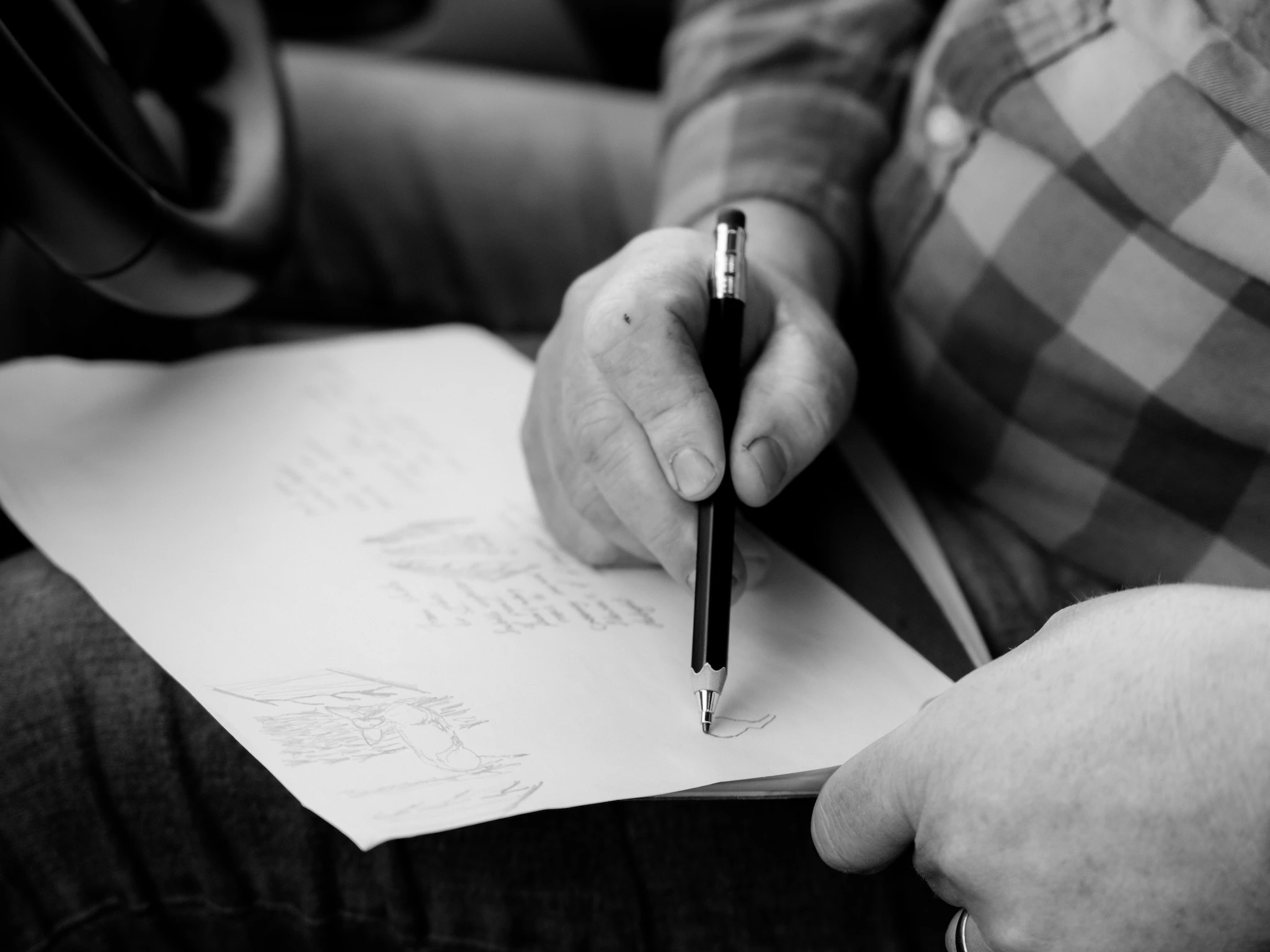
Winemakers love to wax lyrical that wine is made in the vineyard. But for Johan Jordaan, his latest signature releases began somewhere else entirely. In his notebook.
“I’m by no means an artist, but for me, drawing is a way of focusing, thinking and making sense of ideas. Often, ideas stay on a page. In this case, they all made it into the bottle,” adds Jordaan, who says doodling is part of his creative process.
This year, the most significant scribble in the notebook was a single word: Grenache.
Stellenbosch estate Spier offers a diverse range of wines, from the coastal-focused Seaward to the premium Creative Block blends and 21 Gables single-varietals, right up to the flagship Frans K. Smit wines. But the Ideology collection is less a conventional wine range than a space for experimentation: a place where an idea that catches the winemaking team’s attention can be scribbled down, explored, and, if it’s good enough, turned into wine.
“Ideology can be an annual release, and it can also not be annual,” explains Jordaan, cellar master at Stellenbosch estate Spier. “Whenever something piques our interest from a winemaker’s perspective, we’ll try to put it into Ideology. We’ve done Semillon, a distinctive Sauvignon Blanc from Darling, a particular Pinotage and a Merlot. For us, it’s about something that interests us, something we can test and, perhaps at some point, see whether it becomes commercially viable.”
This time, that something is Grenache.
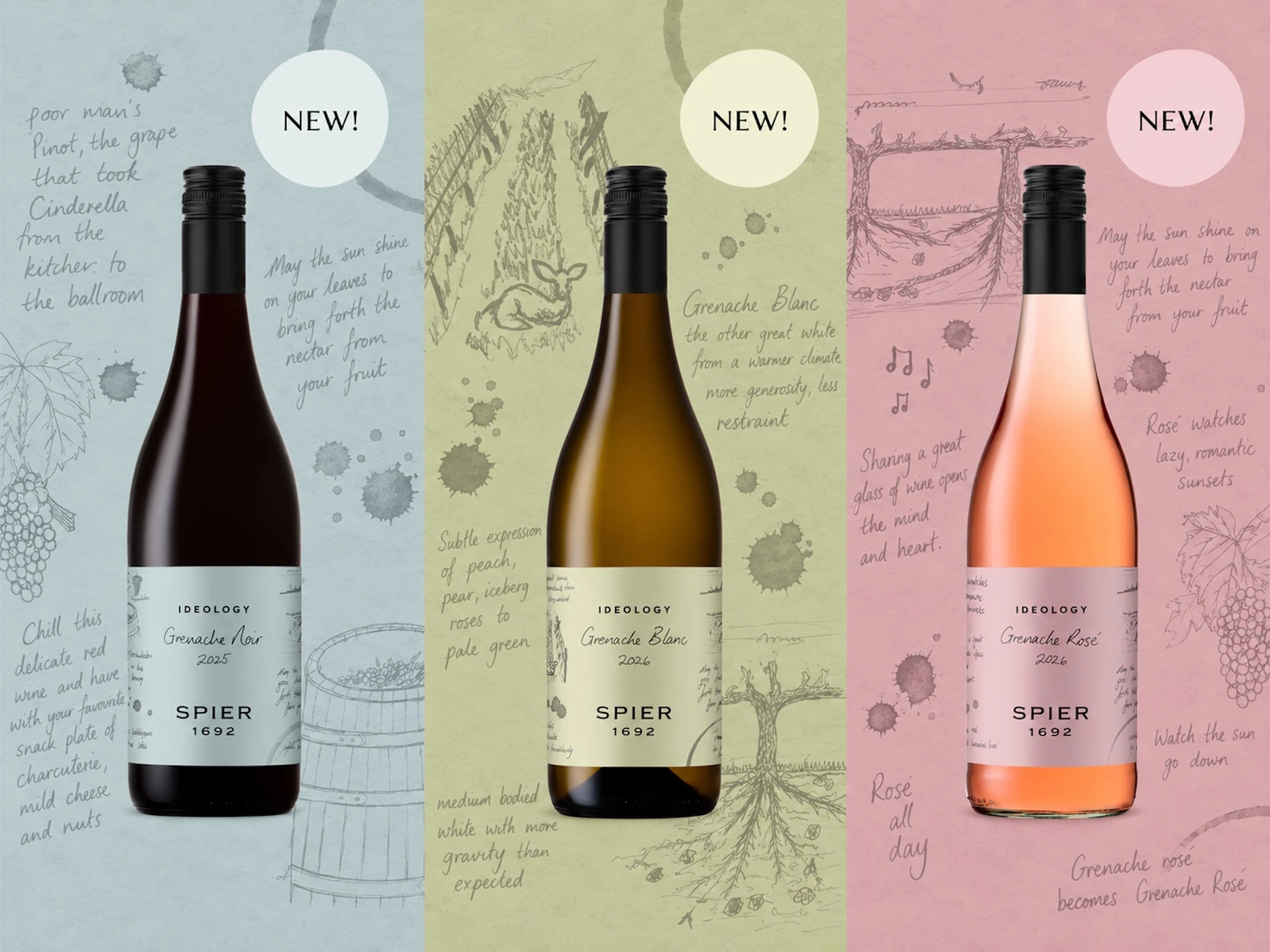
More accurately, it offers three ways to discover Grenache, a grape native to northern Spain but widely planted around the Mediterranean. The latest Ideology collection comprises Grenache Blanc, Grenache Rosé and Grenache Noir, all made from organically grown grapes picked at a Spier-owned farm in Paarl.
For Jordaan, the magic lies in revealing the diverse personalities of a single cultivar.
“Grenache Blanc naturally gives you the texture people are looking for in white wines today,” he says. “People try to make Sauvignon Blanc more textured, or they try to make Chenin Blanc more textured. Chenin can certainly do that, but with Grenache Blanc that texture is inherent.”
Rosé, meanwhile, reveals another side of the variety.
“Grenache always makes fantastic rosé. And if you can make a 100% Grenache Noir Rosé, I think that’s interesting. It’s definitely different from drinking something where a white grape forms the base and a red grape is simply used to add colour.”
Grenache Noir, just in time for summer
“People are talking about chillable reds and lighter styles of red wine,” says Jordaan. “You can try to make Cabernet Sauvignon into a light red, but it doesn’t necessarily resonate with people. Grenache is naturally that kind of variety. You can make it very light and easy-drinking, but you can also make something textured and interesting.”
What links the three wines is not merely fruit but feel.
“The variety’s genetics give you low pH, and when you taste the wines you’ll find this chalkiness running through the Blanc, the Rosé and the Noir. That’s where the texture comes from. There’s a subtle seriousness to them without them becoming too serious. That’s what makes them more interesting to drink. It’s not just fruit, fruit, fruit. It’s fruit with texture.”
The Paarl vineyards add another layer of interest. The organically farmed site has plenty of shale soils, while the warm, relatively dry conditions are similar to those in parts of the southern Rhône and the Mediterranean, where Grenache has long thrived.
“The shale adds to that chalkiness and gives the wine more depth of character,” says Jordaan. “You also get more of a phenolic element due to the dry conditions. So the area definitely has something to do with it.”
So what’s in the bottle?
The Ideology Grenache Blanc is fermented in stainless steel and spends four months on its gross lees, adding texture to flavours of white peach, pear and melon, with flashes of jasmine and elderflower.
The Grenache Rosé, made without skin contact, also spends four months on gross lees. Expect grapefruit, pomegranate and cranberry rather than anything overtly sweet or confected.
The Grenache Noir gets the most cellar treatment, with semi-carbonic maceration, natural fermentation and a combination of stainless steel and small barrels. That’s all technical talk, but what counts is that you can expect a wine firmly in the lighter-red territory Jordaan talks about: mulberry and cherry, violet, fennel and spice, with fine tannins rather than heavy extraction.
Grenache may still be outside South Africa’s mainstream in wine, but Jordaan believes its time is coming.
“For people looking for something red but not heavy, it’s a very interesting variety,” he says. “You can make it super-light and uncomplicated, or you can add saltiness, depth and tannin. It’s also more resilient to heat and water stress, which is increasingly important.”
However, there is one final request from the cellar master: don’t ruin the experiment with an ice cube.
“The red should be as cool as you can get it without adding ice. The rosé can be treated like a white wine, perhaps slightly warmer. Grenache Blanc is best around six to eight degrees. Take it from the fridge, pour small amounts, and let it warm in the glass.”
“Grenache Blanc has a much subtler flavour profile, so chill the bottle properly and drink it sip by sip.”
With summer coming, that sounds like excellent advice.
Sign up to Time Out Cape Town's free newsletter for expert recommendations on new things to do, see, eat and drink in the Mother City. You can also follow Time Out Cape Town on Facebook, Instagram and TikTok!
TIME OUT CAPE TOWN RECOMMENDS:
📍 The best things to do in Cape Town
🏨 The best hotels in Cape Town
🍽 The best restaurants in Cape Town
🛏️ Where to stay in Cape Town
📢 Latest news from Cape Town