[category]
[title]
The timing feels particularly apt. Heritage Day (September 24) offers a chance to look beyond the postcard version of the Mother City.


Cape Town’s history is written into its streets, squares and public spaces.
Sometimes it is monumental. Sometimes it is a plaque, a sculpture or a clock marking time.
This Heritage Month (September 2026), some of those stories are getting a much-needed refresh. The City of Cape Town’s Arts and Culture Development Branch, which is responsible for 140 memorials across the metro, has completed restoration work at several heritage sites over the past year.
It has also replaced 23 missing or damaged plaques, helping to keep the city’s public record of its past intact.
The timing feels particularly apt. Heritage Day (September 24) offers a chance to look beyond the postcard version of the Mother City and consider the many histories that have shaped it, including its colonial past, agricultural roots and painful Struggle history.
And those stories are not confined to museums.
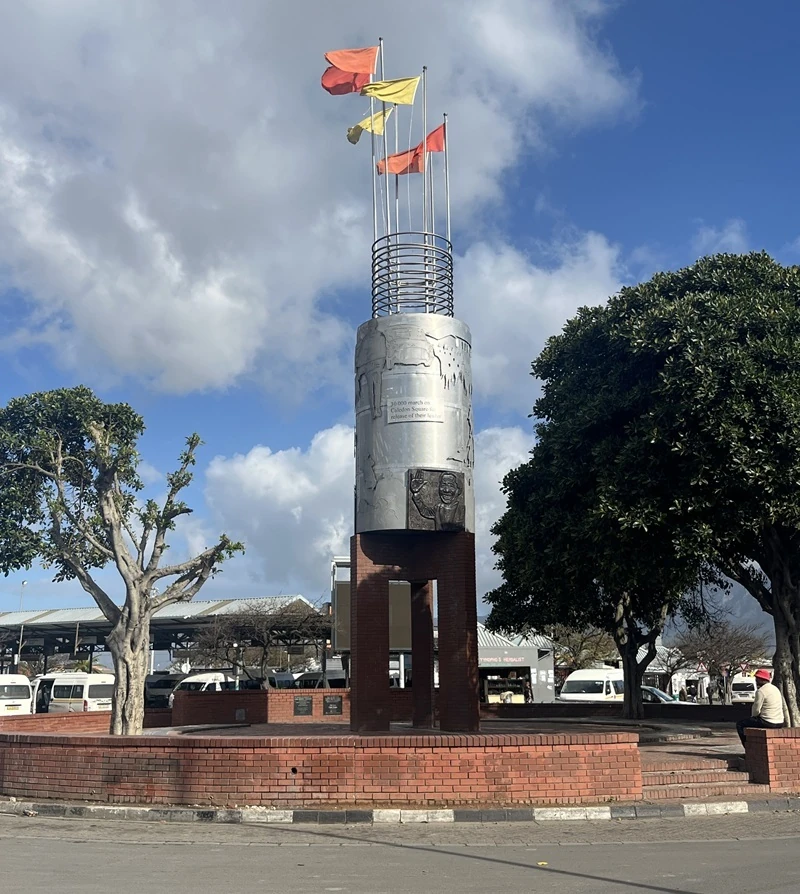
One of the most significant restoration projects is the Langa Memorial on Washington Circle, which honours the victims of the 1960 anti-pass law protests.
Located close to where the historic events unfolded, the memorial commemorates the courage and sacrifice of people who resisted apartheid’s pass laws. Its distinctive design includes a raised circular podium, three legs forming a threshold and a tall, chimney-like tower carrying seven flagpoles.
The R608,000 restoration included repairs to brick seating and paving, damaged concrete and the metal tower. Engraved floor tiles were installed, while flag mechanisms were repaired, and new flags added.
The City has also highlighted Langa as an important part of Cape Town’s heritage landscape, with the Langa Visitor Centre an entry point to the area’s past.
READ: Why you should take this Cape Town Black History walking tour
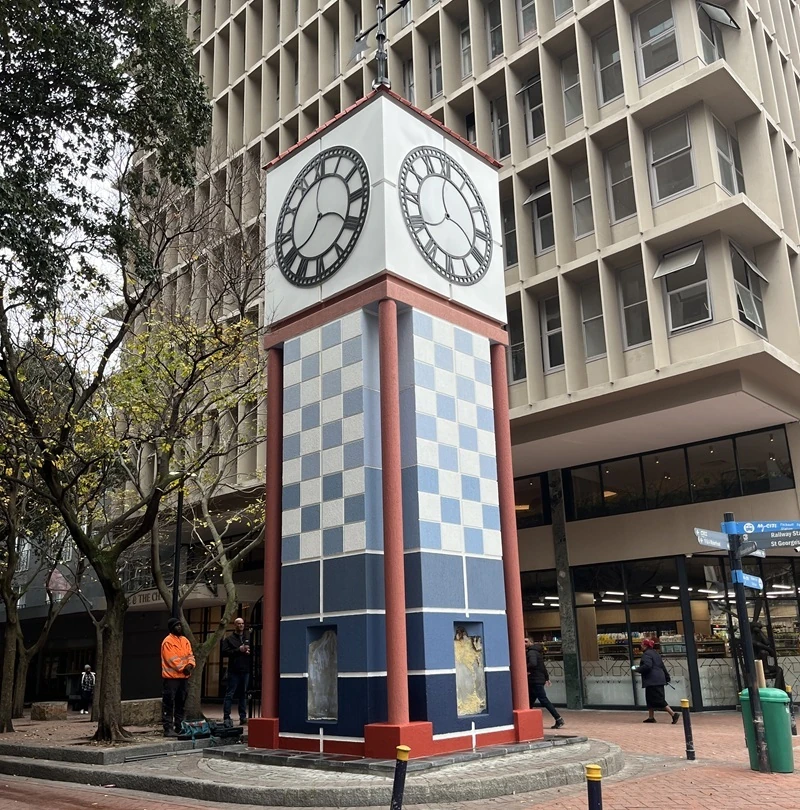
The Colonial Mutual Clock Tower Memorial on Adderley Street received a much-needed refresh.
The structure incorporates four historic clock faces salvaged from the former Colonial Mutual Building, making it both a memorial and a familiar Cape Town landmark.
Phase one, costing R492 430, included structural maintenance, rust repairs, reconstruction of a burned wooden door and internal clock-face supports, as well as re-electrification and repainting.
There is a particularly modern twist: residents helped choose the updated colour palette through an online poll.
Phase two is now underway, with clock mechanisms and hands to be installed, alongside replacement memorial plaques.
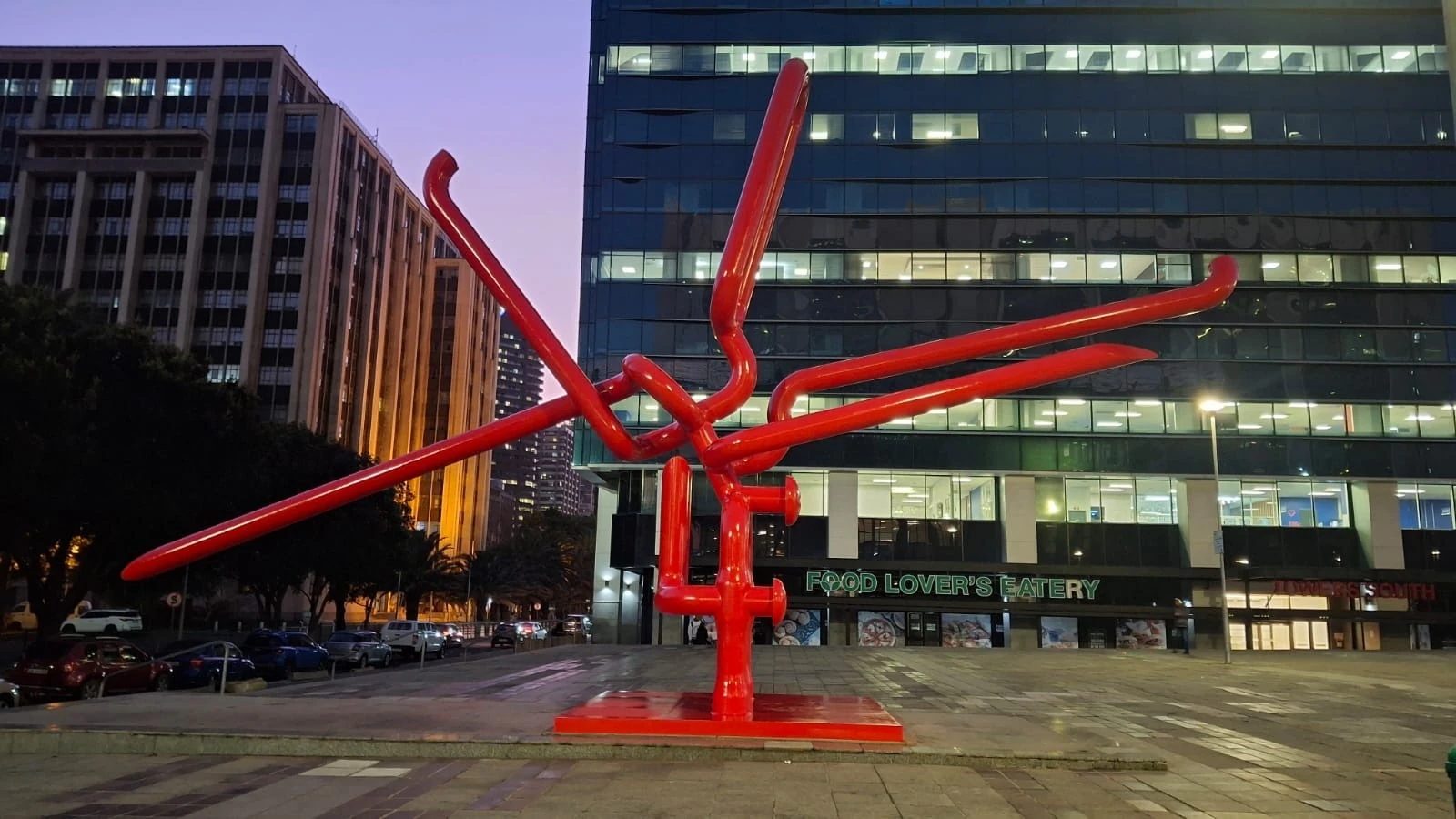
Outside the Cape Town Civic Centre, Eduardo Villa’s enormous The Knot sculpture has also been stabilised.
Installed in 1981, the 6.75-metre steel artwork is Villa’s largest public sculpture and one of the city’s best-known pieces of public art. Its interwoven tubular forms and horizontal arms are intended to evoke connection, unity and balance.
The nearly R306,000 project tackled rust and deterioration, repaired damaged areas and repainted the sculpture while retaining its original character.
SEE: Cape Town has spoken: New design chosen for Adderley Street memorial clock
Heritage also has a more playful face.
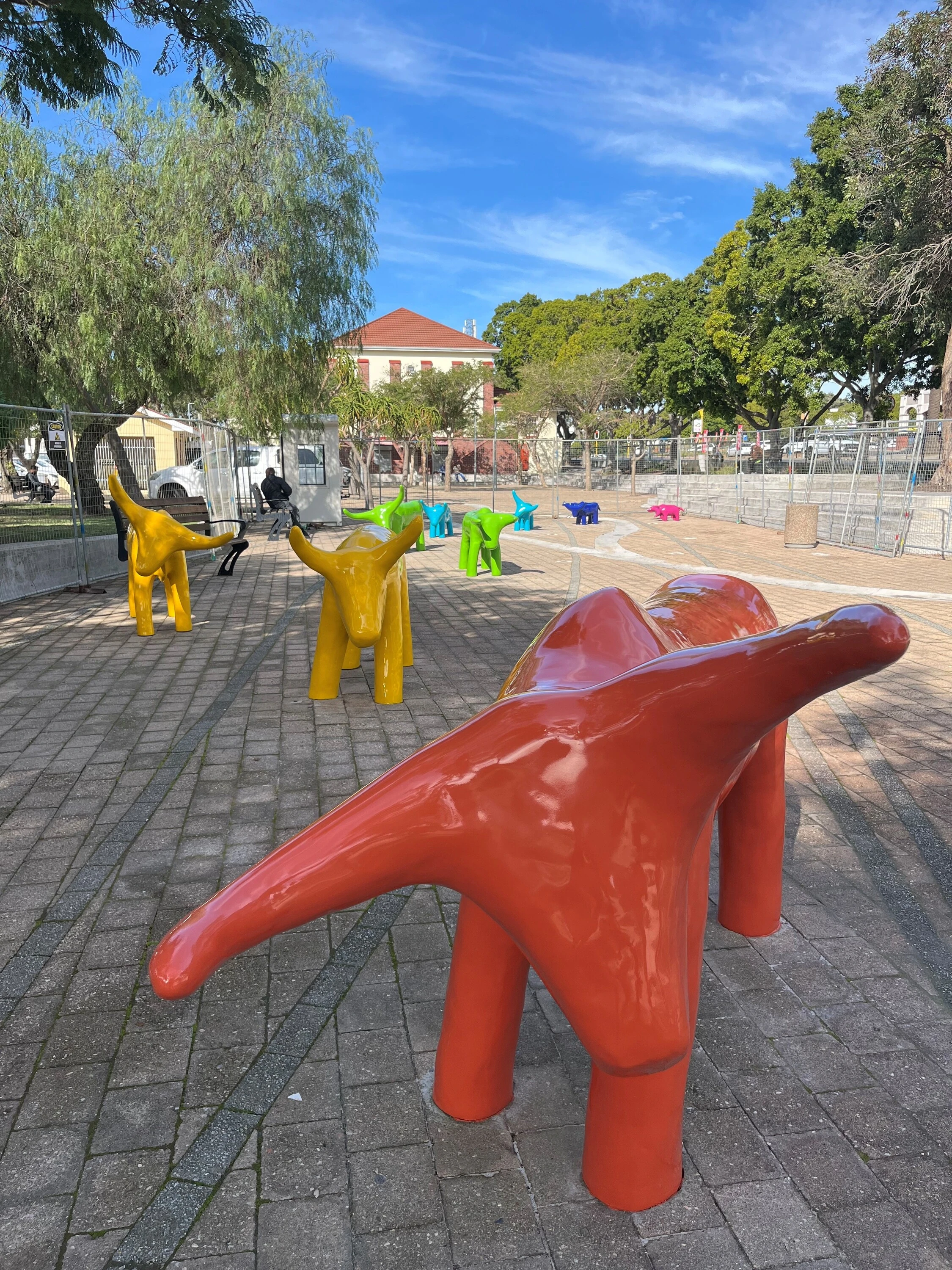
At Pampoenkraal Heritage Square in Durbanville, 14 brightly coloured ox sculptures celebrate the area’s agricultural history and the importance of ox-wagons to its early development.
The sculptures had taken a beating from the weather, general wear, and vandalism, with cracks, chips, faded paint, and missing sections affecting the installation.
The R420,000 restoration recreated missing components, repaired cracks and chips, addressed weathering and resprayed the sculptures in their original colours. The project was initiated by Alderman Theresa Uys using ward funding.
The latest restoration programme comes as the City is also updating its broader approach to heritage management.
A draft Heritage Resources Management Strategy published this month proposes a more proactive approach to identifying and conserving heritage resources. It aims to integrate heritage into planning, improve access to information, reduce unnecessary red tape and recognise previously overlooked tangible and intangible heritage.
That’s important in a city where heritage stretches from the Castle of Good Hope and historic urban landscapes to sites connected to forced removals and the Struggle.
Deputy Mayor Alderman Eddie Andrews added: “Heritage is not only about the past, but can also contribute to building social cohesion and local economies.”
There is another challenge, too: keeping heritage alive requires more than municipal budgets. Cape Town recently faced concerns about the future of several historic house museums, with reports that four could permanently close.
That makes the City’s restoration work particularly relevant.
“Our memorials tell the story of Cape Town and the people and communities who have shaped our city,” said Mayoral Committee Member for Community Services and Health Councillor Francine Higham.
“When they are damaged by weather, age or vandalism, we risk losing important pieces of our shared history.”
Councillor Higham urged residents to report vandalism and damage, describing the sites as “community assets and an important part of our collective heritage.”
That may be the simplest Heritage Month message of all. Cape Town’s heritage is not merely something to visit. It is something to notice, protect and question.
Sign up to Time Out Cape Town's free newsletter for expert recommendations on new things to do, see, eat and drink in the Mother City. You can also follow Time Out Cape Town on Facebook, Instagram and TikTok!
Discover Time Out original video