Yudhika Sujanani at the stove during her Royal Feast Curry Masterclass at the Beverly Hills in uMhlanga.
Nobuhle Modise | Yudhika Sujanani at the stove during her Royal Feast Curry Masterclass at the Beverly Hills in uMhlanga.
Nobuhle Modise

Diwali in Durban: Madame Curry shares the sweet taste of this tradition

Renowned chef and author Yudhika Sujanani chats to Time Out Durban about her favourite Diwali memories and the flavours that define Durban’s celebrations. PLUS 3 recipes to try at home!

Advertising

If you grew up celebrating Diwali in Durban, you’ll know that it’s about more than lighting diyas and admiring the fireworks.

Diwali is about the smell of sweetmeats frying, tables laden with treats, and the unspoken rule that nobody leaves your home without something delicious to take with them.

For chef, author, and personality Yudhika Sujanani – AKA Madame Curry - these are the traditions that make Diwali special. She recalls celebrations starting weeks before the festival itself, with homes being cleaned, new clothes bought, and kitchens transformed into sweetmeat factories.

“You could tell Diwali was approaching by the smell of ghee, cardamom and freshly fried sweetmeats drifting through the neighbourhood,” she says.

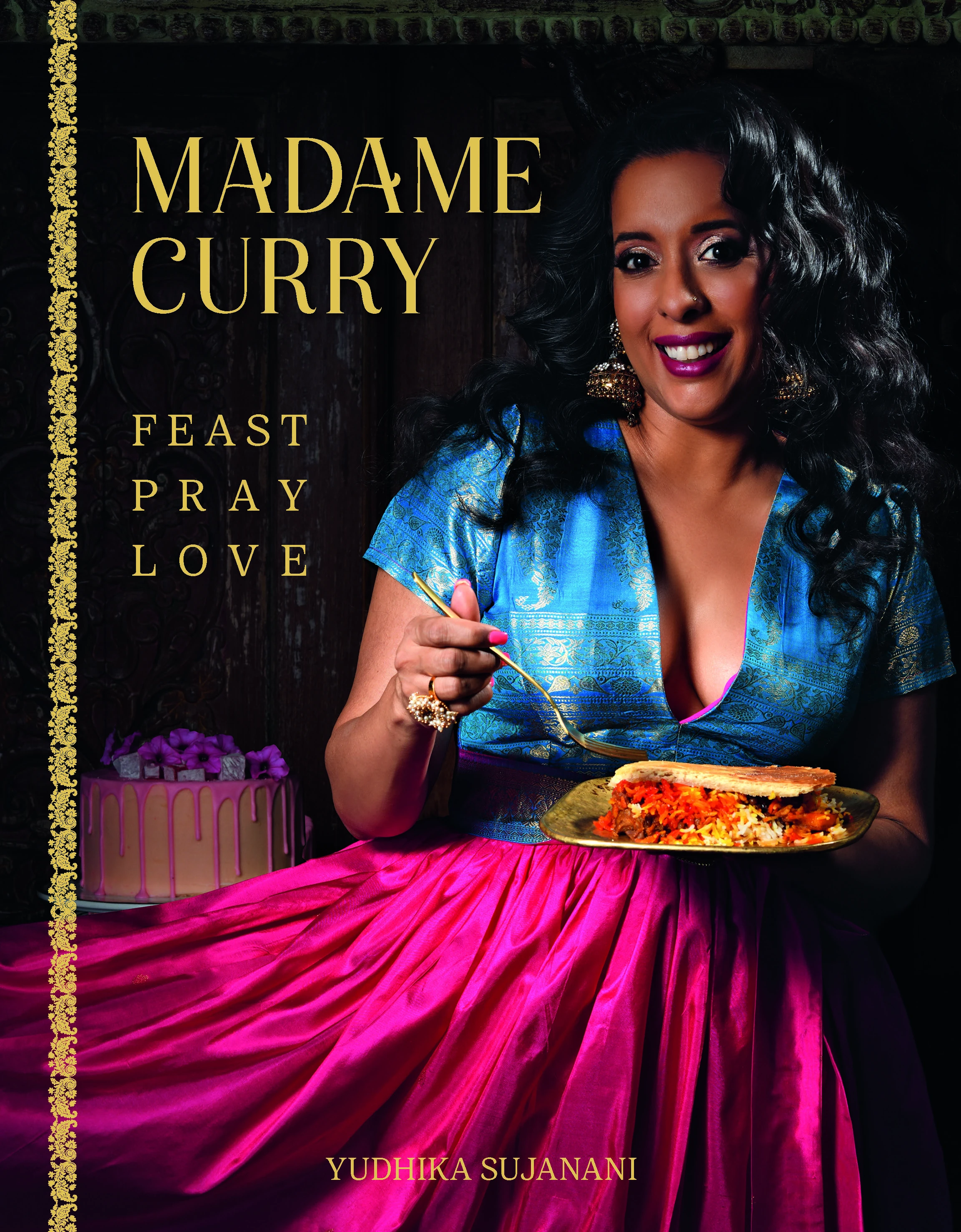
With Diwali around the corner, we caught up with Yudhika about what Diwali means, and got her to share some great Diwali recipes from her latest book, Madame Curry: Feast, Pray, Love – in case you want to bring a taste of a traditional Durban Diwali into your own kitchen.

Madame Curry: Feast Pray Love
SuppliedMadame Curry: Feast Pray Love

READ: These Durban restaurants made Dineplan’s Top 100 for 2026

A celebration that brings Durban together

Diwali, also known as the Festival of Lights, celebrates the triumph of light over darkness and good over evil. But for Yudhika, its meaning goes beyond this.

“Diwali is also about renewal, generosity, gratitude, and the opportunity to reflect on how we treat one another. Lighting a lamp is a symbolic act, but the greater challenge is to bring some of that light into our everyday lives through kindness, compassion, and integrity,” she says.

For Yudhika, the festival is also a particularly personal celebration. Her daughter, Tanvi, was born on Diwali day and turns 24 this year, giving the family two occasions to celebrate: her birthday on 4 November and her Diwali birthday.

“According to Hindu tradition, Diwali is also the day that Goddess Lakshmi, the goddess of prosperity and good fortune, is welcomed into our homes. And on that very day, we welcomed this beautiful baby girl into our family,” she says.

READ: ‘Madame Curry’ on keeping heritage alive through techniques, not recipes

The many flavours of Diwali

Durban’s Diwali celebrations have their own distinctive flavour, shaped by generations of South African Indian families who have preserved and adapted culinary traditions.

“I love the way Diwali has traditionally brought entire neighbourhoods together. Growing up in Isipingo, the celebration wasn’t confined to individual homes. There was an enormous sense of community, with families visiting one another, sharing food and celebrating together.”

And, naturally, food is at the heart of it all.

“Durban also has a wonderful culture of generosity around food. Nobody sends you home with an empty plate, and if you visit enough houses during Diwali, you’ll probably need to loosen your waistband before you get home!”

Sweetmeats that taste like home

At Yudhika & Company, the weeks leading up to Diwali are a whirlwind, with the team producing between three and four tonnes of traditional sweetmeats and confectionery each year.

Ask Yudhika about the dishes closest to her heart: flaky banana puri, creamy almond burfee, rich chana magaj, gulab jamuns, coconut and almond poli, and buttery naan khatay.

“These are not simply sweets to me. They’re recipes that connect us to our mothers, grandmothers and the women who cooked long before we ever thought of writing recipes down,” she says.

The secret, she explains, lies in good ingredients and careful technique. Freshly ground cardamom, quality ghee, fragrant spices, and beautiful nuts make a difference, while traditional sweetmeats require patience and practice.

“Making good burfee requires an understanding of texture, while banana puri is all about delicate layering and careful frying. Chana magaj requires patience, and a properly made gulab jamun should have the right balance of sweetness, texture, and flavour.”

These are skills she believes are worth preserving through recipes and cooking classes. But she also has a practical reminder for anyone planning a Diwali feast: don’t let the preparations take over the celebration.

“A beautiful Diwali feast doesn’t need twenty different dishes. It needs good food, prepared with care, and people who genuinely enjoy being together.”

And this year, you get to enjoy your own feast! Yudhika has shared 3 standout Diwali recipes to try this November.

TIME OUT DURBAN RECOMMENDS:

📍 The best things to do in Durban
🍽  The best restaurants in Durban
🏨 The best hotels in Durban
🛏️ Where to stay in Durban
📢 Latest news from Durban

Follow Time Out Durban on Instagram, Facebook and TikTok! To get the coolest news, features, and things to do straight to your inbox, sign up for our newsletter.

Best Diwali recipes to try

Madame Curry’s Banana Puri

Cracking the formula for perfectly made banana puri will catapult you into the realm of a local celebrity. When I was growing up, our neighbourhood had only one lady, Mrs N, who made perfect puri, and everyone held their breath at Diwali, hoping they had made it onto her gift list.

When Mrs N’s car came up our driveway, we would race out onto the veranda to catch the first glimpse of her latest works of art. She inspired in me an enduring fascination with these light pastries, often called the Queen of Pastries, with their swirls of delicate, diaphanous layers.

They do not contain bananas but resemble a delicate banana flower. Mrs N’s Diwali tray would end up on display in our house so that those who had not made her list could see it. I do not even remember the banana puri being eaten, as they were too precious for anyone to be seen openly tucking into them.

Serves: 8

Puri Ingredients

  • 530 ml cake wheat flour, sifted, plus extra for dusting
  • 5 ml ground cardamom
  • Pinch salt
  • 5 ml baking powder
  • 40 g butter
  • 5 ml lemon juice
  • 200 ml ice water
  • 125 g butter, melted
  • 125 ml sunflower oil
  • Cornflour, for dusting
  • Tepid water, to make a paste
  • Sunflower oil, for deep-frying

Syrup Ingredients

  • 250 ml sugar
  • 200 ml cold water
  • 1 medium cinnamon stick
  • Coloured almonds to garnish (optional)

Puri Method

Mix 500 ml flour, the ground cardamom, salt and baking powder.

  • Cut the butter into little cubes, then use your fingertips to rub it into the dry ingredients until the mixture resembles fine breadcrumbs.
  • In another mixing bowl, add the lemon juice and iced water.
  • Make a well in the centre of the dry ingredients and add the wet ingredients, a little at a time, to make a stiff dough.
  • Cover the dough with clingwrap and leave to rest for 1 hour.
  • Dust a clean work surface with flour. Divide the dough into eight equal portions; use a scale to ensure each portion is weighed out evenly.
  • Shape them into smooth balls. With a rolling pin, roll each portion out into a 3 mm-thick round the size of a dinner plate.
  • Combine the melted butter and oil. Place a large piece of baking paper on a work surface and dust it with cake flour.
  • Place the first dough round on the baking paper, brush the dough with the butter and oil mixture, and dust with a little cornflour.
  • Follow the same process with the remaining dough rounds, stacking them on top of each other.
  • Make sure that both sides of each round are brushed and dusted, except the top of the last round.
  • Using a rolling pin, gently roll out the stack of dough rounds into a 1 cm thick rectangle. Trim the four sides neatly with a sharp knife.
  • Combine the remaining 30 ml cake wheat flour with some tepid water to make a thick paste, then spread it over the top end of the dough in a 1 cm thick strip. (The paste will be the glue that prevents the puris from opening when frying.)
  • Brush the top of the dough with more of the butter and oil mixture (do not brush over the paste), then dust it again with cornflour.
  • Roll up the dough tightly like a Swiss roll, starting from the bottom and ending with the edge with the paste. Slice the roll into eight portions.
  • Place the portions facing upwards so that their spiral layers are visible. Using your palm, press each portion so that the top is at a 45-degree angle to the base.
  • Press down using your palm or fingers to flatten them into oval discs, about 4 mm thick.
  • On the outer layer of each portion, an edge with the paste should be visible.
  • Fold this glued edge over to the back. Press down firmly to ensure it does not open when fried.
  • In a frying pan over medium heat, heat enough sunflower oil for frying. Test the temperature by dropping a piece of the dough into the oil: It should bubble and rise to the surface after 1 minute.
  • Fry the puri one at a time, turning them over only once the bottom sets and feels firm. The puri should still be pale in colour.
  • Drain on a wire rack overnight.

TIP: The dough for this recipe can be kneaded by hand or using the dough hook attachment of a stand mixer.

Syrup Method

  • Combine the sugar, cold water and cinnamon stick in a pot.
  • Cook over medium heat, stirring continuously, until the sugar dissolves.
  • Simmer for 5–7 minutes until a thick syrup forms. Drizzle a little syrup over each puri and garnish with some coloured

Madame Curry’s Chana Magaj

This is the Indian version of what is commonly known as fudge (or tablet) in other parts of the world. In my opinion, chana magaj outperforms the others, both in texture and depth of flavour.

Made with equal quantities of chickpea flour and butter, the ingredients in this sweetmeat combine to achieve a buttery texture and a deep, roasted, nutty flavour profile.

Be patient when roasting the chickpea flour in the butter: Always do it over low heat in a thick-bottomed pot to prevent burning.

Also, the pan-roasted mixture should reach hues of bronze and caramel, and remember that the magaj will lighten by at least two shades when combined with the milk powder.

The scent of the freshly ground cardamom makes these treats even more irresistible.

Serves: 30

Ingredients

  • 800 ml chickpea flour
  • 100 ml boiled full-cream milk
  • 500 g ghee (or unsalted butter)
  • 5 ml ground cardamom
  • 675 ml icing sugar
  • 250 ml Nestlé® Klim full-cream instant milk powder, plus extra if needed
  • Gold leaf, to decorate
  • Melted white chocolate, to garnish
  • Coloured almonds, to garnish

Method

  • Place the chickpea flour in a large mixing bowl and add the boiled milk. Rub the milk into the flour until the mixture resembles breadcrumbs.
  • Set aside for 1 hour to dry, then rub the mixture between your fingertips to break it into fine crumbs.
  • Melt the ghee (or unsalted butter) in a thick-bottomed pot over low heat and add the chickpea-flour mixture.
  • Stir continuously for 1 hour until the mixture turns golden and deep caramel in colour. Set aside to cool to room temperature.
  • After it has cooled, add the cardamom, icing sugar and milk powder, and mix. If it is runny, add a little more milk powder.
  • Grease a silicone mould with nonstick spray and spoon in the magaj.
  • Use the back of a spoon to compress and smooth the mixture into the moulds. Refrigerate for 3 hours to set. Unmould the magaj and decorate with gold leaf.
  • Drizzle with melted white chocolate and garnish with coloured almonds.
Advertising

Madame Curry’s Poli

Those of us who grew up in the ’70s and ’80s will recall breaking into the sweetmeat and confectionery stronghold at weddings, seizing the carefully stashed treasures like pirates.

One of our favourite missions was to seize the poli – golden half-moon-shaped pastries – that were always carefully stored in large, dotted aluminium pots called deghs. Sometimes they were stacked halfway up to the ceiling.

It would bring massive disappointment, as the poli were usually out of reach, so we often abandoned ship in search of the next adventure.

These treats are often served at festivals and prayers, usually as part of sweetmeat trays and platters. The filling is a blend of toasted almonds, desiccated coconut, toasted sesame seeds and cardamom.

Serves: 18 to 20

Ingredients

  • 375 ml desiccated coconut
  • 25 ml sesame seeds
  • 125 ml flaked almonds, crushed
  • 10 ml ground cardamom
  • 250 ml sugar
  • 135 ml condensed milk
  • 75 ml Nestlé® dessert and cooking cream

Pastry Ingredients

  • 750 ml cake wheat flour
  • Pinch of salt
  • 45 g butter
  • 45 ml sunflower oil, plus extra for
  • deep-frying
  • 375 ml boiling water, cooled
  • until tepid, plus a little extra for sealing the poli
  • Sugar, to garnish (optional)

Filling Method

  • Place the coconut, sesame seeds and almonds in a thick-bottomed pot over medium heat.
  • Stir and toast lightly until aromatic. Remove from the heat and leave to cool.
  • Add the cardamom, sugar, condensed milk, dessert and cooking cream, and stir well.

Pastry Method

  • Mix the flour and salt in a bowl, then rub in the butter and oil. Add the water and knead to form a dough.
  • To assemble, divide the dough into 18–20 equal portions. Roll each one out until smooth and cover with a damp cloth.
  • Roll out each portion into a circle with a rolling pin, and moisten the edges with a little water.
  • Place some filling onto the disc, then fold one side of the dough over the filling to make a semi-circle.
  • To seal, crimp the edges or fold them together. Repeat the process until all the dough and filling have been used.
  • In a deep, thick-bottomed pot, heat enough oil for deep-frying and fry the poli for 5–7 minutes – they should be a deep cream colour.
  • Drain the poli on a wire rack, and, if you like, sprinkle with some sugar while they are still warm.

TIP: Poli can be made in advance and partly fried until the colour turns wheaten. They can be frozen for up to a month or refrigerated for 3–5 days until needed and then refried before serving.

Recommended
    Latest news
      Advertising