[category]
[title]
The LivingRoom’s MATRIARCHS series puts generations-old Zulu food knowledge in the hands of professional chefs,with one very proud Gogo keeping a watchful eye on the kitchen


What happens when a grandmother’s food knowledge enters a professional restaurant kitchen?
As soon as I entered the gates of Summerhill Guest Estate, I could tell I would be pleasantly surprised. I knew what I was there for and what was on the menu, but nothing prepared me for the gourmet sensation I read about in one of the many raving reviews of The LivingRoom.
I knew the guest house was nestled somewhere in the rolling hills of Cowies Hill, and as a staff member welcomed me before I even reached the reception area, all the accolades were displayed right at the entrance.
I hope this proves that Time Out Durban doesn't just tell you where to go, what to experience and what to eat without vetting it ourselves.
I digress.
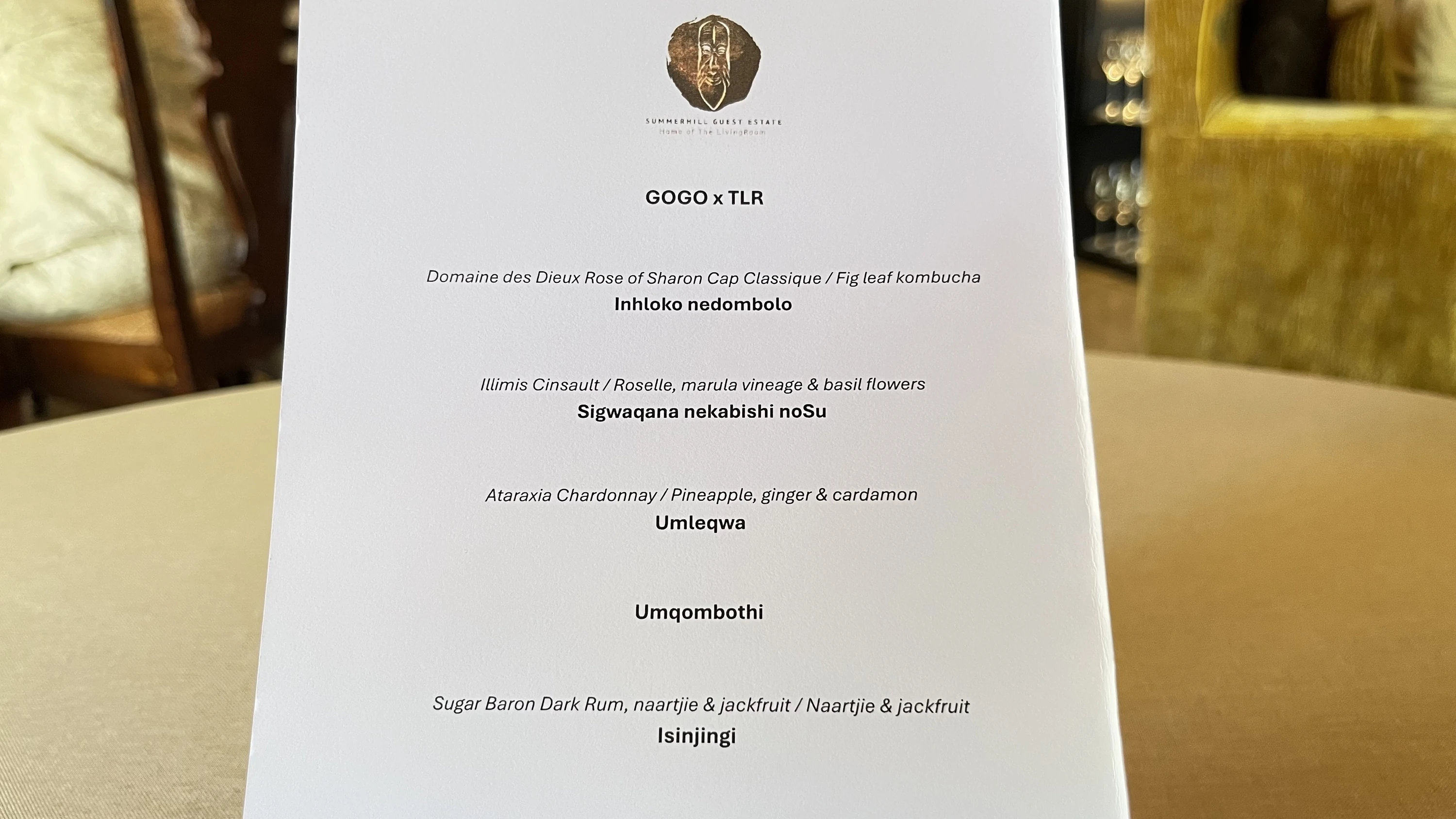
We already told you about The LivingRoom’s MATRIARCHS series, which is what we were there for. I’m not going to lie, when I saw the menu, I was really curious about how foods such as Inhloko (cow’s head), Usu (tripe) and Isigwaqane – a popular dish among Zulu households, made by combining boiled sugar beans and speckled beans with maize meal – would be repurposed.
I have to admit, Isigwaqane is not my favourite thing, so I was a little hesitant but determined to give it a try.
Another least favourite thing of mine was also featured: Isijingi, a pumpkin pudding.
But as my almost-three-year-old would say: “I was brave.”
Read: The bold Durban flavours that are trending in 2026
The aesthetics and the display of their wine selection told me everything I needed to know about what I was about to experience. The restaurant’s elegant setting strikes that difficult balance between a luxurious fine-dining establishment and the warmth of a family home, fitting, given that this particular lunch was all about food passed down through families.
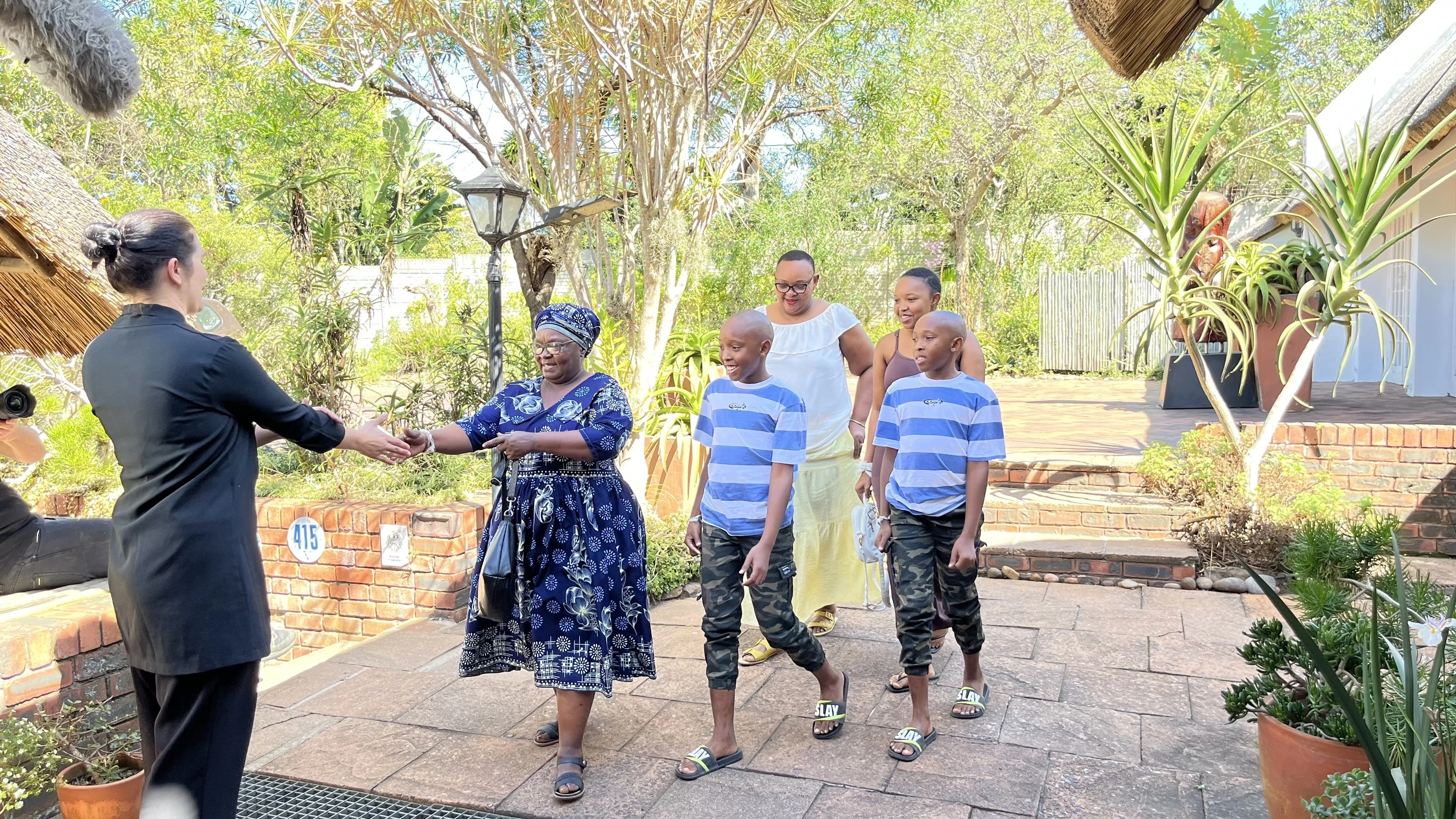
As we waited for the experience to begin, I briefly got the chance to sit next to Gogo Thandi Mchunu, whose menu was the order of the day.
Our quick chat had her declaring that I should’ve actually arrived to document everything on the Friday because she brought an actual live chicken for the Umleqwa – free-range chicken traditionally prepared in Zulu and Xhosa households – and a fresh cow’s head.
She proudly exclaimed that her food is the best, and she’s not shy to mention it.
I liked her immediately.
Read: The 15 best restaurants in Durban
Gogo's relationship with food goes back to when she was just 10 years old, when her grandmother taught her how to make uphuthu, the fluffy ground maize-meal staple.
The lessons were tough.
“I’d have to cook in a huge three-foot pot on a fire, and whenever the maize-meal overflowed and spilled, I would get a smack on the hand,” she says.
That story really gets to the heart of what MATRIARCHS is trying to preserve.
This is knowledge that wasn't necessarily written down in cookbooks. It was passed on through watching, doing, tasting and
apparently, the occasional smack on the hand.
And so it began.
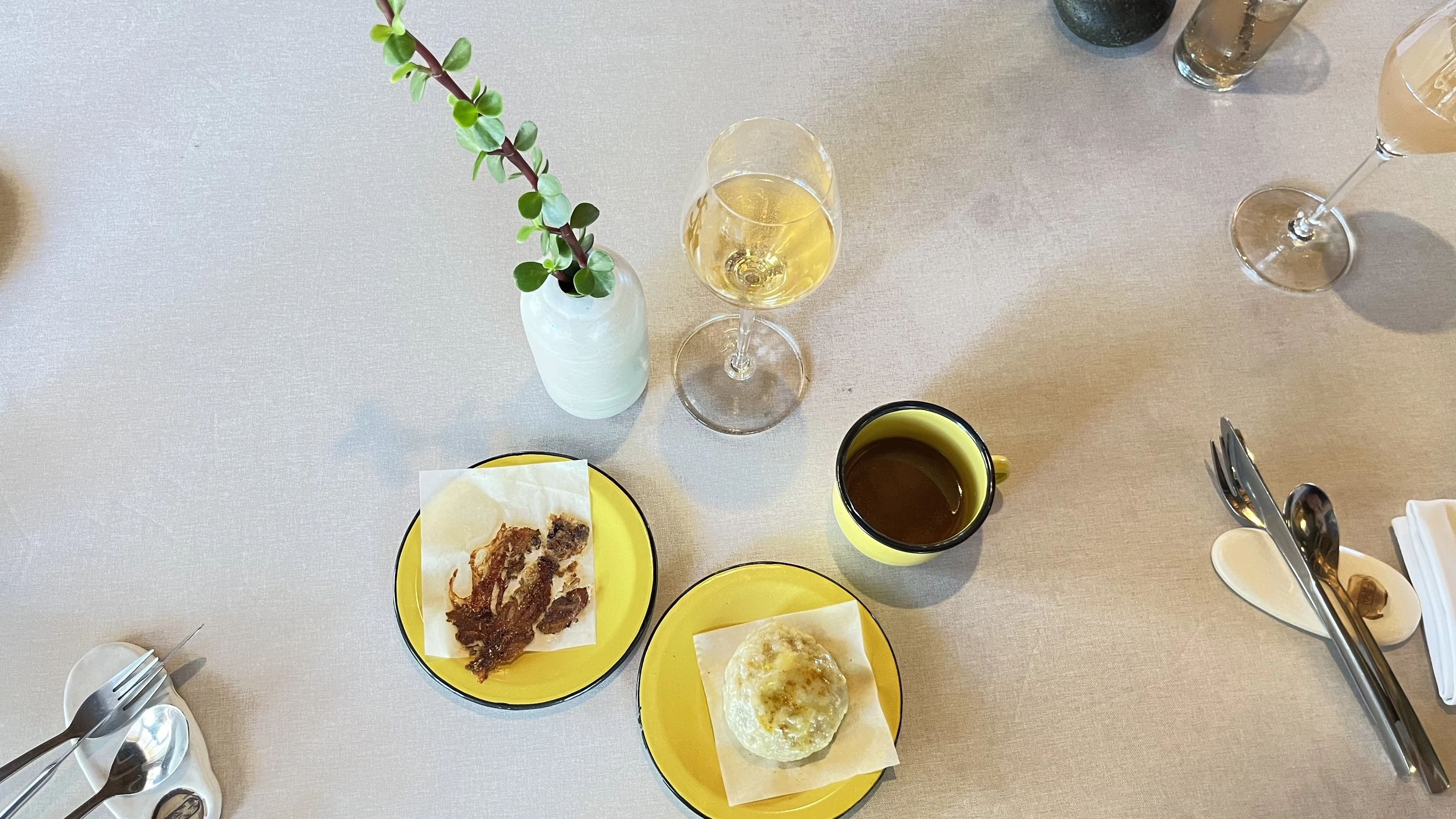
First up was Inhloko (cow’s head) and Idombolo (steamed bread).
Now, this absolutely blew me away.
It came with a side of the broth the Inhloko was cooked in, and part of the head was deep-fried and served as a chip.
There was also something quite personal about eating Inhloko.
As a girl growing up, I was never allowed to eat cow’s head.
My dad’s reasoning? When women eat Inhloko, they become stubborn.
Well, lo and behold!
The Inhloko was tucked into the Idombolo – think African ravioli – and nothing satisfied me more than dipping it into that full-bodied broth. The thinly sliced, deep-fried Inhloko snack resembled biltong.
This was paired with a 2016 Domaine des Dieux Rosé of Sharon Cap Classique, a blend of Pinot Noir and Chardonnay, the perfect way to cleanse your palate of all the rich, tasty fats.
For those who don’t drink, this meal was paired with a fig-leaf kombucha.
I absolutely loved everything about this dish.
We were told by the sommelier at the award-winning restaurant, Johanna Richter, who is also Chef Johannes Richter's partner, that Gogo Mchunu wasn’t particularly impressed with the chip version of one of her signature dishes.
She had many questions!
Gogo explained that she was apprehensive about the Inhloko snack because she believes that when you're trying to preserve the taste of traditional dishes, you don't have to do too much with the flavours.
Her approach to both Inhloko and tripe is remarkably simple: boil it with salt and let the food speak for itself.
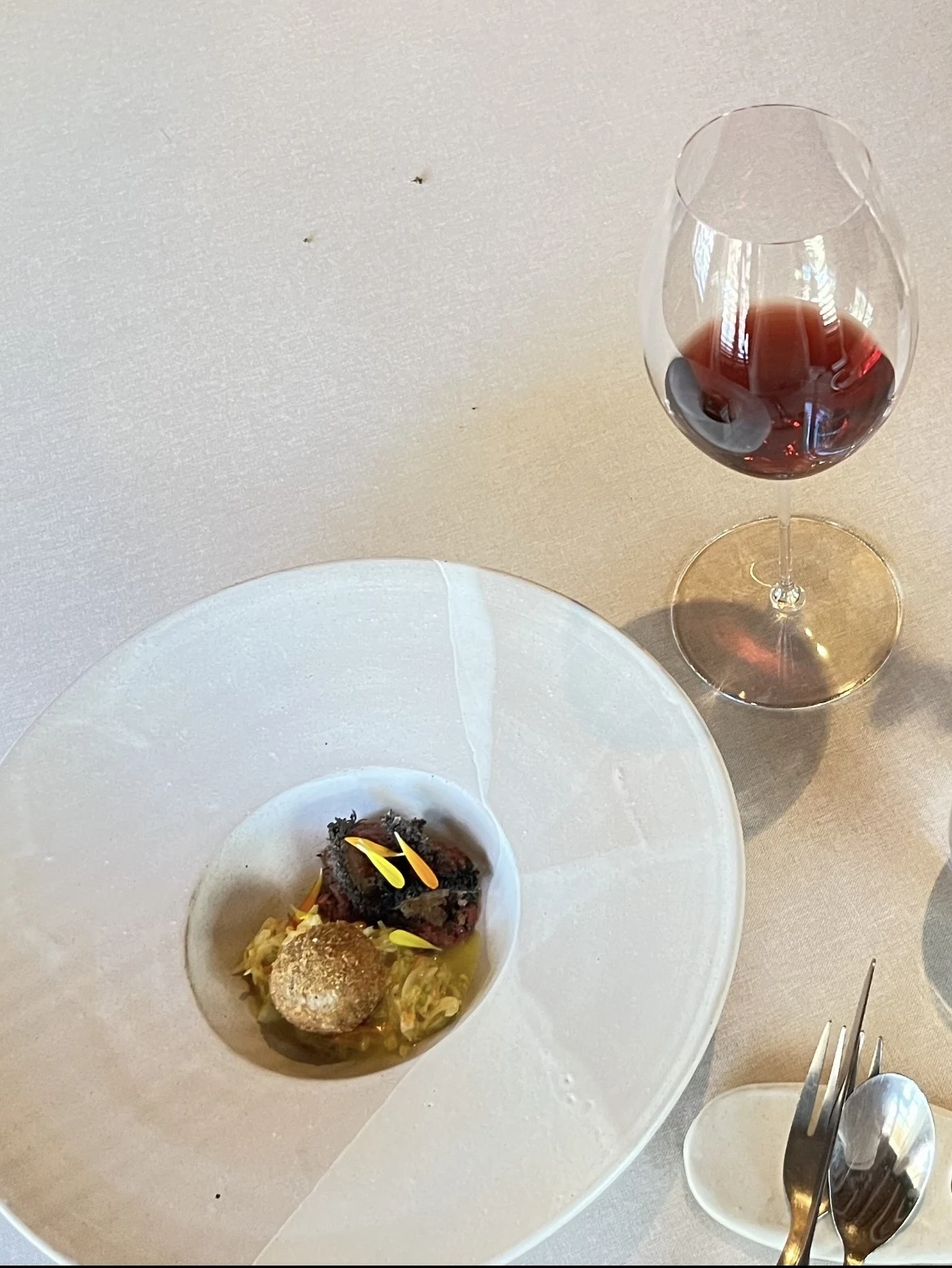
The star of the show had to be the next offering: Isigwaqane, cabbage and Usu (tripe).
Tripe is an acquired taste and not everyone is open to trying it.
The Chef explains that this particular culinary experience was a challenge to sell.
This edition followed the inaugural MATRIARCHS lunch held in March, which celebrated Durban Indian culinary heritage with 94-year-old Dolly Govender, great-grandmother of The LivingRoom chef saucier Antonio Porras.
Richter says that edition sold out almost immediately, while this experience did not sell as well.
It is an interesting contrast, particularly when you consider that both editions are built around food heritage, family recipes and generations of culinary knowledge.
Perhaps diners are more familiar with some traditional food than others. Or perhaps some dishes simply require a little more bravery.
Whatever the reason, I’m glad I was brave.
The Isigwaqane croquette was a PLEASANT SURPRISE; my least favourite meal on the menu became a culinary trip to heaven!
Another raving-review term I found on the interwebs!
The Usu was a very mild take, and it was made crispy – a confusing texture but not scary for those who gag at the thought of eating the stomach lining of a cow.
This was paired with a Pinotage; the non-alcoholic substitute was also less acidic: a Roselle, marula vinegar and basil-flower drink.
Chef Johannes says the reason for the MATRIARCHS series was to put a focus on seasoned home cooks.
“There’s so much knowledge that’s being lost at the moment because of convenience, generally. People are more and more super specialised in what they do, have less time to cook, and a lot of convenience products are creeping into our everyday life, where generations before that we didn’t have access to those,” says the chef.
He adds: “Now it’s about preserving those recipes and bringing in all these amazing young chefs to have direct contact with the people that are preparing these dishes from scratch traditionally as they’ve been done for a long time.”
And that is where the idea of young chefs meeting generations-old knowledge really came alive.
Because Gogo Mchunu admits that she was a little nervous when she realised she would be cooking for Gen Zs – “Ama 2K”, as she refers to them.
In the end, the collaboration was an amazing take on Gogo’s food.
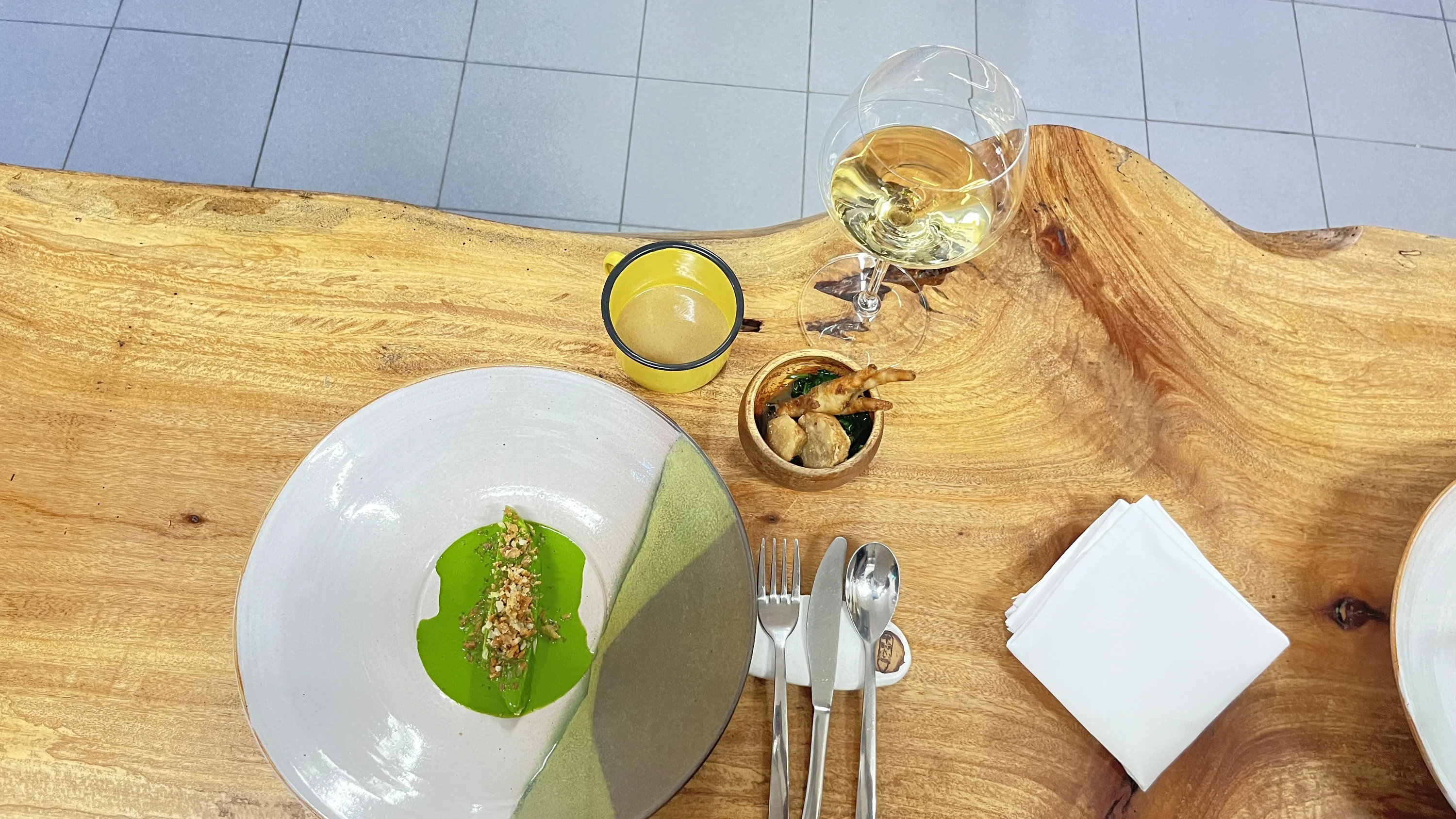
The Umleqwa with Imfino (leafy greens) was where my taste buds started slow-clapping.
For this part of the presentation, the Time Out Durban team was invited into the kitchen to see where the action happens.
The moment I saw a “2K” flame-wilting Imfino, I was eager to taste it.
Not only was it flame-wilted, but there was another version of the greens that was puréed and spread over some boiled Umleqwa, just the way Gogo does it.
Never have I ever enjoyed my Imfino as I did.
It actually feels like most of the meals were a highlight for me.
I do have one critique, though.
I love my chicken. Any girl knows chicken feet, or walkie-talkies, are a great source of collagen; therefore, I like my walkie-talkies full of flavour, and this is where they disappointed me and pleased the matriarch.
They shied away from seasoning this delicacy, but the Imfino and broth absolutely made up for the shortfall in sodium.
A classic Chardonnay sealed the deal, and for the non-drinkers, a refreshing pineapple, ginger and cardamom fusion paired exceptionally well.
When I saw Umqombothi – traditional beer made from malt and sorghum – on the menu, I thought: “Typical.”
And rolled my eyes.
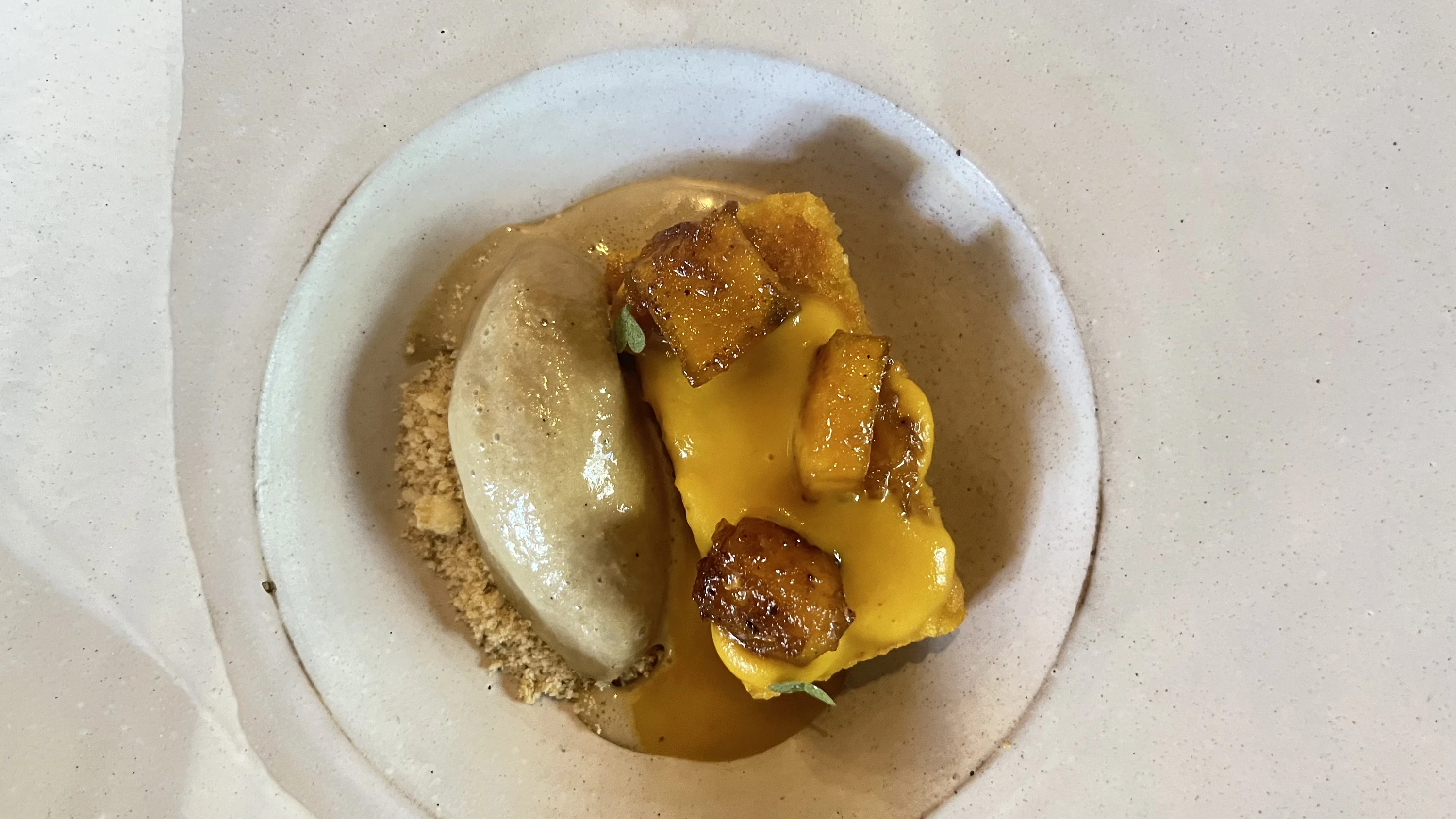
Little did I know it would be infused into a dessert.
Yes, dessert!
The foam was the beer, and beneath, banana sorbet and crunchy caramel bits inside a miniature clay pot.
Then it was time for Isijingi.
My almost-three-year-old’s voice reappeared in my head: “I am brave.”
And of course, there was no need for bravery at this point because I was practically on the verge of licking my plate.
The pumpkin pudding had become another unexpected highlight.
The patrons who came for the experience agreed; the Isigwaqane croquettes and Isijingi were among the favourites.
Phindile Khoza and her husband, regulars at the fine-dining establishment, say they came with high expectations and were not disappointed.
“We also love African food, so we wanted to see what the chef’s take would be on our indigenous food, and it was amazing,” says Khoza.
And perhaps that is what makes MATRIARCHS so interesting.
This is not simply about taking traditional food and making it look fancy.
It is about bringing two very different forms of culinary knowledge into the same kitchen: the knowledge passed down through generations by women who learnt to cook through watching, doing and tasting, and the technical skill of professional chefs trained to reinterpret food.
Gogo Mchunu brought the recipes, memories and techniques she inherited from her grandmother.
Johannes and his team brought their own culinary interpretation.
At times, Gogo questioned what the chefs were doing. There were moments when familiar ingredients were transformed into something I never expected.
But the woman at the centre of it all was never forgotten.
Future MATRIARCHS events will continue to highlight different culinary traditions from across South Africa’s diverse cultural landscape.
And take it from a non-foodie who refuses to spend thousands on small pieces of food: this is absolutely worth it.
Even the Inhloko.
And as for my dad’s warning?
Well, perhaps he was onto something.
Because if eating cow’s head really does make women stubborn, then maybe that explains a thing or two.
What: MATRIARCHS – Preserving the Flavours of our Heritage
Where: The LivingRoom at Summerhill Guest Estate, Cowies Hill, Durban
What it is: A culinary series celebrating South Africa’s food heritage by bringing mothers, grandmothers, gogos and aunties into The LivingRoom kitchen to share recipes, techniques and food memories passed down through generations.
What to expect: Each edition explores a different culinary heritage, with traditional dishes reinterpreted by The LivingRoom’s chefs as a multi-course dining experience.
Price: R650 per person
With wine pairing: R1,050 per person
Follow Time Out Durban on Instagram, Facebook and TikTok! To get the coolest news, features, and things to do straight to your inbox, sign up for our newsletter.
TIME OUT DURBAN RECOMMENDS:
📍 The best things to do in Durban
🍽 The best restaurants in Durban
🏨 The best hotels in Durban
🛏️ Where to stay in Durban
📢 Latest news from Durban
Discover Time Out original video