

[image]
[title]Tell someone you’re taking a city break to Belgium and you’re generally met with a painfully unenthusiatic ‘oh, that’s cool’. For one reason or another, that small nation bordered by holiday heavyweights like France and the Netherlands, has long been cursed with a reputation for being the most beige country on the continent. Travellers are slowly starting to see through that myth, though. Increasingly, people are booking trips to the likes of Brussels for its grand political prestige, Antwerp for its fashion crowd or Bruges for its historical cobbled streets. But what if I told you there’s another Belgian city that gives all three of those, as well as Europe’s more famous cities, a run for their money?
Thirty miles east of Bruges, Ghent is a small and endearing city that’s understatedly cool. It’s packed with stunning cycle routes and environmentally and socially conscious communities, littered with fantastic slow fashion stores and a wealth of organic shops. It’s also the veggie capital of Europe – every week its cafes and restaurants focus on serving plant-based fare as part of the ‘Veggie Thursdays’ initiative – and in 2024 it held the title of the European Youth Capital. Oh, and here’s an adorable fun fact: every time a baby is born in one of Ghent’s maternity wards, parents can press a button that causes the city’s streetlamps to flicker in celebration. Does it get more wholesome than that?
➡️ READ MORE: The best city breaks in Europe for 2026, picked by Time Out editors
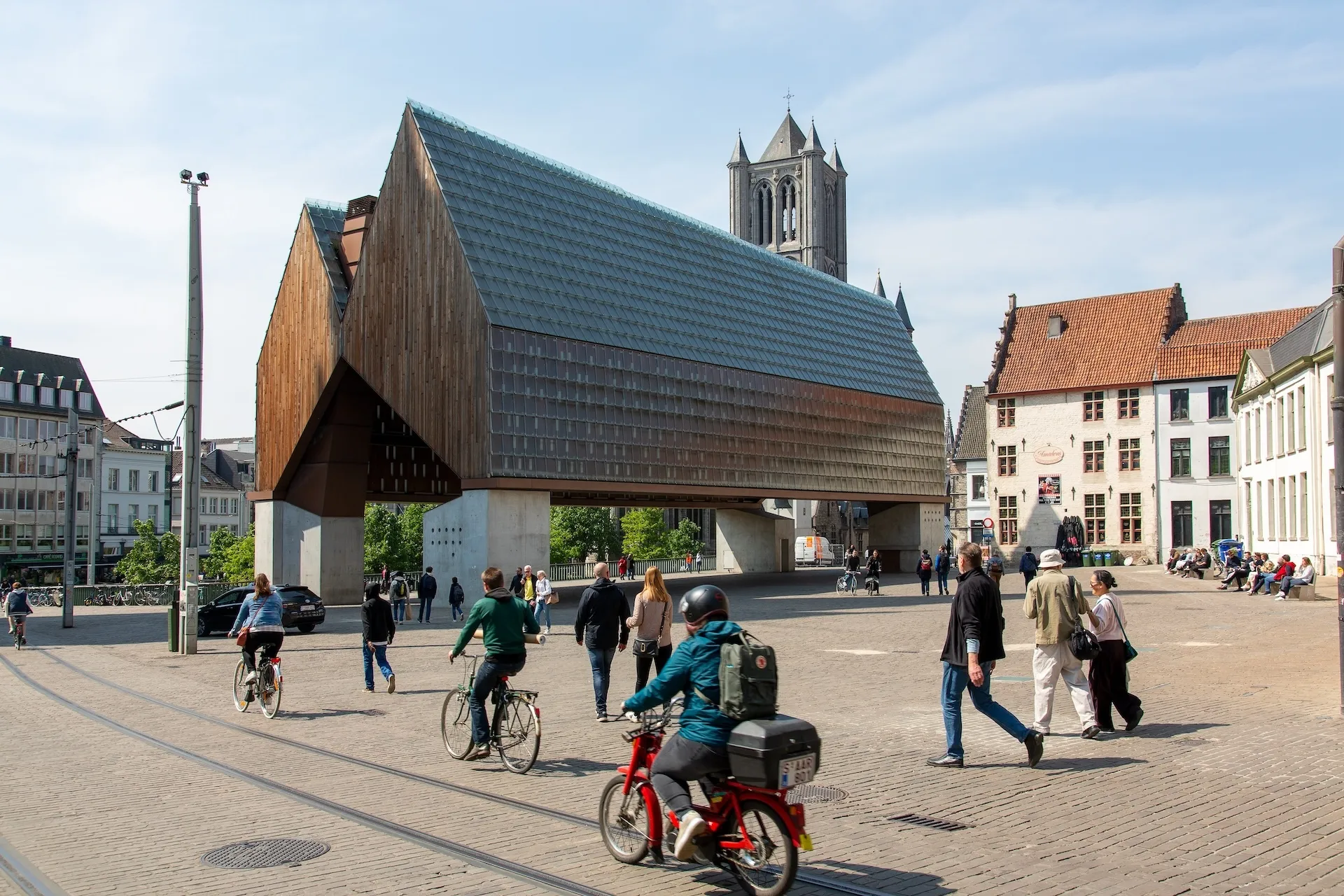
Medieval streets with an understated edge
We arrive via rail, first riding the Eurostar from London to Brussels then riding for another half hour on the train into Gent-Sint-Pieters station. The first thing you see? An enormous horde of parked bikes. We’ll get back to those.
One short cab ride from the station to the hotel is enough to see how eclectic the city’s architecture is. Just one row of buildings is a jigsaw puzzle full of intricate medieval roofs, ornate facades and curvaceous art deco windows. Between the buildings, packs of twenty-somethings are parked on small patches of grass, waiters are bringing chalices of Leffe to tables spilling out onto the street, and swathes of locals are gliding by on bikes like schools of fish. Home to more than 85,000 students (a quarter of the city’s total population and the largest student population in all of Belgium), the city appears laidback and quietly cool.
After dropping our bags off at NH Collection Ghent, an ideal base located right opposite the city hall, we head out to get our bearings. Once you’ve had a short wander around the cobbled streets, it’s a fairly easy place to navigate. I soon found that reorienting myself towards the central trio of spires that poke out above the rest of the city – the Unesco-listed Belfry Tower, St Bavo's Cathedral and St Nicholas' Church – was a reliable way to find myself back to the main square. Ghent was once a medieval powerhouse and Europe’s second largest urban centre after Paris. Therefore it’s rich with historical sites, most notably Hubert van Eyck’s storied ‘Adoration of the Mystic Lamb’, the most stolen artwork of all time, on display at St Bavo’s.
But Ghent also has a buzzing modern energy. Aimlessly wandering around, cool spots I stumbled across included hidden urban eden slash outdoor bar Plantbaar, the impeccably curated clothes store come art gallery shelter Shelter, sun trap coffee spot Stek and treasure trove Lost and Found Vintage. At some point, you’re bound to come upon Graffiti Street, a short alleyway crammed with vibrant murals, and it’ll be pretty much impossible to miss the huge gothic post office turned luxury shopping mall, De Post in the main city square, home to a selection of fab independent brands. The impressive contemporary art gallery SMAK, right opposite the labyrinthine Museum of Fine Arts, is also a must-see if you have the time.
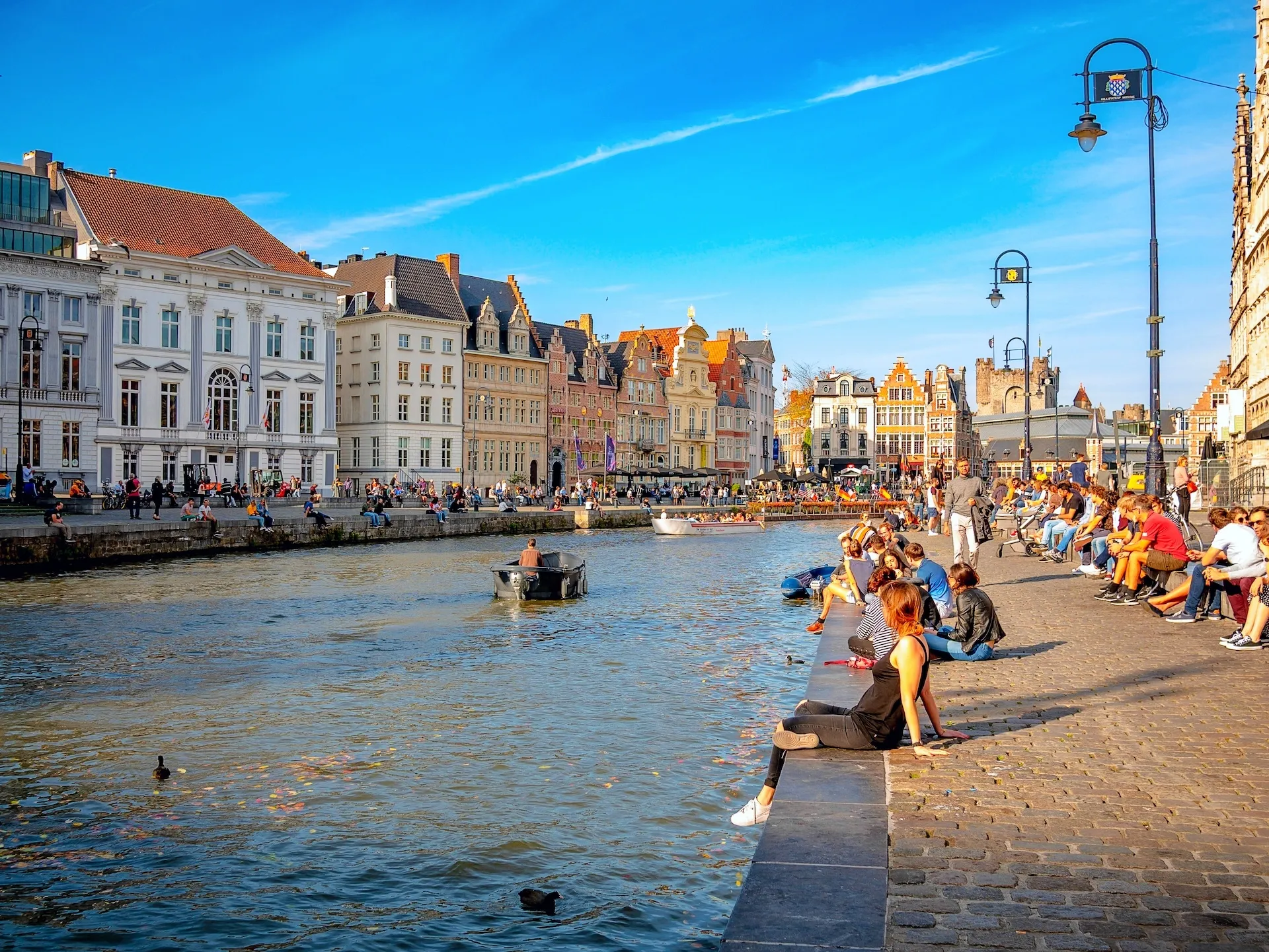
A cycling haven
Now, back to the bikes. Ghent has the largest low-traffic pedestrian zone in Europe, meaning cycling in and around the city is far, far less intimidating than your standard metropolis. In case you need extra reassurance, it was recently crowned the third most bike-friendly city in the world. So, at the start of our second day, we made a beeline for the basement of Ghent’s central library De Krook to pick up our vehicles (electric or manual, it’s up to you) and begin our journey along the Gentse Fietsen Route. Unmistakable red sections on the city roads signify bike priority, and most of the time you’re riding along smooth, flat turf (save for a few short climbs to cross bridges and some bumpy cobbled bits).
The 37km trail (there are shorter versions) took us down the canal, along the edge of the Bourgoyen-Ossemeersen Urban Nature Reserve, and by the Muziekcentrum De Bijloke, a spectacular medieval hospital ward that has been transformed into a world class concert hall, and which is the annual host of Gent Jazz Festival. Not a jazz guy? Visit in July for the colossal Gentse Feesten, one of the biggest free festivals in Europe, with live music, theatre, cabaret and more. Later, we sailed through the expansive Western Cemetery, along the old docks in the north of the city and back onto the bumpy medieval streets of the old town.
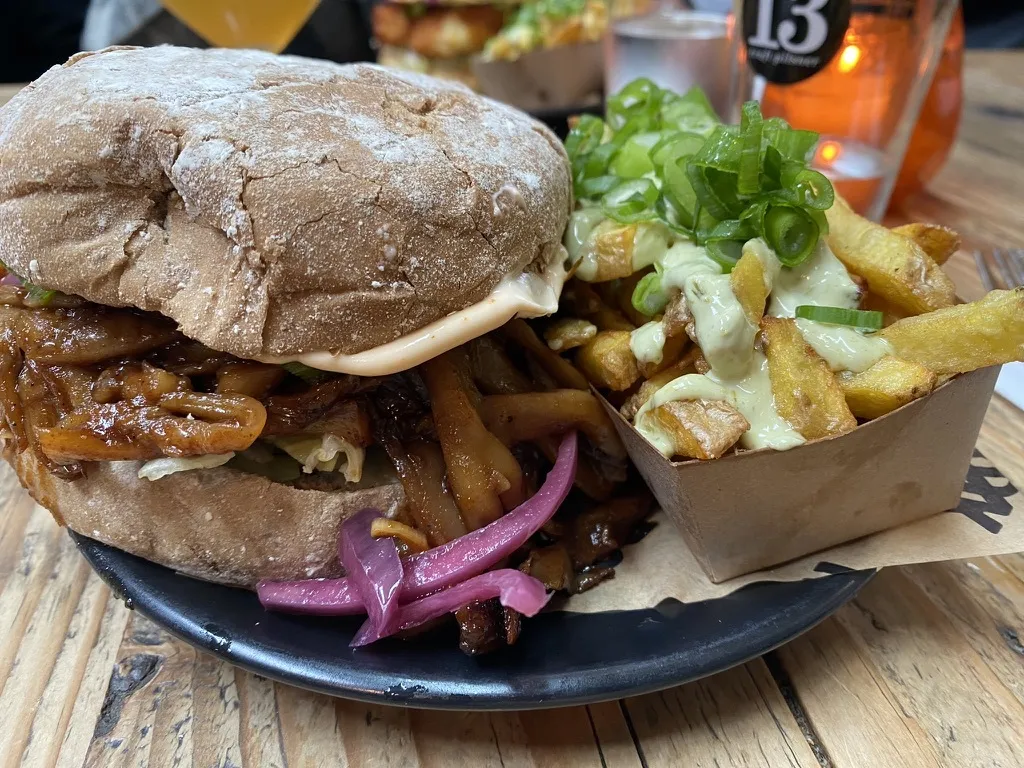
A couple of hours into our ride, we turn into factory recently turned leisure complex Dok Noord for a pitstop at the Hal 16 food hall, home to Dok Brewing Company (DBC). Here, I refuelled with a gleaming (and downright filthy) pulled mushroom burger from ROK Burgers, paired with a pint of DBC’s Pils 13. If, like I did, you could do with an extra burst of energy, grab a coffee and a dreamy vegan cinnamon bun from nearby WAY Specialty Coffee Roasters.
Veg-forward fare, everywhere
There are parts of Europe where you’ll tell a server that you’re vegetarian, and they’ll reply with a friendly but thoroughly sincere, ‘but you eat chicken, right?’. Not Ghent. I’m a pescatarian so I’m normally catered for, but for fully-fledged veggies and vegans who tend to suffer on European city breaks, Ghent is the dream. Thanks to its ‘Veggie Thursday’ initiative and its abundance of meat-free joints, it’s Europe’s official veggie capital – and eating sustainably here is cool.
With a sprawling menu made up of stuff like seitan stew, vegetable lasagne and stacked plant-based pancakes, cafe and deli Knol and Kool is one of the jewels in Ghent’s vegan crown. Lepelblad is also a brilliant option for a hearty, uncompromisingly delicious veggie dinner. The night we ate there, a set dinner involving spinach and broccoli ravioli, oyster mushroom steak and creamy asparagus, showed off the brilliance of the humble vegetable.
That’s not to say meat and fish loyalists are hard done by. One of my favourite meals of the trip was courtesy of Faim Fatale, a small dusty-pink hued bistro a short walk from the city centre. Nick-nack adorned mantlepieces, enormous bay windows looking out onto a bohemian garden and a lone waiter stationed behind the small bar make it feel as though you're dining in someone’s extremely chic living room. A slab of grilled polenta with smoked trout got us off to an impeccable start and white asparagus with cheese, garlic flower, chive and beer foam was a surprisingly soupy delight. For main, monkfish with lentils, leek stew, cider and seaweed. But veggie or not, mark my words: a side of bronzed chunky frites laid with creamy, mustardy Andalouse – a delectable Belgian staple – is a non-negotiable.
Amy Houghton travelled to Ghent with Visit Ghent. Our reviews and recommendations have been editorially independent since 1968. For more, see our editorial guidelines.
Discover Belgium
🧇 The best things to do in Brussels
🏰 The best things to do in Bruges
🏨 The best hotels in Bruges
🍻 The best things to do in Antwerp