[category]
[title]
Skywatchers are gearing up for a rare celestial event as two full moons are set to appear within the same calendar month.


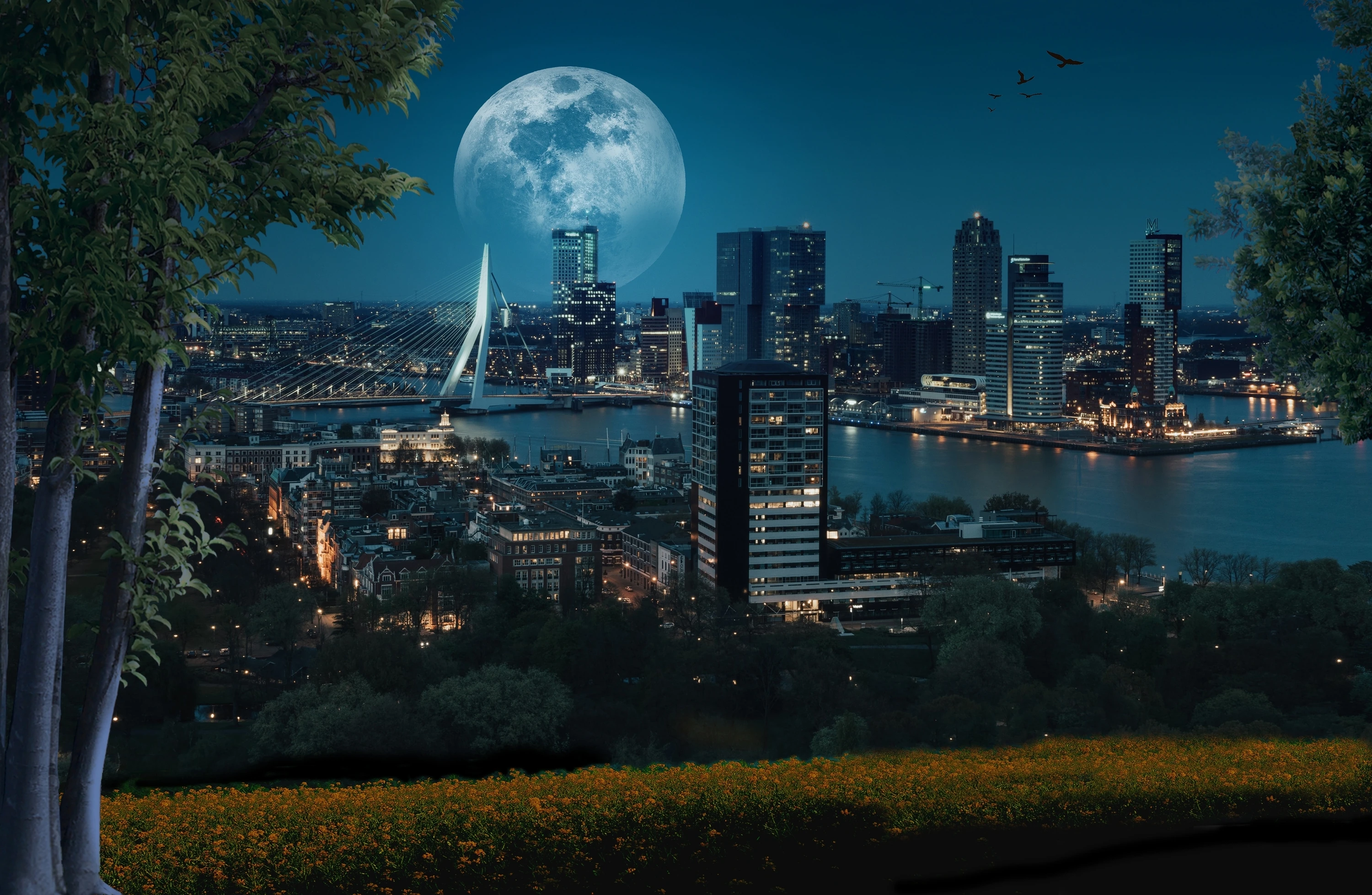
May’s second full moon is almost here—and not only is it a rare blue moon, it’s also set to appear as a micromoon.
Peaking early on May 31 and visible worldwide under clear skies, the blue moon will still appear full a few days before and after it peaks.
Despite its nickname, the rare blue moon rising won't actually appear blue.
Depending on the weather, skywatchers can expect a golden-orange glow near the horizon before shifting to a bright whitish hue higher in the night sky.
Read: Canada could be next as America's explosive tornado season shifts in an alarming way
The blue moon will peak on Sunday, May 31, 2026, at 4:45 a.m. ET.
The previous blue moon was on August 19, 2024, which was a super blue moon (the Moon was closest to Earth that month).
A micromoon occurs when the Moon will be at its farthest distance from Earth (approximately 251,000 miles) and appear smaller.
Despite its name, the moon will not appear blue and will shine with its usual golden-orange hue when rising, and transition to a bright, silvery-white.
It is called a blue moon because it is the second full moon in May, following the Flower Moon on May 1.
Blue moons occur roughly every 2.5 years, according to NASA, and the term dates back to the 16th century.
According to The Old Farmer’s Almanac, every so often a calendar month features two Full Moons instead of one.
In those cases, the first Full Moon keeps its traditional monthly name, while the second is known as a “Blue Moon.” This phenomenon happens roughly once every two and a half years.
According to the Farmer’s Almanac, the term only took off in the 1980s as a result of a much earlier mistake printed in a 1946 issue of Sky & Telescope magazine, and since then, the term has gone viral in the media.
The term “Blue Moon” can also refer to the third Full Moon in a sequence of four occurring within a single astronomical season.
According to the Farmer's Almanac, the moon will be full on the following dates,
Blue Moon: Peaks May 31, at 4:45 a.m. ET
Strawberry Moon: Peaks June 29, at 7:57 p.m. ET
Buck Moon: Peaks July 29, at 10:36 a.m. ET
Sturgeon Moon (partial lunar eclipse): Peaks Aug. 28, at 12:18 a.m. ET
Harvest Moon: Peaks Sept. 26, at 12:49 p.m. ET
Hunter's Moon: Peaks Oct. 26, at 12:12 a.m. ET
Beaver Moon (super moon): Peaks Nov. 24, at 9:53 a.m. ET
Cold Moon (super moon): Peaks Dec. 23, at 8:28 p.m.
For more information about The Farmer's Almanac, click here.
RECOMMENDED:
Full guide to the best things to do in Montreal
Discover Time Out original video