[category]
[title]
Filmmaker and star on the story behind their BAFTA-winning family drama


Earthy yet transcendent, brooding but full of sensitivity and spirit, Nigerian-set family drama My Father’s Shadow has been busy earning comparisons with two recent classics – including a certain Best Picture winner.
The man who made it, Akinola Davies Jr, knows this because he’s been stealthily logging onto Letterboxd to find out what people are saying about the film he co-wrote with his brother. ‘People are like, “It’s the Black Aftersun” or ”it feels a bit like Moonlight”,’ he says, referring to Barry Jenkins’ Oscar-winner and emotionally ruining Paul Mescal sad-dad drama. Not bad company to be in? ‘Just to be mentioned in the same breath as those two films is completely outrageous,’ he laughs.
‘To be talked about alongside those two films is fantastic,’ adds the film’s star, Gangs of London’s Sopé Dirisu. ‘I hope audiences share ours in the same way.’
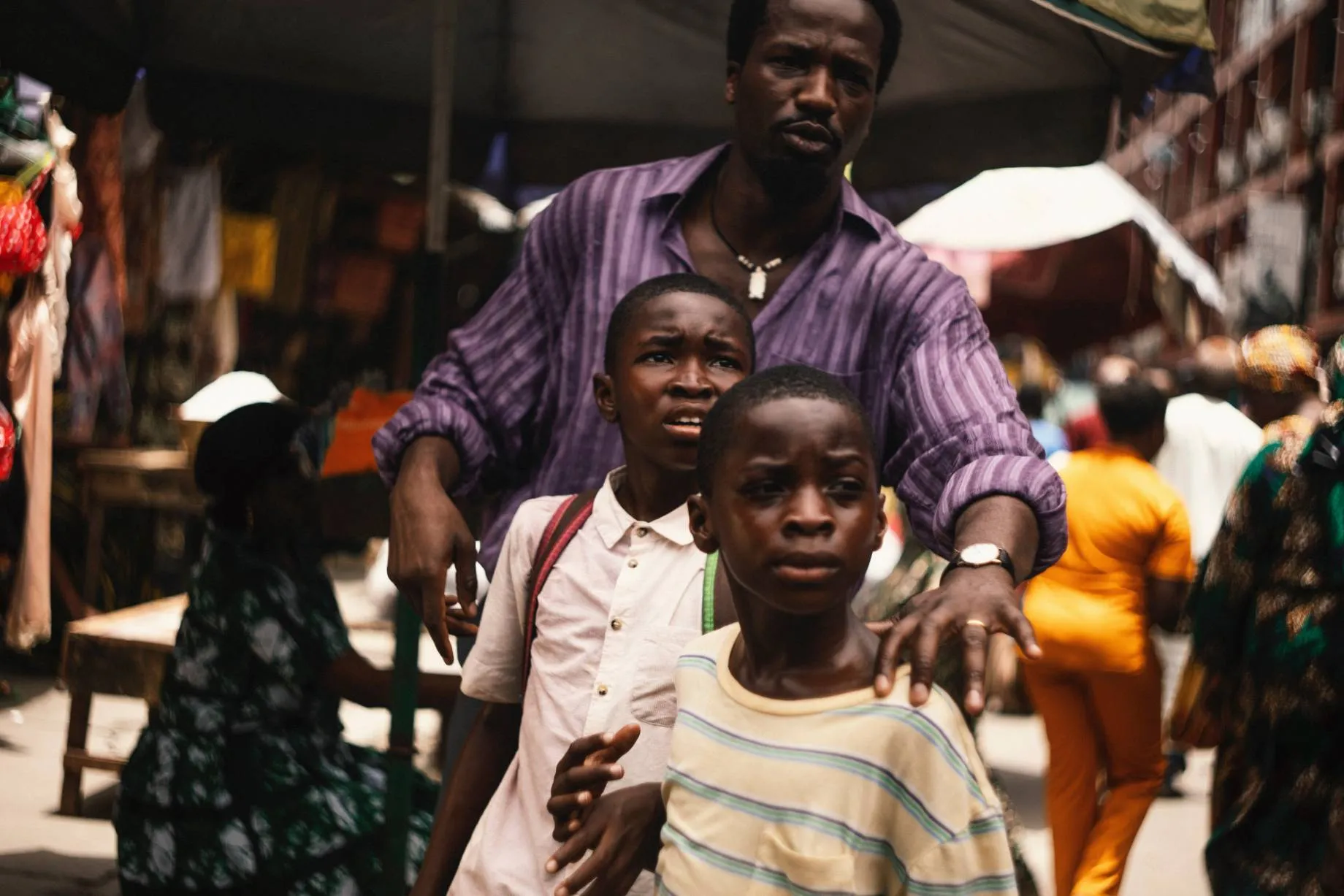
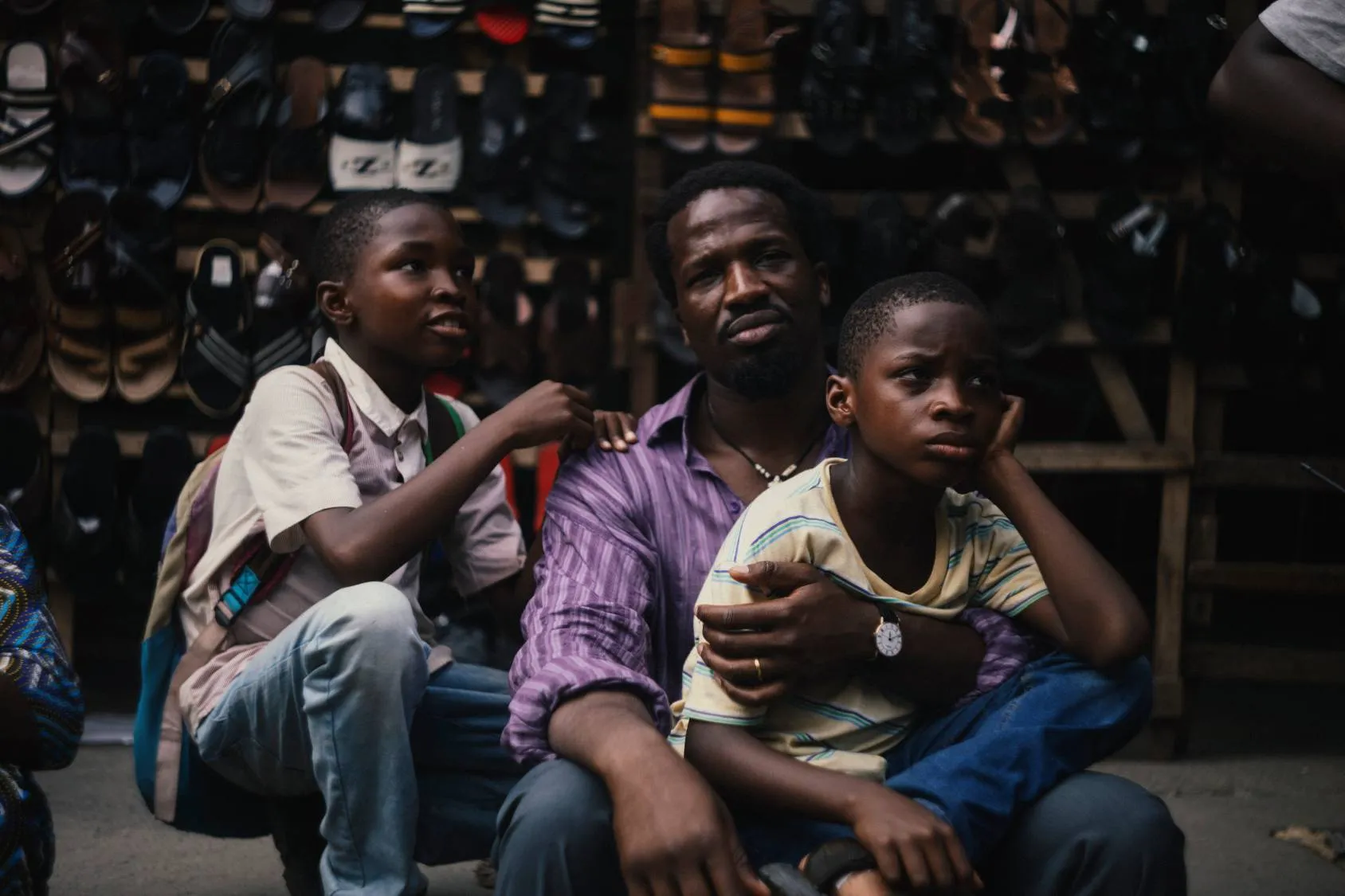
‘Supernatural drama’ is the tag Davies uses for My Father’s Shadow’s rare blend of realism and rapture. Set in Lagos over one tumultuous day of political upheaval in 1993, it’s the story of an absentee dad, Folarin (Dirisu), who returns home to collect his two sons, Akin and Remi (played by real brothers Godwin and Chibuike Egbo), and take them on an unpredictable, revelatory journey into the Nigerian capital. The boys swim with Folarin in the Gulf of Guinea, Moonlight-style, bump into intimidating associates and gradually fill in some of the blanks relating to their dad’s life.
It’s a tender but hard-edged portrait of a man burdened by responsibility and haunted by past decisions, yet full of love for his children – and of the young sons who love him without fully understanding his life. It has the feel of an old-fashioned ghost story, delicate and elusive.
My brother and I lived through those experiences
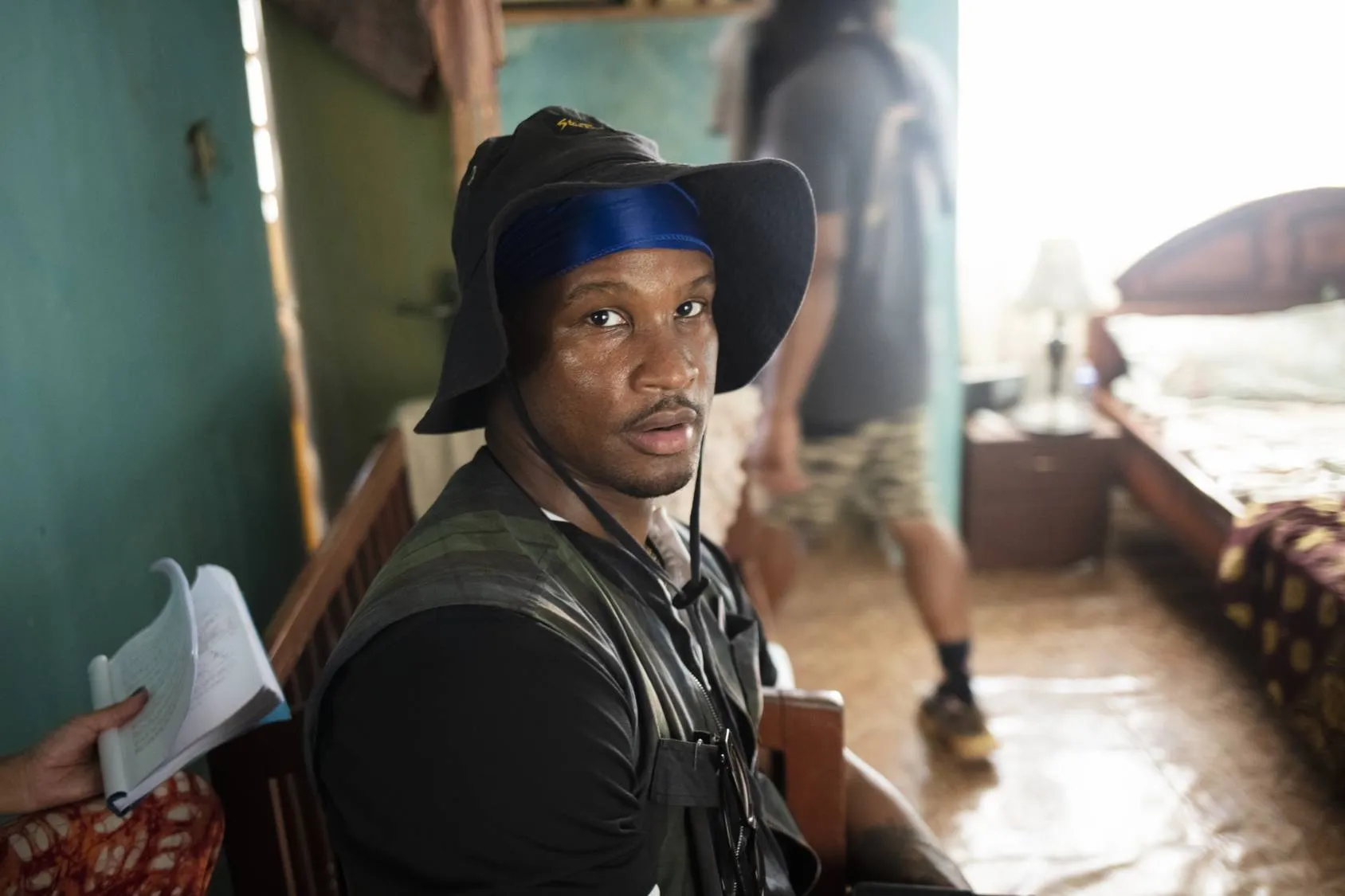
For Akinola and his brother Wade, who co-wrote the screenplay over 10 days together in Ghana, it’s the work of a lifetime. The brothers’ 2020 short film Lizard, set at a Lagos mega church, was another stepping stone. My Father’s Shadow had its roots in their own relationship with their dad (‘semi-autobiographical’ is Davies Jr’s term). The director was eight at the time of the events in the film – he moved from Nigeria to the UK aged 12 – and it’s a film filtered through the half-memories of his own childhood. ‘We experienced the Nigeria you see in [My Father’s Shadow],’ says the director. ‘We lived through these experiences.’
Davies Jr. found his lead, British-Nigerian star Sopé Dirisu, watching Netflix’s striking refugee horror His House (2020) and then witnessing the actor’s barnstorming performance as Cassius Clay in One Night in Miami on the London stage. Then he had to persuade his sibling that he’d made the right choice. ‘My brother had seen Sopé in Gangs of London and he was like: “Okay, well, he fits the physical stature but he doesn’t have the Nigerian accent, he doesn’t know Pidgin and he doesn’t speak Yoruba.” I told him to watch His House.’
‘The script captured Nigeria so beautifully,’ remembers Dirisu. ‘But it was also the parental relationship between Folarin, Remy and Akin. I don’t have any children myself – I aspire to be a father one day – but it was how imperfect he was as a man and how their love grows.’
It was also a chance for the Londoner to explore his own West African heritage. ‘I’d been back to Nigeria a number of times but always as an outsider,’ he says, ‘so to have the opportunity to work there was important to me’.
That meant cramming in lessons in Yoruba and Pidgin (the English-based creole language spoken in Nigeria) while filming Gangs of London. ‘I was wrestling with my identity as a Nigerian-British person or a British-Nigerian – or what exactly are you? – so not having mastery or understanding of the language was a big point [for me], says Dirisu. ‘It’s impossible to learn an entire language in an hour or two a day, even over 3 months, but it did give me a bit more familiarity with it.’
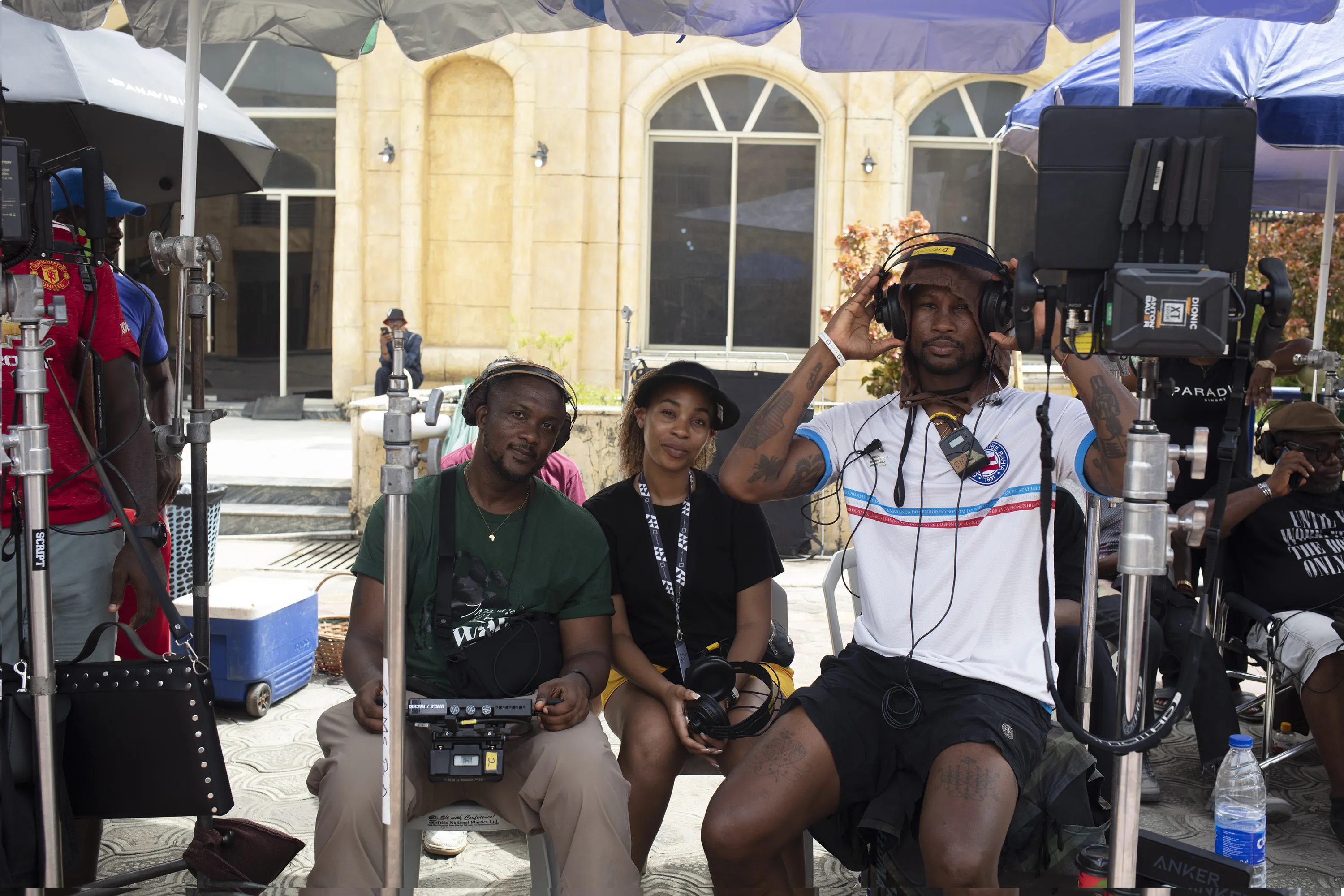
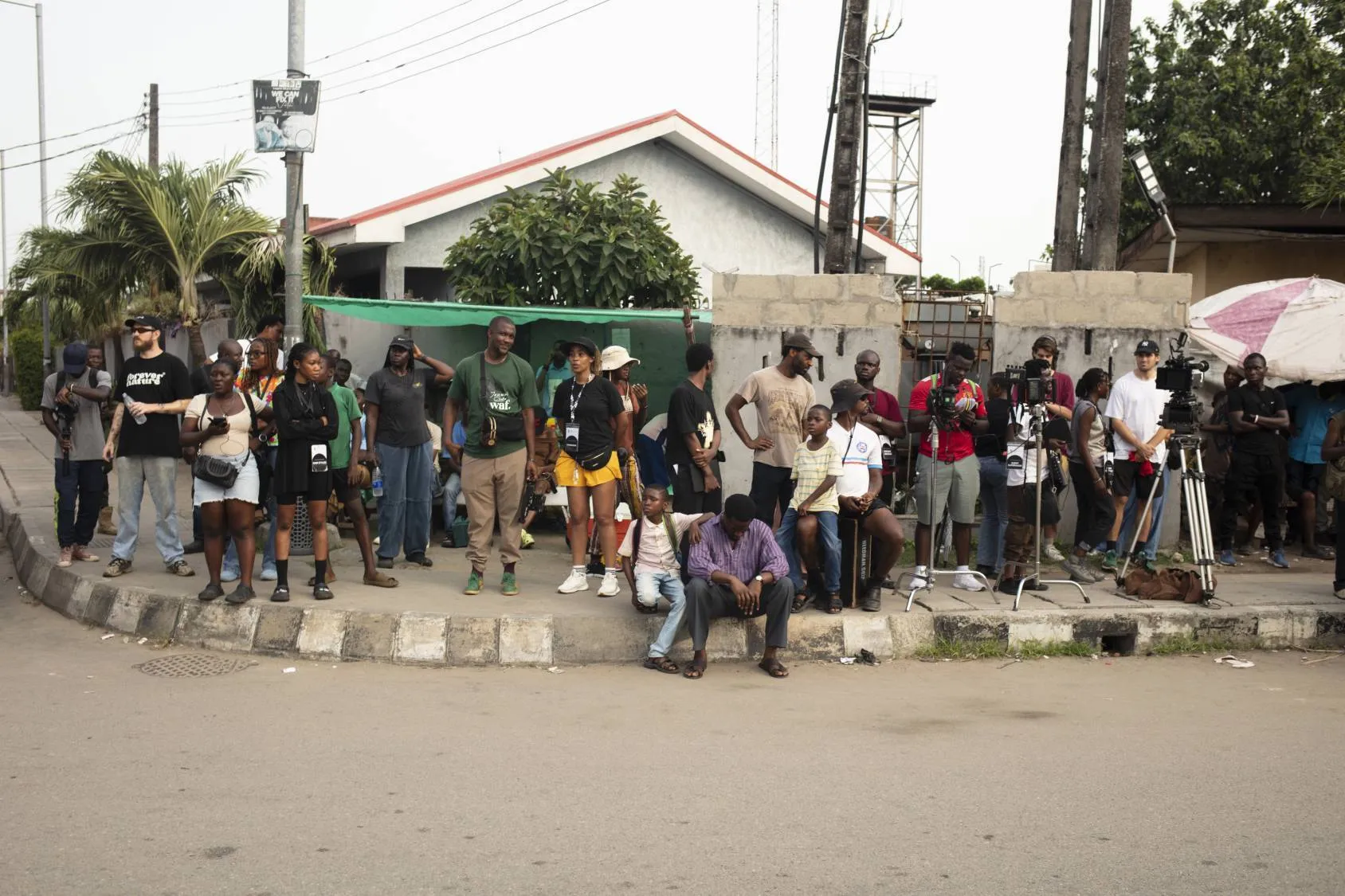
Director and lead actor flew to Lagos for two months in early 2024 to film with a mainly Nigerian and diaspora cast and crew. Dirisu came to it as a fan of Nigeria’s cinema – Nollywood – and reels off a list of his favourite films from the country, including 2016 romcom The Wedding Party and family drama Lionheart (2018) (‘I probably should have consulted my spreadsheet of films that I’ve seen recently,’ he laughs).
Ghana or South Africa have often doubled for Nigeria in movies, but not here. ‘Lagos was absolutely a character in the film,’ says Dirisu. ‘Someone said that you can smell the buka and the suya that’s being cooked on the street corners when you’re watching the film.’
I’d never worked in temperatures like that before
‘The city demanded a lot of us and we demanded a lot of the city. I’d never worked in temperatures like that before. That’s my sweat [on screen], not make-up. There were so many elements of “no acting required”.’
My Father’s Shadow’s chaotic backdrop feels instantly topical. It’s June 1993, an election is unfolding but the powers-that-be are questioning the result. By the end of the day, a new reforming government could be in place. Or a military junta.
Instead of pulling focus from the film’s father-and-son dynamic, the tumult of a city adds edge to it. Folarin wants to shelter his boys from the mayhem but how do you protect your kids from a world where power is snatched at the end of a rifle muzzle?
‘I don’t want to get too deep [into the politics] but I think the world tends to be quite cyclical,’ Davies says of his eerily resonant depiction of anti-democratic authoritarianism. ‘Politics just mimics itself in different contexts in different places. In Nigeria, history isn’t really taught so people are allowed to be mugged over consistently.’ (Almost as if to prove his point, a terrorist atrocity struck the country this week.)
Davies is much happier digging into the film’s depictions of masculinity, its questions of what it is to be a father and a ‘strong male’. ‘For right or wrong, masculinity has been through the wringer these last few years,’ he reflects. ‘The film shows that vulnerability should be allowed – accountability and compassion and vulnerability are all things that people shouldn't have to shy away from.’
For Dirisu, there was a kind of surrogate fatherhood with Godwin and Chibuike, the two boys who play his on-screen sons. ‘It was really, really hard [to say goodbye at the end of the shoot],’ he remembers. ‘I felt almost like I was neglecting them by having to go back to our real lives and for them to go back to their real father. It was a really lovely reunion when I got to see them again.’
Hitting cinemas in the UK and US this weekend, My Father’s Shadow is a road trip movie that’s travelled more than a few miles of its own. There was a glitzy world premiere in Cannes back in May 2024 – somehow the first ever Nigerian film to be in competition at the film festival. Then a more raucous Lagos premiere in September where Nigeria’s great and good celebrated a big international movie that evokes the country’s unique rhythms and the pain of its recent past. ‘People were asking their parents if this really happened,’ remembers Davies. ‘The film created a generational conversation.’
To see my film having any kind of discourse, it’s pretty cool
He’s still absorbing his first film’s dizzying journey to the screen – at Cannes, he received a special mention in the Caméra d'Or prize for debut filmmakers – but Davies’s biggest hopes are for My Father’s Shadow to bring connection for Nigeria and the Nigerian diaspora and to connect its audiences with their own dads.
That process has made it as far as his own doorstep. ‘My landlord saw the film at the London Film Festival,’ he says, ‘and he told me that he had a similar relationship with his dad. To see my film having any kind of discourse, it’s pretty cool.’
And if making the movie was deeply personal for the director, it became equally personal for its star as well. ‘I'm really glad to be able to honour my father's love for me in portraying this character,’ says Dirisu. ‘Anyone with a father will find something that they can resonate with in this film.’
My Father’s Shadow is in UK and US cinemas now.
Discover Time Out original video