[category]
[title]
An extensive exhibition at Creative Museum Tokyo explores how the cult artist’s chrome-plated visions redefine the boundaries between the body and technology


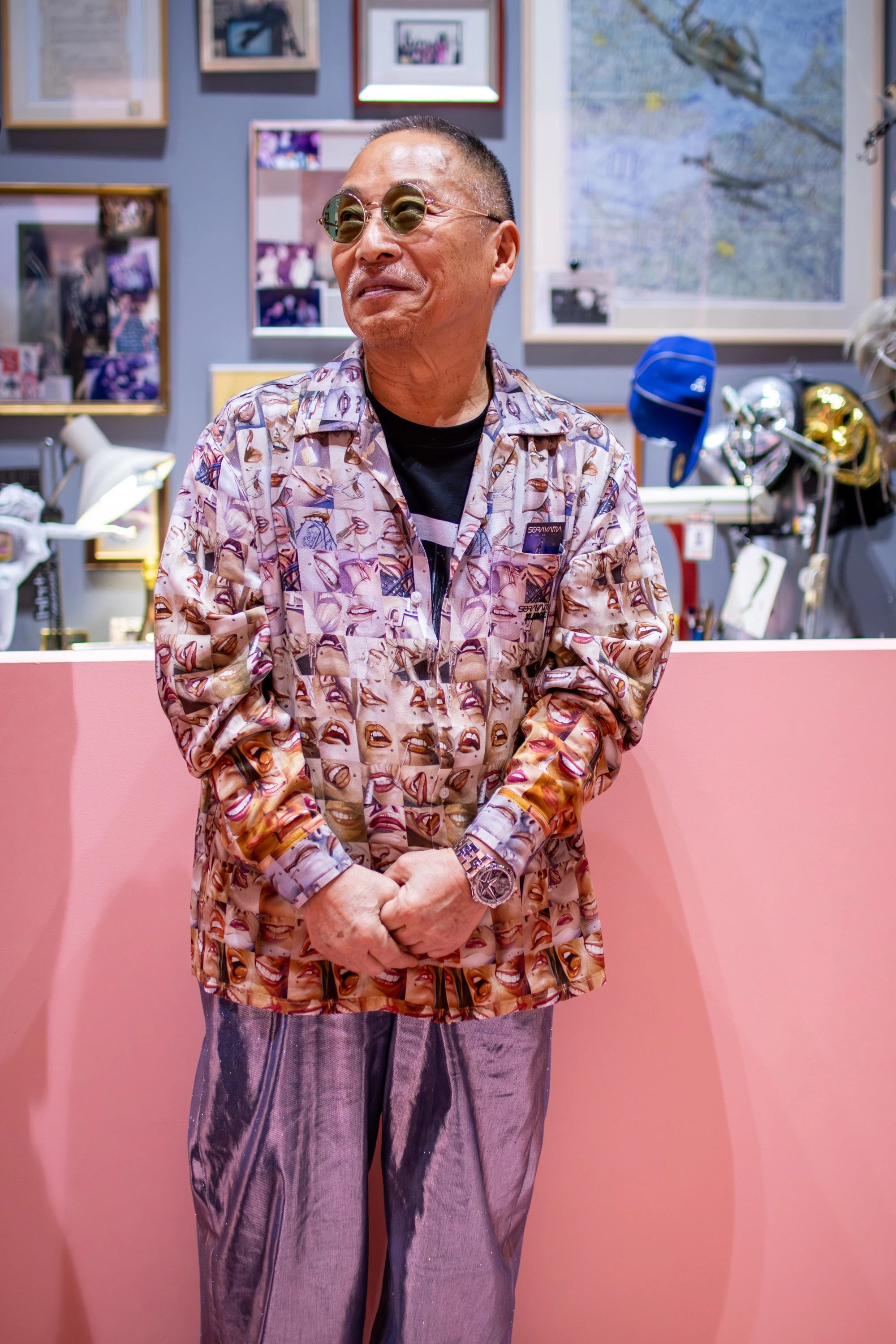
Few artists can lay claim to an aesthetic as singular as Hajime Sorayama’s. The veteran illustrator and designer’s concoction of sensuous forms and gleaming metallic surfaces is immediately recognisable, whether in Sony’s original Aibo robot-dog, on the covers of Aerosmith albums or in the fashion collections of Thierry Mugler.
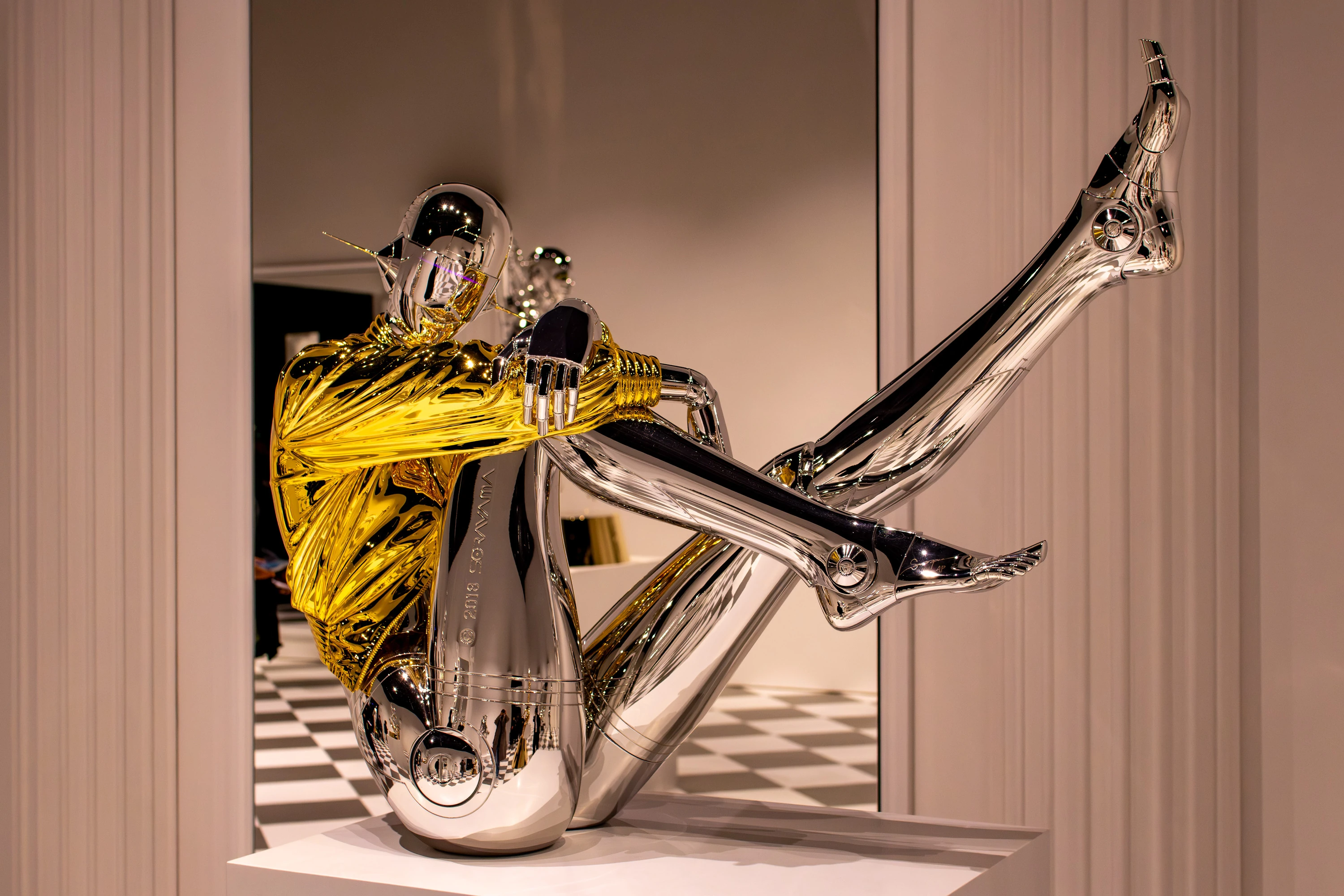
Through ventures like these and, above all, his signature Sexy Robot (1983–) series, the Ehime native has left a lasting imprint on science fiction, design and pop culture. That still-evolving legacy can now be explored in stimulating detail at Creative Museum Tokyo, where an exhibition titled ‘Sorayama: Light, Reflection, Transparency –Tokyo–’ is on show until May 31.
The most extensive Sorayama retrospective to date, the display is the Japan version of an exhibition first presented in Shanghai and traces nearly half a century of its protagonist’s artistic exploration through paintings, sculptures, design drawings and immersive installations.
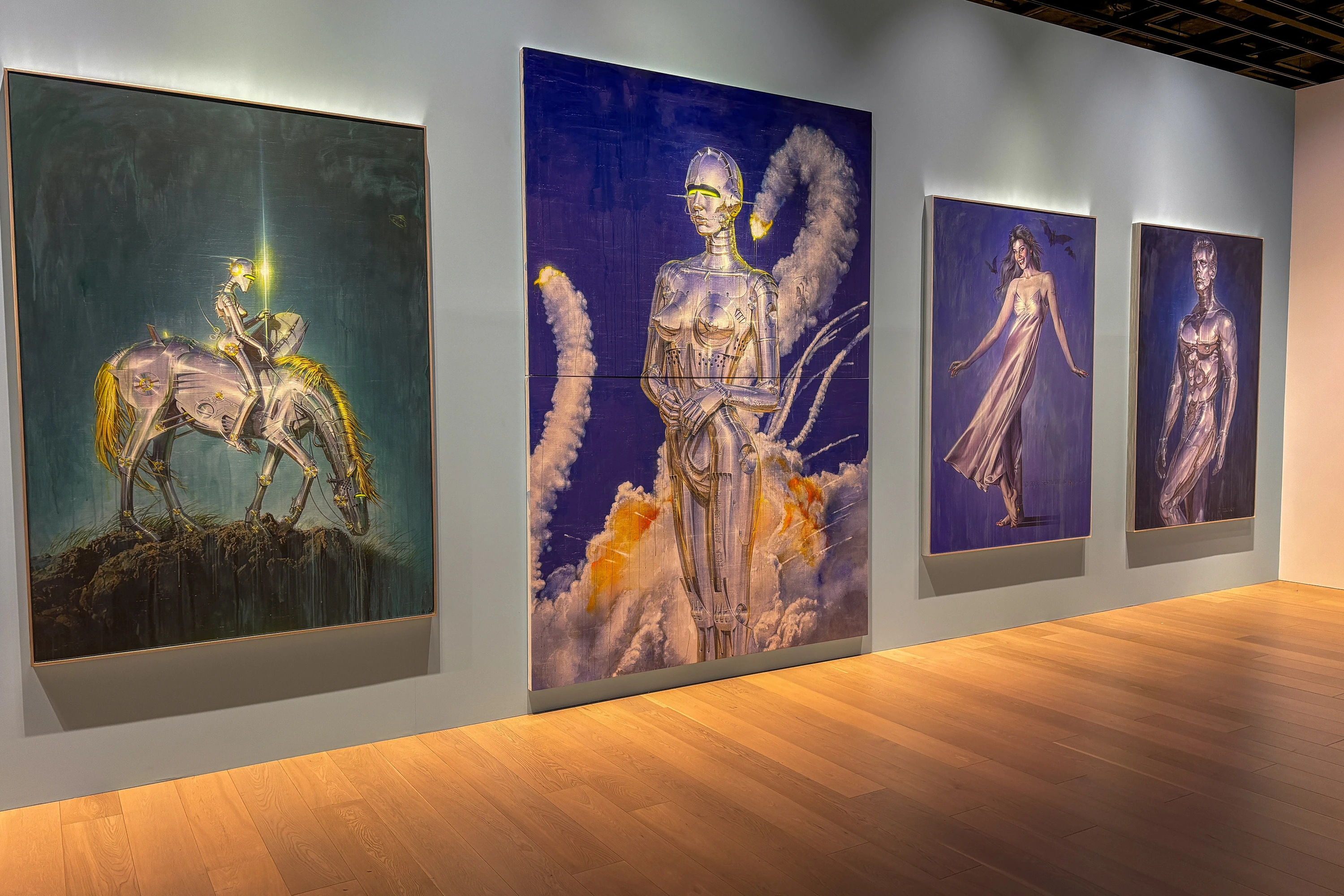
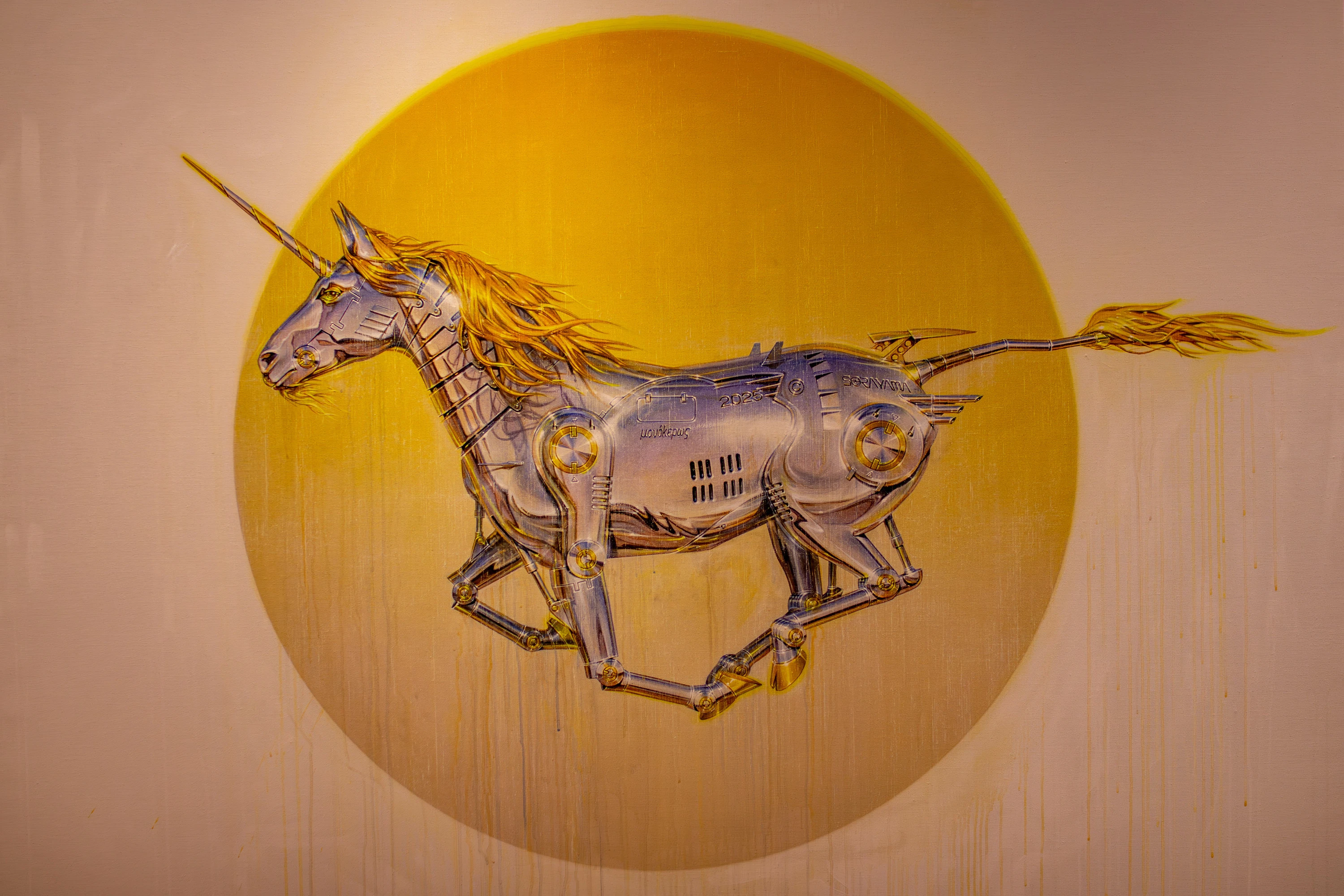
‘Light, Reflection, Transparency’ begins by probing the origins of Sorayama’s imagery. Among the highlight exhibits is the first robot painting he produced in 1978 for a whisky advertisement, marking the birth of the aesthetic that would later define his career. From this starting point, visitors encounter an expanding universe of robotic figures: humanoids, animals, dinosaurs, and fantastical creatures that suggest a speculative future in which biological and mechanical life merge.
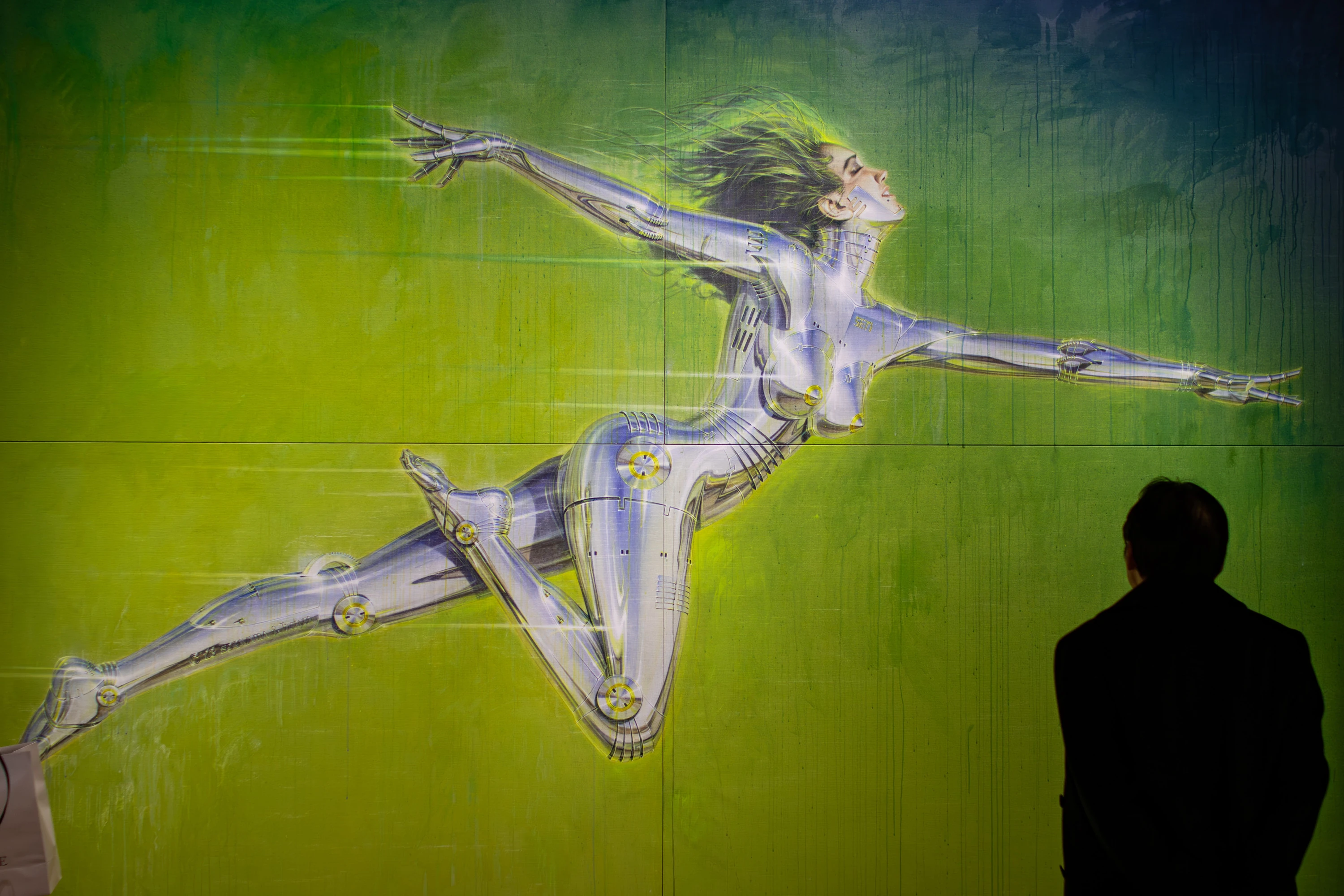
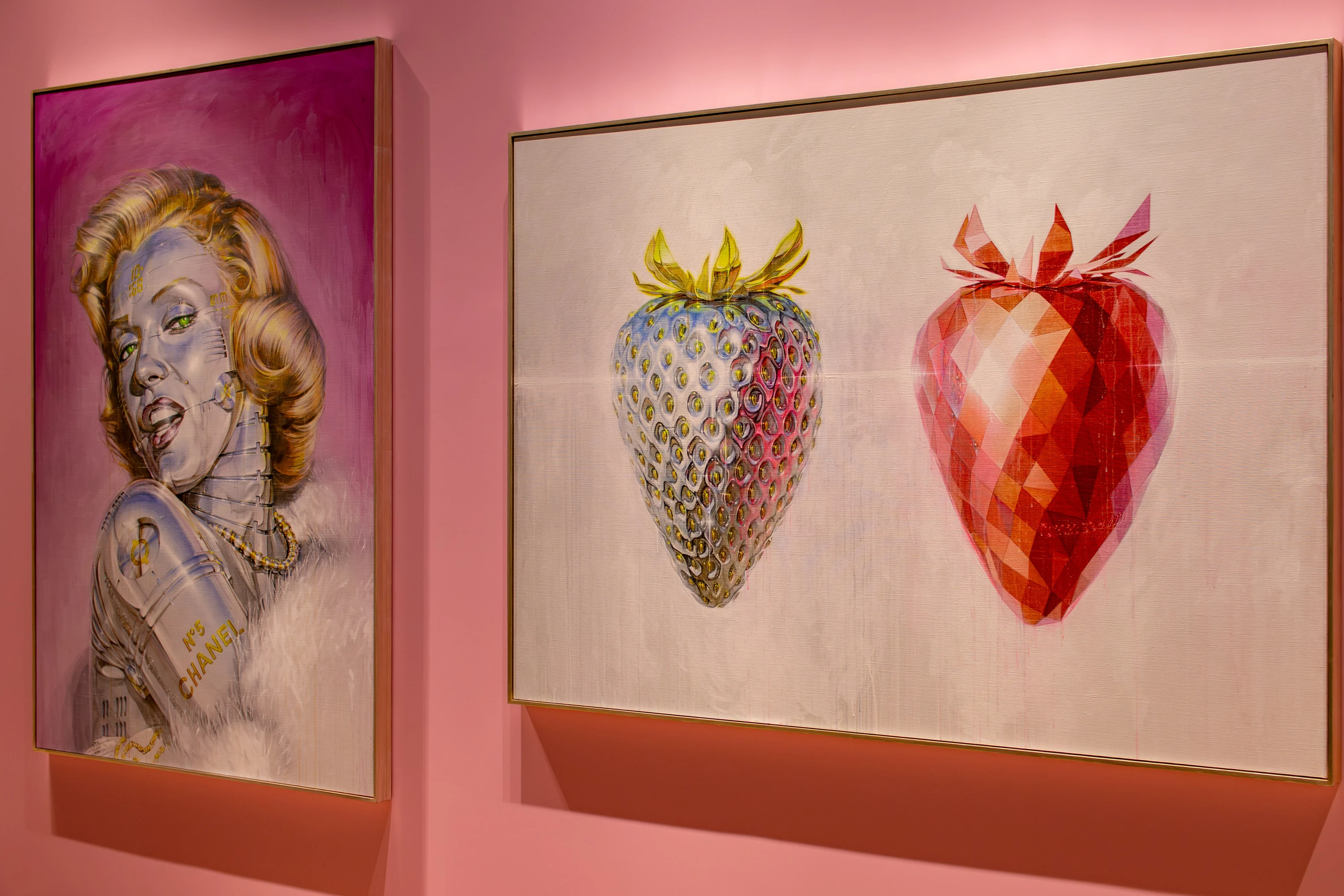
Large-scale canvases created in recent years demonstrate the continued evolution of Sorayama’s technique and imagination. These works reveal a sustained fascination with the physicality of the body and the seductive surfaces of machinery, rendered with a precision that blurs the line between painting, photography and digital imagery.
One room at the venue is dedicated to presenting original design drawings for Sony’s ‘entertainment robot dog’ Aibo, with which Sorayama’s artistic sensibility entered the sphere of industrial design. The artist’s celebrated cover artwork for Aerosmith’s 2001 album Just Push Play is likewise included, illustrating his long-standing dialogue with popular music and visual culture.
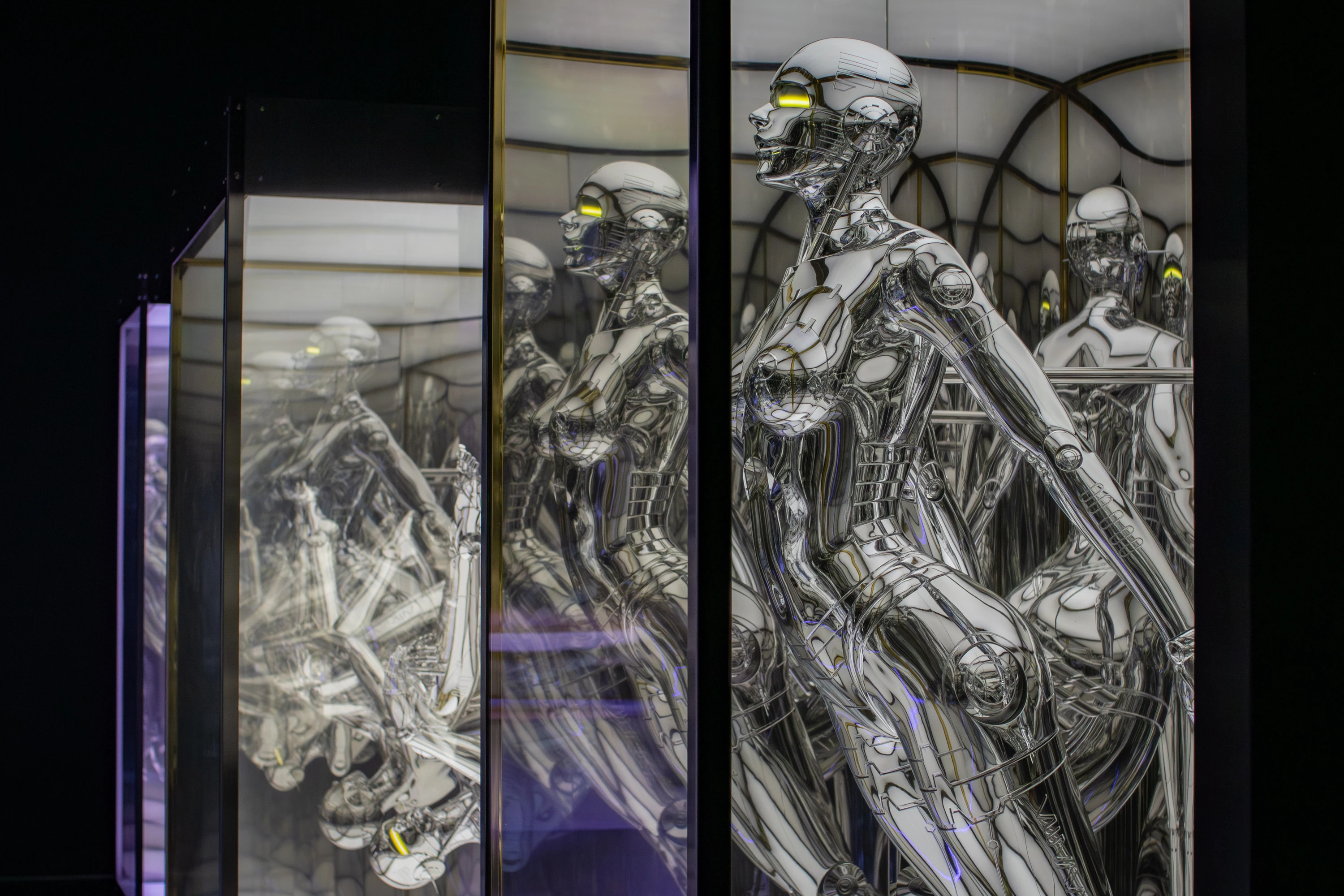
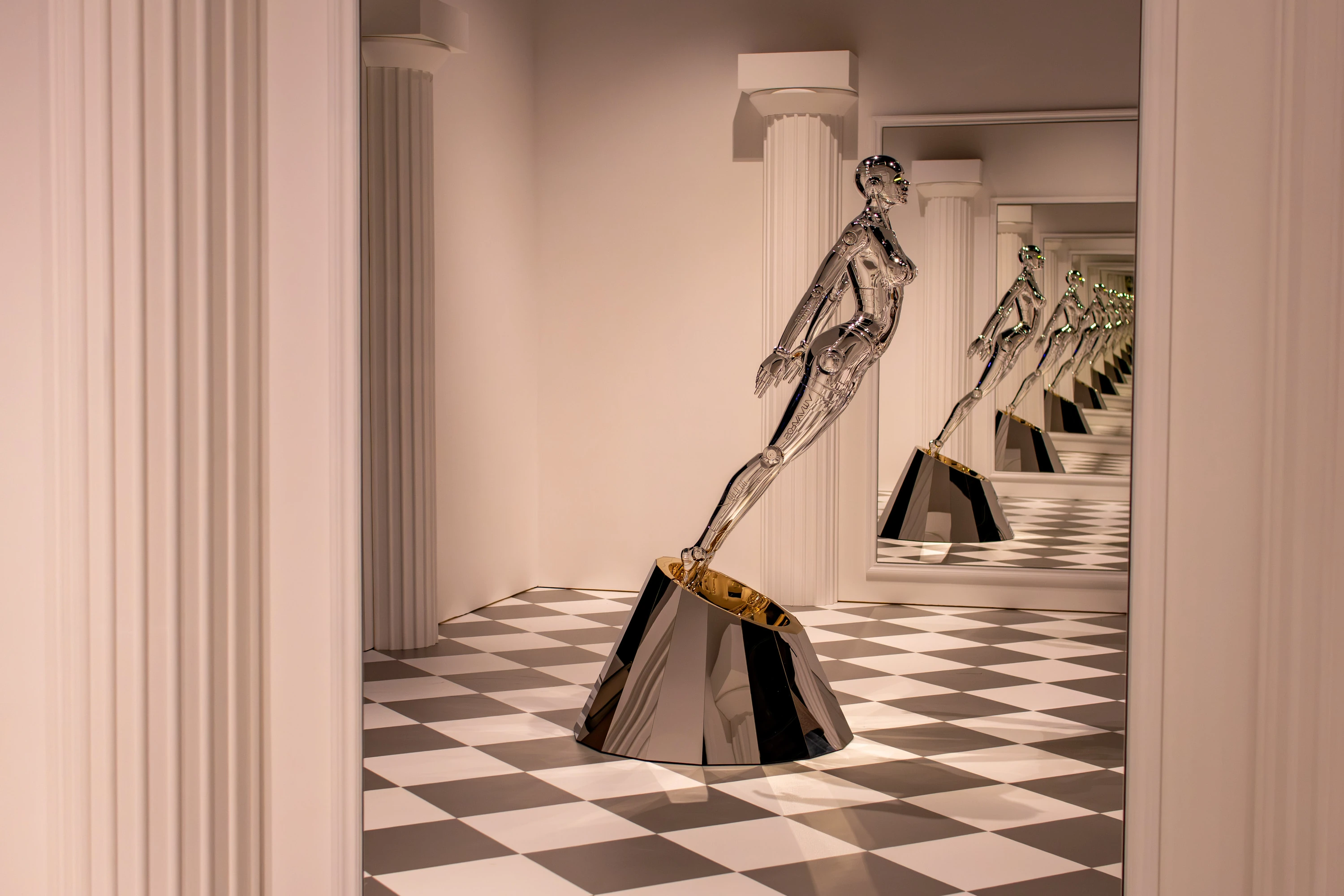
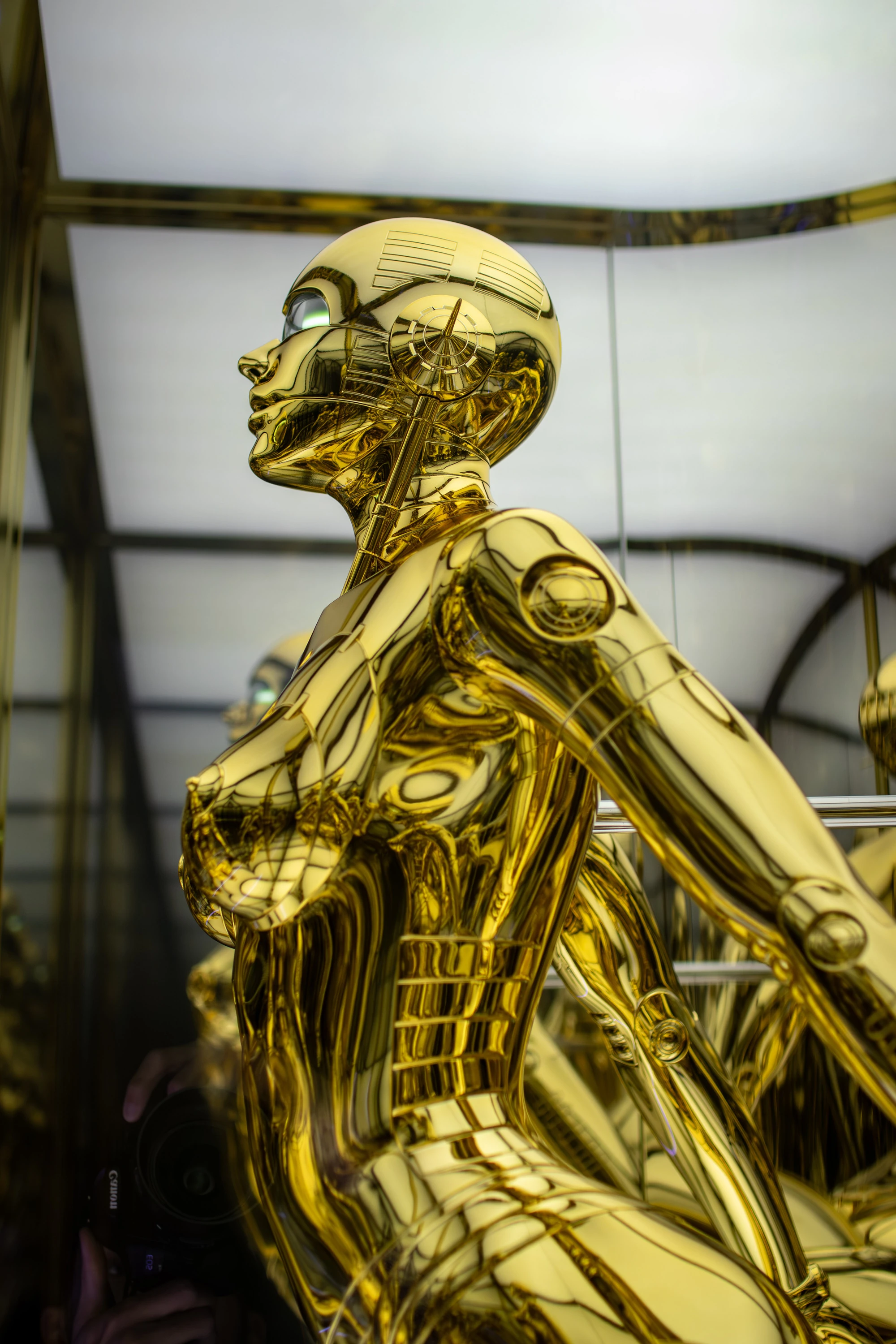
Beyond painting, the exhibition introduces a series of sculptural and multimedia installations that transform Sorayama’s visual language into spatial experiences. The Mirror Maze installation, for example, encloses reflective sculptures within mirrored surfaces that multiply their forms infinitely, immersing viewers in a labyrinth of light and reflection. Here, perception itself becomes unstable, echoing Sorayama’s fascination with visual illusions.
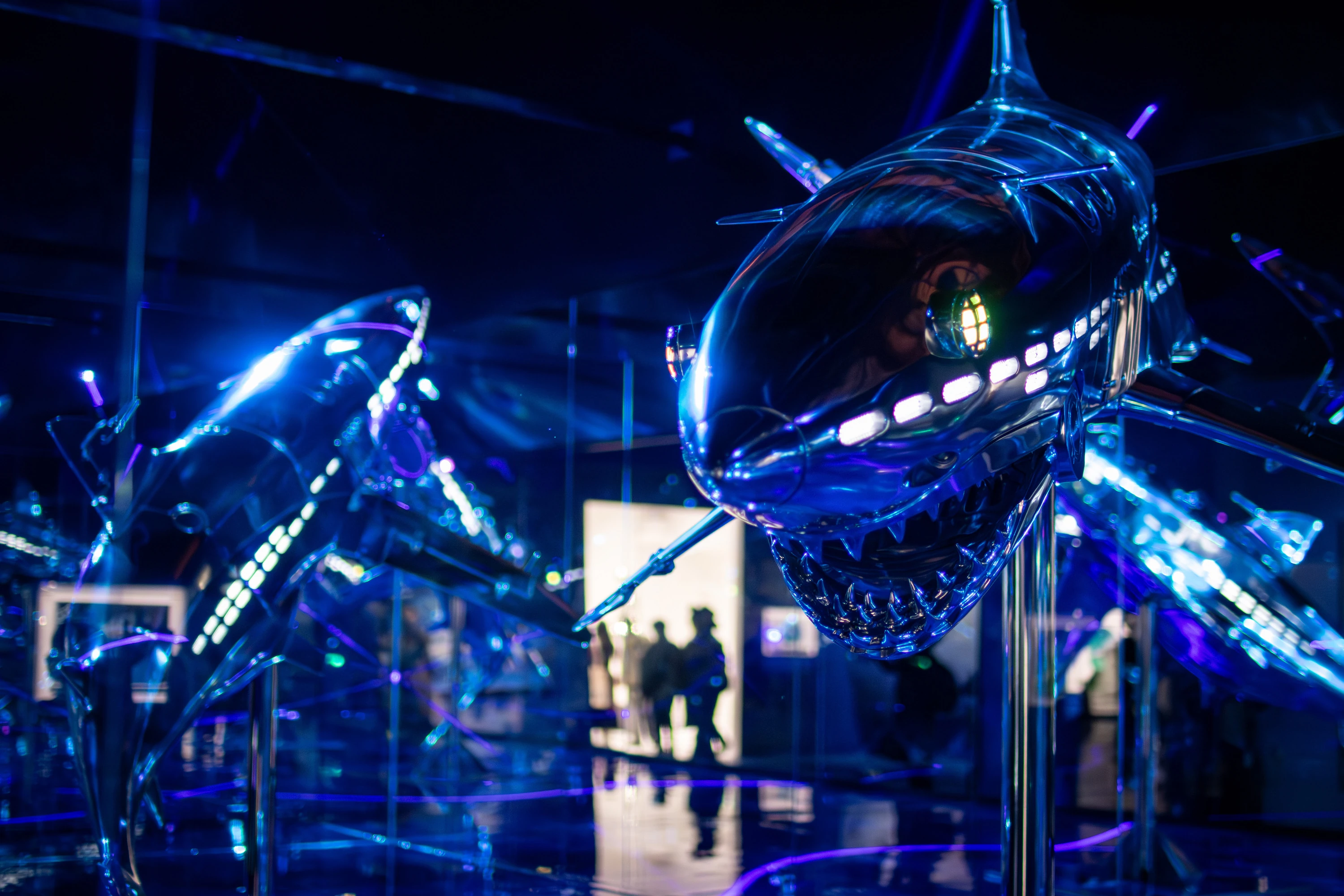
Another striking section, titled Aquarium, presents a robotic shark sculpture displayed within a tank-like environment, surrounded by paintings that reveal the motif’s development over decades. Sorayama has described the shark as ‘the sexiest fish’, and the installation highlights both the elegance and menace inherent in his mechanical creatures.
Digital installations extend this exploration further. In Floating Through Space, a filmic work based on the artist’s long-standing Space Traveler motif, viewers are invited into the interior of a transparent spacecraft, creating the sensation of drifting through the cosmos alongside the robotic figure.
The exhibition also includes an experiential installation featuring a robo-dinosaur, enhanced with tactile technology developed by Sony. By synchronising image, sound and vibration, the piece transforms Sorayama’s imagery into a multisensory encounter.
At the core of Sorayama’s practice lies the conceptual triad cited in the exhibition title: light, reflection and transparency. For the artist, the depiction of light is inseparable from the representation of air, atmosphere and reflective surfaces. His paintings, often rendered with extraordinary technical precision – ‘superrealism’ – push the traditional limits of the genre by producing optical effects that verge on the illusionistic.
Sorayama has described this process as a continuous attempt to capture phenomena that cannot be directly seen. Much as Leonardo da Vinci developed sfumato to evoke atmosphere or the Impressionists experimented with new techniques to depict light, Sorayama pursues visual strategies capable of rendering the subtle interplay between surfaces and illumination. Chrome bodies, polished mechanical skins and mirror-like environments become vehicles through which light is fragmented, reflected and transformed.
Throughout the exhibition, Sorayama’s work prompts larger philosophical reflections. His robots and cyborg figures evoke a speculative world in which the boundaries between organic life and the mechanical dissolve. The images raise questions pertinent for our time: Can technology transcend the limits of the human body? Might artificial intelligence coexist with humanity in new forms of life?
Sorayama’s art encourages viewers to contemplate these possibilities through an ultra-aesthetic experience. His gleaming surfaces and meticulously rendered bodies act as mirrors in which contemporary anxieties and aspirations regarding technology, sexuality and identity are reflected. Bringing together the highs of his oeuvre from the late ’70s to the present, ‘Sorayama: Light, Reflection, Transparency –Tokyo–’ is a must-see – and not just because of all the hot robots.
‘Sorayama: Light, Reflection, Transparency –Tokyo–’ is on daily at Creative Museum Tokyo in Kyobashi until May 31.
More from Time Out Tokyo
Japan moves to implement new pre-travel ‘JESTA’ authorisation system from 2028
Tokyo lands seven spots on the 50 Top Pizza Asia-Pacific 2026 list
Cthulhu collabs with Hokusai in this terrifyingly amazing new art book
5 city-run museums in Tokyo are now offering free admission for ages 18 and under
Tokyo ranks among the world’s 10 best cities for 2026
Want to be the first to know what’s cool in Tokyo? Sign up to our newsletter for the latest updates from Tokyo and Japan.
Discover Time Out original video