


[category]
[title]
Through music, Keiichiro Shibuya builds worlds that feel like portals between life and afterlife. Android Opera Mirror brings that energy to the stage through a project where sound, faith and technology fold into each other until they’re almost indistinguishable.
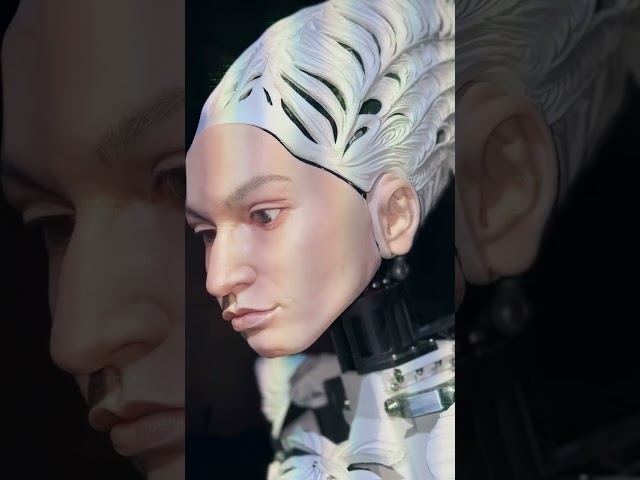
This time, Shibuya performs with Android Maria, a humanoid modelled after his late wife. She sings and reacts through AI, her presence falling somewhere between ghost and performer. Around her, the space fills with the sounds of a piano and an orchestra, plus electronic textures and Buddhist chanting. It’s a haunting kind of harmony: elegant, uncanny, and deeply human in the way it tries to understand loss.
The subtitle, Deconstruction and Rebirth, speaks to the work’s shape. Shibuya revisits fragments of his past operas and rebuilds them through new code and orchestration. The hall itself becomes part of the composition. Monks chant from within the audience, while speakers hidden across the room pull the sound around you like a tide.
Contributors include AI artist Yuma Kishi, sound designer Zak and visual artist Justine Emard, whose projections dissolve between image and afterimage. Together they turn Suntory Hall into a breathing machine – one that plays with memory, ritual and grief.
Mirror has traveled from Paris to Dubai, but its Tokyo return feels personal. There’s a quiet unease in watching technology carry someone’s voice back from the dead, yet that’s where Shibuya’s work lives – somewhere between devotion and dissonance.
Tickets start from ¥3,000 and go up to ¥20,000 depending on the section.
Discover Time Out original video