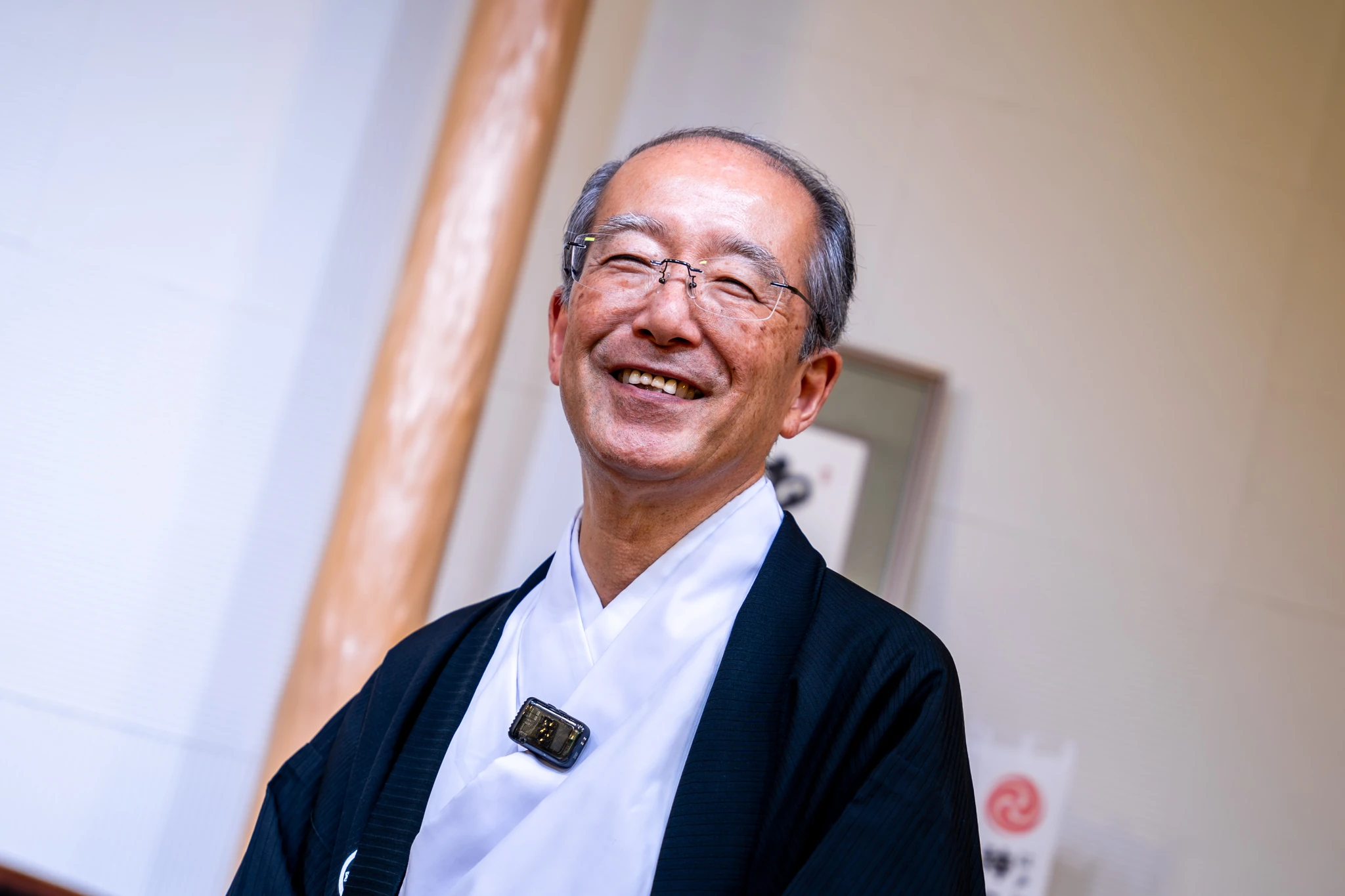
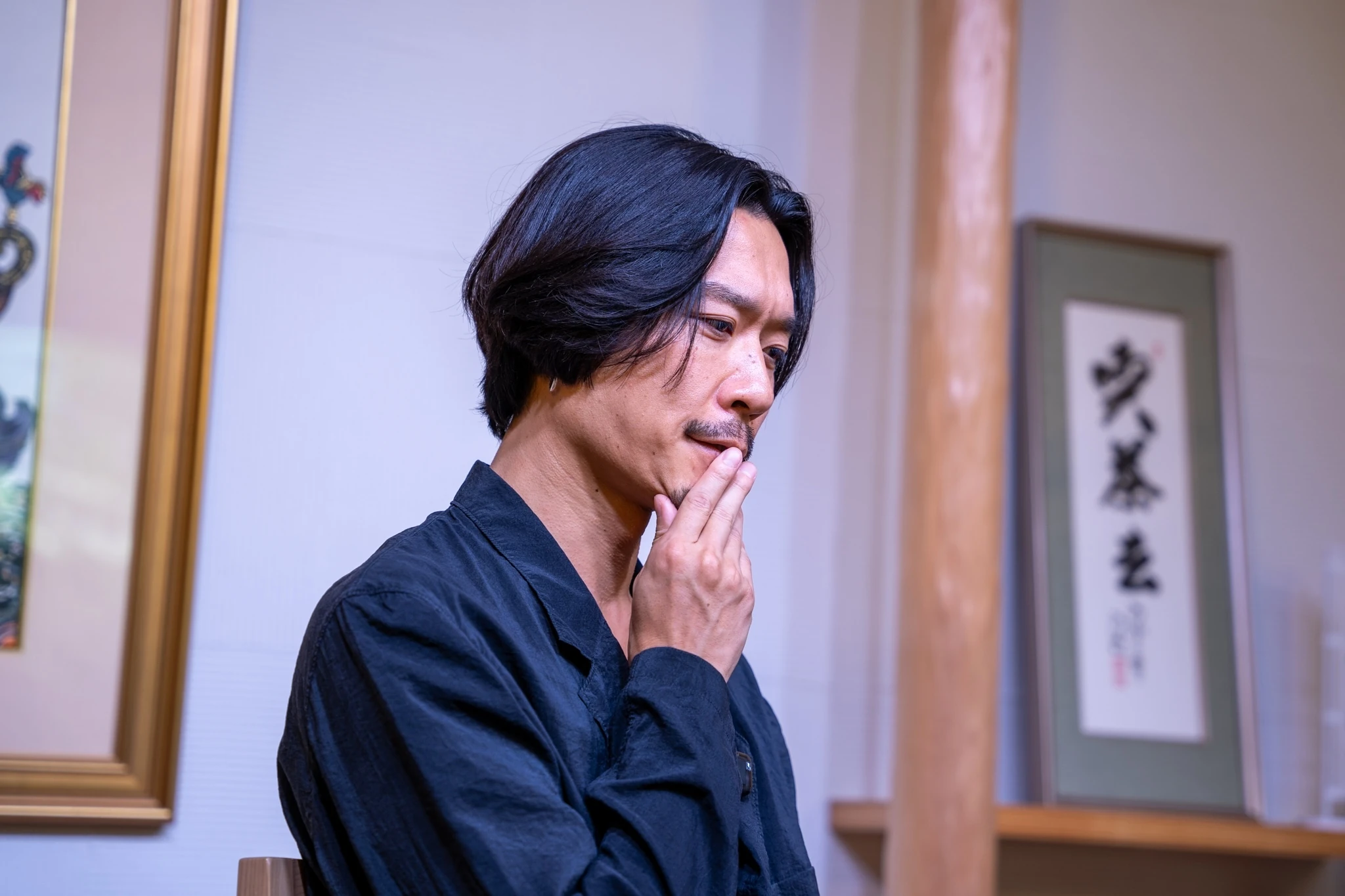
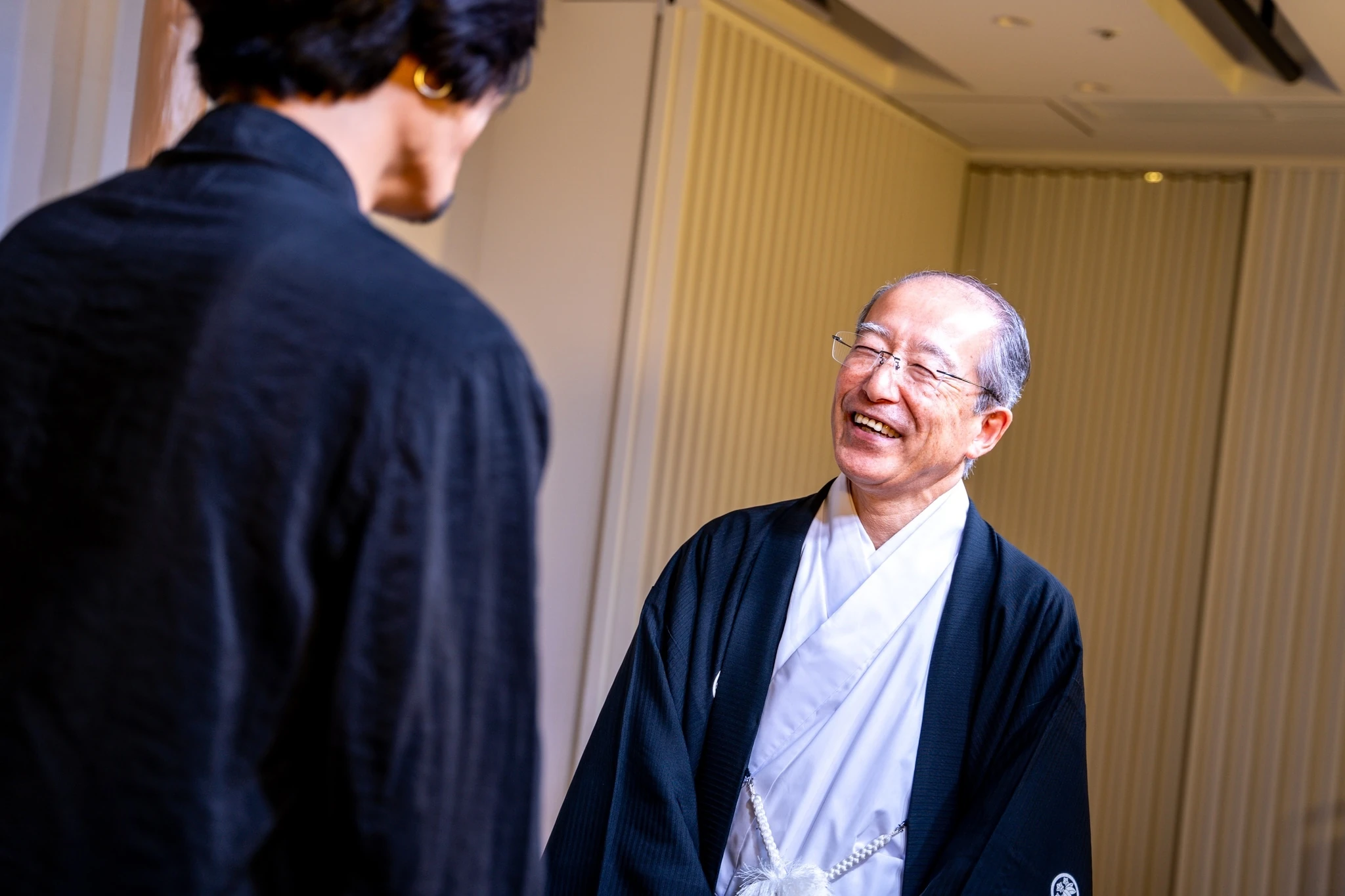
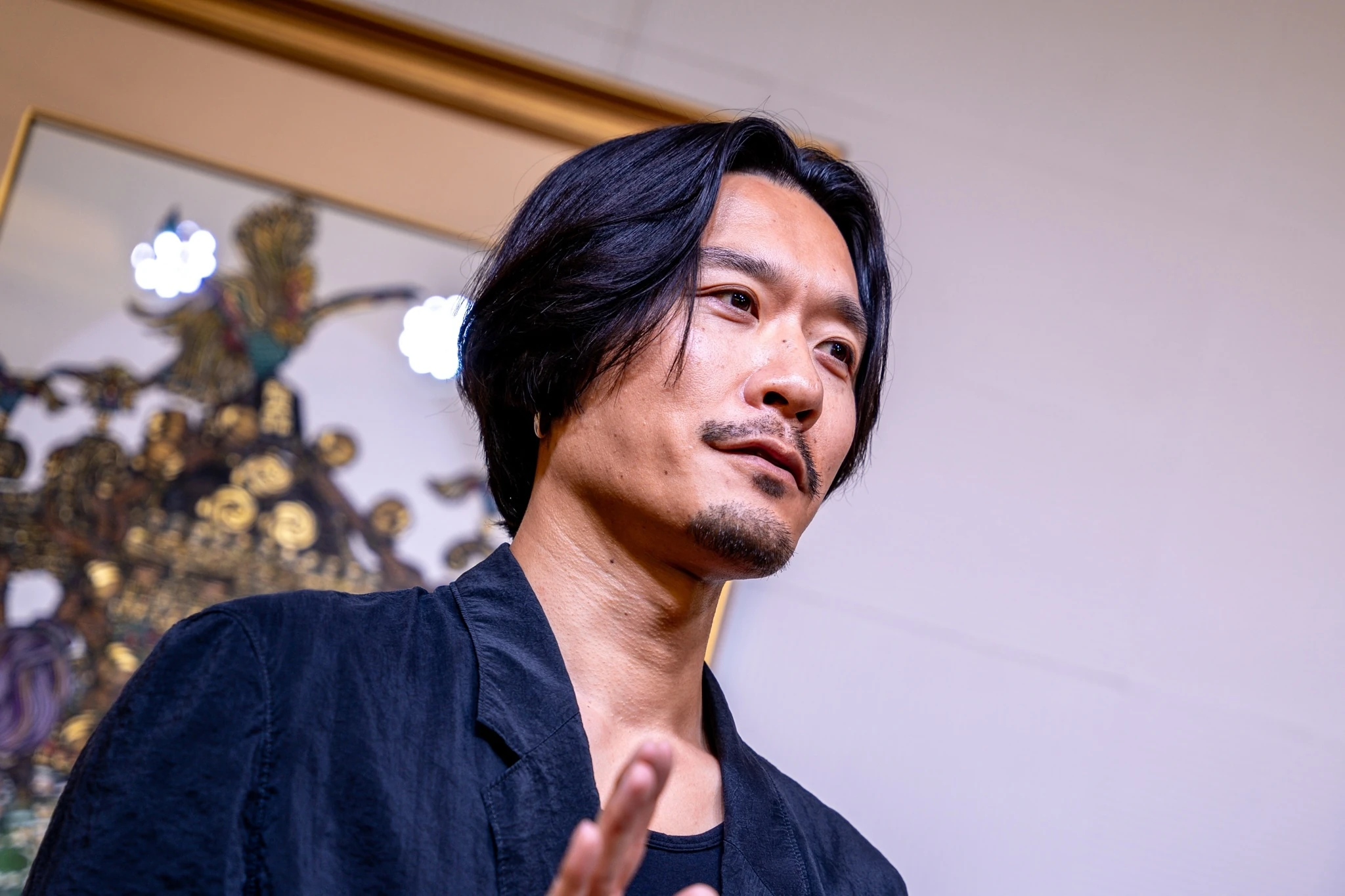
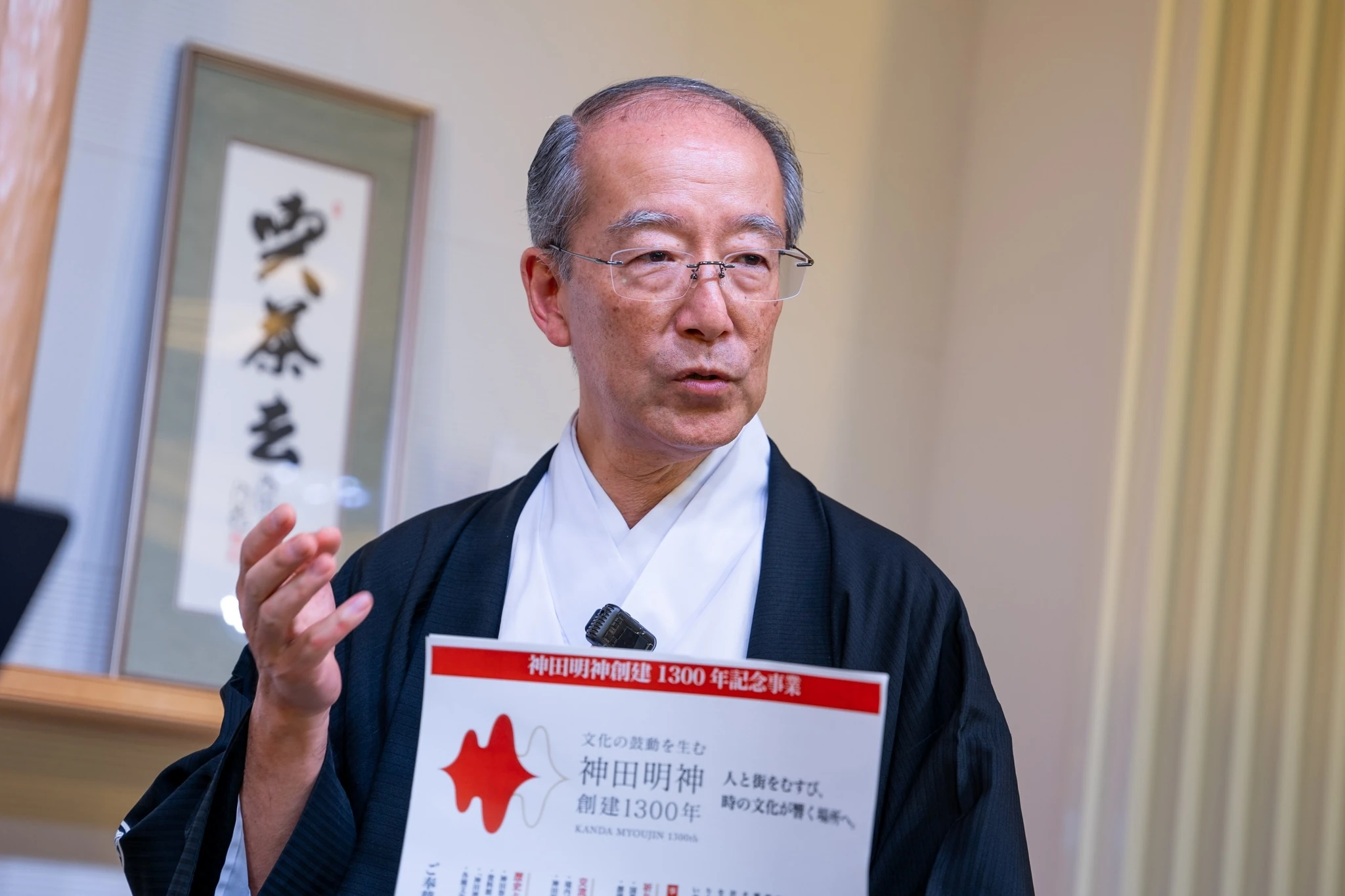
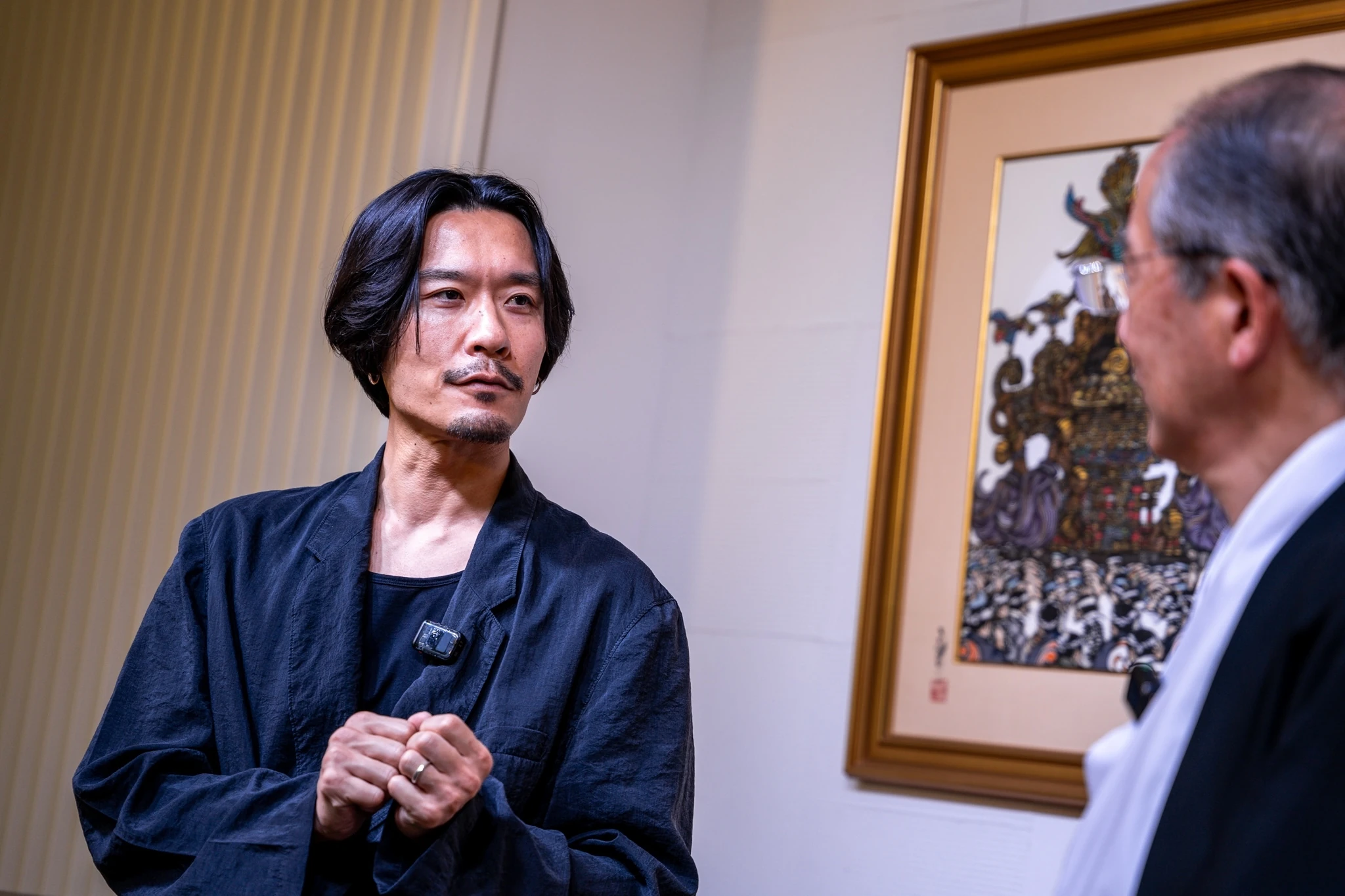
Photo: Masashi Kikuchi | Meitei (left) with Yoshihiko Shimizu, chief priest of Kanda Shrine
Written by Time Out. In association with Nippachi Factory Inc.
Advertising
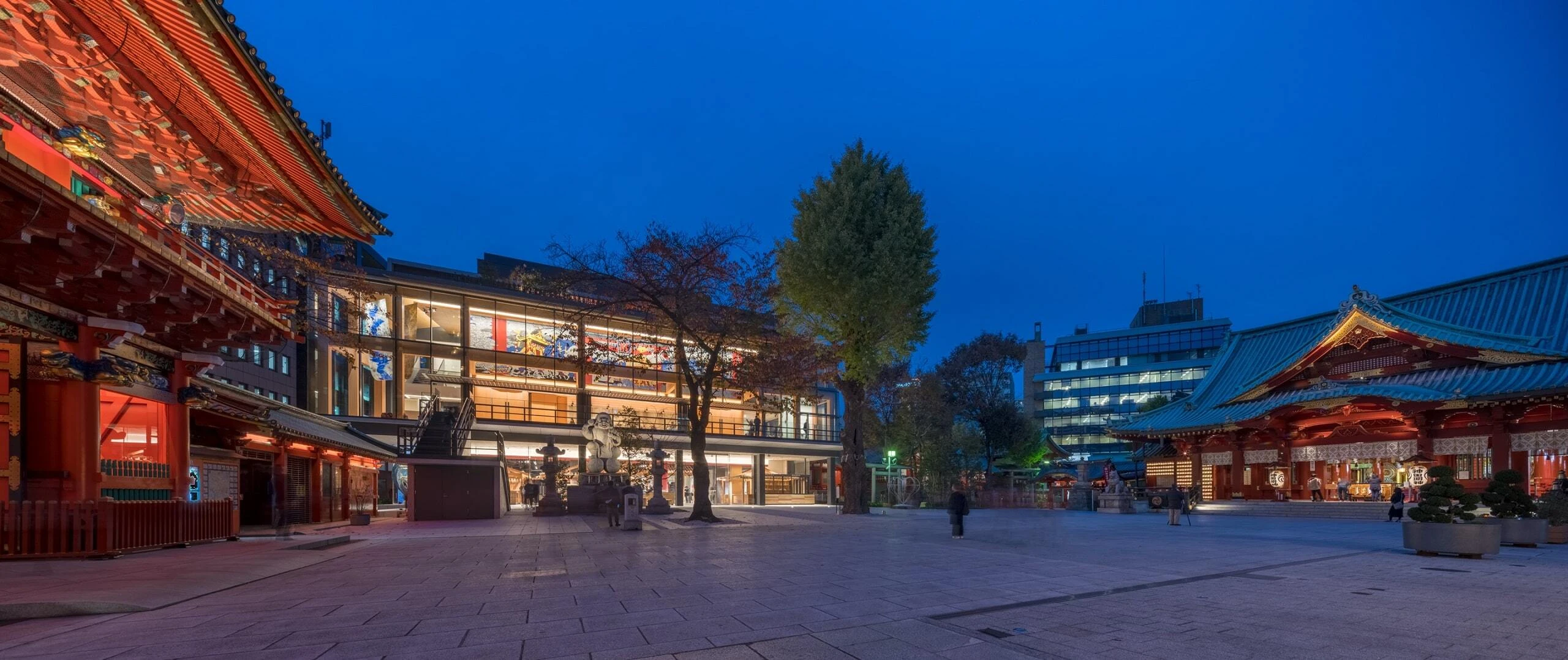
On Saturday December 12, the Edocco cultural complex at the 1,300-year-old Kanda Shrine will host theNippachi Festival, an international celebration that brings together music and moving image to create an immersive audiovisual experience.
Photo: Kanda ShrineThe Nippachi Festival takes place at Kanda Shrine’s Edocco Edo Culture Complex
In an effort to dig deeper into the event’s concept and motivations well ahead of time, we sat down with Yoshihiko Shimizu, chief priest of the shrine, and Meitei, one of the artists on the bill. Shimizu has dedicated his career to safeguarding the shrine’s storied traditions while bringing anime and other forms of contemporary culture onto the grounds. Meitei, meanwhile, is noted for using music to express personal memories, emotions and images of Japan under the theme of shitsu Nihon, or a ‘lost Japanese mood’.
The leftfield pairing produced fascinating bits of conversation of themes like the essence of Japanese festivals, the significance of Kanda Shrine as a venue for a music event and the compatibility of Shinto tradition with tunes you’d be most likely to encounter in a club. Read on for the full transcript, and secure your tickets for Nippachi Fest now.
The festival, identity and people-to-people ties
Festivals have been hugely significant in Japanese life since ancient times. How do you see the role of matsuri today?
Yoshihiko Shimizu: Well, several hundred thousand festivals are still held across Japan, so I’d say they remain pretty significant.
The word matsuri (festival) originally comes from matsuru, or serving and enshrining the deities. You quietly await the coming of deities you cannot see, welcome their presence and receive their power. That’s how festivals first started.
It’s also why festivals are indispensable. Shrines and festivals are inseparable; wherever there’s a shrine, there’s always a festival. Festivals are conducted by the ujiko, the shrine’s parishioners, whose sense of belonging is fostered through the shrine and its events. Festivals pass on old ways through the ages while incorporating one new element after another.
A festival isn’t just about carrying a mikoshi (portable shrine) or pulling a dashi (float). It’s an occasion for welcoming the divine, stirring your soul and receiving new life. It’s also about everyone working together to keep a tradition going, and that engenders contact and communication between people.
Photo: Masashi KikuchiYoshihiko Shimizu
Kanda Shrine’s annual Kanda Matsuri is known as one of the ‘three great festivals’ of both the city of Edo, now Tokyo, and Japan at large. Why is this particular matsuri so significant?
Shimizu: There are all sorts of theories, but what’s clear is that since the Edo period (1603–1868), the ‘three great festivals’ of Japan have been the ones representing the country’s three great cities: Kyoto’s Gion Matsuri, Osaka’s Tenjin Matsuri and Edo-Tokyo’s Kanda Matsuri – or, since Kanda Matsuri is held only every other year, the Sanno Matsuri.
Kanda Matsuri became counted among one of three greats because the Tokugawa shogunate held such a remarkable amount of power in the Edo period. By staging a magnificent festival of floats and parades in the castle town of Edo, the shogunate could impress the authority of the Tokugawa family on ordinary people. So the shogunate supported the Kanda Matsuri, and it grew into one of the three great festivals.
But once the Meiji Restoration came around in 1868 and the new government took control of Tokyo, this festival that was so intimately tied to the Tokugawa shogunate was stopped, and the floats could no longer be brought out.
There was also a time when electric wires were strung across the streets and the floats couldn’t pass. So the people had no choice but to replace the floats with mikoshi. Today, Kanda Matsuri is once again one of the country’s greatest festivals, with 200 mikoshi carried in a lively procession.
Meitei: The shift from floats to mikoshi is interesting to me because it suggests a transformation of the festival’s form, or kata*, even while people’s attitude remained the same.
(*Kata refers to deeply rooted cultural practices, values and ways of being, passed down through generations.)
When making music, I follow a Western kata, but often feel that having a Japanese kata is something really powerful, a source of grounding. When you have that, you retain a sense of belonging even when your circumstances change.
Shimizu: For the people of Edo, festivals were a core part of their identity. If you were born in Kanda, you’d take part in the Kanda Matsuri again and again, throughout your entire life.
Meitei: Festivals are in themselves a kind of Japanese kata codified over hundreds of years. Music, on the other hand, largely follows Western standards. There’s a bit of a mismatch there – an interesting one.
Shimizu: To take the example of kabuki, there are firmly established kata, yet there’s also great meaning in going beyond them. Generation after generation of actors have each performed the kata slightly differently, and still the kata has endured.
Meitei: I feel like a key question is how to connect mind and body and bring a kata to life. When I think about festivals and their history, I feel like what I pursue as a musician reveals itself naturally.
Photo: Masashi KikuchiMeitei
Music beyond Western convention
Shimizu: Do you ever listen to gagaku, Japan’s ancient court music?
Meitei: I sometimes use gagaku instruments as sounds in my compositions, but I’m not well versed in Japanese classical music. Still, I find it remarkable and beautiful.
Shimizu:Gagaku doesn’t have Western-style notations, nor is its orchestra led by a conductor. Yet the interplay of the performers creates a single musical harmony. For those of us used to Western music, that can appear astonishing.
In gagaku, the tone shifts subtly with changes in the weather, as well as the performers’ condition on the day. In place of a conductor, you have a kata in which everyone listens to the musician beside them and builds the whole together.
I think gagaku and other types of old Japanese music such as kagura and ohayashi are interesting as cultural products that deserve to be introduced to the rest of the world.
Meitei: I’ve been thinking about how to do just that as of late. I grew up with Western music, and I have trouble finding an answer to the question of what Japanese music really is.
Most Japanese musicians today follow not the Japanese kata, but the Western one, which we manipulate to our own purposes. I’m curious about how we might begin to use the Japanese kata in a way that speaks to the public.
The Japanese way of being still remains in places like shrines and temples. When I go to these places, I feel tense and humbled by the sublime. But I hope I can one day speak across that divide through music.
Shimizu: Having someone use music to convey the Japanese kata to the world would be amazing. Shrines are, at heart, places of diversity. Shinto is a religious faith native to Japan, but it’s survived into the present by taking in elements of Buddhism, and even Christianity.
So I think you can well make use of the Japanese kata to create hybrid music, whether you choose to draw on European, American, African or Chinese influences.
Photo: Masashi Kikuchi
Meitei: That’s fascinating. I mainly make electronic music, which allows for a great deal of editing.
If we look back at historical examples of ‘editing’, a particularly instructive one is that of the Japanese writing system. Kanji characters were introduced from China nearly 2,000 years ago. Japanese people, who until then had only a spoken language, came face to face with a written language for the first time. I don’t think they were aware then of having a Japanese kata, but while using kanji, they went on to express their own words and sensibilities.
In time, kanji came to be used in ways unique to Japan and different from China, and today’s Japanese language was born. It didn’t originate in Japan, but people layered a Japanese sensibility onto it and, rather than merely tracing the kata, nurtured it with care.
I think the same applies to composition. The sounds of Western music manufacturers and equipment start from a Western place, but I can transform those instruments’ sounds in a Japanese way.
The magic of festival music
Meitei, what meanings does the festival hold for you as a musician?
Meitei: I’m from an island in the Seto Inland Sea, in Hiroshima prefecture, and my local festival had a mikoshi procession. When I went home recently for a memorial service, an older man from the neighbourhood asked me to come back and carry the mikoshi again. I was never especially passionate about festivals, but as a kid I remember being excited the day before, and parading through town with my friends in happi coats.
I left the island in my twenties and have lived in many cities, Kyoto, Tokyo and Osaka. But sometimes when I’m composing at home, I hear the sound of a festival in the distance. Four days ago, I heard festival sounds in central Kyoto, where I live now. It struck me as strange that just hearing the sound stirred my heart, and I think there must be something beyond words that we inherit from our ancestors.
In one project, I was fortunate enough to have the chance to record the ohayashi music of the Gion Matsuri up close. Like I said, I’m not really a festival-loving type myself, but this summer, I felt the heat and energy of the Gion Matsuri – the kata of the festival, if you will.
Photo: Masashi Kikuchi
What was your impression when you first visited Kanda Shrine? Do you have any expectations or feelings about performing here?
Meitei: I think my first visit was two years ago, when I came to pay my respects with someone who had helped me with work. This will be my first time performing here, so I still can’t quite imagine what form it will take.
My music follows the theme of a ‘lost Japanese mood’, and Kanda Shrine has a history of changing in order not to stay the same. I hope to let that philosophy soak into me and will approach this as a chance to learn.
Shimizu: Kanda Shrine aims to be a place that keeps changing with the times, breathing new life into culture through both tradition and innovation. Our culture complex [Edocco] isn’t the kind of facility you’d expect to find on the grounds of a shrine in the first place, and we’ve used it to host everything from music events to pro wrestling bouts.
Our closeness to Akihabara has made it easy for us to embrace otaku culture, and many businesspeople from Nihonbashi and Otemachi also come to worship at the shrine. We even have a ‘data safety’ amulet intended to protect your computer from viruses and the like.
I’d be glad if [the Nippachi Festival] could become an occasion for breathing fresh life into the old Shinto shrine kata and conveying it widely to people around the world.
Photo: Masashi Kikuchi
How do you think festivals move people? What kind of influence do they have?
Shimizu: We live in an age of the internet and AI, but while AI can talk about festivals as historical fact, it can’t be swept up into the whirl of a festival and gain something from it. The festival remains an opportunity for sharing a remarkable experience with others, and through it share the wonder of, and gratitude for, being alive.
Meitei: I find a great deal of meaning in the way festivals reveal the Japanese soul. The digitised society we live in follows a Western kata, and the emotional landscape our homeland once held is hard to depict within it. Festivals exist according to a Japanese kata, so, obvious as it sounds, there is real feeling in them for us.
Towards a place where the ‘pulse of culture’ is felt
Going to a concert or visiting an art exhibition is a very contemporary activity. You can do both at the Nippachi Festival, which might be called a contemporary interpretation of the traditional festival. Would you agree?
Meitei: Yes, and I think an event like this can serve to stimulate thoughts like what a truly Japanese equivalent to a concert venue or club might be. Maybe that’s something we need to pursue to help our country find ways of expression more in tune with our own sensibilities.
Photo: Masashi Kikuchi
Shimizu: Kanda Shrine will mark its 1,300th anniversary in 2030. In the run-up to that celebration, we’ve adopted the theme ‘giving birth to the pulse of culture’. That’s exactly what a festival does.
Japanese folklore studies speak of hare and ke: ordinary everyday life is ke, and the rare, extraordinary time of the festival is hare. The ‘pulse of culture’, elation, is the defining feature of a festival. People are energised and enter a different zone. How deeply can we make souls tremble within the limited period of hare? Can people share time in which they feel joy and happiness? I think that’s the most important thing about organising a festival.
I’d like more and more young people to visit Kanda Shrine, discover new things within an old culture, and share in joy and fun here. As we’re hoping to accomplish with the Nippachi Festival, I’d like the shrine to be a place where a new pulse of culture is born and reaches as wide an audience as possible.
Taking place on Saturday December 12, the Nippachi Festival is an international celebration that brings together music and moving image to create an immersive audiovisual experience.
Held in the Edocco cultural complex at the 1,300-year-old Kanda Shrine, the event features leading lights from Japan’s performance, music and media art scenes, including Daito Manabe, Maywa Denki, Minyo Crusaders and Meitei, as well as DJ sets and collaborative exhibitions.
Just as shrine festivals are cherished as special occasions that offer a break from everyday life, the festival aims to provide an opportunity for the community and visitors alike to come together through music and art and share in the joy and excitement.
By entering your email address you agree to our Terms of Use and Privacy Policy and consent to receive emails from Time Out about news, events, offers and partner promotions.
🙌 Awesome, you're subscribed!
Thanks for subscribing! Look out for your first newsletter in your inbox soon!