[category]
[title]
Be a daredevil and climb over 350 steps to a viewpoint more than a mile high.


Using a staircase to climb to the top of a granite dome doesn’t sound like a terrible idea. After all, you’re relying on evenly spaced stairs and sometimes (but not always) banisters to help make a safe ascent.
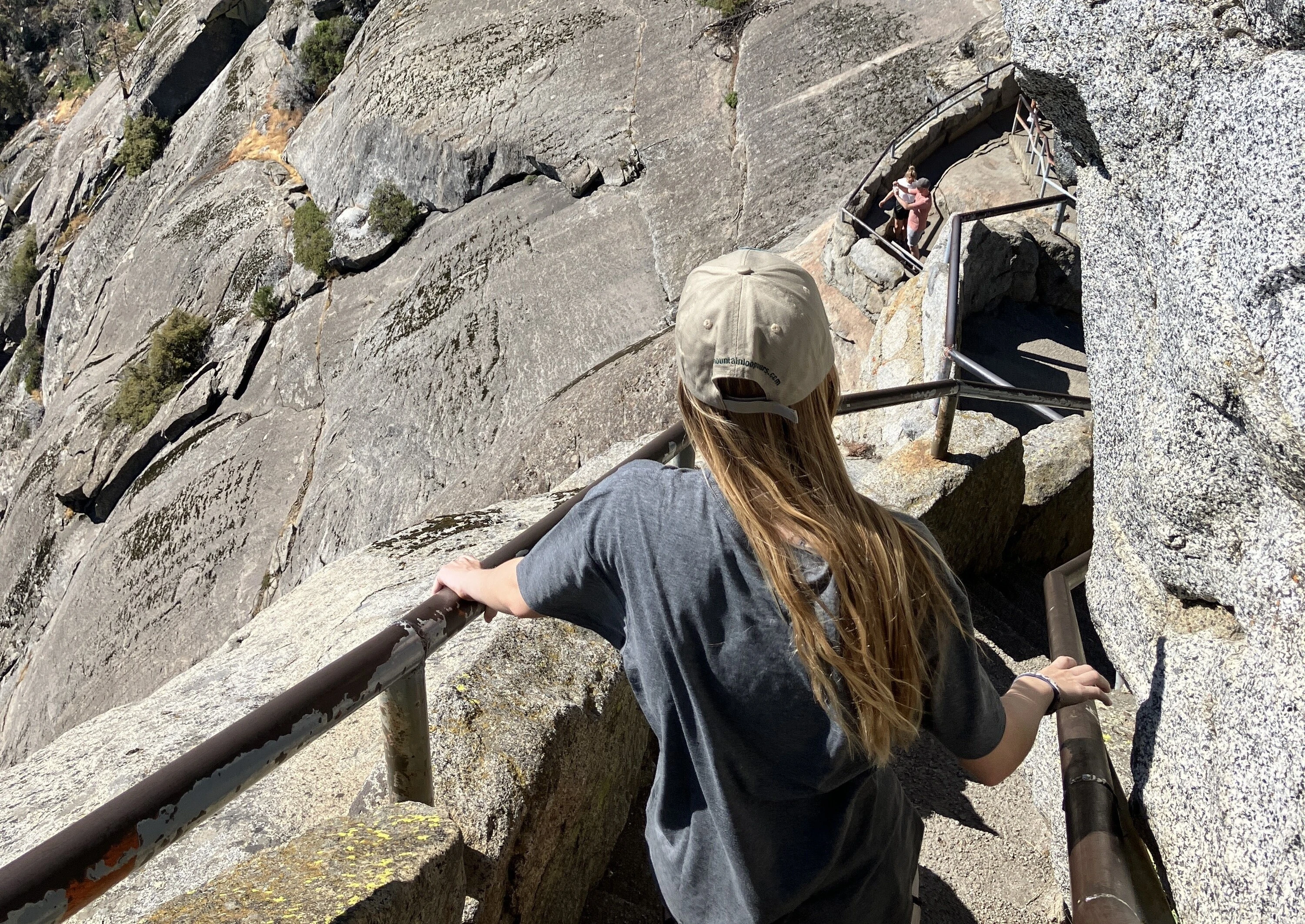
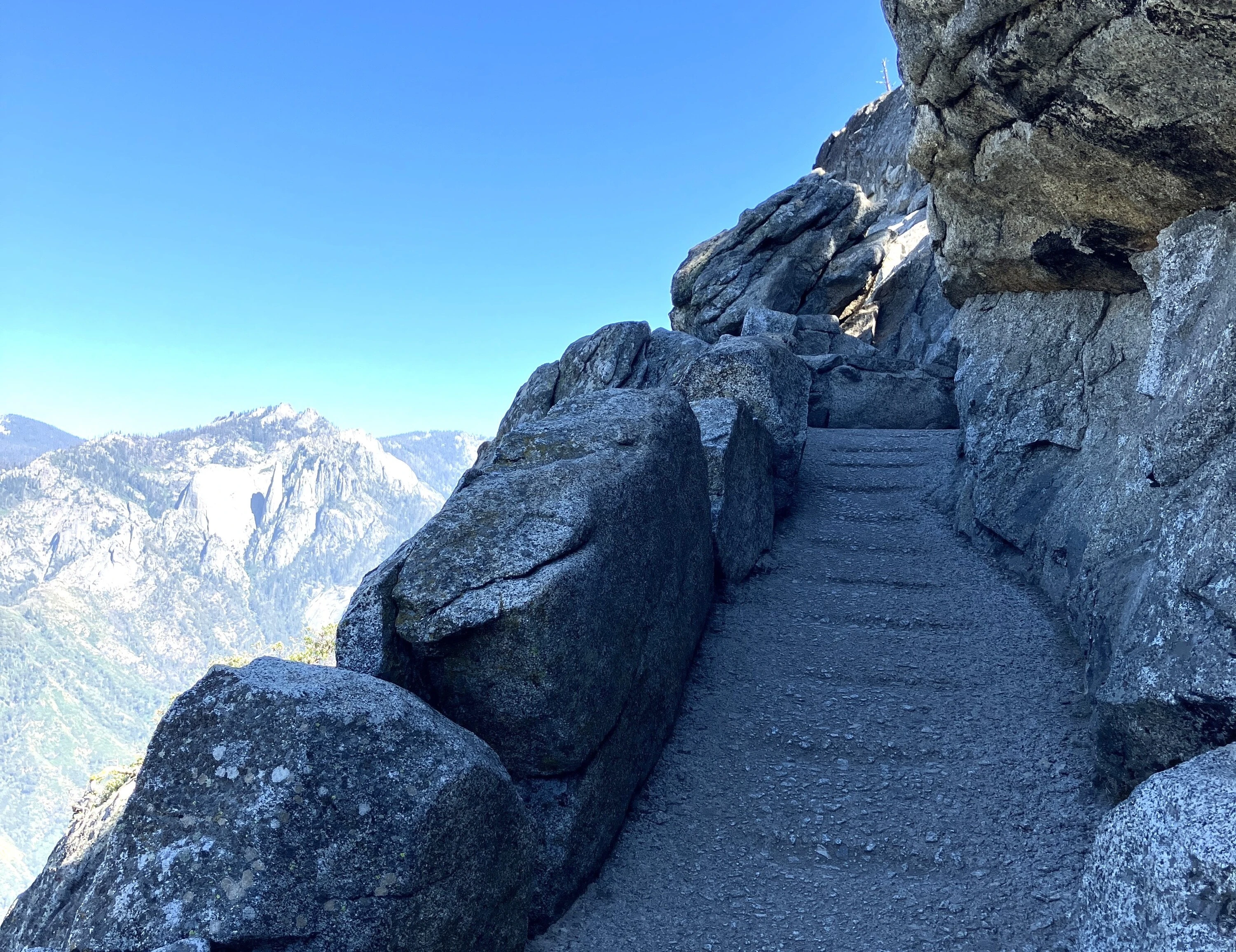
But Moro Rock in Sequoia National Park still provides a frightening climb, especially if you’re scared of heights. The staircase, built in 1931, winds sinuously around the rock face, sometimes with very little to keep you from plunging down to the bottom other than your own fortitude. It’s not Half Dome level, but it’s scary, with constant views of the dramatic drop to the valley floor.
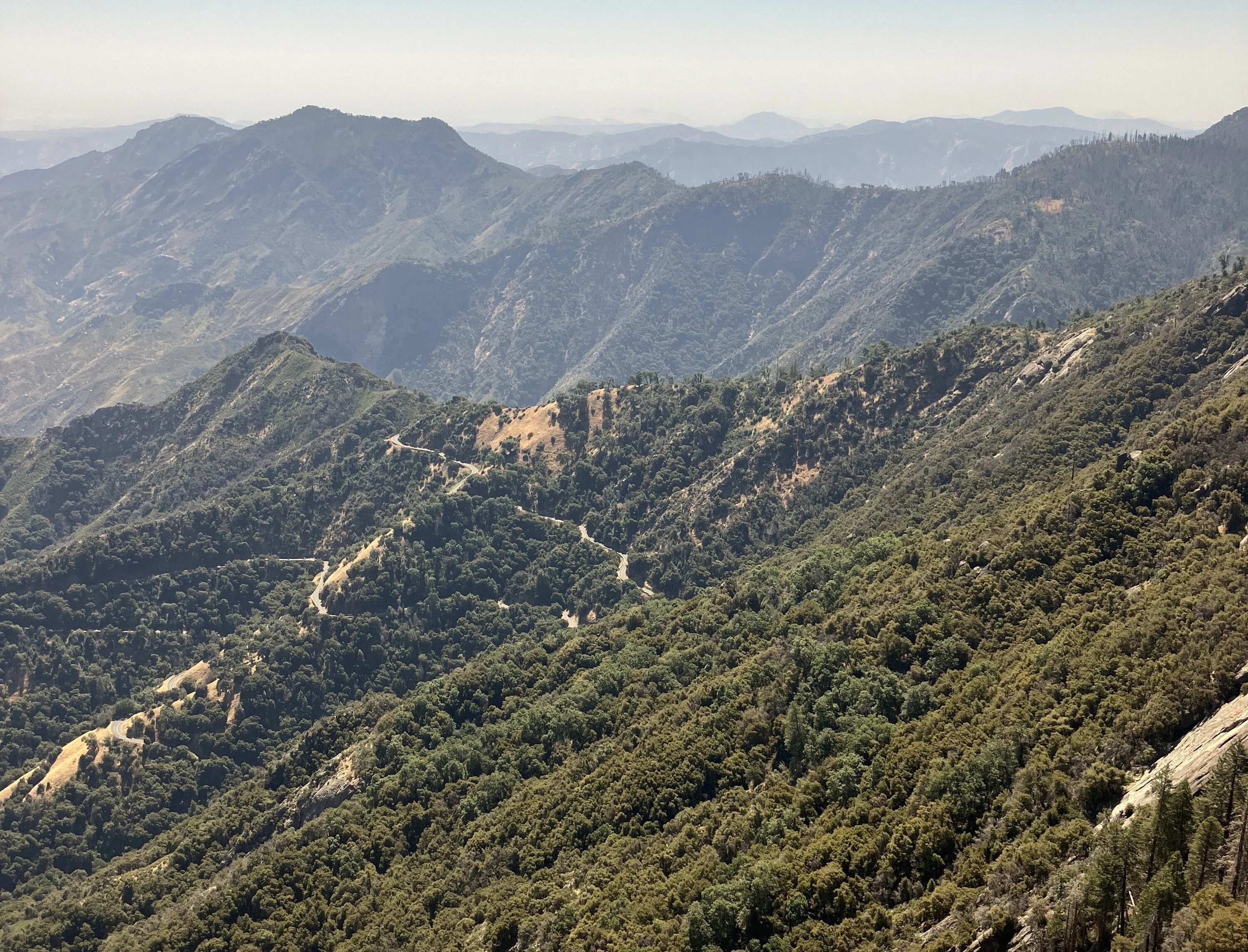
Adding to your sense of how high up you are, you can look down on the little unfurling highway in the distance you took to get there, with miniature cars below. You’ll have to cling to the rock wall when people come from the opposite direction—or worse, you’ll have to be the one on the outer side. One strong hip check will really test your fear of heights (thankfully, metal railings or low rock walls line the path).
With 350 steps to the top, the staircase makes the ascent possible for people who otherwise wouldn’t want to don a harness and rock climb to the top, as early travelers to the rock used to do. And because the staircase is so skillfully concocted to blend into the rock, hiding itself unobtrusively, it’s actually on the National Register of Historic Places, listed in 1978. Other National Register staircases? There are a few others, including the Spanish Steps in Washington, D.C., and the Winding Stairway in Traer, Iowa.
How long does it take to climb? Ostensibly, if you’re ready to just attack it, you could summit in about 20 minutes. But more likely, you’re going to linger to take photos or, well, have a crisis about whether to continue on. Someone in our party initially turned back to descend, but then paused for a while at one of the landings, got back-pocket courage and continued on to the summit. To reassure you, there are plenty of places to stop and let others move past you, sort of like rest areas on the freeway. You’ll probably want to allow an hour for the entire ascent and descent.
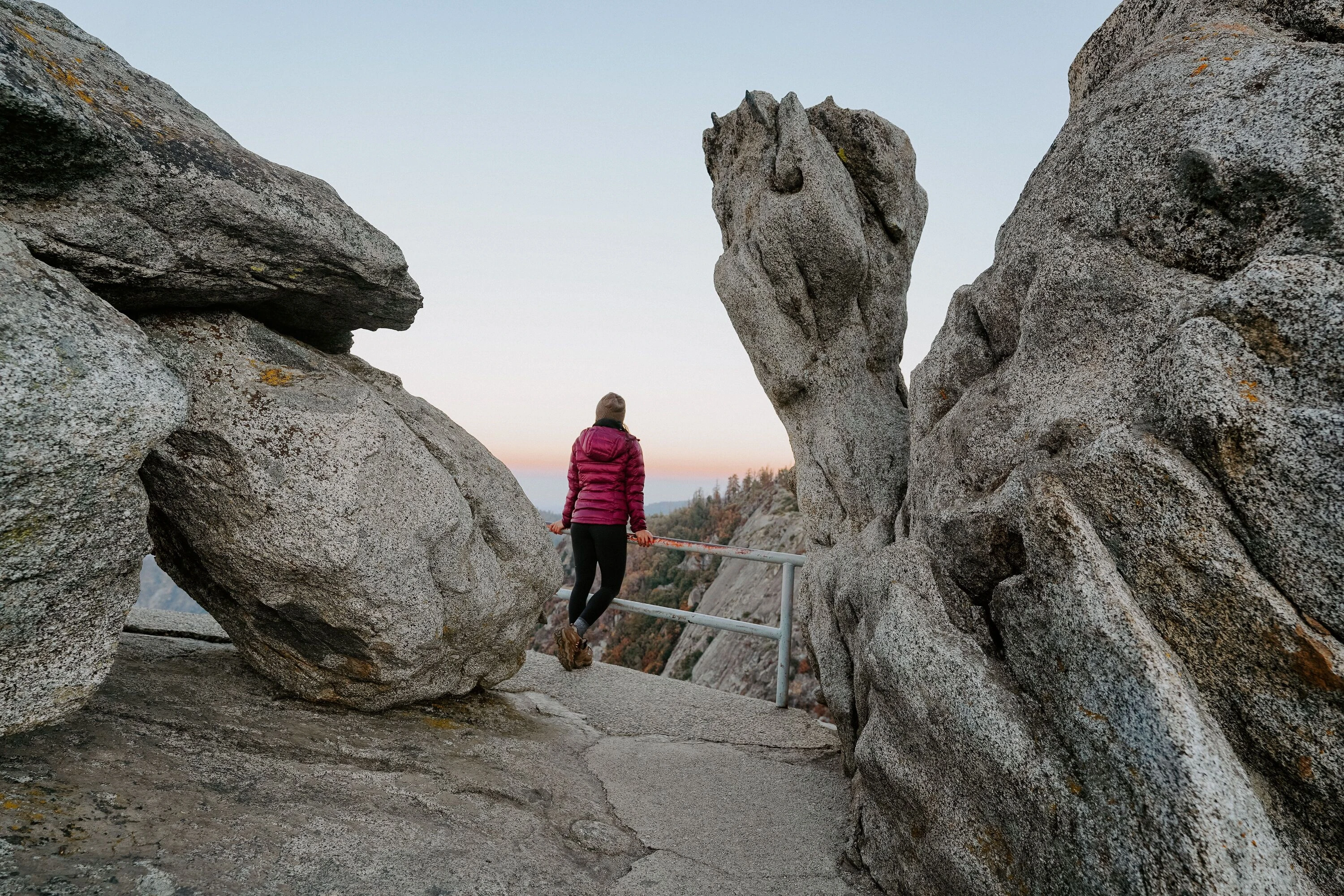
When you reach the top, at 6,725 feet, you will catch absolutely stunning views of the San Joaquin Valley and the Great Western Divide, the part of the Sierra Nevada mountain range that falls within the Sequoia National Park borders. You walk across the slab through a narrow walkway of metal railings to reach the very end, where everyone takes their group photo. On a clear day, you can see 150 miles away to the Coast Range.
One of my favorite parts of this experience is that you feel connected to everyone who’s making their way to the top with varying levels of nonchalance, and you share in your exhilaration at the summit. My family even took photos with some other travelers because we felt so bonded on the route.
Geology enthusiasts will like to know that Moro Rock was once a molten pool of magma beneath the earth’s surface, which then cooled into granite. Forces pushed the granite upward as overlying rock eroded away. Then the dome “exfoliated,” with some of its uppermost layers detaching, which let lower layers loosen. Believe it or not, Moro Rock is still exfoliating, just as passionately as any TikTok influencer touting her $100 scrub.
Wildlife fans, you may be able to see peregrine falcons; they nest on Moro Rock in summertime. We never saw a marmot during our time at Sequoia National Park, but I badly wanted to. There’s a little bit of concern that those rodents will climb into your car engine and eat your wiring and radiator hoses, but even though we took the possibly folkloric precaution of putting Irish Spring soap under the hood, we were untroubled. Bear and deer are commonly seen in the park, but not on Moro Rock, although I’d pay good money to see that.
The experience of climbing Moro Rock may in fact be why we even have the National Park Service. In 1915, a group called the Mather Mountain Party trekked across the Sierra and climbed Moro Rock. While they traveled together, they came up with the idea of creating a national park service.
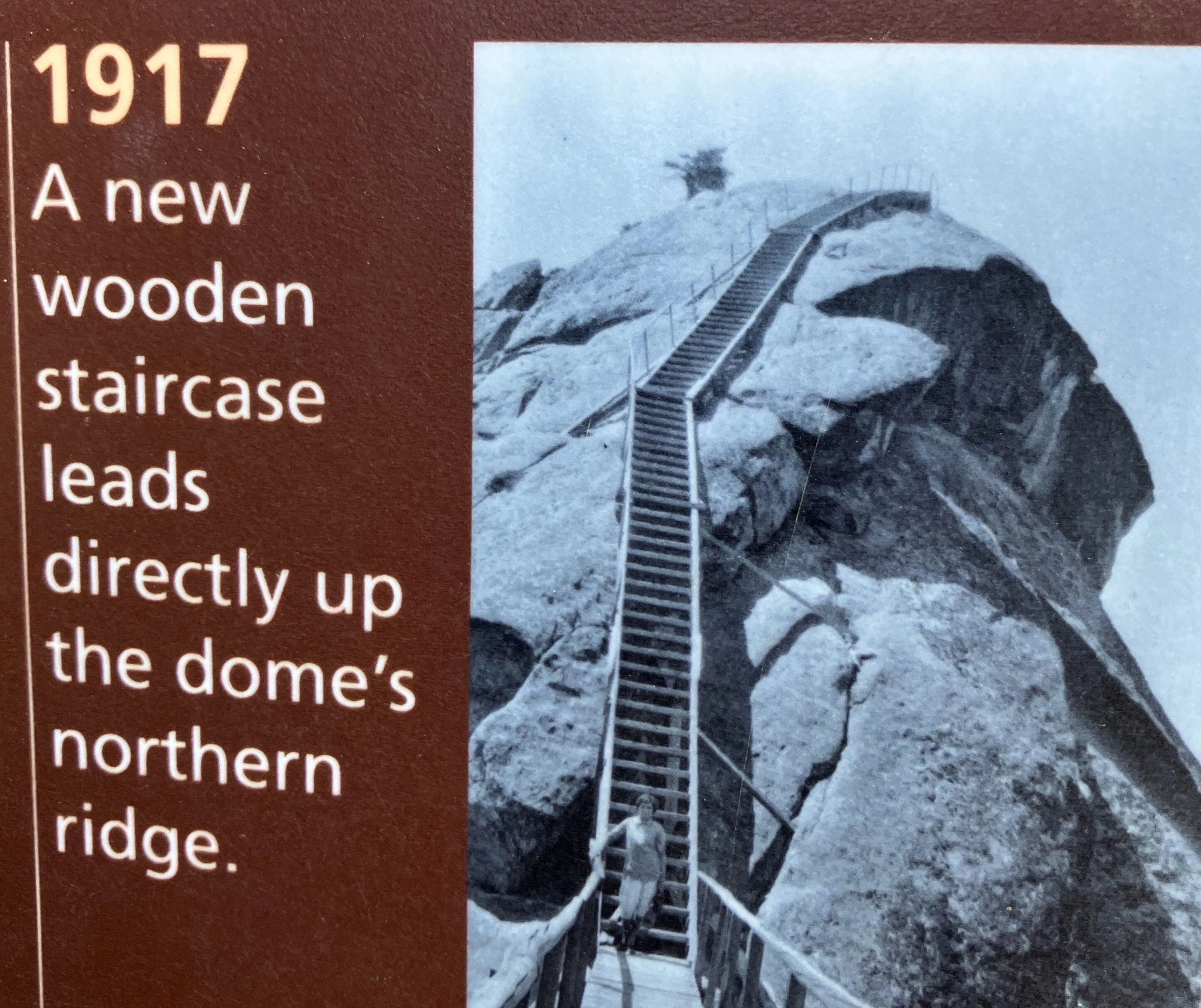
The earliest history we have of Moro Rock is when two Native Americans brought explorer Hale Tharp there. The name Moro may come from a horse known to graze nearby in the 1860s; I was unable to learn the original native name for the rock. Installed in 1917, a series of linked wooden staircases led pretty much straight up to the top. Judging by photographs, it was a rickety and harrowing structure. By 1931, the wood was starting to deteriorate so the stairs were taken out and today’s stone staircase was built to follow the rock’s natural crevices. It was built by volunteers of the Civilian Conservation Corps, a New Deal program established by President Franklin Delano Roosevelt to employ men during the Great Depression. (A lot of the good things we see in national parks are thanks to this program.) In the 1960s, a new handrail was installed to prevent falls.
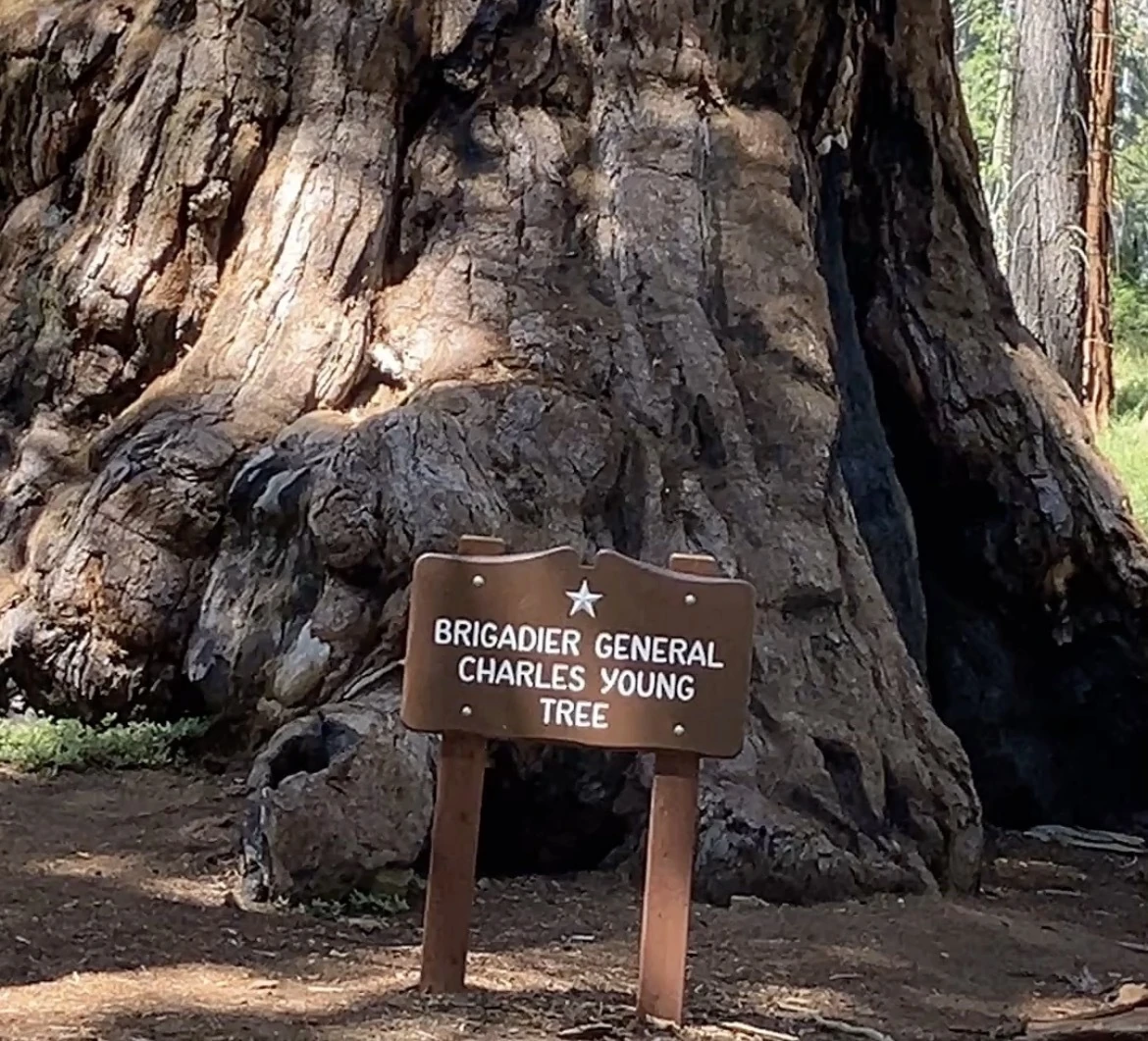
There’s some wonderful Black history here too; the road out to Moro Rock was built by Buffalo Soldier captain Charles Young and his regiment in 1903, making it possible for horse wagons to approach, and later, cars. He went on to become the first Black national park superintendent. Today, you can stop along the way to see the giant sequoia named the Brigadier General Charles Young Tree. While he was still alive, people wanted to name a tree after him, but he humbly declined, saying he preferred to name one to honor Booker T. Washington—and you can see that tree in the park today, too.
Sometimes the rock is closed because of lightning storms—and yes, people have been struck by lightning on the exposed face and died. Fatalities have also occurred when people fall, so you’re warned to stay on the planned trail and within the railings. According to a sign at the site, three people fell to their deaths between 1995 and 2005. That’s just enough to have social media full of people worrying about folks who scramble around on the rock outside of the safe confines of the railings. And a reminder: Some portions don’t have railings. Rocks, at hip height, ostensibly prevent you from plunging to the depths, but what if you trip and go over?
If you can’t quite bring yourself to climb Moro Rock, you can still enjoy it from a distance. Somewhat similar to Yosemite’s Half Dome, it can be seen from various places within the park.
If this article makes you yearn to go, get moving because the rock closes in winter because of snow and ice—that makes the staircase way too treacherous. But you can still ski or snowshoe past it for a stunning view.
Expert tip: Head there during a full moon, and you can take a guided tour with the Sequoia Parks Conservancy—and in fact, one is happening next week on September 27. The next one (and last one of the year) is October 26. The one-hour Full Moon on Moro Rock tour costs $22 adults and $11 children 10 and under. Otherwise, climbing Moro Rock is free once you’re inside the national park.
Discover Time Out original video