

"Many would be surprised to learn that iced coffee has been served for over a century".
Iced coffee is no longer exclusive to specialty cafés. This summer, it fully cemented itself as part of the daily routine. It’s made at home, served in a tall glass with ice, enjoyed in the park, or shared before meeting up with friends. It doesn’t replace hot coffee—it makes it more flexible, expands its possibilities, and opens the door to new palates.
In recent years, the specialty coffee boom multiplied coffee bars, roasters, and new spots across nearly every neighborhood. The city filled up with well-calibrated espresso and single-origin beans. That sophistication educated consumers’ palates. What began as a barista experience gradually moved into the home. In this article, we’ll tell you how to make iced coffee at home.

One thing is clear: more and more people know exactly how they like their coffee. They invest in a good machine, try different varieties, and when the heat arrives, they choose to create their own iced version at home before heading out. Within this trend, Nespresso has been developing varieties specifically designed to be served cold for several years, adding new editions every summer. All of its iced coffee options are available in the Nespresso online store.
This isn’t just a seasonal bet—it reflects a deeper shift in our relationship with coffee. It’s no longer tied to a fixed time of day; it has become more flexible, more portable, and more integrated into urban routines.
Freddo Delicato, Freddo Intenso, and Coconut Vanilla Over Ice are names that confirm iced coffee is no longer just a way to fight the heat. At Nespresso, it’s now a category of its own, with varieties specifically designed to be enjoyed over ice. There are fruitier, lighter profiles for those seeking freshness, more intense and roasted versions that maintain character even as the ice melts, and blends like Coconut Vanilla, where the soft caramel notes of Latin American coffees combine with coconut and vanilla flavors, giving summer a sweet and aromatic twist.
Although iced coffee still has room to grow, its preparation is becoming more sophisticated. The coffee corner is no longer a novelty, but now traditional accessories coexist with those designed for iced versions. In that spirit, Nespresso offers design pieces ranging from Recipe Barista glasses to travel tumblers. But without a doubt, colorful ice trays steal the spotlight. With nine 30 g ice cubes, they’re ideal for cooling the drink without diluting it too quickly or altering the coffee’s balance.
At work meetings or evening toasts
Iced coffee fits urban life for a simple reason: it accompanies without demanding. You can drink it while walking, on the subway, or sitting on a shaded bench. It aligns with today’s routine, shaped by the search for small moments of enjoyment amid daily hustle. A good iced coffee can be the perfect companion to a calm—or hectic—morning, long conversations with friends, a late-afternoon aperitif, or even an evening toast in the form of an Espresso Martini.
You might also like: The best places in the city for afternoon tea
For those who enjoy tracing the origins and traditions of what they consume, iced coffee also has history. While it may seem like a social media trend tied to transparent glasses filled with ice, its story is much older. “Many would be surprised to learn that it’s been served for over a century,” says Camila Carpanetti, Coffee Ambassador at Nespresso Argentina, referring to records of a drink called Mazagran—a preparation of coffee with cold water and sugar that originated in Algeria in the mid-19th century, consumed by French soldiers to cool off. In Portugal, she adds, it’s still served with a touch of lemon and rum. What has changed today isn’t the idea, Carpanetti suggests, but the context. Iced coffee is no longer an exotic curiosity; it’s a concrete response to hot days and to a city lived on the move.
From the counter to the home kitchen
If the café boom established the standard, the next step is replicating it at home—confidently and without depending on schedules or lines. “At Nespresso, we’ve spent almost ten years introducing innovations for iced coffee, generating increasing interest and curiosity. When the first warm days arrive, customers start asking about our limited summer editions,” says Carpanetti. However, what holds people back most isn’t the lack of a machine or proper glasses—it’s the idea that it won’t turn out well. “Consumers may see iced coffee as difficult to prepare, or assume it won’t taste good or look as nice as what they see on social media.”

The answer, she insists, is simplicity. “Our proposal is to have the right coffee for a delicious, easy-to-prepare recipe,” she says. But what actually changes when coffee is served cold? The less visible aspect of iced coffee is that it’s not just about pouring an espresso over ice. When cold, coffee behaves differently.
“There are two elements that create a major sensory difference between hot and iced coffee,” explains Carpanetti. “The lower the temperature, the harder it is for the aroma to be released. And because of melting ice, there’s more water in the cup—so we need coffees with more body, creaminess, and intensity.”
You might also like: New specialty coffee shops in Buenos Aires
That’s why the varieties developed by Nespresso for iced coffee take aromatic loss and dilution into account. They’re calibrated in origin, grind, and roast to maintain intensity even at icy temperatures. However, Carpanetti notes that capsules designed for hot coffee can also be used for cold preparations.

How to make iced coffee at home
“The most common mistake is believing it’s difficult or won’t turn out well,” says Carpanetti. Her recommendations are straightforward: choose the right coffee—“fresh, with fruity or balanced aromatic profiles”—respect proportions, and “always add lots and lots of ice.” It’s also key to start with a guiding recipe based on your extraction method. If your favorite is an Americano, cappuccino, or latte, look for its iced version and adjust from there.
In this transition from café counter to home kitchen, the capsule works as a shortcut. “It simplifies choosing the perfect coffee for your cup—mild or intense—leaving you more time to play with other ingredients or simply add ice,” summarizes the brand’s Coffee Ambassador.
If the specialty boom brought higher standards, iced coffee brought freedom: drink it wherever you want, however you want, and at the temperature that best matches your moment of the day.
Quick tips for perfect iced coffee:
-
Always use plenty of ice. The classic mistake is adding just two cubes “to avoid watering it down.” The opposite happens: less ice melts faster and dilutes more.
-
Think about body and intensity. In cold form, coffee “hides.” If you’re adding tonic, milk, or syrups, the coffee needs to stand out.
-
Mind the layering order. Syrup + ice first; then tonic or milk; coffee last to preserve layers and aroma.
-
Use a thermal glass or mug if taking it to go. It helps maintain temperature and texture (especially with cold milk foam).
-
Start with a guide recipe, then adjust. First replicate, then personalize.
Mini Recipe Book for Home (Perfect “To Go”)
1) Coffee & Tonic with Mint (Refreshing, Citrusy)

Suggested coffee: Ristretto / Arpeggio / Livanto
Ingredients
-
1 pump sugar syrup (7 g)
-
40 ml coffee (ristretto)
-
90 g ice (3 cubes of 30 g)
-
90 g tonic water
-
Fresh mint
Step by step:
In a glass, add ice and sugar syrup. Pour in part of the tonic and stir. Add the rest of the tonic. Extract the coffee (40 ml) over the mixture. Finish with a sprig of mint for extra aroma.
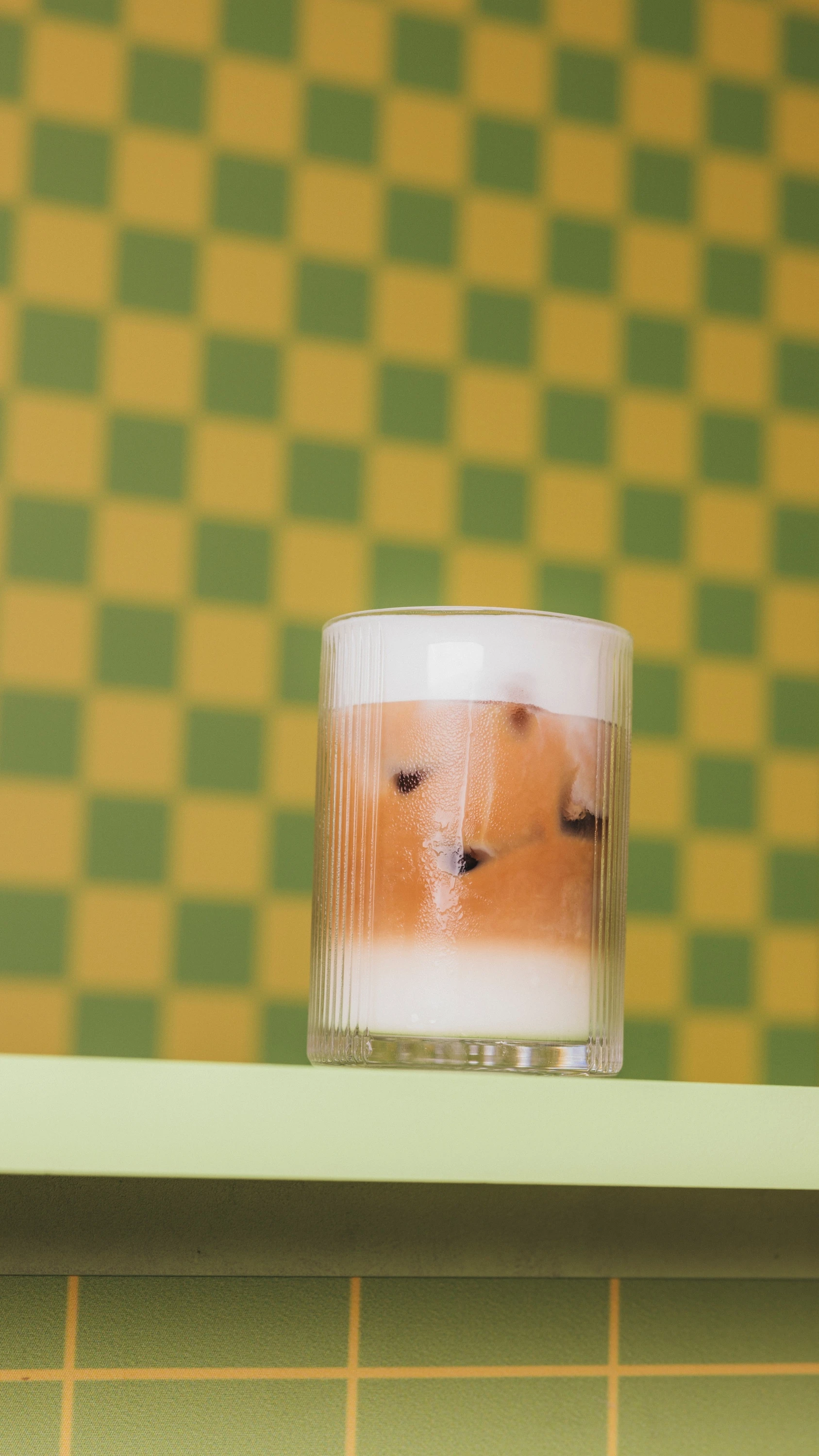
2) Iced Latte Macchiato (Creamy, Easy, Café-Style Look)

Suggested coffee: Ristretto / Arpeggio / Livanto
Ingredients
-
40 ml coffee
-
90 g ice (ideally 3–4 cubes)
-
80 ml whole or skim milk
Step by step:
Fill a glass with ice. Froth the cold milk (if you have an Aeroccino, use the cold foam setting). Pour the frothed milk over the ice. Extract the coffee (40 ml) on top.