
[image]
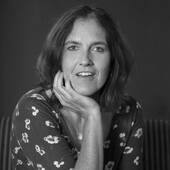
[title]Sergio Lacroix has built an impressive career in the world of live music and audiovisual experiences.
His early work was connected to Virus and Federico Moura, but his career truly took off after meeting Gustavo Cerati. Working with Soda Stereo, he developed his distinctive approach to lighting and visual design, creating groundbreaking stage productions for the band's Dynamo concerts at Obras. Since then, he has designed shows for artists and bands including Babasónicos, Fito Páez, Julieta Venegas, Lali Espósito, Hernán Cattaneo and Tale Of Us, among many others.
His musical sensibility, particularly his connection to electronic music, goes hand in hand with an architectural approach to live performances: each production is conceived as a space that is imagined, built and transformed in dialogue with the artist's identity and the audience's experience.
That same vision has led him to design and transform iconic nightlife venues, including Morocco and El Deseo in Buenos Aires, as well as the legendary Pacha nightclub in Barcelona. He has also worked on festivals such as Cosquín Rock in Córdoba and MUTE in Mar del Plata. In addition, he has created productions for various government institutions, designing settings for the Casa Rosada and the Teatro Colón.
More recently, he participated in the Venice Biennale, contributing to Matías Duville's installation in the Argentine Pavilion, at an event attended by internationally renowned figures such as Björk.
Born in Mendoza, trained in design and architecture, and based in Buenos Aires for many years, Lacroix is a creative visionary who sees light not simply as a technical tool, but as a medium capable of evoking emotions, creating atmospheres and transforming the way we experience entertainment.
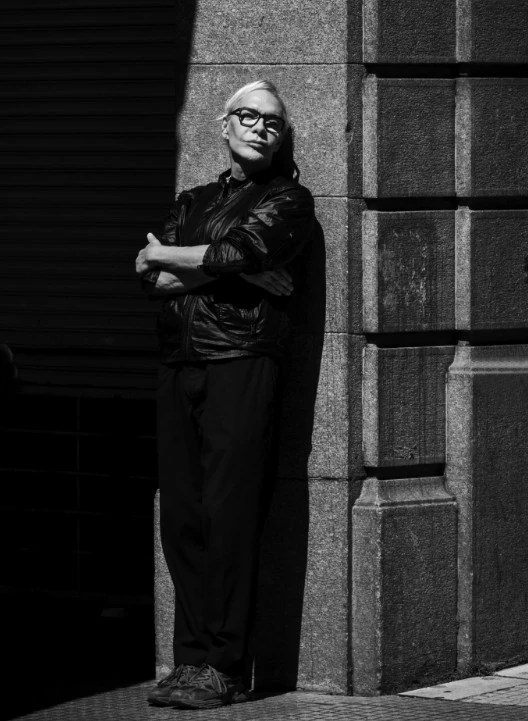
Would it be fair to say you were one of the first people to create these kinds of shows for bands? Was that why Gustavo Cerati approached you?
Gustavo saw something I was doing for the Goethe-Institut at an art event. I remember they had assigned me an area of the venue where I was supposed to build a maze that visitors had to walk through to enter the event.
Because I'd studied architecture, I already had a certain understanding of space and materials, so I designed a rather unusual glass maze with a very strong lighting element.
Gustavo came to the event, saw my work and told me he really liked it. His producers contacted me, and I ended up designing the four Dynamo shows at Obras.
Was that the beginning of your career?
I'd already had some experience working with bands from Mendoza, such as La Montaña. But my professional career really began with Cerati. He opened doors for me. It was also during those Soda Stereo shows that I met Babasónicos, and I fell in love with the band. Today, they're like family to me.
Where did that approach to designing live shows come from?
It was very intuitive. I can't say I was inspired by a particular performance or another show I'd seen. Back then, we didn't have algorithms showing us hundreds of performances from all over the world.
I've always loved music, and I was more involved in the world of DJs and nightclubs. It was the early days of electronic dance music in clubs. Most of my friends were DJs and designers. We were a collective of around twelve people. I also had a background in architecture and fashion, which helped me enormously.
You might also like: Anto Punzino: from Mendoza to Filo News, with music as her guiding passion
You were quite close to Federico Moura at the time. Did Virus's music inspire you?
Federico was also part of that group of friends I mentioned. One day, I was invited to join Virus on a tour through the Cuyo region. Since I'm from Mendoza, I went along. That was when I began to understand how a live show was put together. I never imagined it could become my profession.
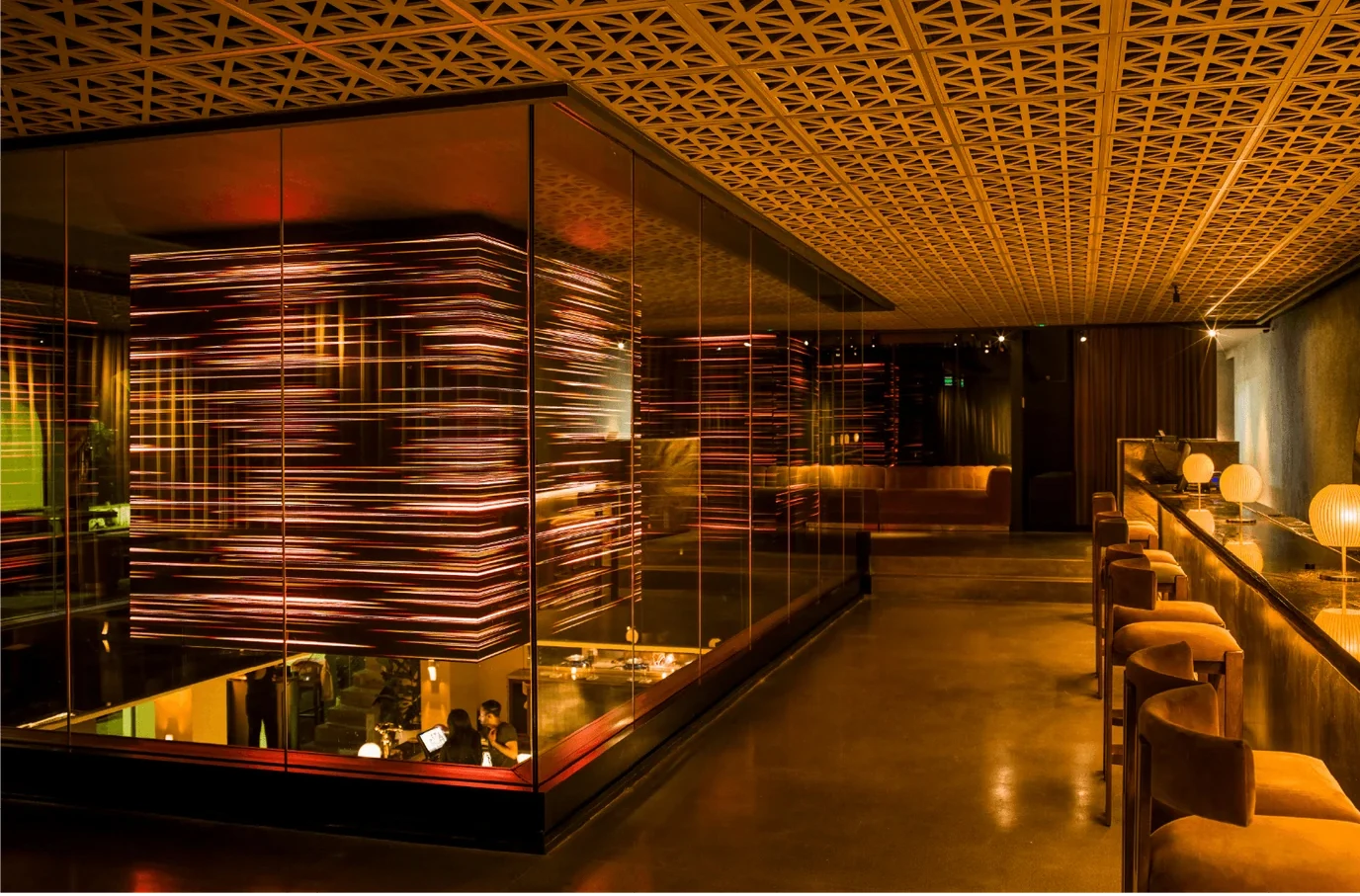
From Morocco Club and El Deseo onwards, you've designed many of Buenos Aires's nightlife venues. How do you approach these spaces today? What's your philosophy?
I also worked on Alsina, Caramelo and Costa 7070. Right now, I'm working on another venue called Dorrego.
I have a great deal of respect for the spaces I work in. It's not about walking into a nightclub and building something that has no connection to its surroundings. Dorrego, for example, is an old railway station opposite the polo grounds, near the intersection of Libertador and Dorrego. I'm preserving and working with many of its original elements because I'm interested in its architecture. These are well-built structures, made with high-quality materials, in this case of English origin. I like to connect with a place and allow the space itself to influence the creative decisions. And there's another important factor: who the project is intended for. Designing for an underground audience isn't the same as designing for a more mainstream crowd.
I like to connect with a place and allow the space itself to influence the creative decisions
You've worked at the Teatro Colón. How do you approach designing for such an iconic Buenos Aires landmark?
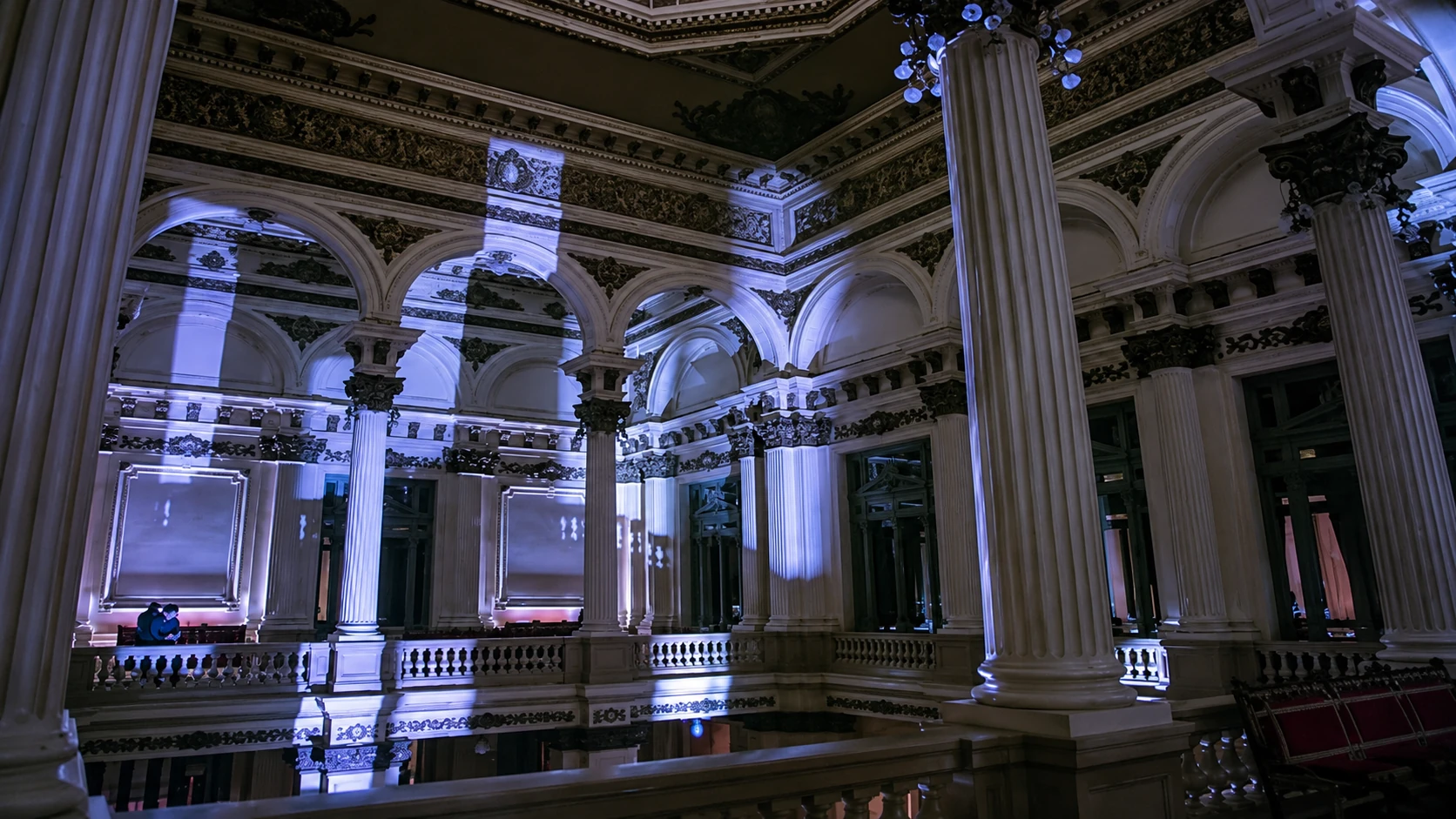
I love the Colón. It has so many extraordinary elements: the boxes, the crystal ornaments, the chandeliers, the curtain designed by Guillermo Kuitca, Soldi's fresco on the dome… There's so much visual information that you can't just do anything you want.
I wanted to approach it with elegance, to give it an extra touch and elevate what was already there. I used the theatre's own features. In a way, I took the elements of the Colón that I loved and brought them into the production.
I worked with what was already there, and I feel I enhanced it. Or at least that was my intention.
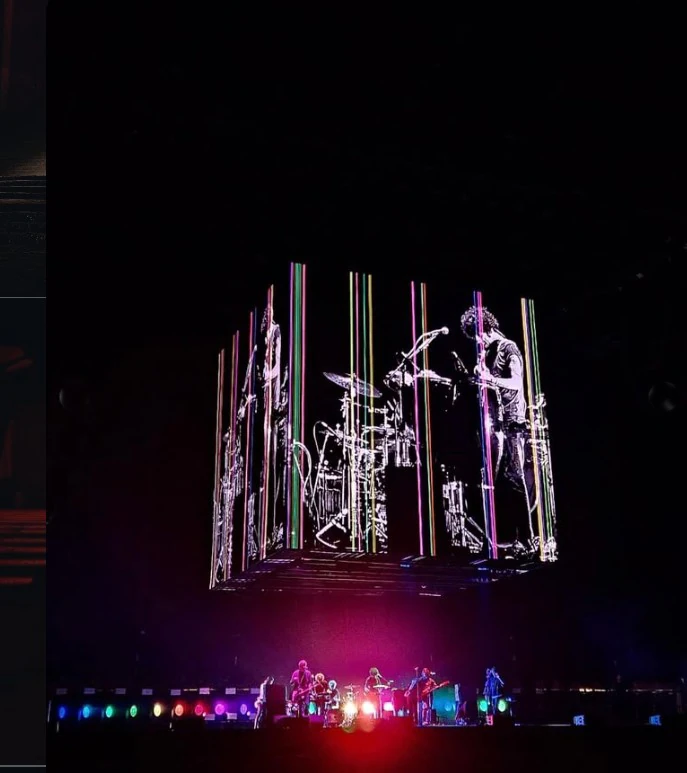
Besides Soda Stereo, Babasónicos and Virus, you've worked with artists such as Julieta Venegas, Lali and Fito Páez…
I toured with Julieta. We performed at Mexico City's Zócalo for around 300 people on International Women's Day.
In those situations, do you feel like part of the band? Are you involved in the performance as another member of the group?
I'm not sure I'd say I feel like part of the band. I feel like I'm part of the show's image and visual identity.
I'm not even on stage. I'm positioned out front, where I control everything. I'm not part of the musical group, but I am part of the show and, above all, I'm the person directing it visually.
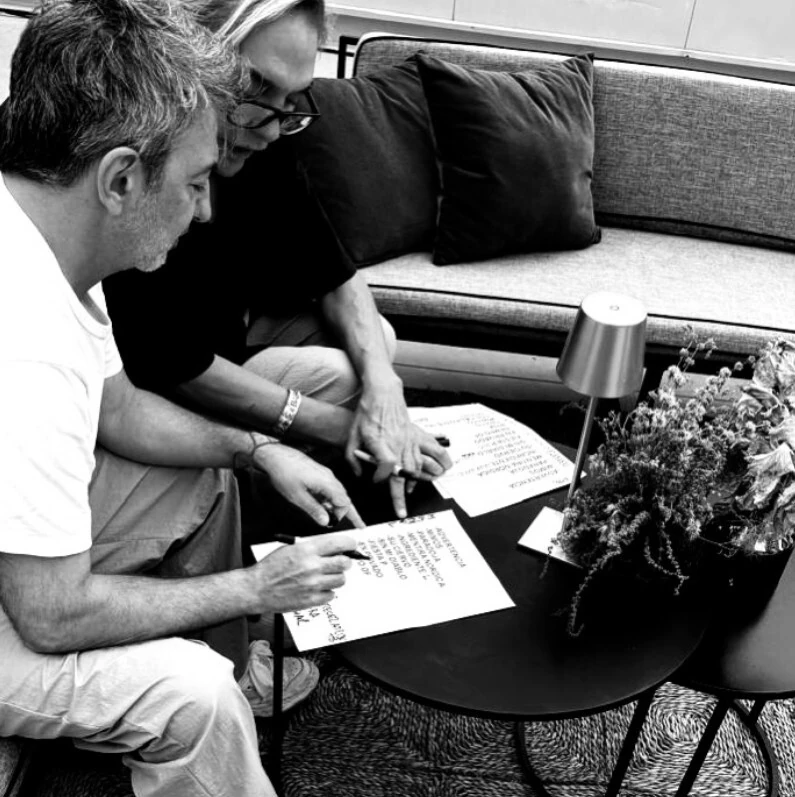
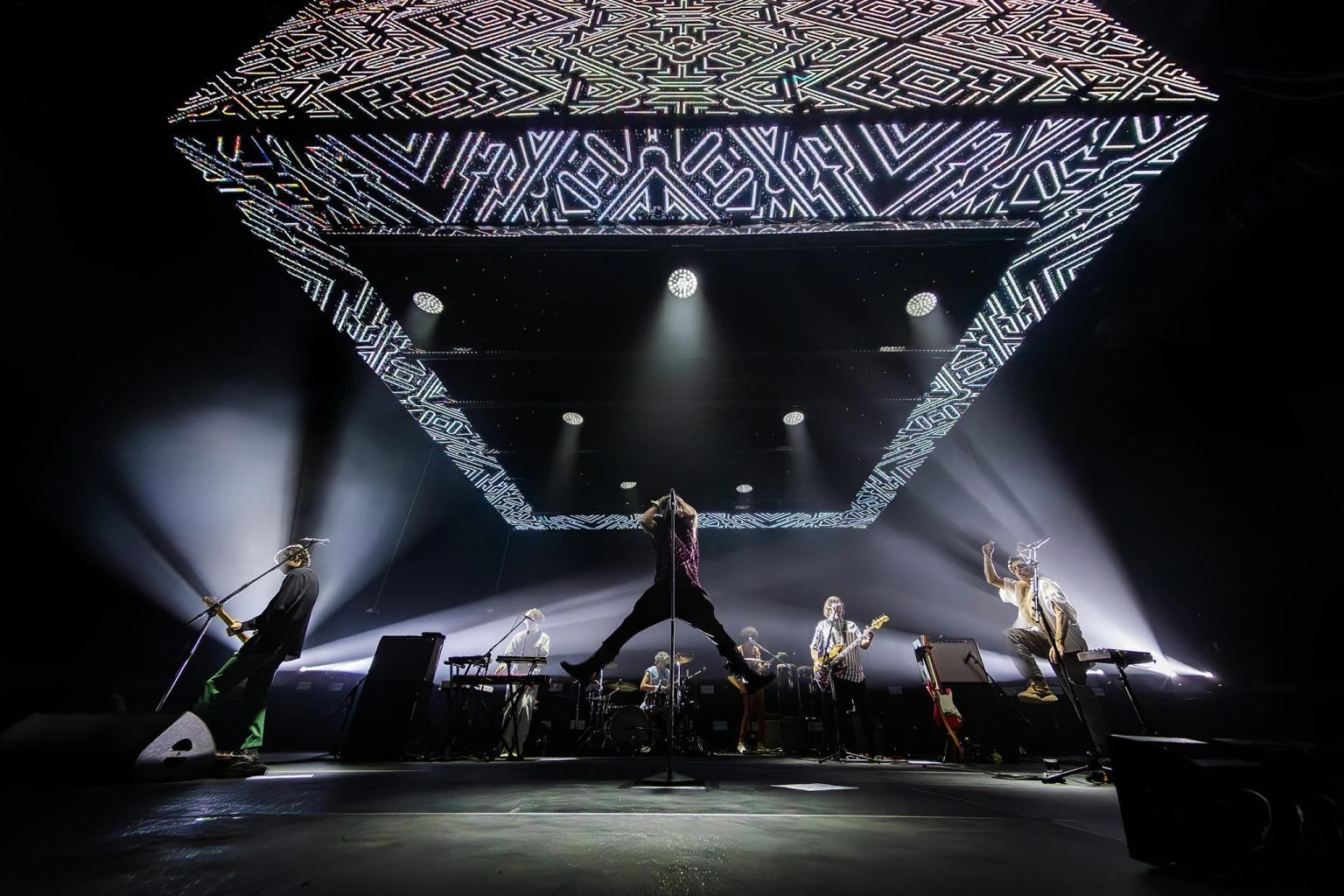
I don't just design the visuals; I also create the show's entire visual script. I receive the setlist in advance, sometimes one or two months beforehand, and use it to develop a detailed plan.
I decide what the visuals will look like, how each musical moment will unfold and even how the artist should move around the stage.
Every artist has a different way of working. I have one dynamic with Babasónicos, another with Julieta, another with Lali and another with Fito. Each one brings a different energy.
I don't like repeating formulas or copying something I've already done for someone else. I want to immerse myself in the artist's personality, identity and work.
For example, Fito performs for an audience that's seated, whereas at a Babasónicos show, people are jumping around and dancing. They're completely different situations.
Every artist has their own energy, and I try to understand it so I can find a way to translate it visually.
Every artist has their own energy, and I try to understand it so I can find a way to translate it visually
You might also like: Mendoza turns up the volume: 18 concerts and festivals to add to your next getaway
You also have a very close working relationship with Fito and Lali, just as you do with Babasónicos. Is there a strong personal bond between you?
For me, having that kind of relationship with artists is essential. I need to build a connection with them, get to know them and feel that there's a bond. If that relationship doesn't exist, my work doesn't come together in the same way. It's something quite emotional.
There's a moment in Lali's show when she's dancing and a flash of light illuminates her. I thought it was incredibly powerful.
The song is called "Sola" ("Alone"). She has twenty dancers around her and thirty musicians, but at that particular moment, she's completely alone.
So I thought, "Well, if the song is called 'Sola', she's alone. What do I do? I keep her company with the light."
There was no set design, no visuals, nothing. It was just a white light, or two, three or four white lights. There was no colour or any other visual effect.
That moment you saw, the one that caught your attention, is, for me, the defining moment of the show.
Working with Lali meant that I had to learn how to operate within the world of pop music.
I've always worked with musicians and DJs, but pop has a completely different dynamic. There are twenty dancers moving from one side of the stage to the other, and you have to create a space where they can dance, light them in a particular way and think about how the whole performance will unfold.
I had to understand that language because I don't come from pop. My background is in electronic music, rock, techno and other musical worlds.
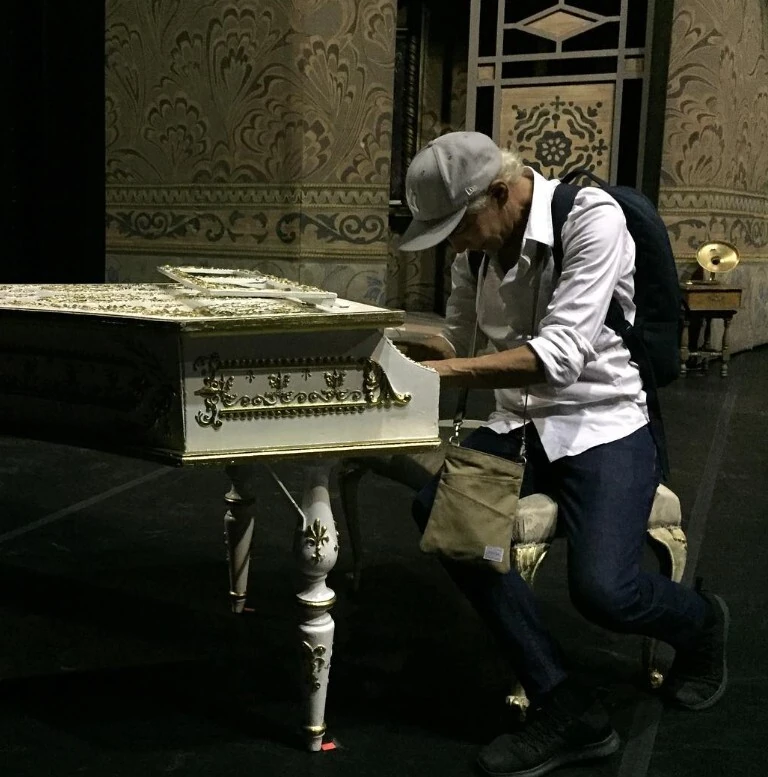
Your mother was a musician and played the piano. I imagine that's where your love of music, which runs through all your work, comes from.
Absolutely. My mother taught all of us to play the piano, read music and listen to it.
Every Saturday at eleven in the morning, we'd go to the Teatro Independencia in Mendoza to listen to the Philharmonic or the Mendoza Symphony Orchestra.
It was a family tradition. She's the one who introduced me to that world.
Last year, you took part in the Venice Biennale. What was that experience like?
I was invited to design the lighting for Matías Duville's work Monitor yin yang, which represented Argentina in the national pavilion at the Venice Biennale.
The installation was enormous, and the lighting design was extremely complex, but the result was incredible.
I think we were among the ten most important pavilions at that edition of the Biennale.
When you arrive somewhere like that and find yourself surrounded by international figures such as Willem Dafoe or Björk, who were both there, you begin to understand the significance of the environment you're working in.
How do you imagine the future of your work? Presumably, you incorporate all the new technologies that emerge, including artificial intelligence.
We work extensively with those tools. If you don't embrace them, you risk being left behind.
Artificial intelligence is already part of our lives. It's a reality, but I don't lose sleep over the future.
I continue doing what feels right to me and what I believe I can contribute to whoever invites me to work on a project. I don't have a fixed formula or a rigid way of working.
Right now, for example, we've just been approached about a project in Villa La Angostura, in the middle of a forest. I still don't know if we'll end up doing it, so I can't say too much.
It's something completely different. It's not a stadium concert at River Plate, a nightclub or a show at the polo grounds.
It's a project set in a forest. In a place like that, nature itself is enough. Sometimes, less really is more.