[category]
[title]
Dining with culinary royalty, Alain Roux and Angel Leon, taught me that outstanding menus go hand in hand with seasonality, sustainability and great cooking.

At Amura’s Four Hands Dinner, classical French precision met Ángel León’s radical vision of the sea. And it was a table-side chat with Chef Alain Roux that revealed a deep respect for craft, ingredients and the ocean behind the special menu.
This dinner was never going to be an ordinary affair.
For one night only, two chefs associated with some of Europe’s most celebrated kitchens came together. Chef Alain Roux is the chef-patron of The Waterside Inn in Bray, the British institution that has held three Michelin stars continuously since 1985. Chef Ángel León, meanwhile, is known as the ‘Chef of the Sea’ for his boundary-pushing approach to marine gastronomy at his restaurants in Cádiz.
That is an extraordinary amount of culinary pedigree in one kitchen. And for the hotel's executive Chef Luke Barry, it was an experience he and his local staff certainly made the most out of in terms of knowledge and skills sharing.
What has stayed with me since that night, isn't simply the calibre of the chefs though. It was their respect for the craft, the ingredients and, above all, the ocean from which so much of the evening’s inspiration had been drawn.
READ: This African city has been named one of the best in the world for food in 2026
The menu began with a series of canapés that gave early clues to the two culinary worlds about to collide. Roux’s French classicism appeared in a truffle croque monsieur and chicken liver parfait with cherries and tarragon. León’s marine imagination surfaced in a delicate sea lettuce tart filled with a plankton emulsion, finger lime, and coastal herbs.
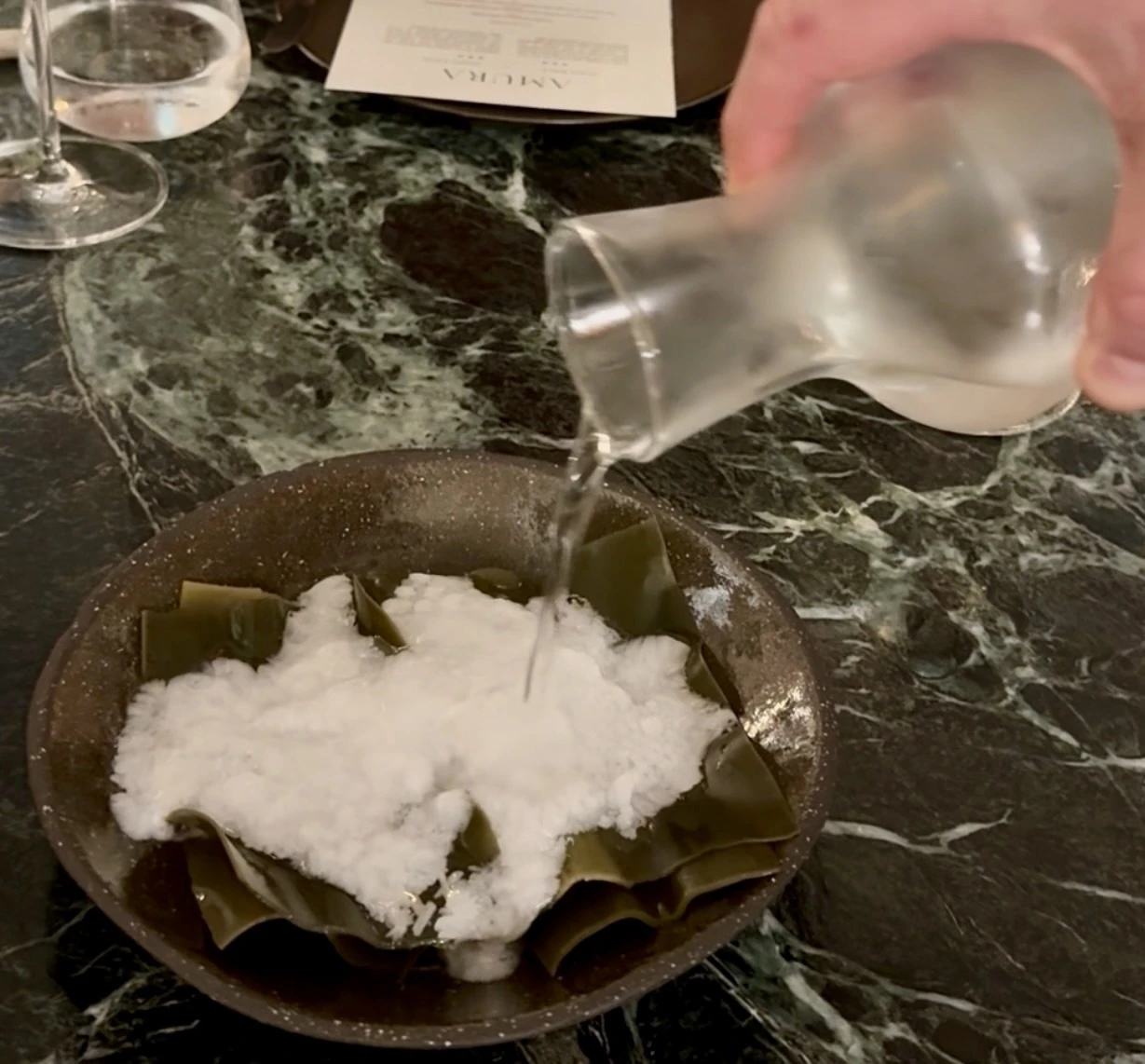
Then came the hot-and-cold scallop, served with oyster emulsion, cured scallop and citrus hot sauce.
The salt-cooking technique was part theatre, part gastronomic marvel. It demonstrated how precision and imagination can transform a familiar ingredient, without losing sight of what made it special in the first place.
The flavour in the delicately sliced scallops floating in their own plankton ocean of deliciousness was clean, deep and intensely fresh.
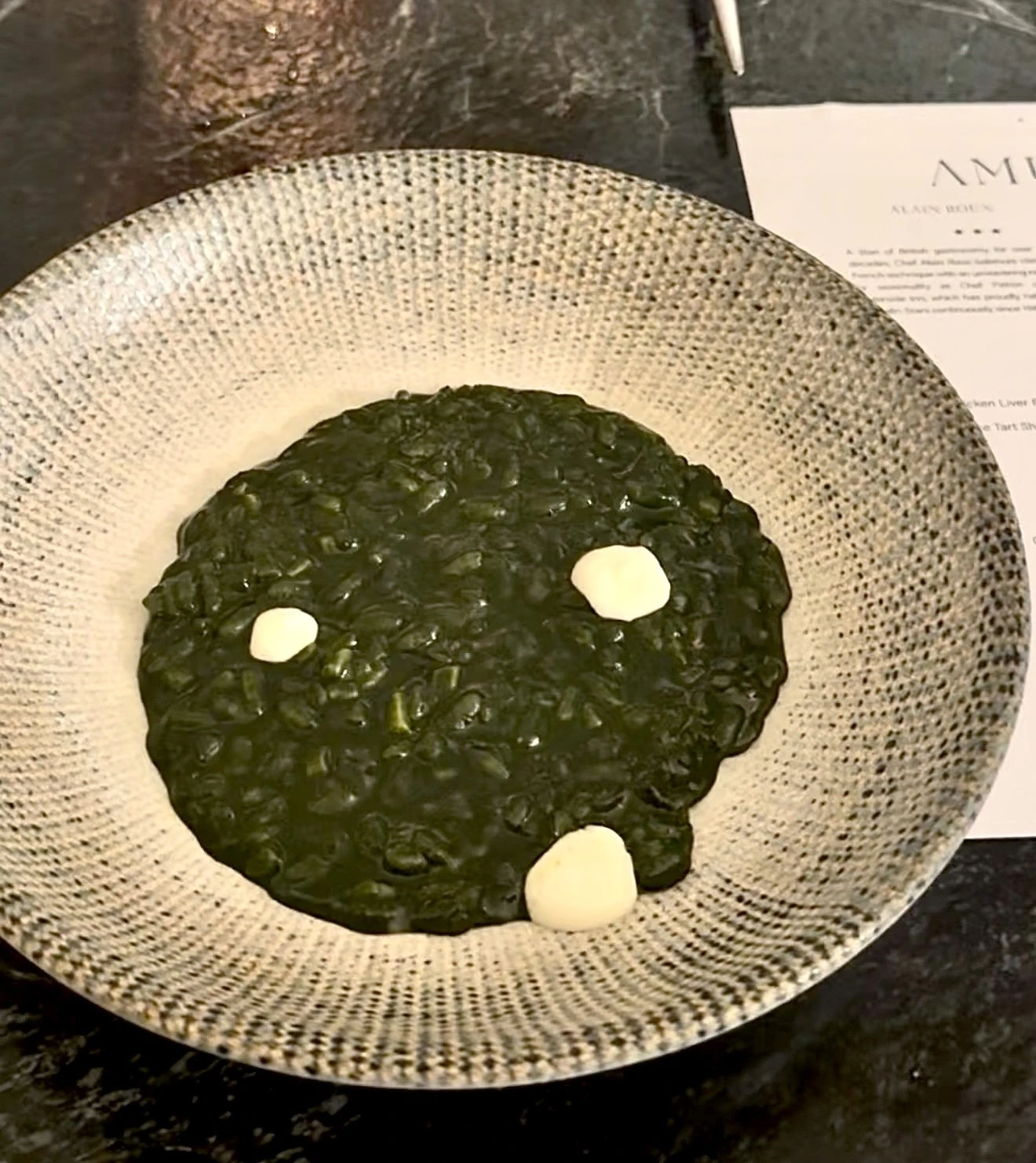
León’s plankton risotto achieved something similar. As it arrived, the plates were gently tapped to allow the risotto to settle into a smooth, even layer.
Chef Roux, who had stopped at our table, explained that this small ritual was not simply for show.
"A good risotto should always have a little help," he said. "That’s what I’ve been told by the Italians. And the Spanish do the same, so it must be true."
The risotto carried an extraordinary concentration of marine flavour. It tasted not simply of seafood, but of the sea itself.
It was the kind of dish that makes you want to protect the ocean. As one of my fellow guests, Bianca Coleman rightly pointed out, we should want to protect it anyway.
Touche! Still, it was quite the moment.
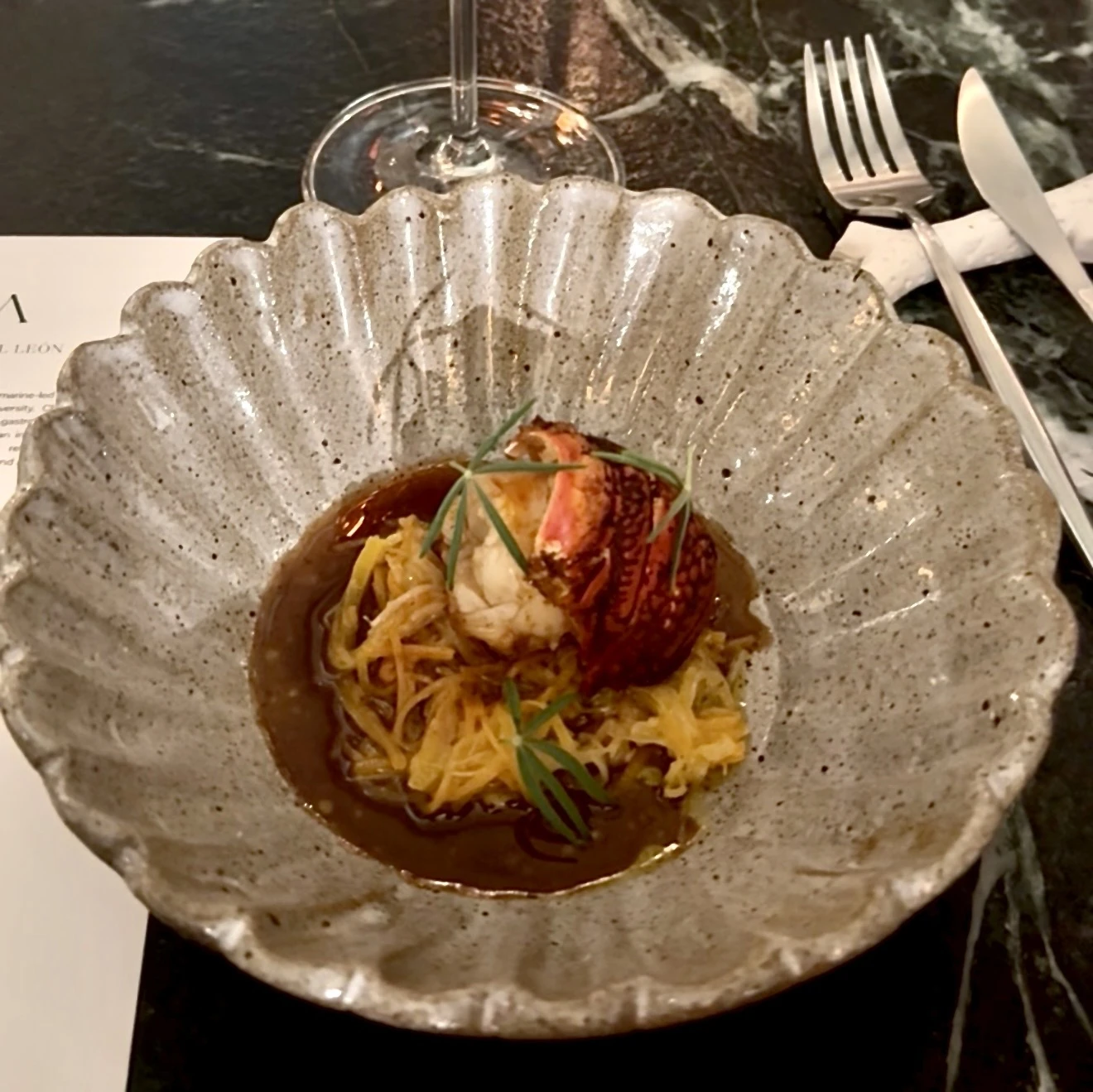
Roux’s signature pan-fried lobster medallion brought another kind of history to the table.
Served with a ginger-flavoured vegetable julienne and white port sauce, the dish has been associated with The Waterside Inn since 1975. The lobster was sweet and delicate, while the ginger and vegetables cut neatly through the richness of the sauce.
"We used Canadian lobster, it’s perhaps a little sweeter, with a slightly different flavour," he said.
There was something revealing in the way he spoke about it. This was not a chef arriving with a fixed formula and forcing local ingredients to conform. He was tasting, comparing and responding to what was available.
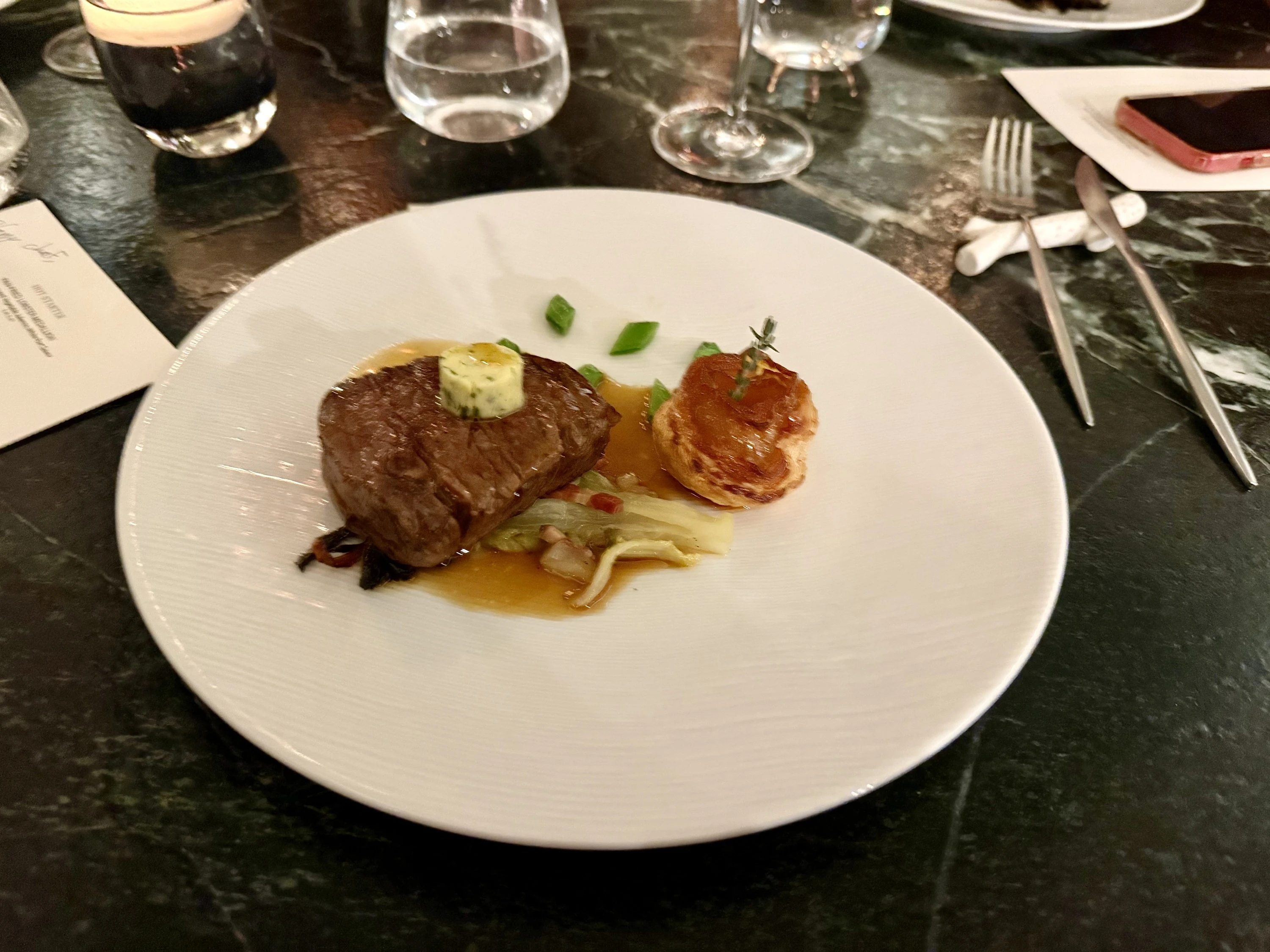
The main course returned us to the reassuring pleasures of classical cooking: barbecued Angus beef fillet with a caramelised shallot tarte tatin and thyme jus.
It was elegant and deeply comforting, with the precision expected of a chef who carries one of Europe’s most formidable culinary legacies.
Simply called Green Beans, there were, in fact, no beans.
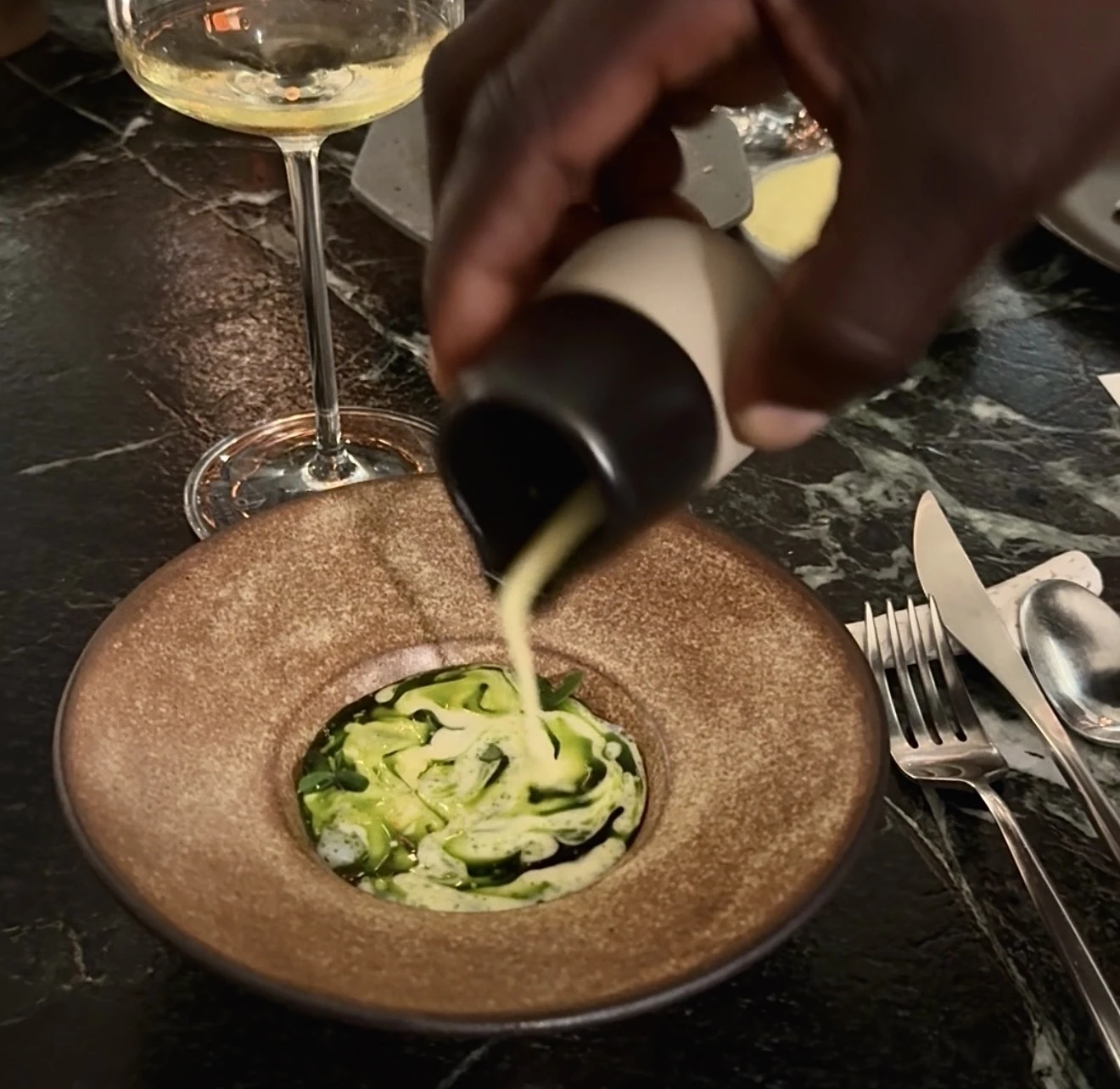
What appeared to be a familiar vegetable was kelp root, served with marinera sauce and baby almonds. It was playful without becoming gimmicky and showed exactly why León has earned his reputation as the Chef of the Sea.
He does not restrict his idea of marine cooking to premium fish and shellfish. His pantry extends to plankton, sea lettuce, kelp and other overlooked ingredients growing beneath the surface.
That philosophy came through most powerfully in the scallop, kelp root and risotto courses. Each revealed a different aspect of the ocean without allowing technique to overwhelm the ingredient.
When Roux spoke about seafood, the conversation naturally turned towards sustainability. For him, respecting an ingredient also means knowing when not to serve it.
"As chefs, we try to follow the regulations because we know people listen to us and that our choices can make an impact,” he told us.
“Every chef has a responsibility to be clever about what they use. If a fish species is in its breeding season, leave it alone for several months.”
It is a straightforward principle, but one that carries weight when it comes from the custodian of a restaurant that has maintained three Michelin stars for more than four decades.
"That is why I cook with the seasons," he continued. "Fish, shellfish, plants and seaweed all have their own seasons, and there are such wide varieties that you can always choose the right one. If you use them responsibly and in moderation, it’s fine."
Those words offered a useful lens through which to understand the entire dinner.
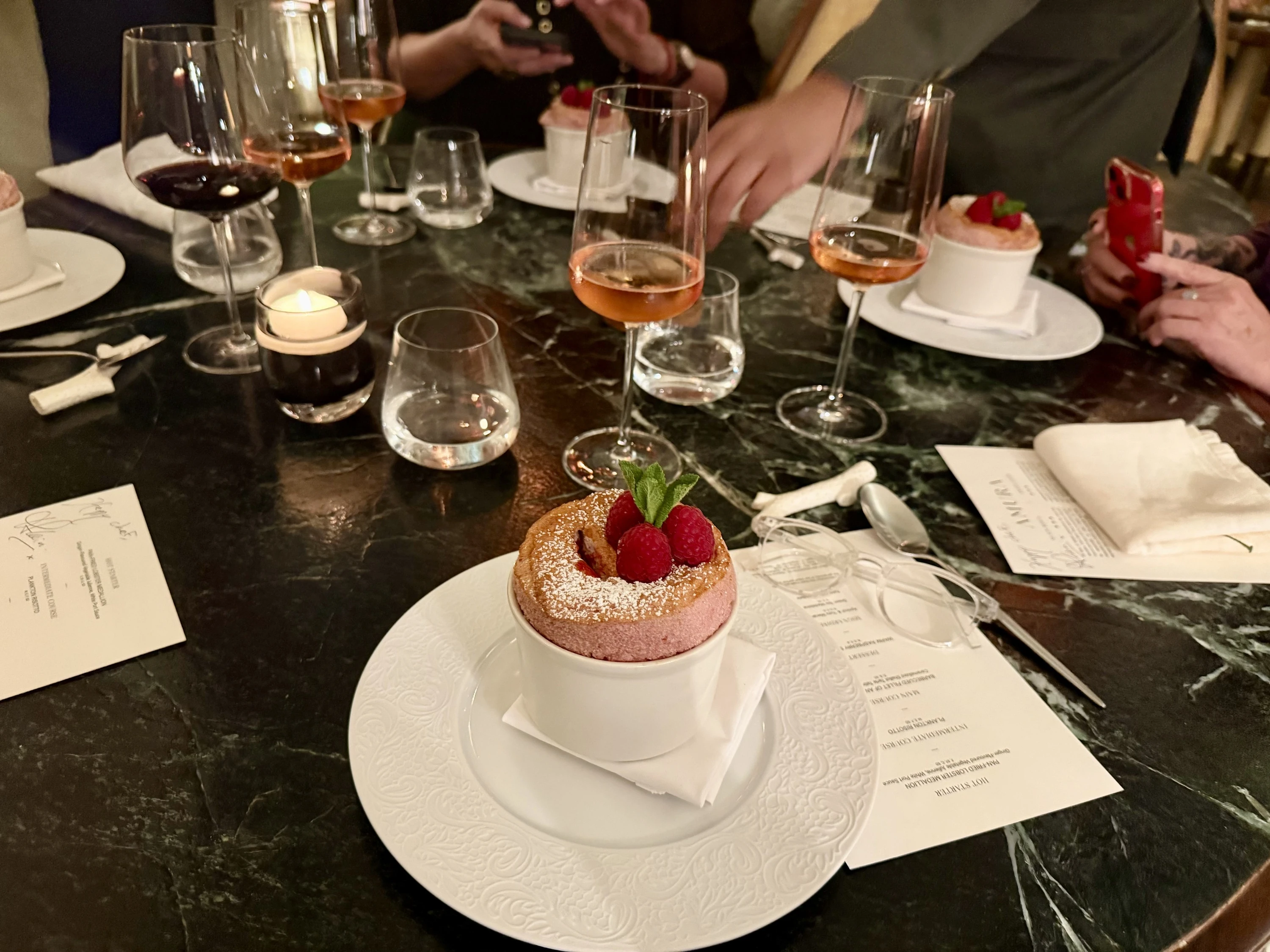
The technical skill was extraordinary, from the precise handling of the scallop to the gentle tapping of the risotto plates and the perfect rise of the raspberry soufflé, which saw the closed clapping of service that celebrated techniques honouring the ingredients.
READ: Cape Town’s FYN selected for new UNESCO sustainability pilot
Cape Town may not have a Michelin Guide, but evenings like this demonstrate that the city is firmly part of the international culinary conversation.
The value of the collaboration also extended beyond the 40 guests seated inside Amura. As part of the residency, two Amura chefs were given the opportunity to spend two weeks training at Aponiente in Spain, allowing León’s approach to marine gastronomy to find new expression in Cape Town.
For us diners, the message was delivered plate by plate.
The scallop tasted of the ocean. The kelp root challenged assumptions about what could take centre stage in a fine-dining menu. The plankton risotto captured the intensity of the sea in a single spoonful. Roux’s lobster, beef and soufflé showed why classical dishes endure when they are made with care and precision.
This was cooking of the highest calibre, but it was not excellence, simply for excellence's sake.
The evening offered a glimpse of what becomes possible when celebrated chefs remain curious, respect their ingredients and recognise that protecting the natural world is inseparable from the future of their craft.
Dinner may have lasted only a few hours, but that is the kind of lesson that sticks!
Sign up to Time Out Cape Town's free newsletter for expert recommendations on new things to do, see, eat and drink in the Mother City. You can also follow Time Out Cape Town on Facebook, Instagram and TikTok!
TIME OUT CAPE TOWN RECOMMENDS:
📍 The best things to do in Cape Town
🏨 The best hotels in Cape Town
🍽 The best restaurants in Cape Town
🛏️ Where to stay in Cape Town
📢 Latest news from Cape Town
Discover Time Out original video