[category]
[title]
From the meaning of the reed to the songs, traditional dress and cultural teachings, here’s what to know about one of KwaZulu-Natal’s most significant annual ceremonies.


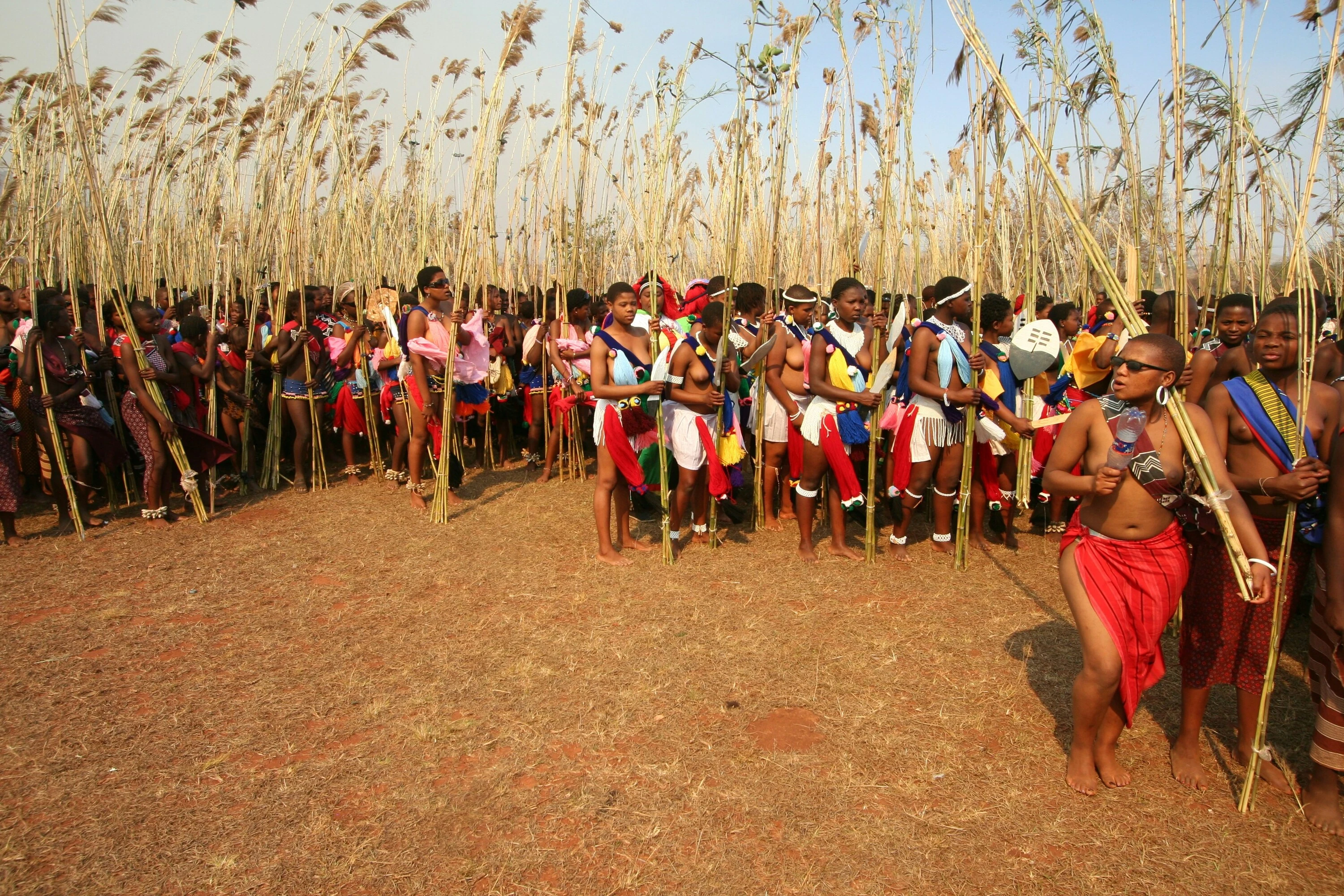
Every September, thousands of young women gather in KwaZulu-Natal carrying reeds as part of uMkhosi woMhlanga, commonly known as the Zulu Reed Dance.
The colourful ceremony is known for its singing, dancing, traditional dress and royal procession, but there is much more to it than the spectacle.
For generations, uMkhosi woMhlanga has provided a space for cultural knowledge to be passed from older women to younger generations, while celebrating Zulu identity, language, customs and traditional arts.
The modern Zulu Reed Dance was revived during the reign of the late King Goodwill Zwelithini kaBhekuzulu, with his Great Wife, the late Queen Mantfombi Dlamini-Zulu, playing a crucial role in bringing the tradition back into Zulu cultural life. Queen Mantfombi, who was born into the Eswatini royal family, was widely credited with helping restore the ceremony and bringing knowledge of the reed dance tradition from her royal home into the Zulu kingdom.
With the 2026 ceremony taking place across two royal residences in northern KwaZulu-Natal, Time Out Durban spoke to Professor Sihawukele Ngubane, a UKZN academic specialising in isiZulu language, literature and culture, to find out more about the tradition and what visitors should know.
READ: Celebrate Spring and Heritage Month at Durban Botanic Gardens
uMkhosi woMhlanga is an annual Zulu cultural ceremony centred around young women presenting reeds to the Zulu monarch.
The tradition has older Nguni cultural roots, while the modern Zulu ceremony was revived during the reign of King Goodwill Zwelithini, with Queen Mantfombi playing an important role in its restoration.
In 2022, King Misuzulu kaZwelithini paid tribute to his late mother for bringing the tradition from her Swazi royal home and sharing it with her marital home in the Zulu kingdom.
According to Prof Ngubane, the ceremony has traditionally been associated with chastity, moral education and the transition from maidenhood to womanhood.
READ: What's on in Durban this Heritage Month!
The clue is in the name. The reed is a powerful symbol within Zulu culture and is connected to the story of the Zulu people's origins. According to tradition, the first human ancestor emerged from a bed of reeds. Participants seek out straight, flawless reeds, which symbolise purity, before presenting them to the King as a gesture of respect.
“Uhlanga lomhlabathi is designated to the King as founders of the nation,” explains Ngubane.
The reed also has a practical place in traditional life, having historically been used to make mats, baskets and other items, as well as in the construction of traditional homes.
“This was initiated for chastity and to preserve young girls’ moral behaviour. In the Zulu tradition, girls under 18 years were treated as treasure for the nation and were prevented from becoming pregnant out of wedlock.”
He describes it as “the rite of passage from maidenhood to womanhood”.
READ: 5 things to do in Durban for under R200
For visitors, one of the most striking aspects of uMkhosi woMhlanga is the atmosphere.
The ceremony features traditional singing and dancing, with maidens dressed in traditional attire and adorned with beadwork. The colours, patterns and accessories form part of a wider expression of cultural identity.
But the spectacle is only one part of the experience.
The songs, dances and teachings are also a way of passing cultural knowledge between generations, with older women playing an important role in preparing and guiding the young women taking part.
Prof Ngubane says the ceremony should be understood as a cultural and educational gathering rather than simply an event to watch.
READ: Black Coffee’s Art Legacy Gala brings South Africa’s creative heavyweights together in Durban
Parts of the Reed Dance are open to the public and attract spectators, dignitaries, tourists and members of the media.
However, this is first and foremost a royal and cultural ceremony, rather than a tourist attraction.
Some aspects of the proceedings may be private or culturally sensitive, so visitors should follow instructions from organisers and respect areas where public access is restricted.
Photography should also be approached respectfully. If you are unsure whether something can be photographed, ask before taking a picture.
The best way to experience the Reed Dance is to observe respectfully rather than treating cultural practices as a photo opportunity.
READ: Learn to cook Durban dishes this Heritage Month
While the Reed Dance remains firmly rooted in Zulu cultural traditions, its role has evolved alongside challenges facing young people.
The revival of the ceremony also took place against the backdrop of the HIV/AIDS epidemic, which was having a devastating impact on KwaZulu-Natal. Its emphasis on abstinence and responsible sexual behaviour subsequently gave it an added role in conversations around HIV/AIDS and sexual health.
Broader educational programmes surrounding the event have also addressed issues affecting young people, including teenage pregnancy, sexual health, gender-based violence and human trafficking.
“It has transformed from a customary focus into a multi-layered youth camp,” says Prof Ngubane.
For him, that ability to evolve while retaining its cultural foundations is part of what has allowed the Reed Dance to remain relevant.
“It is about preserving the culture, preserving the identity and making sure that the younger generation knows where they come from.”
What began as a royal cultural gathering has grown into one of KwaZulu-Natal’s most prominent annual cultural events.
Thousands of maidens take part, with large crowds gathering around the royal proceedings. In 2013, more than 40,000 maidens were expected to participate in the ceremony.
The ceremony has also taken place at different royal residences over the years, including eNyokeni and eMachobeni.
Beyond the ceremony itself, uMkhosi woMhlanga provides a platform for traditional crafts, beadwork, music, dance and cultural tourism, bringing together communities from across the province and beyond.
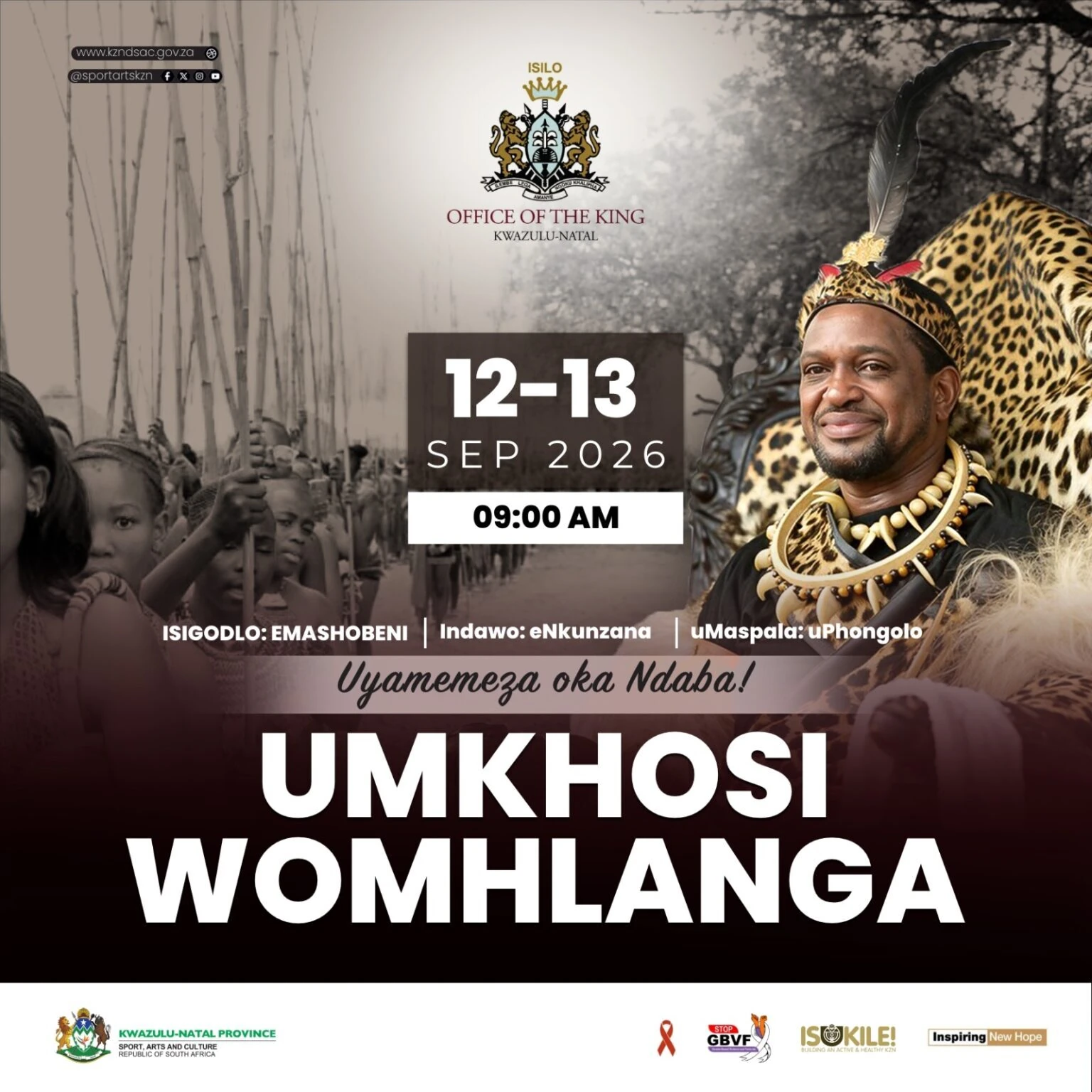
The 2026 uMkhosi woMhlanga programme takes place across two separate royal residences in northern KwaZulu-Natal.
The first part takes place at eMachobeni Royal in iNgwavuma from 4 to 6 September 2026.
The second takes place at eMashobeni Royal in uPhongolo from 11 to 13 September 2026, with the main public celebrations listed for 12 and 13 September.
The two locations are separate venues, so check the programme carefully if you are planning to attend.
When: The 2026 programme runs from 4 to 6 September at eMachobeni Royal, iNgwavuma, and from 11 to 13 September at eMashobeni Royal, uPhongolo. The main eMashobeni celebrations are on 12 and 13 September.
Where: eMachobeni Royal, iNgwavuma, and eMashobeni Royal, uPhongolo/Pongola.
What to expect: Traditional singing, dancing, beadwork, dress, royal proceedings and thousands of young women participating in the ceremony.
If you’re visiting: Dress respectfully, follow instructions from organisers and be mindful that this is a cultural and royal ceremony rather than a conventional public festival.
Photography: Be respectful when taking photographs and do not photograph private or restricted proceedings.
Getting there: If you are travelling from Durban, allow plenty of time for the journey into northern KwaZulu-Natal and check your route before setting off.
While you’re there: Take the opportunity to learn about the traditions rather than simply watching the spectacle. The Reed Dance is a living cultural practice, and understanding its meaning is part of experiencing it respectfully.
The wider Zululand region is rich in cultural, historical and natural attractions, including the Zululand Heritage Route, which follows an historic trade route for approximately 250km through the region.
For official programme information and updates, check the KwaZulu-Natal Tourism and Film Authority.
Follow Time Out Durban on Instagram, Facebook and TikTok! To get the coolest news, features, and things to do straight to your inbox, sign up for our newsletter.
TIME OUT DURBAN RECOMMENDS:
📍 The best things to do in Durban
🍽 The best restaurants in Durban
🏨 The best hotels in Durban
🛏️ Where to stay in Durban
📢 Latest news from Durban
Discover Time Out original video