[category]
[title]
As options for flight-free travel across the continent continue to grow, writer Rebecca Crowe tries out Europe’s newest luxury sleeper bus Twiliner


When someone asks me how long it'll take for me to get to Switzerland this week, I say around 35 hours. They, understandably, look dumbfounded.
Since the golden age of budget flying, travelling abroad for a city break is a much more accessible and speedy undertaking. Doing as I’m doing – carving out days just to get to a destination – is coming back in vogue, but it will still get you some blank stares. Slow travel is, of course, driven by a heightened awareness of our carbon footprint and our impact on overtourism, but it’s also about having more experiences while you travel. My journey to Switzerland, which involves a train, an overnight ferry and a ride on Europe’s brand-new luxury sleeper bus – not to mention stops in a couple of different cities – is certainly proof of that.
RECOMMENDED: I’ve taken crowded sleeper trains – my first journey in a private compartment was game-changing
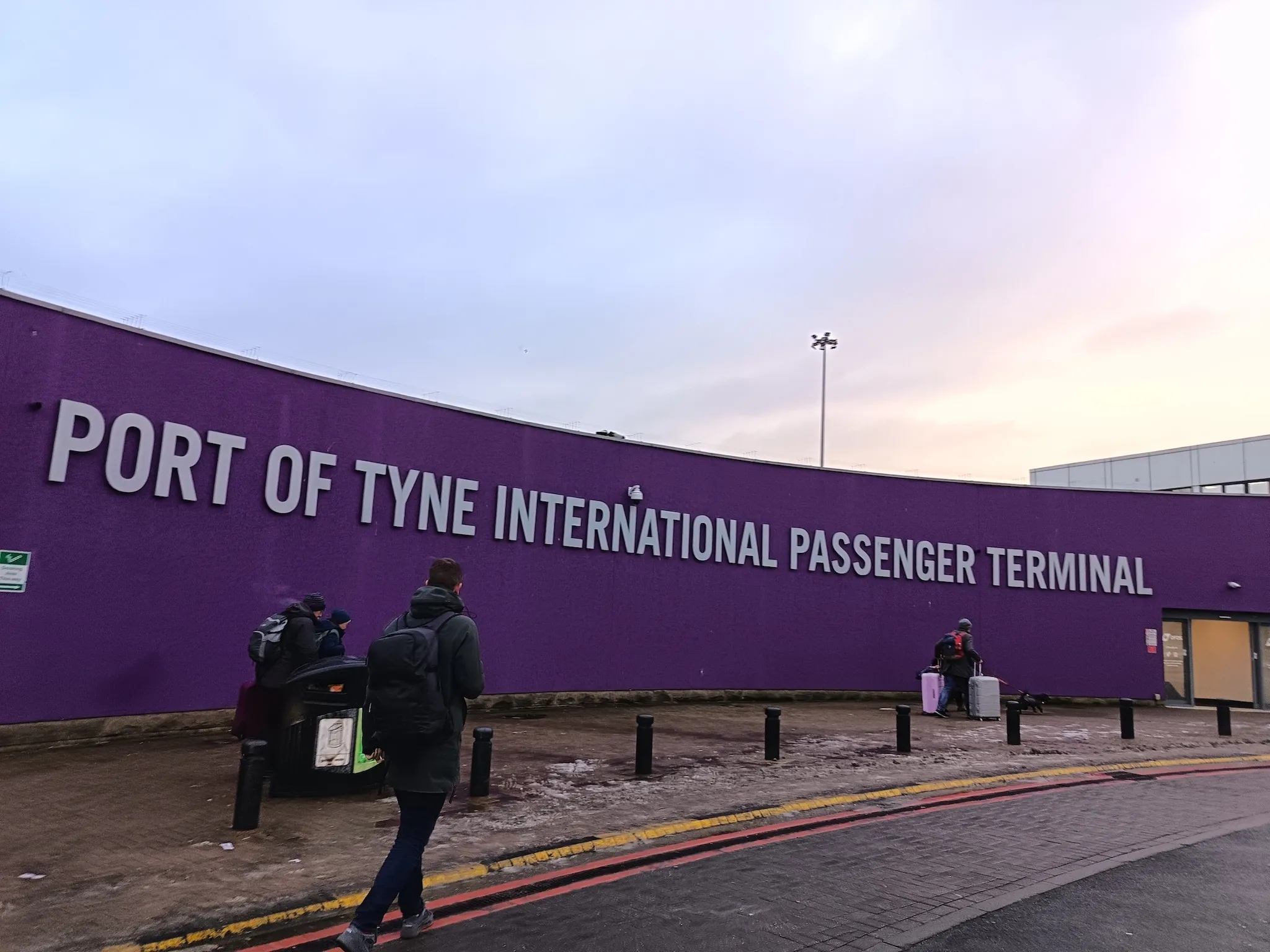
My first leg is a four-hour Transpennine Express train from my home in Liverpool up to Newcastle. It’s technically the wrong direction to my final destination, but I’m headed to North Shields for the Newcastle to Amsterdam ferry, a longtime stalwart for slow travel between the UK and Europe. While the Eurostar gets all the attention, for many living in the North of England and Scotland, the cost of travelling to London far exceeds any time lost on the 15-hour overnight ferry, touted as a mini cruise.
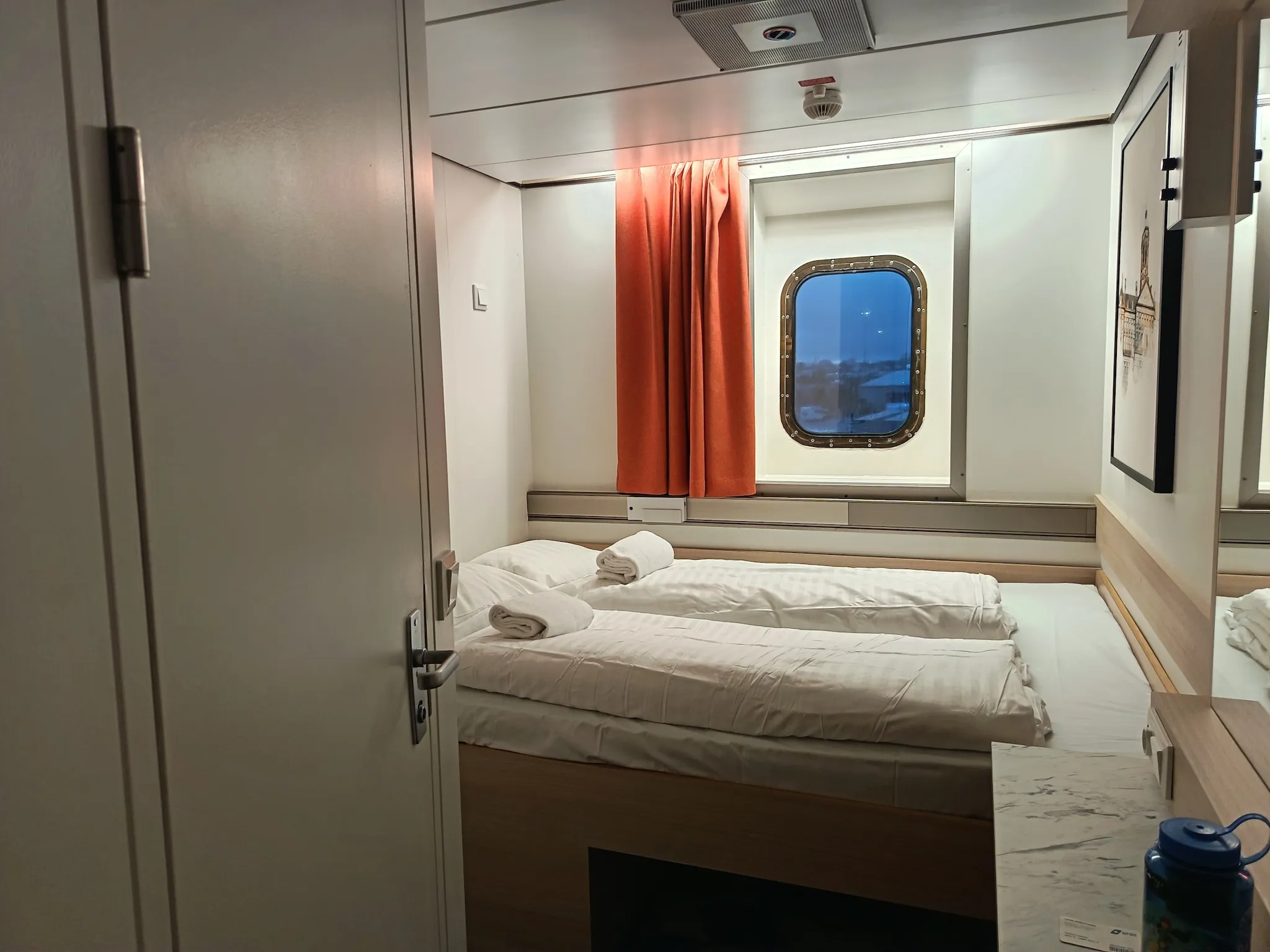
Stepping on board this behemoth, it's easy to see how this could be a taster cruise for many. The daily service for North Sea passengers is equipped with a cinema, bar, club, duty-free shopping and live music. Setting off at 5pm UK time, you have time to settle, explore, have dinner in one of the two restaurants, before having a nightcap and going to bed in the bijou but serviceable cabins.
The ferry docks at Amsterdam’s IJmuiden at 9:30am, and DFDS offers passengers the option to board a shuttle directly from the port to Amsterdam city centre, where they’re dropped right outside Centraal Station. On my particularly rocky voyage, there were more than a few green faces – the ferry was busier than usual due to adverse winter weather in Amsterdam. That’s another great thing about ferries, though. While Schiphol and many rail routes ground to a halt, the North Sea ferry chugs ever onwards.
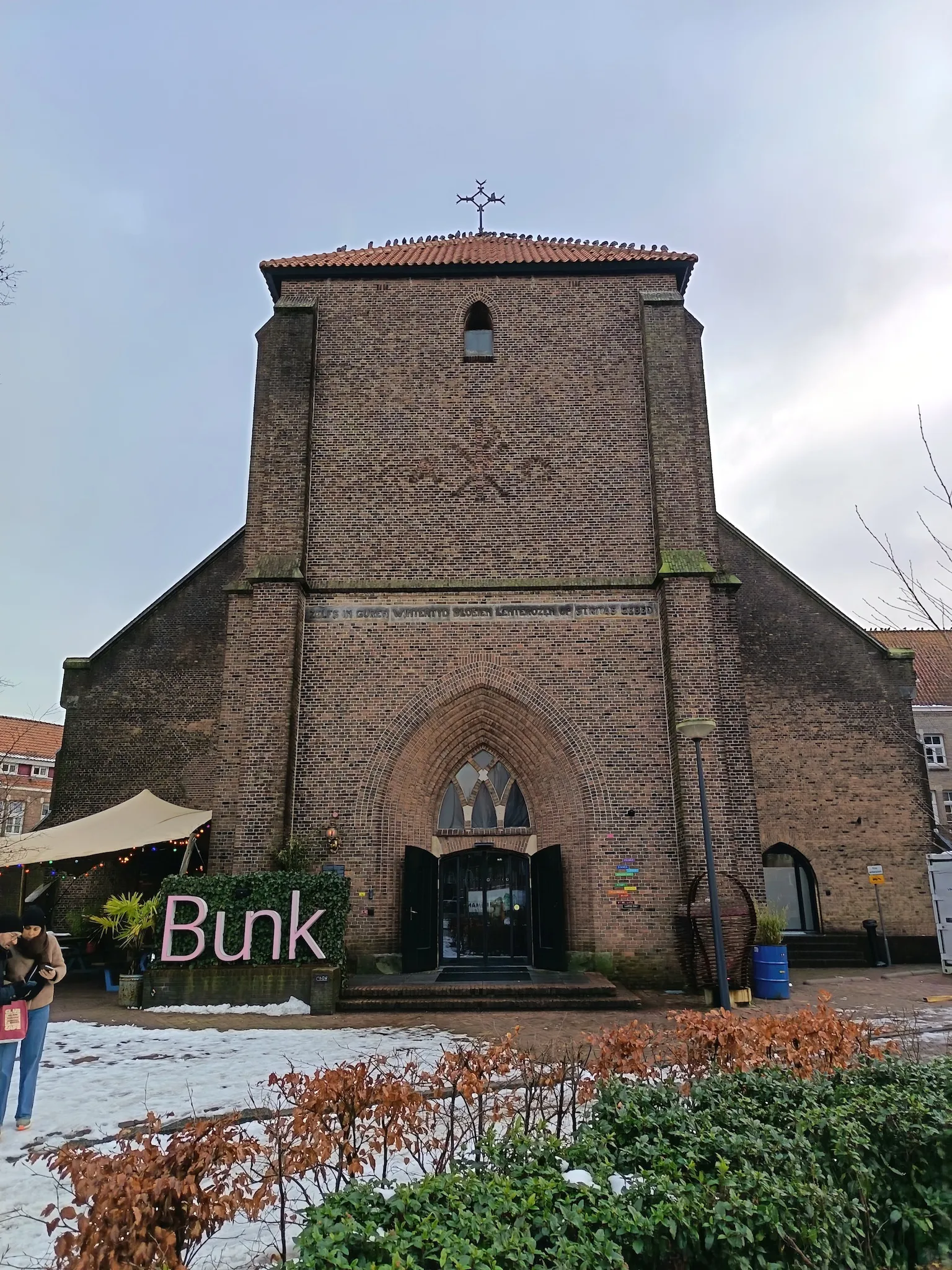
Arriving in central Amsterdam, slick with slush and ice from the early January weather bomb, I jump on the free ferry to Amsterdam-Noord to check into the stylish and sustainable Bunk Hotel. Set in an old church, it’s certainly a unique spot, right in the heart of the trendy Amsterdam-Noord neighbourhood.
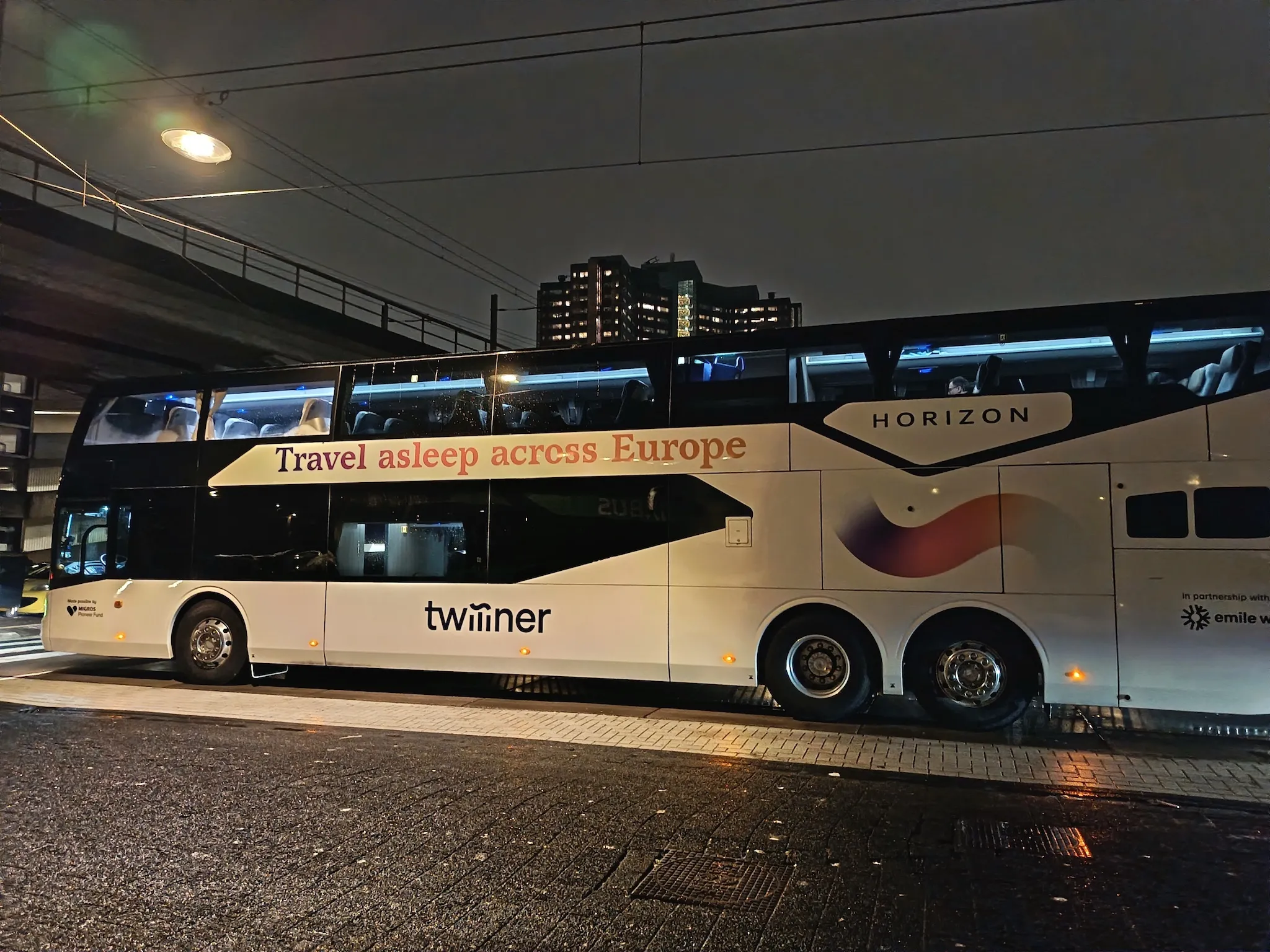
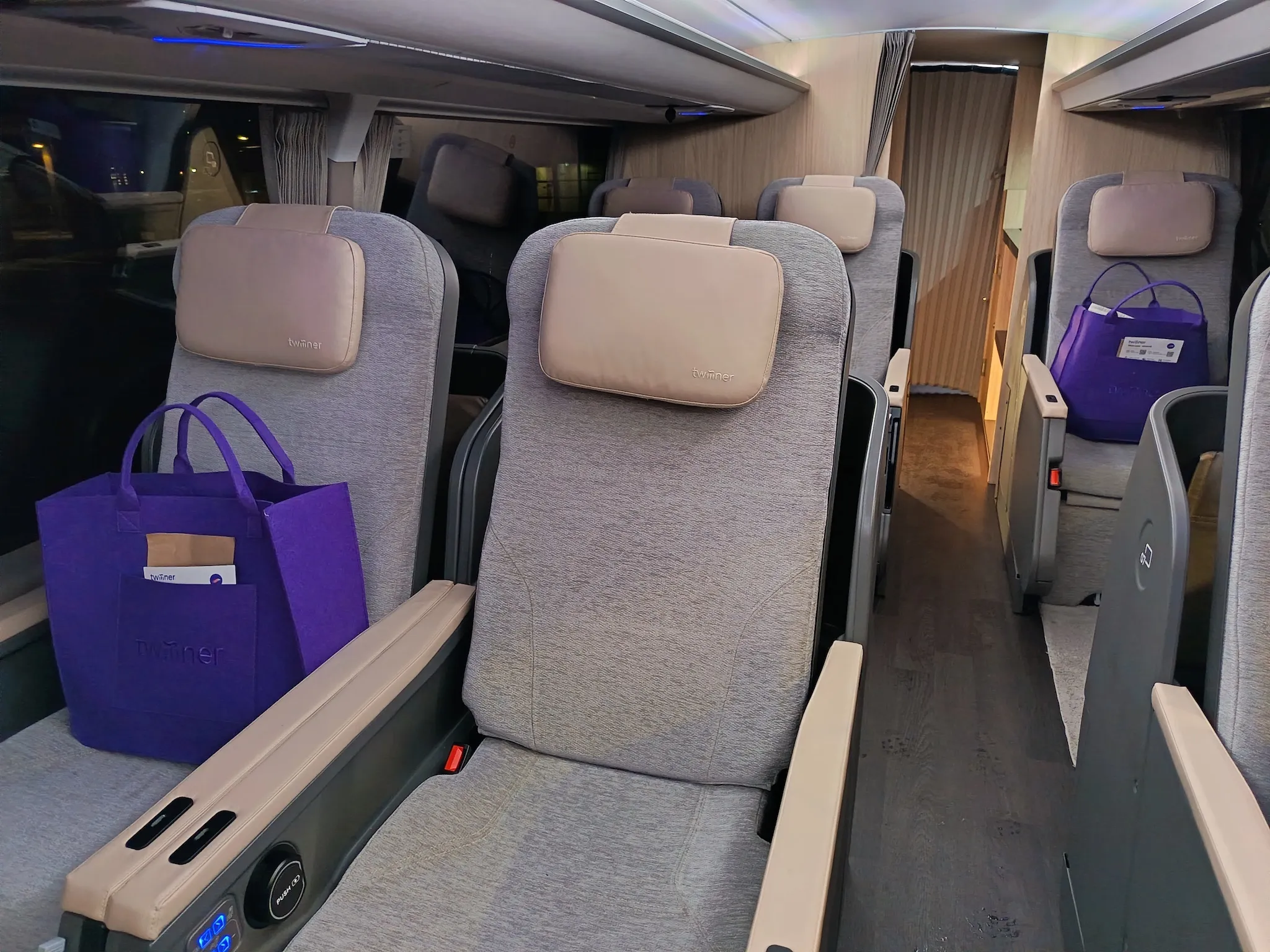
After a day and a half of tentatively exploring Amsterdam via slippy cobblestoned backstreets, I continue my flight-free odyssey via the brand-new Twiliner sleeper buses. Far from the back-breaking coaches I’m used to, these swanky 21-seater double-decker buses have business-class-style lie-flat seats. They’re created by aeroplane outfitters, specifically designed for comfort, flexibility, and roadworthiness.
At the moment, they only have two routes. One goes from Zurich to Barcelona, via Girona, and the one I tried out goes from Amsterdam to Zurich, via Rotterdam, Brussels, Luxembourg, and Basel. Designed to provide comfortable cross-Europe transport for those who don’t want to fly, Twiliner entered the market in November as a high-end, business-class-style alternative to long-distance coaches. Think of it as a sleeper train, but on the road.
RECOMMENDED: Europe’s brand-new sleeper train routes we can’t wait to ride in 2026
Tickets are around CHF 150 (approx. £140) for a single journey – steep, but miles off the amount you’d pay for a luxury train ride in Europe. According to co-founder and CEO Luca Bortolani, Twiliner is more about comfortable travel that gives you the space you need to have a good night’s sleep while being on the move – and that shouldn’t be considered a luxury.
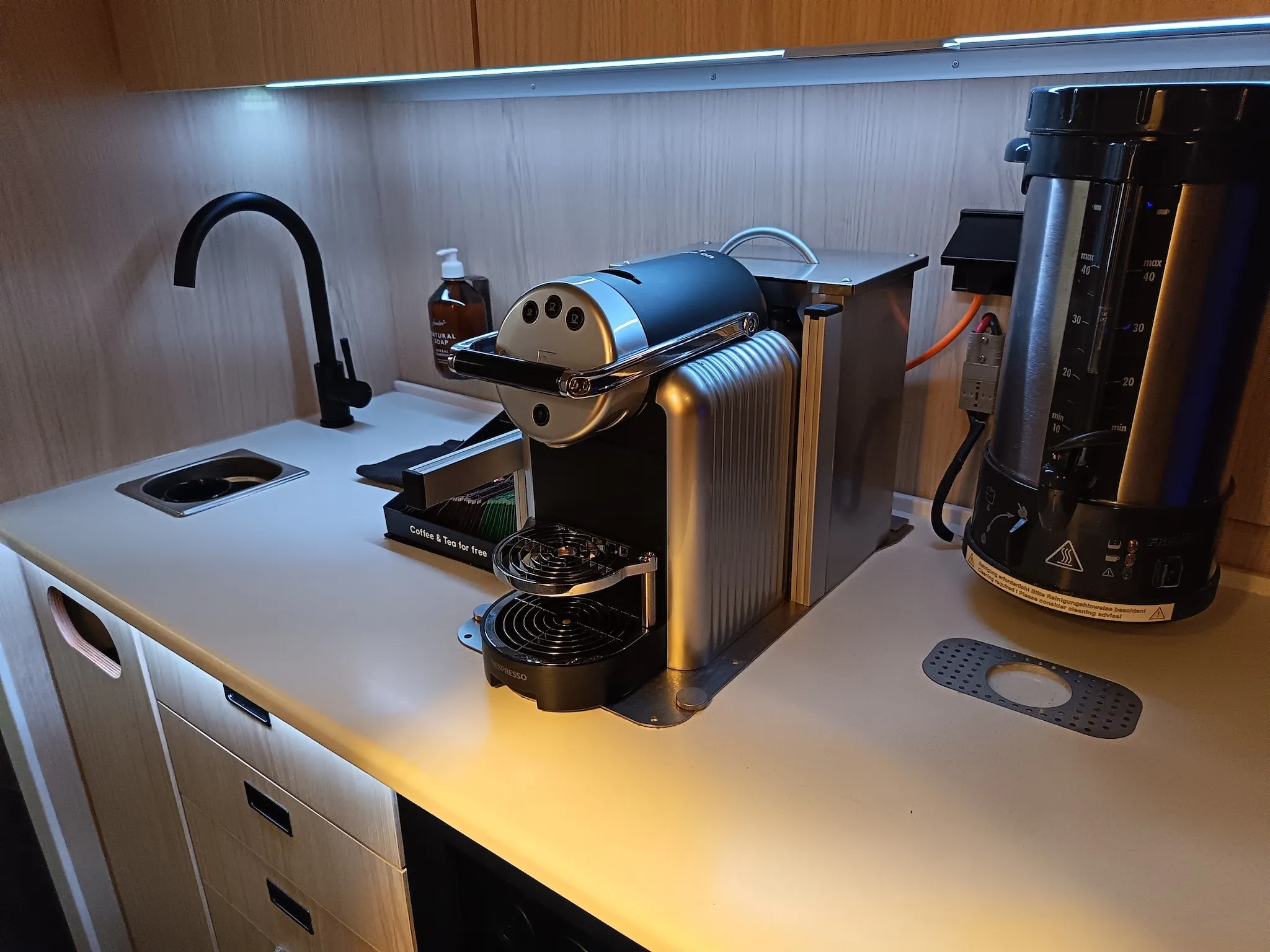
While it’s true that Twiliner coaches don’t have all the bells and whistles of a business-class flight, they do have impressive on-board amenities. From free tea, coffee and bottled water to a mini fridge of wine, beer and soft drinks, plus snacks that you can purchase with a QR code, reliable WiFi and in-seat USB chargers throughout, there’s a lot to like here. There’s also a hidden compartment for your shoes under the seat in front to keep everything neat and tidy.
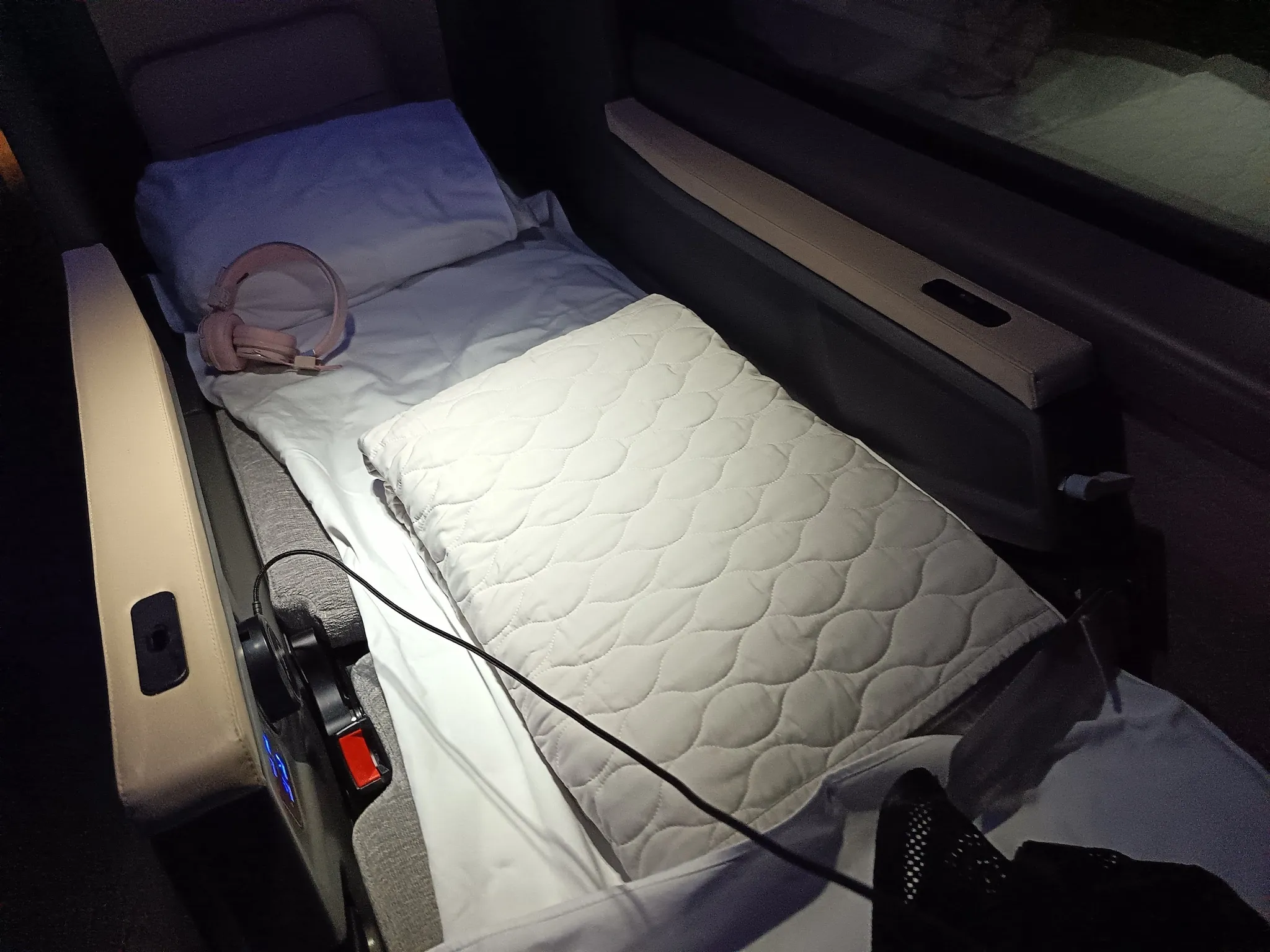
Immediately, on taking my seat, I start pressing buttons. The recline on the seat can be stopped at any point on the way down to its lie-flat status. You have to move any bags on the floor out of the way to stop them from being pushed around by the pop-up footrest, but other than that, it’s a seamless transition.
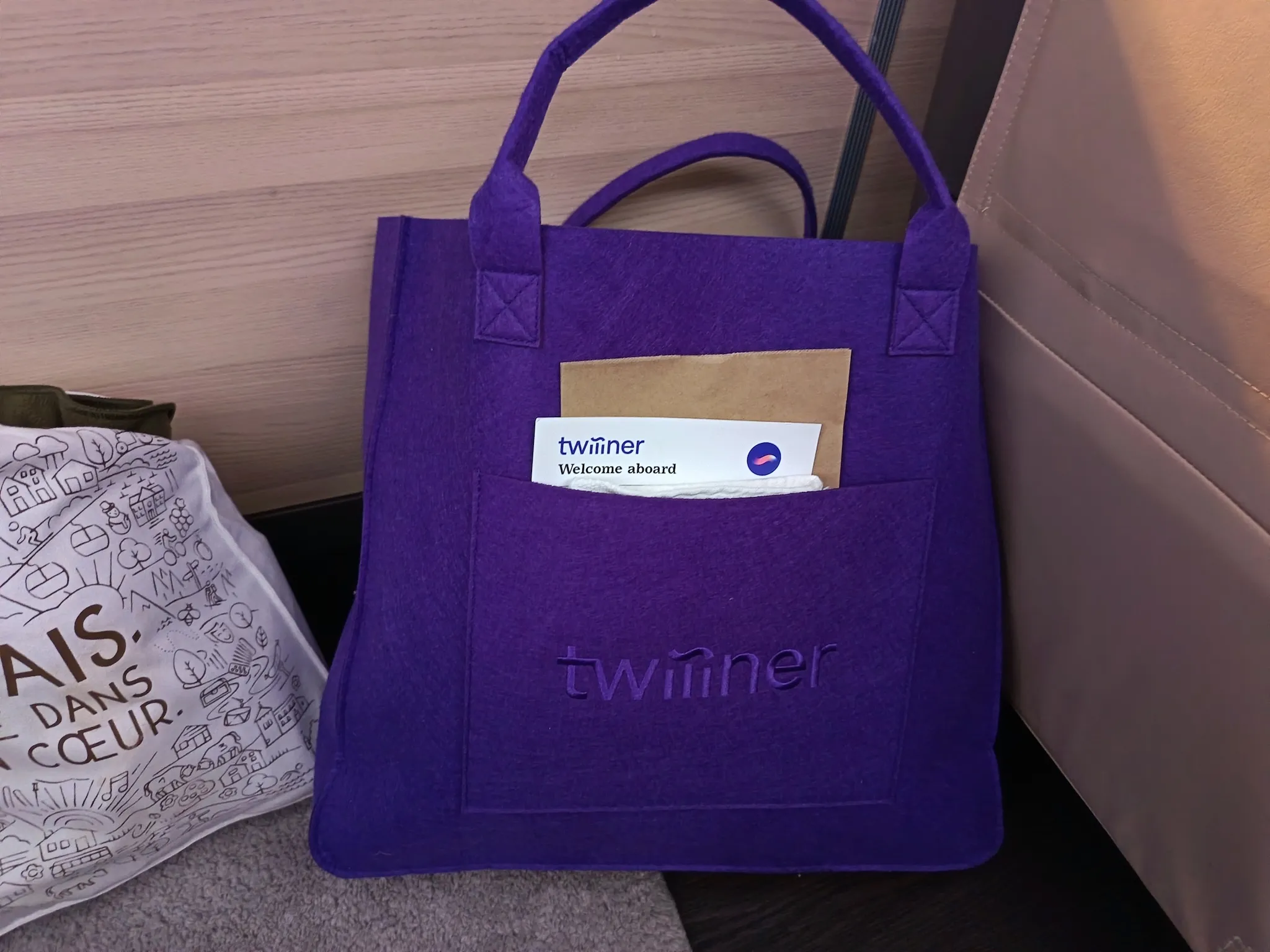
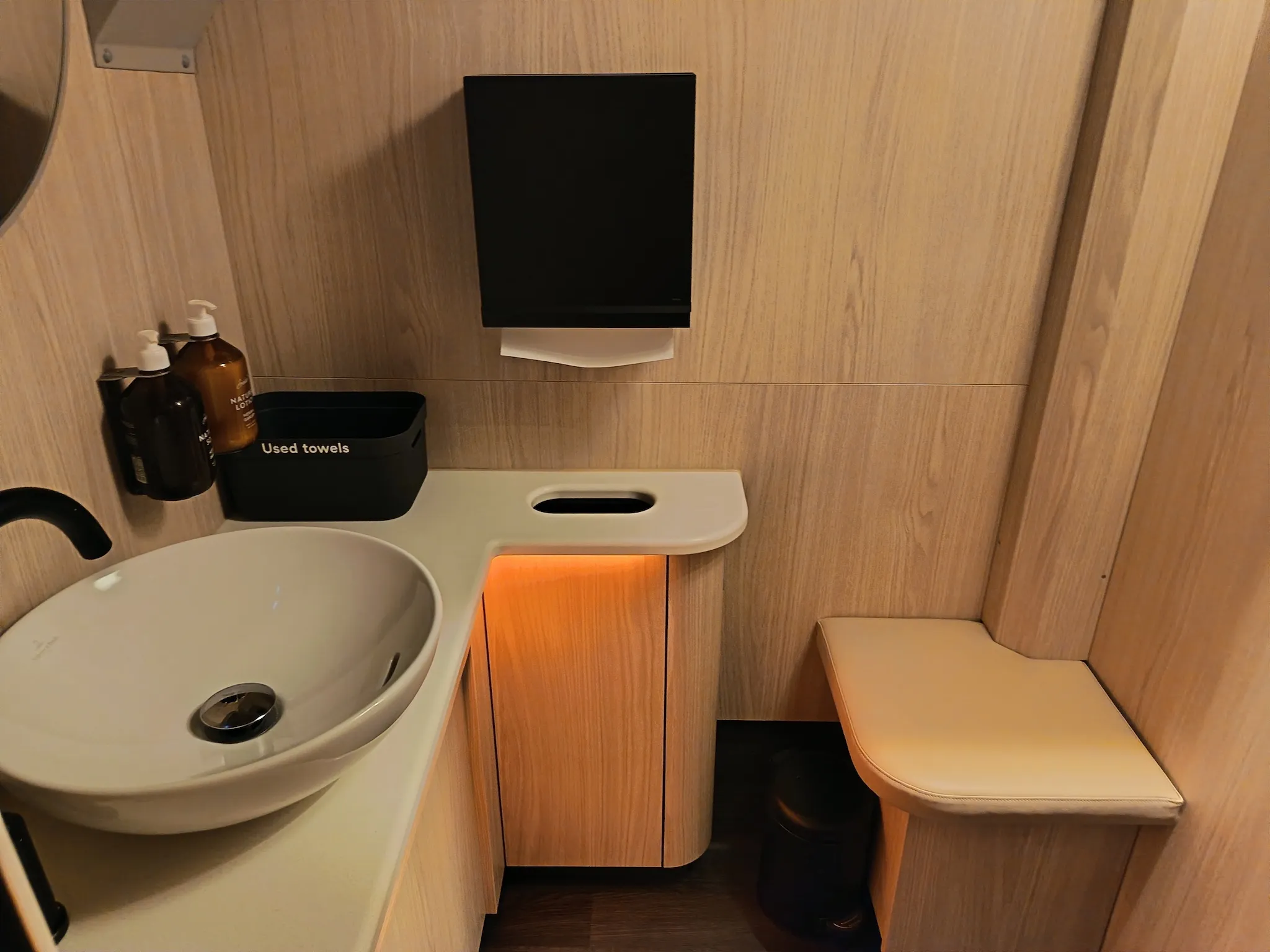
You’re also given a bag of bedding when you step onboard to make your seat even comfier when you want to go to sleep. Settling in for the evening, I head to the changing room. Yes, this bus has a changing room, and it’s separate from the toilet, and both rooms are equipped with premium toiletries – you don’t get that on a Megabus.
Trying to sleep flat with a seat belt on is not without its challenges. For safety purposes, there’s an additional sleep sack, which is a sort of mesh sleeping bag that buckles into seat belt fastenings and comes up to your shin. It takes some manoeuvring to get into an optimal position with the sleep sack and the pop-up footrest portion. At 5ft 1, I’m on the smaller end of the passenger spectrum.
However, after some initial wriggling, I drift off. The constant movement on Europe’s main motorways makes for comfortable rocking; however, I do jostle awake as we arrive at the cities along the way. The stop-start motions at traffic lights and going around tight corners don’t help if you’re a lighter sleeper. Nevertheless, I wake to the sound of my alarm on the outskirts of Zurich, feeling refreshed.
As far as overnight sleeper transport goes, this is, as Luca intended, a comfortable and spacious way to travel. It might not be the most budget-friendly option, but with hold and cabin luggage included as standard, and the ability to wake up in a new country in an eco-friendly, well-rested way, this could very well be the future of sustainable travel transport in Europe.
Rebecca Crowe was the guest of Transpennine Express, DFDS, Bunk Hotel, and Twiliner for this trip.
Stay in the loop: sign up to our free Time Out Travel newsletter for all the latest travel news and best stuff happening across the world.
Discover Time Out original video