[category]
[title]
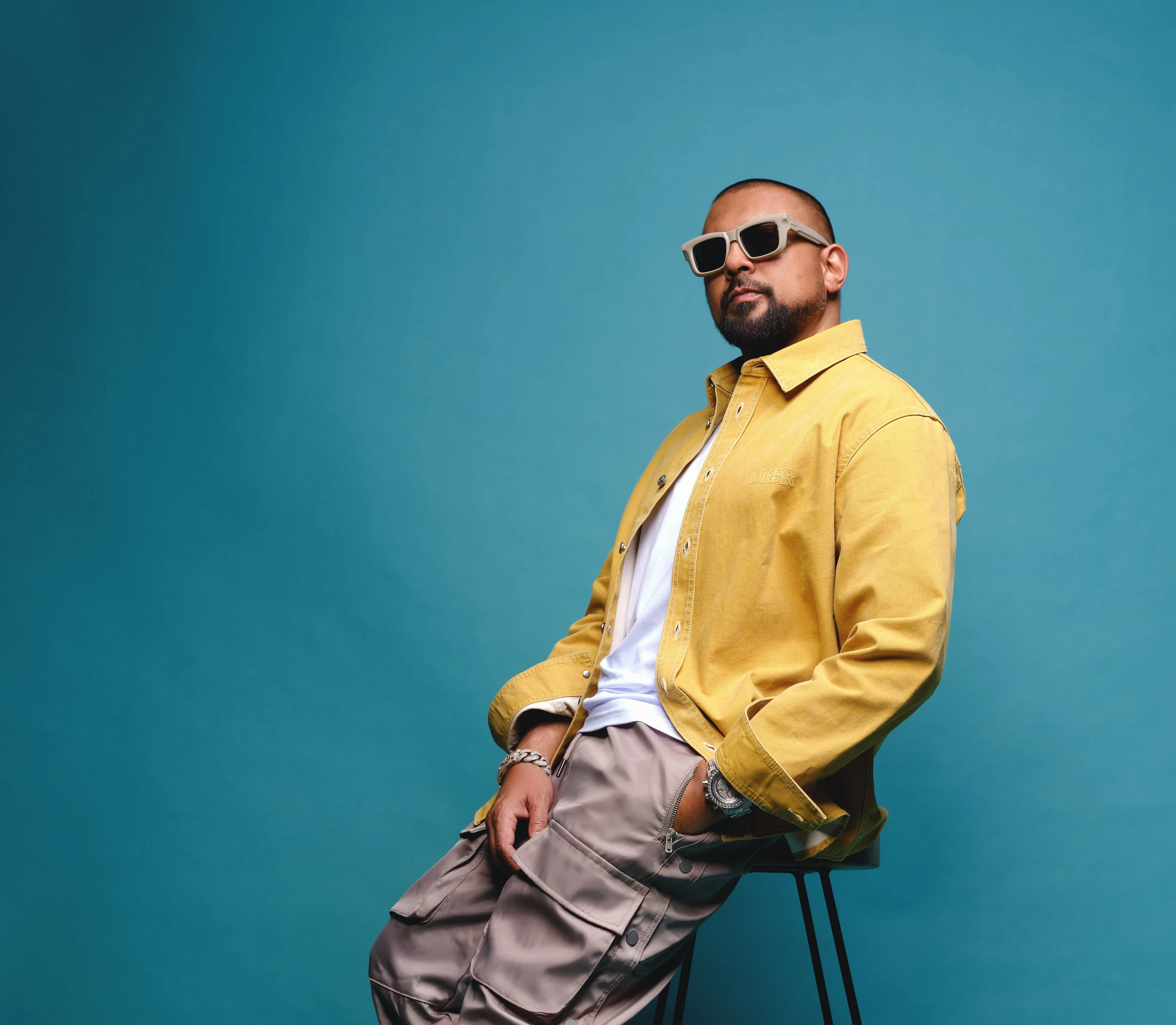
Ahead of his December shows in Cape Town, Pretoria and Durban, Sean Paul speaks to Time Out about the music that connected him to South Africa, his admiration for Tyla and dancehall’s fight for recognition.


Long before Sean Paul performed in South Africa, Jamaican musicians had brought this country into his life. Growing up on the island, he heard them speaking out against apartheid. Through their music, a struggle unfolding thousands of kilometres away became something he felt connected to.
“That just made me feel close to the situation,” he tells Time Out South Africa.
It is an answer that takes our conversation somewhere I hadn’t expected. I had asked what keeps bringing him back to South African audiences. He begins with the history he learnt through music.
Reggae grew out of Jamaica’s poorer communities, particularly in western Kingston, drawing on earlier Jamaican sounds, African musical traditions and American rhythm and blues. It made room for songs about love and faith alongside demands for dignity and accounts of injustice. Those concerns travelled with the music.
In South Africa, we know something about that. Music helped people organise, mourn and keep going through the struggle against apartheid. Songs were sung at marches and funerals, while musicians in exile carried the country’s story to international audiences. Hugh Masekela’s ‘Bring Him Back Home’ demanded Nelson Mandela’s release. Miriam Makeba used her voice and her platform to confront the system that had forced her into exile.
Jamaican musicians added their voices to that international opposition. Reggae also found South African interpreters, most notably Lucky Dube, who made the sound speak to life here.
The two countries have distinct histories. But music offered a way for people to recognise one another’s experiences and take an interest in a struggle beyond their own borders. Sean Paul’s childhood memories are a personal account of how that happened.
When he eventually visited Robben Island, Mandela’s resilience made a lasting impression. During our conversation, he returns to it while discussing his own frustrations and the determination to keep working when recognition falls short.
He also remembers learning a saying there: “Each one, teach one.”
It is something he says he has carried into his life. His interest in South Africa has continued as the country’s music has found new audiences, with younger artists giving him fresh reasons to listen.
Tyla is one of them.
He notices something quite specific about her singing: the way she pronounces “motivation”. She keeps her South African accent, rather than adopting an American one. For a musician whose Jamaican delivery is so central to his own work, that feels familiar.
“An artist like Tyla sounds authentic to me, and I love that,” he says.
His brother introduced him to her work before her international breakthrough. At the time, Sean Paul was trying to work out how to reach the TikTok and Instagram generation. Watching her, he saw someone enjoying herself and being herself.
READ: Tyla is giving Tygas two nights in Pretoria
They went on to collaborate on the ‘Push 2 Start’ remix. He also appreciates her decision to work in Jamaica, which he sees as respect for the culture behind some of the sounds in her music.
That matters to him because he hears a continuing exchange between Africa and the Caribbean. African musical traditions helped shape Jamaican music; reggae and dancehall, he believes, went on to influence contemporary Afrobeats. Now he hears African production influencing dancehall again, including the use of log drums.
“We need the connection to the motherland,” he says.
His enthusiasm for that exchange comes with a frustration: Jamaican music has travelled widely, but he feels the people behind it have not always received the recognition they deserve.
Dancehall developed in Jamaica during the political turbulence of the late 1970s, with performers talking and singing over rhythms becoming a defining part of the sound. It offered another way to describe everyday life, with its own language, humour, arguments and pleasures.
Sean Paul calls it a “street newspaper”. It speaks to what young people are experiencing now, he says, which helps explain why it continues to connect across generations.
For him, dancehall provided a way to understand his own community and express himself when he was younger. Heartbreak, growing up, and trying to make sense of things all had a place in the music.
He is proud of its influence on hip-hop, reggaeton and pop. But he questions why that influence is not always openly acknowledged when Jamaican sounds become part of an international hit.
“Where is the love?” he asks.
When I bring up Buju Banton’s criticism of Afrobeats, he makes a distinction. He agrees with the call for respect for Jamaican music. He is less comfortable with the expectation that African artists should always be delivering a political or social message.
“Music is for education, it’s for entertainment, it’s for upliftment,” he says.
He feels some of the criticism was harsh on African musicians getting their chance to be heard internationally. He names Tyla and Ghana’s Stonebwoy among those who have come to Jamaica to work and shown respect for its music.
There is room in his view for the protest song and the party record. That feels particularly relevant to a South African audience. We have a history of music helping people endure difficult lives, including by giving them somewhere to dance, laugh and spend time together.
Sean Paul wants Jamaican music’s contribution to that experience recognised, even when the song’s immediate purpose is simply to make people move.
Sean Paul’s frustration with recognition comes from personal experience. Recalling the Grammys, he describes the excitement of performing with Sting, an artist he admires, alongside the disappointment of being given a trailer outside rather than a room backstage.
At the time, he felt his commercial success should have counted for more.
“My music in 2003 was number one everywhere in the world, so I didn’t get my own room backstage in the Staples Center. How come?”
To him, the treatment suggested that his success was being dismissed as temporary. While people called to congratulate him, he was struggling to enjoy the occasion.
“I was still in a trailer outside, on the red carpet. I could still see people coming late to the red carpet and walking in,” he recalls. “This feels like a disrespect. It feels like they think that this music is not going anywhere.”
He also points out that his Grammy acceptance speech was not televised. For him, that feeds into a wider concern about how reggae and dancehall are treated, even as their influence reaches far beyond Jamaica.
He respects the Grammys, but believes they sometimes get it wrong. The disappointment did not make him stop recording.
“I like what I’m doing, and that’s why I do it.”
“The prospect of a nine-to-five for me was very frightening,” he says.
Had music not worked out, he thinks water polo coaching would have suited him better. His parents met at a swimming pool as children, and swimming and water polo became a significant part of his own upbringing. Training filled six days a week.
He still goes to the National Stadium pool to swim and play when he is home in Jamaica. The discipline and friendships from those years have remained part of his life.
For all the discussion about music’s wider influence, some of the stories behind his own songs begin much closer to home.
The Jodi he mentions in ‘Get Busy’ is his wife. She was his girlfriend then, and he was heading to the studio when a phone conversation gave him an idea.
She was with a friend who called out a request: put their names in the song.
He agreed. Later, with the verses and choruses recorded and an intro still to find, he remembered the conversation.
“I didn’t plan, and I never thought it would be such a thing,” he says.
Years later, women named Rebecca still approach him to claim their mention, too. A small moment between people who knew one another became part of a song that strangers around the world know by heart.
He has included his family in his videos as well. But touring has also taken him away from them, sometimes over Christmas and other occasions when work had to come first.
When I ask what brings him the greatest joy now, he speaks about his children.
“Right now, it’s reading to my kids every evening. That’s the high point of my day.”
Being away makes those evenings valuable. He talks about their formative years, what they are learning and his responsibility to guide and protect them.
It is a quieter part of his life than the one audiences see, and one he clearly wants to be present for.
I tell him how pleased I was to see Durban on the tour announcement. International tours have a habit of leaving us out, so the inclusion deserved some appreciation.
He reminds me that he has been here before. His memories include visiting an aquarium and swimming with sharks. Shout out to uShaka Marine World! He also volunteers a recollection of Durban Poison, with an apology to anyone who might be offended.
His previous stay lasted about a day and a half. With Durban closing this three-city run, he hopes there will be time to see more.
“Maybe I’ll spend a day or two to kind of learn more and see more.”
Cape Town left him with food memories, although he cannot recall the restaurant’s name. He remembers trying everything and gaining a little weight in the process. Eating, he says, is part of how he experiences another culture.
There is plenty he would like to fit into this return. Onstage, the challenge is deciding what can fit into the set.
At the time of our interview, Sean Paul was still finalising the South African shows. He expects to perform for around an hour and a half, possibly longer, balancing new material with the songs audiences have come to hear.
READ: Sean Paul is coming to South Africa this December
“I know they want the hits,” he says.
He will probably include the Tyla remix to acknowledge their collaboration. That is a possible song choice; a guest appearance by her has not been confirmed.
‘Get Busy’ often comes early in his set, while ‘Temperature’ closes it. Asked which songs he still loves performing, he picks those two because of the response they get.
He is considering learning some African dance moves for the trip as well. Any potential guests will remain a secret for now.
After a conversation that has taken us through apartheid, musical influence, recognition, and family, his wish for the audience is straightforward. He wants people to dance enough to leave some of their stress behind.
Music helped him feel connected to South Africa before he ever arrived here. In December, he wants to give the people in front of him a good night, and a little relief from whatever awaits outside.
He has two words for how they should feel on their way out.
“Happily exhausted.”
Sign up to Time Out South Africa's free newsletter for expert recommendations on new things to do, see, eat and drink in the country.
TIME OUT SOUTH AFRICA RECOMMENDS:
📍 The best things to do in Pretoria
📍 The best things to do in Durban
📍 The best things to do in Johannesburg
📍 The best things to do in Cape Town
Discover Time Out original video