
[image]
[title]Following his 2022 album Untidy Soul, Samm Henshaw has enjoyed a steady rise to the summit of the contemporary soul scene. The South London native’s long-awaited new record It Could Be Worse – featuring the already much-praised singles ‘Get Back’ and ‘Float’ – arrived as a vinyl exclusive in December 2025, and now Henshaw is gearing up for a world tour that kicks off right here in Tokyo on January 27.
The authentic, timeless soul sound of It Could Be Worse brings Henshaw’s artistry to new heights. ‘I feel like I’ve been living to arrive at this work,’ he told us recently. He also spoke about the album’s striking cover and the meaning behind its title, the documentary that influenced him during production, and the one song he kept listening to while making the record.
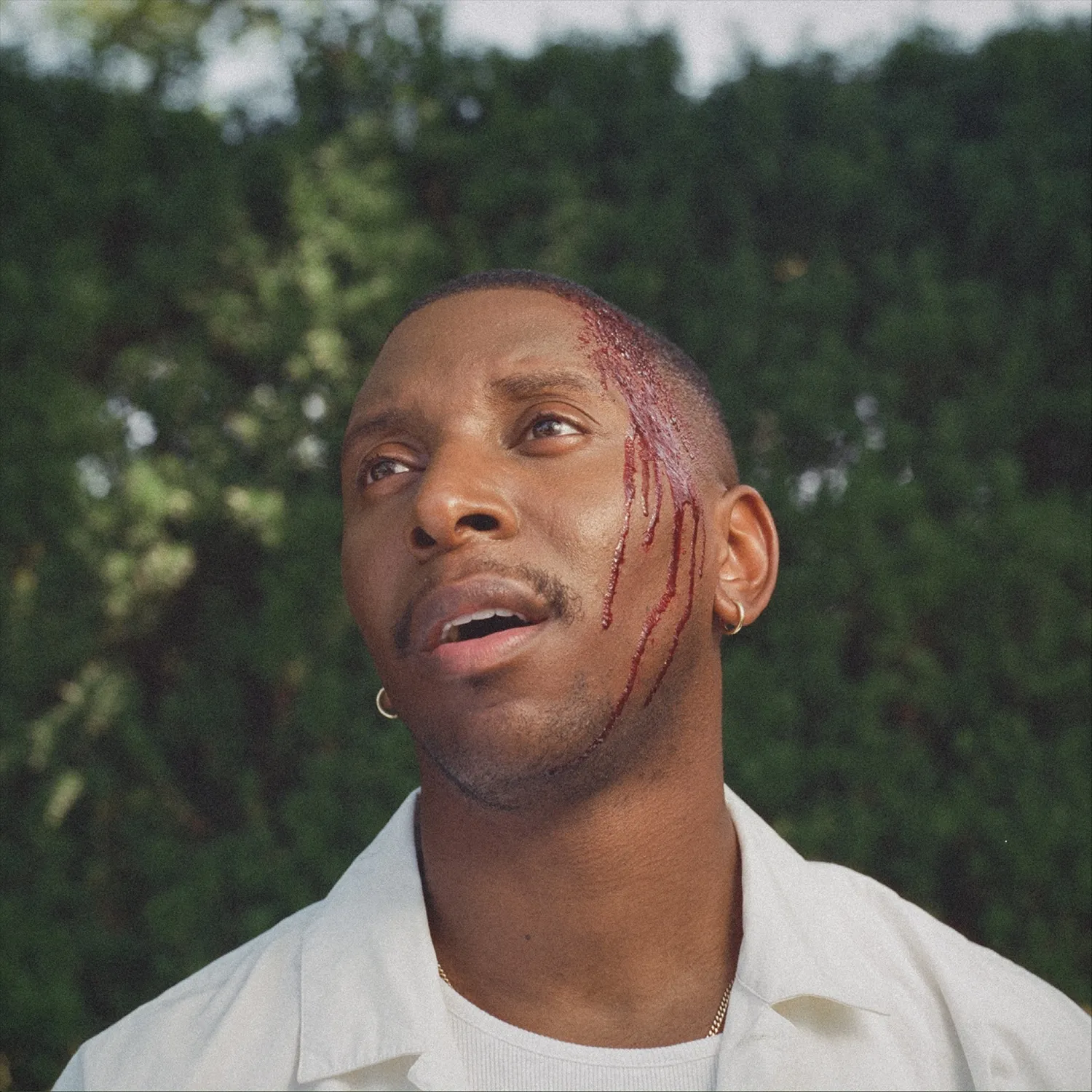
The cover photo of you bleeding from the head, along with the title It Could Be Worse, produces a pretty unsettling effect. What inspired the cover and the title?
I wanted the album title and the artwork to work together. When listeners hear the title and see the cover, I want them to feel like detectives. Almost like stepping into a crime scene and trying to deduce what happened – listening to the album as they unravel it.
With the title It Could Be Worse and the single cover, along with the songs included, I hope listeners will imagine their own stories.
The lead single ‘Float’ reminded me of the first time I heard Marvin Gaye’s ‘Mercy Mercy Me’. You’ve said it’s ‘the soul record I’ve always wanted to make.’ What is the concept behind this album?
So much has happened over the past five years. Looking back, there were many painful experiences – losing family members, among other things. When I was in the middle of it all, I couldn’t imagine whether I’d be able to get through it, whether I’d be okay, or how things would turn out in the end.
But I feel like this album brought all those experiences together. It expresses my own perspective through the process of growing from adolescence into adulthood – who Samm Henshaw is as a person. In a word, it’s a growth album. You could also say it’s an album about becoming an adult.
After the first and second The Sound Experiment EPs and a run of singles, your album Untidy Soul felt like you’d found your signature sound. Since then, you’ve kept making music, and this new album feels even more like ‘authentic’ soul. Was there a specific breakthrough moment that led to this?
I’ve always thought I wanted to make this kind of album. Looking back, whether consciously or unconsciously, I feel like I’ve been living to arrive at this work. One hundred percent of my experiences so far are reflected in this album.
As for a breakthrough moment, it might have been a separation I experienced while recording in Los Angeles last year. In that moment, it felt like the pieces clicked into place – suddenly, everything started to make sense. I was able to focus intensely and pour my energy into finishing the album. That’s how this record came together.
How did you choose the musicians who play on the album? Were they people you selected yourself, friends, or chosen by the producer?
Some of the people I worked with were musicians I already knew, and others were introduced to me by the producer.
During the making of this album, I watched a documentary about how Michael Jackson’s Thriller was made, and it had a big influence on me.
What struck me most was how Quincy Jones, Michael and the entire team spent an incredible amount of time on sound and performance, thoroughly pursuing what they were trying to create. There was no compromise like, ‘Well, this is good enough.’
They really took the time and effort to aim for sounds no one had heard before, and then carefully selected from among them. What impressed me most was their serious commitment to creating new sounds.
That made me want to create something that felt as real, authentic and fresh as possible. For that, gathering the right musicians was extremely important.
Your lyrics often feel deeply personal and provocative, like in ‘Thoughts and Prayers’ from your previous album or ‘Stay on the Move’ on this one. When do ideas for lyrics come to you, and what are your sources of inspiration?
In my daily life, I always make sure to write down moments when I feel inspired. That way I end up with a list of events that can serve as a reference for lyrics. In the studio, I go through them one by one and write from there.
‘Stay on the Move’ was born exactly that way. I had written down some painful experiences I’d gone through. The song expresses continuing to move forward toward where you want to go, without giving up, while accepting difficult situations as reality.
Actually, the title Untidy Soul for my previous album also came from a phrase I’d heard somewhere years ago and noted down. I found it when I looked back through my notes for album title ideas.
The first and last tracks on an album can be really important. ‘Don’t Give It Up’ and ‘Tangerine,’ both featuring memorable opening choruses, feel perfect in that sense. In today’s streaming era, where songs are easily skipped, do you still think about track order?
Track order is extremely important. I want people to listen to this album from start to finish. Honestly, I’m not that interested in singles right now. Of course, when I make a single, I craft it as a single, but this project was conceived entirely as an album.
What I cared about most was having the beginning and the end of the album respond to each other like bookends. I hope listeners sense this composition themselves.
I also aimed to make an album where, after listening all the way through, if you then play just one song by itself and the next track doesn’t come on, it feels strange – that’s how organically connected I wanted the songs to be. I wanted to make an album where each track inevitably leads into the next.
In recent years, we’ve seen the release of many masterpieces in the vintage soul scene, including from Big Crown Records [the New York label led by Leon Michels]. I feel like this album resonates with that scene. Have you been listening to any of those records?
Clairo’s album Charm, which was co-produced by Leon Michels, had a huge influence on me. It has classic elements but feels very modernly updated, while still retaining her own character, and it fits perfectly with the current era. It has a timeless universality. I was really impressed by that approach.
When I first heard it, I couldn’t help thinking, ‘Who on earth made something this good?’ Then I checked the credits and saw Leon Michels’ name. That led me to really get into Big Crown Records’ releases as well.
You mentioned Marvin Gaye earlier when talking about ‘Float’, right? This isn’t something I’ve talked about much, but during the album’s production, I generally tried not to listen to other artists’ music. But there was one exception – when I was making ‘Float,’ I listened to Clairo’s ‘Juna.’
I was really inspired by it. That was literally the only song I listened to. It left a strong impression and was such a cool piece of work.
If you had to name just one soul album that influenced you, what would it be?
Just one…? That’s too hard… [laughs].
How about three then?
That’s still hard [laughs]. D’Angelo’s Voodoo, Lauryn Hill’s The Miseducation of Lauryn Hill and… D’Angelo’s Black Messiah, I guess. I ended up picking D’Angelo twice.
Last time you came to Japan, you brought a full band. What kind of line-up can we expect for the tour starting in January?
We’ll be playing with a full band again. I’m really looking forward to it.
Will the setlist mainly focus on the new album?
Yes. I’d be happy if everyone enjoys the songs from this record. Of course we’ll also play older songs.
Why does the world tour start in Japan?
It was actually a coincidence… But I’m happy if people in Japan are pleased about it [laughs]. To everyone in Japan, thank you always for your support. I can’t wait for the January shows. See you very soon!