

[category]
[title]
The creator talks music discoveries, creative chemistry and why the best part of a game might happen after you stop playing

You finish a game, look up a musician from the soundtrack and suddenly have a new obsession. A writer’s name sends you towards a book. A character’s outfit gives you ideas. Somewhere between playing and getting on with your life, your taste has changed.
Hideo Kojima would like more of that.
Speaking at the media preview for Kojima Productions’ tenth-anniversary exhibition, the creator describes games as a way into a much wider cultural education. Growing up, films introduced him to composers, books and clothes he might otherwise never have found. He wants the worlds he builds to leave players with that same curiosity.
It makes sense for a studio whose interests stretch across music, fashion, film and animation. For Kojima, those connections give players somewhere else to go once they put down the controller. You can follow the musician, find the author, get a little further into whatever caught your attention.
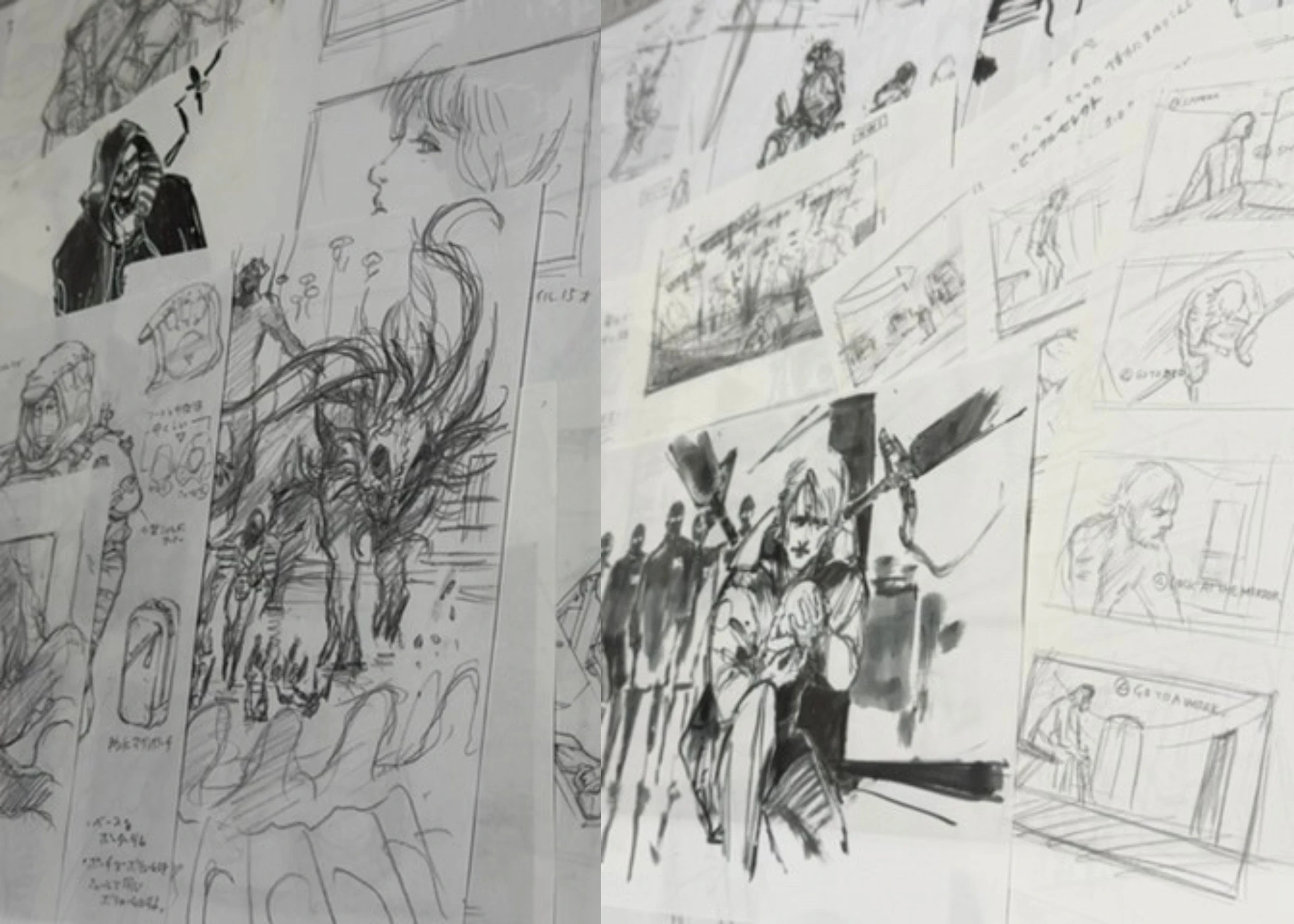
The exhibition extends that invitation to the people making the games. By sharing internal production material, Kojima hopes visitors will start wondering how it all works – and whether they could make something themselves.
There’s also a practical story behind one of its exhibits. During the production of Death Stranding 2, Kojima’s team used the MADO audiovisual system to connect Tokyo with a performance-capture set in Los Angeles. Directing actors through an assortment of phones and screens had proved difficult; the large panels helped them work across the distance.
For the exhibition, the system connects the venue with the studio.
It’s a fitting glimpse into how Kojima thinks: technology opening a door, with people and their ideas on the other side. The game gives you an introduction. Where you go afterwards is up to you.
You work with actors, musicians, artists and fashion brands. How do you choose your collaborators?
The actors… I do a lot of collaborations with musicians, artists, people in manga and so on, but they're almost all people I've liked over the course of my roughly sixty years.
Otherwise, it doesn't last. It takes four or five years. With actors, too, we have a slightly unusual way of shooting, so the filming period lasts around two years. It can become a very tough situation.
We have to understand one another, and we have to like one another, or we can't keep going. So I'm very careful about that when deciding who to collaborate with, and with casting as well. If you get that wrong, it doesn't work.
As AI develops, what do you think will be required of human creators?
[…] For a creator, the process of composing a piece of music is very interesting. It's not just telling someone, ‘Please make this kind of song,’ having it come back and saying, ‘OK.’
There's all that trial and error in between. A lot of adrenaline comes out in that process, and it feels incredibly exciting. I don't want a future in which that's lost.
On the other hand, it makes it easy to create things, and much more efficient. Depending on how we use it, perhaps we can build a good future.
I think creativity and products are different things.
Your work reaches people across national borders. Do you notice differences in how audiences respond to it?
It's the same with films or manga. Because there are cultural differences, you see something you've never seen before and are drawn to it. Of course that happens. I think that's part of why Japanese anime is popular around the world.
But what's at the core – storytelling… My games have human drama and things like that built into them. That's universal, you could say. It touches people's heartstrings, whatever country they're from. I think that can happen with games too. I think that's what it is.
With the first Metal Gear Solid and so on, I didn't make it thinking, ‘I want this to sell.’ I put in the things I wanted to make, the things I liked, and the result was that it sold. I wasn't doing any marketing at all. I think perhaps that was a good thing too. I introduced what I wanted to make to everyone, and they liked it, you could say.
With OD and your other upcoming projects, what do you want to try that you couldn’t realise in your previous work?
I'll get told off if I say too much about this, but these are things that move us from the second phase towards the third phase. OD is horror, but – I can't really talk about this – in terms of its system, it's something that hasn't existed before. Well, I can't say much. Physint is espionage action, but we're trying to make it a new kind of espionage game.
I want to remove the boundary between films and games. Again, I'll get told off if I say too much, but that's what we're aiming for. OD has something close to that, to films, as well.
Questions have been shortened and answers excerpted from a Japanese-language media Q&A.
Discover Time Out original video