[category]
[title]
The artist who put cyborgs on the commuter train has her first major solo exhibition in Japan in 24 years.

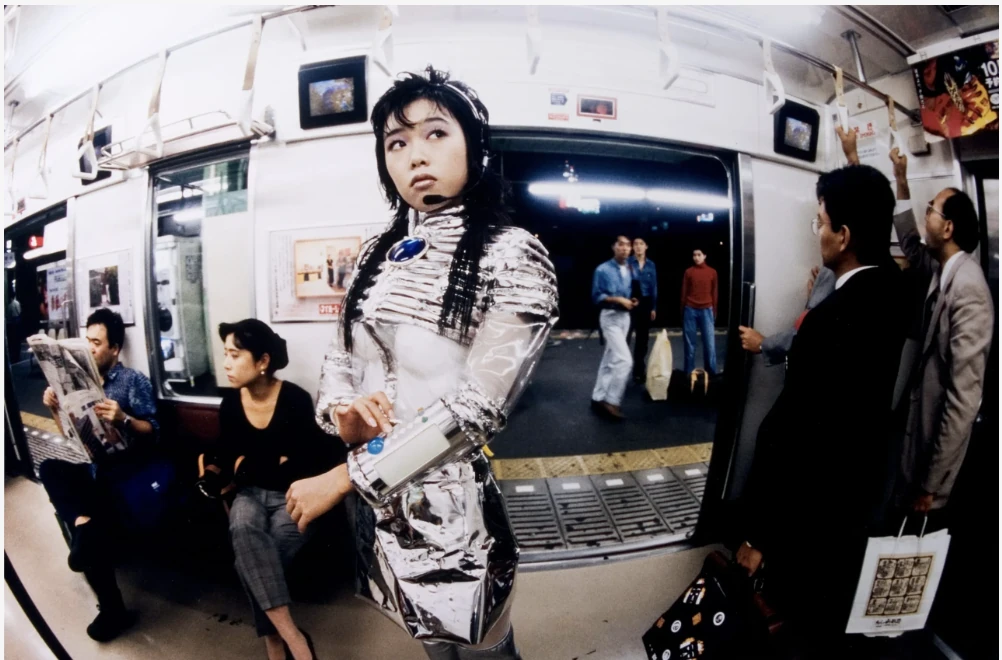
A woman in a silver suit and headset sits on a Tokyo train. Around her, the other passengers carry on with their commute. She looks ready for interplanetary travel; they have somewhere to be.
This is Mariko Mori in Subway (1994), inserting a highly styled version of the future into a city apparently too busy to notice. More than 30 years later, the image still has the peculiar charge of something you recognise without being able to place its decade.
Now, ‘Mariko Mori: All That Shines’ at Mori Art Museum offers a longer look at the artist behind it. Bringing together 40 works across more than three decades, the exhibition is her first major solo show in Japan since ‘Pure Land’ at the Museum of Contemporary Art Tokyo in 2002.
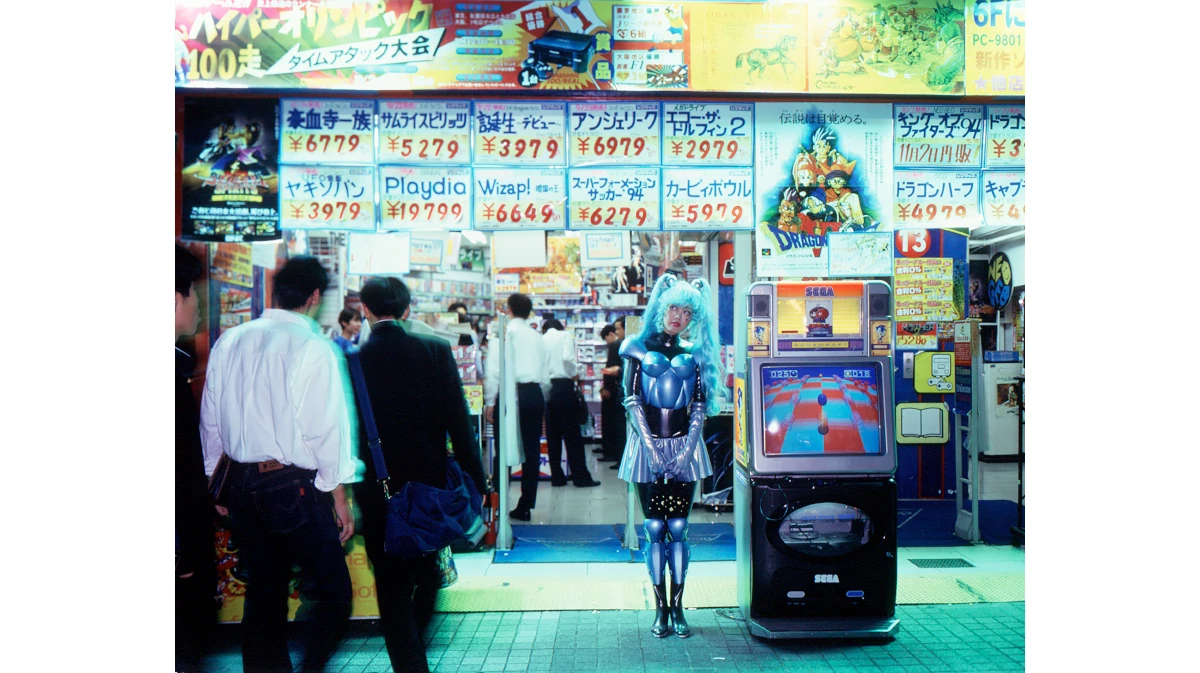
Mori’s early work has all the precision of a fashion editorial, with a considerably stranger brief. Having studied fashion and worked as a model, she understood how clothing, pose and setting could build a character before that character had said a word. In Play with Me (1994), she appears outside an Akihabara shop in blue hair and moulded armour. In Birth of a Star (1995), she manufactures her own pop idol, complete with a song she wrote and sang herself.
Anime, gaming, cosplay and commercial imagery gave her a language for looking at the present. Through these immaculate characters, she made the expectations placed on women seem oddly artificial: the outfit might be futuristic, but the roles available underneath it were already familiar.
That helps explain why these images remain so compelling beyond their original moment. In a visual culture now fluent in avatars, filters and carefully constructed online selves, Mori’s performances feel particularly legible. She was already treating identity as something that could be dressed, staged and technologically altered.
But the exhibition also makes room for everything that happened after the cyborg photographs. Her interests expanded into Buddhist ideas about life and death, ancient cultures and the connections between living things. The technology grew more ambitious along with the questions.
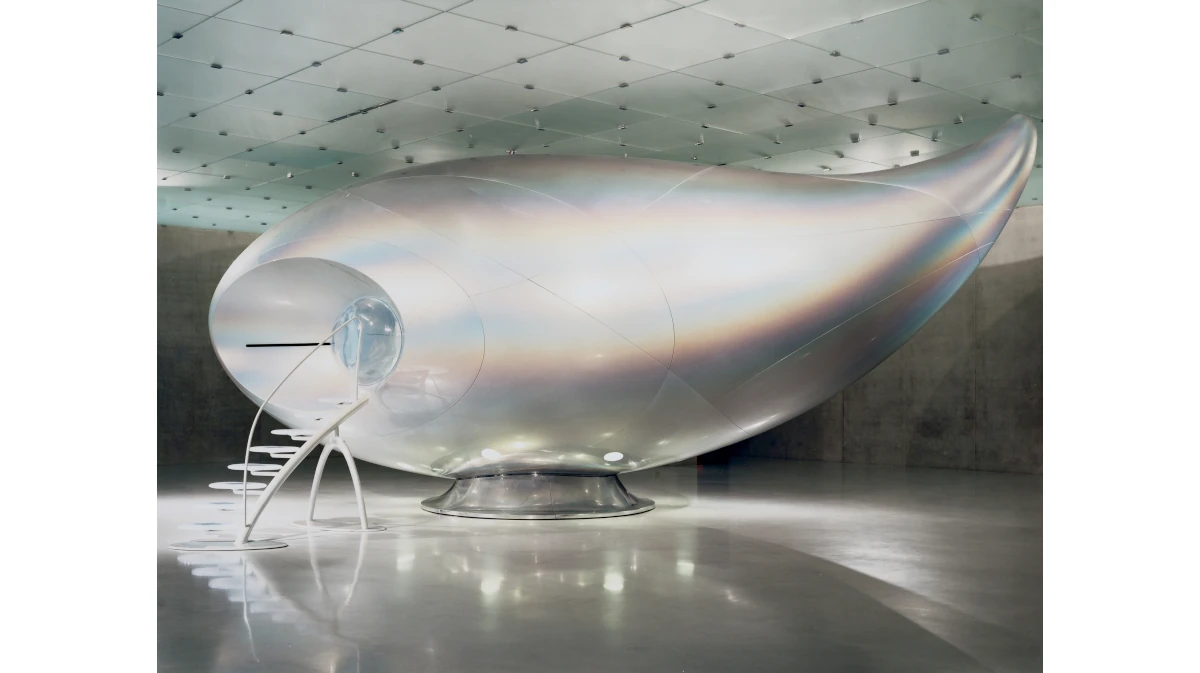
In Wave UFO (1999–2002), three visitors recline inside a sculptural pod wearing headsets that detect their brainwaves. Their activity becomes projected imagery overhead, bringing Mori’s idea of human interconnectedness into an experience shared by actual bodies. Tom Na H-iu (2006), meanwhile, turns real-time data from Japan’s Super-Kamiokande neutrino observatory into light.
Seen together, the works suggest a consistent curiosity beneath the changing surfaces: how do you make something invisible – a social expectation, a thought, a connection – perceptible?
The early photographs give that question a wardrobe. The later installations give it a space you can enter.
‘Mariko Mori: All That Shines’ runs at Mori Art Museum until March 28 2027. If you want to enter Wave UFO, registration opens beside the work at 10am and 2pm, with up to 27 places available at each intake. Participation is included with exhibition admission, but places are limited.
Discover Time Out original video