[category]
[title]
Dive deep into intellectual history with this immersive display inspired by the critically acclaimed manga and anime


Having highlighted the likes of Leiji Matsumoto, Osamu Tezuka and the Evangelion universe over the last year alone, Tokyo City View has quietly transformed into one of the city’s premier venues for ambitious manga and anime exhibitions.
This spring, the observation deck 250 metres above Roppongi continues its hot streak with a showcase featuring mononymous creator Uoto’s philosophical masterpiece Orb: On the Movements of the Earth.
Serialised between 2020 and 2022, the manga unfolds in 15th-century Europe, where the geocentric worldview reigns as absolute doctrine. Against this orthodoxy, a constellation of individuals driven by an uncompromising devotion to knowledge risk persecution and death to pursue the heretical idea of heliocentrism.
Orb was a hit especially among critics, earning the prestigious Tezuka Osamu Cultural Prize in 2022 and inspiring a subsequent anime adaptation produced by Madhouse that was broadcast between October 2024 and March 2025.
Now the work’s universe finds an unexpected yet compelling extension at Tokyo City View, with an immersive exhibition that invites visitors to reconsider both the city below and the cosmos beyond.
Come ready to concentrate, as the exhibition transforms the observation deck into a site of intellectual inquiry. By aligning the narrative of Orb with the vertiginous openness of Tokyo City View and the luminous nightscape of the city below, the show suggests a continuity between medieval stargazers and contemporary viewers.
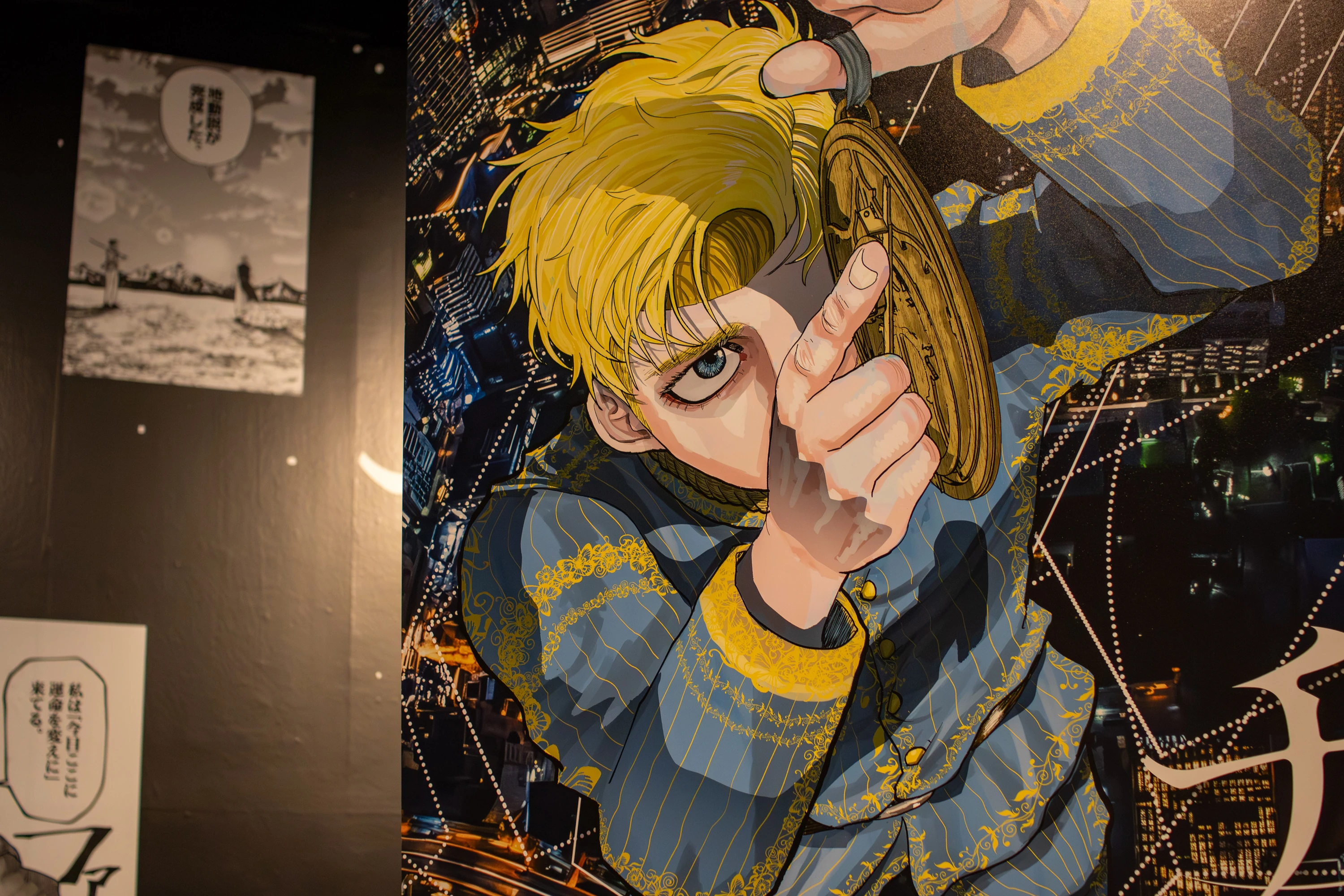
Thanks to some ingenious spatial design, key motifs from the manga – astronomy, the structure of the universe and the transmission of knowledge across generations – are woven into the viewing experience. Guided by key scenes and fragments of dialogue, visitors move through a sequence of spaces that evoke both the intellectual fervour and existential stakes of early astronomical inquiry.
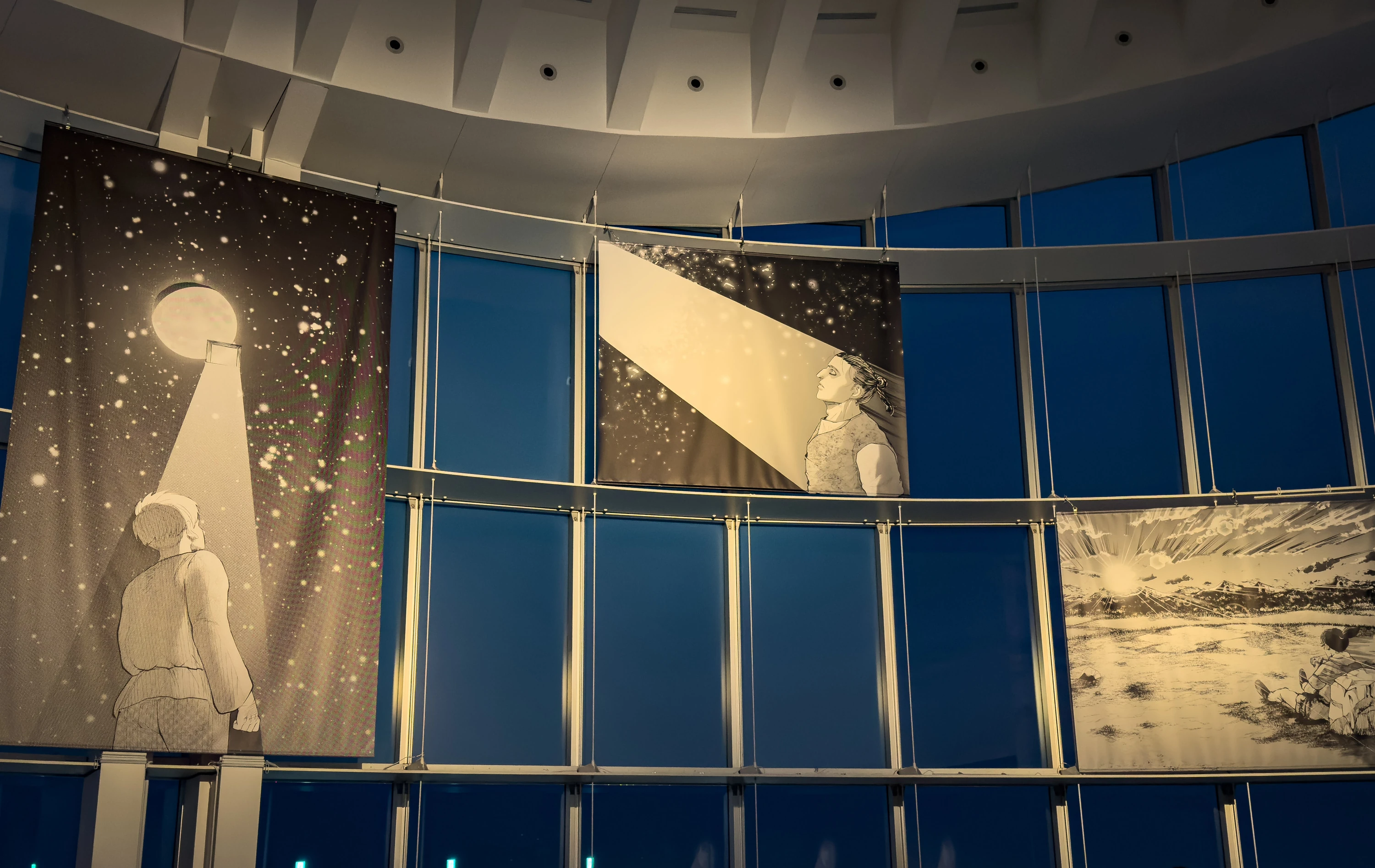
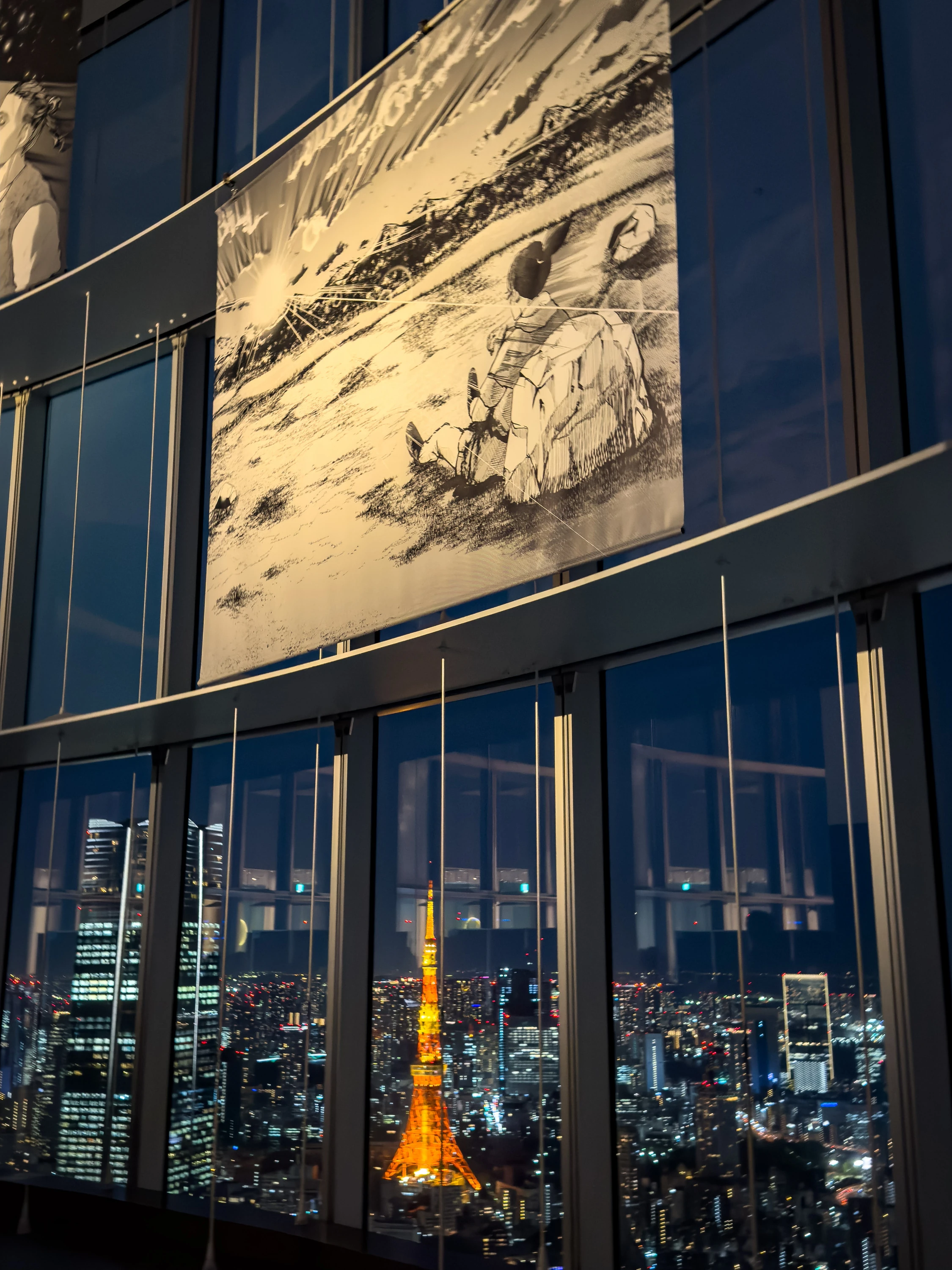
One of the exhibition’s most striking features lies in its visual juxtaposition of fiction and reality. A large-scale installation frames the Tokyo skyline, most notably the silhouette of Tokyo Tower, with imagery of Orb’s protagonists gazing into the night sky. The effect is both cinematic and contemplative, collapsing temporal and spatial distances between the medieval past and the contemporary metropolis.
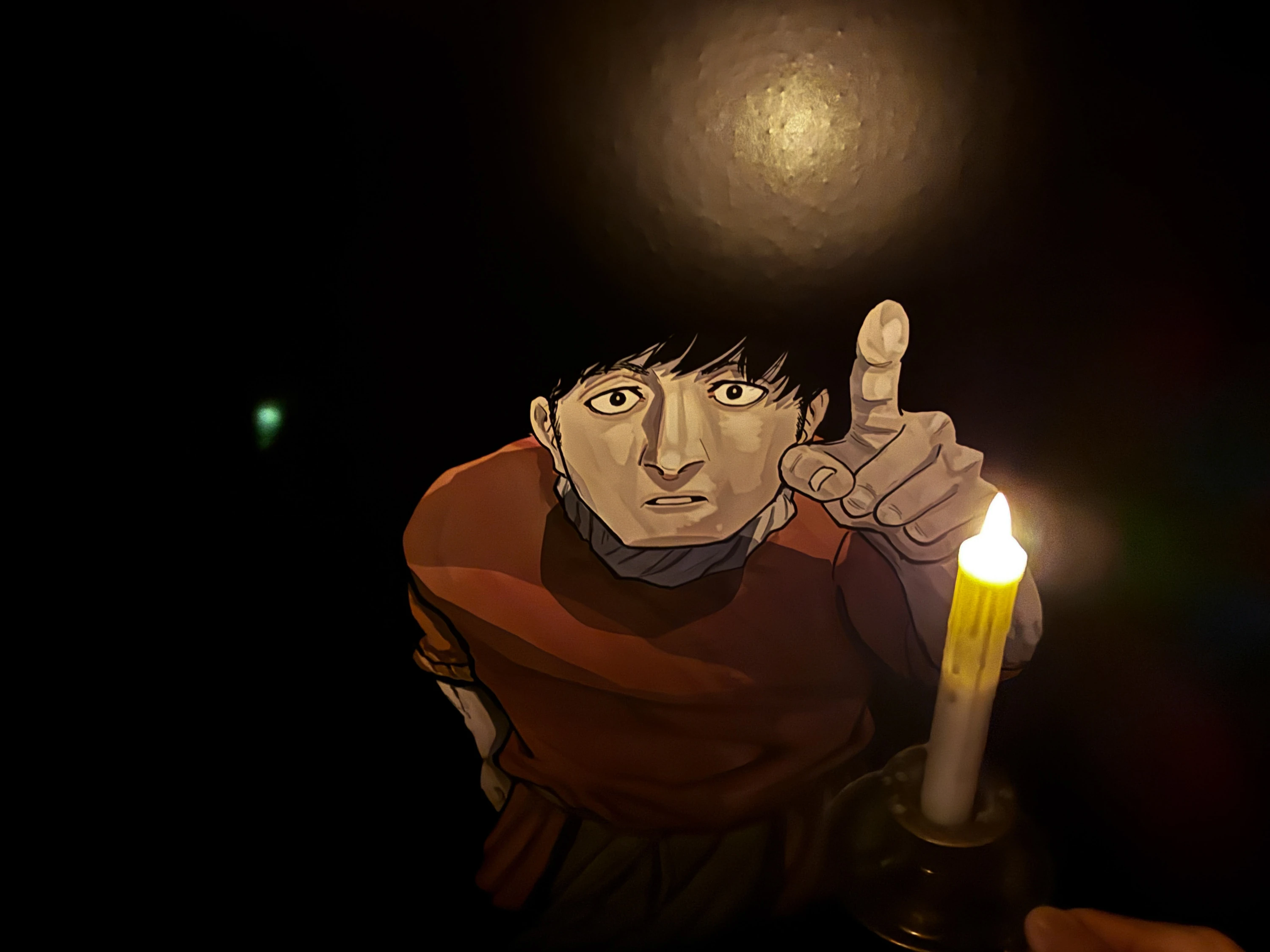
Elsewhere, interactive photo installations allow visitors to step into the visual language of the manga. Rendered in monochrome linework, the spaces recreate the aesthetic of drawn panels, enabling participants to inhabit the narrative world. These devices reinforce the exhibition’s central proposition that perception itself is constructed, mediated and ultimately transformable.
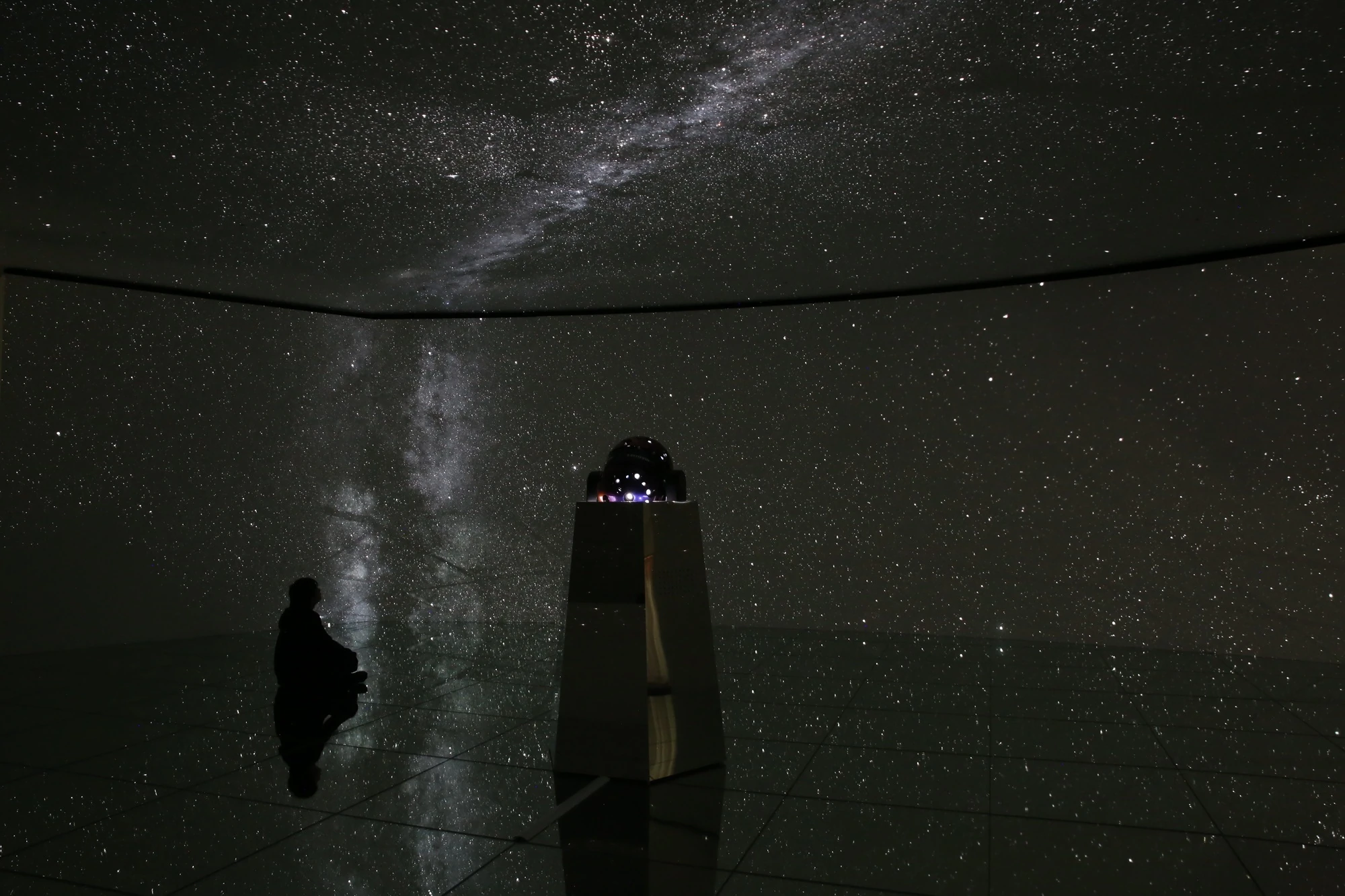
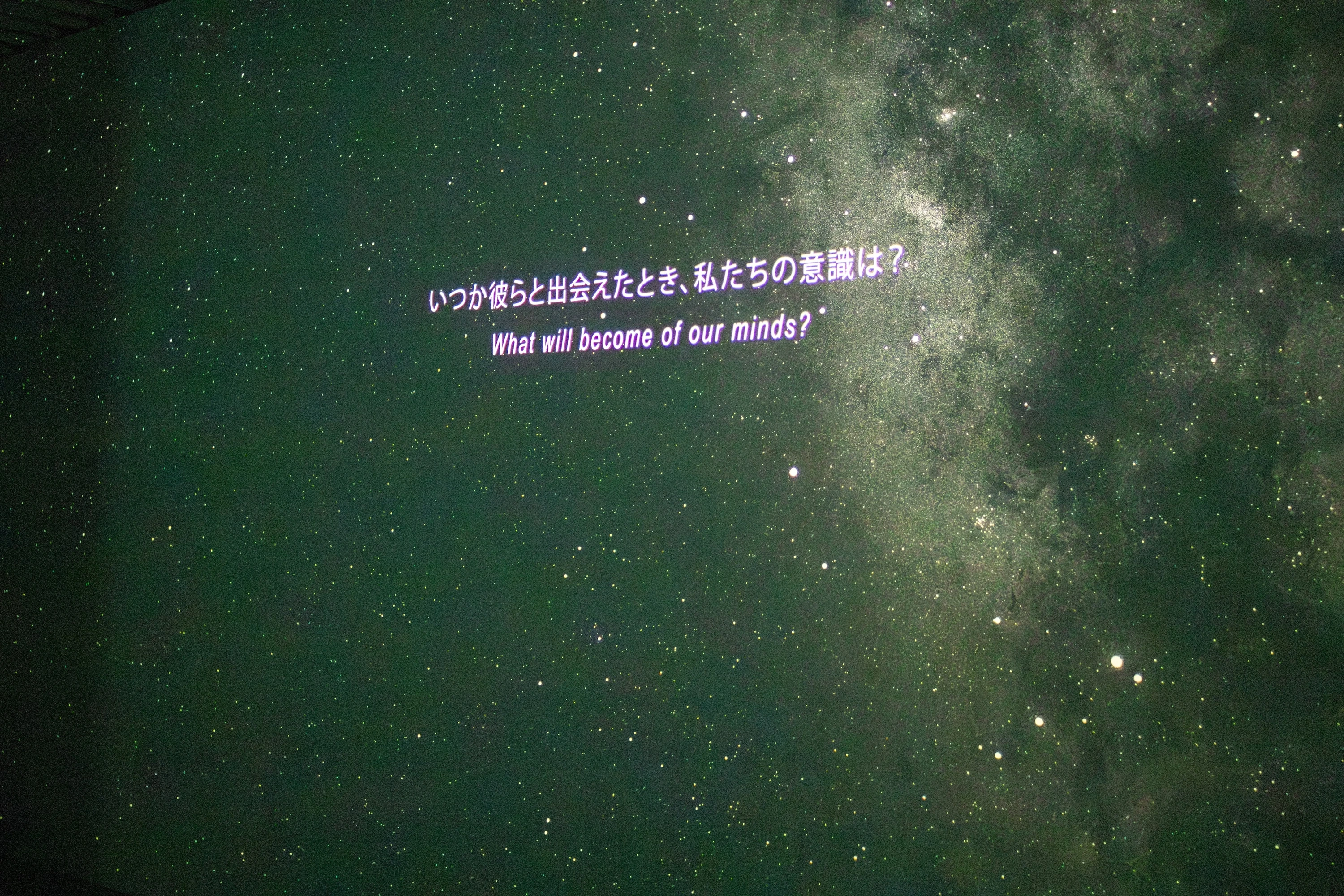
Complementing these sections is the Starry Sky Theatre, developed in collaboration with a team led by planetarium creator Takayuki Ohira. Using the advanced Megastar system, the installation projects millions of stars onto 360-degree screens, guiding viewers from the imagined skies of medieval astronomers to the scientifically mapped vastness of the universe. Though not directly derived from the manga, this sequence serves to situate the Orb narrative within the broader history of cosmological discovery.
Beyond its visual spectacle, the exhibition engages with the intellectual core of Orb, namely the tension between belief and evidence, and between authority and inquiry. Interpretive texts, including contributions from contemporary thinkers such as philosopher Yoshihiro Tanigawa, place the narrative in the context of broader philosophical debates. These reflections encourage visitors to consider the historical struggle over heliocentrism and the enduring dynamics of knowledge production.
The choice of Tokyo City View as a venue is particularly resonant. Known for its expansive glass architecture, the observatory is a space where perception is constantly recalibrated. By embedding Orb within this environment, the exhibition underscores the idea that every view, whether of a city or a star, carries within it layers of interpretation, history and belief.
Suspended between earth and space, ‘Orb: On the Movements of the Earth’ at Tokyo City View successfully converts the manga’s central concerns into a spatial and sensory experience. The exhibition feels especially effective at sunset, when the city lights begin to flicker below. The skyline, once familiar, appears newly charged with meaning, and the sky feels intimately connected to human curiosity and courage.
‘Orb: On the Movements of the Earth’ runs daily at Tokyo City View until June 8.
More from Time Out Tokyo
10 art exhibitions to check out in and around Tokyo this spring
Grand Hyatt Tokyo celebrates Pokémon’s 30th anniversary with themed rooms this summer
7 best parks and gardens to see late-blooming cherry blossoms in Tokyo this spring
Tokyo could be getting its own version of the Las Vegas Sphere
Ueno Zoo is set to open a ‘roller-coaster’ people-mover in 2029
Want to be the first to know what’s cool in Tokyo? Sign up to our newsletter for the latest updates from Tokyo and Japan.
Discover Time Out original video