

[image]
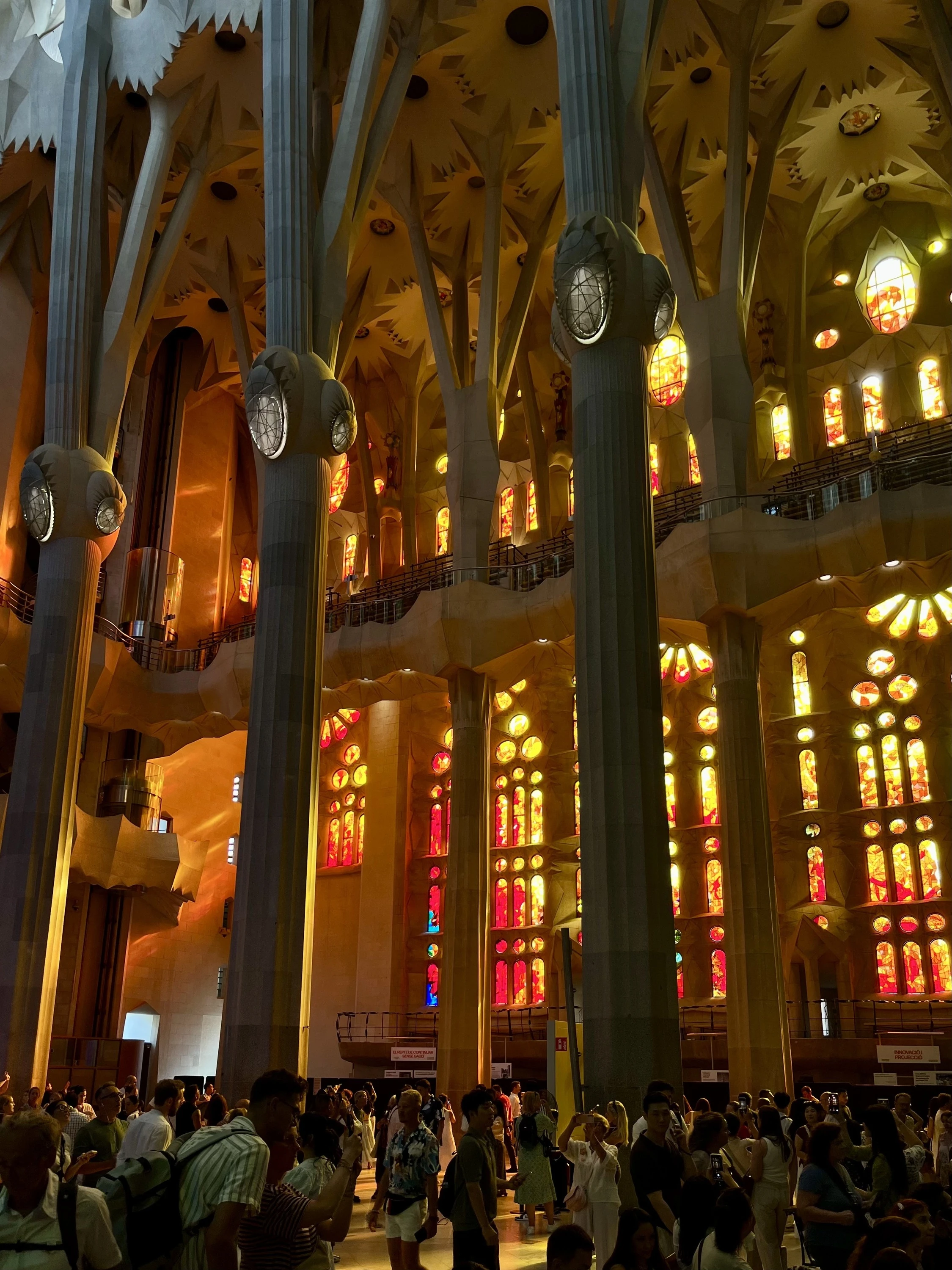
[title]Sprouting from the lustrous, expansive tiled floors, the central columns inside the Sagrada Família’s Basilica loom magnificently over the humming flocks of visitors like the trees of a pleasingly still forest, and that’s precisely what its maker intended – according to my audio guide.
This extraordinary structure is the world-famous, yet-to-be-complete (despite what that visit from Pope Leo might imply) magnum opus of Catalan architect and designer Antoni Gaudí. A deeply faithful man, a pioneer and poster boy of Catalan Modernisme and, as visitor numbers to his creations can attest, one of the world’s most adored designers, his work is woven into the cool, casual, bustling fabric of Barcelona.
This year marks a centenary since his death, and the Catalan capital has put on a splendour of celebrations – from immersive installations to community dinners – to honour him. I travelled to Barcelona with Vueling to get a closer look at Gaudí’s craftsmanship, from the near-complete cathedral to the formative, lesser-known spaces. Here’s why you should, too.
Sagrada Família: Gaudí’s unfinished cathedral
Sure, the cathedral sits atop every single list of must-see attractions in Barcelona, but with its arresting scale, forensic, ornate carvings and general one-of-a-kind aura, there really isn’t anywhere else like it.
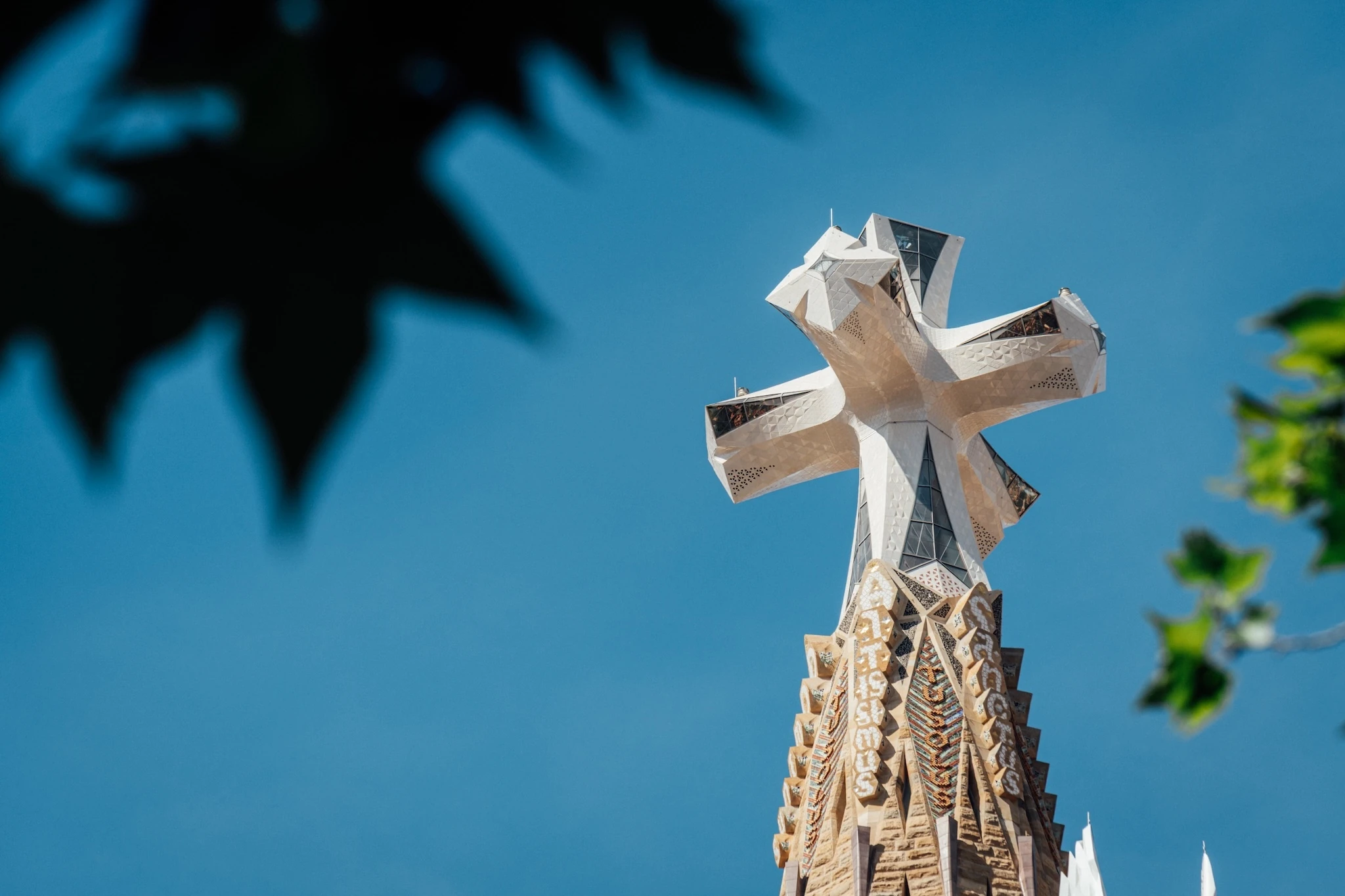
In the 11 years since I first visited Barcelona, it’s undergone one major change: the completion of the Tower of Jesus Christ, which was made official back in June in a milestone achievement, inaugurated by a visit from Pope Leo XIV.
Cranes are still poised alongside the towers and scaffolding still adorns various sections of the southern façades, but now that the cathedral has reached its full 172.5 metre height, it looks markedly closer to eventual completion.
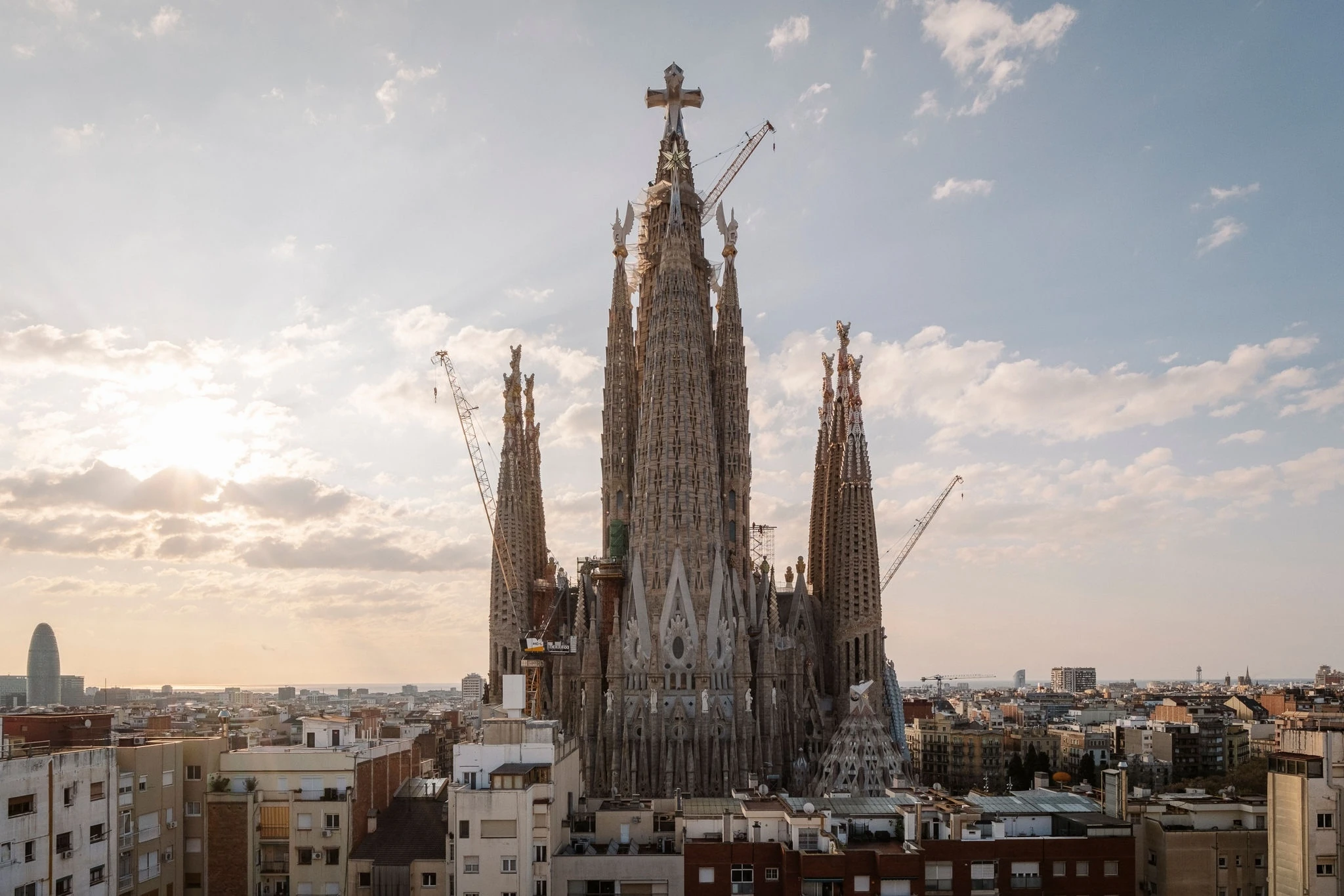
There’s a seemingly never-ending flow of visitors meandering around the entrance and surrounding gardens, but don your headphones and the thrum of chatter is drowned out by an audio-guided peruse of all the exterior’s microscopic – and fabulously camp – details.
The Nativity Façade hangs regally over the Basilica’s entrance, with various levels of ageing in the colour of the stone, documenting just how long this building has been under construction (144 years, at the time of writing). Elsewhere on this portion of the building are unexpected pops of colour – the doors are enveloped in green leaves designed by Japanese sculptor Etsuro Sotoo, and the pinnacles on the structure’s eastern side are crowned with mosaic baskets of fruit.
Follow the throngs of people into the imposing entrance and you’re greeted with a kaleidoscopic display. Gaudí’s mastery, not only of beautiful design but also practical engineering, is an impressive balance that manifests in every one of his structures we visit in Barcelona. But the Sagrada Família captures his skill with manipulating one entity in particular, better than anywhere else – light.
Much of the religious iconography has been chipped, moulded and carved onto the building’s exterior, which means the inside remains a comparatively blank canvas. At 3.30pm, the sun dangles at the perfect point to illuminate the fiery stained glass of the western Passion Façade, and hues of yellow, orange and red billow into the hall with enchanting vibrancy.
Casa Vicens: Gaudí’s overlooked masterpiece
A mere 15-minute metro journey from the Sagrada Família – but worlds away artistically – is Gaudí’s first major architectural commission, Casa Vicens.
Never heard of it? You wouldn’t be the first. Compared to the Sagrada Família and other major Gaudí landmarks like Parc Güell and Casa Batlló, this alluring house remains relatively slept on by visitors to Barcelona. It welcomed 262,000 people in 2025, which pales in comparison to the 5 million-plus who travelled to Sagrada Família.
Casa Vicens was commissioned by wealthy stockbroker Manuel Vicens i Montaner. Gaudí was instructed to design the family a summer house to escape the sweltering Mediterranean heat – despite the fact they already lived in Barcelona all year round.
‘Does anyone know why Vicens would want a summer house in his hometown?’ our tour guide Laura asks keenly. ‘It’s actually a trick question, as this neighbourhood wasn’t part of Barcelona yet.’
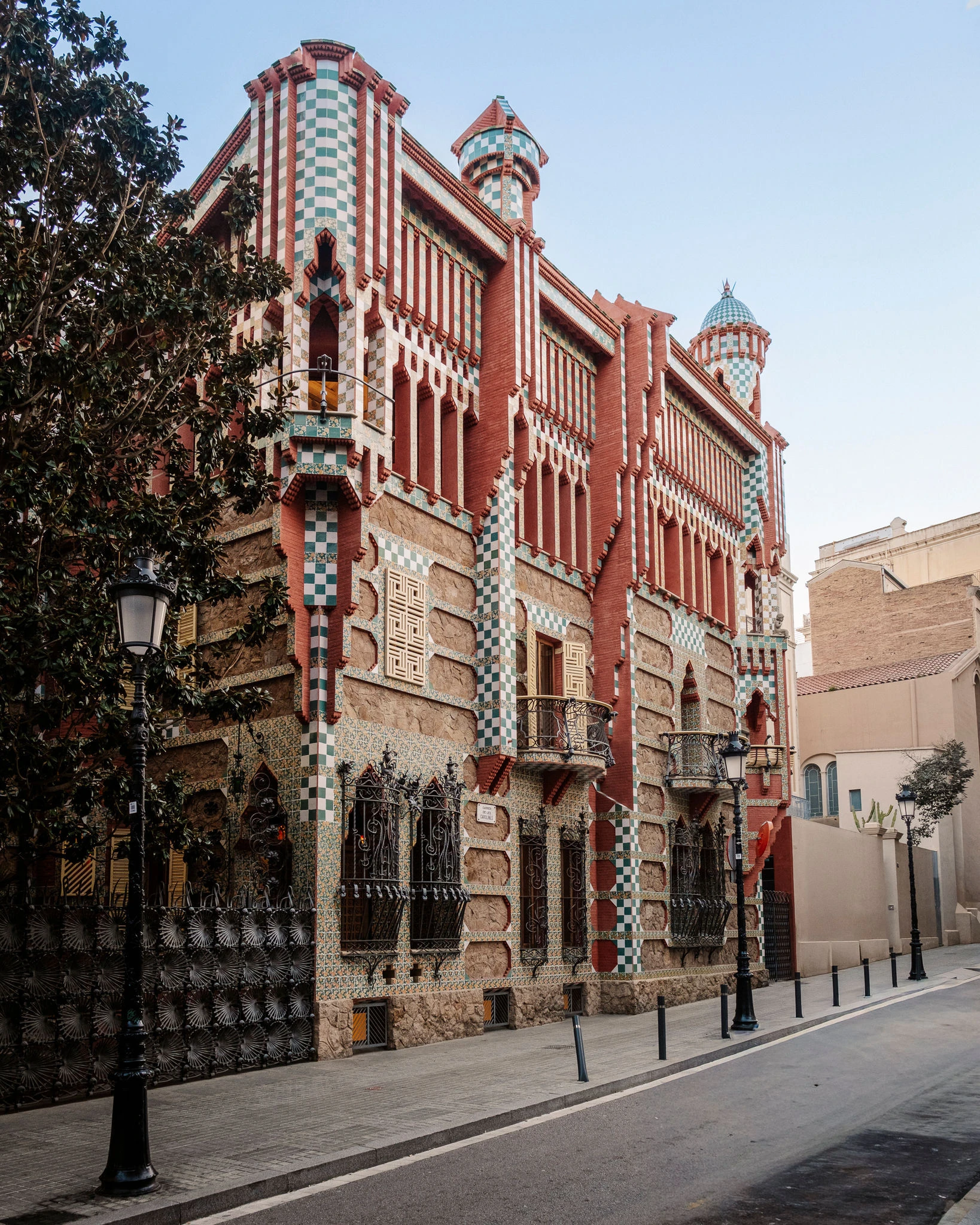
Casa Vicens is in Vila de Gràcia, which was a separate town from Barcelona until it was officially annexed in 1897. Though Barcelona has since grown around it, the neighbourhood’s slightly higher altitude and cleaner air hint at its former status as a peaceful retreat from the city. Inside the house, meanwhile, the fascinating design features offer a glimpse into a bygone era.
The first thing you’ll notice about the house is how unlike Gaudí’s other masterpieces it is. ‘You might think of Gaudí as somebody who never used straight lines, but actually there’s plenty of them here,’ explains Laura.
And she’s right – it’s actually predicated on a relatively ordinary-looking skeleton, with no undulation in sight. But this is still Gaudí, and the whimsical flair which has become associated with his style can instead be found in the minute decorative details.
After the house was purchased by prestigious doctor Antoni Jover Puig in 1926, it doubled in size – but Gaudí didn’t design the extension. Instead, it was copied by budding architect Joan Baptista Serra de Martínez, who, for the most part, mirrored the original brick, wood, and paint.
However, as we take a closer look at the exterior tiles, it seems they’re affixed in two different formations. Martínez’s newer half of the house has them laid uniformly in the same orientation, while on Gaudí’s, they rotate, creating spiralling rows of flowers. Laura says that ‘Gaudí was always inspired by nature, and his arrangement better mimics the sense of the natural world in its truest form.’
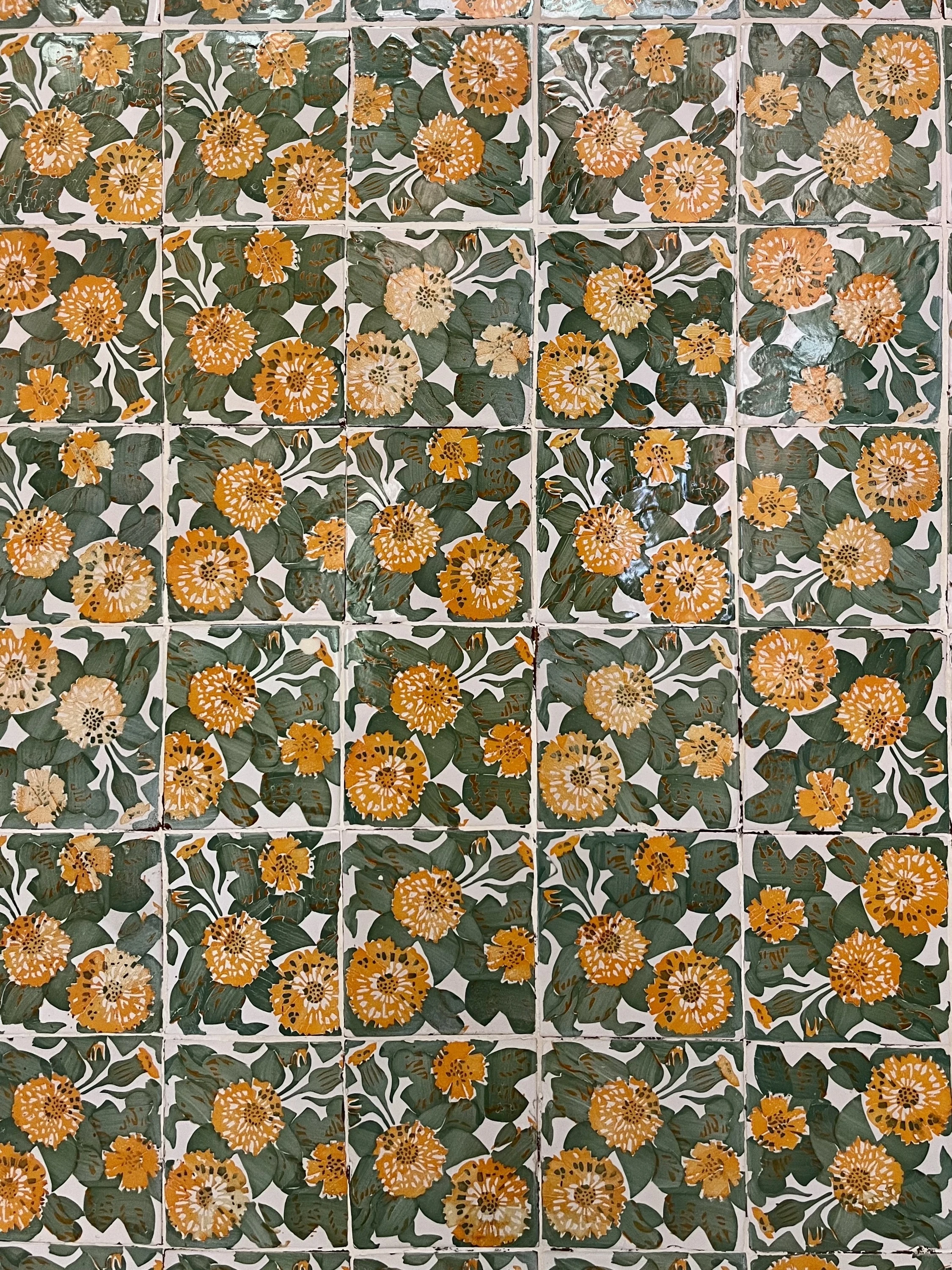
As we ramble around the building and into its ground floor, more and more juxtaposing yet strangely harmonious design choices appear, many with unexpectedly functional purposes.
‘Gaudí never loses sight of practicality, even if the house is very beautiful,’ says Laura, as she guides us onto a striking veranda. Walled by butter yellow shutters, it’s a breezy and tranquil space. Gaudí apparently utilised a Japanese technique called ‘shitomi’ in which the slits between the wood panels not only allow air to pass through, but also facilitate privacy.
Laura points to a strange, cobweb-like adornment hanging from the rafters between two panes of wood and excitedly asks if I know what it is. I stare blankly back at her. ‘It’s like a fan, without the electricity!’
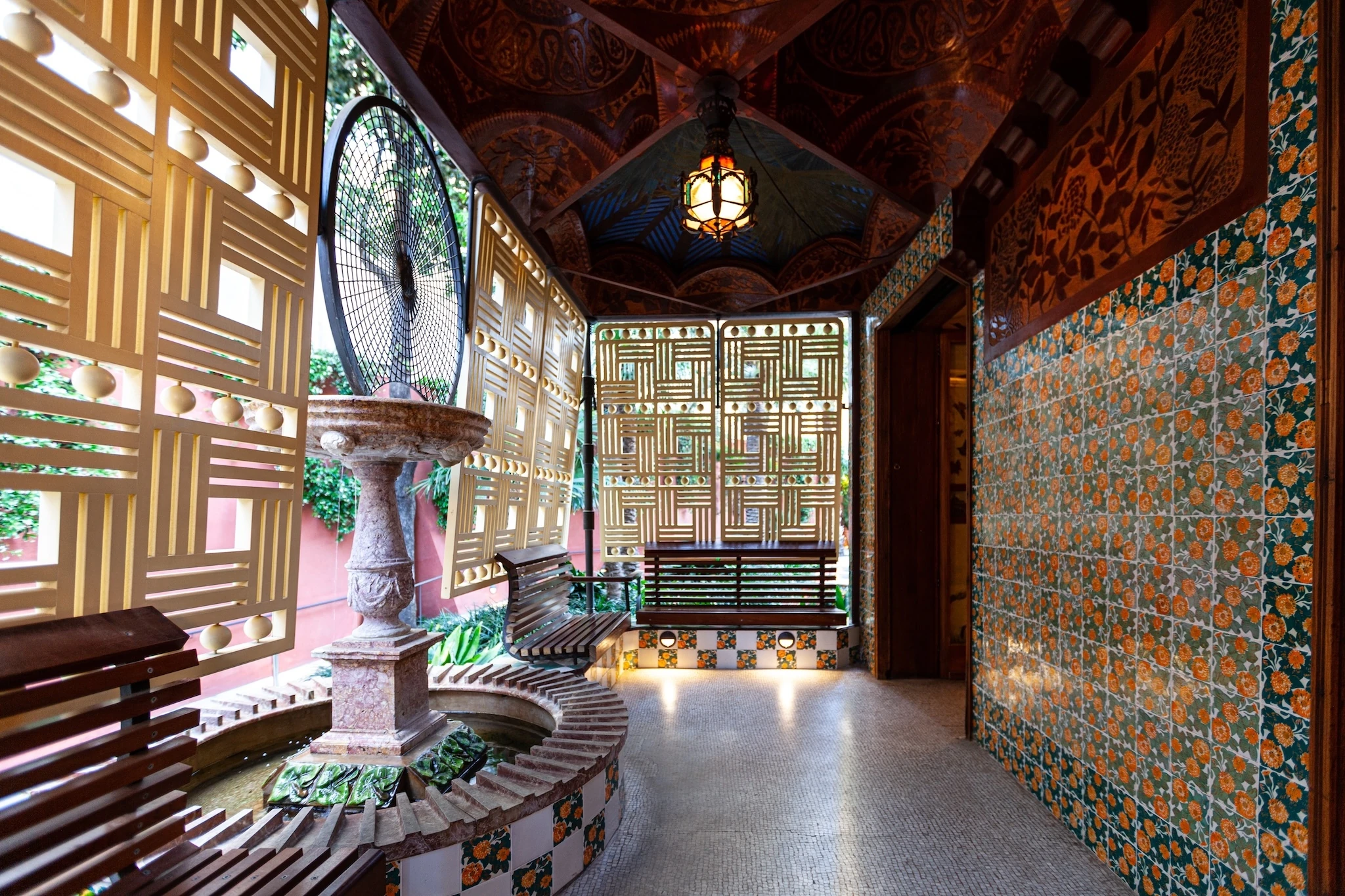
Not only an architect and artist, Gaudí also had an aptitude for innovative utility, thanks to his astute engineering skills.
During the era when the house was first constructed, running water was incredibly rare, but Casa Vicens is built atop underground springs which Gaudí was able to harness. It’s sadly no longer standing, but the house used to be enshrouded by much larger grounds with a gorgeous, dramatic water fountain as the focal point.
Laura emphasises how important visiting Casa Vicens is – it’s Gaudí’s first major work and a testament to his skill set with artful interiors, rather than structural design. ‘It’s also the only place he’s ever been able to work literally, and not just symbolically, with nature.’
Casa Milà: Gaudí’s final completed work
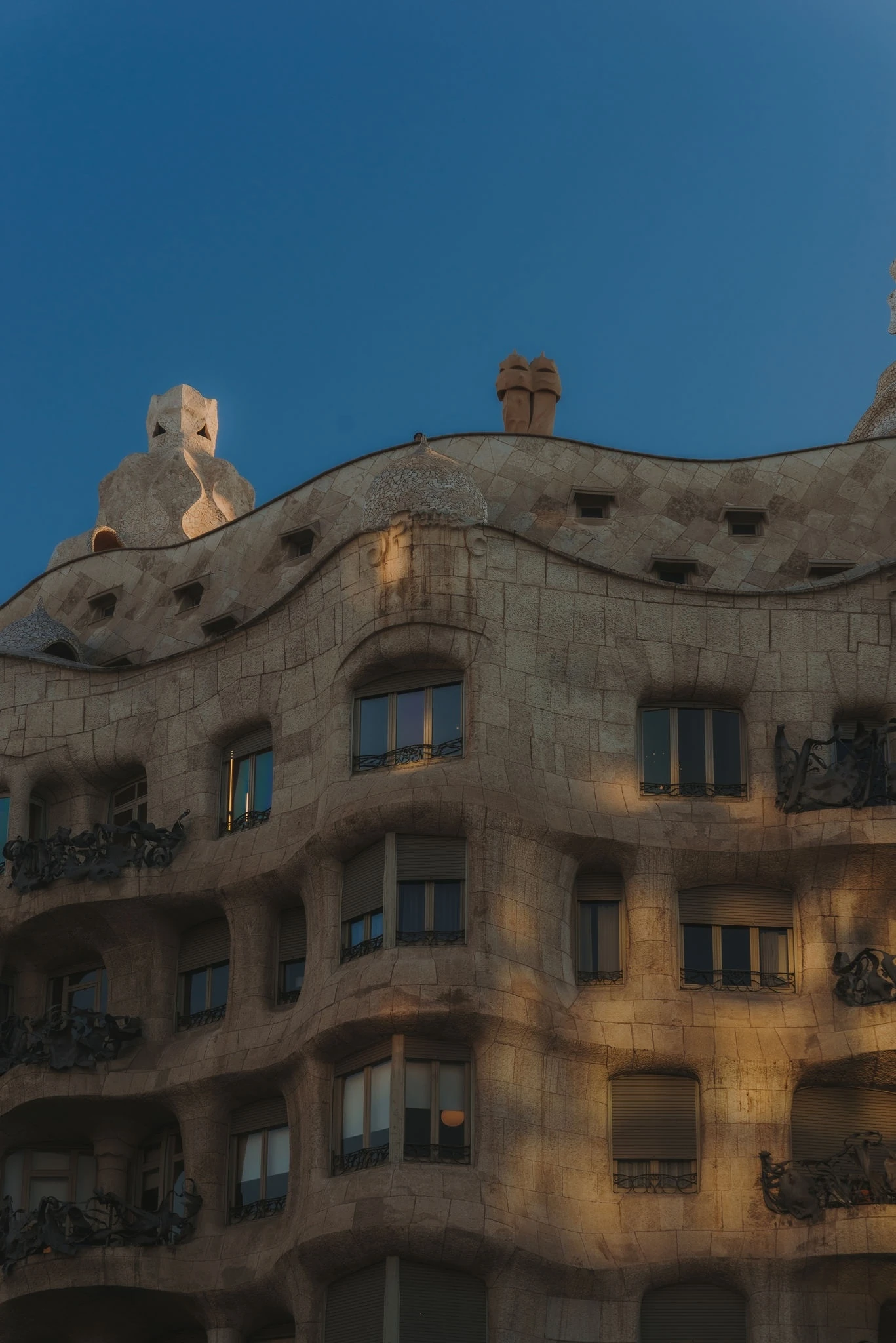
The third landmark we visit is not the illustrious Parc Güell, nor the newly-restored Casa Batlló – it’s actually Casa Milà, also known as La Pedrera (which translates to ‘stone quarry’).
The final work Gaudí ever saw completed, this luxury apartment building, which glimmers like a crowning Modernista jewel on Passeig de Gràcia (Barcelona’s answer to the Champs-Elysees), was commissioned by rich but not very happily married couple, Pere Milà and his wife Roser Segimon.
They adored Casa Batlló, and, as our guide Milena tells us, were exceedingly wealthy, so called on Gaudí to create a building just like it on the corner of the grand avenue and Carrer de Provença.
However, Casa Batlló is not what they got. Unlike the pretty, glitzy and extremely elaborate façade of Casa Batlló, La Pedrera is comparatively less grandiose. Instead, it’s a feat of pioneering construction and ergonomic design.
We stand in the larger of the two courtyards with the stories of luxury apartments reaching high above us. Milena points out the faded murals on the walls, explaining that, against Gaudí’s wishes, the Milàs hired their own artist who mistakenly used oil paint, which is why they’ve aged so badly.
‘All of the iron used was recycled from the port of Barcelona,’ she says, highlighting the rippling metal balconies that wave like strands of seaweed. The same balconies feature on the street-facing façade of La Pedrera. Allegedly, Mrs Milà trained her parrots to terrorise passers-by with insults from the first-floor terrace.
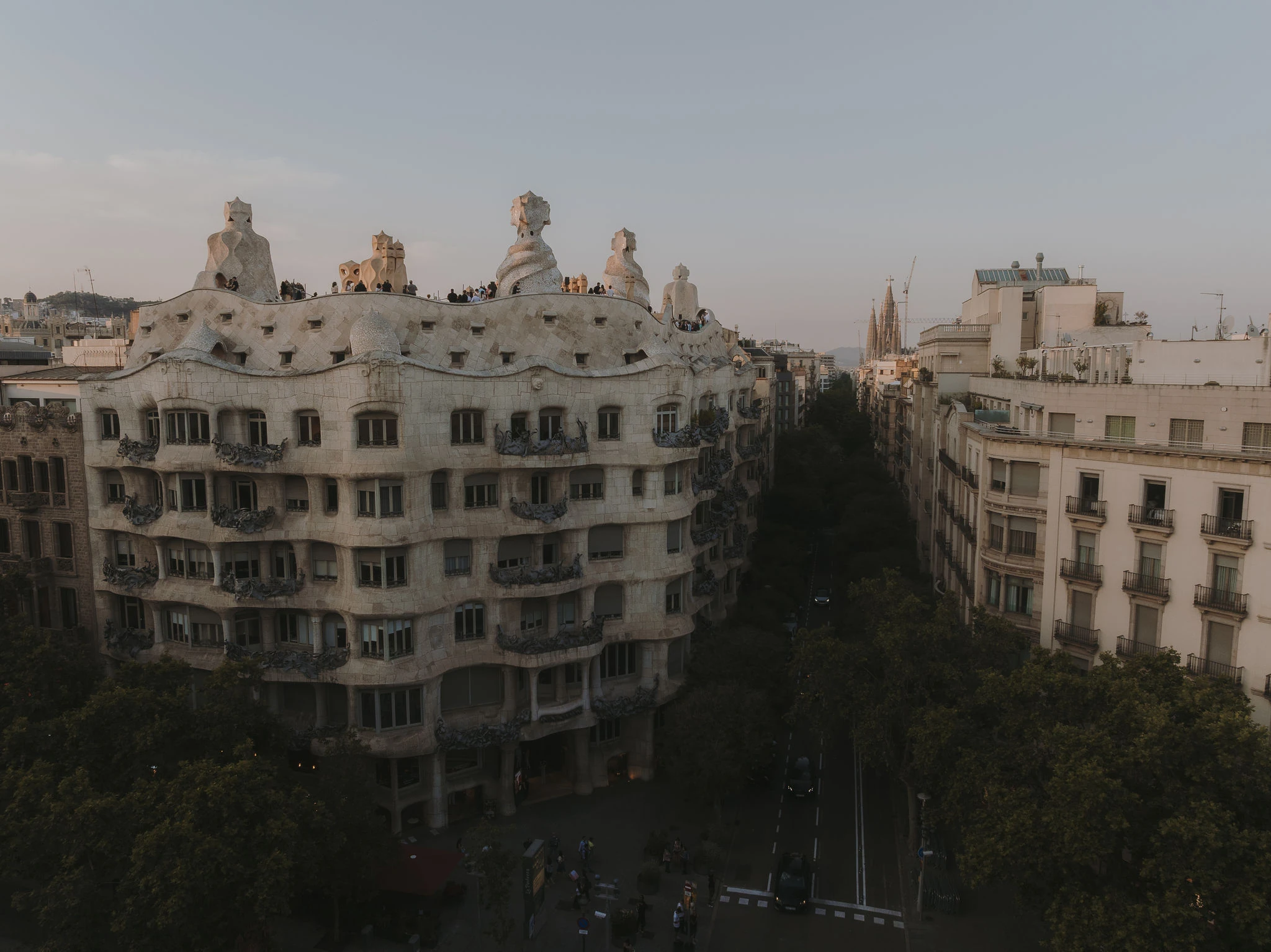
From above, the building’s blueprint mirrors the shape of an infinity sign, and after clambering up to the sixth floor – or completing ‘a short hike’, as Milena describes it – we pass one of the two residences in La Pedrera which is still lived in (thanks to a nifty three-generation lease) and reach the display apartment.
It’s an intriguing insight into Gaudí’s furniture design, and his fascination with ergonomics (which even extends to the door handles), but Milena explains the pièce de résistance of this building awaits us in the attic.
‘We call this room the whale’s stomach’, she says, as we arrive inside… well, a room that looks a whole lot like a whale’s stomach. It’s cavernous, gloomily lit by just a handful of poky windows and wonderfully cool, and it winds organically around the top floor of the building with brick arches supporting the roof like a colossal ribcage.
‘People come to Casa Milà for the terrace, but this is my favourite room,’ says Milena. She points out textured bricks, handmade by workers who left their own individual marks on each one, as a kind of signature.
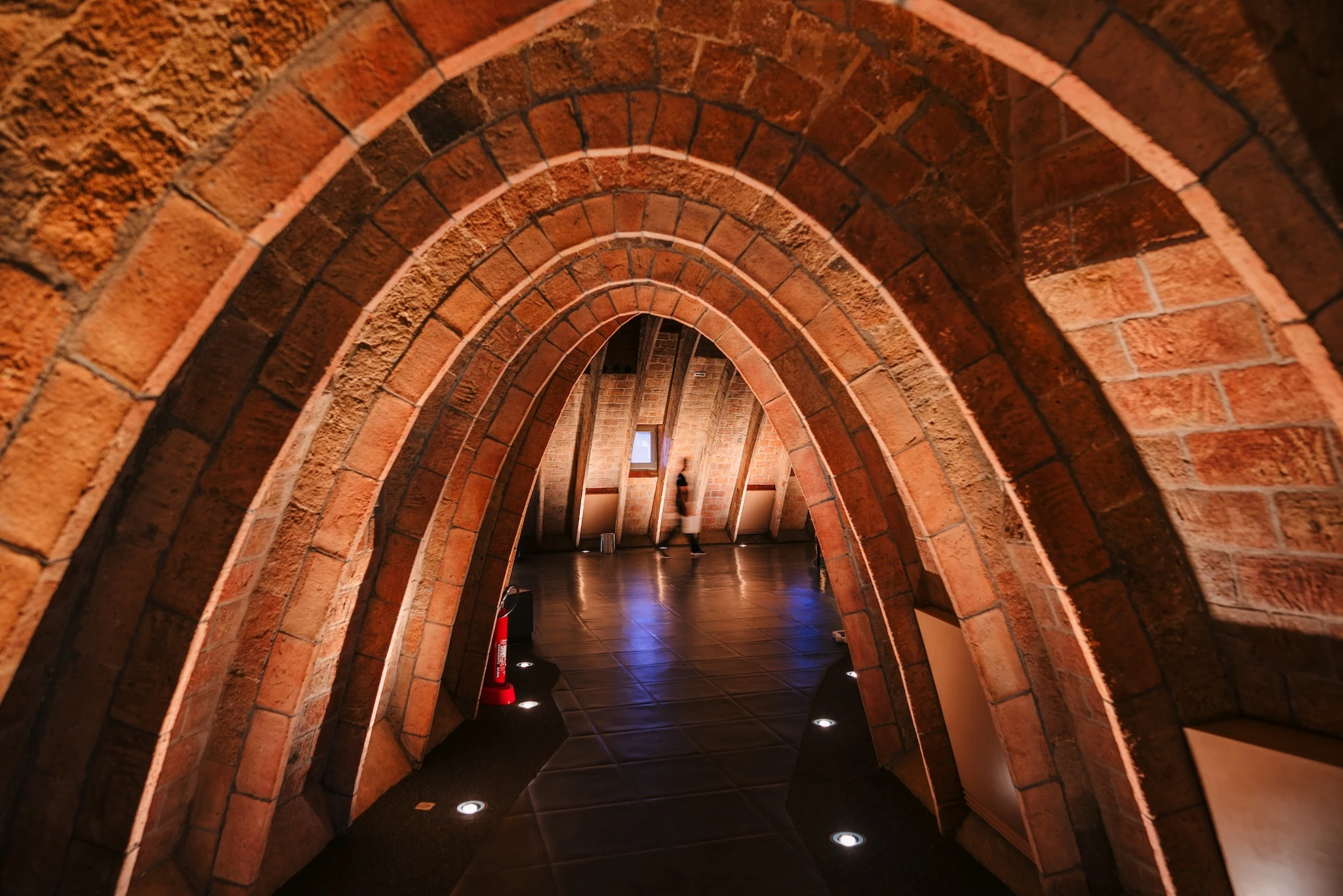
Inside this space is a permanent exhibition which showcases the development of Gaudí’s style, as well as real-life examples of how he designed various structures, such as the towers at the Sagrada Família. Marine objects and other knick-knacks are displayed to demonstrate the breadth of nature and creatures that inspired him – a tortoise shell, honeycomb, poppy capsules, and leaves.
Finally, the rooftop, a serpentine walkway with peaks and troughs, which offers splendid city (and, in the distance, Sagrada Família) views. It’s one hell of a sight to punctuate this deep-dive into Gaudí’s craftsmanship.
‘[His work] isn’t just for the visitors,’ says Melina, ‘Catalan Modernisme is unique to us, and it’s different from the rest of the country – it’s crucial to our regional identity.’
Liv Kelly travelled to Barcelona with Turisme de Barcelona and Vueling. Our reviews and recommendations have been editorially independent since 1968. For more, see our editorial guidelines.