[category]
[title]
Oxford Economics has ranked 1,000 of the world’s biggest cities on everything from GDP to housing costs. Here’s how every major UK city stacks up


Every year, Time Out crowns the world’s best cities based on what the people actually living there think, and it’s easy to fall in love with a city when you’re looking at it through a lens of galleries, underground club scenes and beautiful green spaces. But sometimes there are more practical questions worth asking, like how strong the job market really is or whether you can actually afford to live there. That’s exactly what Oxford Economics’ Global Cities Index sets out to answer.
To find the winners, economists scored the 1,000 largest cities on Earth across 27 different data points. They looked at everything from local wealth and environment to housing costs and political stability. Out of a thousand global contenders, 20 UK spots successfully cracked the top 200 this year.
London once again claimed second place globally, beaten only by New York and ahead of Paris. The capital topped the entire index for ‘human capital’, but came in a more surprising eighth for ‘economics’, a lower placing than you might expect for a city with the world’s fourth-largest economy.
Oxford Economics puts London’s overall strength down to sheer scale plus the stability it’s shown over time, noting that fears Brexit would knock the city off its perch as a global financial centre ‘have not been realised’. Quality of life tells a very different story, though, as London ranked a distant 144th, dragged down by a housing affordability crisis researchers described as ‘hurting’ the city’s liveability, with workers spending an outsized share of their income just keeping a roof over their heads.
Next up for UK hubs was Edinburgh at 71st, one of the cities Oxford Economics grouped into its ‘cultural capitals’ category (referring to cities that might not have the economic firepower of a global giant, but offer residents a high standard of living). The label holds up, as Edinburgh’s GDP per capita actually overtook London’s back in 2023 and the city remains the UK’s second-biggest financial centre after the capital.
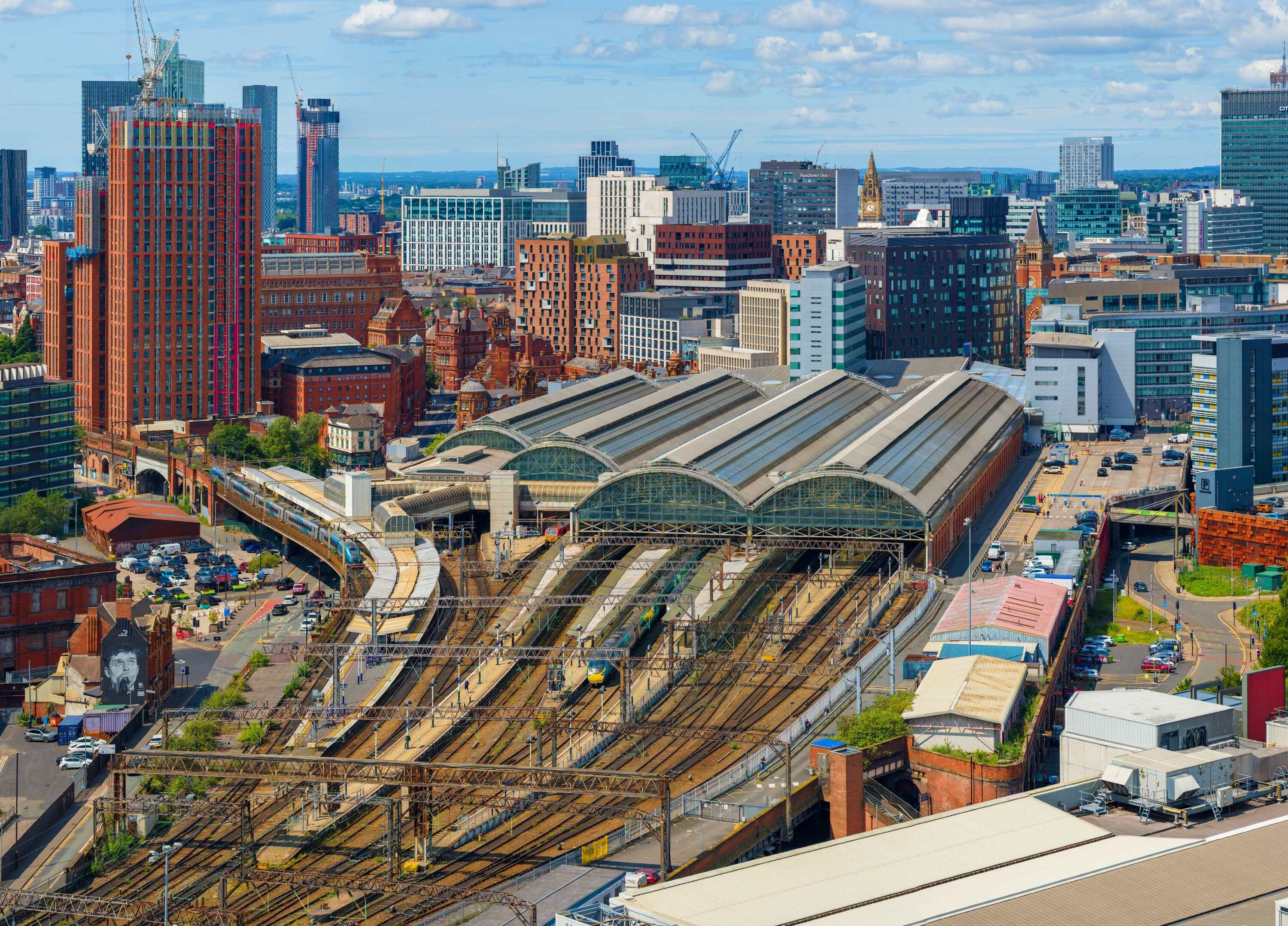
Manchester followed at 90th and was the only UK city to earn a spot on Oxford Economics’ brand-new ‘cities to watch’ list for 2026, one of just five picked across the whole of Europe. Since 2010, the city has outpaced every other UK city for both GDP and productivity growth and researchers forecast it’ll add the fifth-highest number of jobs of any city in Europe over the next 25 years. It’s not all good news, though, as Manchester ranks a lowly 280th globally for quality of life, dragged down by high housing costs and a high-ish crime rate.
Cambridge completes the UK’s top four at 100th, its outsized global standing driven by a world-leading university and the dense cluster of biotech and deep-tech firms that have grown up around it, often nicknamed ‘Silicon Fen’.
Further down the list, other national capitals Cardiff (158th) and Belfast (156th) sat almost neck and neck. Both continue to lean on strong universities and comparatively affordable living costs relative to London and the South East, even as they compete with faster-growing regional cities elsewhere in the UK for investment and jobs.
You can compare the UK’s rankings against the rest of the world in the full Oxford Economics 2026 Global Cities Index.
Did you know this major UK music venue is set to build a floating stage?
Plus: Britain’s most romantic hotel is this Cotswolds pub with award-winning food.
Stay in the loop: sign up to our free Time Out UK newsletter for the latest UK news and the best stuff happening across the country.
Discover Time Out original video