[category]
[title]
I tasted, sipped, shucked, and cruised during this unforgettable, only-in-Maine experience.

I'm from New Orleans and grew up eating big, fat, salty Gulf oysters. Raw, fried, stewed, or Rockefellerized, these oysters are anything but delicate. While the Gulf region is seeing more refined oysters on menus these days, my experiences with delicate oysters that express the subtle differences in merroir—a real term meaning "terroir of the sea"—have mostly been limited to culinary exploits on the East and West coasts. Over the many summers I've been lucky enough to spend in Maine, the oyster industry in the state has grown, and now there are nearly 200 oyster farms tucked away up and down the state’s famously craggy coast. I've sampled a few producers here and there, but recently decided to dive in and really get to know the scene. And while there are plenty of oyster experiences to be had in Maine—from lively oyster bars and unique farm tours to oyster shucking lessons—one, offered by a Midcoast-based company, covers the whole shebang.
I'm from New Orleans and grew up eating big, fat, salty Gulf oysters.
Lady Oyster Tours & Tastings is a leader in Maine seafood culinary tourism. If you want a deep dive into everything oyster, this is who you turn to. Owner and operator Virginia Shaffer is Maine's first "oyster sommelier," an oyster expert certified by the Oyster Master Guild. Lady Oyster is a love letter to the beloved Maine bivalve, offering tastings, tours, dinners, and more in gorgeous settings that embody the epitome of Maine beauty. Stop by The Parlor—their petite tasting room in Bath—and you can taste oysters from farms across the region. Seating is limited to four, with reservations highly recommended, so you know you'll get an amazing, personalized experience (you can also pop in any time to shop their retail offerings). But if you want a really unforgettable experience, opt for a tour. I had the opportunity to join the Half-Day Seafood Adventure, and I learned all about oyster farming, tried some incredible oysters, learned to shuck and cruised into the sunset to see how oysters are raised in the cold waters of Maine. Here's how it went:
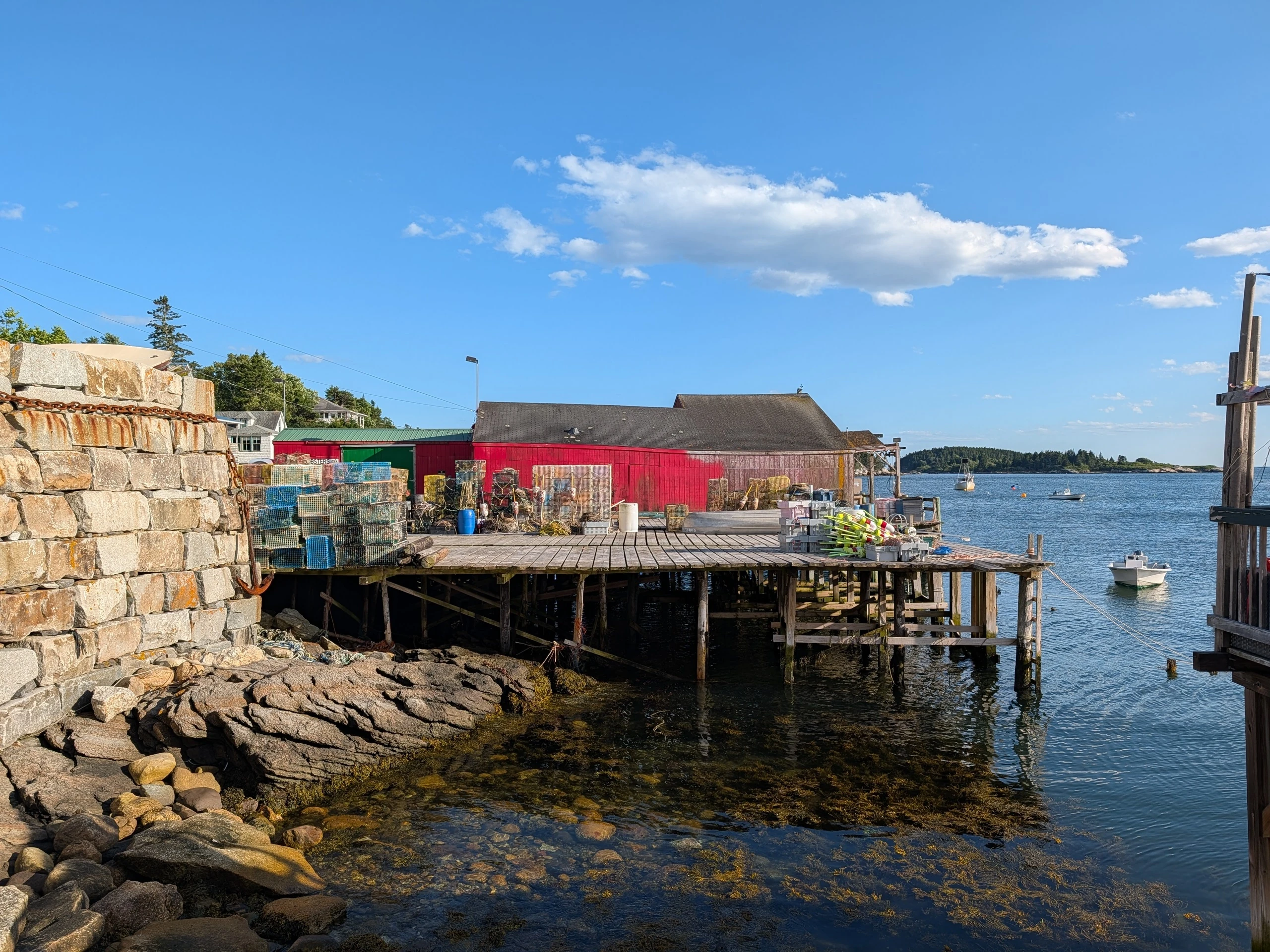
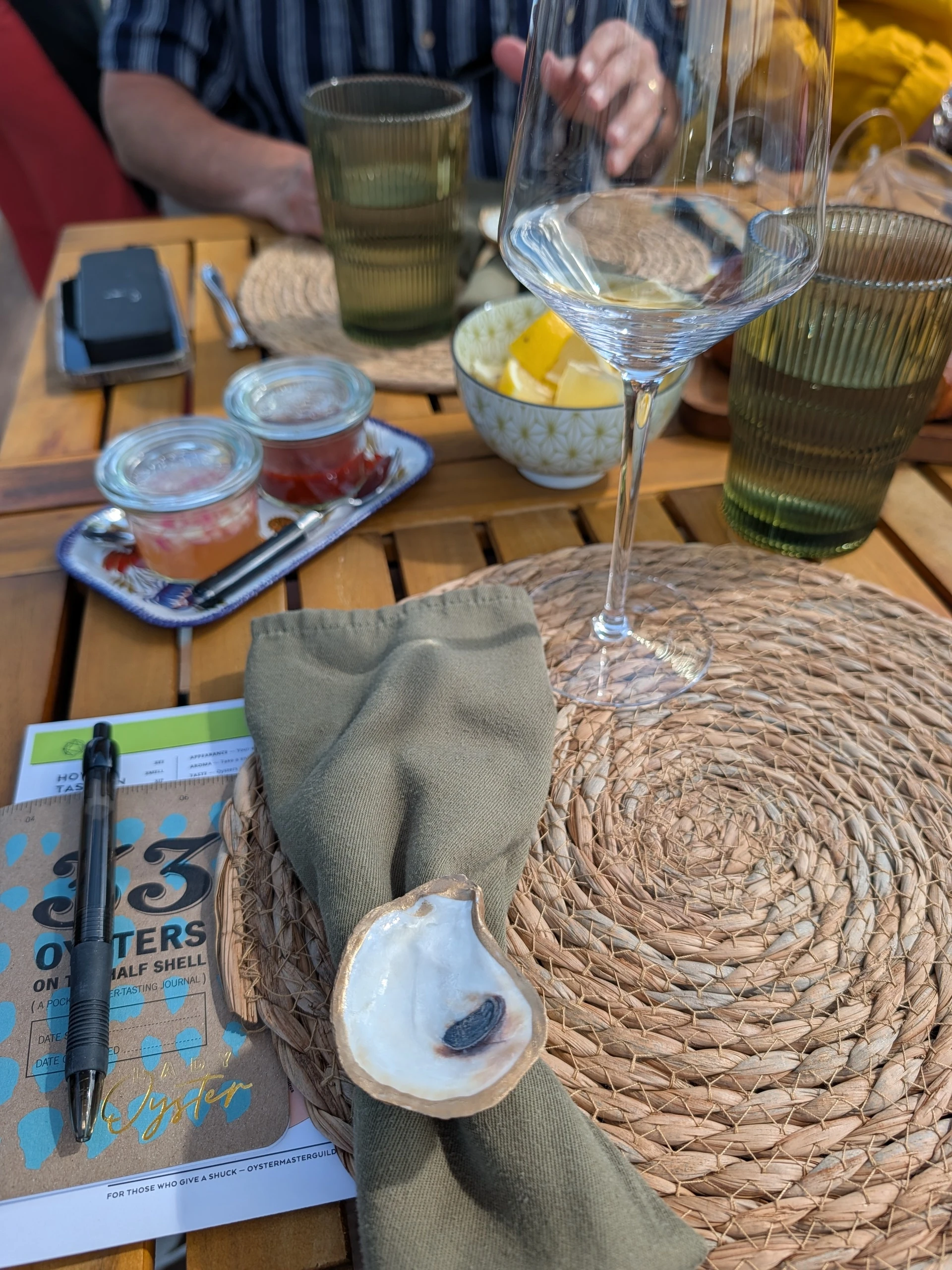
The adventure begins at Lady Oyster's headquarters in Phippsburg, on a gorgeous rooftop with panoramic views of a cove, boat docks and a quaint house on a little island. I was seated with three Mainers from Portland, but other guests were visitors from away looking for a truly local experience. The beautiful table setting included some tasty focaccia, baked fresh by Virginia's husband, to enjoy as the 10 or so guests settled in. Once we were provided with a tasting wheel and a small journal for note-taking, I realized oyster tasting is serious business.
While two skilled shuckers got to work in the background, Virginia herself kicked things off with an overview of the oyster growing region, noting the OG spots and the up-and-coming areas. Each tasting is different, depending on which farms she decides to spotlight. Lady Oyster currently works with about 30 oyster farms, many of them off the beaten path, and she noted that the focus of this tasting was going to be on some of the lesser-known producers.
First look—so pretty!—then smell, then taste the liquor, then eat the oyster (and be sure to chew).
The tasting consists of three rounds of oysters—four oysters from each of three farms. Round one was Spinney Creek oysters from the Piscataqua River, paired with Yohanna Suzanna, a fresh and lively sparkling wine from the Portland-based winemaker Michele D'Aprix. Virginia led the group through how to taste an oyster: first look—so pretty!—then smell, then taste the liquor, then eat the oyster (and be sure to chew). While some lovely accouterments were provided (grapefruit-ginger-peach mignonette and Hatch chile cocktail sauce), she encouraged everyone to try at least one plain, to fully experience the true taste of the oysters. The Spinney Creeks were salty and earthy, with "notes of algae," as she put it.
During the tasting, Virginia explained more about the oyster industry and how pretty much all oysters come from the same seed. This means the delicate beauties we were tasting and the gargantuan Gulf oysters I'm used to both started out exactly the same. She explained how, much like grapes grown for wine, it's where and how the oysters are grown that determines their size, shape and flavor. Maine oysters grow in extremely cold waters and take about three years to grow. They get nice and fat to survive the winters, which helps to explain why they're so creamy and sweet. The microclimates in each river and cove where the oysters grow, plus the farmers' techniques, impart subtle differences that perceptive oyster lovers (and oyster somms like Virginia) can easily identify. Yep—this is "merroir."
Round two featured Back River oysters from Westport—tangy, with a lobster note at the end—paired with a crisp Spanish Txakoli. Round three was Bailey Point oysters from Broad Cove, paired with a Lambrusco. These tasted pure, like the ocean, and the lightly sparkling Lambrusco was a surprisingly perfect match. All the while, Virginia answered questions, offered tasting notes and gave a quick oyster-shucking lesson ("wiggle-wiggle, lollipop, turnkey").
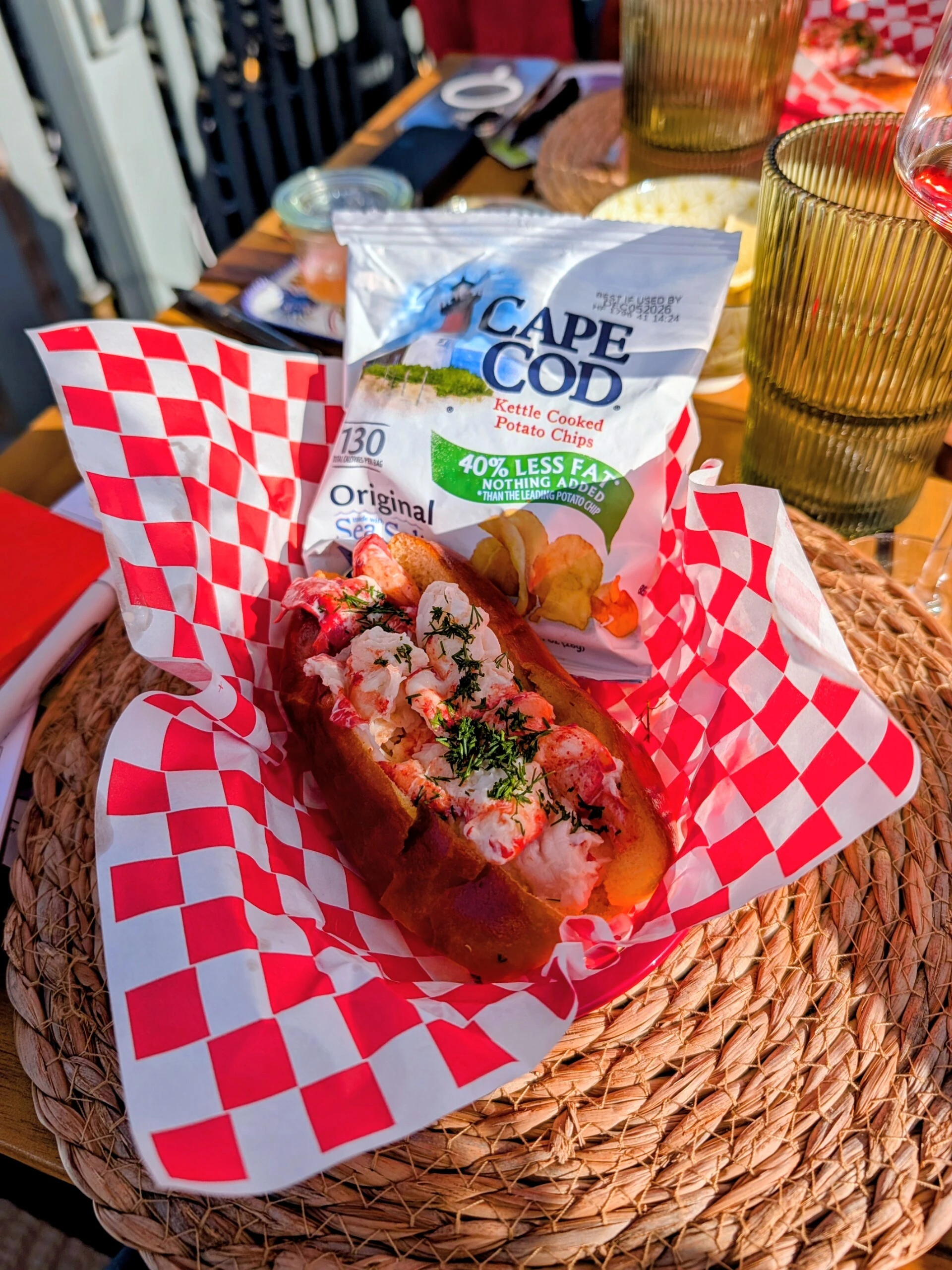
And because Lady Oyster aims to support fellow sustainable seafood purveyors ("a rising tide lifts all boats" guides their philosophy), we were all treated to another beloved Maine delicacy: a lobster roll from neighboring Small Point Fisheries. Talk about a taste of Maine!
Half of the guests were there for only the tasting, so the lobster roll was a fitting sendoff, but for the rest of us it was time to hop aboard a small boat with the exceptionally knowledgeable Captain Joe. We took a leisurely cruise through the cove while Joe talked oysters, Maine and anything else we wanted to know about the region. In the winter months, he takes kids out to learn about Maine aquaculture, so he knew how to explain everything in simple terms while keeping it adult-friendly.
He navigated around ledges and rocks to guide us to his personal oyster farm, a single line of floating baskets tethered by three large yellow floating balls. Not exactly what you picture when you hear the word "farm." But when he pulled up just one of these baskets, we could see the bounty these floating contraptions can deliver. Apparently his little operation can produce around 10,000 tasty oysters each year.
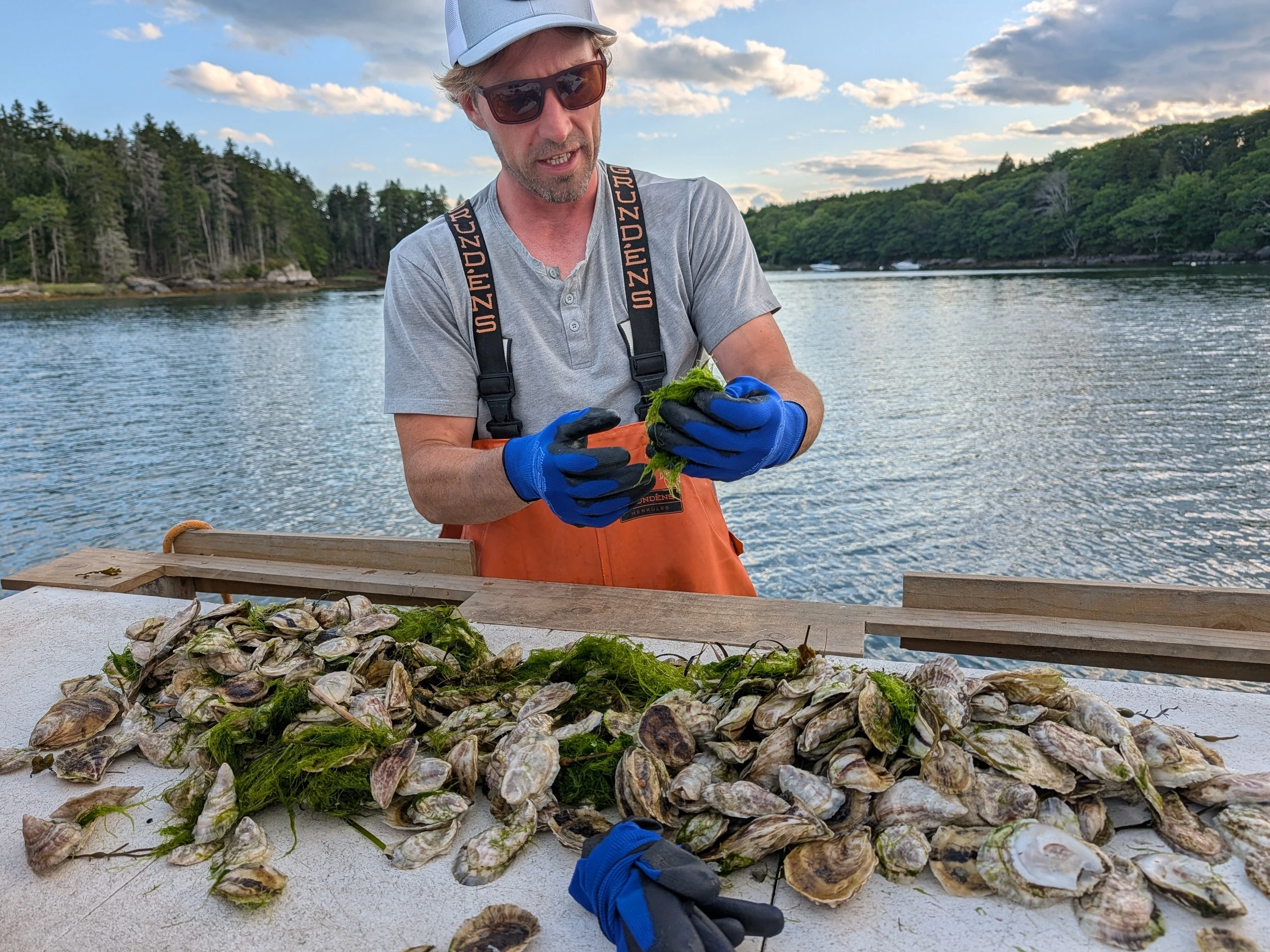
He took us to a special floating dock equipped with a high table, dumped his small haul and gave us another look at the life of an oyster farmer. These oysters were about a year old. He showed us his hands-on technique for coaxing the oysters to develop a deeper cup: rolling the edge of the oyster back and forth on the table to crush the outer layer, then tossing it back in the basket. We all got to work helping him out. While some oyster farmers use mechanical methods to take care of this step, he does it by hand, and I found the process to be therapeutic and meditative.
Next up was a hands-on shucking lesson. We all got oyster knives and gloves, and Joe went over the techniques again before letting us have a go with some of his more mature, ready-to-eat oysters. Shucking isn't easy, but it's not as hard as I always assumed. Why haven’t I tried this before? I may have poked a hole in one oyster, missed a bit of the adductor in another, but they were all very tasty. Joe rated our technique in the kindest way possible, and gave us some fun insider info on professional shucking techniques.
After we got the hang of things, Joe pulled out some oysters from Pemaquid and Johns River. All three were so different, both in look and taste. We got our fill of these oysters, and as the sun started to drop, Joe prepped a special sunset cocktail for everyone. Then, sadly, it was time to head back.
As we returned, Joe pointed out some of the longstanding communities along the water, where generations of families have gathered in the summer, getting around by boat, sharing the bounty of the waters. We stopped by his oyster farm to tuck the baby oysters back in, then arrived back at Lady Oyster HQ as the sun was setting. Lady Oyster operates out of Maine Oyster Company's Basecamp, a welcoming spot where you can pick up some fresh oysters or simply hang out on a comfy couch. On this day, a few neighbors were lingering after watching the World Cup final. It was a fitting end to a very cool, only-in-Maine experience. I'm now armed with plenty of cool oyster facts and a basic proficiency in shucking that may or may not impress oyster enthusiasts back home, plus a lovely experience that instantly became a highlight of the summer.
Discover Time Out original video