[category]
[title]
A near-total lunar eclipse will turn the moon a dramatic reddish-orange across much of the U.S. this Thursday night.


Look up on Thursday night—a deep partial lunar eclipse will turn nearly all of the full moon a dusky red-orange and the U.S. is in an especially good position to catch it.
On August 27 into the early hours of August 28, Earth’s shadow will cover about 96-percent of the moon. It’s technically not a total lunar eclipse as one bright sliver of the moon will remain outside Earth’s darkest shadow, but it should still make for a very dramatic late-summer sky show.
The eclipse will be visible in at least part of nearly the entire country, with some areas of Alaska missing out. Clear skies, naturally, remain the uninvited guest who could spoil the party.
The penumbral eclipse (when the moon enters Earth’s faint outer shadow) begins at 9:23pm EDT Thursday. The part you’ll really notice begins at 10:33pm EDT, when the moon starts entering the umbra, Earth’s darker central shadow.
Maximum eclipse arrives at 12:13am EDT on Friday, August 28, though it will still be Thursday night in Central, Mountain and Pacific time zones. The partial eclipse ends at 1:51am EDT, with the moon fully leaving Earth’s shadow just after 3am EDT.
East Coast viewers can watch the whole progression unfold. Farther west, the moon will rise already eclipsed or close to it, so find an open spot with a clear view of the eastern horizon. The most cinematic moment should be around maximum eclipse, when only a narrow slice of the lunar surface remains bright.
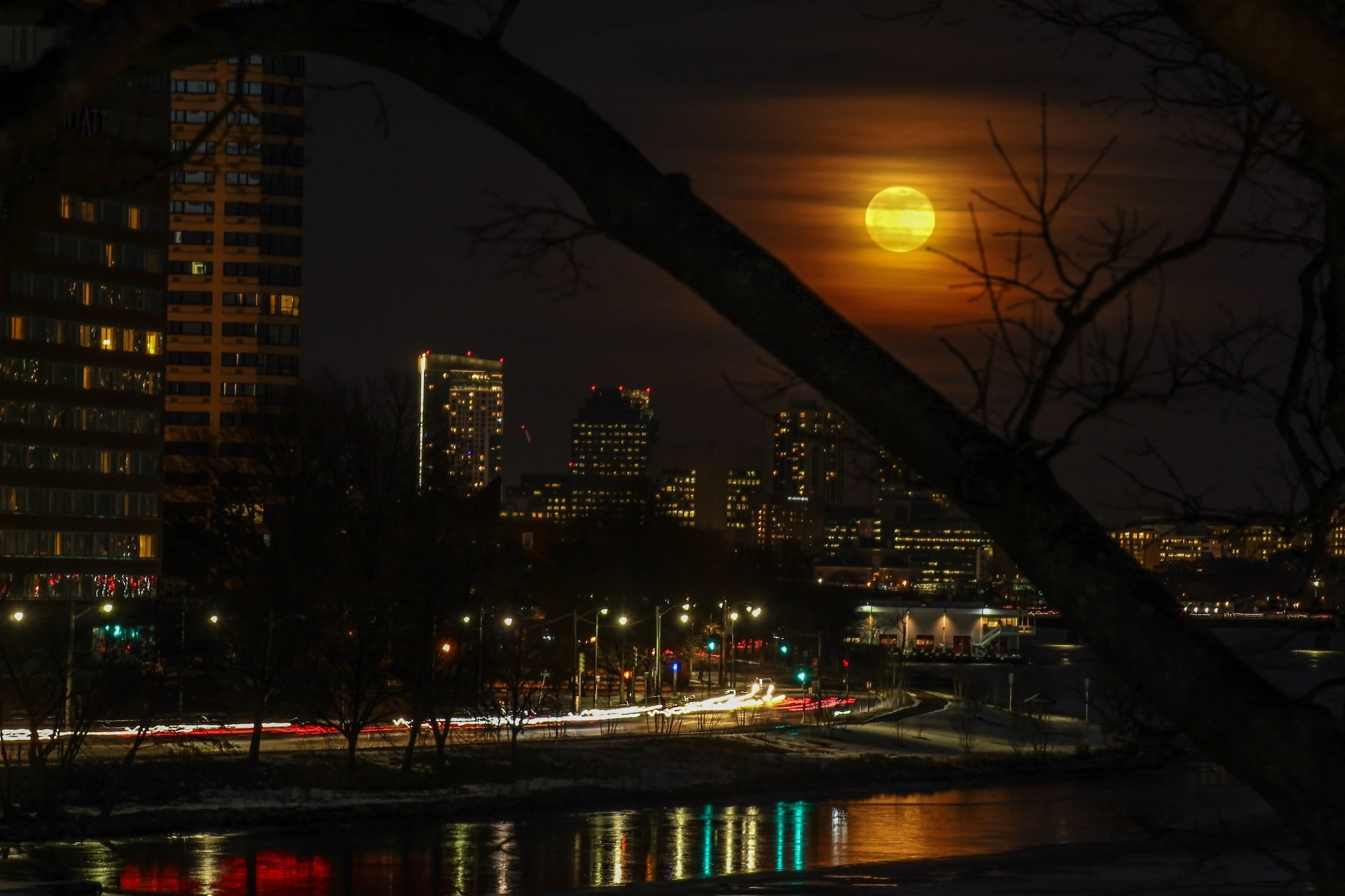
A “blood moon” is the nickname for a moon that takes on a reddish hue during a lunar eclipse. As sunlight passes through Earth’s atmosphere, shorter blue wavelengths scatter away while red and orange light bends toward the moon.
Because Thursday’s event is a partial eclipse, it won’t produce an entirely red lunar disk. Still, with 96-percent of the moon inside the umbra, expect most of it to look coppery, rusty or reddish-orange.
RECOMMENDED: The best places for stargazing in the U.S.
Lunar eclipses happen two to three times a year on average, but they’re not all created equal. The moon’s orbit is tilted, so most full moons pass above or below Earth’s shadow. Total lunar eclipses are less common; this year’s earlier total eclipse took place in March.
Thursday’s is the second and final lunar eclipse of 2026—and one of the more impressive U.S.-visible ones for a while.
The most recent total lunar eclipse visible from the Americas occurred in March 2026. The next total lunar eclipse will arrive on New Year’s Eve 2028, although North and South America won’t get another full view of a total lunar eclipse until 2029.
Yes. Unlike a solar eclipse, a lunar eclipse is completely safe to watch with your naked eyes, with no special glasses required. Binoculars or a telescope can make the moon’s changing colors more striking, but your own eyeballs will do the job just fine!
Discover Time Out original video