[image]
[title]I like going out for walks. Even more, going out on a bike. Really, what matters is getting out: unplugging from screens for a while, moving, looking around. Rediscovering the city. Getting lost in streets I thought I knew and seeing them with fresh eyes.
This time I went to Puerto Madero. You only have to cross a few blocks from downtown for something to shift: the traffic noise fades, the air opens up, and the water in the docks starts to set a different rhythm.
Sometimes it feels like stepping into a small bubble within Buenos Aires. It always makes me think of Kevin Johansen, when he plays with the neighborhood’s name: “Puerto Madero, Madero Puerto…”. In one of his lines he says that everyone who isn’t from here wants to come, and many of those who live here want to leave. Something of that still lingers in the air.
You might also be interested in: 10 food projects revitalizing downtown Buenos Aires
Puerto Madero does have a bit of that international postcard feel, yes, but it’s also a huge public space you can enjoy without spending a cent. There’s a detail I always like: its streets are named after women. It’s not a coincidence—it was a decision meant to correct a pretty obvious absence on the city map. Here, at least, history is also written in the feminine.
I set out with a camera in hand and no plan. I started near Luna Park and headed down toward the river. In just a few minutes I was in a different scene: cleaner, more orderly, as if the city breathed differently by the water.
Guide to discovering Puerto Madero for free
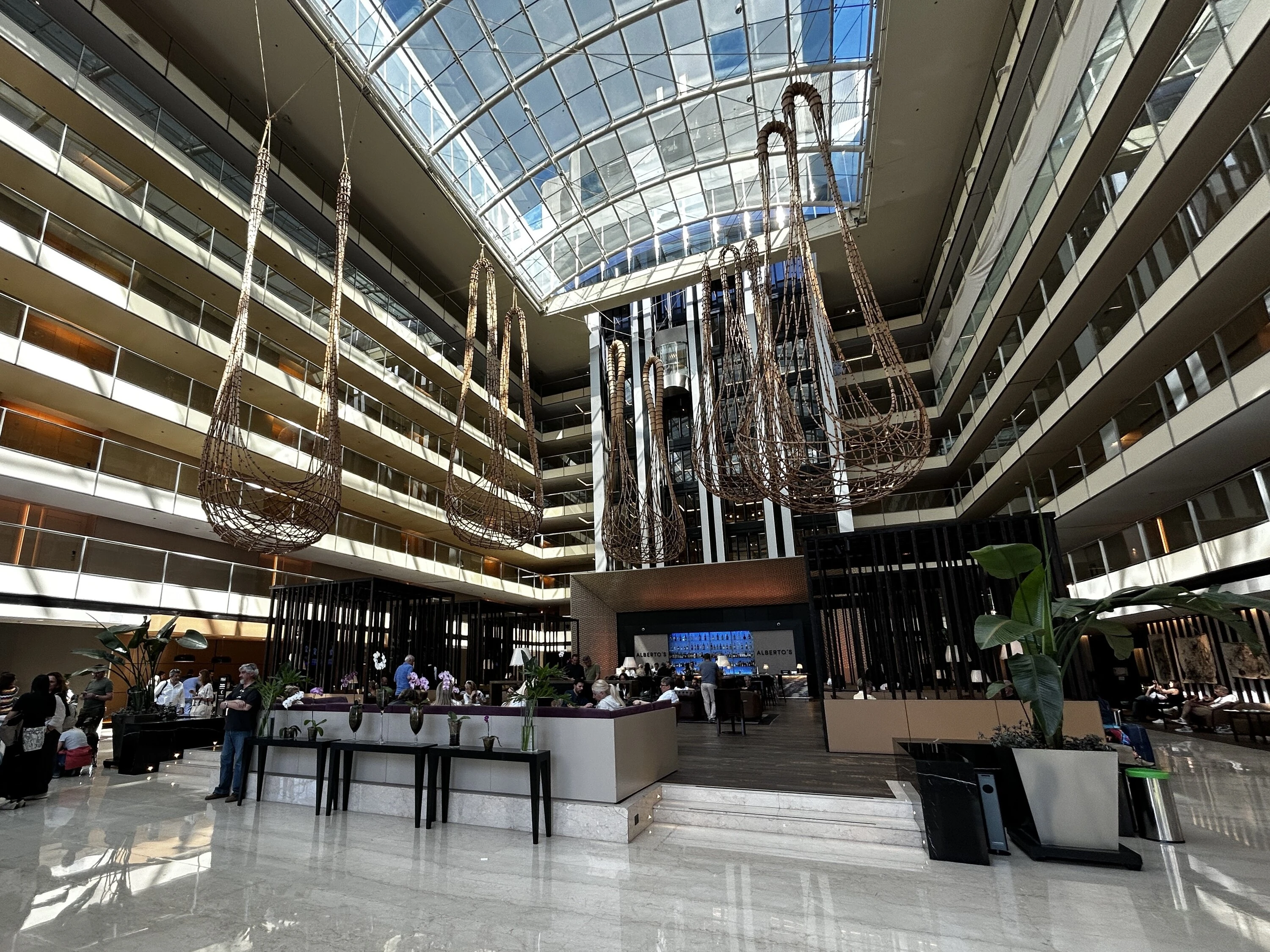
I stepped into the Hilton Buenos Aires almost without thinking. The contrast was immediate: a huge, bright lobby, suitcases rolling, people arriving and leaving without lingering much.
You might also be interested in: Coghlan: a neighborhood to bookmark (and return to)
Opened in 2000, the hotel also functions as an exhibition space. Amid that constant movement, artworks appear throughout the building almost unannounced. That time it was paintings that managed something unusual: slowing time down. Several people, almost silently, stood there looking at them.
The exhibitions change, but the scene repeats itself. You don’t have to be a guest—anyone can walk in and look around. It’s a small detour within the route, an unexpected place to pause, look… and then keep going.
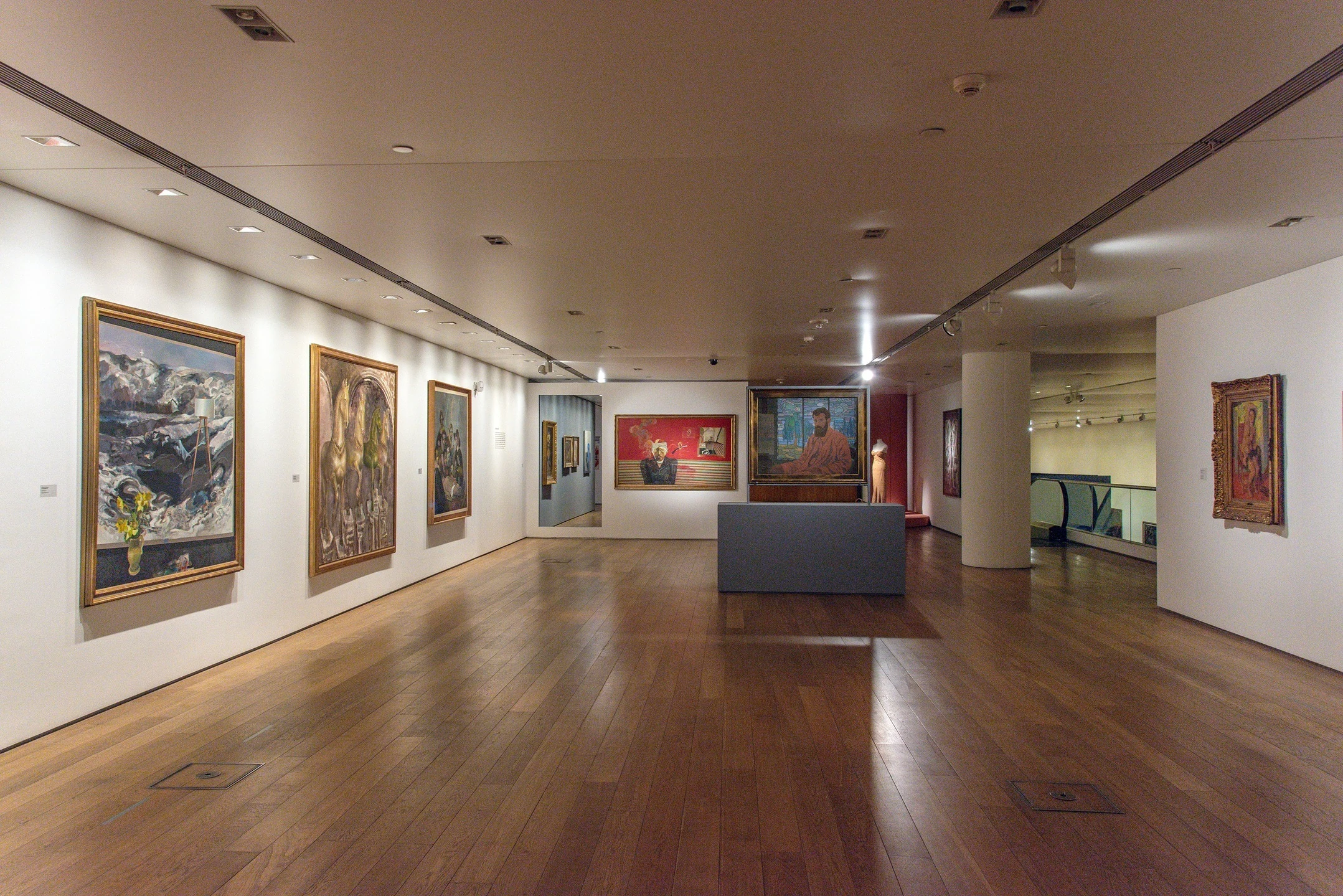
I kept walking to the Amalia Lacroze de Fortabat Art Museum, a few blocks away, on Olga Cossettini 141.
Inside, international names like Andy Warhol, Salvador Dalí, and J. M. William Turner coexist with key figures of Argentine art such as Antonio Berni, Benito Quinquela Martín, and Xul Solar. The collection, with more than 150 works, unfolds across the first and second basement levels, with a renewed curatorial approach focused on Argentine art.
A key detail for those exploring on a budget: on Thursdays, admission is free for teachers, retirees, and students; also for children under 12 and people with disabilities. It’s open Thursday to Sunday, from 12 to 8 pm.
At some point, the inevitable question comes up: is the selfie part of the experience, or does it ruin it a bit? That time I left it for the end, and outside. Because these days it seems that if there’s no photo, it didn’t happen. But spending a few minutes in front of a work, without a screen in between, is still the best part.
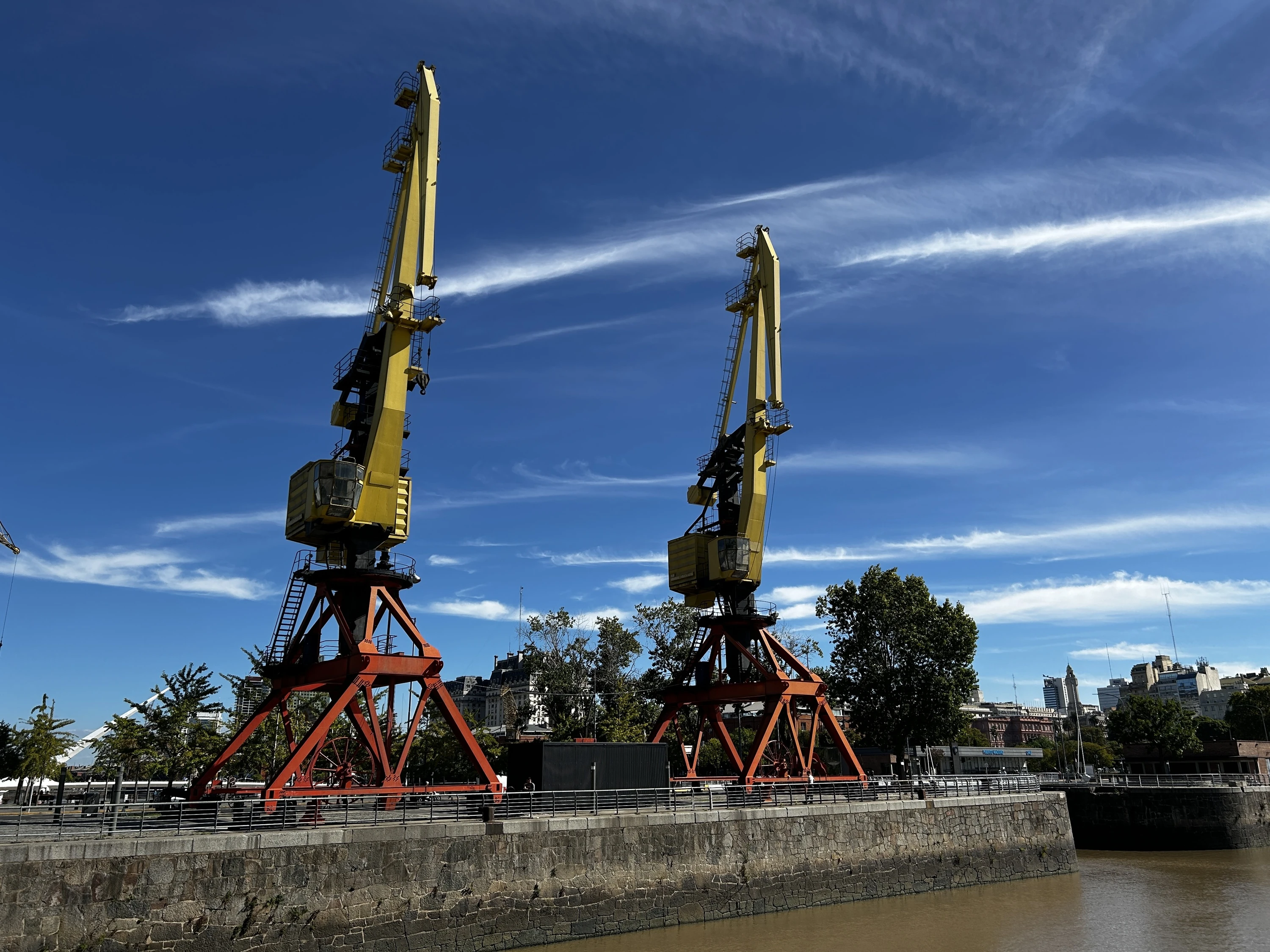
The sun started to set and everything became sharper. In the distance, the old silos appeared and, for a moment, I felt like I was inside a movie, with a slightly apocalyptic mood.
You might also be interested in: 10 free places to visit with kids in Buenos Aires
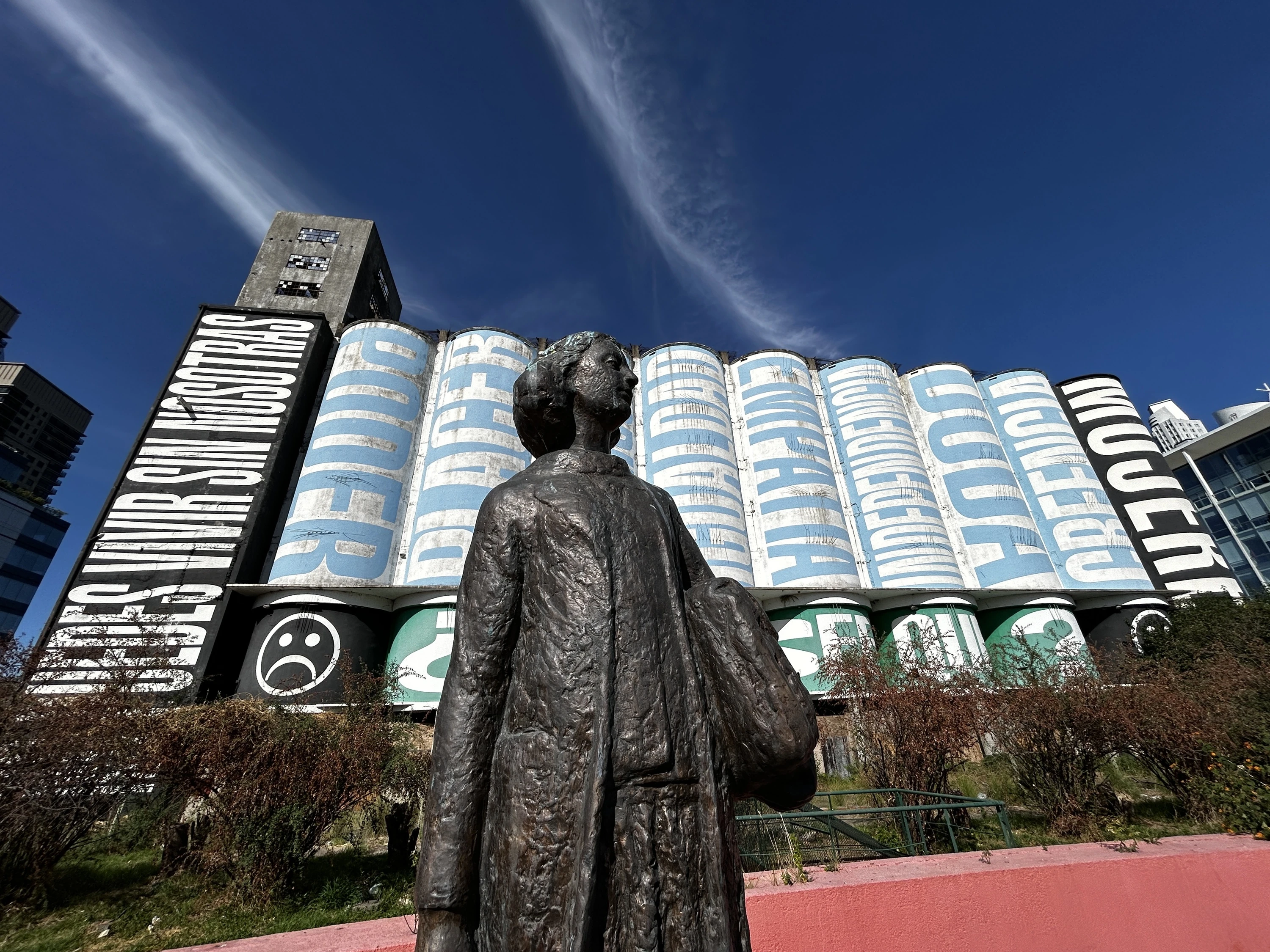
They’re concrete structures more than a century old, remnants of another Puerto Madero—when this area was all grain and port activity. Some silos have been repurposed; others remain as they are, exposed. Today they function as an urban canvas. Right now they’re intervened by Barbara Kruger: large-scale text covering the surfaces and completely changing the perception of the space.
A few meters ahead stands the statue of Anne Frank, in Plaza Reina de Holanda, right in front of the silos. Another pause. Another kind of silence.
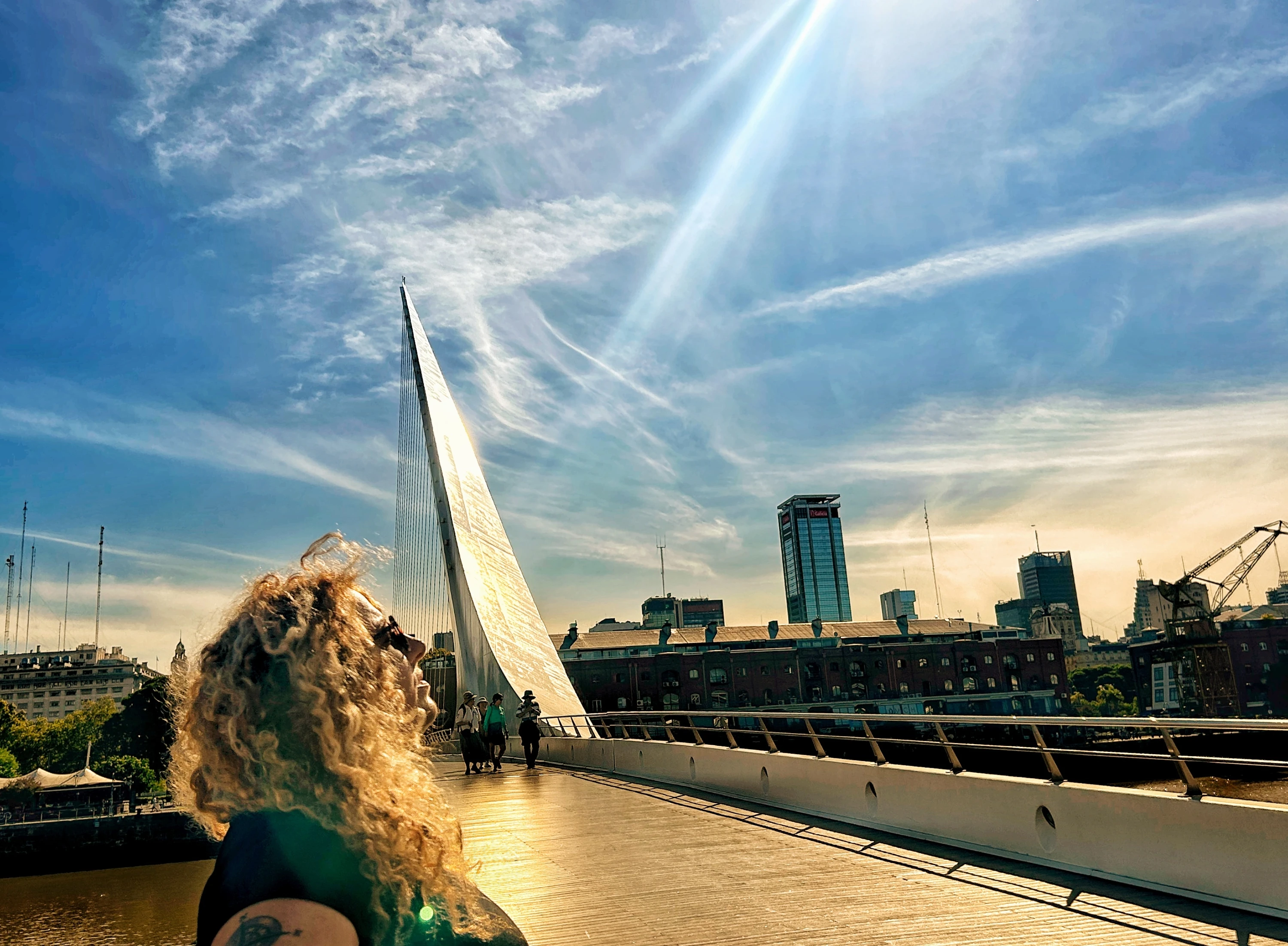
Everything is in Dock 3, near the Puente de la Mujer. By this point, the route practically builds itself.
Designed by Spanish architect Santiago Calatrava, the Puente de la Mujer evokes a couple dancing tango. Day or night, it’s an unavoidable photogenic spot—but also a way to cross and keep going.
On the other side, the route continued: the food scene keeps growing, but the promenade remains for everyone. I saw tourists and locals, people just passing through and others lingering with their thermoses. Even a guitar here and there.
Sometimes that’s enough: stopping, looking. Like when we travel and everything surprises us. Learning, too, to look at what’s ours.
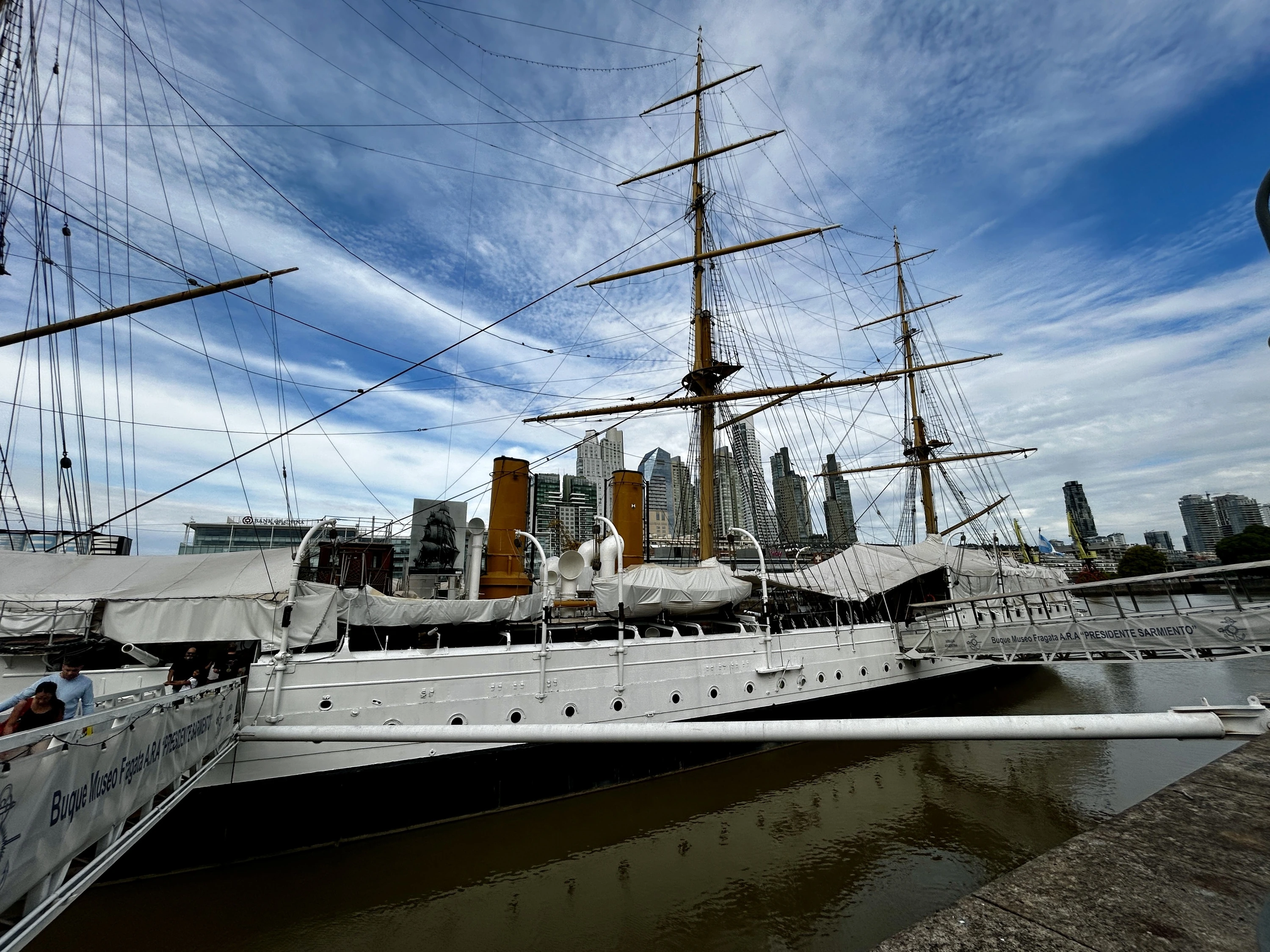
The ARA Presidente Sarmiento Frigate caught my attention. Admission isn’t free, but it’s almost symbolic. On weekends it fills up: families, tourists, people wandering aimlessly. There’s something about that ship, anchored in the middle of the dock, that makes you pause too—as if it were still about to set sail.
Launched in 1897, it was the first modern training ship of the Argentine Navy: it completed 37 training voyages around the world. Today it’s a National Historic Monument and works as a museum in Dock 3. You can explore almost everything: the wooden decks, cabins, engine room, and bridge. Details that tell of another time, another way of traveling.
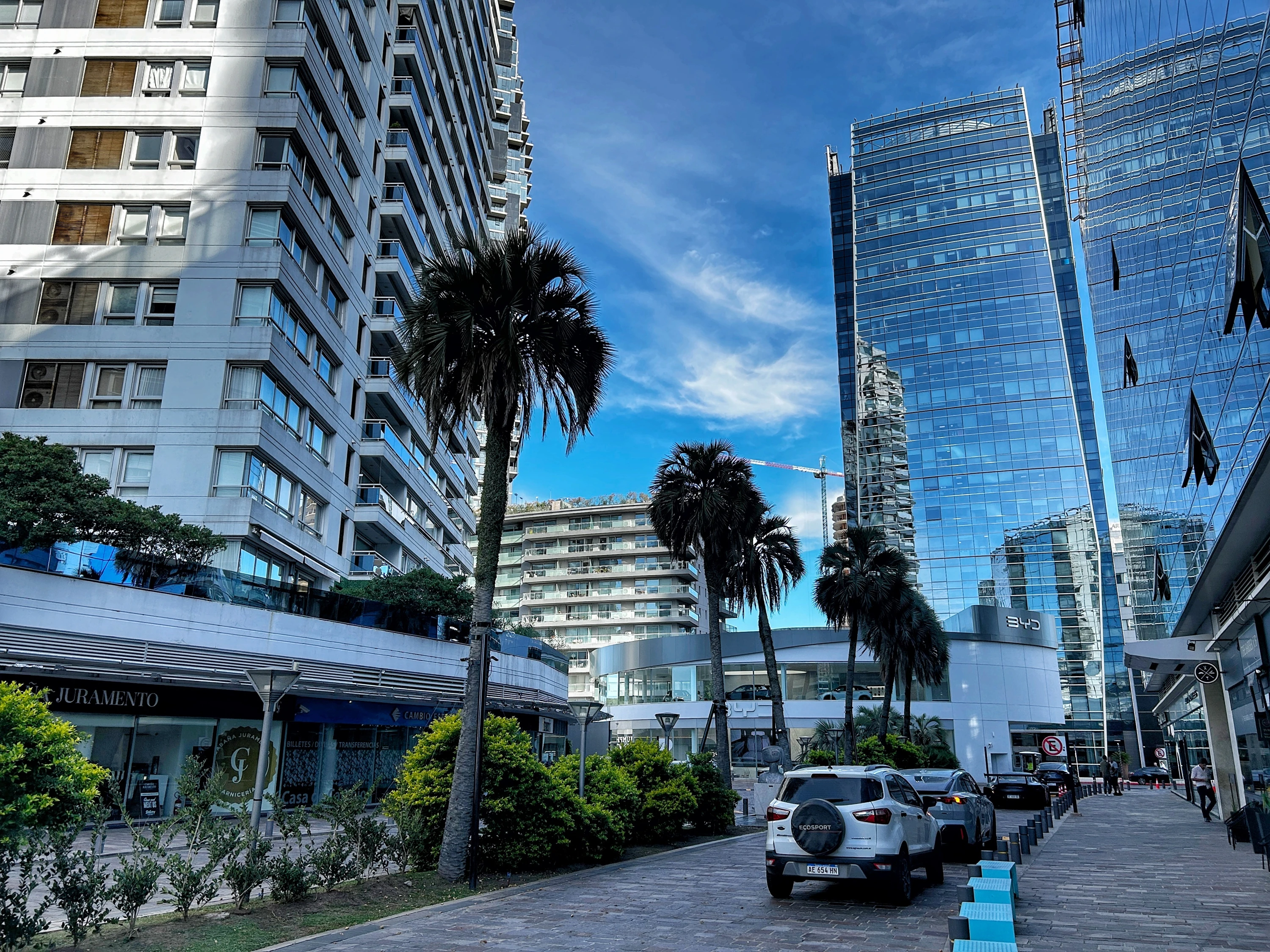
Puerto Madero is always evolving. New architecture appears all the time, and at moments the landscape recalls the skyline of major metropolises. I thought of New York—even of other cities. I laughed.
Some tourists asked me to take their photo. I loved that moment: when someone hands you their camera or phone and trusts your eye for a few seconds.
You might also be interested in: 6 bars to unplug and play again
I continued toward Dock 1, a newer area. Where there used to be empty land, new spaces are taking shape: promenades, corners still under construction that already invite you to linger. Palm trees, neat pathways. It’s the Madero Harbour area. I stopped at a flower shop—or rather, it stopped me. Those places that seem to exist just to make you pause, even if only to look. I stayed for a while. I chatted. I discovered.
Suddenly, another square, lots of green, playgrounds. I sat down. And wondered: why not have some mate here?
At one point, stairs appeared. I felt like running up them, as if someone were filming me for a remake of my favorite movie.
It was Micaela Bastidas Park, instantly recognizable: it breaks with Puerto Madero’s flatness. It’s organized on two levels that change your perspective. Above, at street level, several plazas and a large viewpoint. Benches, total calm. From there you can see much of the neighborhood and its skyscrapers. Some people were training, fully focused, detached from everything. Here, everything seemed to happen in a world of its own.
Below, closer to the Costanera Sur, the space turned greener. Everything connects through ramps and stairs. The route isn’t linear—it takes shape as you go.
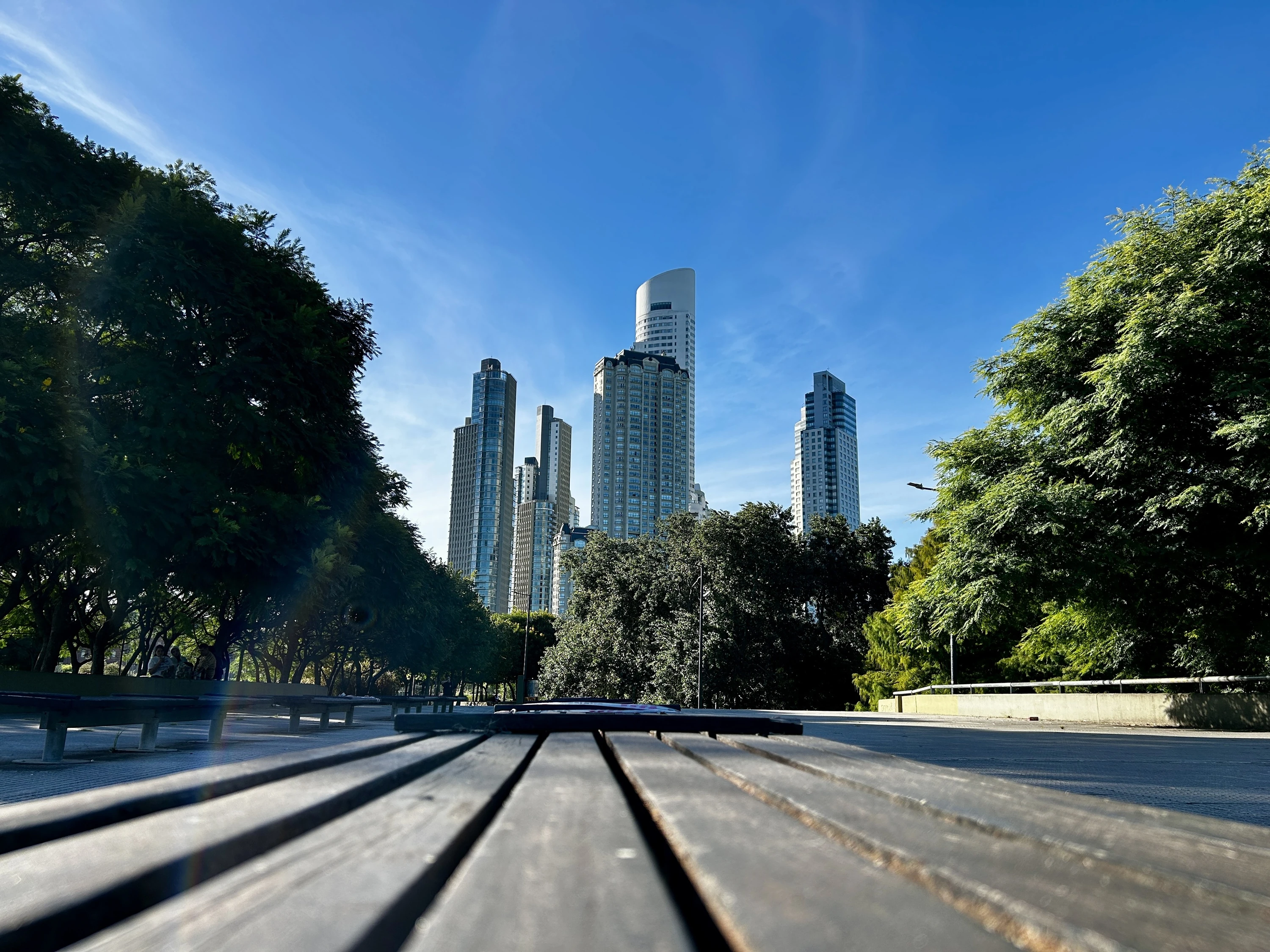
Before entering the Reserve, I stopped in front of the Fuente de las Nereidas, Lola Mora’s most famous work. It depicts the birth of Venus emerging from a seashell, and it’s almost impossible not to linger on every figure, every gesture, every detail.
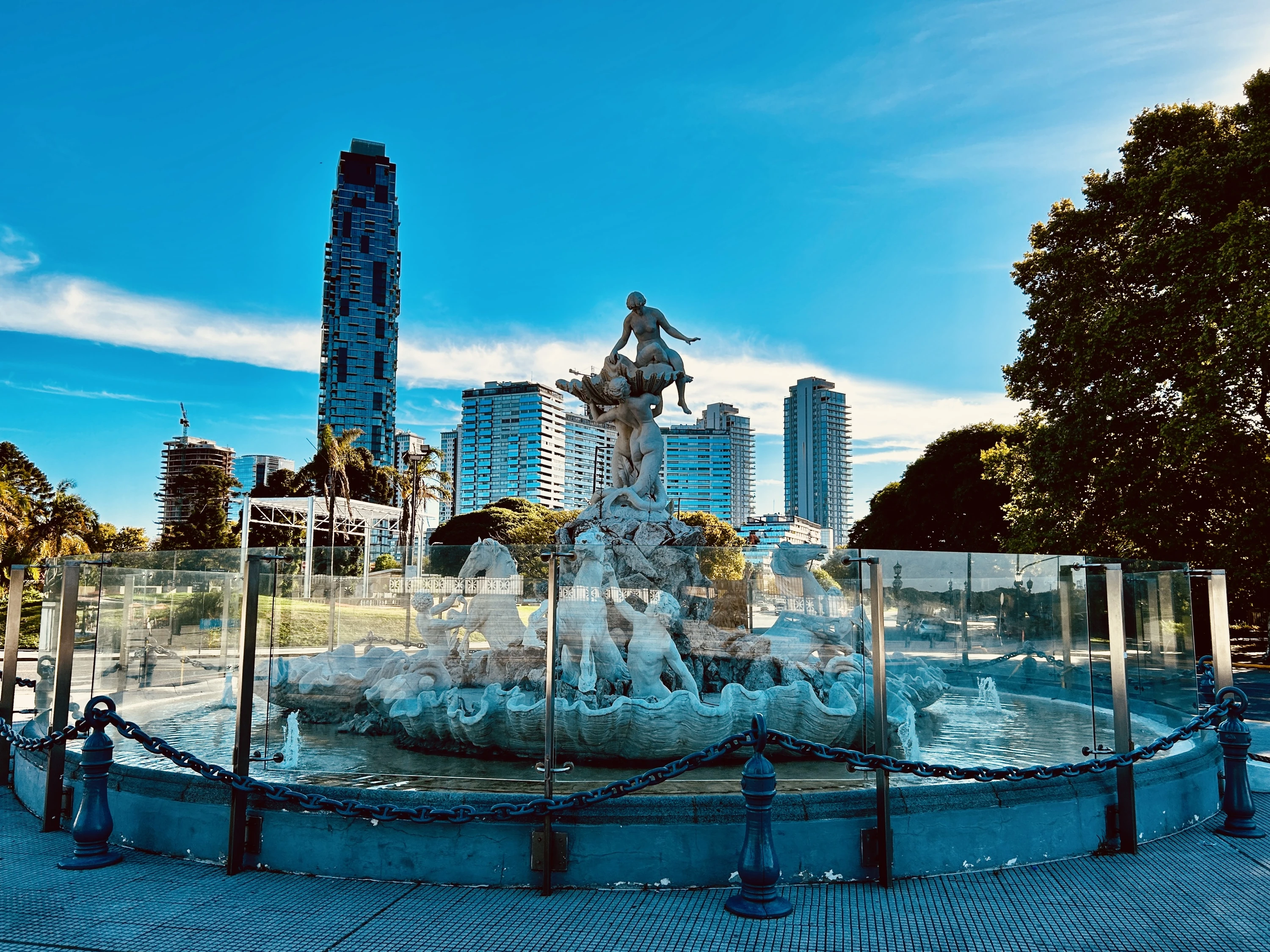
Then came the Costanera Sur Ecological Reserve, that green lung in the middle of the city. You can explore it on foot or by bike, and time flies here. Cyclists coming and going, runners, people drinking mate. Everyone in their own world, all sharing the same space.
It’s not just a park—it’s a protected natural area. The river on one side, greenery all around, and suddenly a bird you weren’t expecting appears on the path.
It’s open every day except Mondays, from 8 am to 7 pm.
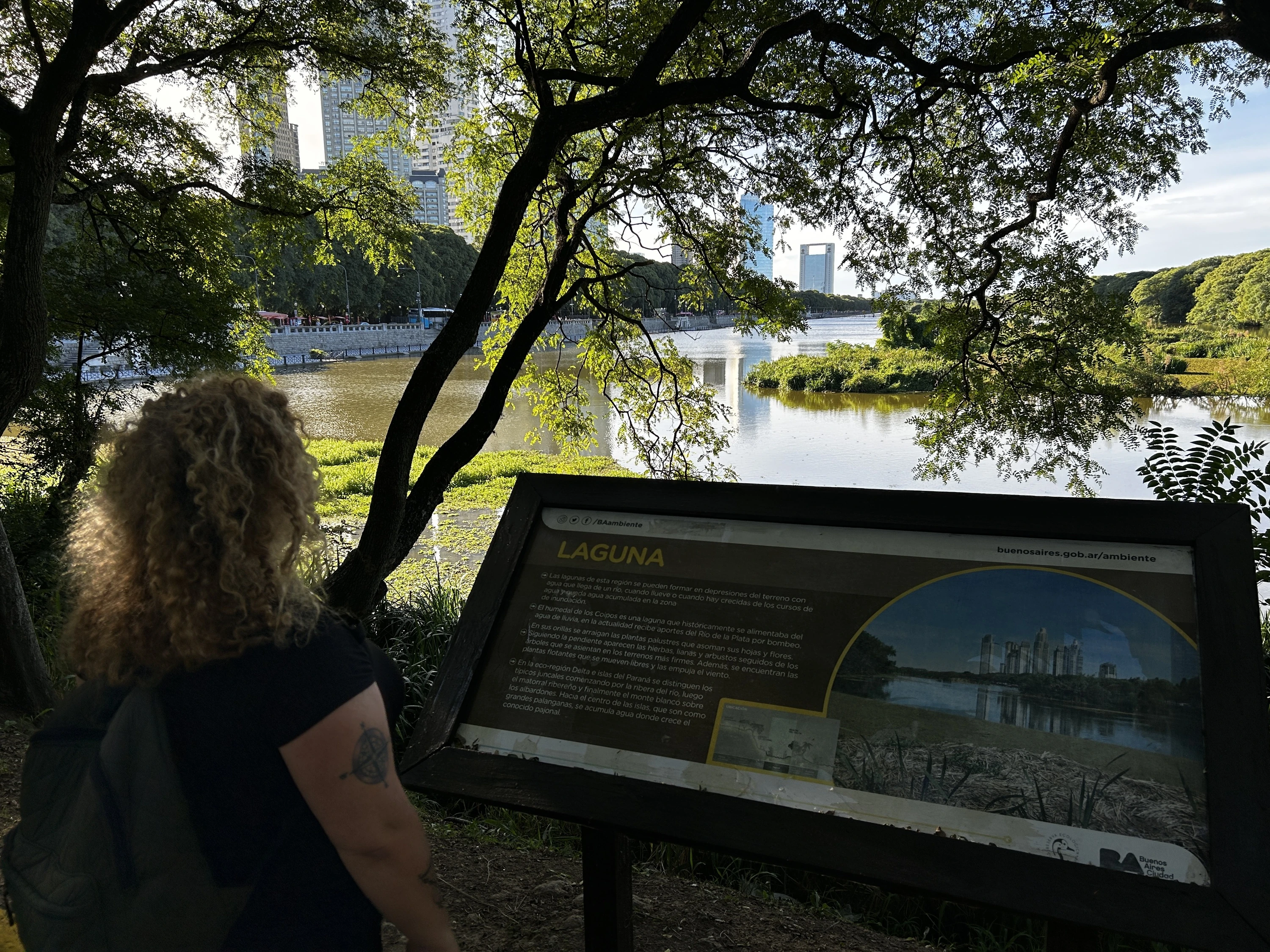
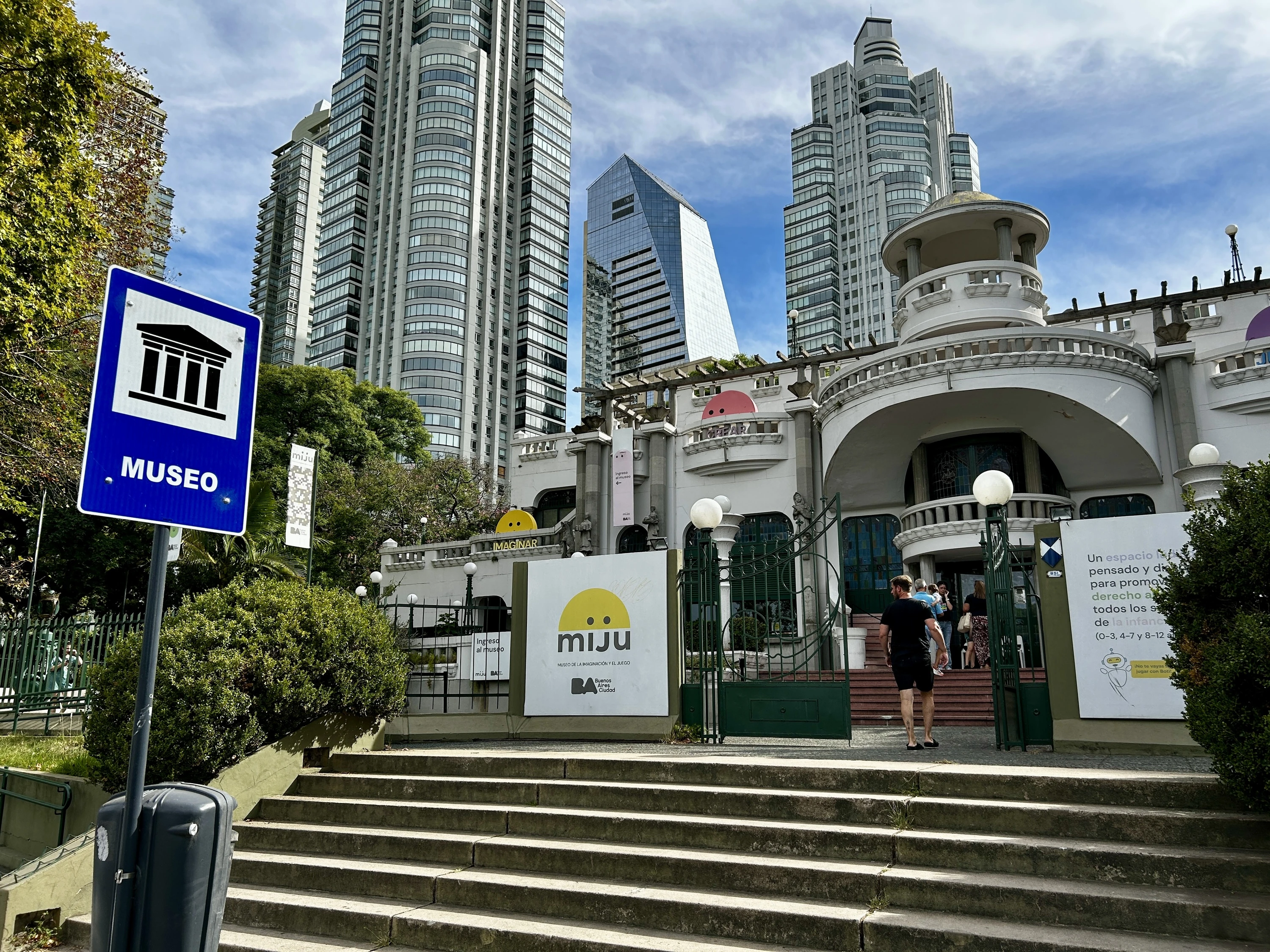
After walking a bit through the Reserve, I noticed several families heading toward Avenida de los Italianos. I followed them and stumbled upon a small treasure: the Museum of Imagination and Play.
It’s designed for kids up to 12 years old, with installations meant to spark imagination, curiosity, and play.
You might also be interested in: Villa Devoto: what to do in Buenos Aires’ “Garden”
Inside, the scene was clear: kids running, rooms organized by age, and outside, a huge patio with games and parents on the grass. An energy you can’t fake.
Admission is free on Wednesdays. It’s located at Avenida de los Italianos 851.
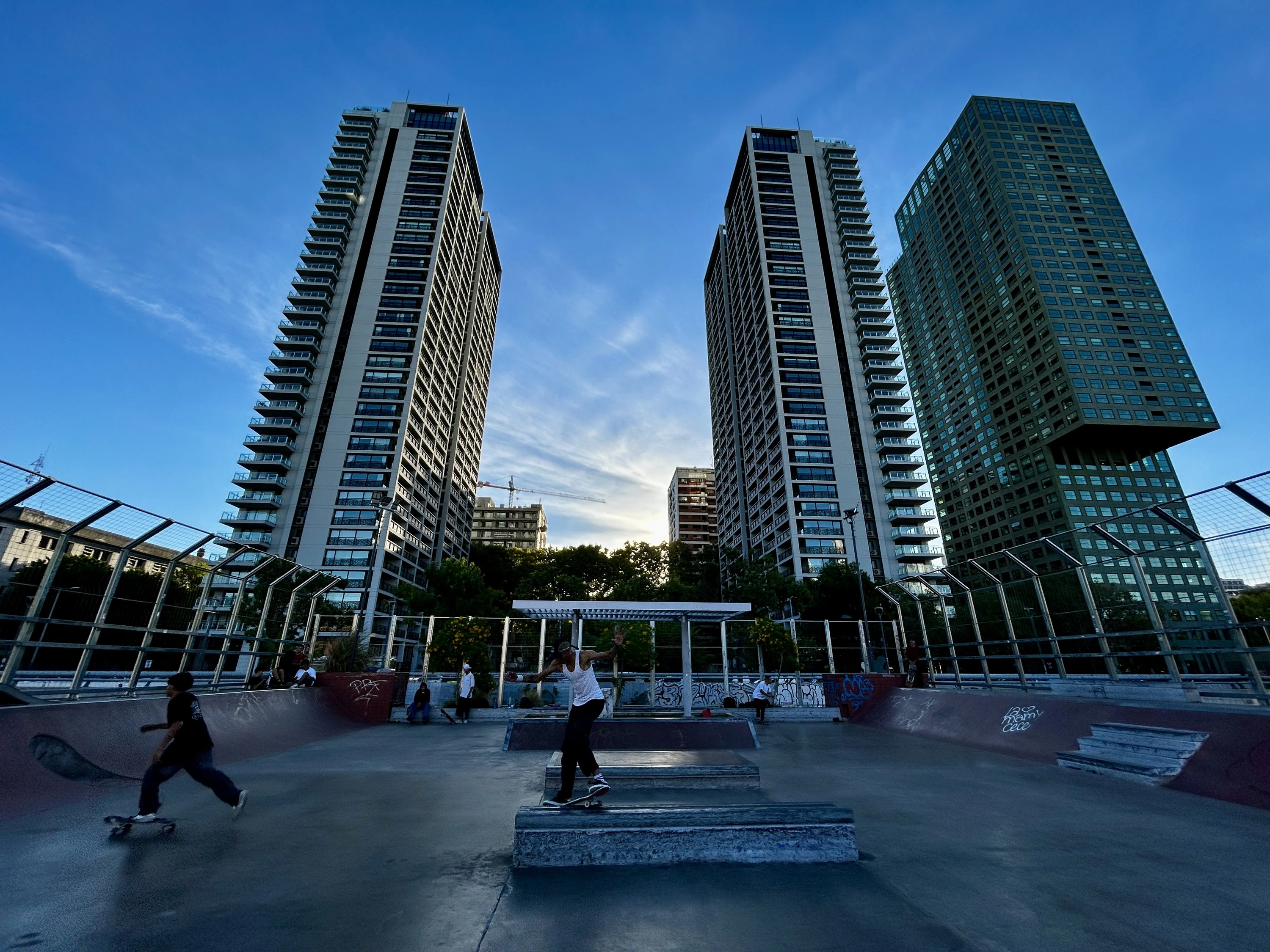
As I was about to say goodbye to Puerto Madero, I spotted something in the distance: kids who seemed to be flying. I got closer. It was a skatepark, in Dock 2. Jumps, spins, falls, laughter. Another unexpected scene in a route that keeps changing… I stayed for a while taking photos, the kind that almost take themselves.
It’s on Paseo del Bajo, at Av. Alicia Moreau de Justo 1349. A space that appeared almost by surprise, like many of the things that ended up defining this walk.
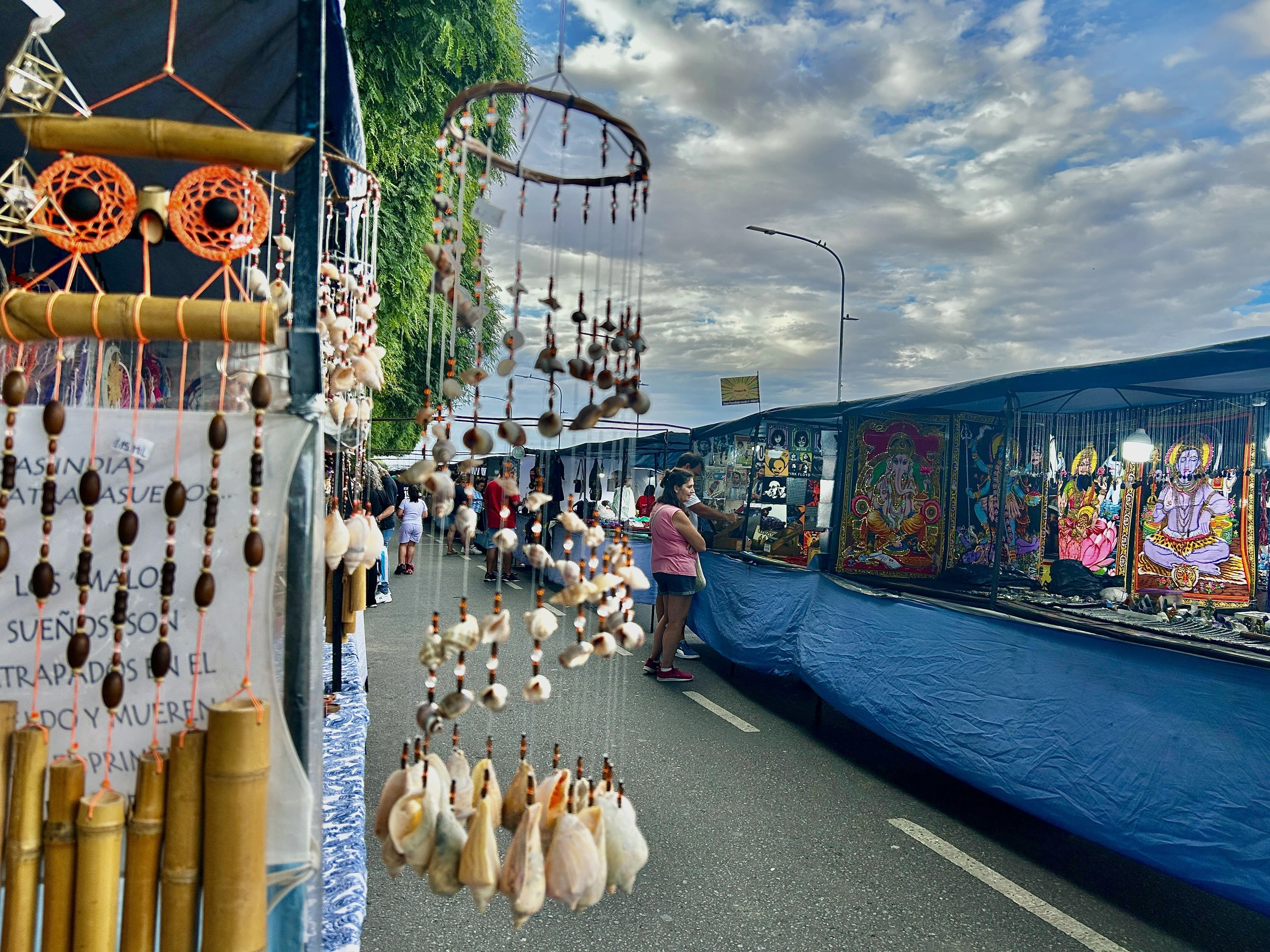
I didn’t expect to find so much. On weekends, another layer appears: the Costanera Sur Entrepreneurs’ Fair, already a classic open-air market. That day there weren’t many people, but those who were there browsed enthusiastically through crafts, accessories, toys, candles, incense. Those scents that surround you before you even notice.
There were also food stalls, and some music blending with the low hum of the city, which here felt more distant. Everything unfolded between greenery and the river in the background. And nothing more was needed.
The fair runs Saturdays, Sundays, and holidays, from 10 am to 8 pm, in front of the Reserve.
My bonus track—almost an Easter egg—is the Immigration Museum. It’s a bit farther away, but worth it. You can even start there and then make your way down to the Reserve. This route doesn’t have just one direction.
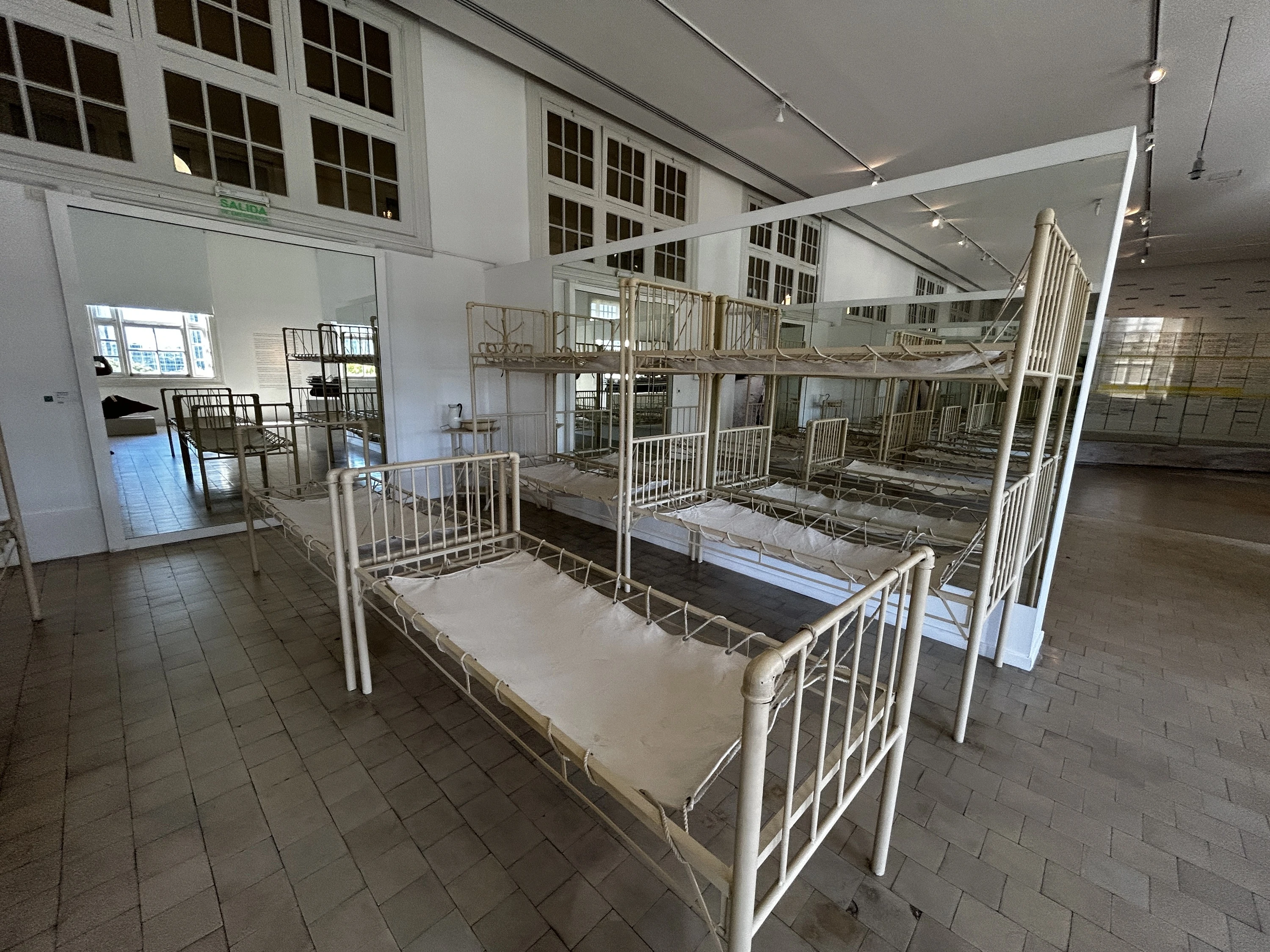
I walked there from the Buquebus terminal area and, almost without looking for it, it appeared: the former Immigrants’ Hotel. Imposing, silent, full of history. Since 1911, thousands of people passed through here upon arriving in the country. I found myself thinking about that—about those who crossed everything without knowing exactly what they would find, but moved forward anyway.
You might also be interested in: The new Buenos Aires nightlife: 10 after-office spots redefining going out
The permanent exhibition “For all the men of the world” traces the great European migration waves of the late 19th century through to more recent movements. The journey is organized into three stages: the voyage, the arrival, and what came after. Documents, photos, suitcases, and everyday objects still hold something of those lives in transit. Sometimes, among so much archive material, something connects in a deeply personal way. Something shifts inside.
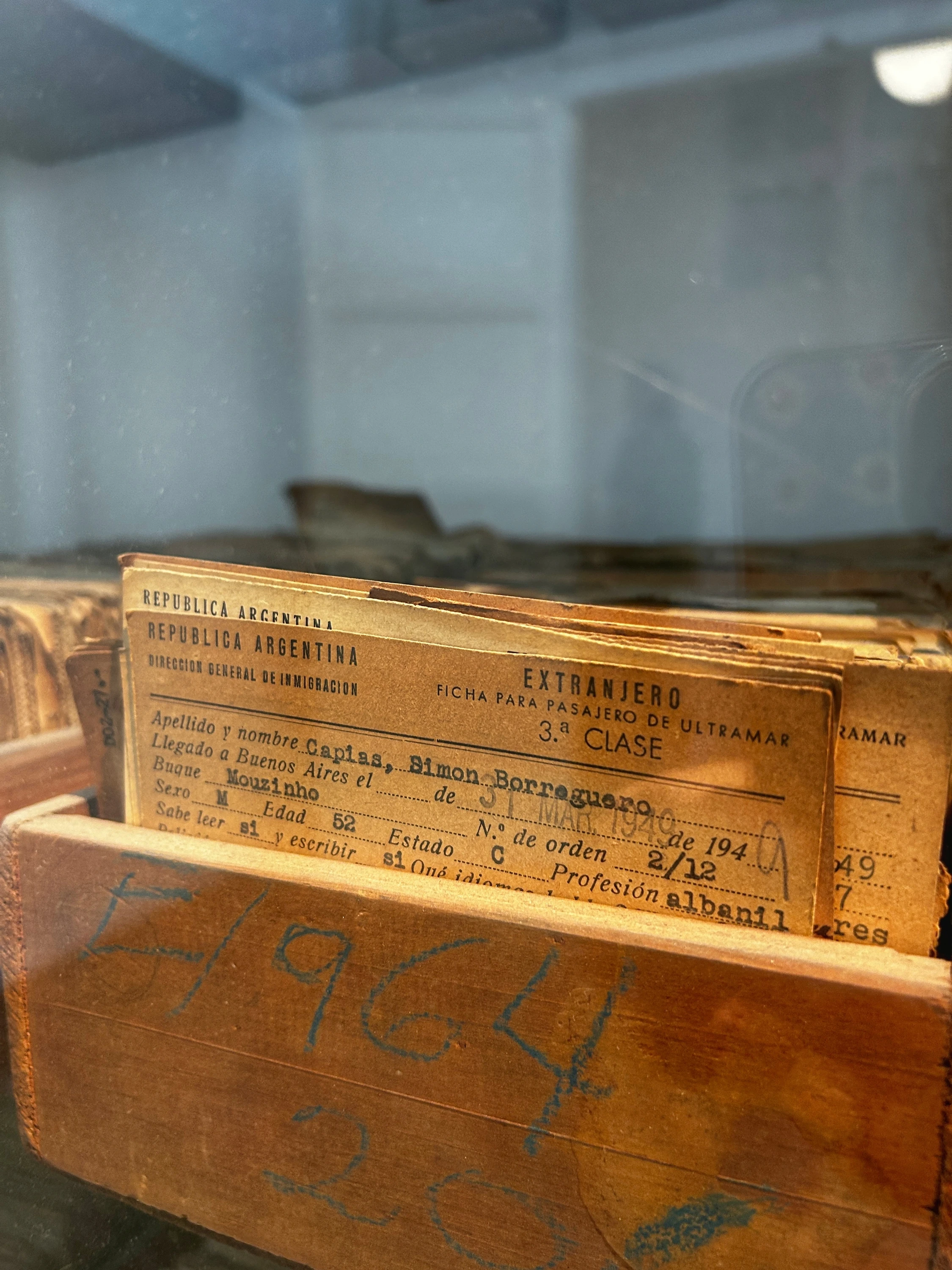
There’s one final detail that ties it all together: if you have ancestors who arrived by ship, you can search for their record and get it printed on the spot. I asked for mine. Seeing that name, that date, that ship… it’s hard to put into words.
Admission is free. It’s open Wednesday to Sunday, from 11 am to 6 pm, at Av. Antártida Argentina s/n, entrance via Apostadero Naval.