[category]
[title]
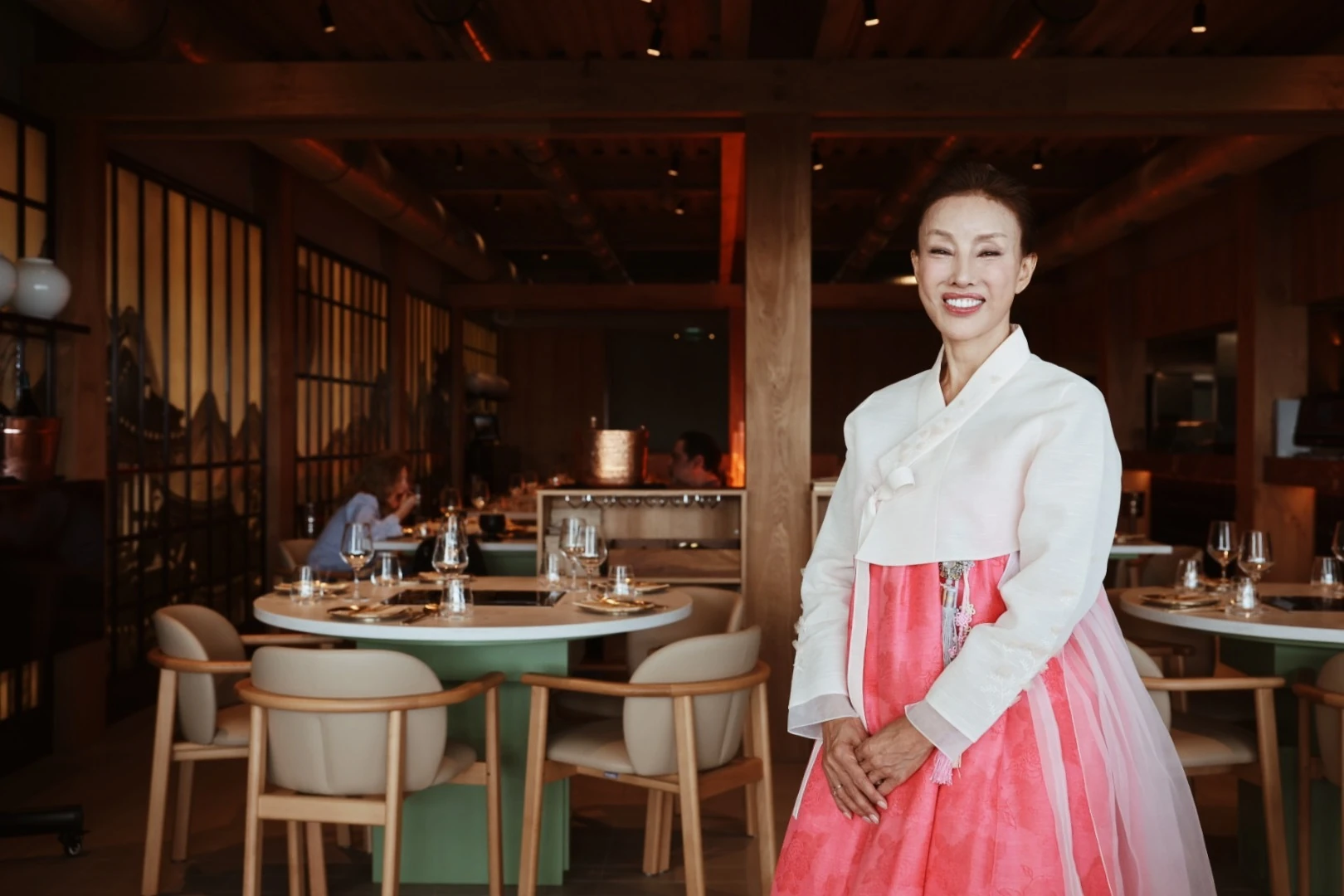
Kelly Choi has opened Omonni in Cascais Marina to honour her mother’s recipes and teach Westerners how to savour authentic Korean gastronomy, far removed from trends or fast food.


Kelly Choi moved from South Korea to Cascais eight years ago, and there was something that puzzled her: the way Westerners ate Korean food. Sometimes it is just a cultural misunderstanding – much like what happened when McDonald’s first arrived in her home country: “We would often eat each ingredient of the burger one at a time. First the bun, then the meat, then the pickles, and finally the other bun,” she describes. To ensure no one else goes through this embarrassment, she decided to open a restaurant to help pass down traditions the right way. “At Omonni, I want people to understand how you are actually supposed to eat.”
Opened on the 1st of May, the restaurant promises to bring the true and authentic essence of Korean gastronomy to Cascais Marina. The project was born from a long-standing challenge and a promise that crossed oceans. Kelly Choi, the owner and mentor behind this concept, recalls that the seed for the restaurant was planted as soon as she arrived in Portugal: "I’ve lived in Cascais for eight years. When I moved here, the Korean ambassador to Portugal asked me to open a typical restaurant from our country because, at the time, there weren’t many."
Kelly did start a project in Lisbon, but the architectural works coincided with the start of the pandemic, and the venue ended up closing before it ever opened. Years of planning later, Omonni has finally arrived. The name was not chosen by chance and links directly to the root and mission of the project: "It means mother in Korean, and that’s how many people address me in this space," the owner tells Time Out.
Omonni’s main mission is to honour the memory and culinary legacy of Kelly Choi’s mother, who is now 94 years old, by recreating her artisanal techniques and the purity of the food. "My mother worked on a farm; we were a modest family. I loved her cooking," the owner shares, describing how her mother would pick vegetables straight from the earth and cook without using any chemical additives.
It is this respect for a slow-cooking process and for health that dictates the identity of this Cascais spot, steering radically away from the fast-food model of Kelly’s previous businesses — she owns more than a thousand sushi kiosks, restaurants, and quick-service Korean concepts spread across supermarkets and large shopping centres in 12 countries. Omonni is the complete opposite. It is a restaurant where the processes demand time, dedication, and affection. The goal of this establishment is to preserve the origins of the recipes and the way of eating, refusing to compromise on tradition.
This commitment is visible in the precision of the menu. Traditional sauces, soy and miso sauces, as well as ssamjang (a thick paste made with doenjang, gochujang, sesame oil, garlic, and onion), are brought straight from Korea. However, the restaurant relies on local ingredients, especially vegetables and greens, applying a fusion of Korean techniques and national produce to prepare the recipes inspired by Kelly’s mother.
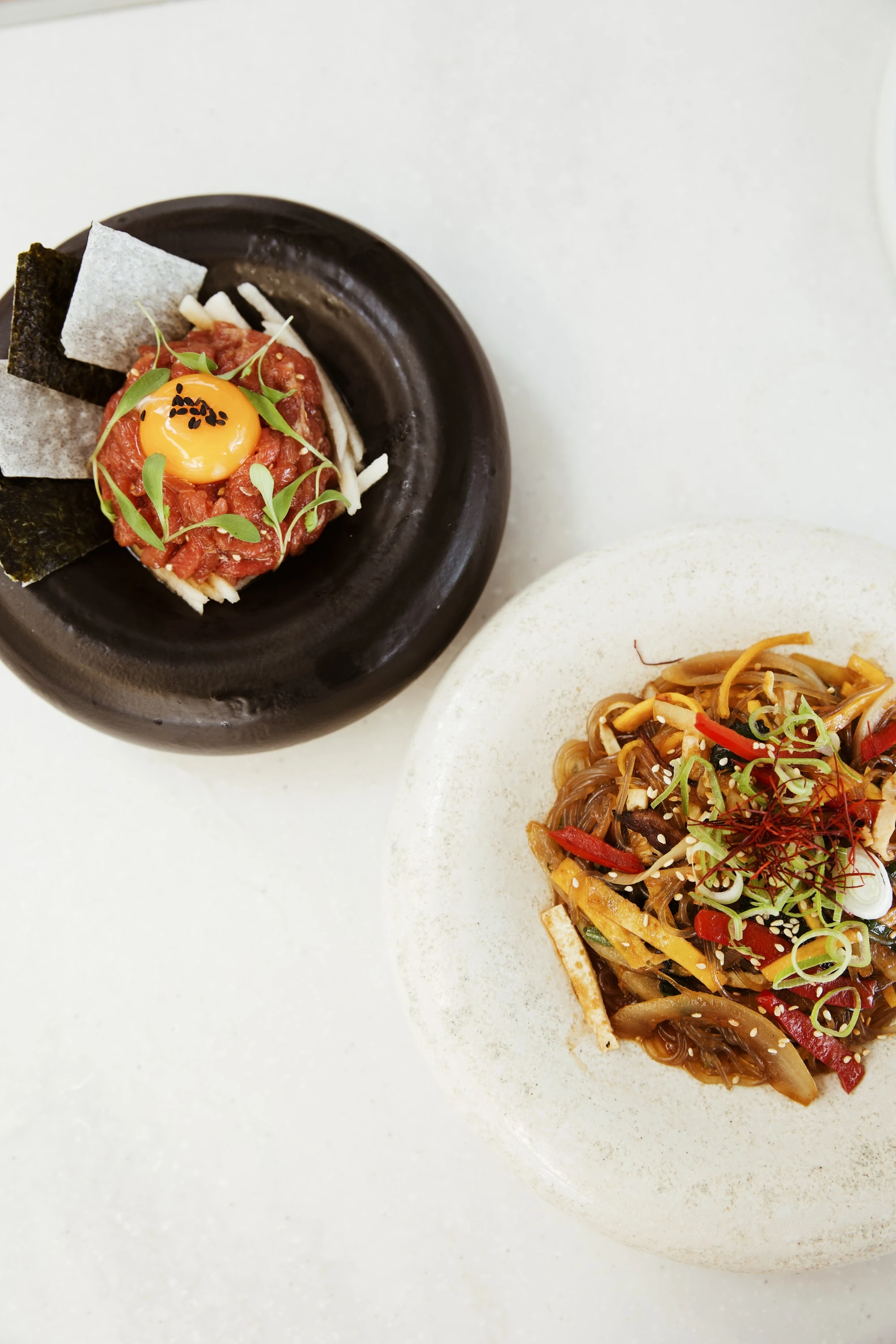
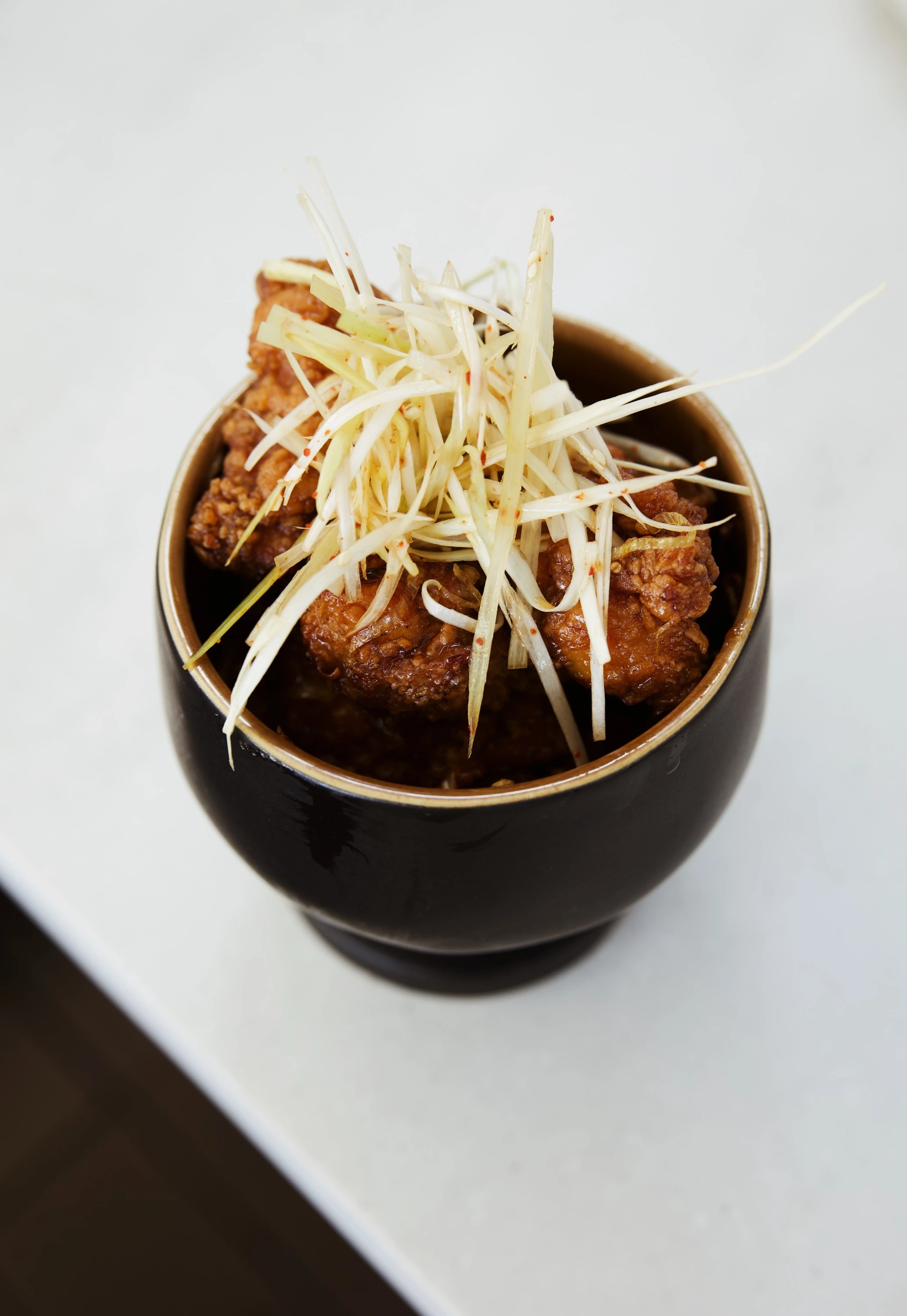
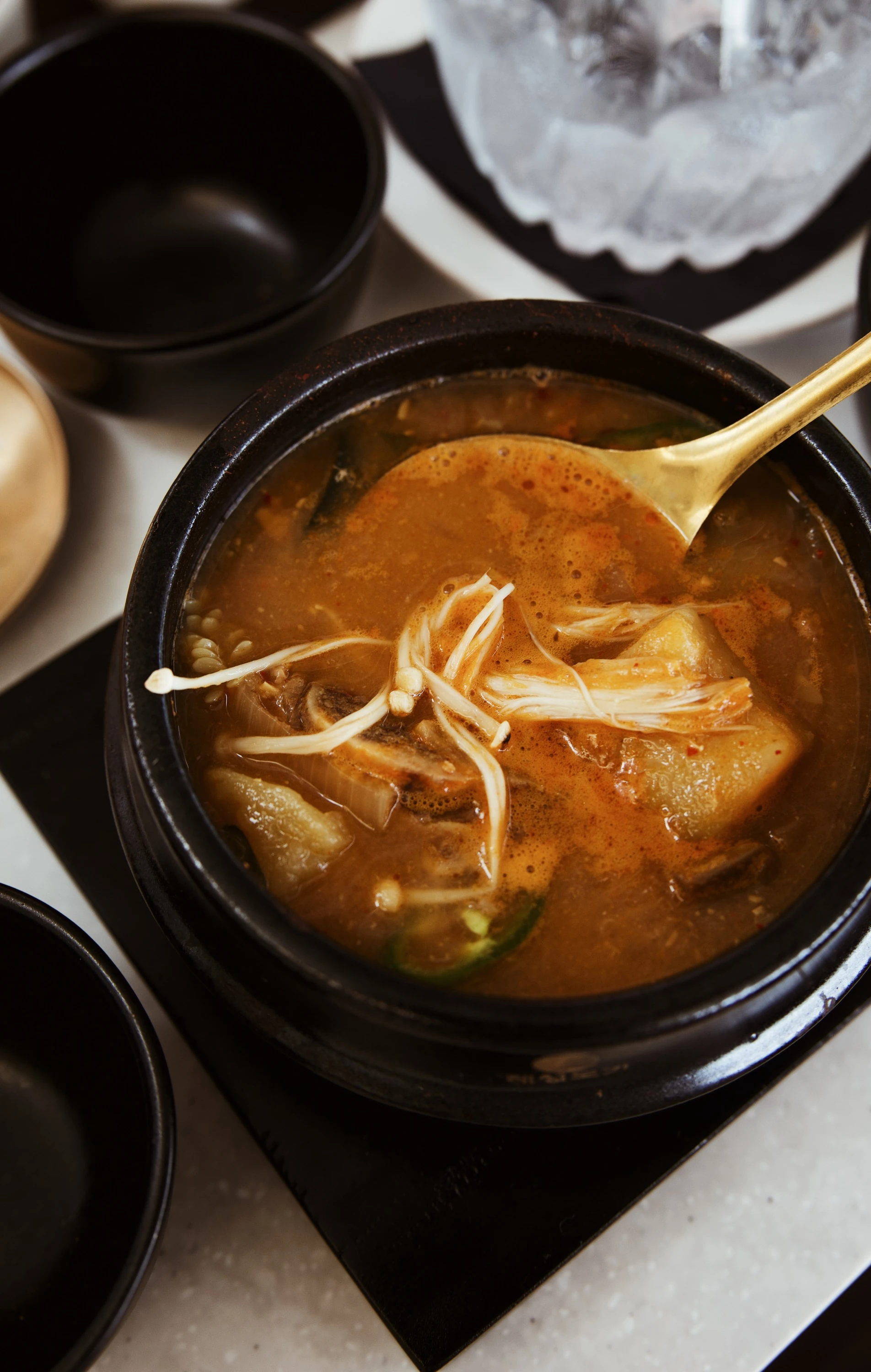
The menu includes starters, grilled dishes, and traditional side dishes, mostly designed for sharing. The gastronomic parade, which was experienced with great joy (and some difficulty, given the quantity of different dishes) by Time Out, began with the starters. Highlights include the yuk-jeon (€16), consisting of thinly sliced beef lightly coated in egg batter and pan-seared until golden, and the yuk-hoe (€18), similar to a beef tartare. Next come the Korean pancakes, such as the sam saek jeon (€16), a three-colour option with seafood and seasonal vegetables, and the classic haemul pa-jeon (€16), a savoury pancake combining seafood and spring onions. Alongside Omonni’s unmissable fried chicken (€16), there is jap-chae (€14), a generous portion of sweet potato glass noodles stir-fried with seasonal vegetables, which can include extra meat for an additional euro.
At the centre of the experience is the Korean BBQ Menu, where the meat shines. Among the premium cuts on offer is the wagyu u-seol (€20), featuring ten portions of wagyu beef tongue, or the Portuguese wagyu (€90), a sirloin or entrecôte cut coming from an exclusive production in Alentejo, which stands out for its balanced marbling and deep flavour. Fortunately, Kelly was at the table to prepare this meat, rather than the journalist, who would never have managed to cook the pieces to perfection, wasting their quality.
The mains and sides section features the geuril-yong yachae mikseu (€12), a carefully selected mix of seasonal vegetables and mushrooms for the grill; the special kimchi selection (€9), which brings three artisanal varieties of this famous preserve made in-house; and the dolsot bibimbap (€16), a comforting mixed rice dish with vegetables, gochujang, and soy sauce, served in a hot stone bowl, available with beef or tofu.
The meal concludes with pat-bingsu (€12), a dessert of shaved ice with sweet red bean and pieces of mochi.
More than just serving food, Omonni’s philosophy is to educate the customer in the art of savouring a meal the proper Korean way, with a special focus on the ssam ritual. This consists of taking a fresh lettuce leaf, adding a base of rice, placing the grilled meat and its respective sauce on top, and rolling it up tightly to be eaten in a single bite.
Despite still being in their "soft opening" phase, the owner made sure to explain the method to her team, in case she is not personally there to teach every customer. "This is the traditional way I want people to eat the dishes my mother passed down to me. Because Korean food is not just a single dish. Korean food is made up of many small parts," she explains. “We want to treat customers as if they were our family, our children, and make them feel as though it is their mother serving the food.”
Marina de Cascais. Mon-Thu 12.00-15.00; 18.00-00.00; Fri-Sun 12.00-00.00
Discover Time Out original video