[category]
[title]
Isn’t the Estrada do Guincho synonymous with fish and seafood? Not anymore. In the place of the classic Panorama, a colourful, relaxed and welcoming restaurant has opened, serving Neapolitan pizzas, pasta and risottos.


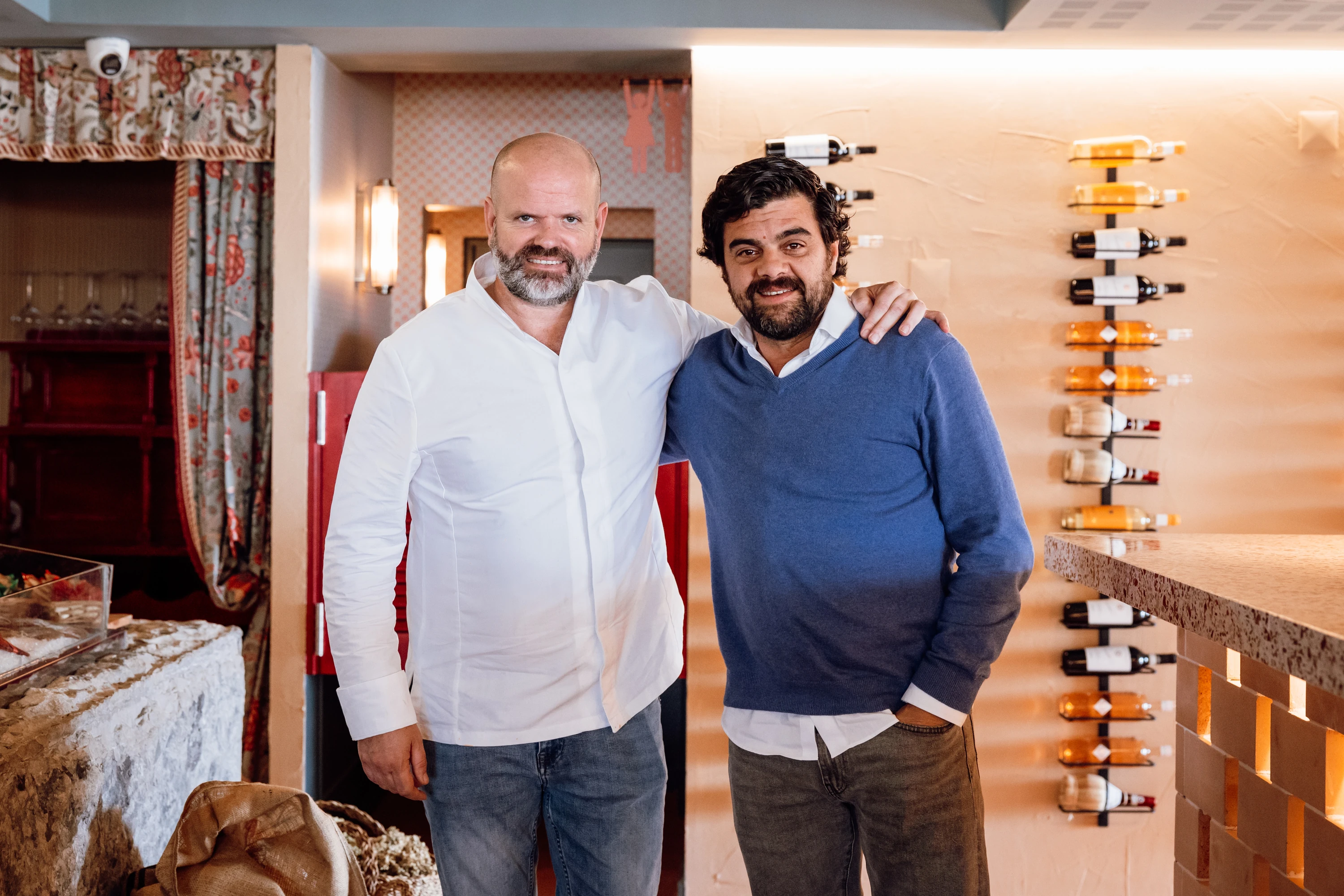
Miguel Laffan and Pedro Saragga Igrejas, both from Cascais, have known each other since childhood. A few months ago, they met at Panorama, a classic on the Estrada do Guincho with more than 40 years of history, which last May took the first step towards modernising. “What would work really well here would be an Italian,” the chef suggested at the time. His friend, who was running the Panorama Beach Club, was intrigued. And in December he had a suggestion in return: would Laffan like to take on Cascais’s new Italian kitchen?
This is how Gabbro was born, a project by the Saragga Igrejas family (their mother bought the space and all six children had a role, from carpentry to communication) that completely breaks with what we are used to finding in these parts: sober fish and seafood restaurants like the neighbours Porto de Santa Maria, Faroleiro or Meste Zé. It also breaks with what Miguel Laffan was doing at Intemporal, in Paço de Arcos, where, in an interview with Time Out, he said he aspired to a Michelin star. “I have a consultancy company that builds concepts. And when I fall in love with one, as is the case with this one, with the conditions it has… It’s very hard to say no,” says the chef, pointing to the large windows overlooking the rough sea. “I’ve lived in Areia for 46 years – if the third world war breaks out and there’s no more fuel, I can come to work by bike! I’m at home. This is home.”
Italian gastronomy had long been a dream. “In the most stressful moments, when I had a Michelin kind of life, the thought of having a pizzeria calmed me down. The idea of bread, of the oven, something down to earth… When Pedro contacted me to be part of it, to design the gastronomic concept – my first Italian gastronomic concept – I felt a lot of enthusiasm, a lot of curiosity, and I fully embraced it.”
And what about the haute cuisine of Intemporal, which has just entered the list of recommended restaurants in the Michelin Guide? The dream of a star? “I like cooking, full stop. For me there is only good cooking and bad cooking. I’m very grateful not to have stayed only in the safety of fine dining – my adventures have made me grow a lot, and this project is giving me a lot, a lot of pleasure.”
Like Pedro Igrejas, who took on the role of general manager after many years working in hospitality in the United States and, more recently, at Seen in Lisbon, Laffan also wanted to give a new life to this area of Cascais. “When I was younger and connected to restaurants around here, I used to say: ‘Watch out for the grandchildren, who only come here with their grandparents!’ I think it makes sense to bring more current, different proposals,” says the chef. “Zezinho [José Avillez], whom we’ve also known forever, has already done something a bit more modern there [at Maré],” Pedro continues, who wanted the change to be radical in the atmosphere and decoration as well. The Cascais-based project Fusion Interior Design, with almost 20 years of experience, took on the challenge.
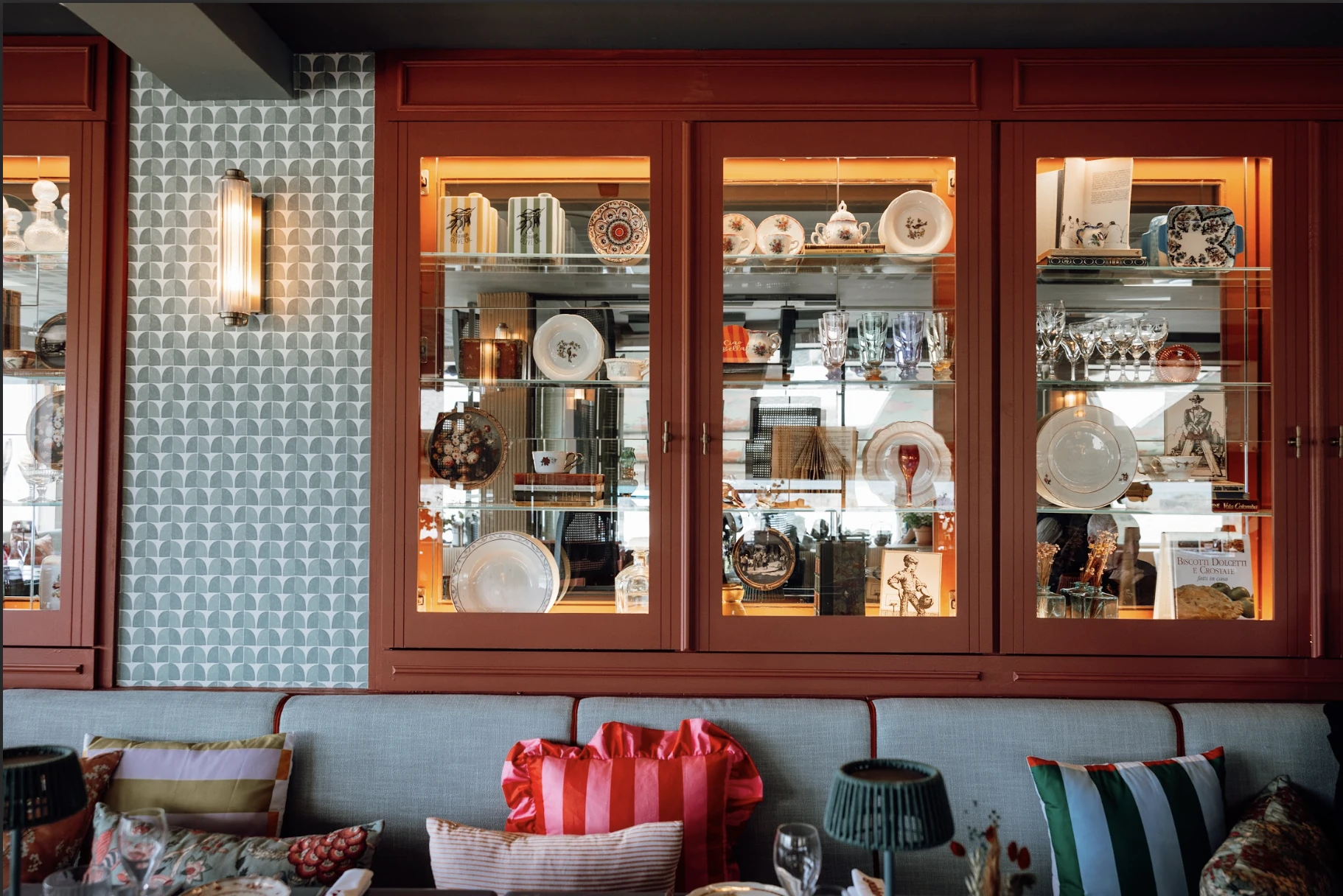
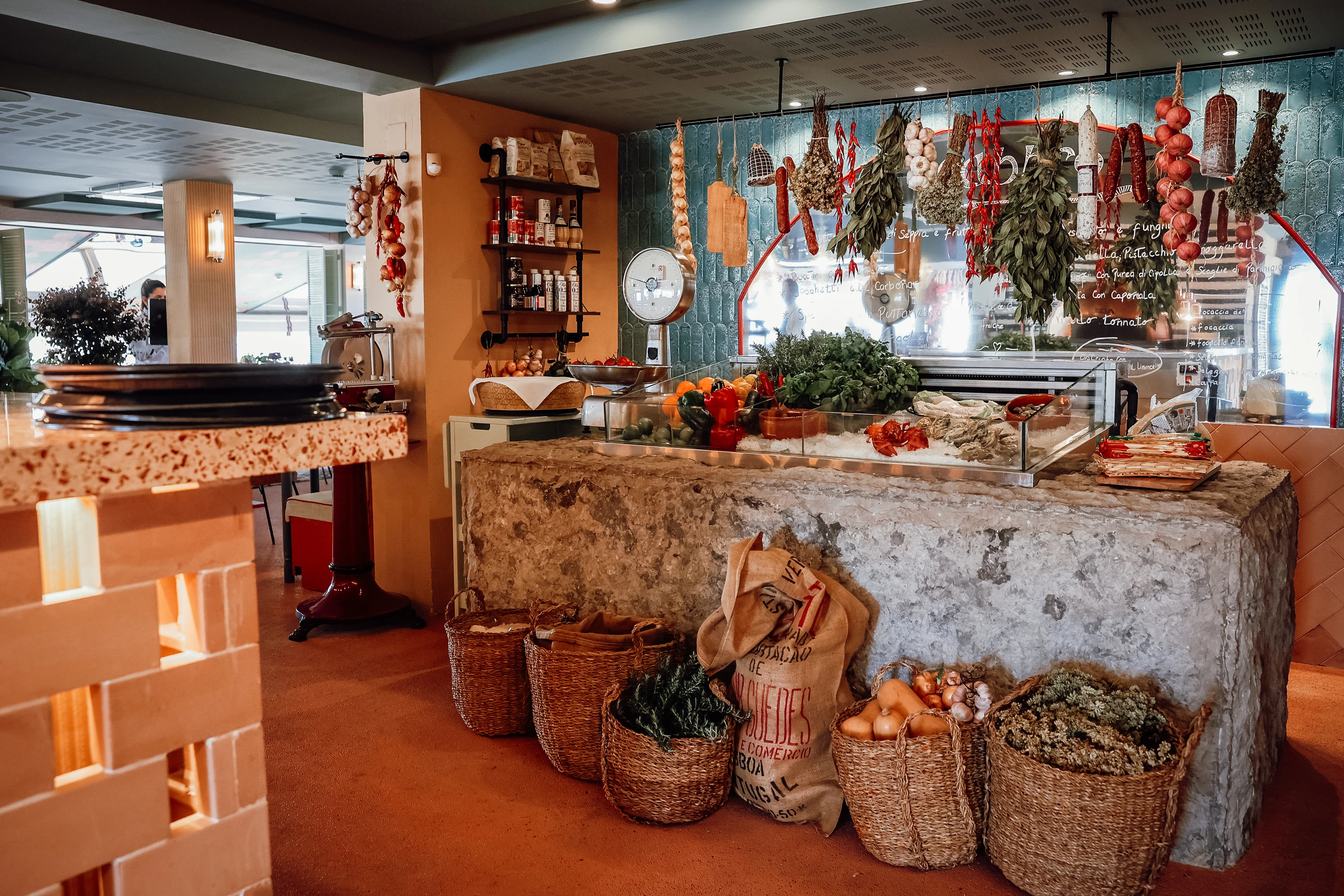
Right at the entrance, the bougainvillea and the mix of patterns on the ceiling, lamps and cushions – between flowers and colourful stripes – surprise visitors, making the space unrecognisable to those who used to frequent Panorama. As you move further in – passing the small reception counter lined with mismatched plates, the display cabinets filled with crockery and mementoes, the walls covered with frames of all shapes and sizes, and the small market with fresh produce laid out on a stone counter, baskets of fruit, potatoes and pumpkins, old scales, aromatic herbs and bunches of garlic hanging – the feeling of comfort grows, as if we were in our grandmother’s house.
“It’s a premeditated chaos. We wanted people to feel a bit of southern Italy, those old courtyards. The music, the furniture, the colours – everything contributes to that,” describes Pedro, who hopes very soon to open seven days a week and without breaks between lunch and dinner. “We’d like lively late afternoons, where people can come for a drink and nibble on something after the beach, with their family.” For now, Gabbro is open from Tuesday to Sunday between noon and 4pm and from 7pm to midnight – with Fridays and Saturdays going on until 2am, although the kitchen closes at 11pm.
The menu, huge, is entirely Italian. At the beginning, it offers an explanation for the name of the new restaurant: gabro (with two b’s, in Italian) is a volcanic rock found both in the Guincho area and in southern Italy, conveying the idea of solidity and durability.
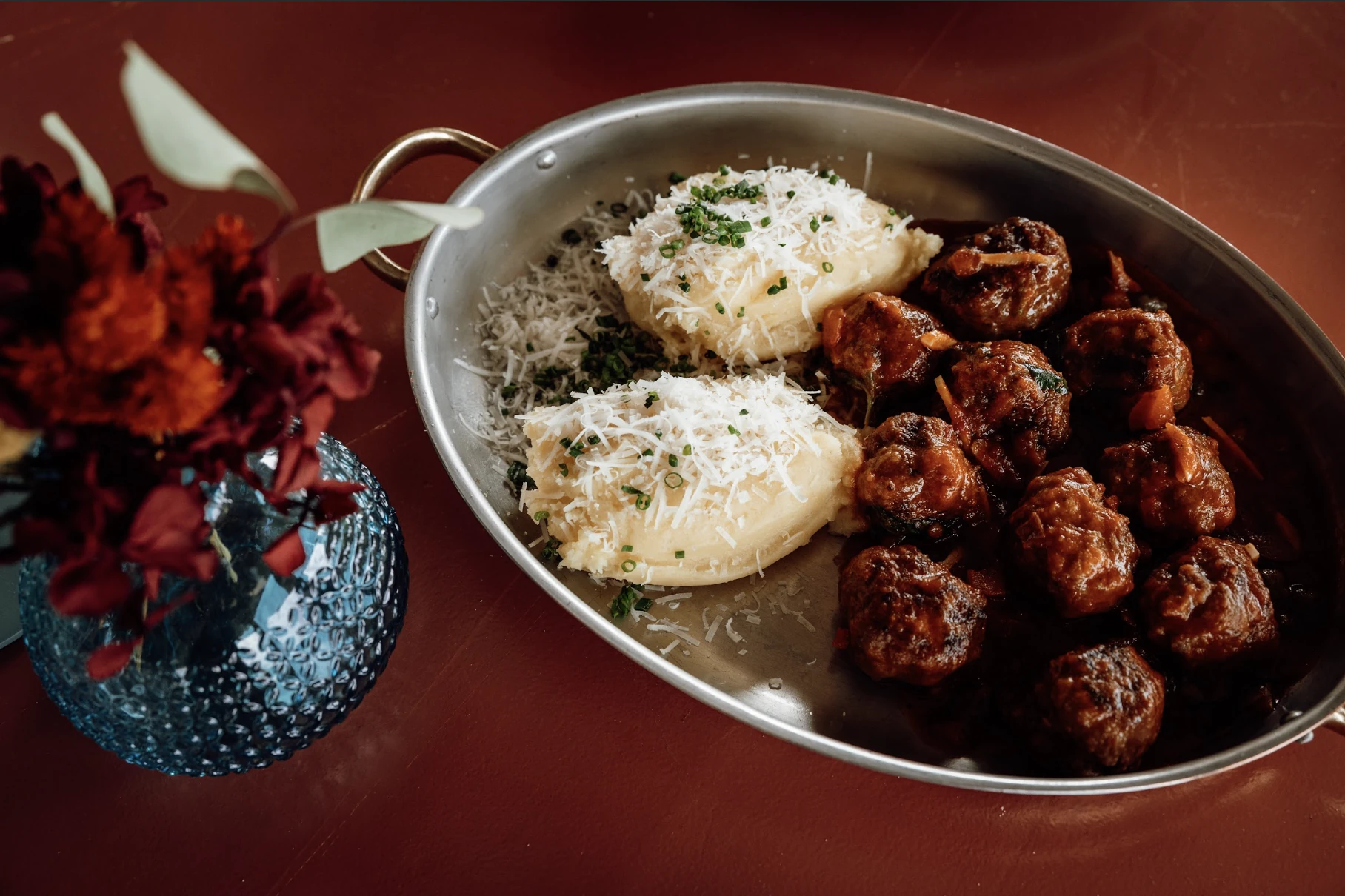
Then come the dishes, divided into chapters such as salumi e crudi, la pasta e risotto, dal mare, della terra or la pizza. The idea is to order without rules and split. “People can start with a pizza, move on to a pasta, have a starter as a main. They share – and I like that,” says Pedro who, just a few days after opening, already has some specialities to highlight, such as carciofi con purè di cipolla e parmigiano (artichokes with onion purée and parmesan, €12), burrata affumicata con salumi di Parma e focaccia al pomodoro (smoked burrata, €14), rigatoni con salsiccia e funghi (pasta with sausage and mushrooms, €19) and polpette di wagyu alla puttanesca con purè di patate (meatballs with tomato sauce and mashed potatoes, €26).
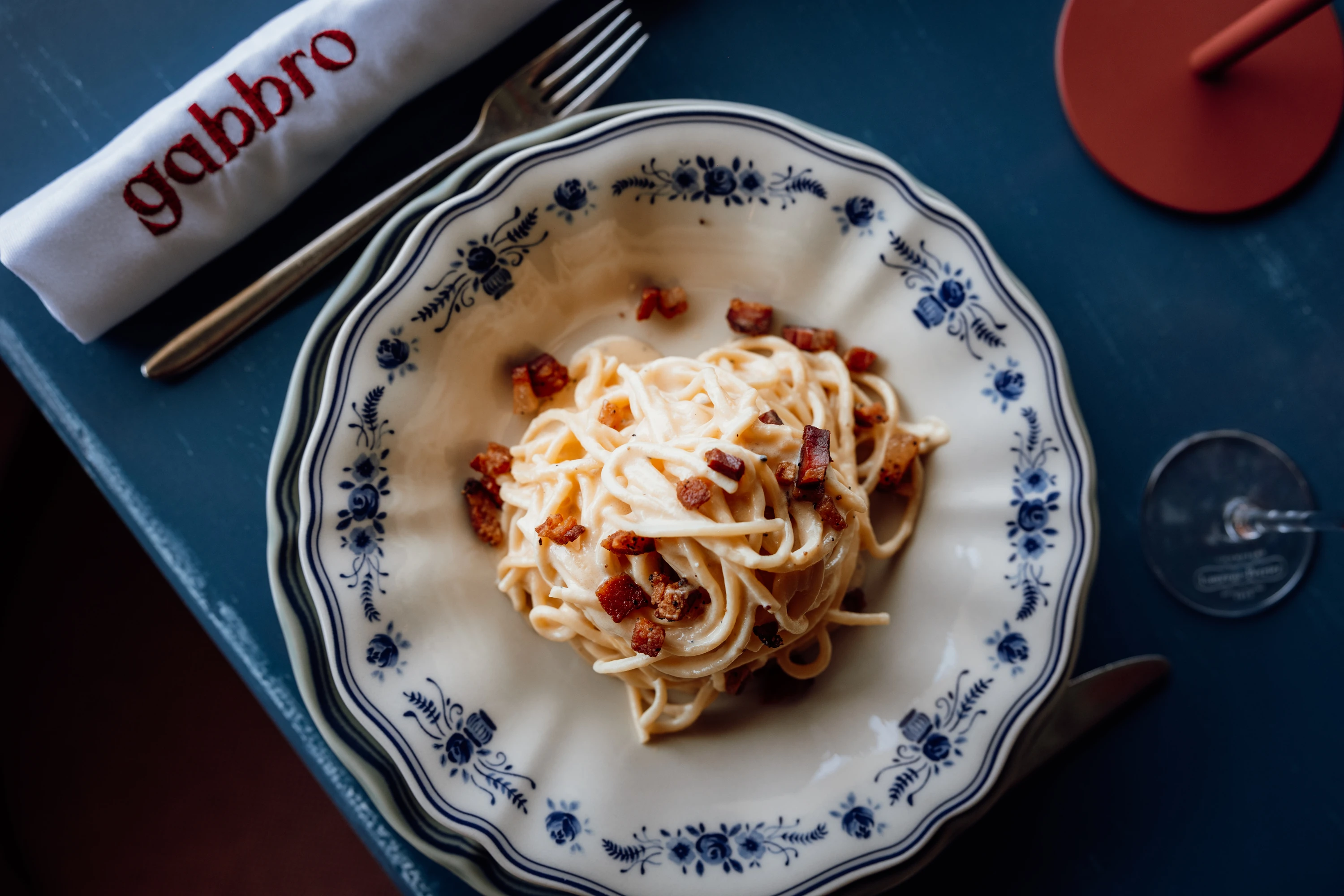
There are very traditional proposals, such as vitello tonnato (€14), cacio e pepe (€17) and carbonara (€18), and less obvious creations such as bacalà mantecato con focaccia, olio d’oliva e agio (€14), a creamy cod dish for dipping with crunchy slices of homemade focaccia well seasoned with olive oil and garlic.
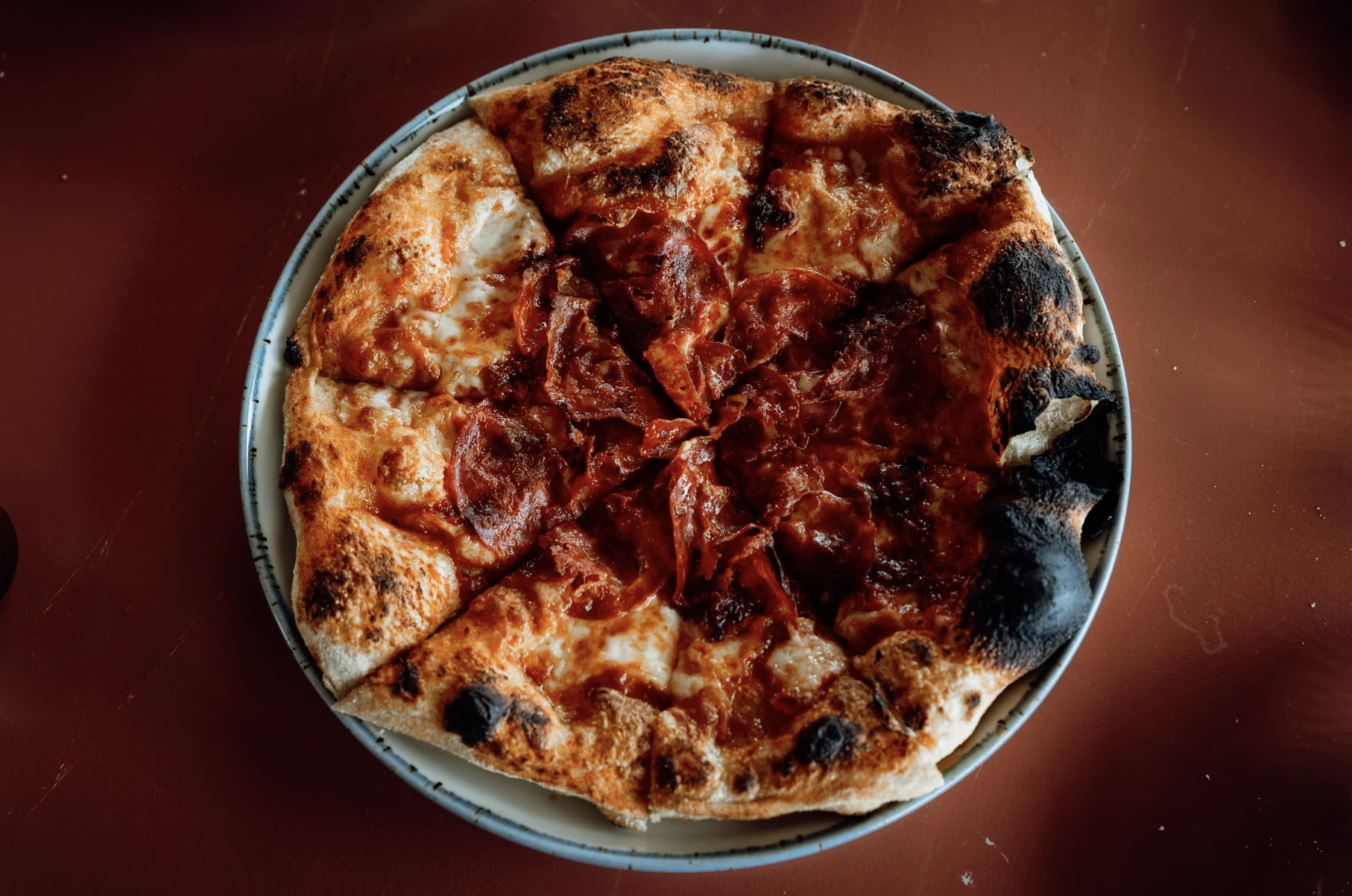
The pizzas, Neapolitan – with a thick rim and a thin, crisp centre – range from traditional margherita (€13), diavola (€18) and prosciutto e funghi (€19) to surprises such as mortadella, pistacchio e stracciatella (€19). “They were the biggest challenge,” says Laffan after finishing a Caesar salad (€12) in the dining room, in front of the customers. “Setting up the whole process, the dough recipe, the fermentation, the oven temperature… We had several versions – and ended up going back to the original recipe.” The challenge of creating a pizza connected to the sea has been considerable, but the chef is not short of ideas. “I’ve been having some very nice dreams about lobster,” he reveals.
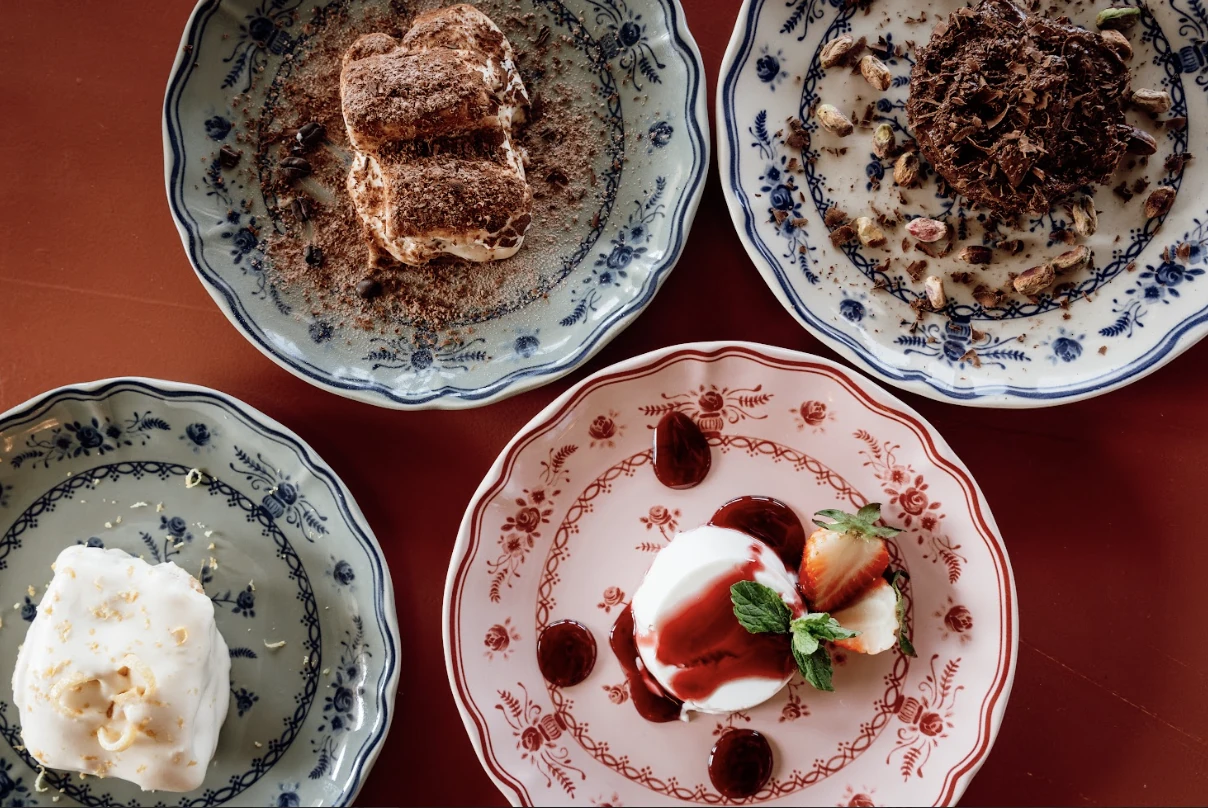
All meals begin with the coperto (couver, €6), composed of homemade focaccia, grissini, cherry tomatoes, stracciatella cheese, olives and capers, and none should end without going through the dolce finale, which can be either a very Italian cannoli alla Nutella e panna montata (€8), a tiramisù (classic or al limone, €8) or a panna cotta (Sagafredo or with forest fruits, €7).
As for drinks, there are white, red (€20) and sparkling sangrias (€24), classic cocktails, aperitifs, sours and negronis, as well as wines and beers. “The bar side is important – we want people to feel they can stay for a drink. There may be music, we have lots of ideas for the summer,” anticipates Pedro, who managed to keep many of Panorama’s staff – some with more than 25 years in the house – in the team, both in the kitchen and the dining room. “I remember the first day I arrived to talk to them. They were very happy to have the opportunity to do something different. And I see they are very proud to see the house full, even on weekdays,” says Miguel Laffan. “Seeing younger people arrive and enjoy it is normal – they always want something new – but older customers being enthusiastic too is very rewarding. Only yesterday an old Panorama client came here and was delighted,” Pedro concludes.
Estrada do Guincho, 1984 (Cascais). Sun, Tue–Thu 12.00–16.00 and 19.00–00.00, Fri–Sat until 02.00
Discover Time Out original video