

[image]
[title]Combining decadent fluffiness with an OTT rococo-esque aesthetic, thick floral-print blankets were an omnipresent part of the postwar Japanese experience. But in our age of Muji-coded minimalism, the gaudy beddings have been dismissed as the height of kitsch. A young Makoto Egashira found out as much when he brought his mum’s old duvet with him into his first Tokyo apartment, only to have the item called ‘lame’ by a shocked friend.
That moment of embarrassment left a mark – one that’s since powered Egashira to create works of art by enveloping traditional folk crafts, everyday objects and entire rooms in floral prints. Covering a Styrofoam hearse with the mind-boggling textiles netted the Mie native a Special Prize at the prestigious Taro Okamoto Memorial Contemporary Art Awards in 2015; mainstream recognition followed in 2022 with the video work Kaguya by Gucci, commissioned by the Italian luxury fashion house.
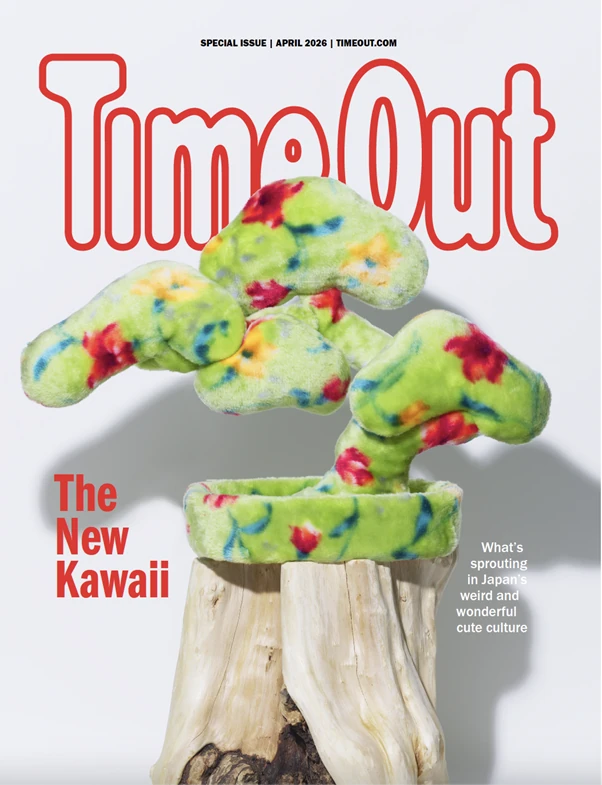
Egashira’s triumphs have sparked a reevaluation of his subject matter, with a new generation now embracing the florid Showa bedroom look as kawaii. How did flower prints go from eyesore to endearing? We asked the artist whose blanket bonsai adorns one of the covers of Time Out Japan’s May 2026 special issue (pictured below).
Why did floral-print blankets become so big in Japan in the first place?
There are various theories, but someone who works at the bedding manufacturer Nishikawa told me that after the war, when people became fascinated by Western culture, floral prints were often used to decorate everyday items like rice cookers and kettles, from where the aesthetic spread to blankets.
Some say the trend may have stemmed from a sense of inferiority Japanese people felt toward their own culture, but there were practical reasons too. For one, floral patterns make stains less noticeable.
How do you source your material?
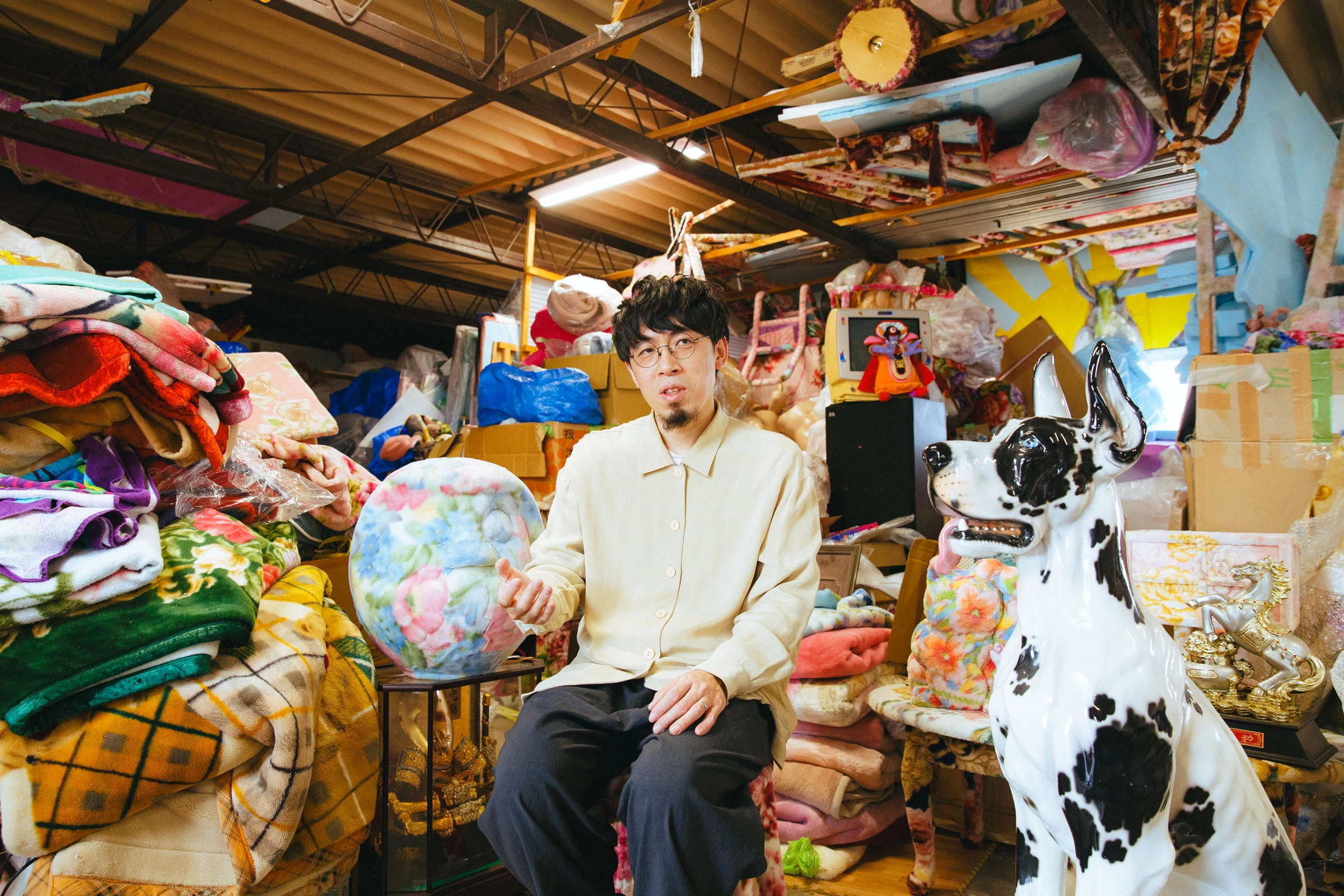
Mostly through resale apps. I get in touch with people who have a blanket for sale and arrange to meet them somewhere, like in front of an elementary school or whatever. Then this stranger shows up with the blanket, I take it and hand over the money, and we go our separate ways.
Navigating that whole process just for a single blanket is fascinating in itself. It’s about more than acquiring an item; you get to interact with all sorts of people and collect these little stories along the way. I cherish that.
What inspired you to create bonsai works like the one on our cover?
I made my first bonsai piece for an exhibition at the Tsutaya bookstore in Ginza, because I thought it’d go nicely with the real miniature trees on display there. The experience was eye-opening. Until then, over the decade I had worked with flower-print blankets, I had always cut out only the best parts of the patterns for my pieces. But I realised that discarding the rest of the blankets felt off; it was like skinning an animal to stuff it.
So to make the bonsai, I changed to cutting up blankets, stuffing them with cotton and shaping them into taxidermy-like forms. I feel like that process is more apt for bonsai, which are living things that humans control and shape.
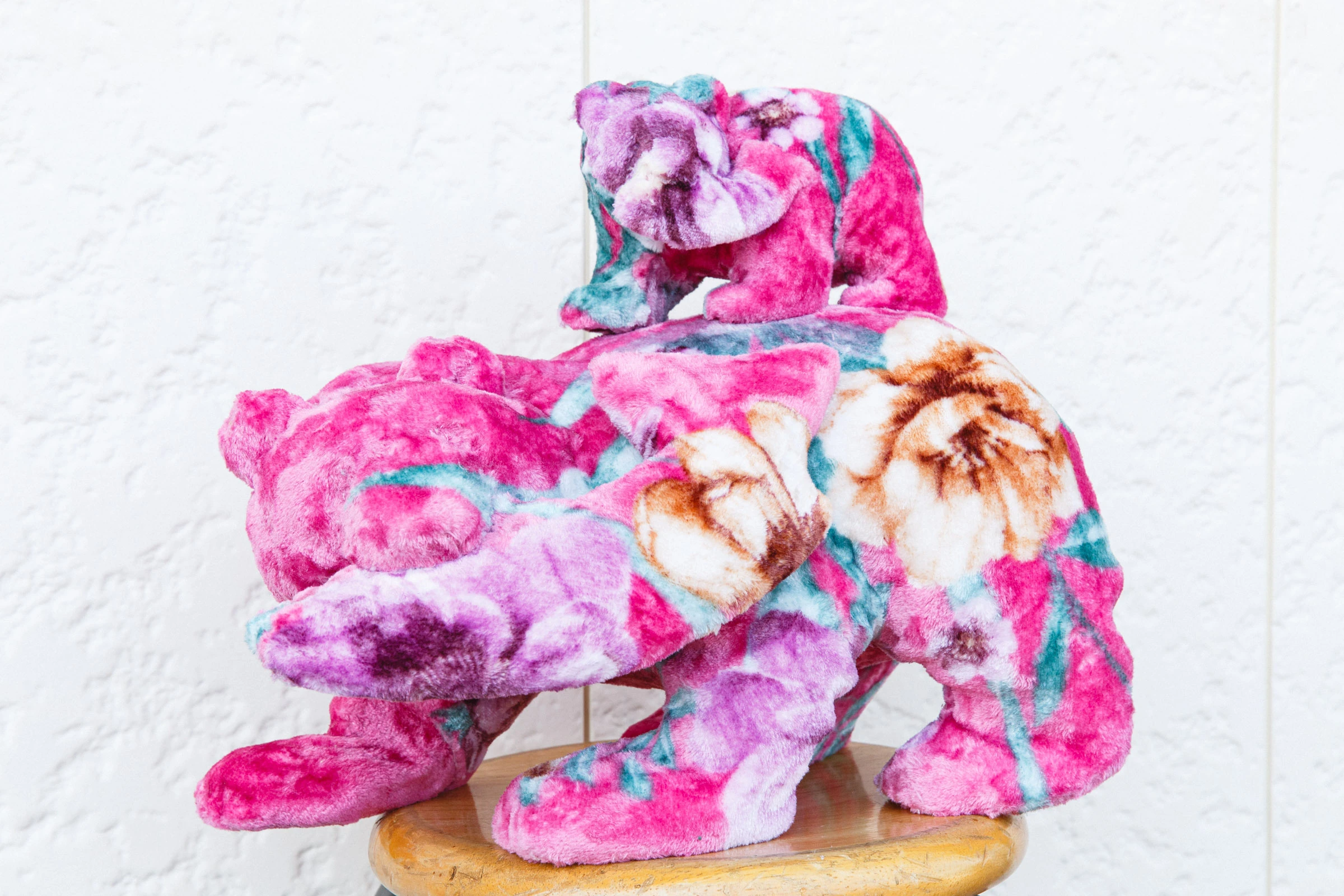
You often work with typical Japanese motifs like manekineko (‘beckoning cats’) and wooden carvings of bears from Hokkaido. Why is that?
It’s what I find at thrift stores – stuff that’s become obsolete. It’s not that these things have lost their intrinsic value; they’ve just been displaced or become incompatible with their time. By repackaging them, I hope to give them a new look and new value. Combining things that people consider tacky often leads to interesting results.
So you’re not deliberately trying to make ‘cute’ art?
No. I start by approaching what scares me or piques my curiosity, and that process often ends with finding cuteness. The fluffy texture of a blanket or the plush feel of a stuffed animal can make it seem… alive. I believe that as long as you use that soft material, just about anything can become somewhat cute.
Your practice seems to combine breathing life into lifeless things with bidding those things a final farewell.
That sounds about right. I feel like I’m doing these abandoned items and materials a favour by picking them up and giving them new form, new life.
Death has always loomed large for me. I’m afraid of dying myself, of course, but I’m even more scared of others dying. Art, for me, is a way to approach my fears. By working with these discarded things, mourning them, in a way, gives me an outlet for my feelings. I don’t want them to die. I don’t want to lose them.
You mentioned thrift stores earlier; do you have a favourite secondhand shop?
There’s one shop I frequent in Sagamihara. The sheer scale of their inventory is on a whole different level. They have all these prefab buildings and garages that are absolutely packed with stuff. Prices aren’t listed; everything’s negotiable. The old guy who runs the shop gets mad at me when I haggle too much [laughs].
Then there’s Hard Off, of course. I live near Hachioji (western Tokyo) and often visit the location in Owada. It’s huge!
What would you like to try next with your art?
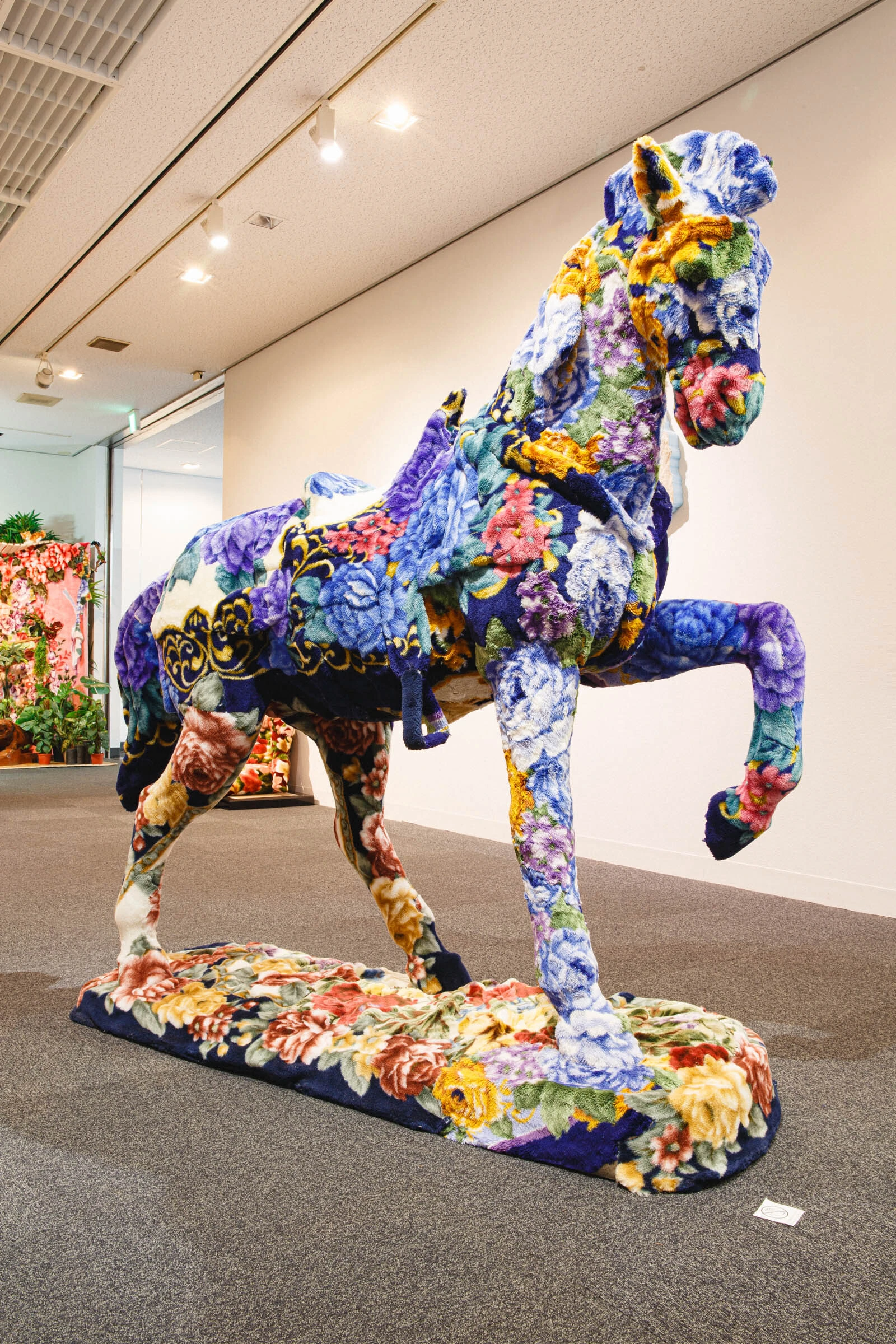
I think most of my work so far has been about expressing my inner self, but from here on I’d like to try drawing out the stories of others.
For my [ongoing] exhibition at Signal in Toranomon, I’m showing some works created using blankets donated to me. I’m also curious about how people overseas might react to my stuff, and I’d like to learn more about what’s considered tacky in other countries. I’m especially curious about Mexico.
See Makoto Egashira’s art at the Museum of Modern Art, Saitama (until May 10), at Ochanomizu Station’s Kenelephant & Vinyl Showcase (until May 13) or at Signal Social Issue Gallery in Toranomon (until May 23).