[category]
[title]
Experience the immersive, multi-sensory ‘Feel the Sound’ at MoN Takanawa – it’s on until March 22 2027


Noise is all around us, from the low hum of an air conditioner to the drilling your neighbour decides to unleash on your wall. Most of the time, we hear these sounds without giving them much thought.
But this winter, an immersive exhibition from the UK is inviting Tokyoites and visitors alike to experience all manner of sound in a whole new way. First held at London’s Barbican Centre in 2025, ‘Feel the Sound’ in Tokyo runs until March 22 2027 at MoN Takanawa: The Museum of Narratives, the new experimental arts hub inside the Takanawa Gateway City mega-complex.
Taking over the museum’s vast fifth floor, the exhibition goes a step further than the London presentation, adding three all-new artworks, while some of the original pieces have been reconfigured to suit the Tokyo venue.
So, what’s the experience like then? Here’s our take on the symphony of frequencies, sound, rhythmic patterns and vibrations presented across a show that rewards the curious and patient museum-goer.
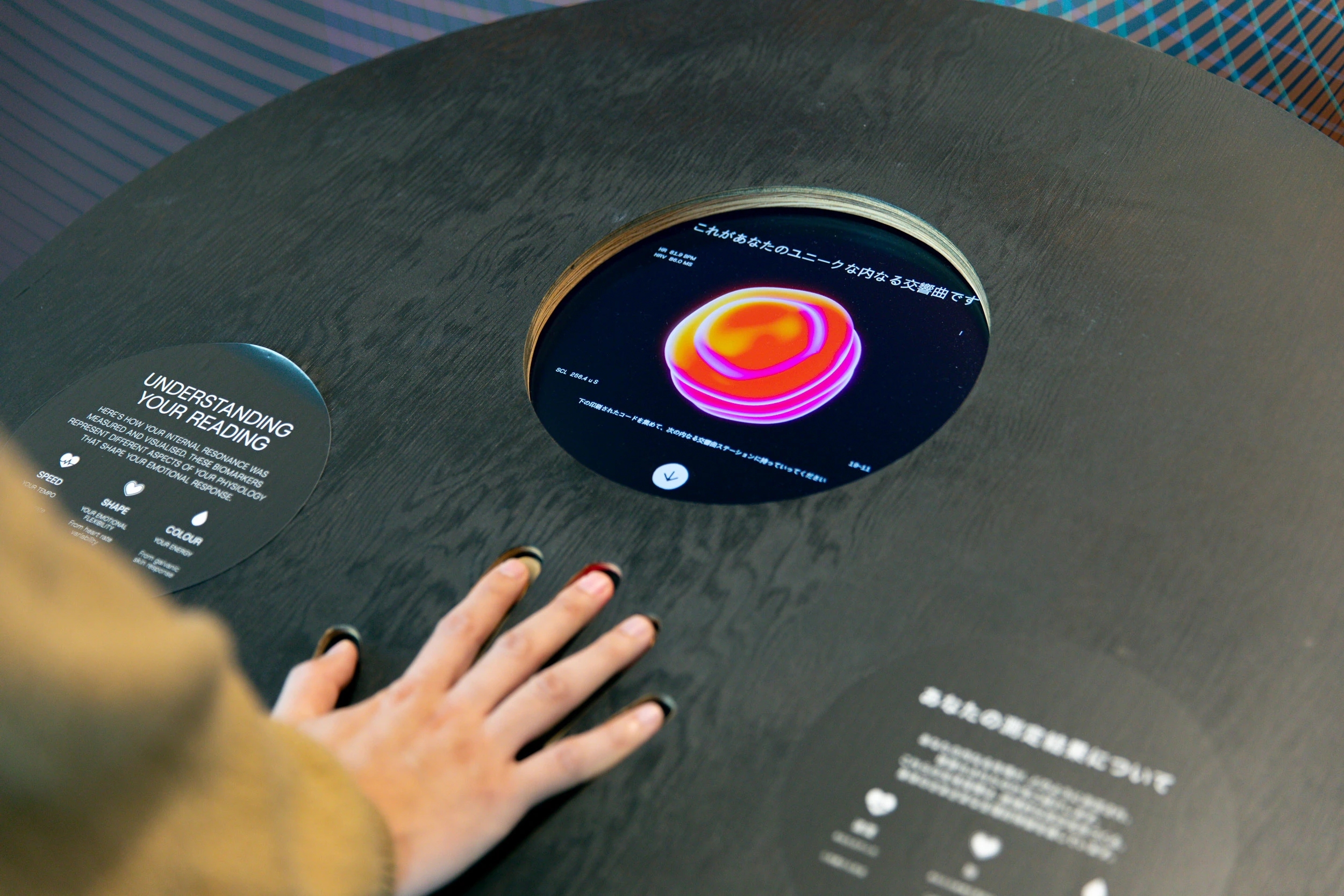
You’ll come across the first artwork before even entering the exhibition proper. Your Inner Symphony (2025) by Nexus Studios and Kinda Studios is a device that measures your ‘internal resonance’, translates it into numerical form and outputs the results as a QR code. You’ll want to have the code handy later on, so be sure to hold onto it while exploring the exhibition.
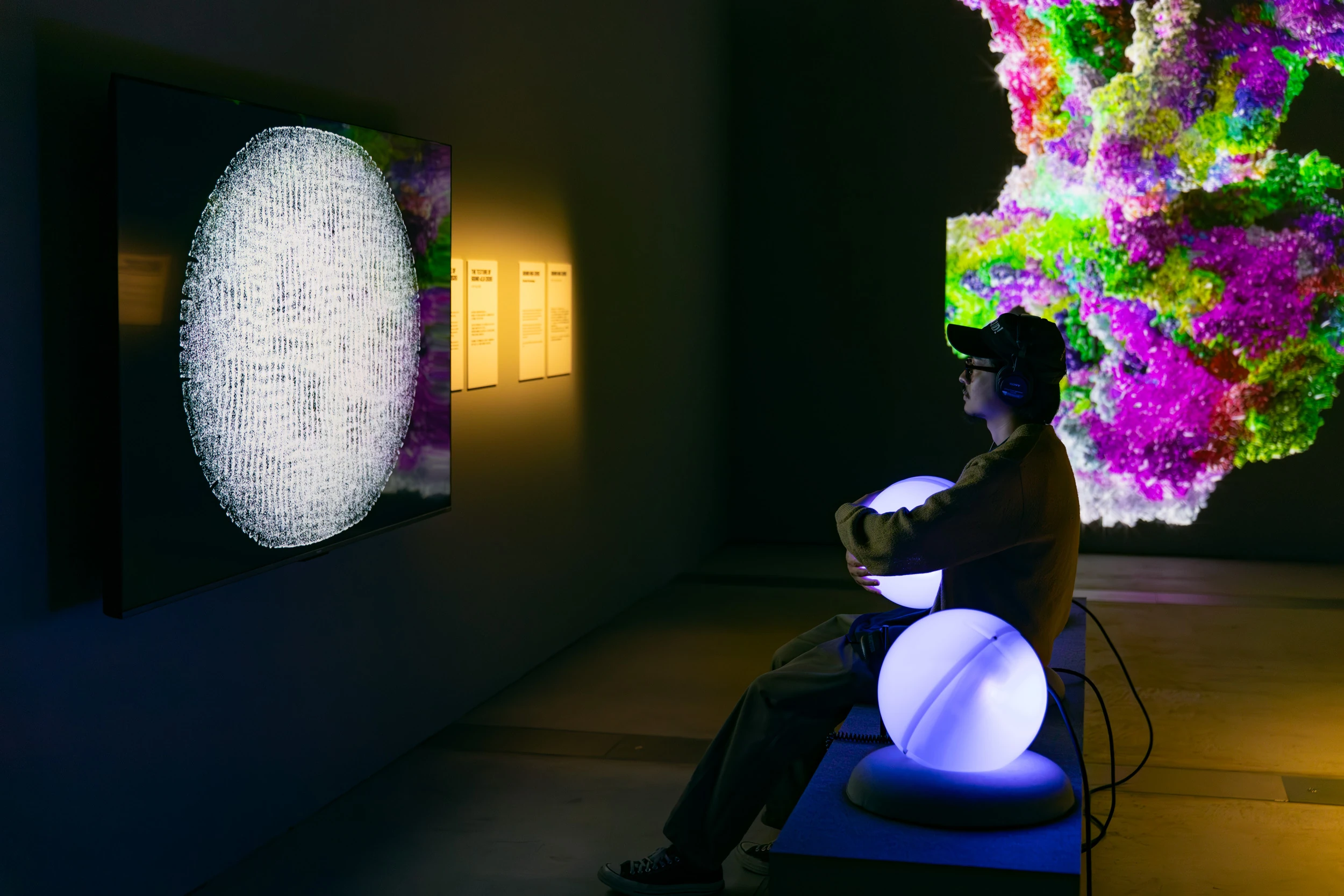
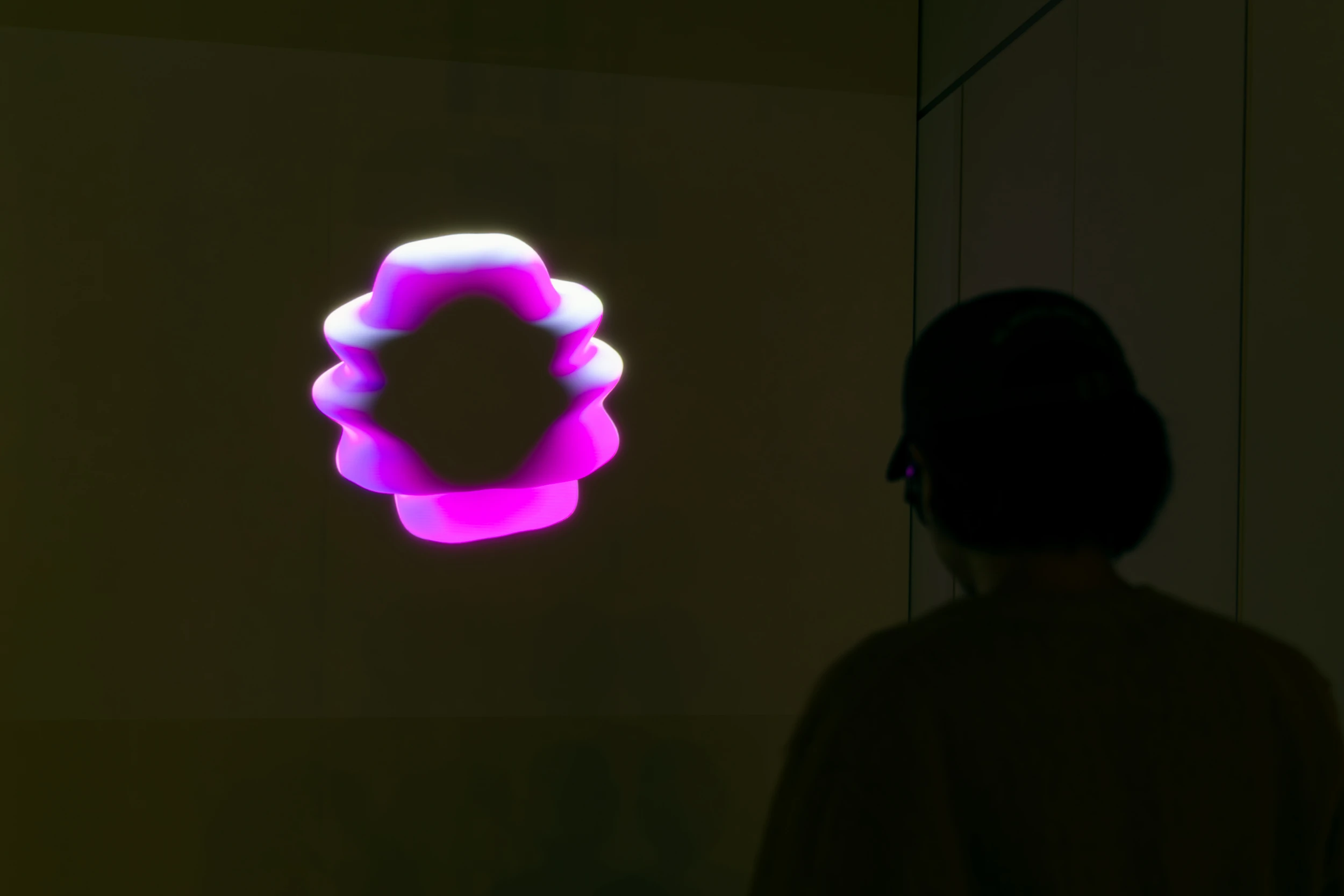
Once inside, you’ll enter ‘Embodied Listening Playground’, a section featuring works that prompt you to think about listening through senses such as touch and sight. Here, you can get hands on with sound by way of works like Sound Hug (2018), a vibrating, multichromatic sphere that’s combined with headphones through which you can hear a track composed specifically for the purpose.
Take off the headphones, and the work reveals its ability to evoke a strange sensation: that of ‘listening’ without sound. It’s an experience that drives home how sound is ultimately all about vibrations.
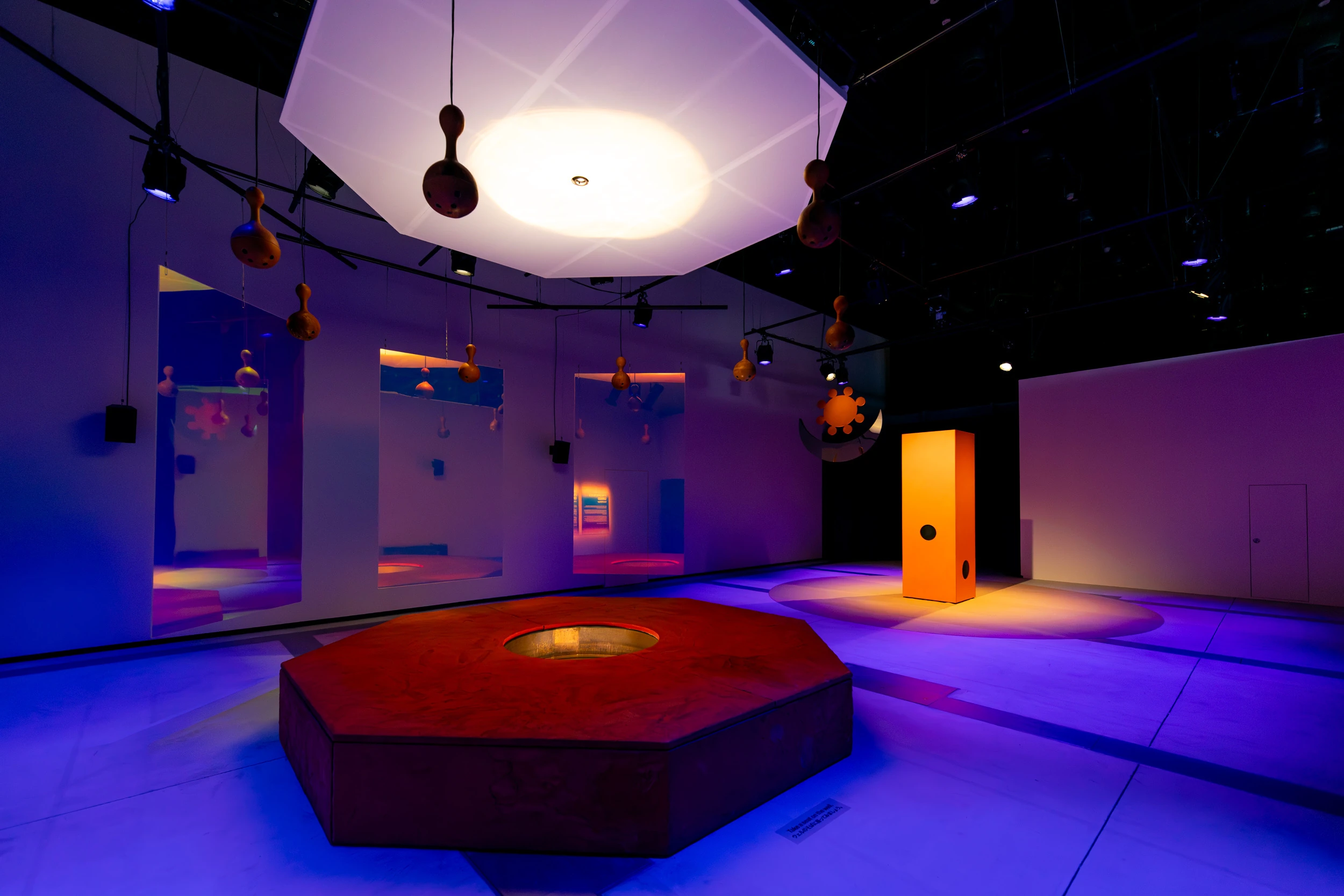
Then it’s on to Resonant Frequencies (2022) by Evan Ifekoya – a work that draws on a story from Ifá, a system of divination and knowledge rooted in the religious traditions of the Yoruba people of Western Africa.
Building on the Yoruba myth of creation, which holds that the world began with the sound of a calabash breaking into 201 pieces, the work tells its story through calabash-shaped speakers hung from the ceiling. You get to sit in the middle of it all, immersing yourself in the narration and vibrations.
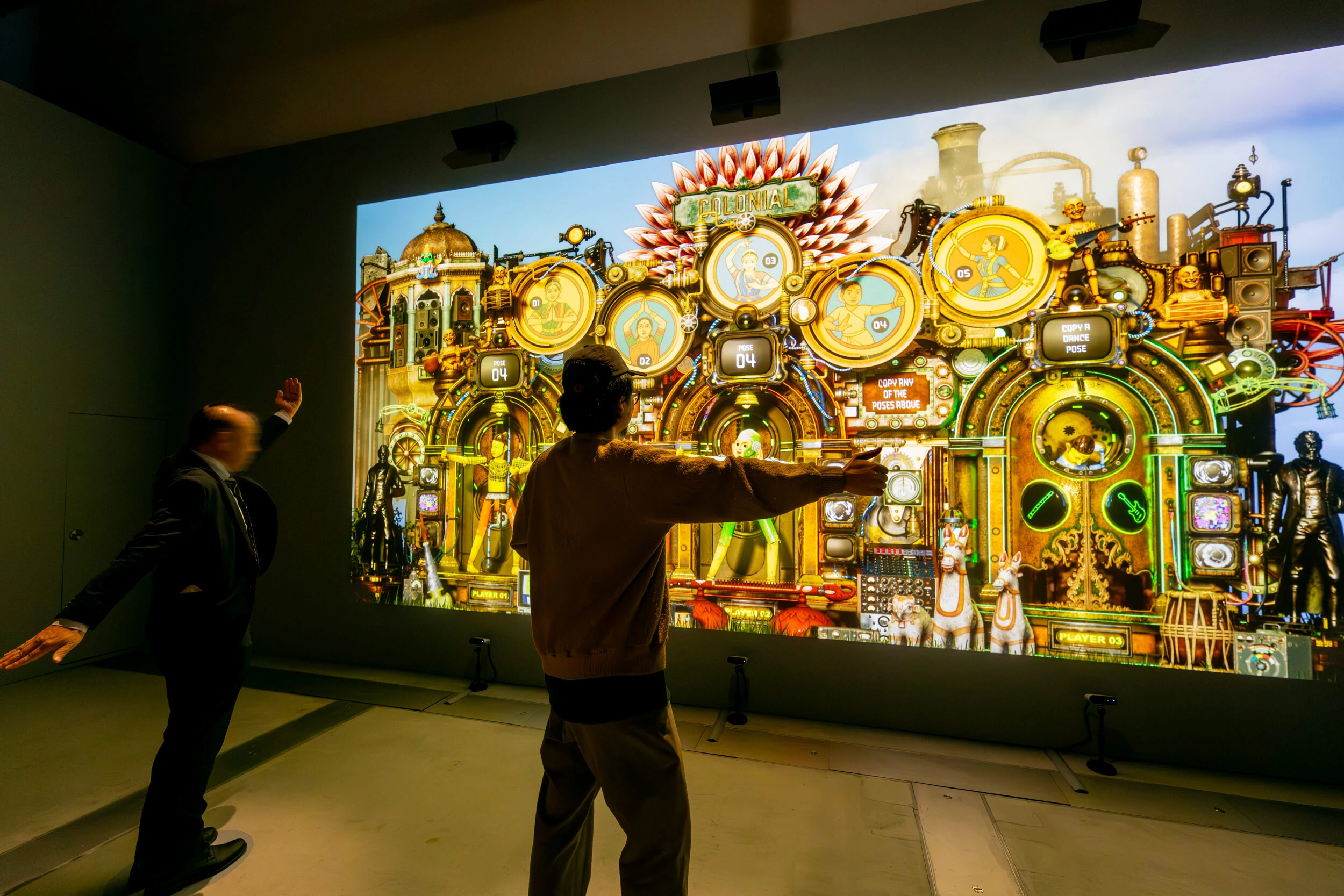
Far less meditative but equally engaging, Resonance Continuum (2025) by Elsewhere in India challenges you to stand in front of a screen and strike poses as prompted by the work. Your movements trigger sitar- and sarod-like tones and a distinctive vocal chorus line. The experience of gesturing to make music makes for a satisfying mini-workout.
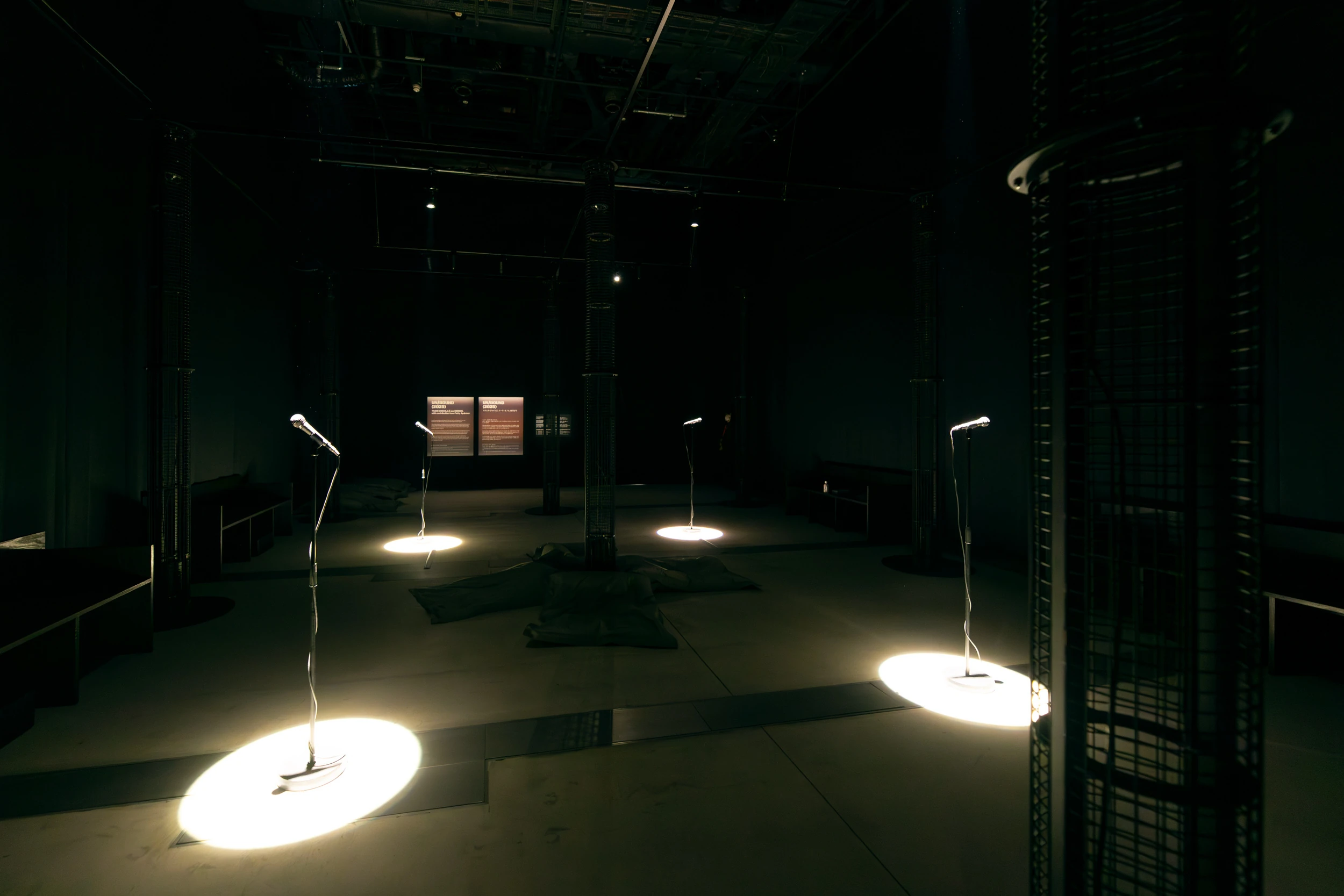
A rather different interactive experience is provided by Un/bound (2025) by Vocaloid producer and critic Patty Ayukawa; UK vocal collective Trans Voices; and the Ilā & Monom unit, formed by artist and vocalist Ilā and Berlin-based art studio Monom. Here, you’re invited to connect and contribute by listening or using your own voice.
Four microphones in the space are each lit up by a single light source to invite you to make sound. Whether you whisper, shout, whistle or sing, your voice is transformed using an AI model into the voices of the Trans Voices choir, harmonising and blending rhythmically with the piece.
Next, in the ‘Sonic Machines Playground’ area, you’ll come across hands-on works like The Ambient Machine (2022) by Yuri Suzuki, which lets you flip switches to alter the volume and BPM of the ambient music emanating from the piece.
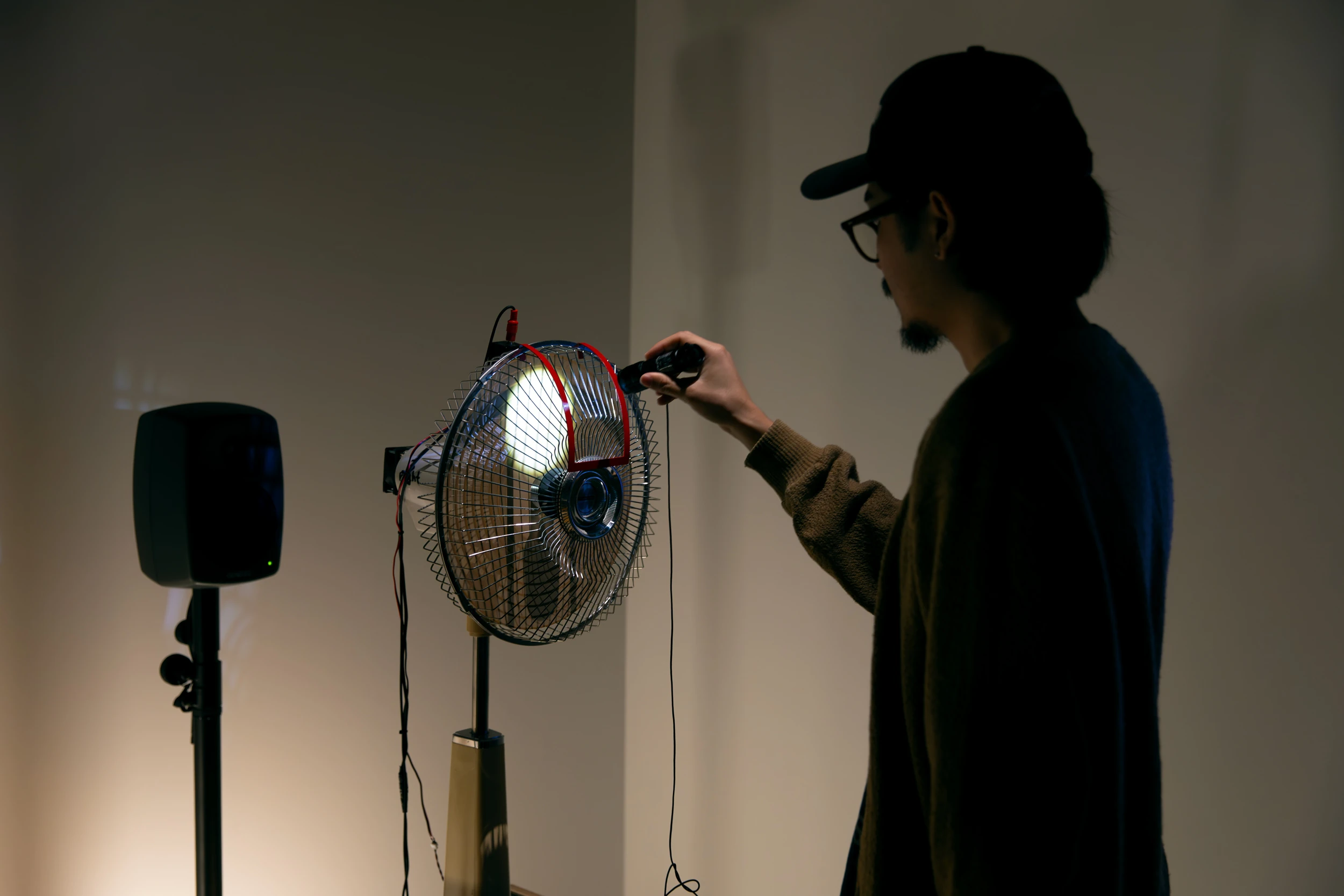
One of our favourite works in this section was Electric Fan Harp (2016-) by Ei Wada of Electronicos Fantasticos, an artist noted for building his own instruments from old electrical appliances. This one produces sound by shining light on part of a spinning fan’s blades. The sound changes when you adjust the speed dial, allowing you to try improvising a melody or two.
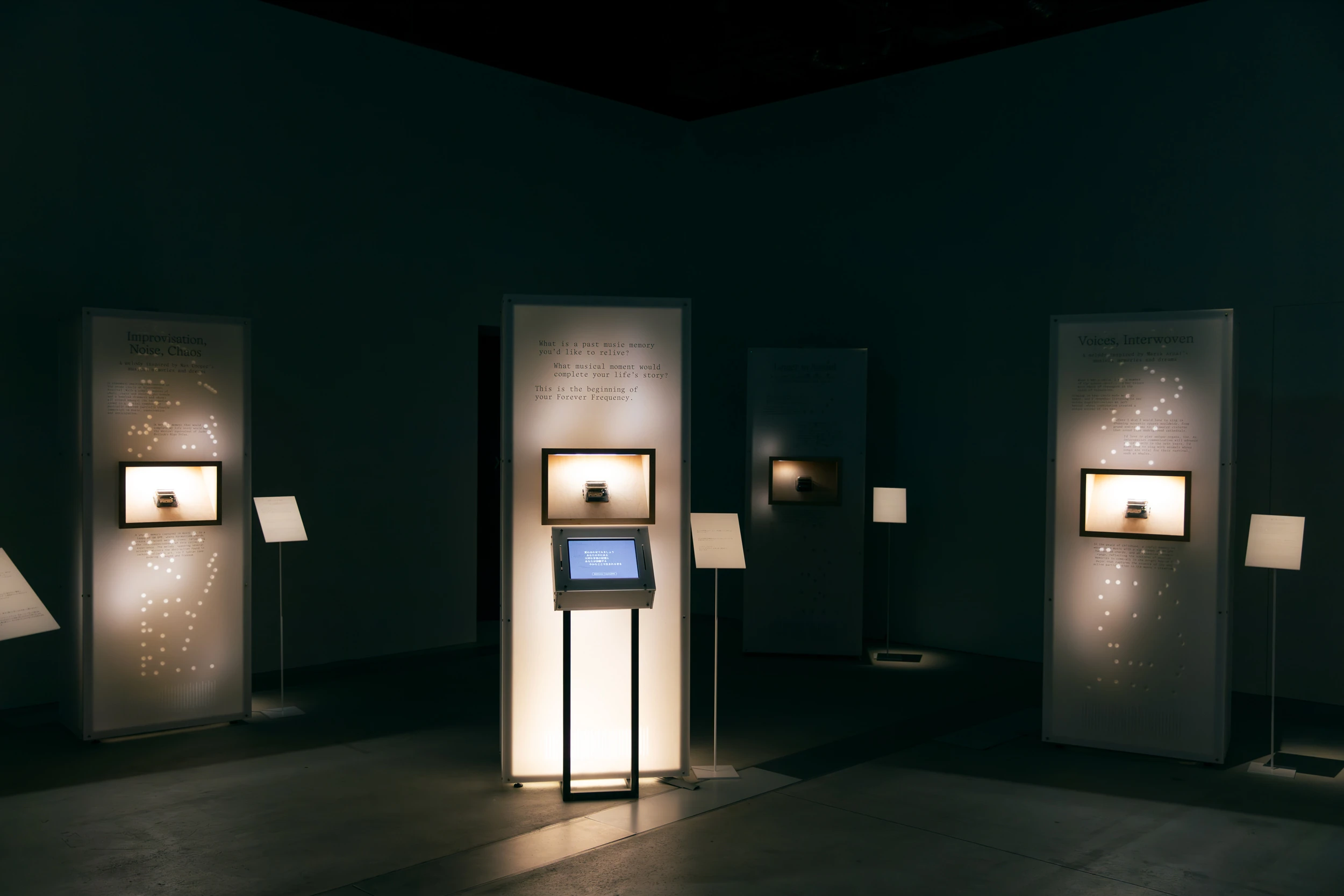
The music box-like Forever Frequencies (2025), courtesy of Barcelona-based collective Domestic Data Streamers, uses an LLM to turn answers to questions such as ‘What music from your memories would you like to experience again?’ and ‘What musical moment would complete the story of your life?’ into melodies.
You can read anecdotes from composer Suzanne Ciani, electronic musician and producer Max Cooper, singer Maria Arnal and architect Kengo Kuma, and hear their music. Once you’ve answered the questions for yourself, you’ll be rewarded with your own little tune snippet.
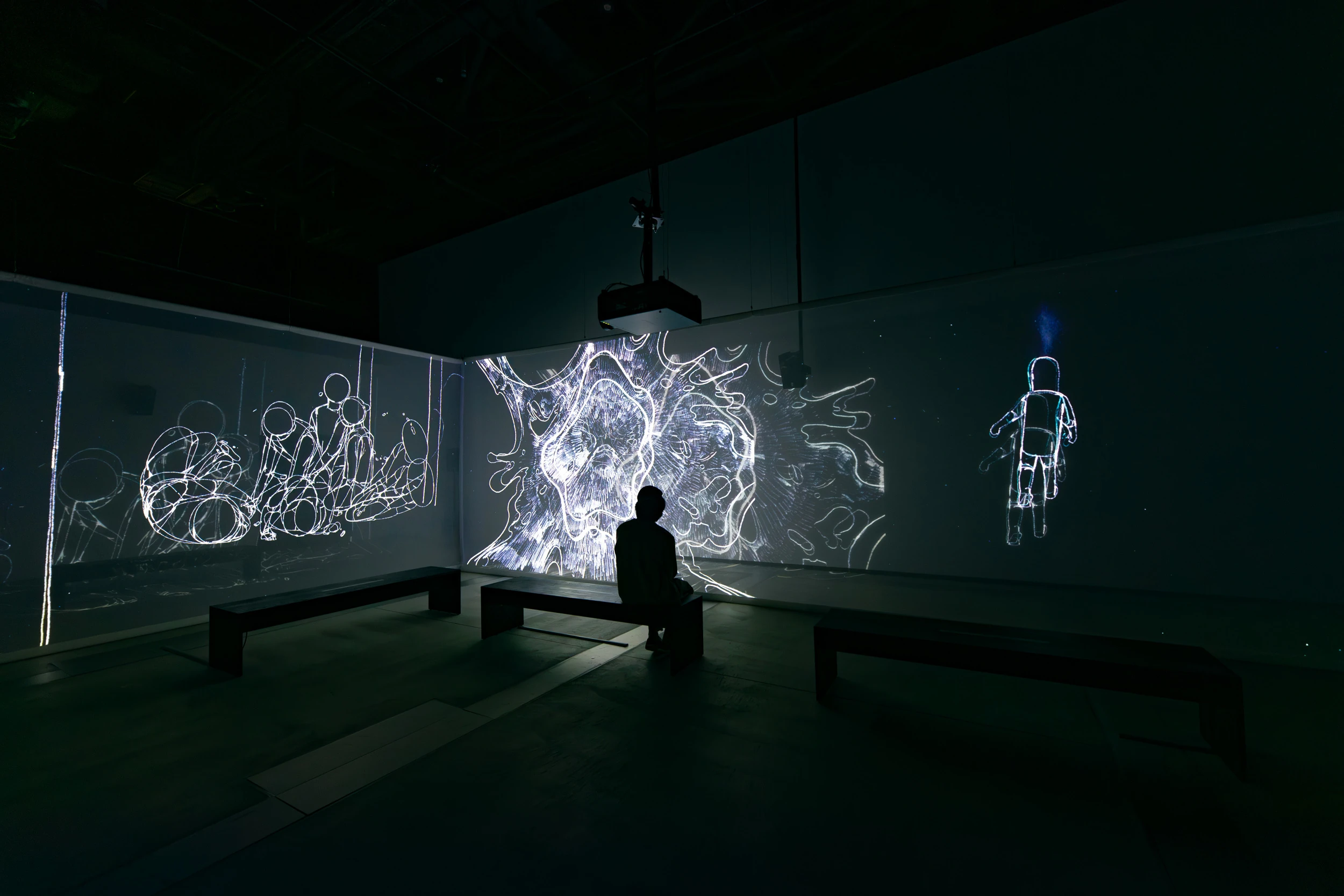
Towards the end awaits one of the exhibition’s highlights: the multisensory Reflections of Being (2026) by Max Cooper. Combining music, visuals and text, it’s based on anonymous responses to a single question: ‘What is something you feel you cannot express in daily life?’
Images projected onto semi-transparent screens overlap and merge with the silhouettes of visitors. When the music joins in, you might feel as if the emotions of countless strangers were flowing into you. The spatial audio is paired with haptic benches that let you physically feel bass frequencies you can’t hear.
At the exit, you’ll come across the second Your Inner Symphony unit. Here you can scan yourself again and compare your results to those measured at the entrance. In our case, the second reading had a ‘stronger kick’ and demonstrated ‘more energy’.
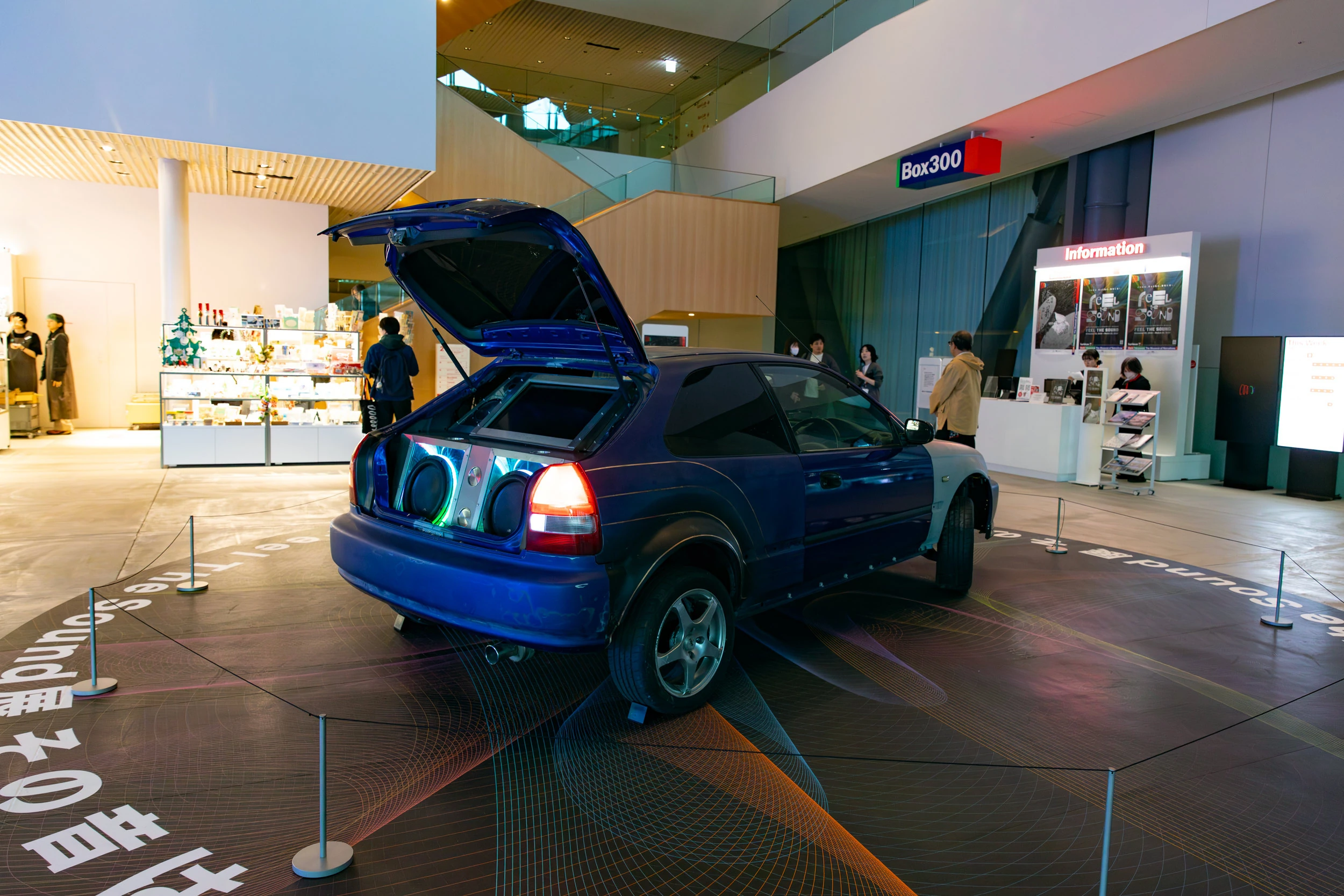
There’s more to see outside the venue. You don’t need a ticket to experience works such as Observatory Station (2025), a piece based on field recordings by sound artist Miyu Hosoi and the global sound project Cities and Memory; Joyride: The Tokyo Tuner (2025), a sound system and sculpture made from a scrapped car; and Raymond Antrobus’s Heightened Lyric (2025), composed of seven kites bearing poems with British Sign Language translations.
‘Feel the Sound’ reexamines what it means to listen, and makes you realise that the world is always full of sound, whether you choose to pay attention to it or not.
‘Feel the Sound’ is on view at MoN Takanawa: The Museum of Narratives until March 22 2027.
More from Time Out Tokyo
Akihabara now has a pop-up snack bar for anime, gaming and karaoke fans
Olivia Dean is bringing her ‘The Art of Loving’ tour to Yokohama in February 2027
Suica’s new character is here, but it doesn’t have a name yet
11 coffee shops in Japan make Asia Pacific’s 100 Best Coffee Shops 2026
Shibuya’s iconic cherry blossom street is going away in 2030
Want to be the first to know what’s cool in Tokyo? Sign up to our newsletter for the latest updates from Tokyo and Japan. Plus, check out our Time Out Japan coupons for exclusive discounts.
Discover Time Out original video