[category]
[title]
The Lodge at Marconi is chock full of fascinating angles.

The headline for this feature was originally going to be about how this Northern California lodge boasts best-in-class dark skies for stargazing, but as luck would have it, my family and I stayed at the Lodge at Marconi—a little more than an hour north of San Francisco—on a cloudy night. Even after I happened to wake up at 3am and ventured outside to check, the stars were still obscured. Despite that fluke, on most nights the lodge is unusually well-situated for celestial viewing. In fact, West Marin, which encompasses the lodge’s town of Marshall, California, is poised to become Northern California’s first officially designated dark-sky community thanks to ordinances that curb light pollution and protect the unspoiled night sky.
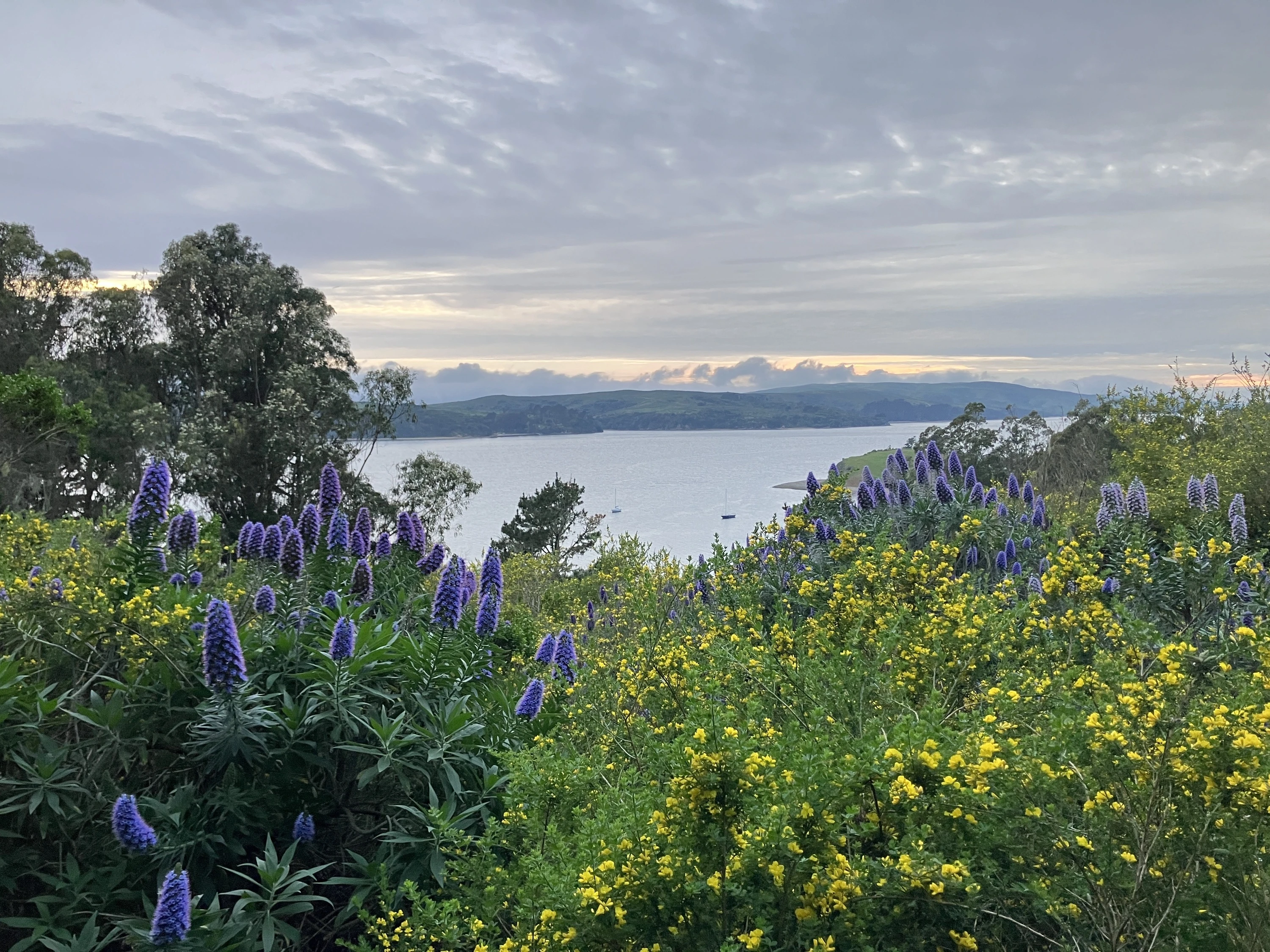
At the Lodge at Marconi, lighting across its 62 acres is dimmed, so you get the best possible view of the heavens and can even hike on its 3.5 miles of trails at night or forest bathe under the stars. You’re guaranteed a peaceful experience because the lodge sits within the Marconi State Historic Park, and the scenic campus overlooks Tomales Bay.
“Having spent time under Montana’s big sky, I don’t say this lightly… on a clear, moonless night, West Marin has nothing to envy,” says general manager Robert Fegan. “At Marconi, the Milky Way can stretch across the bay, stars reflect off the water, and the darkness creates a remarkable sense of quiet.”
Although our visit didn’t give us incredible stargazing, it still gave us a memorable stay we’ll be talking about for a long time because of three aspects: the beautiful drive to Tomales Bay, the lodge’s history as a telegraph spot for the Marconi wireless system to communicate with ships at sea, and, perhaps most interestingly, the use of the site by a full-on cult in the 1960s and ’70s called Synanon. I’ll tackle each of these in order.
The drive to get here from San Francisco takes about about an hour and 20 minutes, and you’ll go through the kind of lush landscape that makes you wonder why you ever bother to go to Europe when this is at your doorstep. The hills are currently drenched in green from the spring rains, and obliging herds of sheep, goats and cows picturesquely arrange themselves as you pass dairies and creameries on a curving two-lane road and catch sight of the bay.
Tomales Bay is a fascinating seaform, a very narrow inlet that stretches for 15 miles with varying widths. From the lodge, it looks swimmable to Heart’s Desire Beach on the opposite shore, but at other points it can be a mile across. This finger of water probes into the Point Reyes National Seashore.
Speaking of which, you’ll want to add time to your drive to stop by the 1870 Point Reyes lighthouse and the Elephant Seal Lookout where you can see, depending on the time of year, elephant seals breeding, giving birth or shedding their skin (bring your binoculars and check the National Park Service website first for road closures when pups are newborn). The Point Reyes National Seashore is a twisty road paradise.
Any Titanic buff knows the name (Guglielmo) Marconi; he’s the Nobel Prize-winning Italian inventor who created the wireless telegraph system (he’s also largely credited, with some patent-shuffling, with inventing the radio). The two lads who worked the wireless room on the Titanic were Marconi Company employees, not White Star Line staff. Their efforts to alert area ships to the Titanic’s plight saved countless lives, as the lifeboats drifted in an ice-strewn sea after the ship sank.
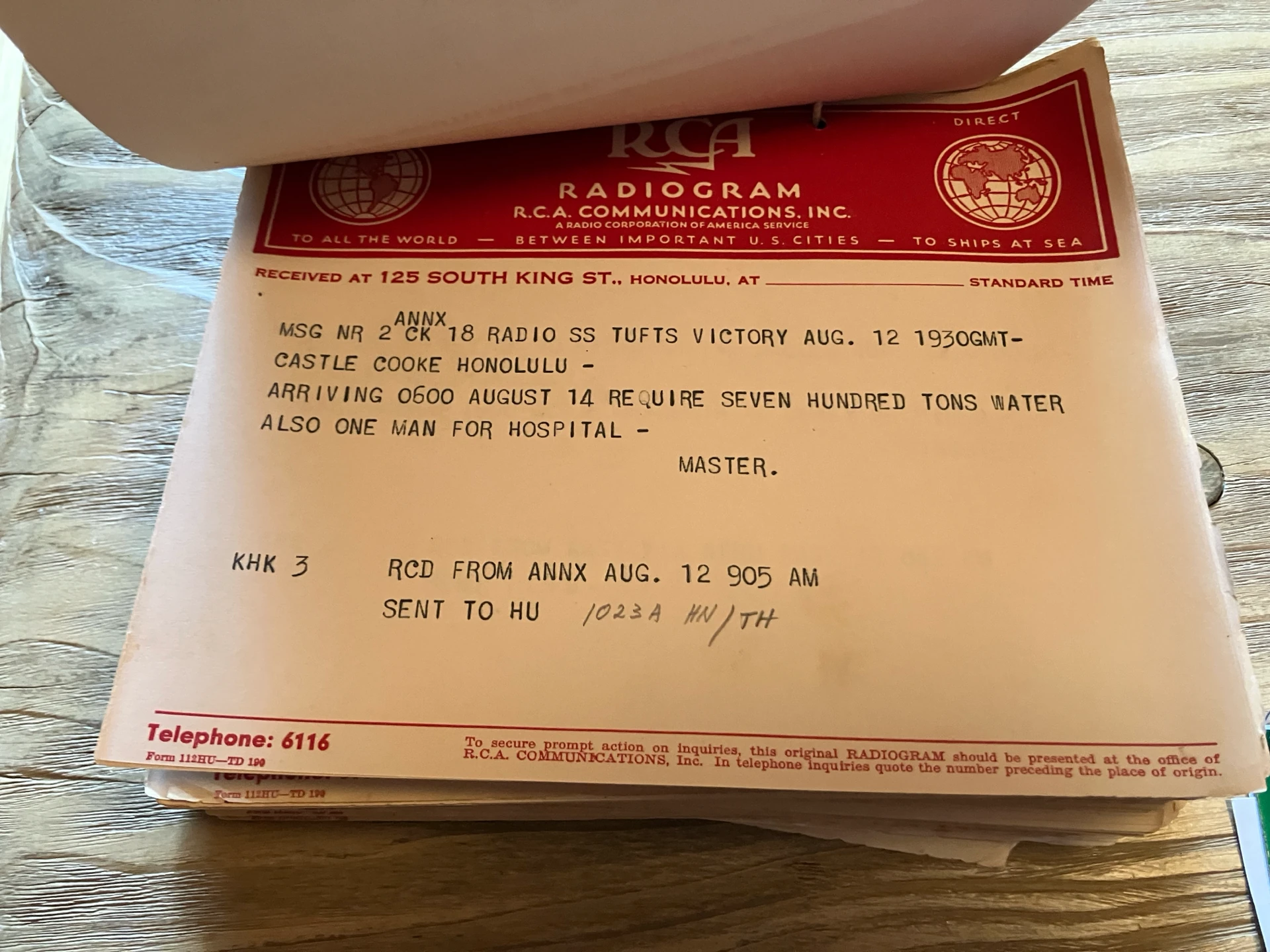
You can take a short hike to Tower Hill, a gentle rise above the lodge. There, you’ll find remnants of the concrete bases for the 270-foot towers with antennas once used to beam the wireless signals out to sea. In a room off the main lobby, you can look through a bound collection of undated wireless messages sent from this spot all the way to Honolulu. An example: “Will arrive Monday morning aboard Mariposa. See all at pier. Love to all” from Olga Kiyo. Sea history buffs will adore this part of the stay.
When I asked Fegan why Marconi’s name and legacy weren’t better known (other than the line “Marconi plays the mamba; listen to the radio” in the 1980s comeback hit “We Built This City” by San Francisco’s own Starship), he cited his involvement with Mussolini’s fascist government. Yep, that’ll do it.
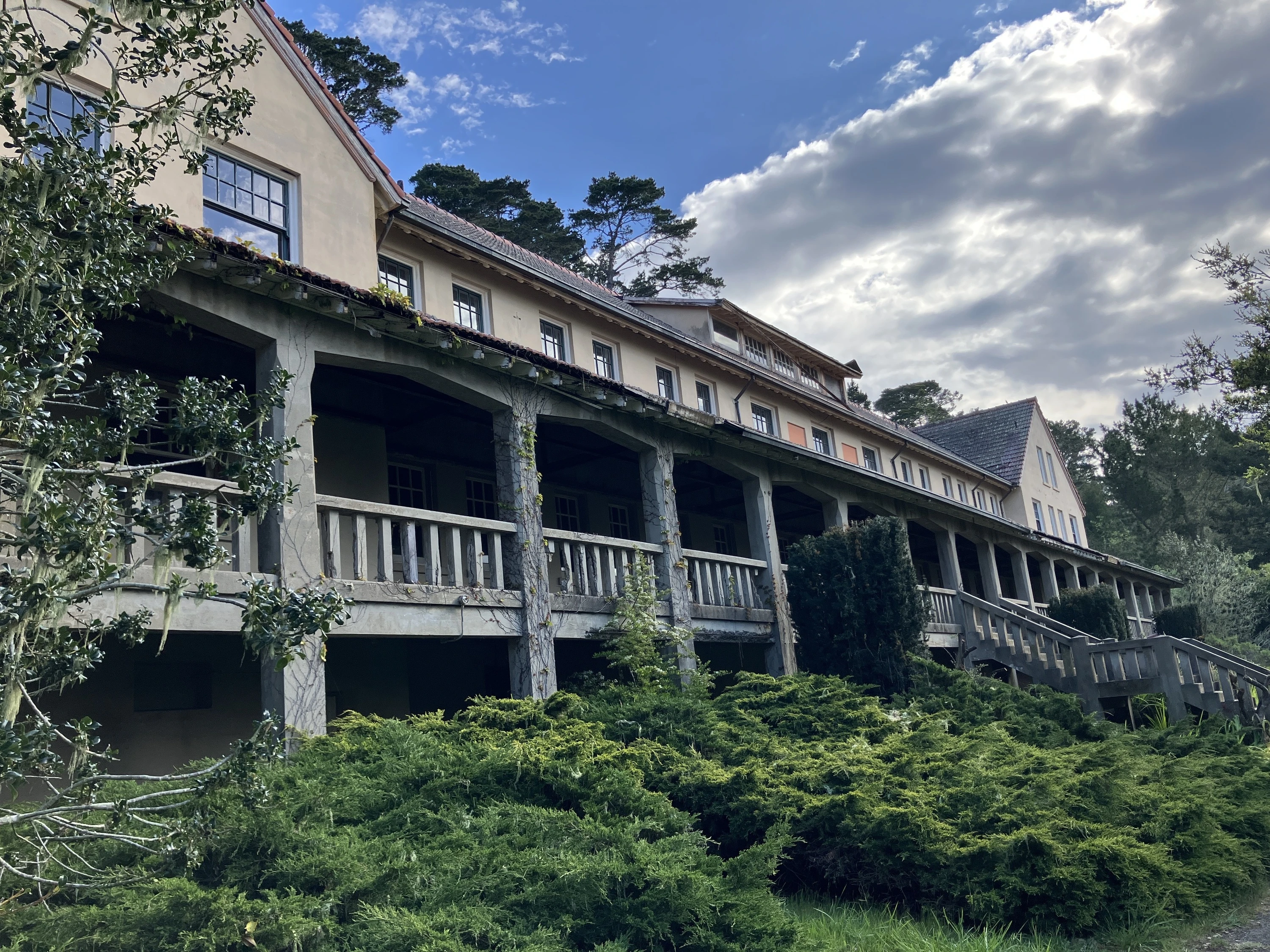
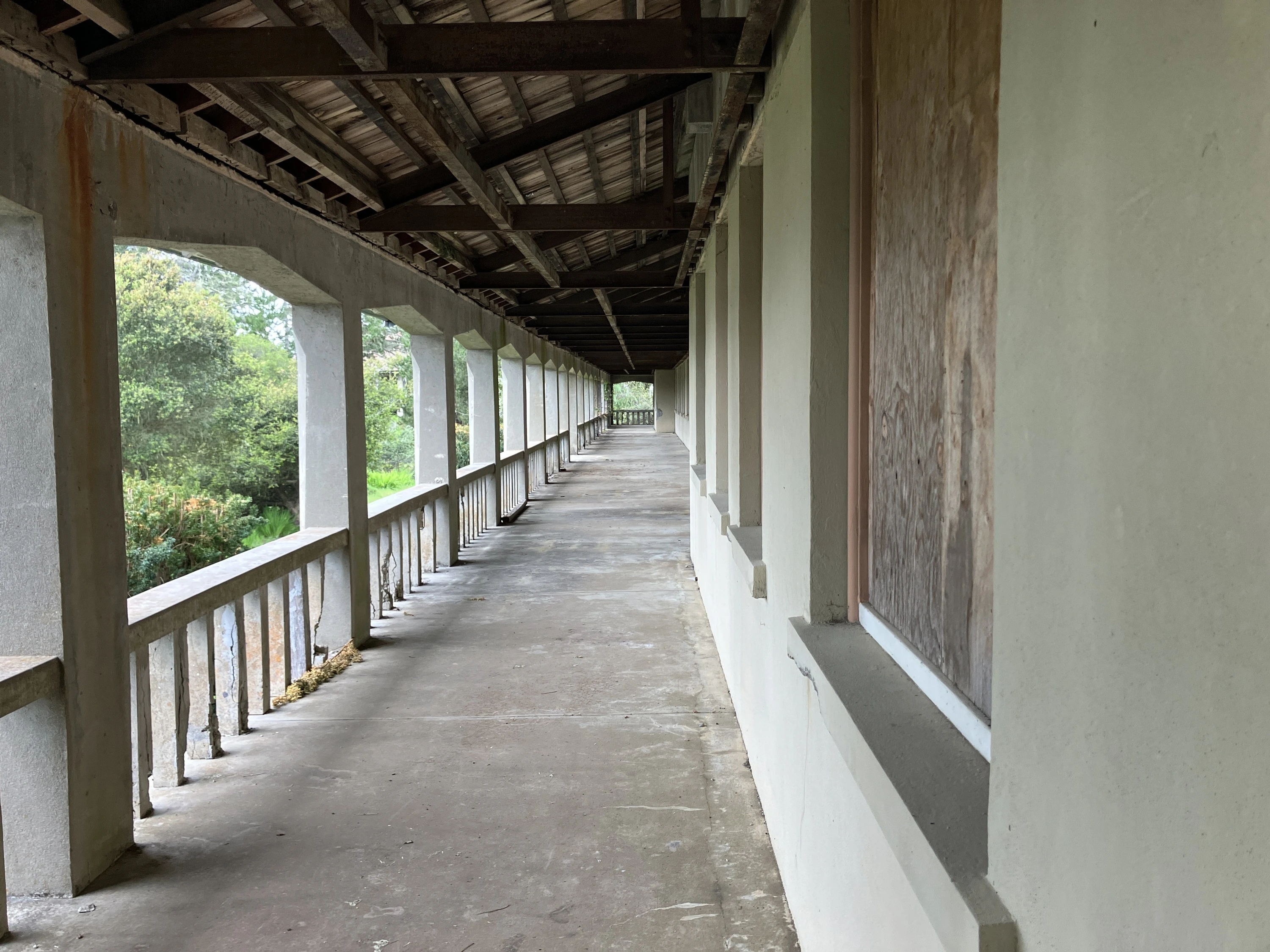
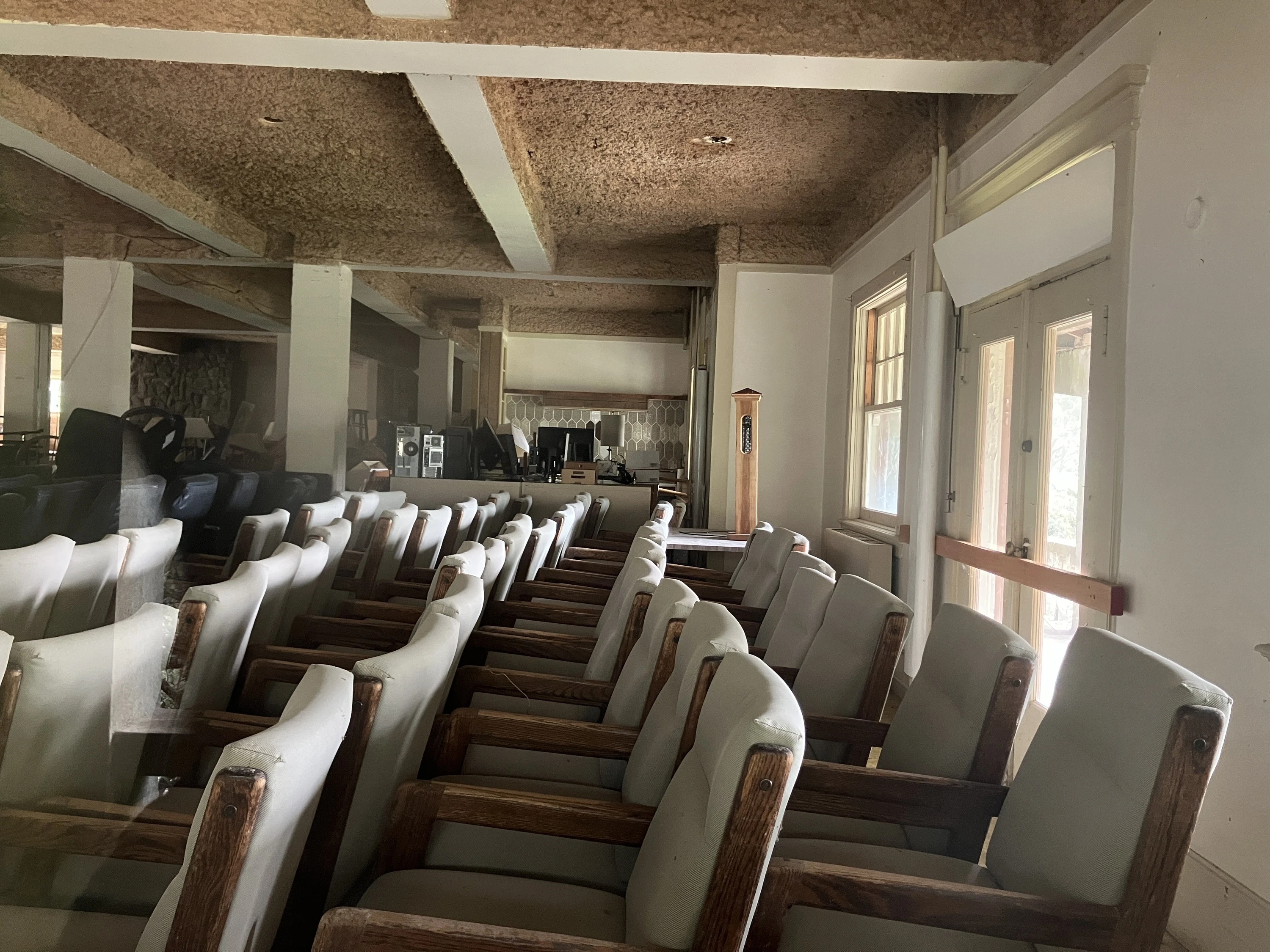
The structure that used to house Marconi’s employees is currently uninhabitable, but a $20–$30 million renovation could make the historic building spiffy again. Currently, it’s entertaining to walk around and peek in the windows to see an abandoned wheelchair or a room full of chairs piled to the ceiling. It definitely gives abandoned asylum vibes, largely because it was later used by Synanon members. On to No. 3!
Synanon started out, as cults often do, as a benevolent organization. Founded by Chuck Dederich in Santa Monica, it was a place for alcoholics and drug addicts to sober up, a revolutionary and humane concept for the time. Sometime in the early 1960s, the group moved to Tomales Bay and took over the Marconi site. They began building the structures where visitors currently stay at the Lodge at Marconi. The original Marconi lodge on the grounds, now derelict, was used for a community gathering space. For a quick primer, watch The Synanon Fix, currently streaming on HBO Max; you’ll see footage of the group there engaging in the Game, a rehab method that involved everyone ganging up on one person to insult them to their face. Lest you think that I’m exaggerating on the “insult” angle, here’s a literal exchange from the documentary:
“You are such an affected fool that you didn’t want anyone in Synanon to think for a moment that you were a human being and could actually get into a Game like the rest of us broads, because you are such a phony bitch.”
The response? “You are such a minimum daily motherf---er.”
(I tried to interest my family in the Game, but we were all too nice to go through with it.)
At Tomales Bay, things went deeply awry as children were separated from their parents and treated very cruelly. Often, treatment of children and adults escalated to physical abuse. A woman who escaped from Synanon said she had been held there against her will. The attorney who helped her get a $300K judgment got bitten by a rattlesnake that Synanon members, directed by Dederich, had placed in his mailbox. Luckily, the closest ER had the antidote or he would’ve died.
Synanon had, at its height, 14 locations across the U.S., all connected 24/7 by a radio system called the Wire (Marconi would’ve been proud?). As Dederich devolved, he had Synanon members buy out gun stores, terrifying locals about his plans, and his followers shaved their heads, adopted wearing overalls like him and participated in mass weddings. Eventually, Dederich fled the country and began drinking again. Without him, the organization, like the Titanic, floundered.
Fegan says visitors to the Lodge at Marconi are often people who were once members, revisiting memories of their time there.
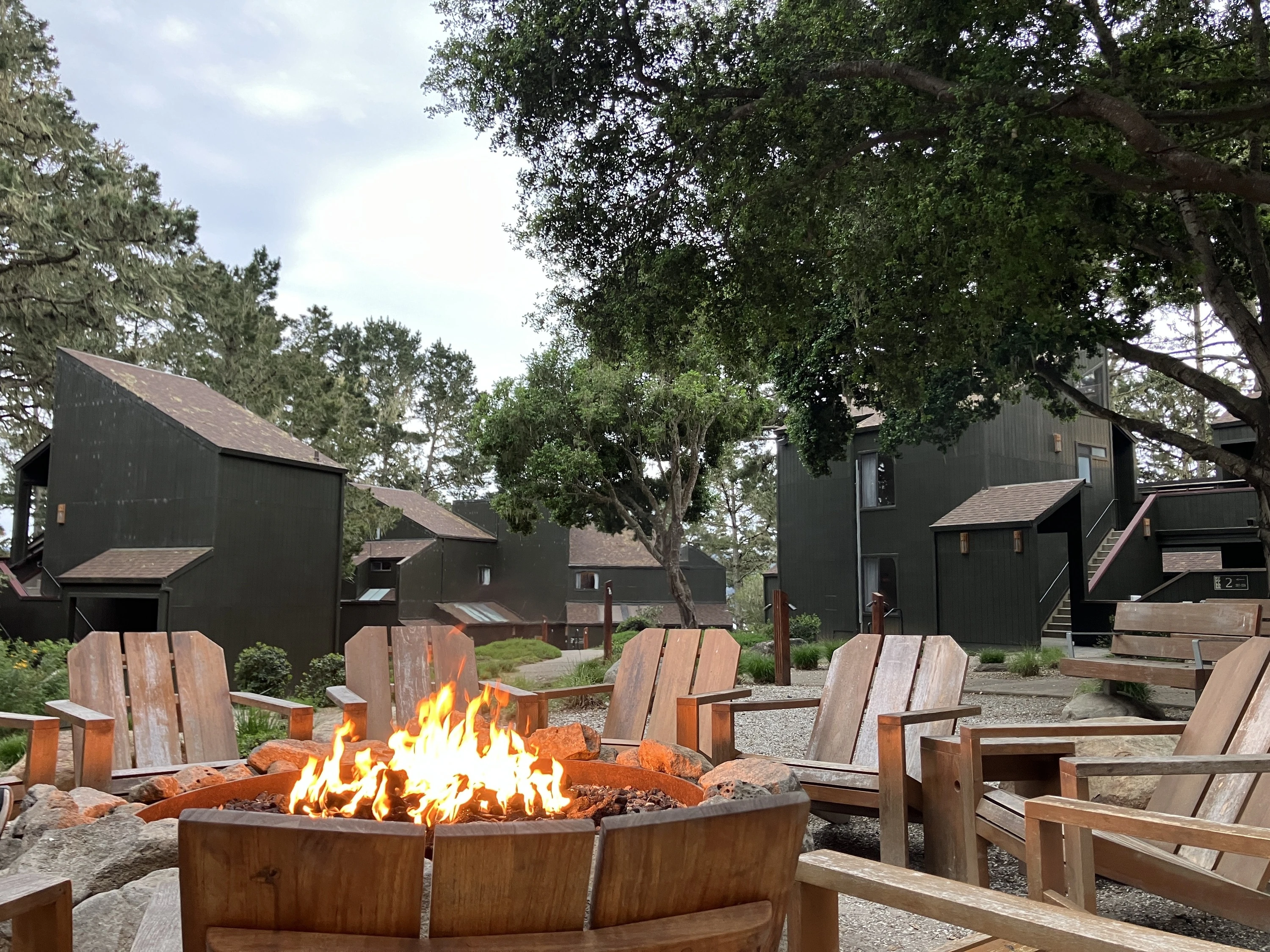
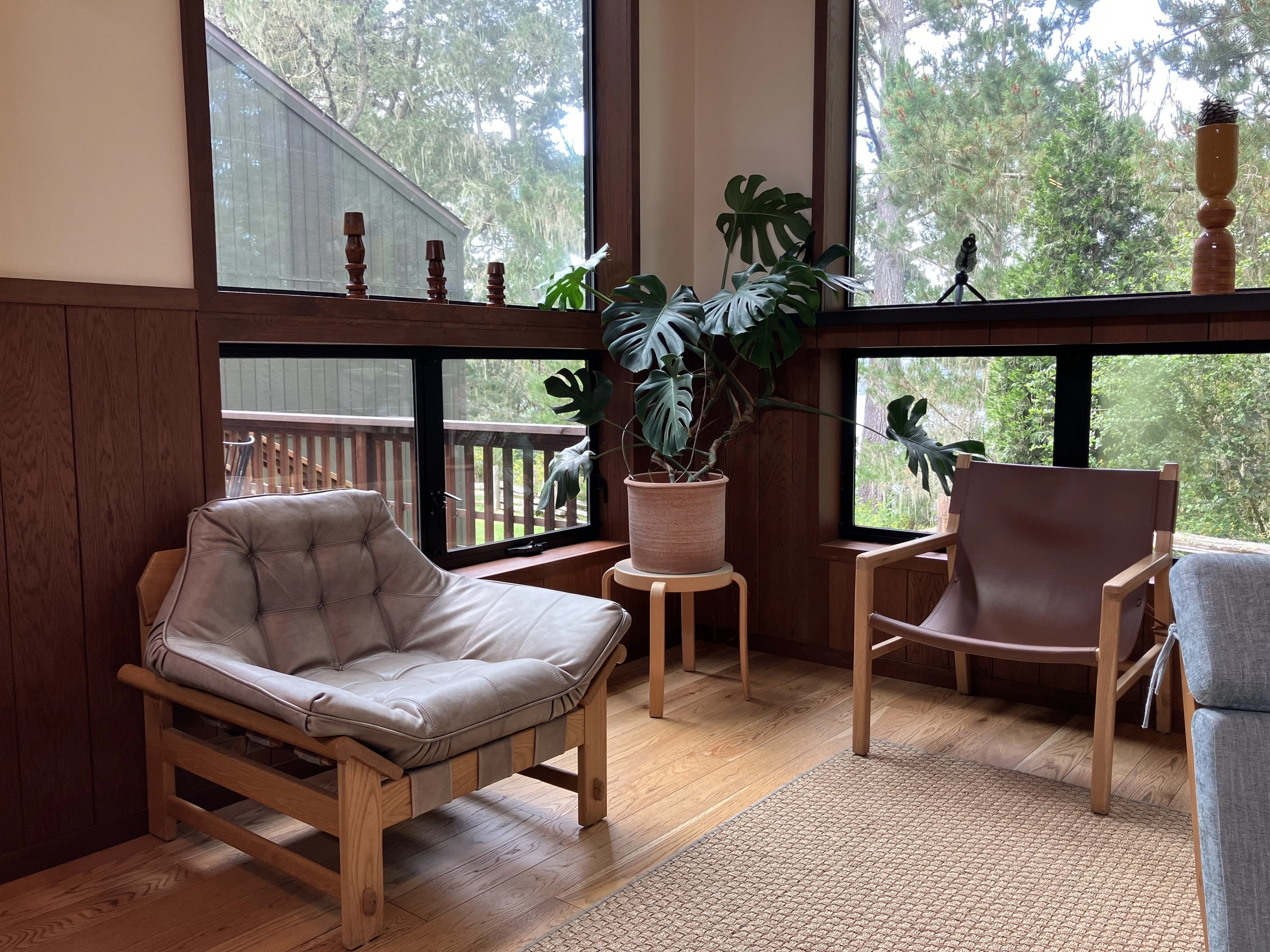
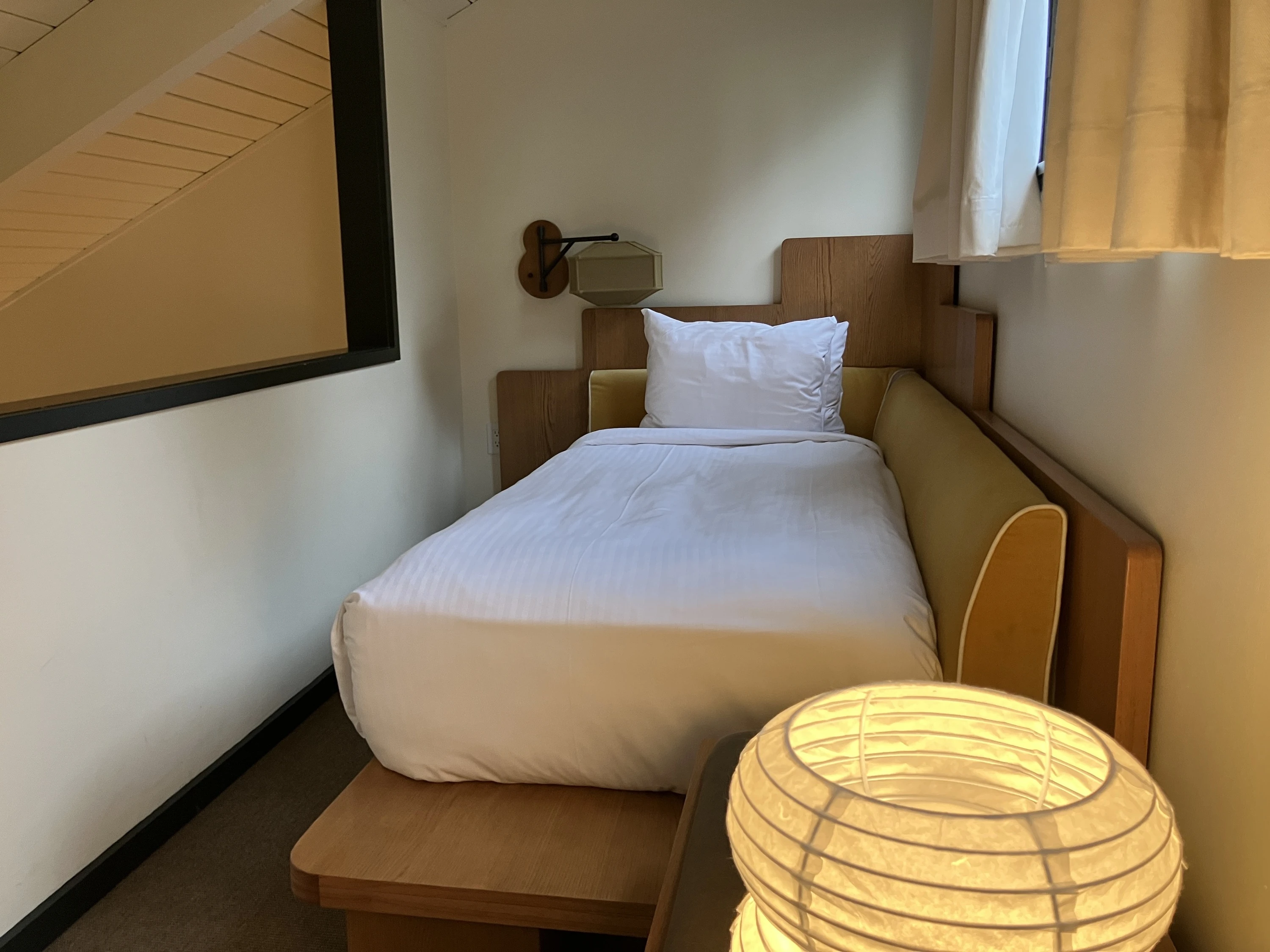
Of course, those cult days are no more, and now the lodge is very pleasantly unusual place to spend the night. Each unit (called “caves” in the 1970s when designed by architect Ellis Kaplan) consists of a two-story space with an open flow primary bedroom on the ground floor and a cozy loft on the second floor with a twin bed. Everything’s made of wood and carries a very 1970s architectural flair with asymmetrical roof lines and large windows. I mentioned to Fegan that it reminded me of Sea Ranch, the famous architectural enclave several hours north, and he directed me to a framed November 1970 article from The Forum, Al-Anon’s monthly magazine, on the lobby wall; it refers to this campus as “Sea Ranch South.”
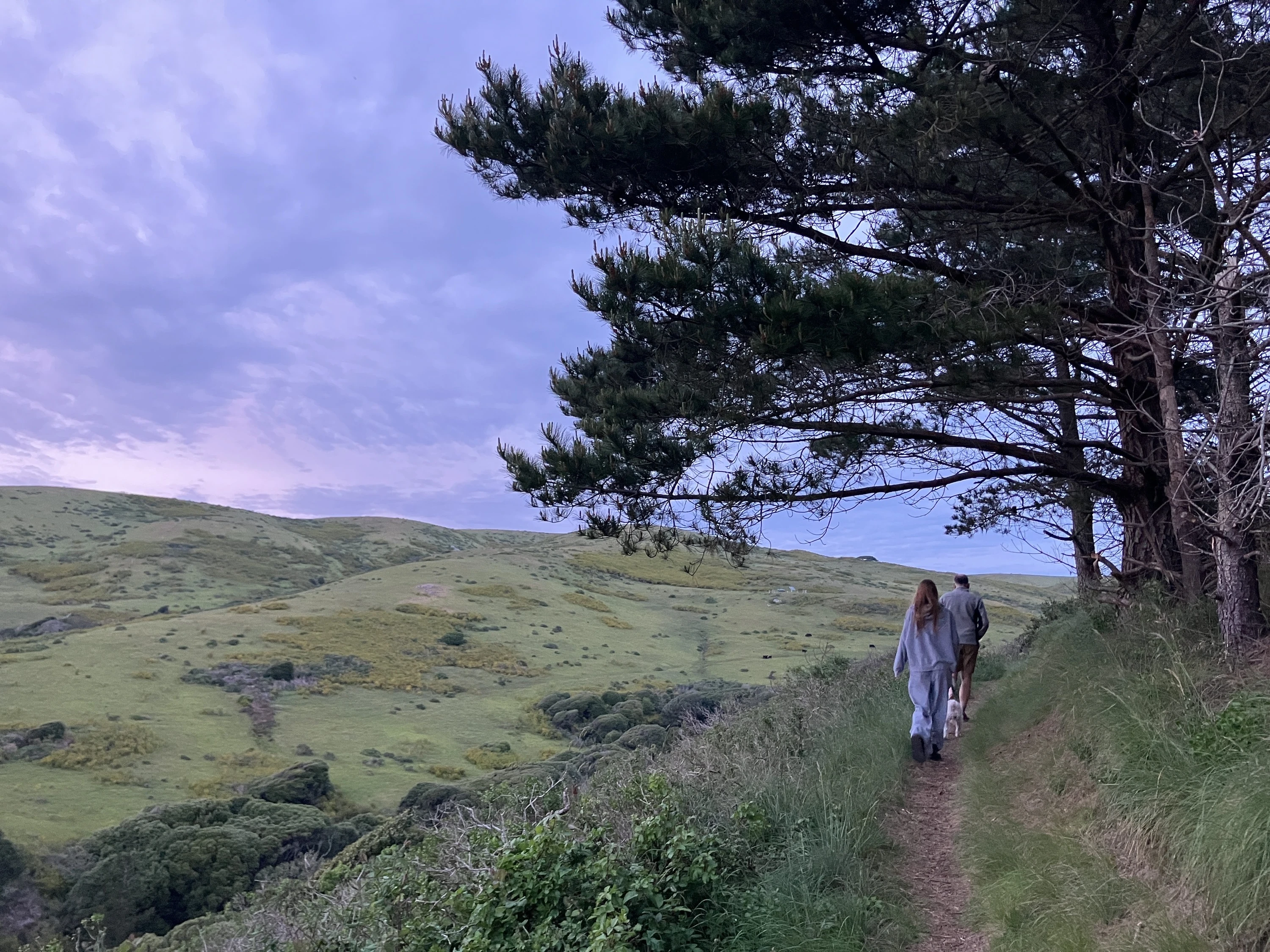
Each unit has views of the bay. Front desk agent Melissa Fiddler says that not too long ago, a whale was seen in Tomales Bay, and more frequently river otters frolic there. Yet, her favorites are the banana slugs that tend to be found in the planters on dewy mornings. There are trails lined with wildflowers (watch out for poison oak, especially if you bring your dog like we did), a footbridge, a pond and benches or wooden chairs scattered everywhere for you to sink into to soak up the view. The on-site restaurant Mable’s wasn’t open during our stay, but we loved our meal at Side Street Kitchen in nearby Point Reyes, and we brought our own doughnuts for a decadent breakfast (there’s coffee in the lodge lobby in the mornings, and we also bulked up eating s’mores at the communal firepit the night before).
If cults and telegraph stations aren’t your thing, no worries: Both are subtle background aspects to the stay. If you’re just looking for a private, nature-based stay in architecturally interesting buildings with a 2023 Oliver Hospitality redesign by Home Studios (a New York firm founded by a former publishing house editor—you know you’re in good hands with bookish folks), these 46 guest rooms are immensely satisfying… and you never have to play the Game.
Rooms start at $360 a night for a standard king room.
Discover Time Out original video