[category]
[title]
More than just a gallery of garments, this exhibition reveals the deep research and emotional resonance behind one of theater and cinema’s most influential visual storytellers.


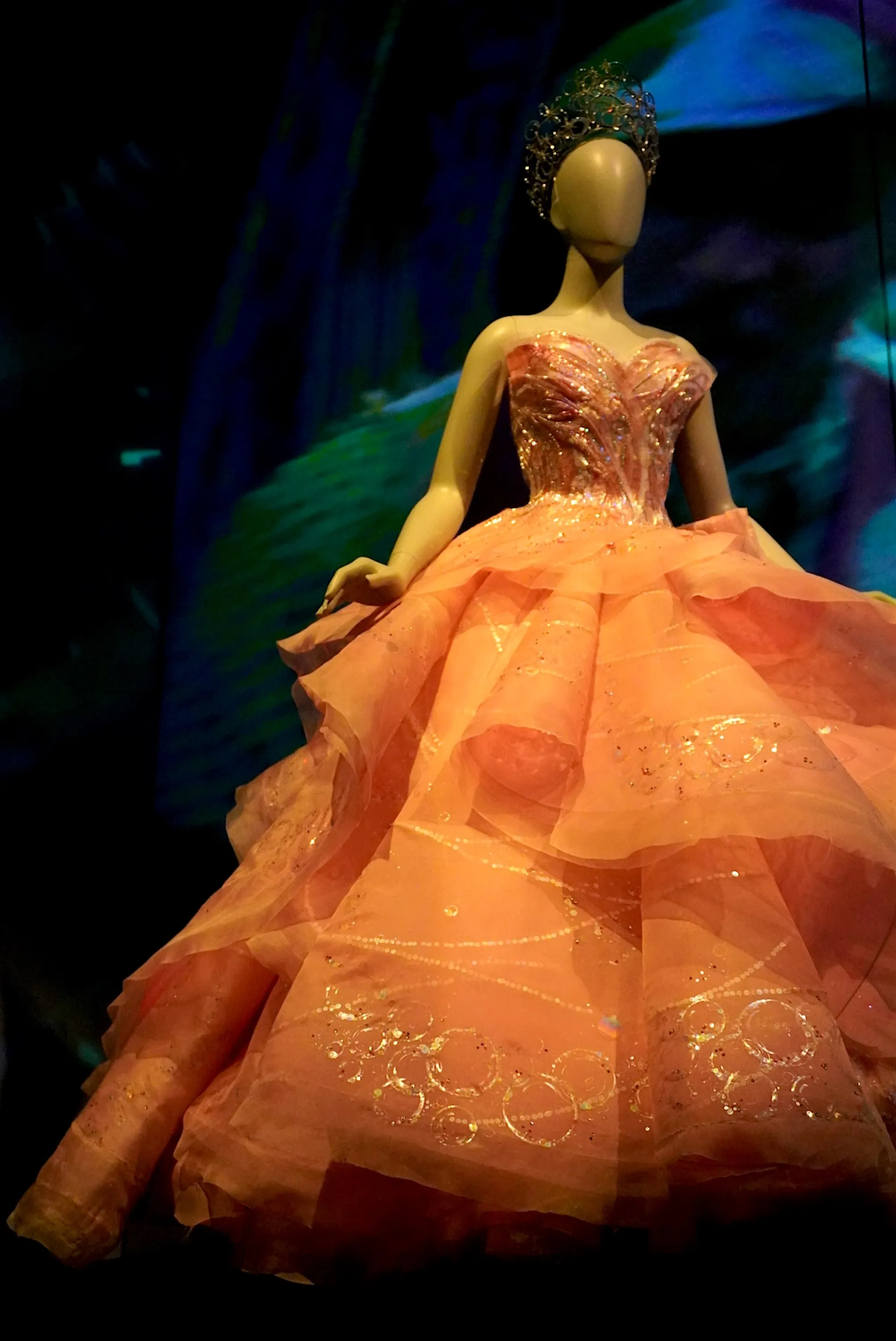
You likely recognize Glinda’s rhinestone-spangled pink gown from the Wicked films or Anita’s sunflower-yellow dress from Steven Spielberg’s adaptation of West Side Story—garments so vivid they feel as though they might still be hanging in a wardrobe somewhere, quietly judging your choice of winter coat. But do you know the man who masterminded the architecture behind these icons? I journeyed south to the Griffin Museum of Science and Industry to find out.
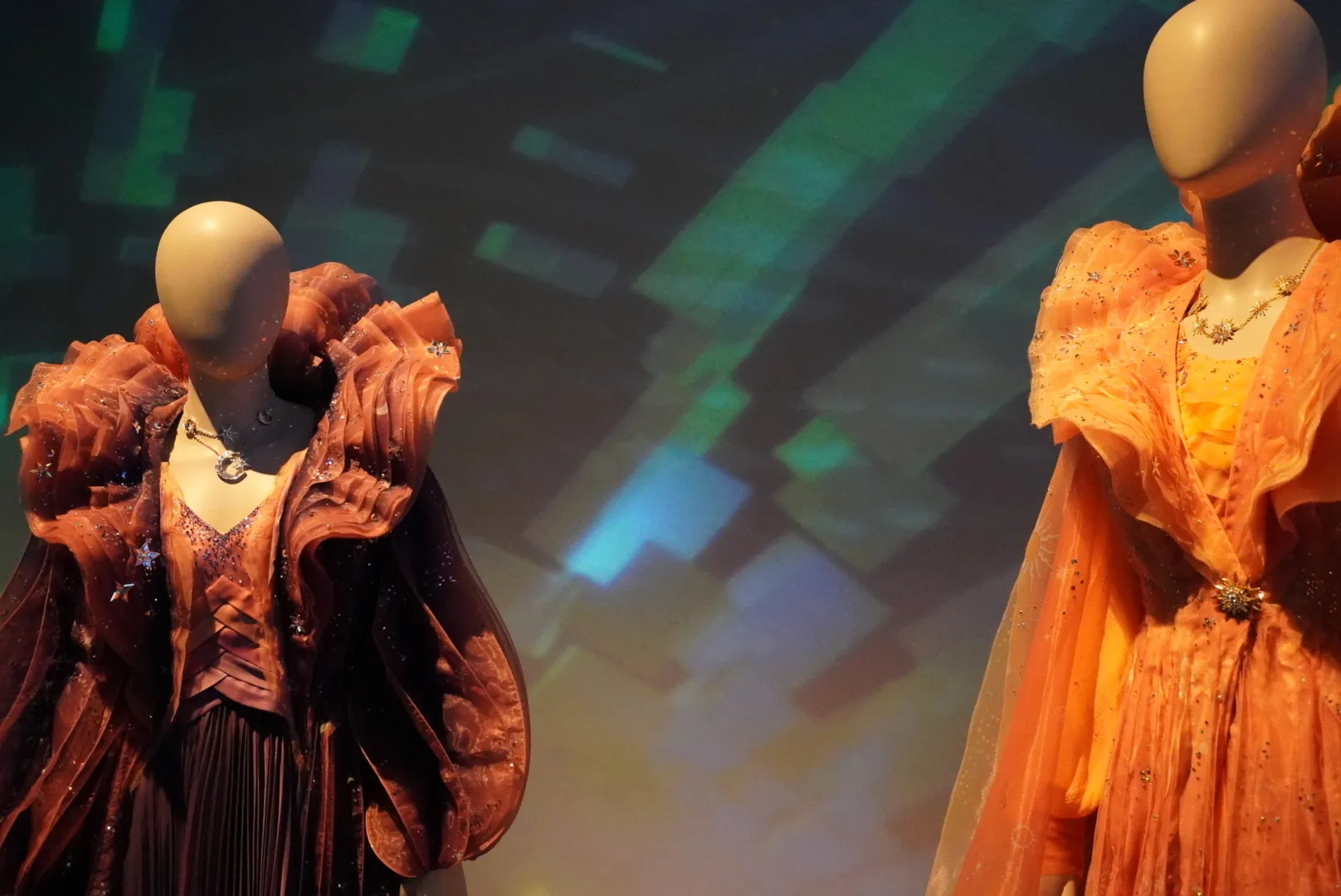
Enter Paul Tazewell, the subject of the MSI’s new exhibition, “Crafting Character: The Costumes of Paul Tazewell.” Open now through September 7, 2026, the show invites visitors behind the seams, tracing the frantic imagination and sheer, finger-pricking labor required to define modern film and Broadway. This is not merely a greatest hits rack of pretty clothes—though the sequins are out in full force—but a deep dive into the alchemy of how fabric becomes a person.
The exhibition commences in a darkened room where Janelle Monáe’s MET Gala ensembles hold court like chic, unblinking sentries. From a screen, Tazewell’s polished and friendly visage explains that costumes are more than just fancy upholstery; they are storytelling tools that dictate how a character moves, speaks and is ultimately judged by the balcony seats. “Costume is a character made visible,” he declares, just as a pair of doors fold open to welcome us into his world.
Each room is studded with tender personal artifacts: a self-portrait Tazewell painted in high school, his mother’s handmade marionettes and dioramas that hint at an early obsession with scale. Placards explain that his craft is rooted in African ancestry—specifically, the photo albums and oral histories of his family lore that served as his first clues into how culture and history shape our silhouettes.
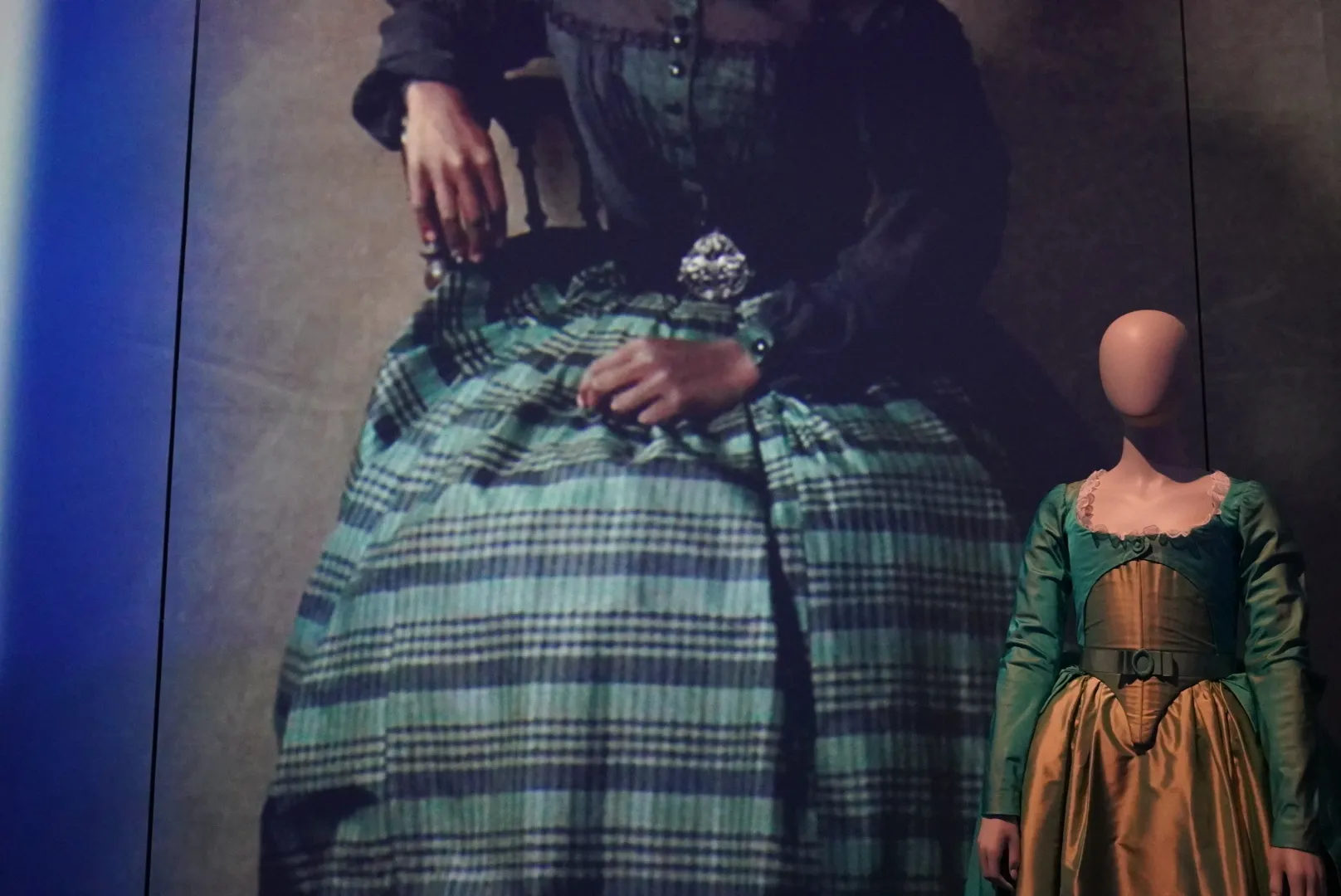
This logic is stitched into every display. Take, for instance, Cynthia Erivo’s wardrobe for Harriet. The garments don’t just track Harriet Tubman’s ascension from being enslaved to becoming an abolitionist “superhero”; they reflect the very dirt she traversed. Every hem is made for movement, a textile reflection of the land she crossed throughout her journey toward freedom for all.
Even the color palettes feel curated by a man who views the rainbow as a suggestion list. For the Jets and the Sharks in West Side Story, Tazewell looked toward Puerto Rico; the warm tones evoke the island’s climate, while Anita’s yellow dress serves as a metaphorical sun around which the entire rooftop “America” scene must orbit. Other inspirations range from the mundane to the whimsical—folded book pages, Christmas trees—all fueling his inimitable vision.
While the costumes are fabulous standing still, the exhibition truly sings through each room’s timed narration. Tazewell acts as a genial guide, explaining how a character’s movement dictates a hemline and how emotion—joy, menace or a particular strain of longing—can be stitched directly into a sleeve. You begin to notice things you’d never thought to look for, such as the structural integrity required for a garment to survive eight shows a week without a nervous breakdown.
The Griffin Museum of Science and Industry might seem a curious home for such finery, but the fit is snug. Tazewell’s work lives at the intersection of art, engineering and anthropology. It is a must-see for anyone who has wondered how a fleeting idea becomes an object you can actually zip yourself into. As a testament to the show’s magnetism: During my visit, the galleries were crawling with elementary school girls, all squealing at the fiber-optic magic of Glinda’s gleaming gown from The Wiz and gazing, rapt, at the emerald and russet velvets of the Harriet collection.
My only complaint (if you can call it such) is the exhibition’s brevity. Spanning four rooms in a railroad style—walking in a straight, polite line—the layout lacks the transformative whimsy of the work itself. Tazewell’s costumes whisk us off to the technicolor land of Oz or 1950s New York; one wishes his retrospective felt less like a corridor and more like a kingdom. But that’s hardly a gripe; it’s simply a symptom of the Tazewell effect: There is simply not enough of him to go around.
Think of “Crafting Character” as a fashion show with a soul. You’ll leave feeling thoroughly glamoured—and, perhaps accidentally, a bit more in tune with the stories we wear on our sleeves.
Discover Time Out original video