[category]
[title]
A new wave of coffee shops is designed for lingering, where comfort, space and time matter as much as the coffee.

Chicago has always had coffee. What it didn’t always have was time.
For years, the city’s café culture moved at commuter speed: espresso shots pulled fast, laptops opened with purpose, tables turned over before the second cup cooled. Even the design of many spaces reinforced that rhythm, narrow counters, upright chairs, just enough room to pause but not settle.
RECOMMENDED: Chicago was just voted one of the best cities in the U.S. for coffee lovers
Lately, that logic is shifting. Across neighborhoods, a growing number of cafés are being built, or quietly reworked, around a different assumption: that people want to stay.
Not indefinitely, not aimlessly, but long enough for a place to register as part of their day rather than a transaction within it.
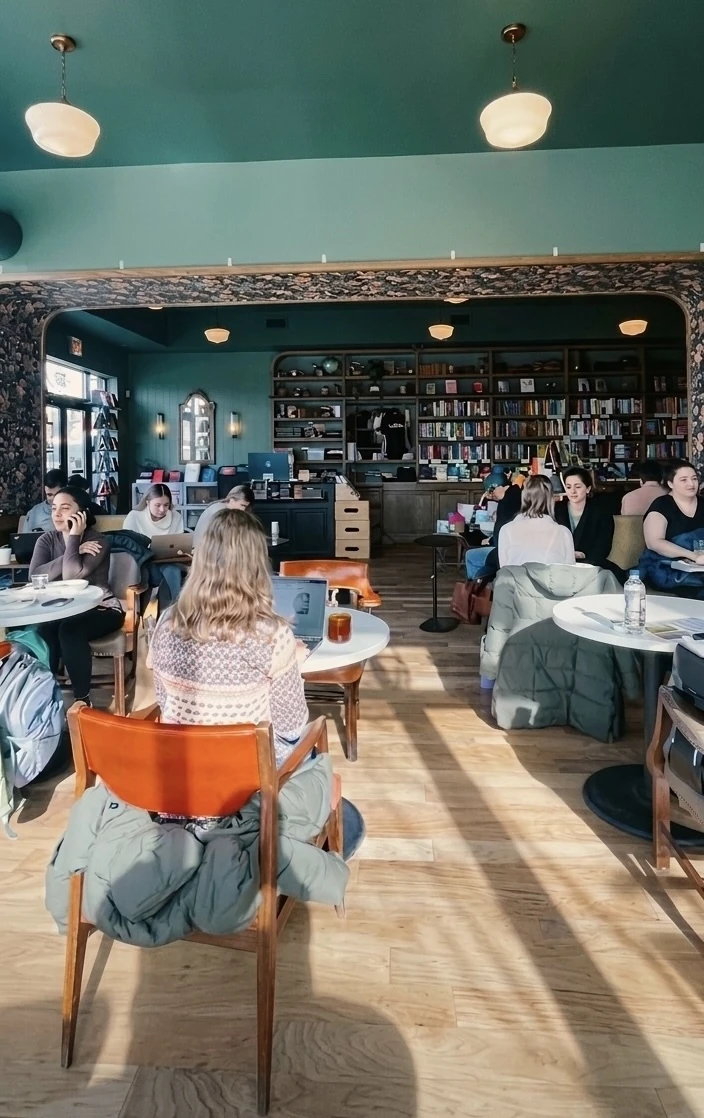
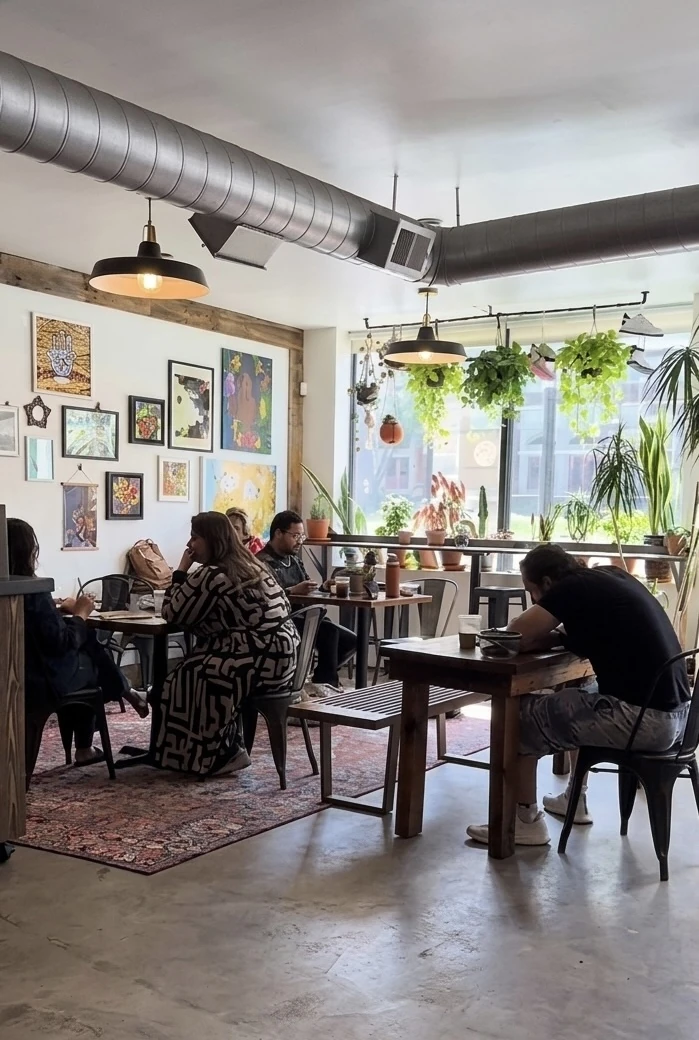
At The Understudy Coffee and Books in Andersonville, the first thing that stands out is the softness. Not just in the seating, low couches, wide wooden tables, but in the way the room absorbs sound. Conversations settle into a low hum. Pages turn. Someone reads for nearly an hour without ordering a second drink, and no one interrupts them.
The café doubles as a bookstore, but it doesn’t feel like a retail hybrid so much as a space calibrated for lingering. The shelves create a kind of perimeter, gently enclosing the room. It’s easy to lose track of time here, which is precisely the point.
That sense of enclosure, of being held in place rather than pushed through, is becoming a defining feature of Chicago’s new café interiors. Designers talk less about efficiency and more about dwell time, how long someone feels comfortable occupying a seat, and what signals a space sends about staying versus leaving.
At Pedestrian Coffee in Logan Square, those signals are subtler. The layout is still relatively minimal, but the spacing between tables is generous, and the seating varies just enough to give people options. A long communal table runs through the center, where strangers work side by side without acknowledgment, while smaller two-tops along the wall host quieter, more contained conversations.
I noticed that no one seems to rush here. Drinks arrive, laptops open, and then the tempo flattens. A customer finishes their coffee and remains seated, scrolling, reading, thinking. Staff move through the room without the subtle cues that usually indicate it’s time to order again or move along.
That absence of pressure is intentional. Café owners across the city describe a shift in customer behavior that began during the pandemic and has since stabilized into something more permanent. People are not just stopping in, they are structuring parts of their day around these spaces.
In practical terms, that means longer stays, fewer but more deliberate orders, and a different expectation of what a café provides.
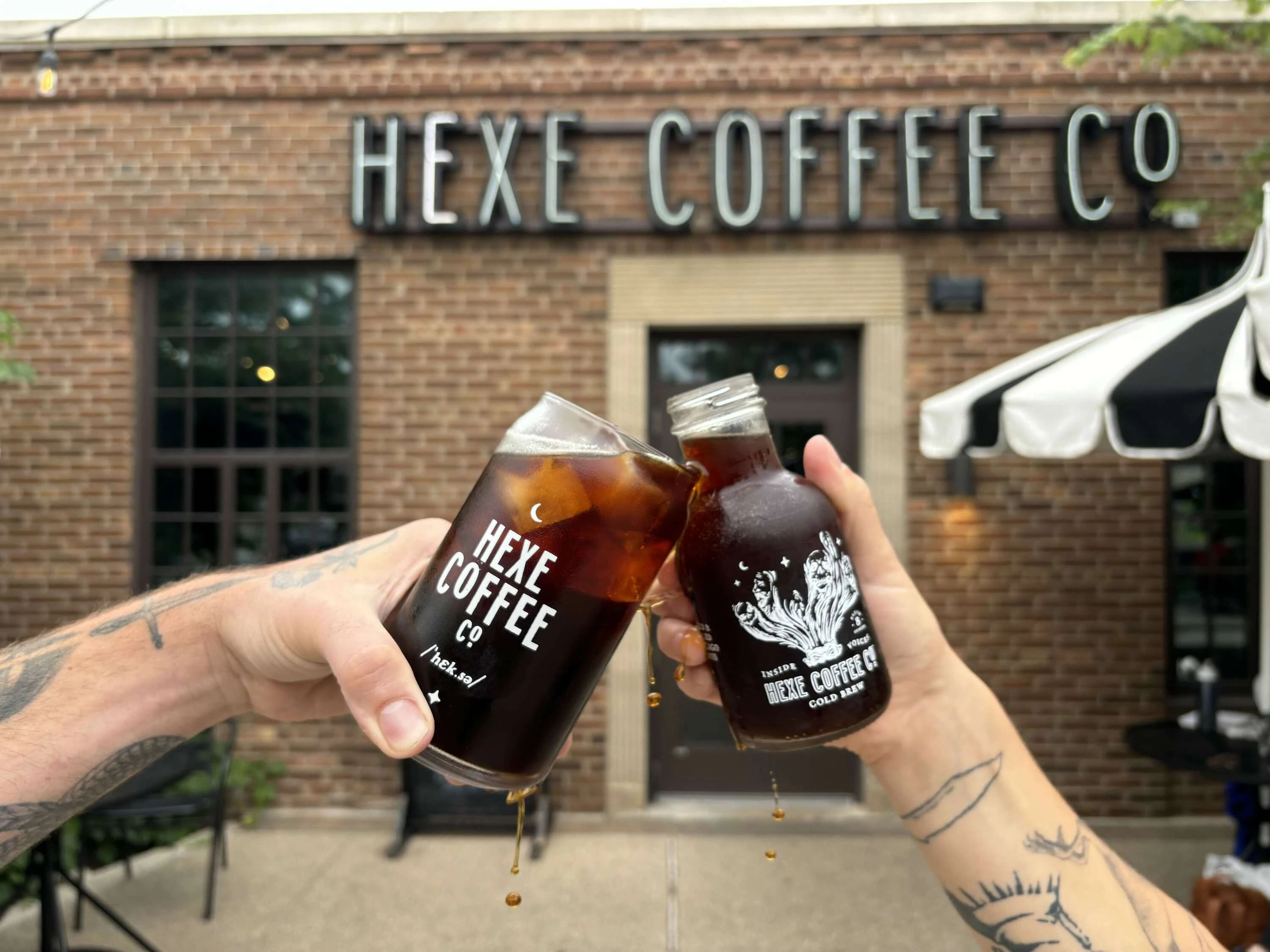
At Hexe Coffee in Roscoe Village, the model leans slightly more social. The café incorporates a roastery and a brewery, but what defines the space is its flexibility. In the morning, it functions as a quiet work environment. By late afternoon, the energy shifts, tables fill with small groups, conversations grow louder, and the same room begins to feel like a neighborhood bar.
Other parts of Chicago’s hospitality scene are already following suit, designing spaces that evolve over the course of an evening rather than serving a single, fixed purpose.
Cafés are now absorbing some of that logic, not by adding entertainment or alcohol, but by creating environments that can hold different kinds of presence: solitary, social, productive, idle.
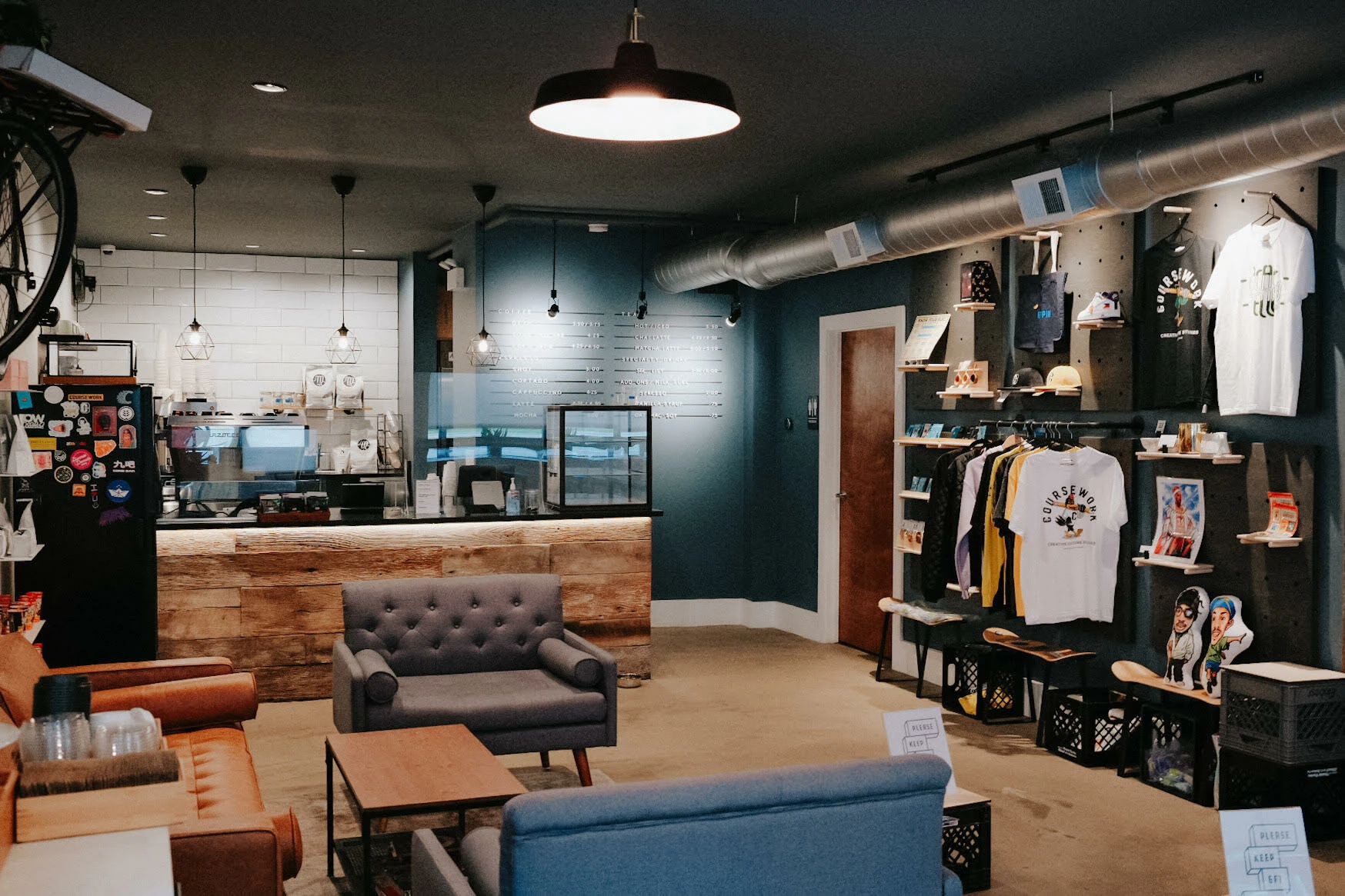
At Side Practice Coffee in Ravenswood, that flexibility extends to programming. The café hosts small events, zine swaps, and community discussions, but even outside those moments, the room feels prepared for them. Seating can be rearranged easily. The back area opens up just enough to accommodate a small crowd without disrupting the rest of the space.
What’s notable is how lightly these interventions are handled. There’s no aggressive branding around “community,” no forced interaction. The design does most of the work. People choose how to occupy the space, and the space accommodates those choices.
That restraint is part of what distinguishes this current wave of cafés from earlier attempts at building “third places.” The term itself, popularized by sociologist Ray Oldenburg, has been used so broadly that it risks meaning very little. But in practice, these cafés are not trying to engineer connection so much as make room for it.
And that room, quite literally, is expanding.
Across the city, square footage that might once have been allocated to standing lines or additional service counters is being redirected toward seating. Chairs are softer. Tables are wider. Corners are carved out for privacy. Lighting is warmer, less directional. Even the acoustics are being considered, with materials chosen to dampen rather than amplify sound.
These are small decisions, but together they produce a noticeable effect: people stay.
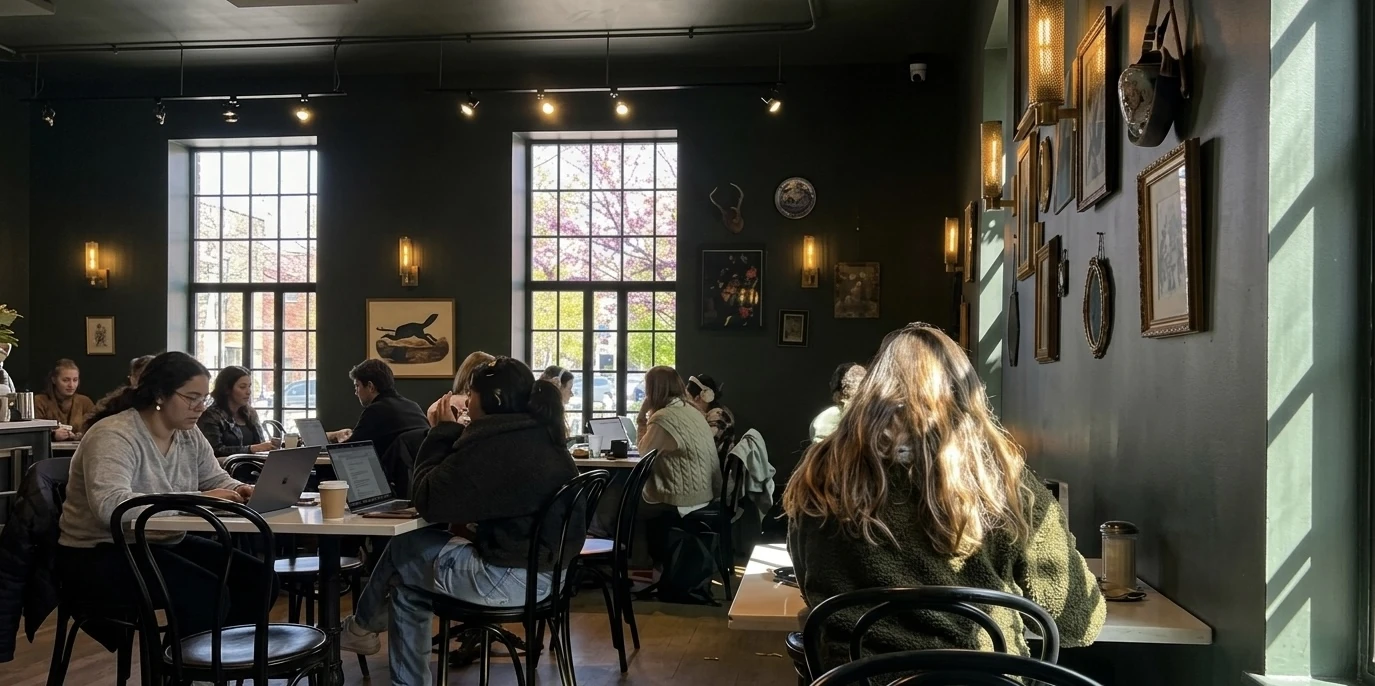
After observing a handful of cafés over several afternoons, a pattern emerges. Customers arrive in waves, morning rush, midday lull, late afternoon return, but unlike traditional cafés, the room never fully resets. There are always a few people who have been there for hours, anchored to their seats, moving slowly through time.
These cafés are not trying to engineer connection so much as make room for it.
That continuity changes the atmosphere. It makes the space feel less like a waypoint and more like a shared environment, something closer to a library or a living room than a storefront.
It also introduces a quiet tension.
Longer stays mean fewer turnovers, which in purely economic terms can be difficult to sustain. Café owners acknowledge this, but many frame it as a tradeoff rather than a loss. A room that feels full, even if orders are spaced out, creates its own kind of value. It attracts more people, encourages repeat visits, and builds a sense of familiarity that faster-paced models often lack.
In that sense, the current shift is not just aesthetic, it’s structural.
Chicago’s cafés are recalibrating around three overlapping ideas: duration, comfort and permission. Duration, because the spaces are designed for extended stays. Comfort, because the physical environment supports that duration. Permission, because nothing in the room suggests that staying longer is a problem.
Taken together, those elements redefine what a café visit looks like.
It’s no longer just a stop between destinations. Increasingly, it is the destination itself.
And in a city where so much of daily life is organized around movement, commuting, working, and going out, that subtle shift carries weight. It creates pockets of stillness within a broader urban rhythm, places where time stretches just enough to feel noticeable.
The coffee is still there, of course. But it’s no longer the main event.
What people are really ordering is time, and for once, Chicago’s cafés seem willing to let them have it.
Discover Time Out original video