
[category]
[title]
Part science experiment, part spectacle, the immersive theater production blends neuroscience with a faltering meditation on grief and memory.


Broadway review by Shannon Shreibak
Rating: ★★★ (three stars)
David Byrne has always been a thinking person’s artist, from his early years as the frontman for the art-rock band Talking Heads through his 2021 Broadway concert show, American Utopia, which opened with him holding a plastic model of a brain. In Theater of the Mind, which he co-created with writer Mala Gaonkar, he invites us again to inhabit his head, this time through an interactive, multisensory experience steeped in neuropsychological trickery.
When you arrive at the Reid Murdoch Building, a sterile office block in the heart of the Loop, you are ushered into a waiting lounge awash in vibrant colors and East Asian–inspired banners. Entrance times are staggered, with groups of about 15 people moving together through the rooms to come. When it’s your group’s turn, your primary guide, dressed in a utilitarian jumpsuit, leads you to a stark white chamber lined with doors and lit by cold fluorescent rods. (It’s very severely Severance, sometimes to the point of parody.)
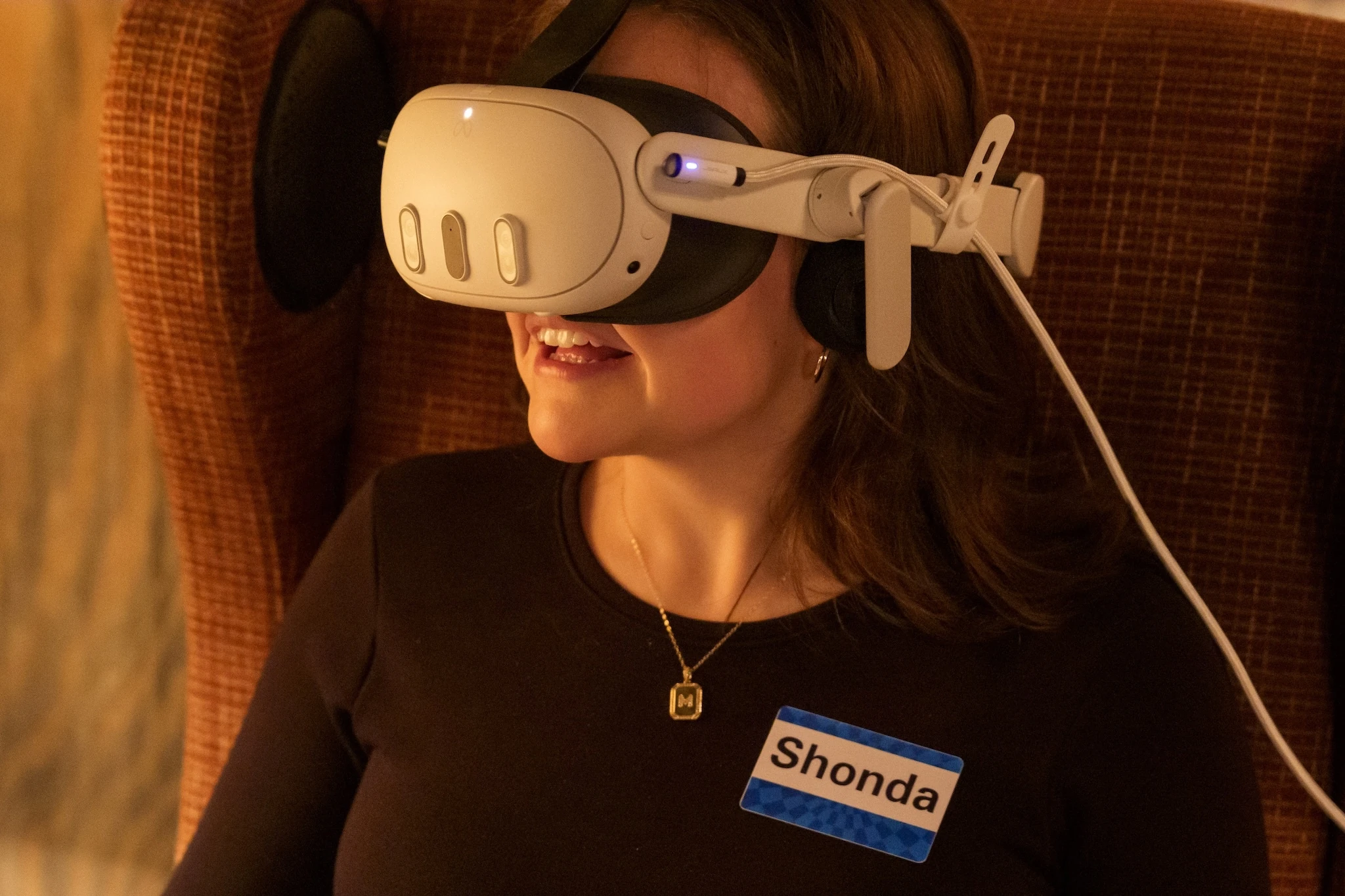
The guide wheels out a miniature model house; the roof lifts, and inside are magnetic nametags for group members to wear as you stand in for Byrne’s friends in the show’s first scene: his funeral. From there, an actor playing Byrne narrates your tour through a 75-minute “memory palace” of episodes from his life, traveling backward in time through multiple rooms and passageways of a 15,000-square-foot complex that has been transformed (by the veteran scenic designer Neil Patel) to evoke formative spaces in David’s life, from a discotheque to the backyard of his childhood home.
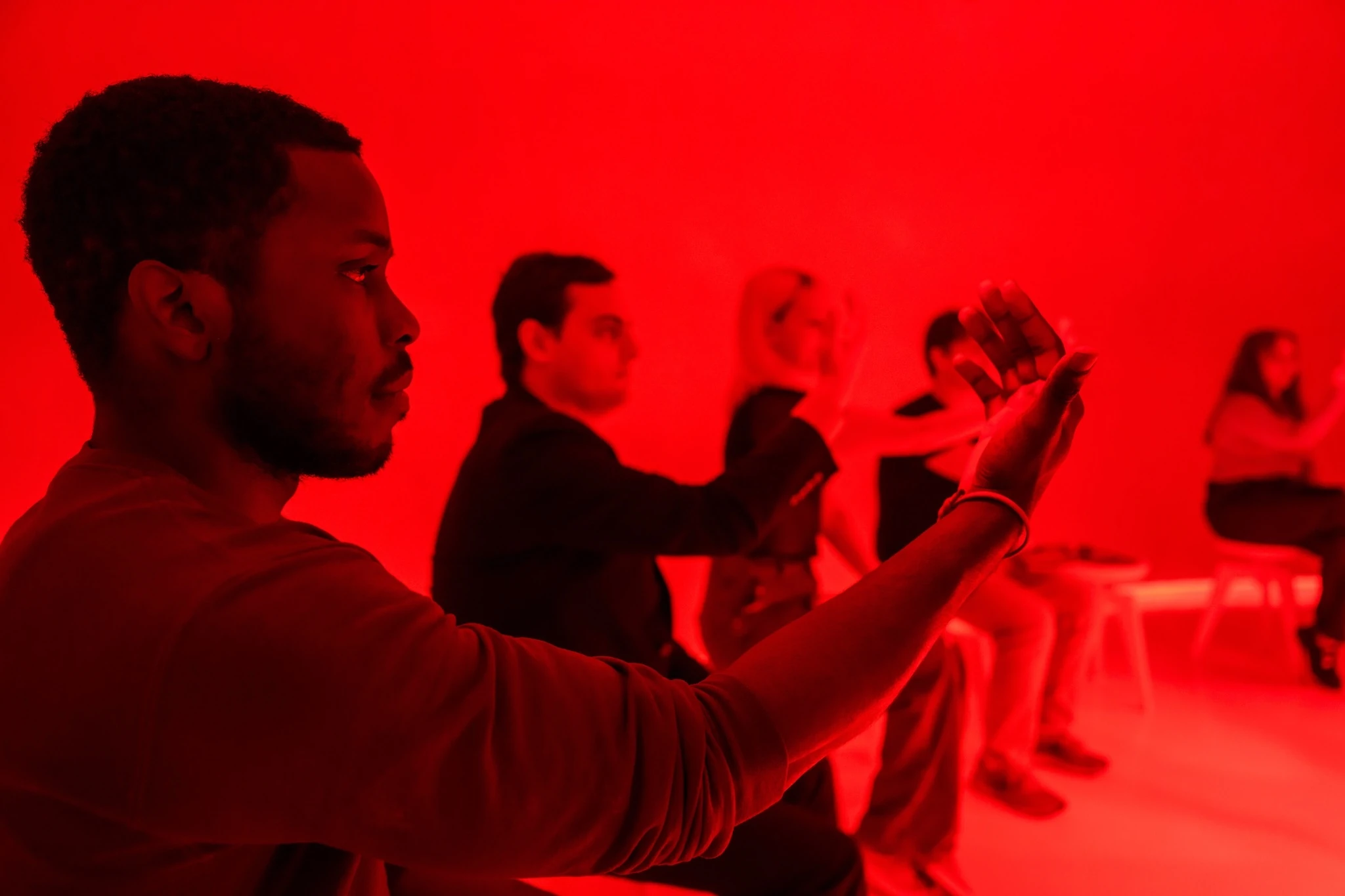
At each step of the journey, you are coaxed into participating in mind-bending, sense-teasing vignettes, experiments and optical illusions that underscore the mutability of perception. In a dance-club space, you are handed a miracle-berry cube, then instructed to suck on a lemon wedge; the citric sourness of the lemon transforms on the tongue, blooming into sweetness. In another room, you don VR goggles to assume the perspective of David as a boy—in a smaller body, from a lower vantage point—and find yourself dwarfed by the world.
This destabilization of the senses also entails questioning the judgments we base on them. As we traverse the corridors of his past, David also wrestles with the fragility of memory. Did his mother truly abandon him each night, or was she upstairs, painting, trying to preserve a piece of herself? Why did he and the love of his life really fall apart? If we are no one without our memories, but our memories are unreliable, then who do we think are we?
Audience participation is a central element of the show, which can be exhilarating but also sometimes awkward; the instructions are sometimes muddled, and the responses of the group can affect the narrative in ways that don’t always cohere. Ultimately, your enjoyment of Theater of the Mind may hinge on the group you’re there with—and on your own state of mind. I arrived solo, tired from a long week and a late start time, and found the demands of participation more draining than transporting. A group of college-age attendees, by contrast, seemed buoyed by boundless energy and had a blast. Like memory itself, perhaps, Theater of the Mind is a slippery and subjective experience: shaped as much by what you bring to it as by what it gives.
Discover Time Out original video