
[category]
[title]
Seasonality, taproom culture and homegrown brewing techniques are taking Japanese craft beer to intoxicating new heights


Japan’s craft beer scene is evolving faster than ever. New breweries, brewpubs, taprooms and festivals are popping up across the country, pouring inventive beers blending international styles with Japanese sensibilities. What’s emerging is not just a trend, but a maturing culture – one that’s confident, collaborative, and unmistakably Japanese.
Drinkers are discovering Belgian wits laced with yuzu and sansho, sakura-infused gose (sour beer) and even shiitake porters; brewpubs and taprooms are flourishing; seasonal ingredients are giving beers a distinctly local flavour; and traditional Japanese brewing techniques are being reimagined with new intentions.
To hear how the scene is evolving, we caught up with some of the country’s most exciting breweries, as well as those who were pouring beers at this year’s biggest festivals, from Fuji Rock to Shimokita Craft Beer Fest, to hear why right now is such an exciting time to be a craft beer lover in Japan.
If craft beer has a heartbeat in Japan, it’s seasonal. The appeal of limited editions – driven by wintery, springtime, summery and autumnal novelty, not to mention social media – keeps drinkers curious and breweries constantly innovating.
‘Beer geeks are constantly seeking new stimuli,’ says Kyoto Brewing Company’s (KBC) sales manager Haruka Tsubakino. KBC runs a popular ‘Whimsical Series’ composed of four IPAs designed to reflect the mood of each season: a classic American IPA for spring, an eminently drinkable session IPA for summer, a malty red IPA for autumn and a white IPA for winter.
Look at the rest of KBC’s beers and you’ll find no shortage of Japanese inspiration. From a Belgian wit brewed with yuzu and sansho pepper instead of the usual orange peel and coriander, to a Tripel with jasmine and hassaku orange, KBC’s beers are a perfect example of how Japanese brewers are remixing traditions with local ingredients.
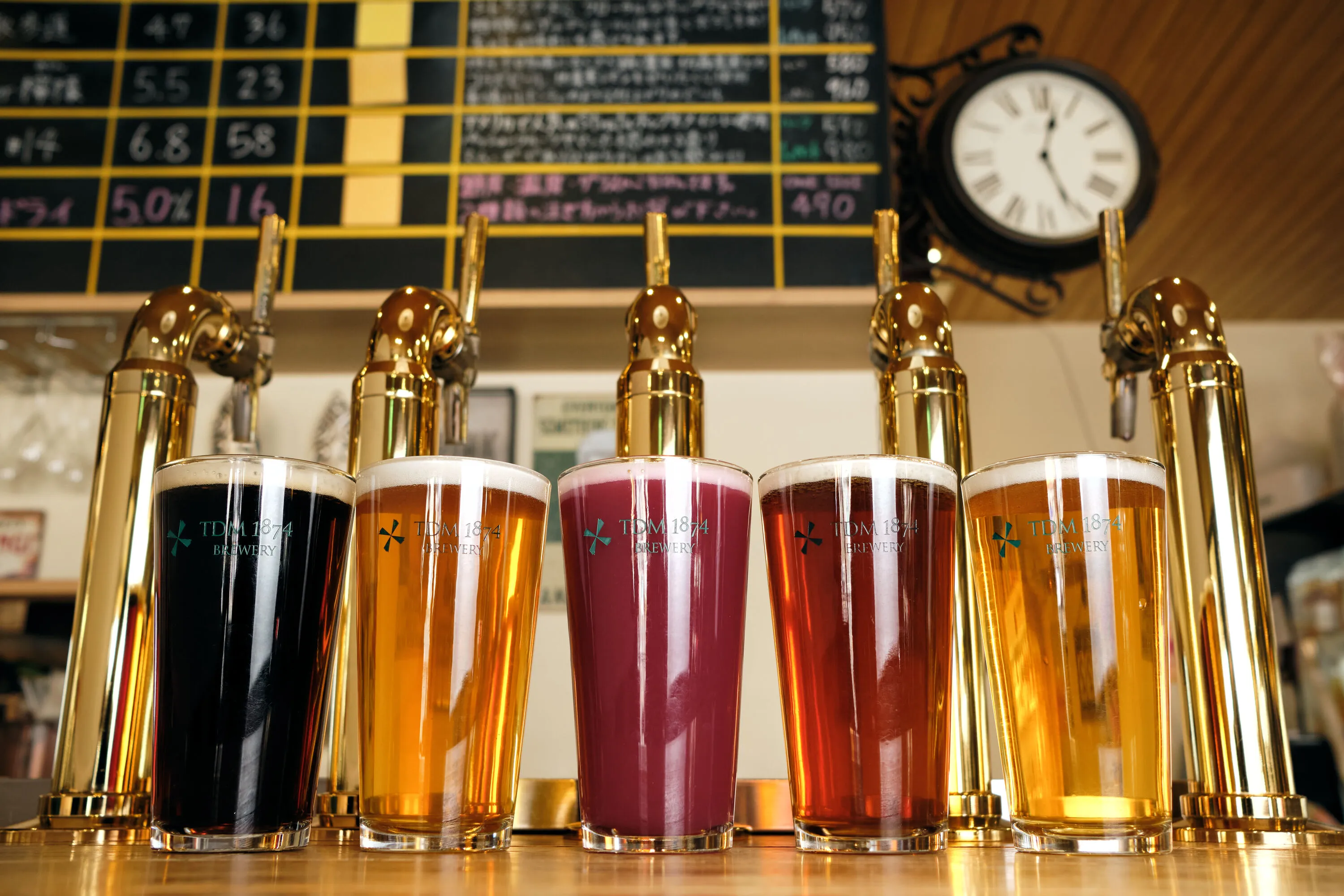
At TDM 1874 Brewery in Yokohama, seasonal experiments are equally central. Their collaborations with local farmers have yielded beers infused with Shonan Gold citrus, nashi pears and a rotation of teas from Kanagawa. This autumn, their hojicha-infused ale pairs Japan’s favourite autumn tea with the malty richness of a dark beer. ‘Novelty is important in craft beer, especially in the social media age,’ says Misuzu Ishida, director of TDM 1874.
For Chiba-based Kaigan Brewery, seasonality also means sustainability. By using imperfect produce that might otherwise go to waste, they have brewed beers with a host of native fruits and even shiitake mushrooms. The result is a portfolio that constantly rotates, driven by whatever is fresh and available.
Jokun Brewing Lab from Niigata views seasonal releases as a way to strengthen community ties. ‘Brewing a seasonal beer for the local community deepens relationships and helps promote the region,’ says founder Keita Higuchi, who started off the summer serving his craft beer to thousands at Fuji Rock.
From Japan’s sweetest fruit to its most surprising vegetables, seasonal ingredients are giving Japanese beer a sense of time and place. The excitement lies in how each new season brings the chance to taste something fleeting – an ever-changing snapshot of the country in a glass.
One of the strongest trends shaping Japan’s craft beer scene is the rise of brewpubs and destination taprooms that double as social hubs. These spaces both bring people together and showcase each brewery’s constantly rotating creations, giving visitors a front-row seat to Japan’s most inventive beers.
Even international brands have cottoned on. Mikkeller started out as a ‘gypsy’ brewery in Copenhagen, creating beers without owning a brewery of its own, but quickly became one of the first craft beer brands to go truly international. In a clear sign of the international appeal of Japan’s craft beer culture, at the end of last year, Mikkeller expanded to Kyoto, opening a second Japan location to add to their Tokyo taproom.
For small and mid-sized breweries, taprooms and brewpubs aren’t just a place to drink; they’re a vital showcase for a brewery’s character. ‘The taproom is a core pillar of our business,’ says TDM 1874’s Misuzu Ishida.
Tokyo Aleworks head brewer Randy Carncross agrees, and stresses that taprooms and brewpubs succeed because they stand apart from izakaya. ‘The trend is moving away from beer bars and more towards brewery taprooms,’ he says. ‘Taprooms do better when they create a distinct, international feel.’
Kaigan Brewery is on the same track. This year saw them open a new location in Tokyo’s Aobadai to add to their popular taproom in Shimokitazawa. Similarly, Shizuoka’s West Coast Brewing, an established heavyweight in the Kanto craft beer scene, has gone from strength to strength and now boasts 11 locations. This summer alone they opened two more outlets in Tokyo, adding to a brewery in Shizuoka and spots all the way from Osaka to Okinawa.
What makes this trend so exciting is how it connects drinkers directly to the source. Taprooms are blurring the line between brewer and customer, turning beer into a community experience and giving Japan’s beer scene a stronger social heartbeat.
Alongside taprooms and seasonality, Japanese craft beer is increasingly defined by its experiments with the country’s traditional brewing methods and local craftsmanship. And it’s Japan’s longest standing alcoholic tradition, sake, that is proving an inspiring challenge to beer brewers.
Sake yeast behaves differently from beer yeast; it can easily contaminate other batches, ferment sugars in unexpected ways, and produce off-flavours if conditions aren’t perfect. But that hasn’t stopped some bold breweries from finding ways to update the centuries-old tradition.
Jokun Brewing Lab’s Sake Hazy IPA uses lees from 80 sake breweries in Niigata to trigger a secondary fermentation, giving the beer a crisp taste and layering fruity aromatics over hop bitterness. Higuchi, the founder, is also experimenting with sake lees in higher-strength styles such as triple IPAs, aiming to merge Japan’s sake traditions with modern beer culture.
Kyoto Brewing Company has explored similar territory with tea. Their sencha saison, brewed in collaboration with a local tea producer, involved meticulous testing of steeping methods to balance the beer with the flavour of three different teas.
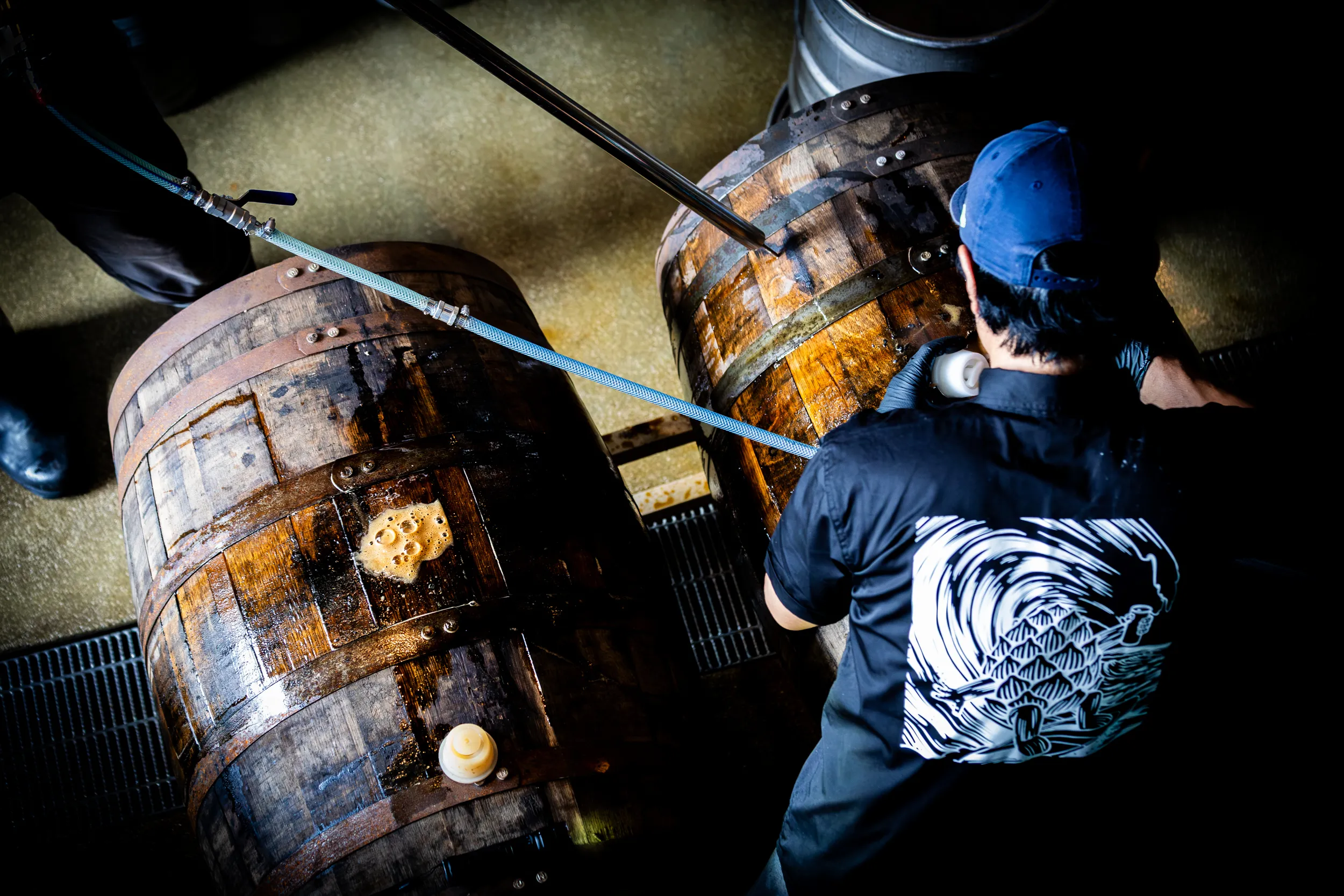
Kaigan Brewery is taking a different path, experimenting with ageing in sake casks. A twist on the barrel-ageing method, long used in Belgium for lambics, it allows beer to absorb complex flavours from the wood and residual spirits, layering vanilla, oak and subtle sake notes.
It’s this spirit of experimentation – bridging centuries of tradition and turning it into fuel for innovation – that makes this moment so exciting. Japan’s brewers are rewriting the rules of beer, one barrel, one yeast strain, and one idea at a time.
Uniting Japan’s craft beer scene is an appreciation of quality. As Randy Carncross from Tokyo Aleworks puts it, ‘The most important part to recognise is how much the quality level is coming up from where it was ten years ago. Domestic breweries now hold their own next to the greats from the US.’
And sure enough, Japan’s craft breweries have an embarrassment of riches when it comes to awards. Dozens of Japanese breweries took home prizes for their brews when this year’s winners of the World Beer Awards were announced in August.
As more in the industry find ways to incorporate local practices, Japanese brewing is carving a distinctive identity that reflects both legacy and innovation. Heritage buildings have been reborn as brewpubs, farmers are seeing their produce celebrated in glasses, and brewers are finding that Japan is a place to push the boundaries of beer.
For drinkers, all this is of course thrilling. The next time you visit a Tokyo taproom or a Kyoto brewpub, ask what’s on rotation. You might just find the season, the story, and the soul of Japan in your glass.
More from Time Out Tokyo
The first issue of Time Out Japan is out now: Culinary school
The amazing illuminations at Ashikaga Flower Park are here until February 2026
Winter music festival Snow Machine to return to Hakuba in March 2026
A new burger joint from the team behind I’m Donut? has opened in Shibuya
Here's the official 2025 forecast for autumn leaves in Japan – updated
Want to be the first to know what’s cool in Tokyo? Sign up to our newsletter for the latest updates from Tokyo and Japan.
Discover Time Out original video