

[image]
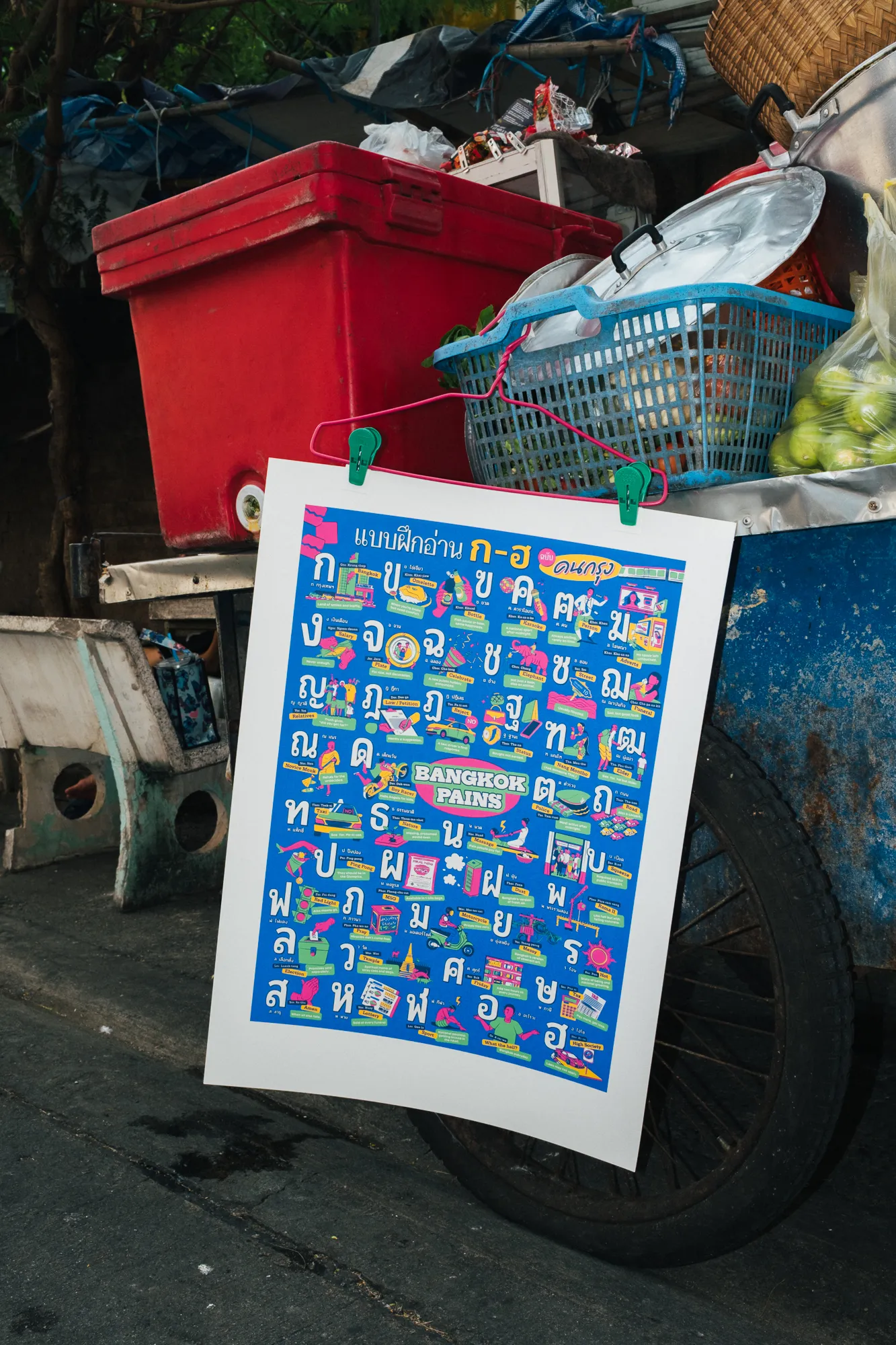
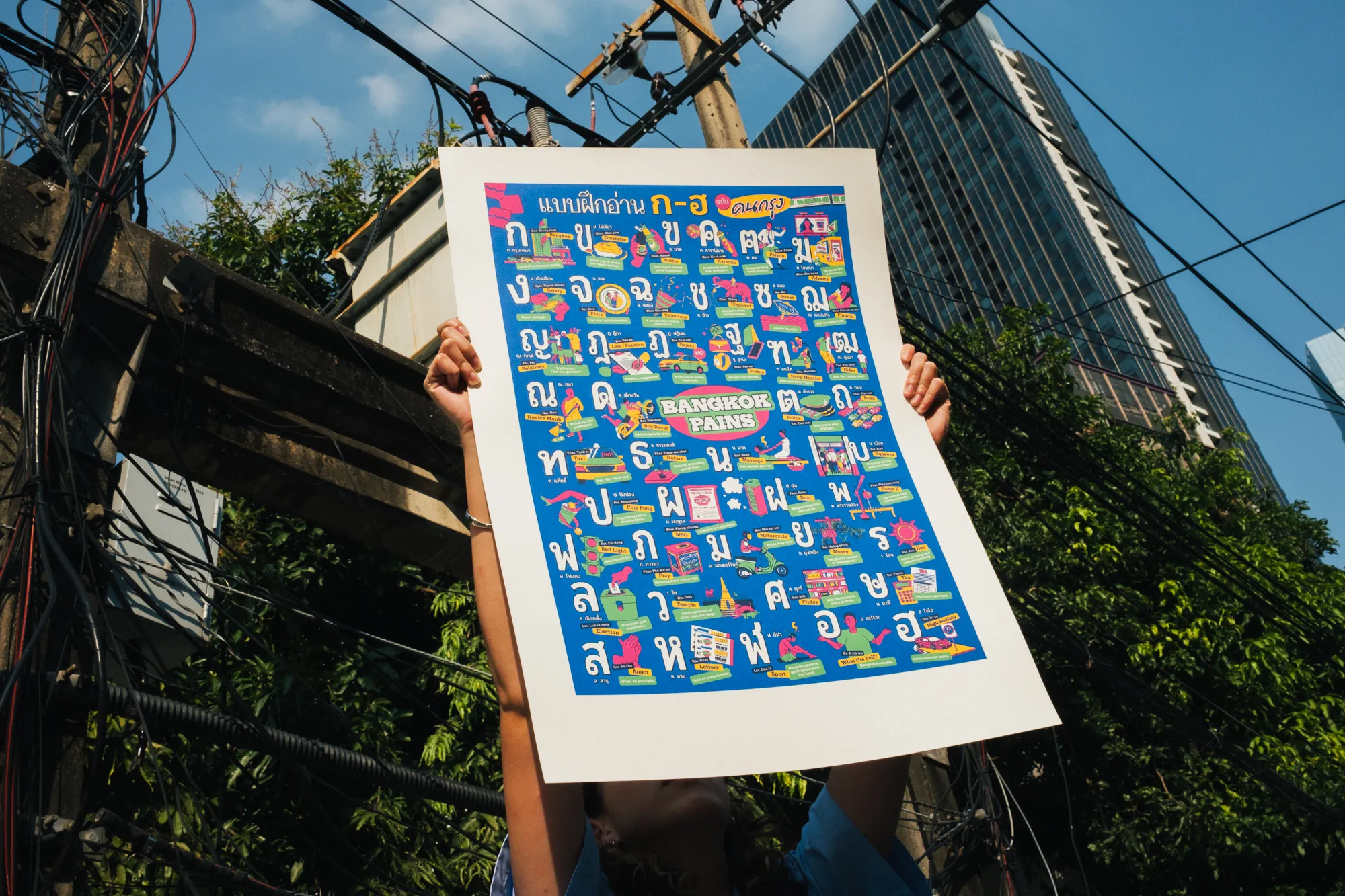
[title]Coming back to poke Bangkok where it already aches is perhaps not how most creative projects like to announce themselves. Yet that is precisely how Bangkok Pains feels when it returns, slightly smug, knowingly sharp and irritatingly accurate. Invisible Ink, the Creative Agency behind last year’s Bangkok Pains board game, is back with another affectionate assault: Bangkok Pains – The Alphabet Poster. It scratches the same itch as its predecessor, the kind that only appears after years of living here, when affection and exhaustion start sharing the same sentence.
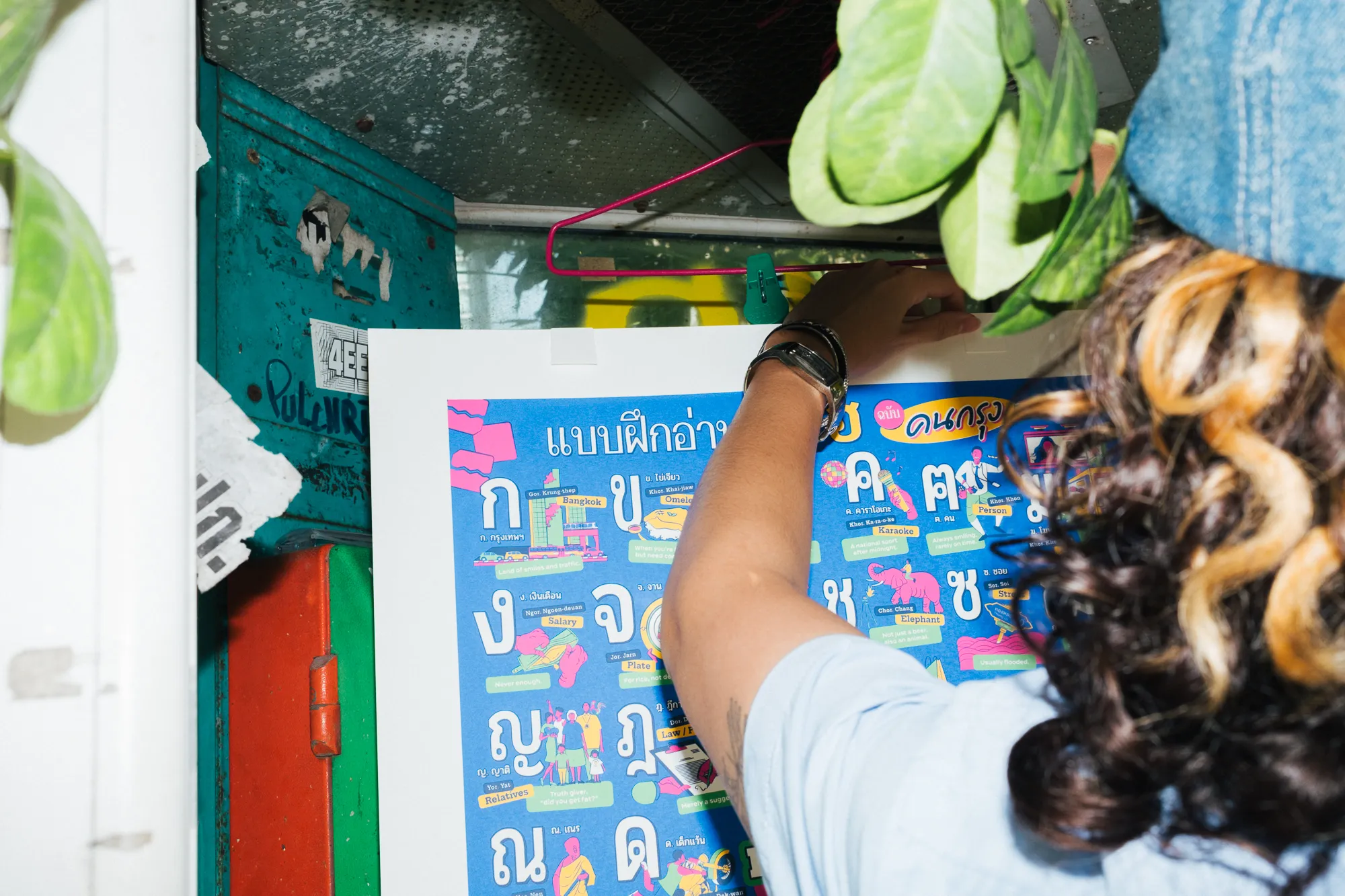
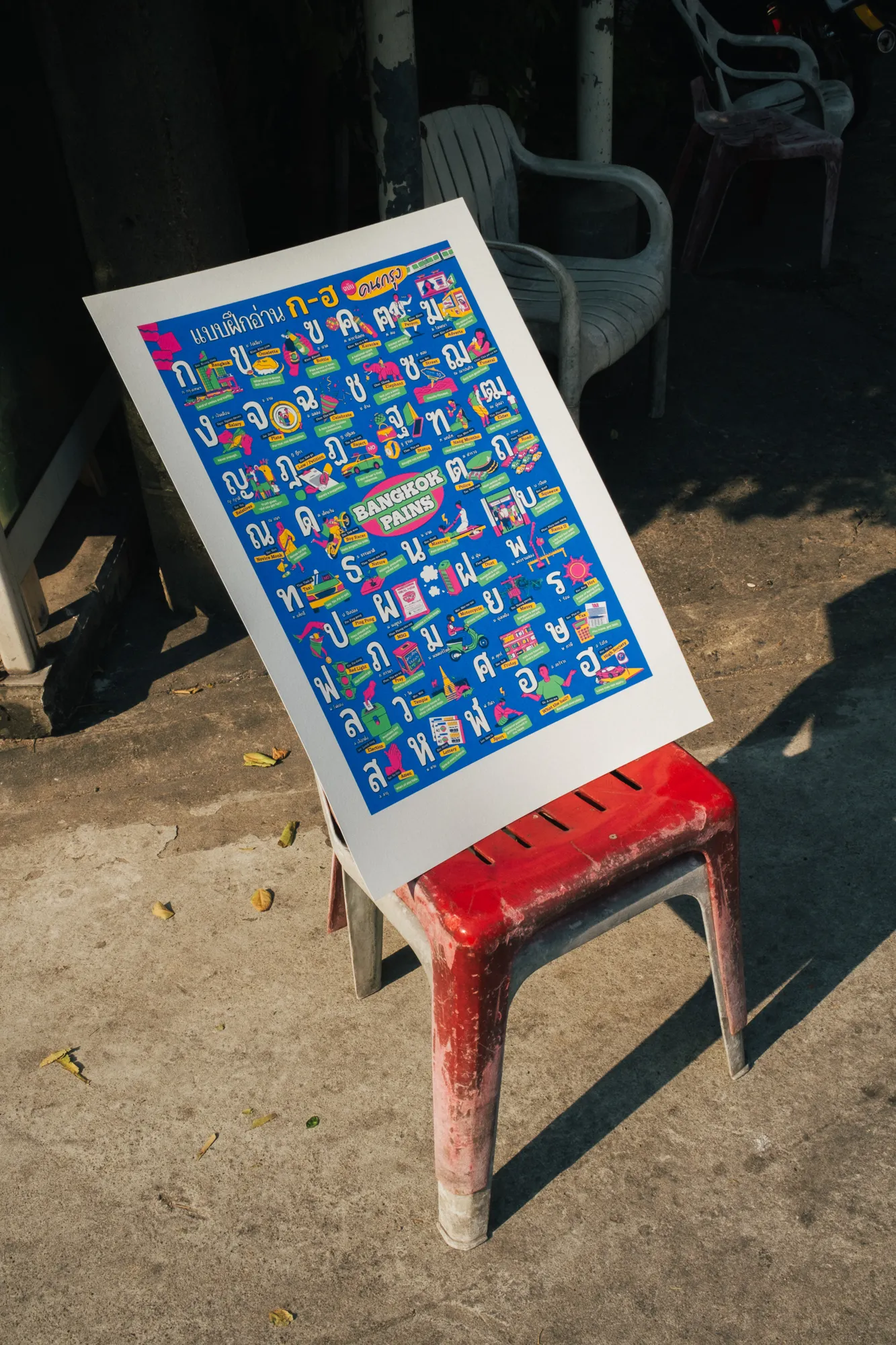
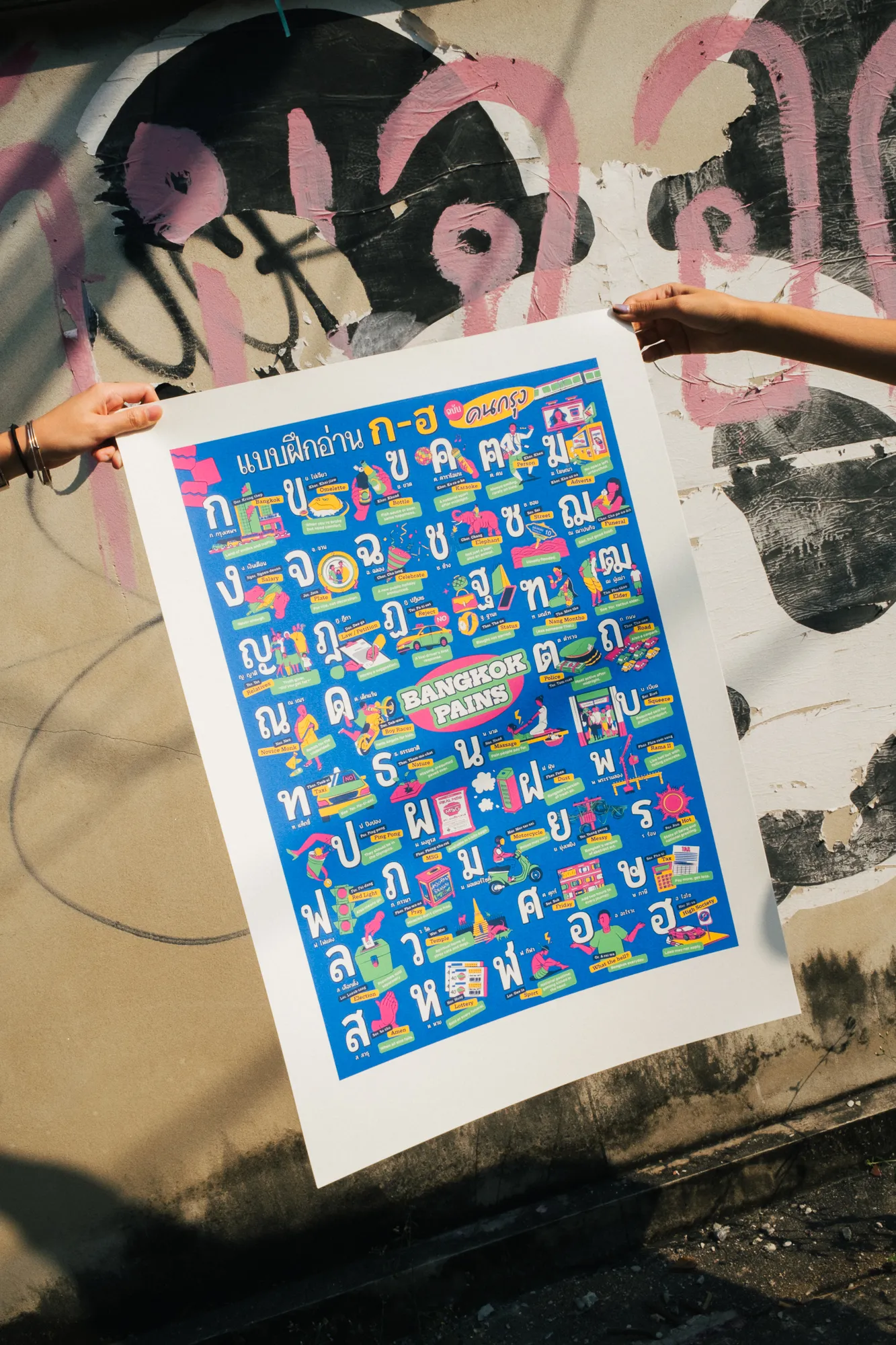
This time the medium is deceptively gentle. A Kor Kai to Hor Nok Hook alphabet practice sheet, the kind that once hovered above childhood desks, learning corners and dusty classroom walls. The familiar cadence of Thai consonants is still there, but the meaning has been quietly rerouted. Gor Gai has left the coop. Hor Nok Hook has flown off somewhere quieter. In their place come readings written by the city itself, spelling out daily irritations with the precision of someone who has been stuck at Asoke junction long enough to observe everything else happening around them.
View this post on Instagram
I approach the poster with the particular defensiveness of someone who has lived in Bangkok long enough to recognise themselves in the joke. Some letters make me laugh out loud. Others make me stare for a moment longer than expected. It is funny, yes, but not in the way a punchline is funny. It is funny in the way shared discomfort becomes bearable once named. Invisible Ink understands that instinct well. Their work has always taken lived experience, polished it just enough and handed it back, asking us to read it aloud.
It is about learning Bangkok letter by letter, about irritation as a creative tool and about why this city, even at its most draining, still insists on being home.
No such thing as an ordinary Tuesday
Before Bangkok Pains became a poster, a board game or a shared language of complaint, I wanted to know what Bangkok felt like to them on an ordinary Tuesday. The answer arrives quickly, and predictably, rejects the premise altogether.
There is no such thing as routine here. Even the act of leaving the house feels slightly improvisational. They describe moments that could barely exist elsewhere: a king-size mattress balanced heroically on the back of a motorcycle, a woman selling fruit from a pickup that passes their office every day, familiar yet still faintly surreal. Bangkok rewards attention. Miss a day and you miss a story.
That unpredictability is not merely tolerated but central to the city’s appeal. ‘There are no ordinary Tuesdays in Bangkok,’ they add. ‘Every day brings something unexpected, good and bad.’ It is the quality that people both complain about and quietly defend. The thing you curse while stuck in traffic, then miss the moment you leave.
I recognise this instinct immediately. There are days when Bangkok feels like it is actively testing you, stacking minor inconveniences until patience becomes a scarce resource. Yet there are also days when the city compensates generously, with a perfectly timed meal, an accidental conversation or a moment of collective absurdity that reminds you why you stayed.
Invisible Ink’s work lives in that tension. Rather than smoothing the city into something aspirational, they let the edges show. Irritation is not something to escape but something to observe, catalogue and occasionally laugh at. That sensibility underpins everything that follows.
When irritation becomes a shared language
Invisible Ink have always had a knack for turning lived experience into sharp ideas. I ask when everyday irritation stopped being something to endure and became a creative resource. Their response is blunt and revealing.
‘We draw upon experiences for much of our creative work,’ they explain. ‘Shared negative experiences unite people as much as, if not more than, positive experiences. Rather than get angry, we’d rather highlight the negative issues.’
It is an approach that feels particularly suited to Bangkok, where complaints are often communal, exchanged casually with strangers while waiting, sweating or negotiating small delays. Humour becomes a survival skill.
“You have to have a sense of humour to live in Bangkok.”
‘There’s plenty to get angry or frustrated about and if you can’t find the funny or joyous ridiculousness in it, it could become a pretty overwhelming place to live.’
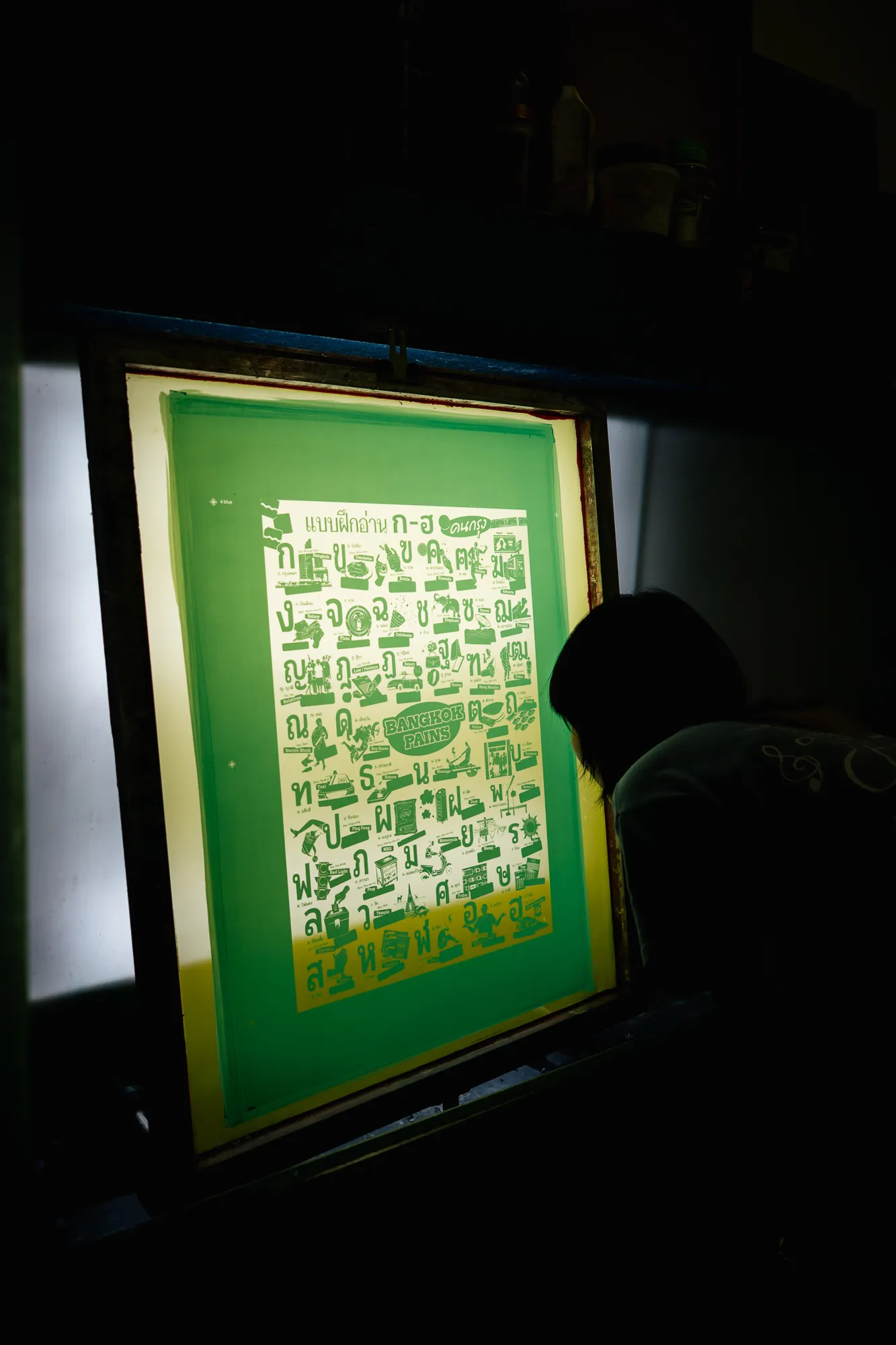
Bangkok Pains began as social media posts, small observations that found immediate recognition. Those posts evolved into a board game, which then made space for the alphabet poster. Each iteration expands the same idea, offering new formats through which irritation can be shared. The choice of the alphabet feels particularly loaded. Memorising all 44 Thai consonants is already a challenge. To layer frustration on top of that difficulty feels almost mischievous.
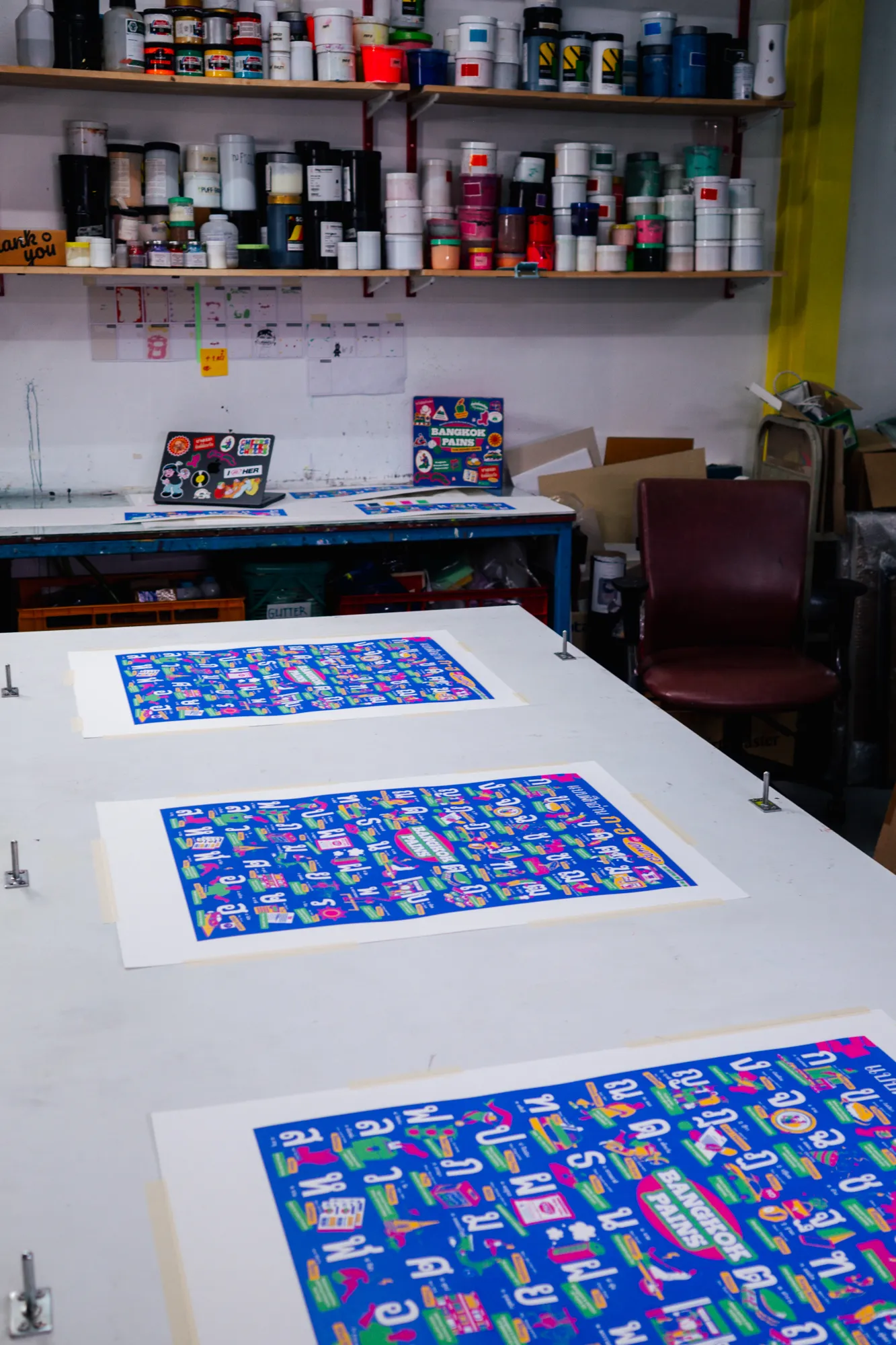
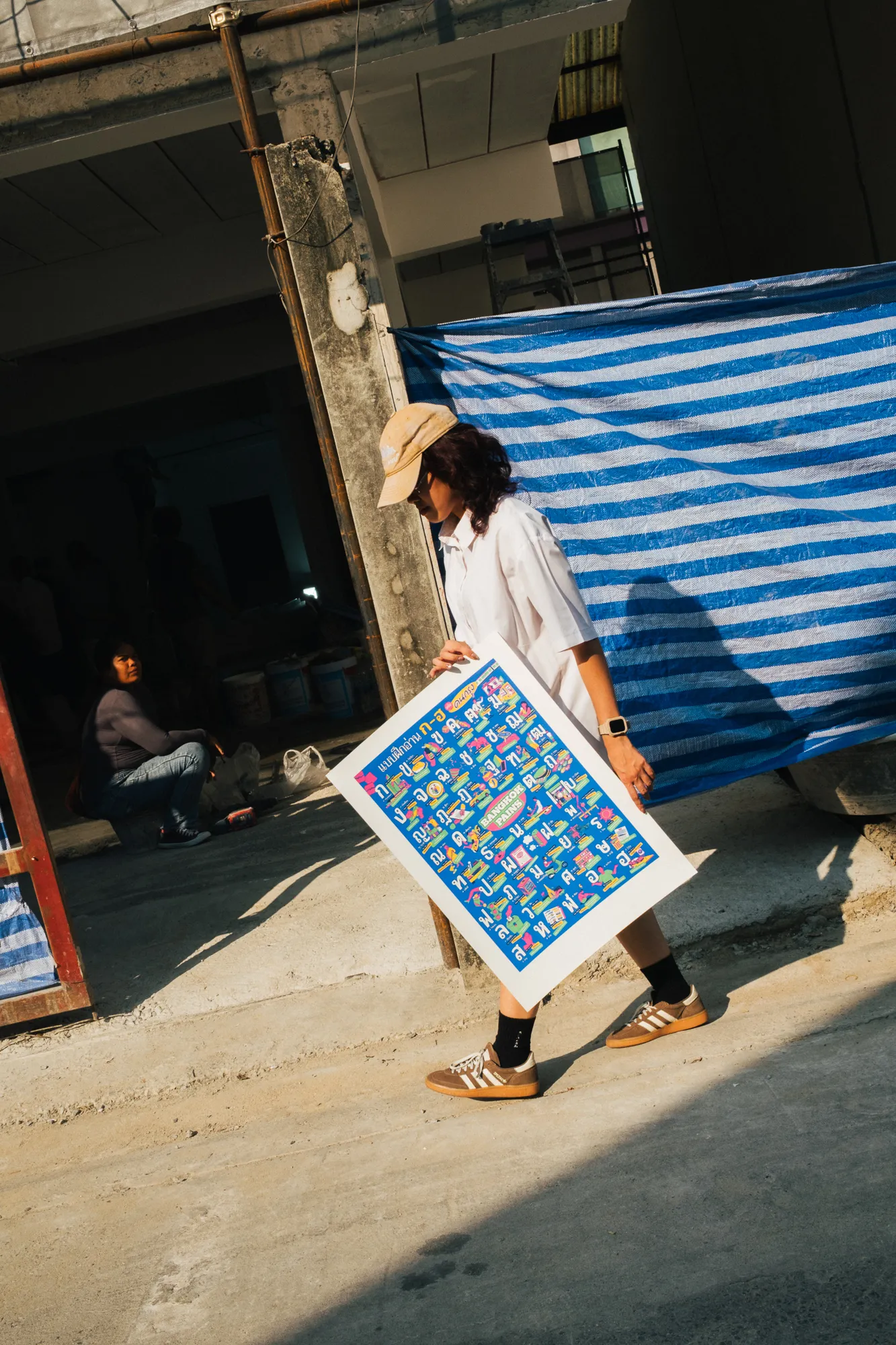
‘Our goal with the poster was less about finding more ways to make more Bangkok Pains products,’ they insist, ‘and more about creating a piece of artwork that was functional, had a purpose and hopefully made you smile while you tried to remember all those letters.’
That balance between function and commentary matters. The poster is not merely decorative. It invites participation, asks to be read aloud, demands engagement. In doing so, it turns individual annoyance into something collectively legible.
Alphabetising the city
Why the alphabet, specifically? Why organise discomfort A to Z when a slogan or campaign might be simpler? The answer circles back to familiarity. The Kor Kai to Hor Nok Hook poster is one of the first visual systems many Thai people encounter. Rewriting it feels both playful and subversive.
‘Bangkok Pains began with social media posts focused on individual topics which led to the board game,’ they explain.
From the board game, we plan to continue exploring and expanding the theme.
The alphabet offered structure without flattening complexity. Each consonant got a story, or a joke, or something that just sits there hurting quietly.
Some letters are funny. Others cut. Ngor Ngoo, snake is now Ngor Ngern Duan, salary, with its parenthetical reminder ‘never enough’, feels painfully specific. Or Thor Taharn, soldier is now Thor Taxi conjures an entire emotional arc in a single syllable. And For Fun, teeth is now For Foon, PM2.5, dust, floats somewhere between satire and resignation.
Deciding where the joke ends and the truth begins was a collective process.
The truth hurts but laughter is the best medicine so we definitely tried to sugar coat things
The team shares a reasonably dark sense of humour, but diversity within the agency meant constant negotiation. ‘With a pretty diverse team it meant the final selection was made collectively,’ they say. ‘We left a lot on the cutting room floor but hopefully it’s brought balance.’
Some topics hovered dangerously close to the line. ‘There are a few topics in Thailand that are off limits if you know what we mean,’ they write, laughing digitally. The rule of thumb was simple: if the press can get away with it, it’s fair game. Staying close to the edge without tipping over requires restraint, something the poster demonstrates quietly.
Reading them out loud feels weird. Confessional, almost. Like admitting something you'd been pretending not to notice. The city’s frustrations, once named, stop being background noise. ‘Laughter is the entry point,’ they explain, ‘but it’s not the end goal.’ The aim is acknowledgement. Naming something gives it weight, makes it discussable, maybe even changeable.
Playing the city back at itself
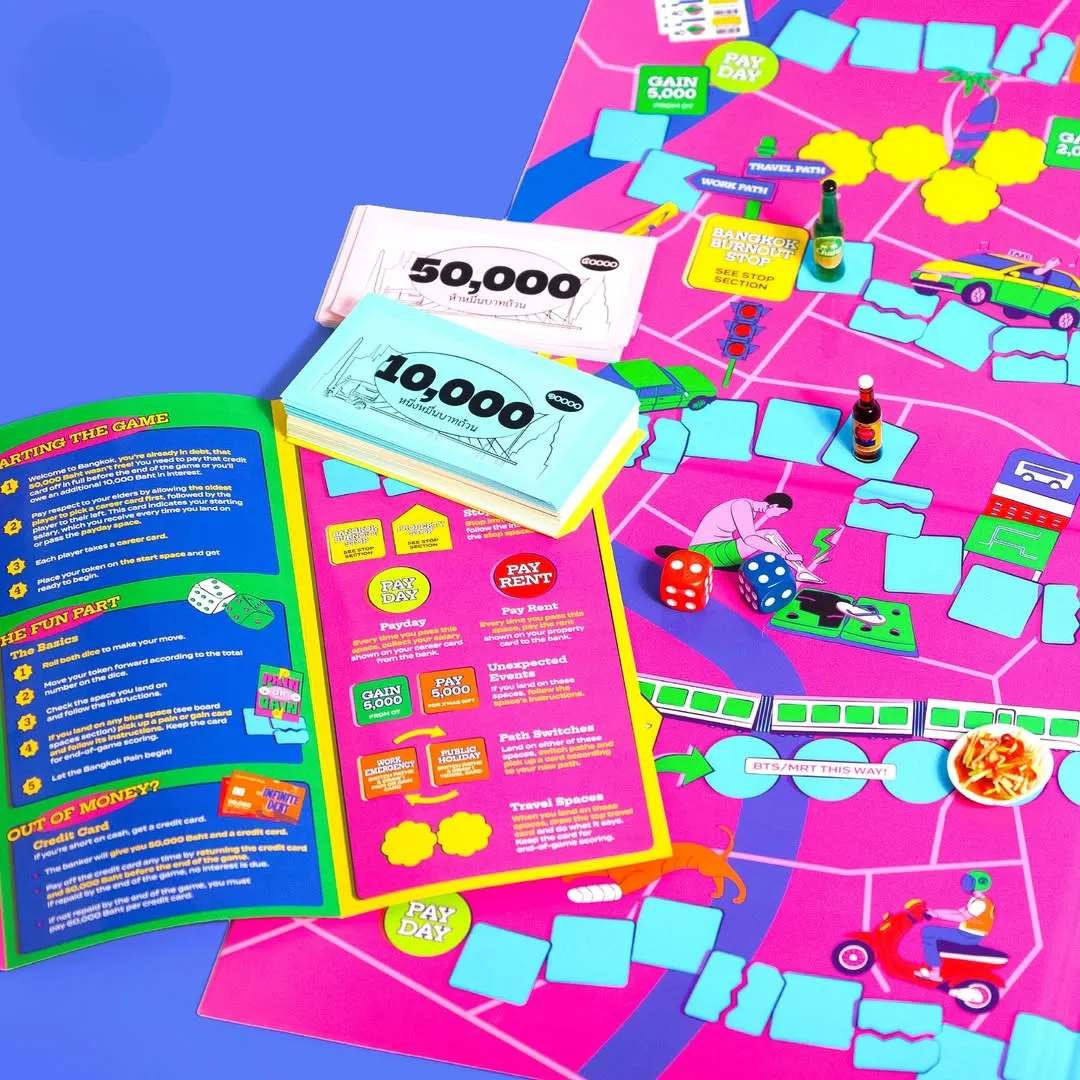
The board game came later, originally as an April Fool’s joke. Too many people asked for it to become real, and Invisible Ink could not resist the challenge. Translating Bangkok’s emotional rhythm into gameplay required precision. ‘Getting the balance right was crucial,’ they recall. ‘Too much gain and the game loses tension. Too much pain and it stops being fun.’
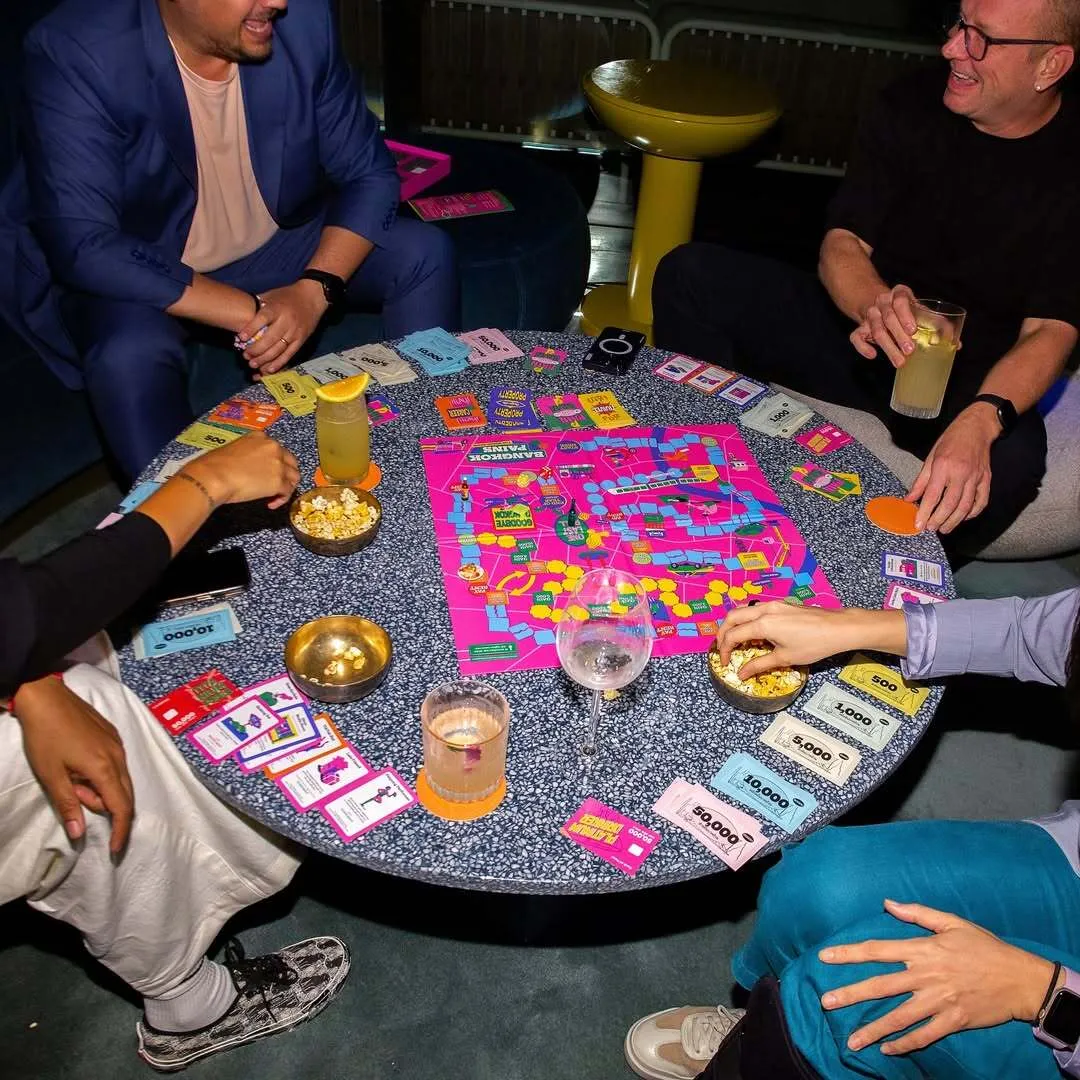
Life here swings wildly. Generous one minute, petty the next. The game does the same, setbacks, small wins, and you just keep moving because what else are you going to do? Familiar objects anchor the experience. Fish sauce bottles, small plastic chairs, things you recognise before you even roll the dice.
We wanted the game to be an authentic tribute to our city, the details matter.
The 80 cards draw from personal experience, overheard stories and shared memory. Everyone has lived some version of these moments. Even those new to the city feel their weight quickly. The feedback surprised them. People bought the game and carried it back to other parts of Asia or Europe. Some asked for versions set elsewhere. Bangkok Pains, it seems, travels well.
I ask whether working so closely with the city’s frustrations has changed how they move through it. The answer is unexpectedly calm. ‘No, not really,’ they say. What has changed is perspective. Collaborating with organisations focused on climate action and social change on other projects revealed how many people care deeply about Bangkok, pushing for improvement quietly and persistently.
Avoiding cliche remains central. ‘Simply by creating something we would want to see, read and play,’ they say. Bangkok is too often reduced to surfaces. Invisible Ink wanted to speak to those who live through the discomfort, not skim it.
Why it still feels like home
Personal projects carry risk. The scariest decision, they admit, was producing the board game at all. Time, energy and resources disappeared quickly. Ideas multiplied. Suddenly there was copy to write, illustrations to finish, even a jingle recorded with traditional musicians. Everyone in the agency became involved. When the first batch sold out in 24 hours, relief arrived alongside pride.
Collaboration, patience and letting go of control are lessons Bangkok teaches regardless. ‘Nothing teaches you patience quite like Bangkok,’ they say. Struggling against the same problems only leaves you stuck longer. Adaptation becomes instinctive.
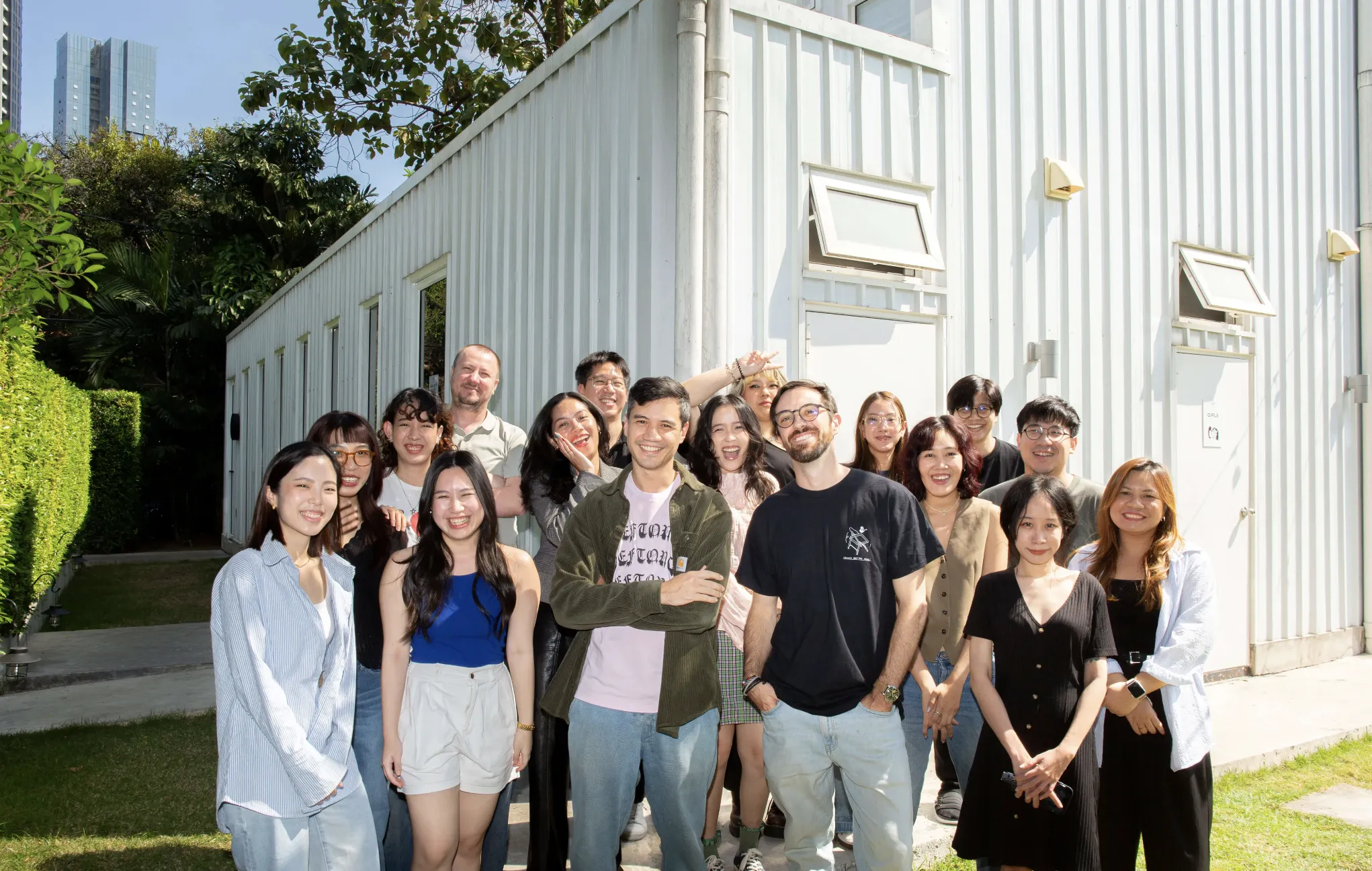
Relevance, in such a fast-moving creative scene, is not something they chase. Bangkok’s creative community is strong, crowded with talent. Standing out requires honesty rather than strategy. Invisible Ink approach their 14th anniversary not by chasing trends but by reinforcing a reputation for adventurous work.
If someone new played the board game before ever living here, they would receive what the team calls a baptism of fire. It would make more sense with Bangkokians nearby, offering context, filling in gaps. Yet many themes resonate elsewhere. Urban frustration, after all, is not unique.
I end where I began, asking what reminds them, on the most exhausting days, that Bangkok is still home. The answer is simple.
That sabai feeling, easy-going people, food that never disappoints, a sense of comfort that persists even when energy runs low.
As I sit with the alphabet poster again, reading letters I thought I knew, I realise that Bangkok Pains works because it refuses to sentimentalise discomfort or dramatise it unnecessarily. It simply notices. In doing so, it gives shape to something many of us feel daily but rarely articulate. The city, spelt out consonant by consonant, becomes readable again.
Maybe that's what makes this work. It doesn't try to fix Bangkok or change it into something else. It just sees the irritations as part of what the city is. To say, gently and with humour, that learning this city never really ends. You just keep reading, out loud, hoping the next letter makes you laugh rather than wince.