

[image]
[title]
This Bangkok story begins where fashion meets faith: with someone distracted by a Buddha stall outside a temple. This time, the distraction became a brand.
Khong founder Sophie Schuemers-Rogers describes herself, without much ceremony, as a ‘straight-A catholic girl’ who skipped class and never got caught. She grew up in Bangkok as the daughter of a gemologist, so gemstones and jewellery-making were always in the background – familiar, but not yet hers. She later moved abroad and settled into a quieter life as a housewife in Switzerland. Oddly enough, that was where she found her calling. Nine years ago, she launched Pacharee, a pearl-led jewellery brand that took off faster than even she expected.
By most measures, that could have been the whole story. It wasn’t.
The stall that changed everything
Then, in 2025, life handed her a rough patch. She’s candid about it without dwelling on the details. ‘My belief was shattered early 2025,’ she says.
‘Personal issues led to self-doubt and I got completely stuck. Nothing inspired me the way it had,and my brain felt clogged.’ Friends took her to a local temple by the river, hoping to help. What was meant to be a moment of reflection became something else when she wandered past a Buddha stall.
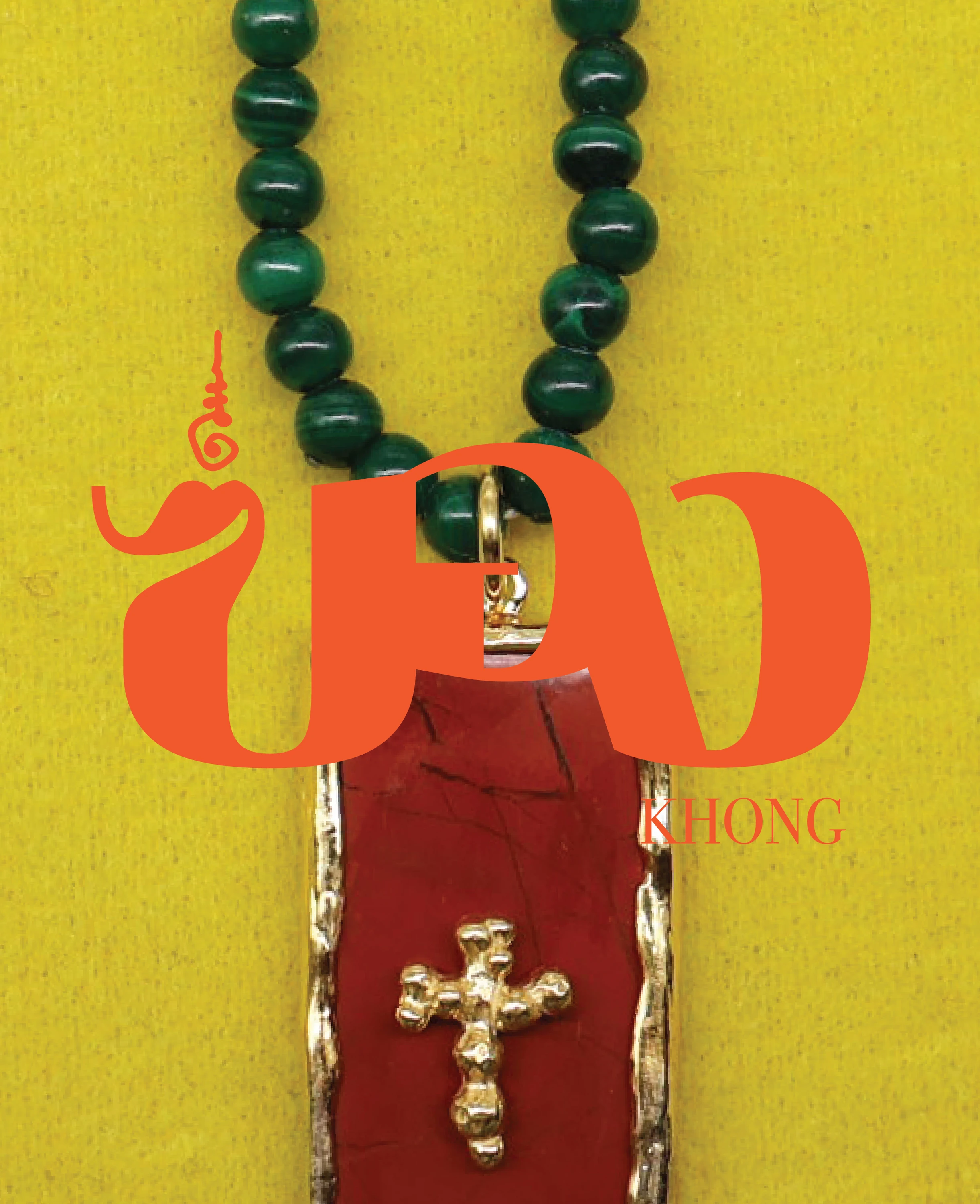
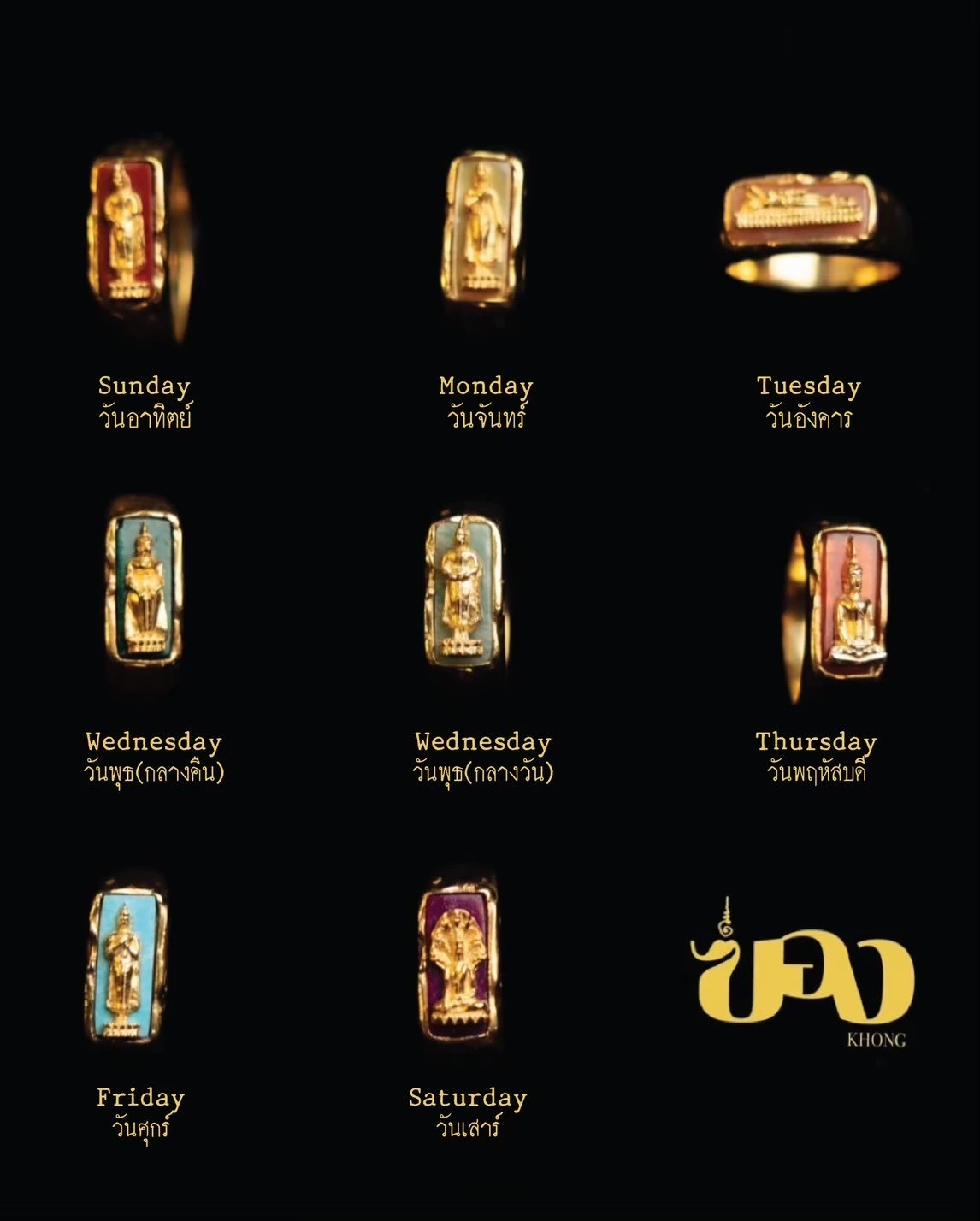
It wasn’t the Buddhas themselves that stopped her, but everything around them: neon-coloured robes, geometric shapes and the chains holding it all together. Her designer’s brain started asking questions, then set a deceptively simple challenge. These pieces already had presence, scale and character; her task was to bring them into everyday rotation without losing what made them special.
What followed was less a slow-burn creative process than a controlled avalanche. ‘I had ideas pouring in non-stop,’ she says. ‘And I had a clear task I’d given myself.’ The name came to her in a minute and the brand identity and logo took an hour. Initial designs followed within two weeks – and Khong had its Bangkok launch at the end of that same fortnight. ‘Everything fell into place like it was meant to be,’ she says. Given the speed of it all, it’s hard to argue.
Confirmation came at the launch, she says, as Bangkok’s creative crowd gathered around the pieces. ‘Their eyes sparked.'’
‘They could not stop trying on different pieces, touching them and studying every detail.’
At that moment, she realised Khong had done more than fill a gap in the market. It had, in her words, ‘resurrected my belief in my ability not only to design, but also to move cultural needles and connect people through belief objects.’
Not a Pacharee side project
It would be easy to assume Khong is simply Pacharee’s edgier younger sibling, but Schuemers-Rogers is quick to correct that. ‘Pacharee never played a role at all from a design point of view,’ she says. What it did provide was infrastructure: nine years of production experience, a trained team and the technical knowledge that made Khong’s rapid arrival possible. ‘All my experience, my production team and technical knowledge made it easier for Khong to exist, if that makes sense.’
The relationship between the brands is not entirely frictionless. Swept up in Khong’s momentum, her team sometimes struggles to switch gears back to Pacharee projects – a nice problem to have, perhaps, but a problem nonetheless.
Aesthetically, the two brands could hardly be further apart, which is rather the point. Pacharee, she says, is ‘quite artistic, but it also feels very pretty and feminine.’ Khong has caught people off guard in a good way, revealing a harder-edged side of her design instincts that Pacharee’s audience had not seen before.
White magic, mostly
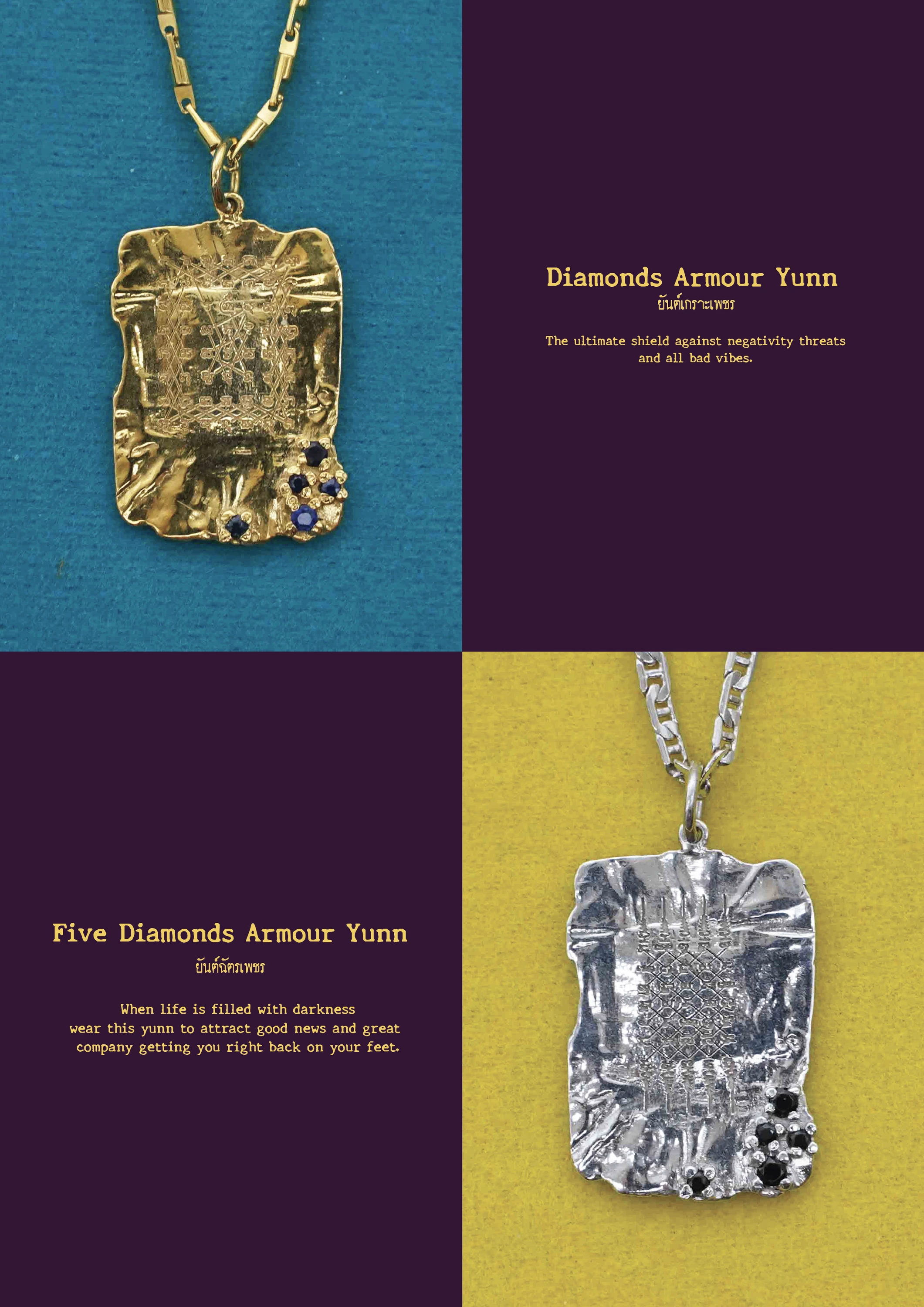
Amulets are not a neutral subject in Thailand. There is a long-running tension between black and white magic, and Khong planted its flag early.
‘I knew from day one we would be about white magic,’
she says.
‘Feel-good jewellery that makes the wearer feel confident and protected, while still being fun to wear.’
From the outset, she has worked with reputable temples on sourcing and blessings, following each ritual precisely. Nor is she naive about how the business might look from the outside.
‘I’m very sensitive to the criticism that may arise around commercialising beliefs,’ she admits, though she credits the reputation she built with Pacharee with earning her some grace from a discerning audience.
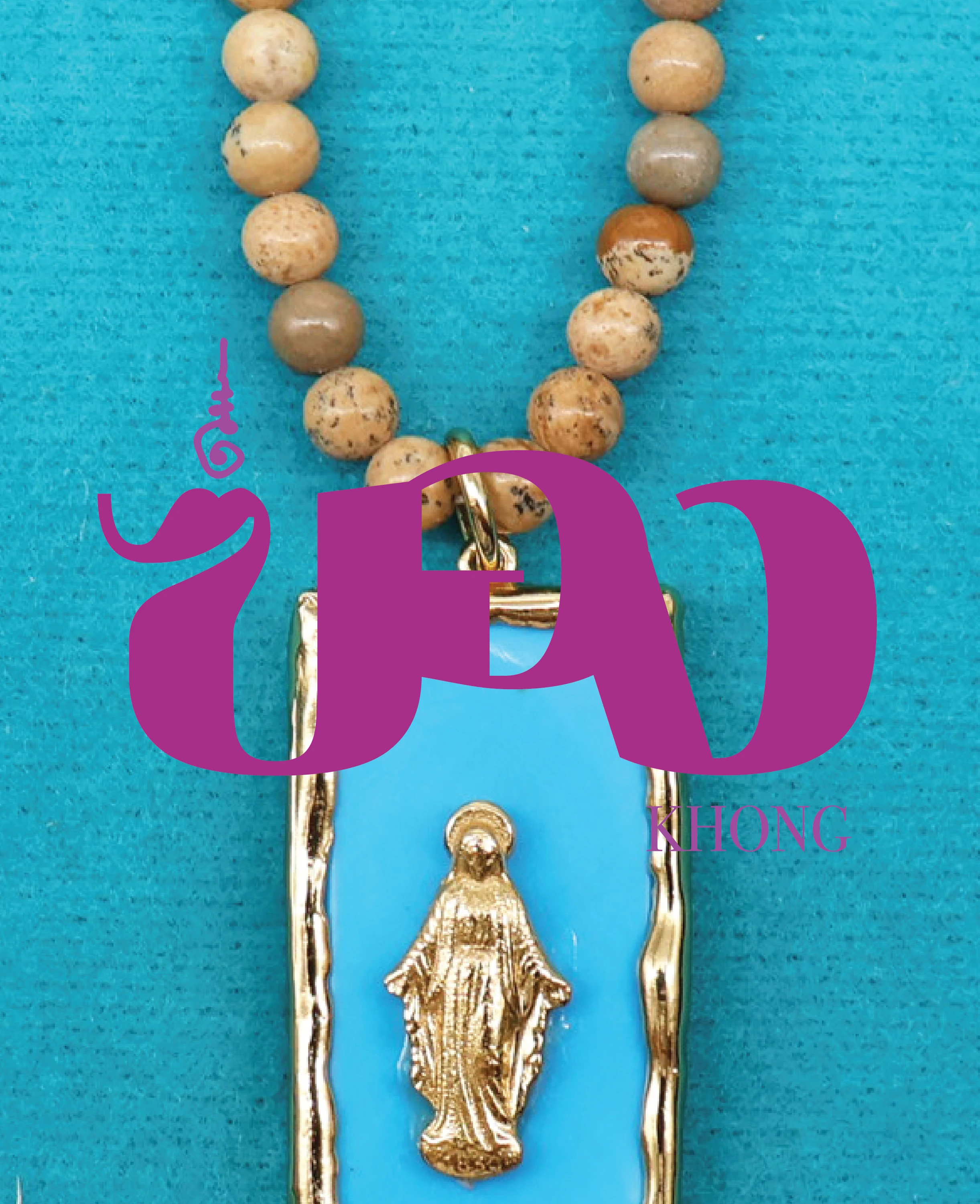
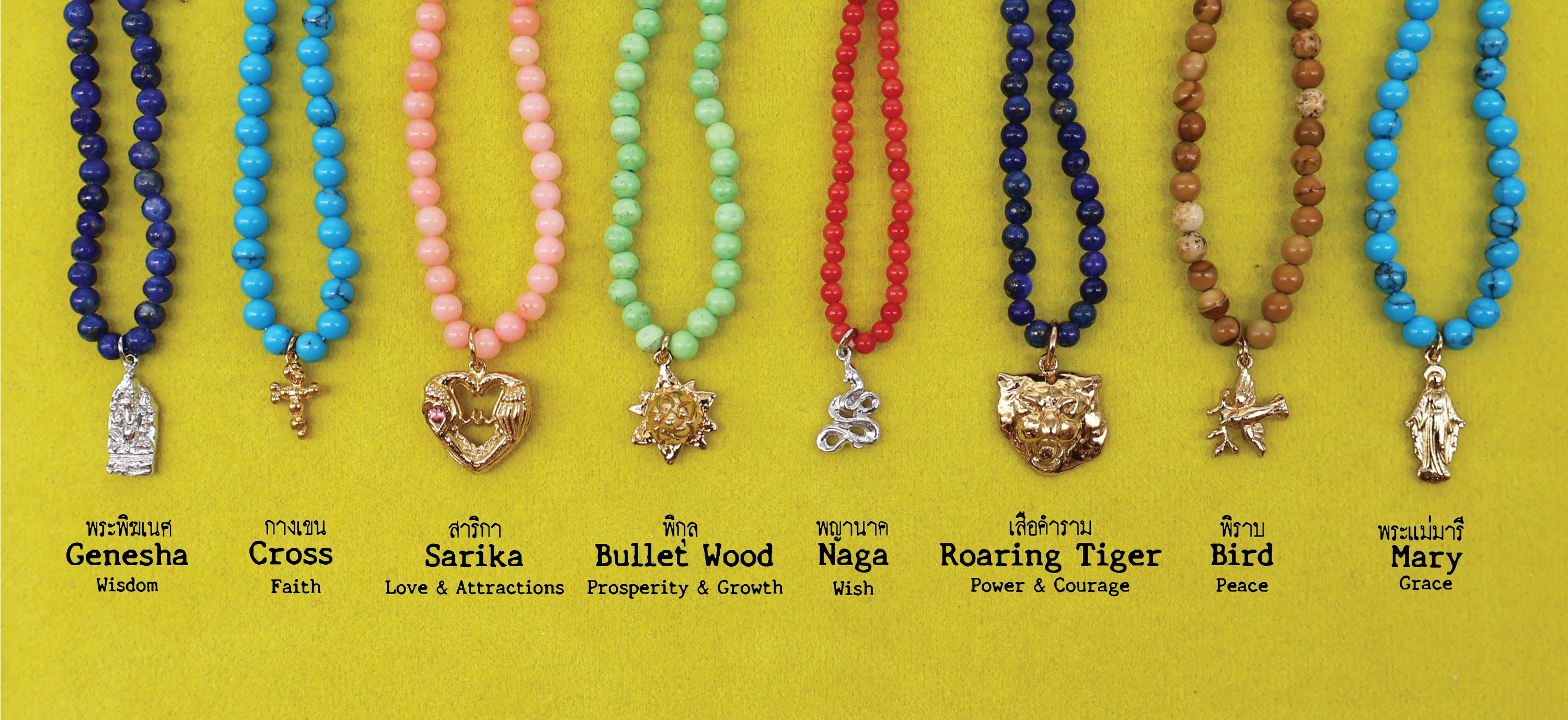
That sensitivity extends to how Khong’s catalogue is built. Alongside Buddhas are crosses, Ganesha, the Virgin Mary and spirits such as Naga and Sarika, untethered to any single faith. Partly, this is personal. ‘I am a Catholic,’ she says.
‘So even though Buddha was our first inspiration, I selfishly wanted to design something I could wear too.’
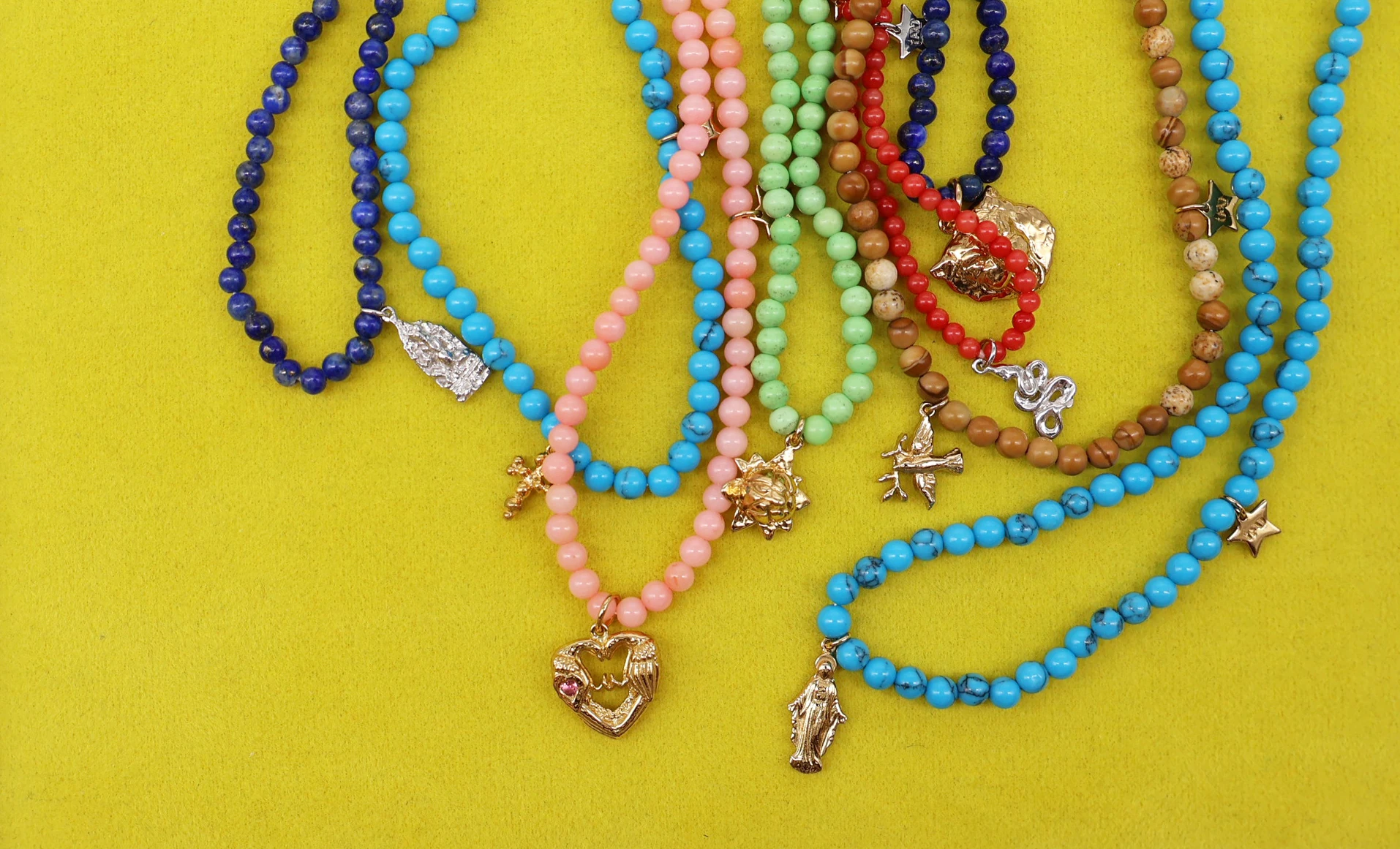
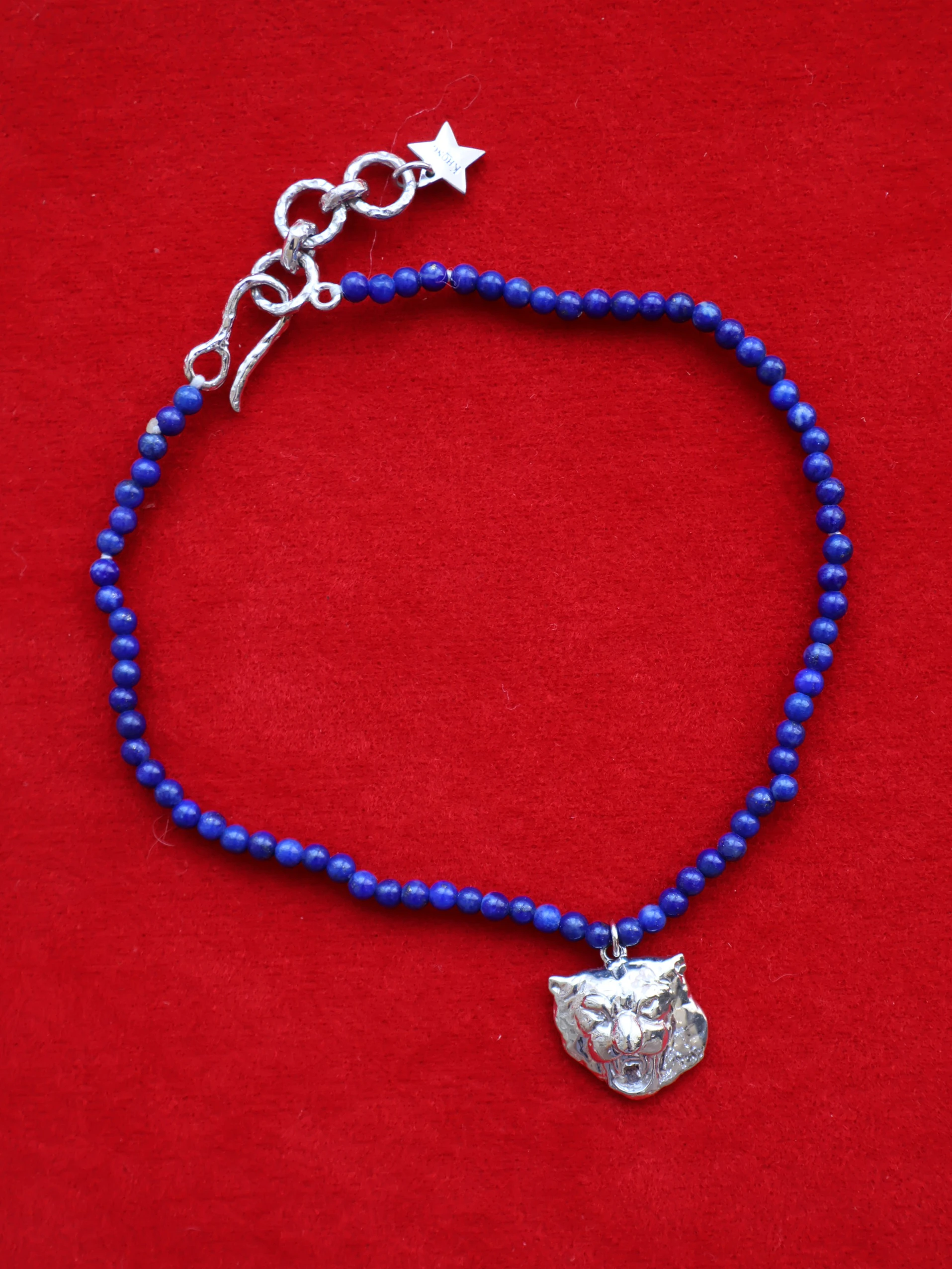
Partly, it is simply where the research led her: she fell for Sarika birds and roaring tigers along the way and expects more of that visual language to appear in future collections. Ultimately, the ambition is bigger than any one symbol. She wants Khong to become synonymous with belief objects in general, rather than a single tradition.
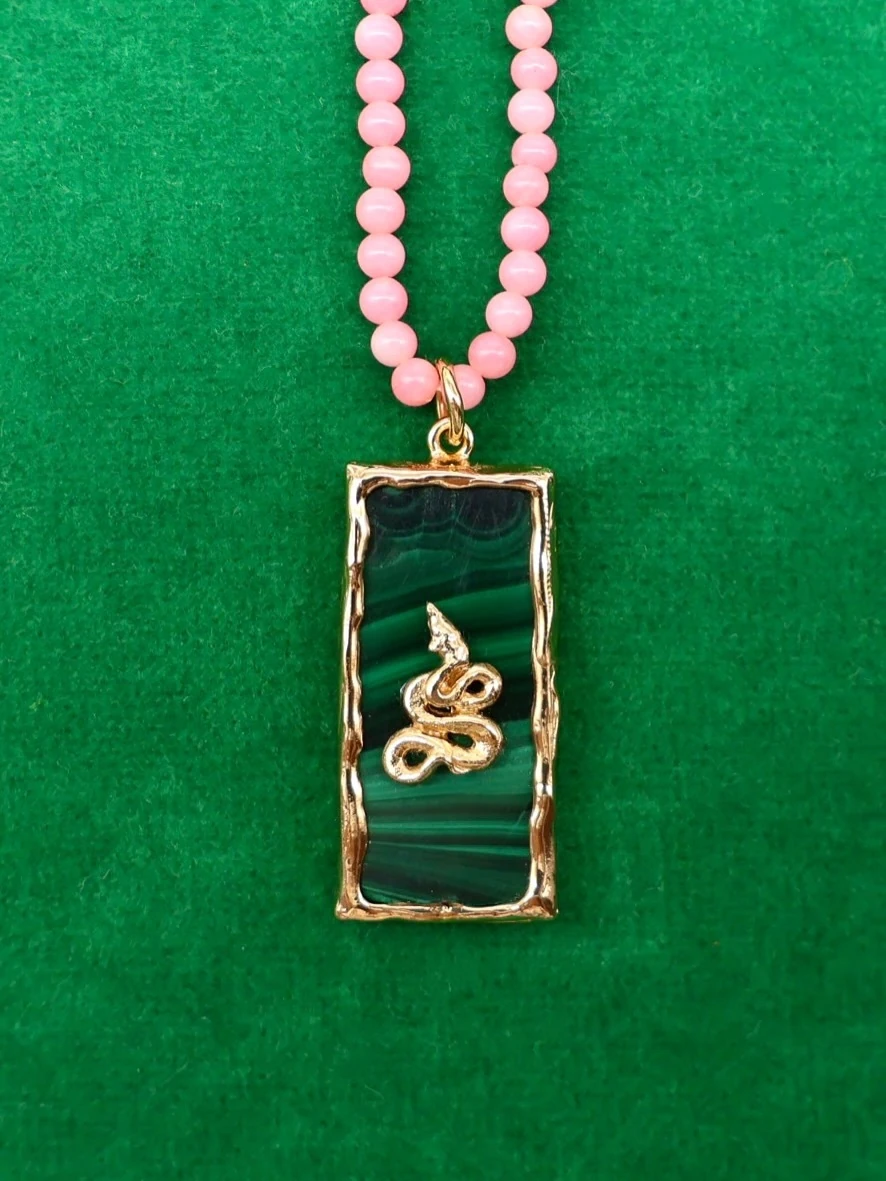
On the thornier question of whether selling amulets, even properly blessed ones, cheapens their meaning, she does not dodge the issue. ‘I feel that, at the end of the day, it’s down to intention and face value,’ she says. Her bet is that fair prices and visibly considered craftsmanship will do much of the persuading. ‘The audience sees our vision and trusts us,’ she adds. ‘The value is visible.’
A woman in a very male world
Amulet culture in Thailand has historically belonged to men: collectors, dealers, along with the monks who bless charms for boxers entering the ring or soldiers heading somewhere far riskier. Entering that world as a woman came with doubts.
‘Initially, I worried and wondered whether I should be the silent creator,’
she admits.
Khong’s reception quickly put those doubts to rest. ‘I think at the end of the day, the work speaks for itself,’ she says. She is clearly grateful for the respect it has earned her from creatives around the world.
When someone else’s history walks in the door
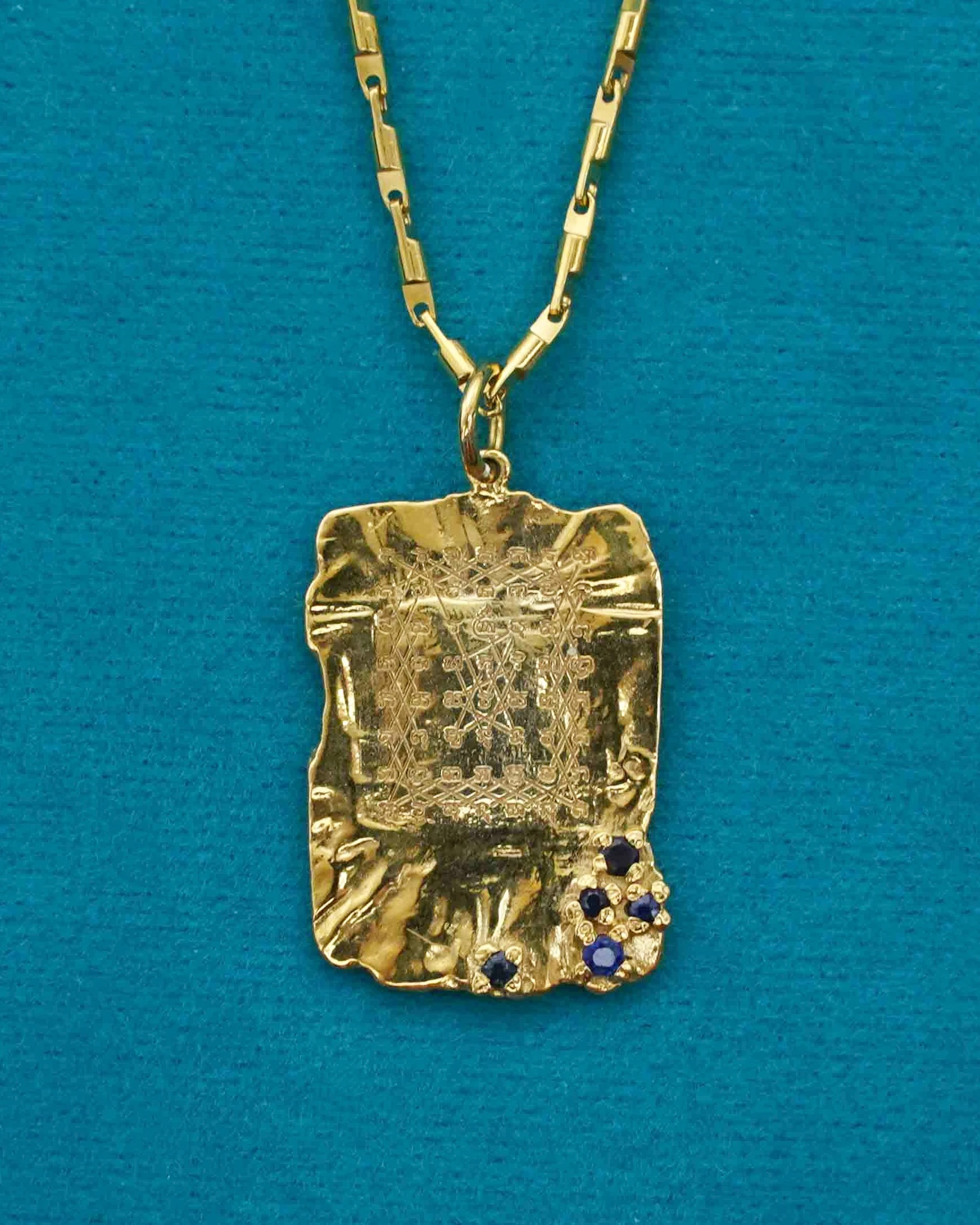
Some of Khong’s most moving work happens away from the shop floor: resetting a client’s own charm as a new piece of jewellery. It means handling an object that carries someone else’s history before it reaches her workbench, and some have given her pause. ‘Each of them is so special,’ she says, ‘To be honest, the bespoke projects brought so much joy.’ Each one comes with a learning curve that she describes, without irony, as ‘magic’ and ‘a blessing’.
There are complications, too. These objects are often valuable both sentimentally and financially, so Khong has built a process around that responsibility. The team takes measurements first, then asks owners to return with the object only when its new setting is ready, ensuring nothing remains in the workshop longer than necessary.
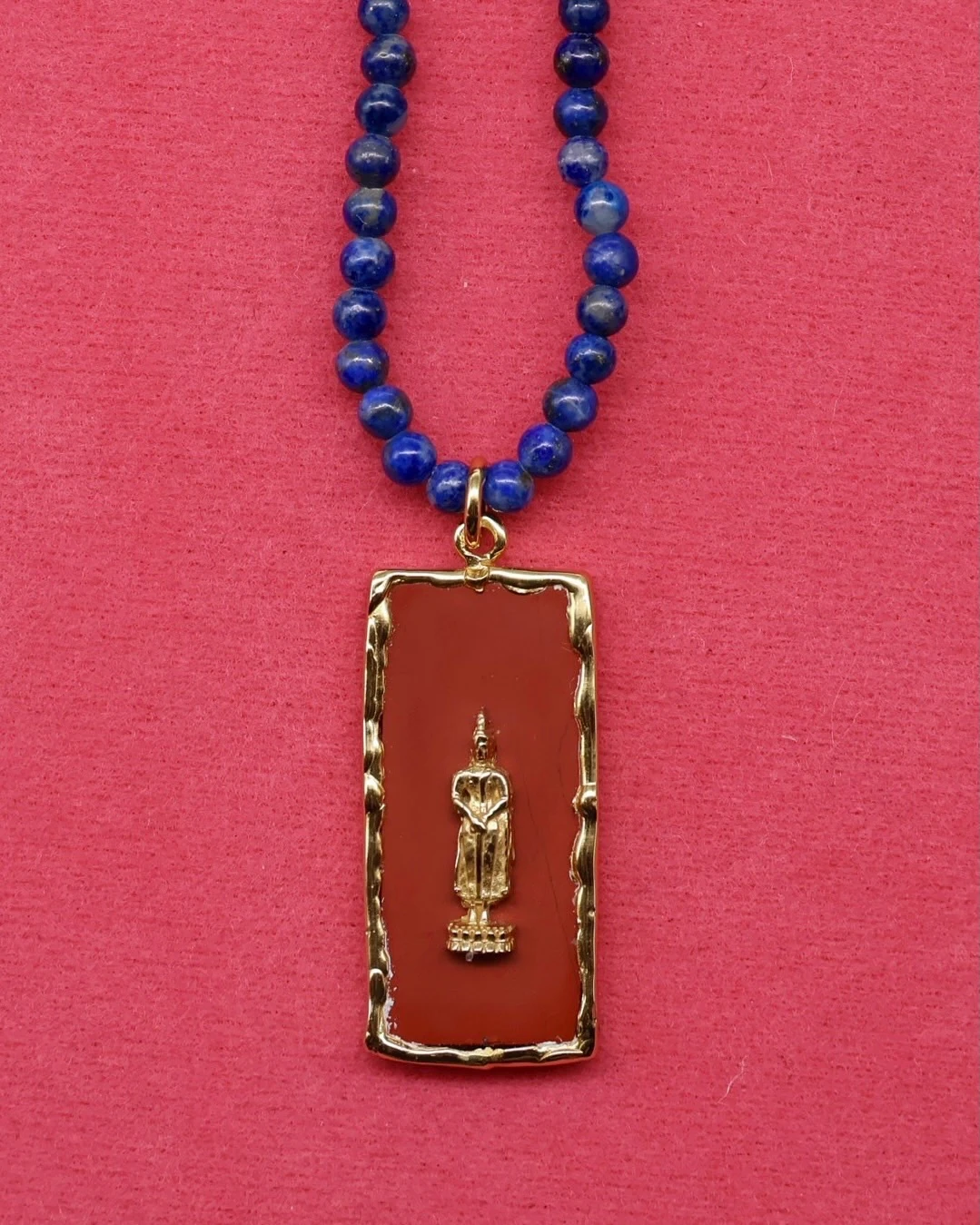
Whether people regard Khong’s pieces as fashion first and sacred objects second, or the other way round, does not concern her. ‘As long as they’re respected by our audiences – whether from a design point of view or a belief point of view – either or both work for me,’ she says.
Jewellery is too personal for her to dictate its meaning. People will decide that for themselves.
What's next
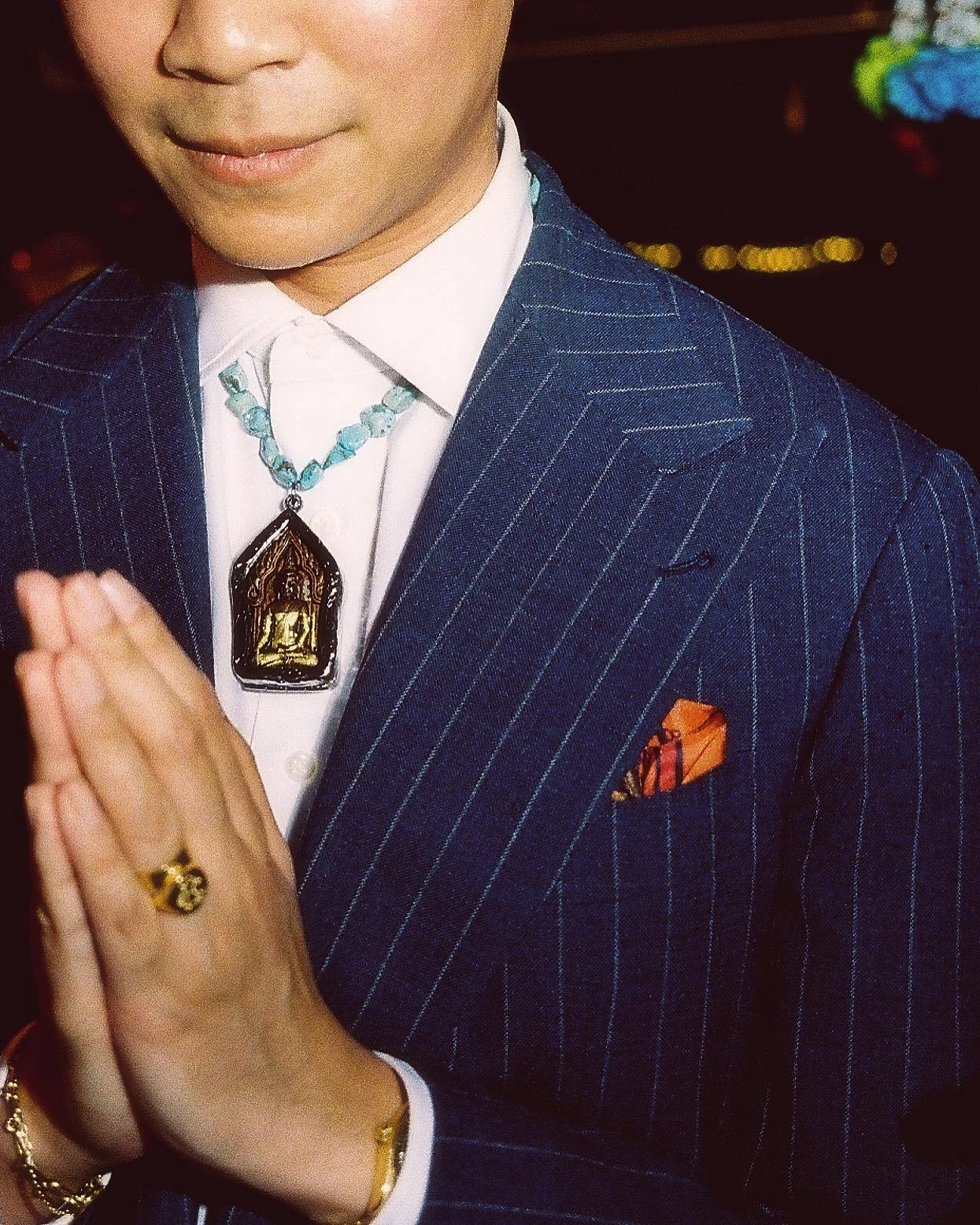
Ask Schuemers-Rogers about Bangkok’s wider jewellery scene and she lights up. Heritage motifs are being reworked across the city and independent designers are finally gaining the visibility they deserve. She is also quick to note that many global luxury jewellery houses already manufacture in Bangkok. Her argument is simple: if the city’s craftsmanship is good enough for them, local talent should be able to compete in the same market. What frustrates her are brands that fail to make proper use of Thai goldsmiths and export low-grade, copy-and-paste work instead. As the industry grows, she hopes respect and originality will define it. If she had to name one local brand getting it right, it would be Patcharavipa – ‘the only Thai brand I see creating true works of art,’ she says.
She will not be drawn on what is coming next for Khong. ‘I can’t say, or it won’t be fun,’ she says, offering just one hint: more cultural symbols are on the way.
What she’d want a Khong piece to say in 100 years
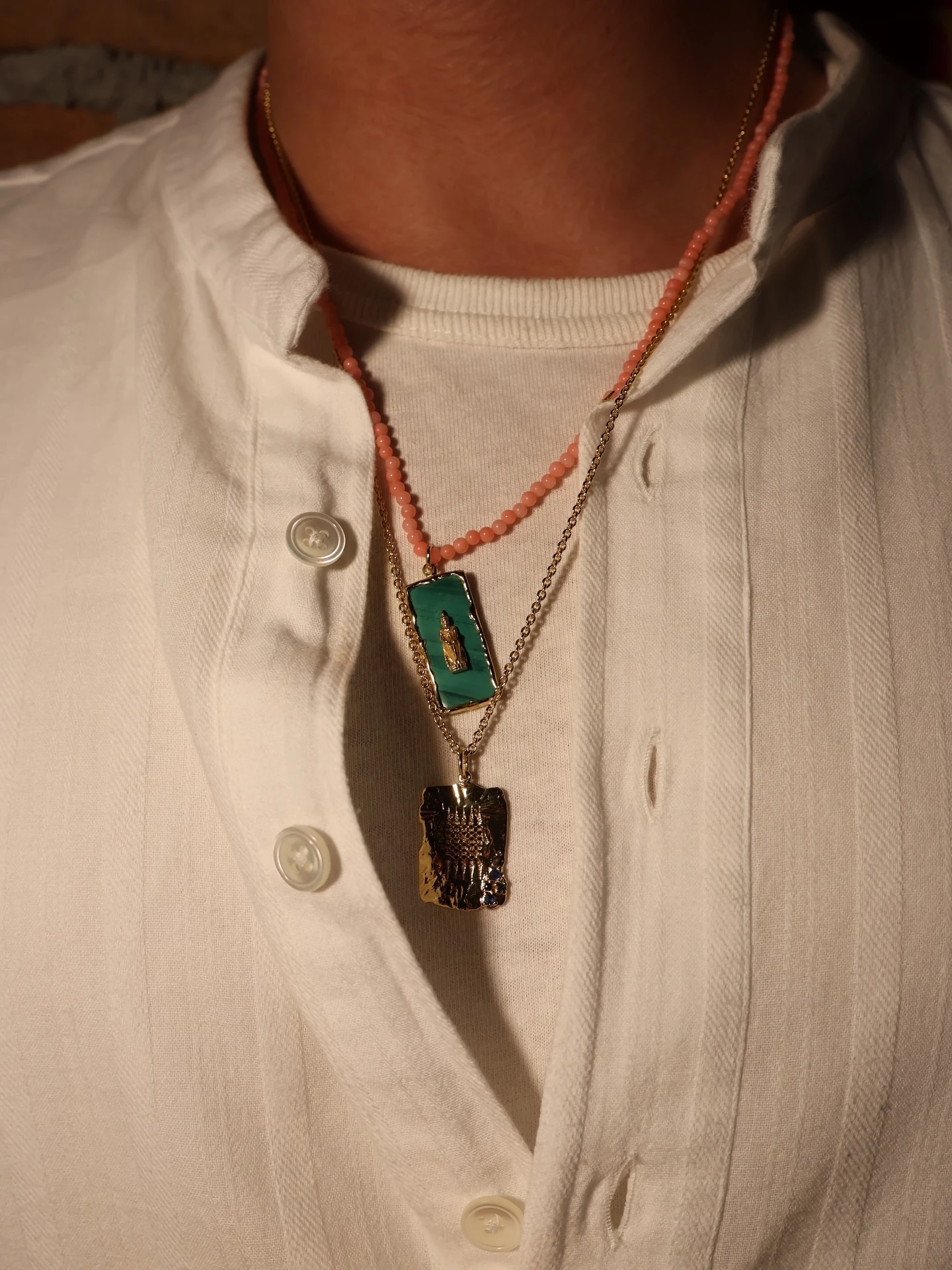
There is real ambotion in the way she talks about legacy. Asked what she would want a Khong piece to communicate a century from now, whether in a family collection or a museum case, her answer is not about the brand at all. It is about the wearer.
‘I want them to say that they had never worn any relic objects before and that this was the very first one they wore,’
she says.
She hopes Khong will be remembered, particularly among Thai audiences, as the brand that made people curious about wearing Buddhas again. She believes it is already happening, with Buddhas now being worn and bought more widely, well beyond Khong’s own collection.
And yes, she practices what she preaches. Her Sarika heart pendant on a hand-sculpted chain is worn so often that it keeps being bought straight off her neck. A stone-canvas bearing the Buddha associated with her birthday is another daily fixture. She is still waiting for one piece, however: a takrut she says she will never take off once it arrives.
Wear your faith a little differently with Khong. See more at thekhong.com and @khongbangkok.