
[image]
[title]Just recently, at a whisky event that promised the usual swirl of ice and polite applause, something else cut through the room. Not a saxophone – it was thinner, stranger, almost trembling. I remember turning to a friend and asking, 'What is that?'
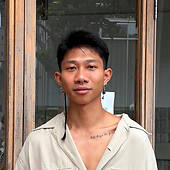
The answer leads me to Sorrawat 'Ben' Suviporn.
Ben is one of the partners behind Studio Lam, the vintage-style bar long considered a sanctuary for Thai musical heritage. For years it's been a meeting point for luk thung devotees, mor lam obsessives, jazz heads and anyone willing to let African rhythms sit beside Latin swing, funk and soul. It's a place where crates matter and curiosity is currency.
Yet the sound I hear that evening doesn't
come from a record collection. It comes from plants.
Under the name Melt and Reform, Ben works with bioelectric signals from living organisms, translating their electrical activity into control voltage, then shaping that data through a modular system until it becomes something like music. Or perhaps something before music. The project grows out of Melt Experience, an earlier collaboration rooted in plant medicine, inner stillness and guided frequencies. Over time, the work shifted from symbolic use of natural elements to actual dialogue with Mother Nature herself.
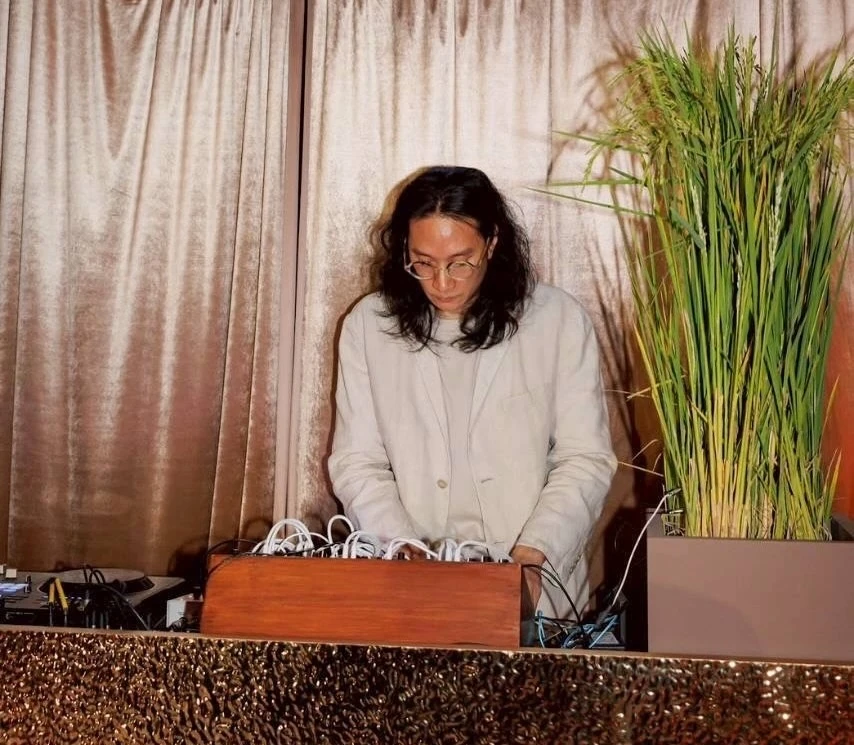
Melt and Reform feels almost alchemical. Frequencies dissolving, field recordings bending, bioelectric signals reshaped into song. I ask Ben when he first realises sound can be treated as something alive.
View this post on Instagram
'Actually, Melt and Reform didn't begin with plant sound,' he replies. 'It started during a project my friend and I created called Melt Experience, which focused on inner peace and plant medicine.'
Within that earlier project, there's a segment dedicated to guiding participants towards relaxation. Music is composed not as entertainment, but as architecture for stillness. 'We wrote four or five pieces built from frequencies, natural sounds, guided meditation elements and melodies we felt personally connected to,' he explains.

During that period, he encounters a device called PlantWave, a tool designed to translate plant bioelectric signals into sound. The idea lodges in his mind.
“If we are already working with plant medicine physically, consuming it, maybe it would be meaningful to also hear the sound of that plant.”
The shift is subtle yet profound. Instead of composing about nature, he begins composing with it.
When I ask how he starts translating mushroom bioelectric signals into something audible, his answer is practical rather than mystical. 'I used a modular system to translate the mushroom's bioelectric fluctuations into control voltage. That signal was mapped to pitch, triggers or modulation within the patch.'
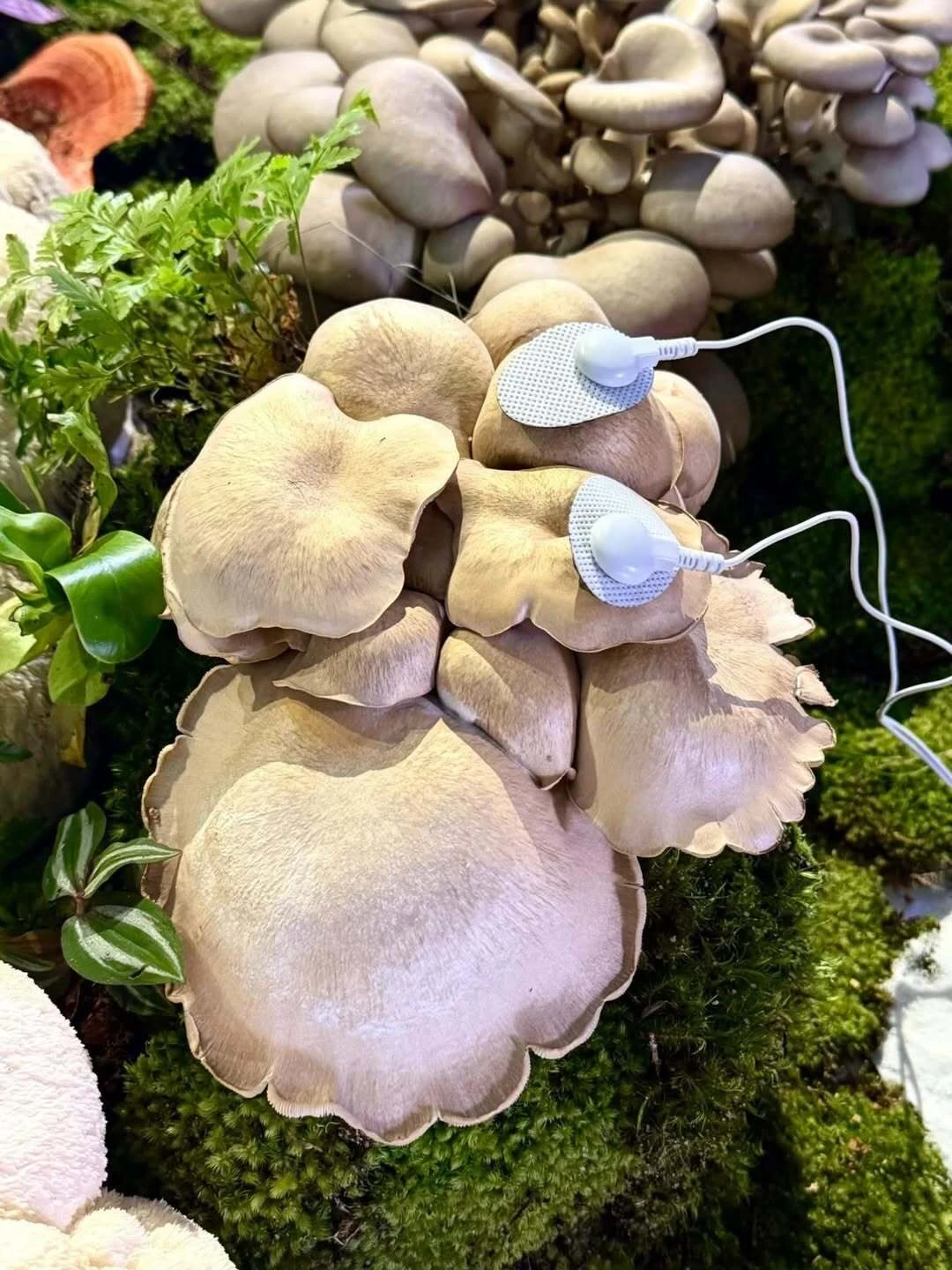
At first, it's simply experimentation. Connecting cables. Listening. Observing how unstable, slow or unpredictable the signals can be. 'From there, I gradually shaped it musically, deciding what the mushroom would influence and what I would control myself.'
Why mushrooms?
'Honestly,' he admits, 'I just love their shapes and forms.'
Rehearsals, he tells me, resemble a classroom more than a band practice. 'I'm still relatively new to this kind of equipment, so we're learning the tools at the same time as we're making the sound.'
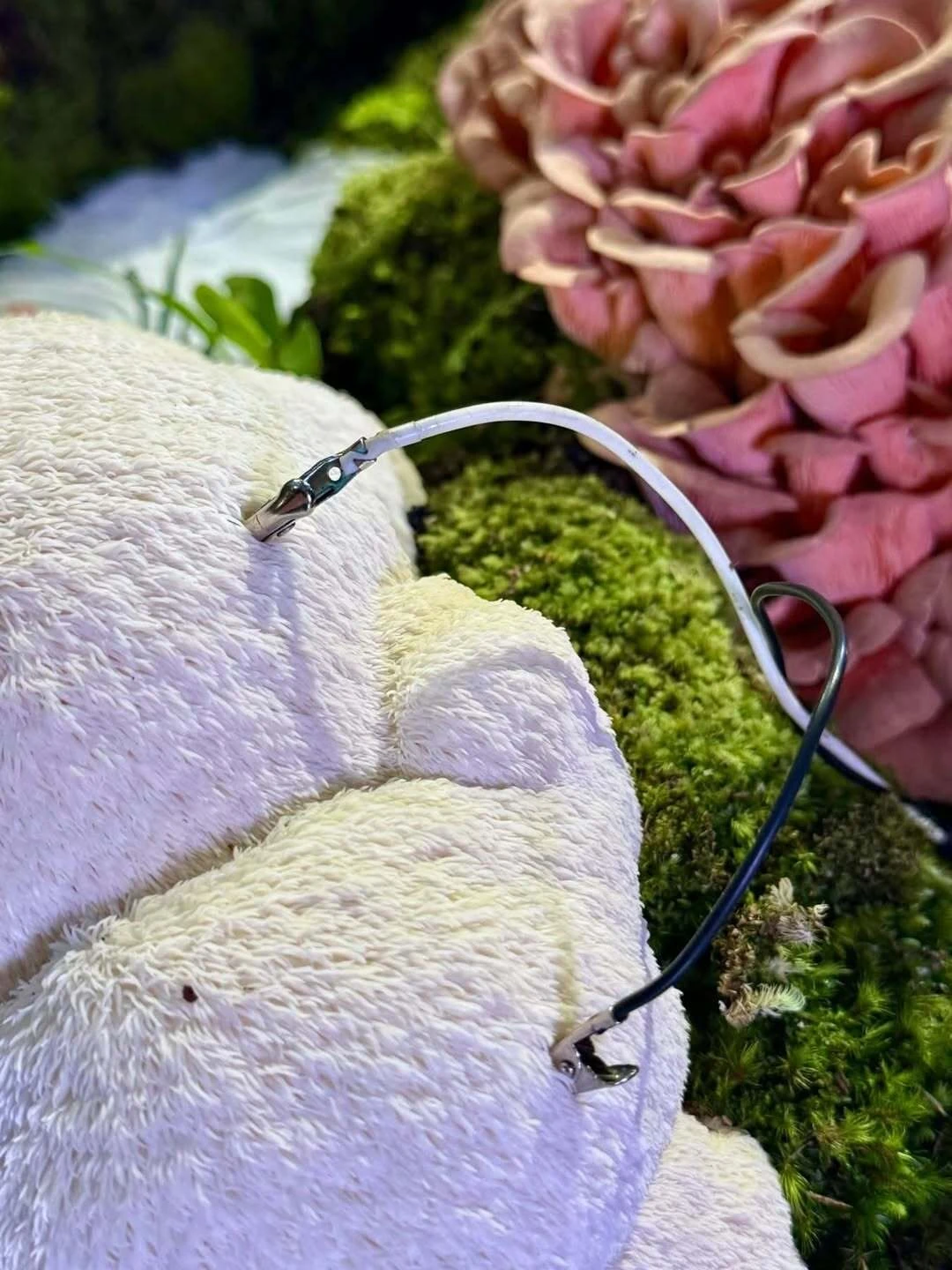
There's wiring and patching, of course. Technical diagrams, voltage ranges. Yet instinct is just as crucial. 'Sometimes intuition leads to sounds that feel almost unbelievable. And sometimes we, with the plants, create something we can never recreate again which is beautiful… and slightly painful.'
The idea of loss sits quietly there. Music that cannot be repeated because the organism will never respond in precisely the same way again.
Collaboration without intention
How do you compose alongside an organism that has no intention to perform, yet still responds?
'It can be seen as a collaboration between plant and human, shaped by response rather than intention,' Ben replies.
View this post on Instagram
There's no narrative imposed upon the mushroom. No assumption that it wants to be heard. Instead, its electrical activity becomes part of a feedback system. A loop between voltage and touch, light and humidity.
He's also worked with rice, translating its bioelectric signals into composition. Does that project change how he views everyday ingredients?
'It reframed rice not as an object, but as a dynamic system,' he says.
“The sound isn't hidden energy in a mystical sense, it's measurable electrical activity. But translating it into music changes how we emotionally relate to it.”
He shares a story that lingers with me. 'I've had someone listen to the sound of a mushroom and tear up, saying it felt sad. Another person said it sounded cute. For me, that says more about the listener than the organism.'
Nature, he believes, acts as a mirror. 'It reflects something already inside you.'
In performance, who leads? Him, the modular system or the mushroom?
'It depends on how we design the setup.'
Control, then, is fluid.
Has working with living organisms changed how he thinks about authorship?
'I still try to stay in control, but you can't control everything. Sometimes unexpected moments create results that are more interesting than what I originally planned.'
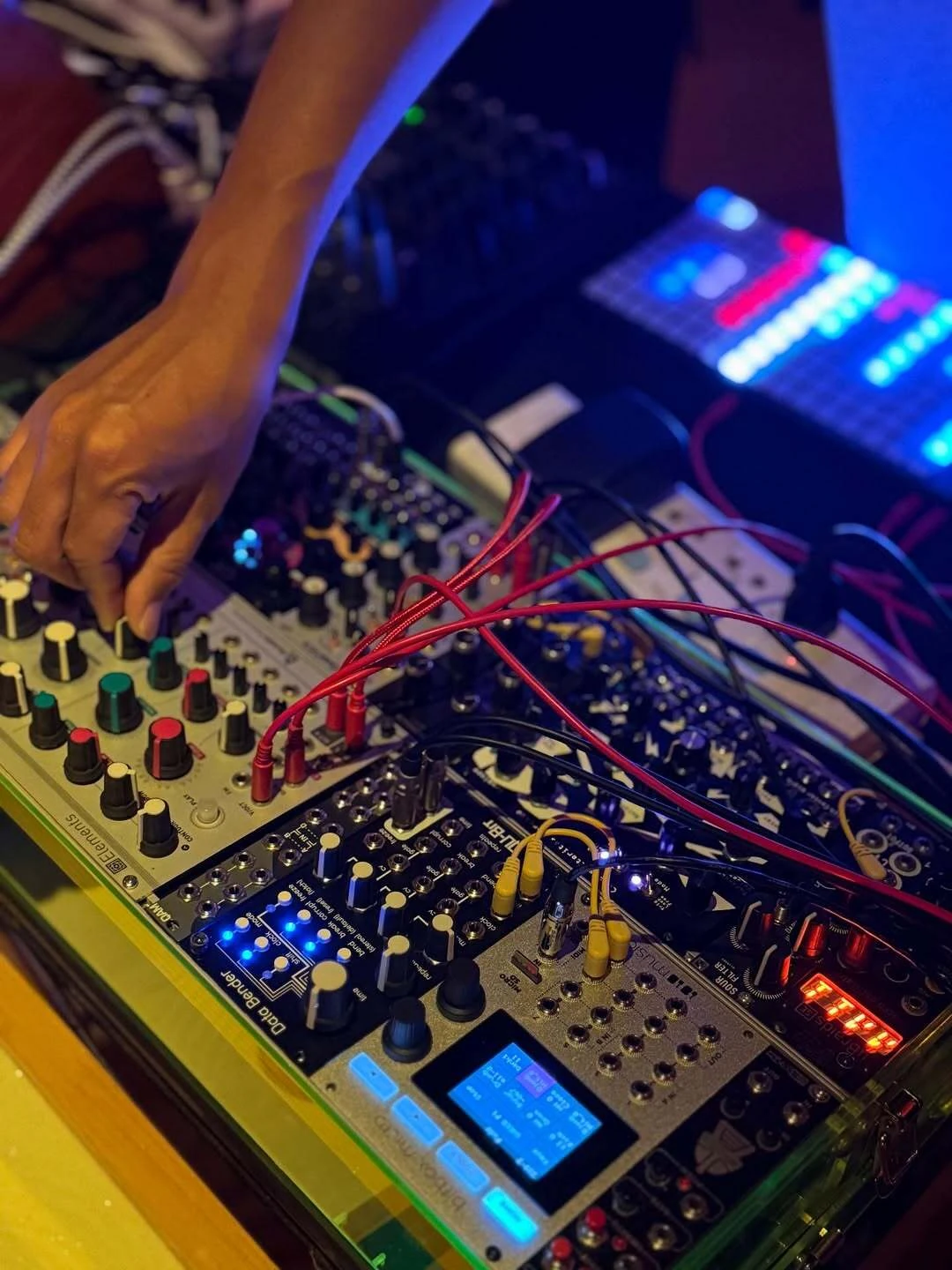
The hardest lesson in merging technology with biology, he admits, is instability. 'Technology likes precision. But plants respond to their surroundings, light, humidity, touch, and sometimes they don't respond at all. You have to learn to work with that sensitivity instead of fighting it.'
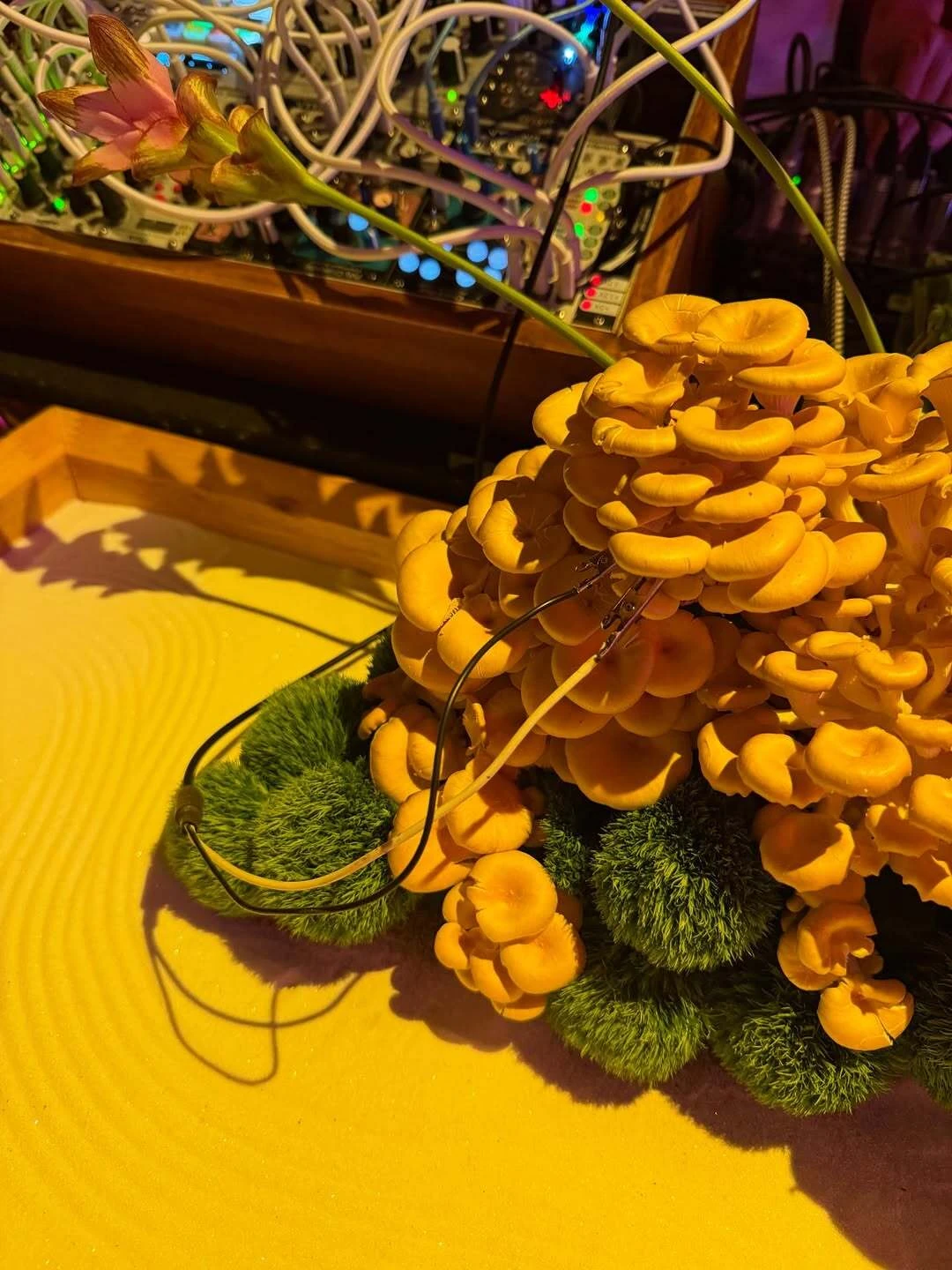
You don't 'tune' a mushroom, he clarifies. 'I carefully design how the signal is translated and choose the instruments I pair with the plant. But once it flows, I let the unpredictability shape the performance.'
Changing the plan, as he later puts it, 'is part of the plan.'
Dialogue with DJ SWEED
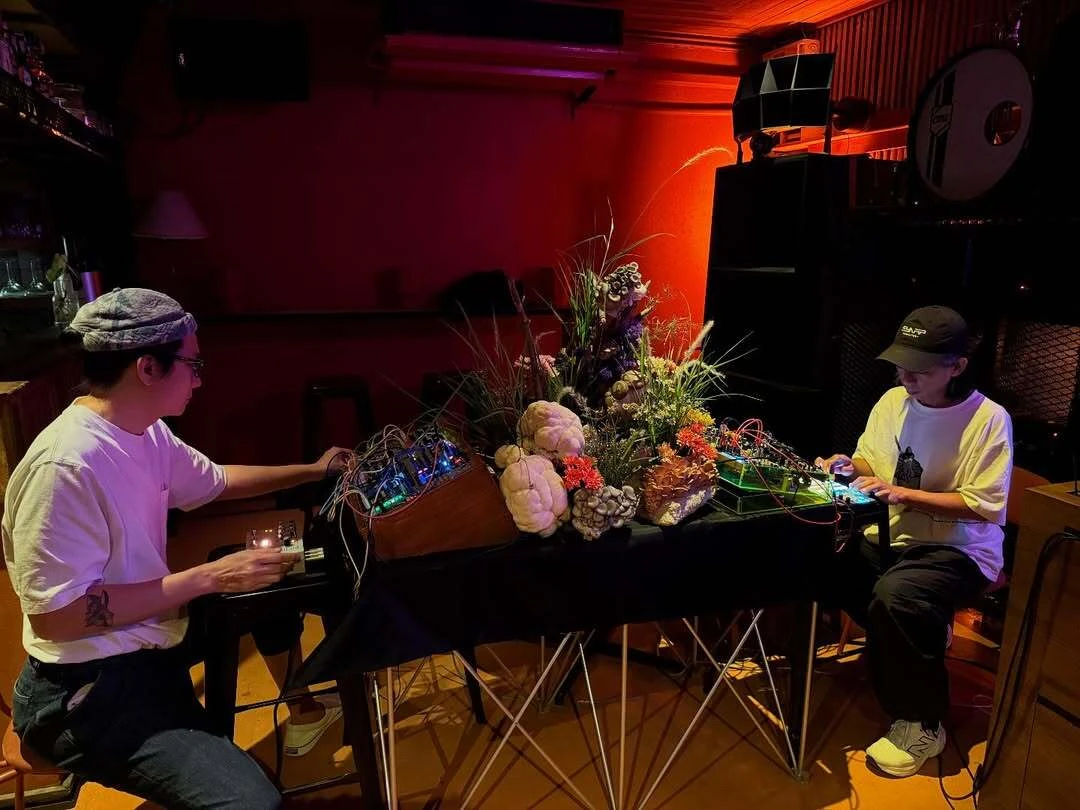
Melt and Reform isn't a solo venture. On stage, Ben is joined by DJ SWEED, whose background leans towards techno's heavier architecture.

'If I remember correctly, DJ SWEED studied music,' Ben notes. 'I think he majored in classical guitar. His musical background is very broad, and his imagination when it comes to sound is exceptional.'
The pairing is unlikely on paper. Organic voltage fluctuations meeting structured sequences and trippy textures. Yet Ben describes the relationship with quiet gratitude. 'He supports me in almost every aspect of music.'
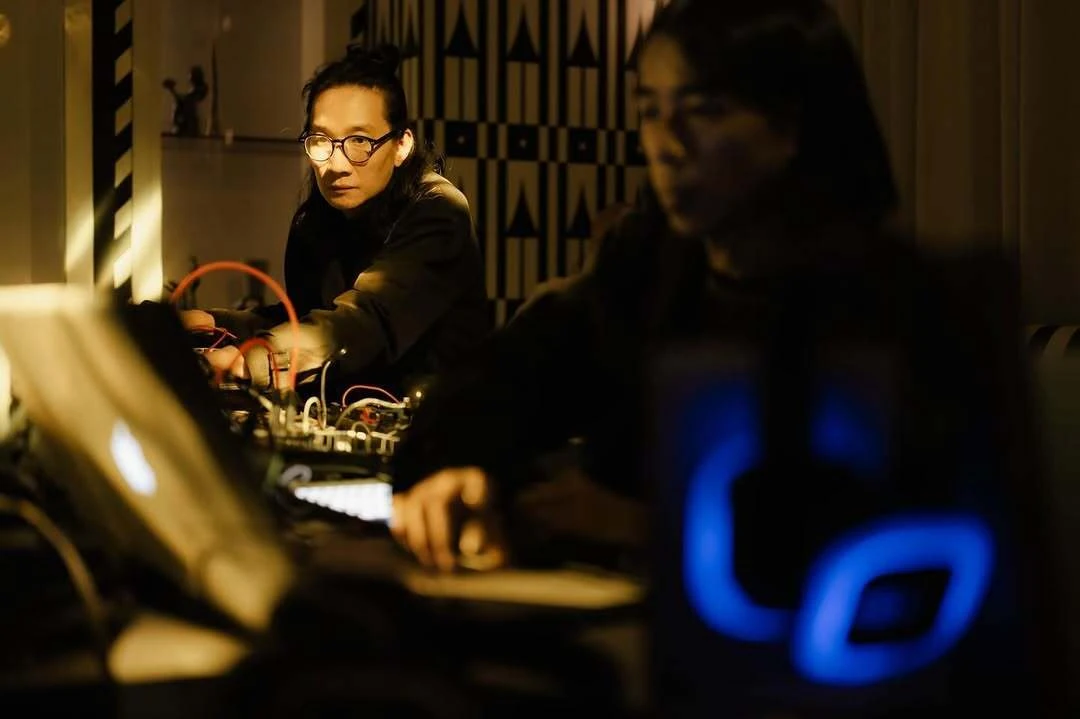
Their performances are built around loose frameworks. 'We usually set a structure and leave space inside it,' he says.
Negotiation happens through listening rather than argument. There are moments when the modular rig hums gently and others when percussion cuts sharply across the spectrum. The mushroom may trigger a gate that shifts the mood entirely. At times, Ben reaches a tone he feels content with and allows the organism to take over. 'That's when I feel most at peace,' he writes.

At Wonderfruit in 2023, Melt Experience blends plant medicine, shared mindset and sound. 'People came looking for something,' he recalls. 'Some connected deeply, others less so. But overall, the sound did its work.'
I ask whether Melt and Reform feels like meditation for him, or something more unruly.
'In the beginning, it felt calm,' he says. 'Almost meditative. Over time, I've learned to appreciate the raw and unpredictable side of it. It can exist in both states.'

Bangkok's electronic landscape often favours club nights and imported names. Where does experimental, bio-interactive work sit within the city?
'I think Bangkok always seems to have space for creative work.'
He doesn't position himself as part of an underground. 'I never really saw myself as belonging to any scene. I've just been living my life and doing what I enjoy. If I've survived, maybe it's just luck.'
The machine, the mushroom and the signal chain
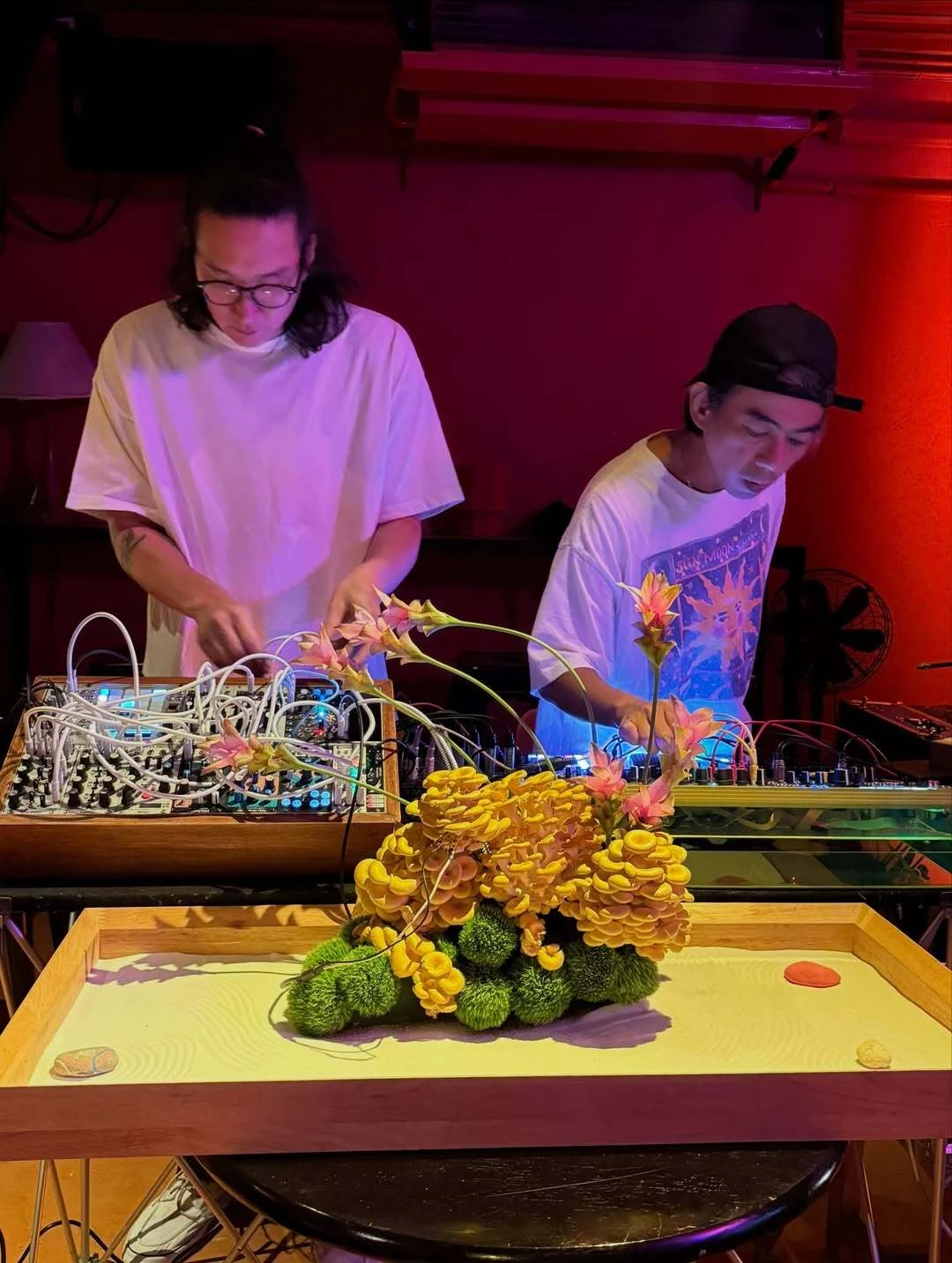
For those of us who like to peek behind the curtain, Ben outlines his current setup in precise terms.
He uses Instruō Scíon to translate bioelectric signals from plants. Electrodes pick up the organism's electrical activity and send it to Scíon, which converts it into CV and gate. That signal travels into his modular synthesiser, generating and processing sound before reaching the speakers.

One of his most-used modules is Mutable Instruments Rings, often processed through Microcosm or Mimeophon. DJ SWEED's system centres around the Oxi One sequencer, sending MIDI to a 1010 Bitbox Micro and Oxi Coral for samples and synth parts. Basslines and leads are handled by multiple Elements instruments, with occasional monophonic lines from uBraids processed through Topographic Delay.
“I use existing modules to translate very small electrical fluctuations into audible sound,' he says. 'I'm not building custom gear.”
How does he arrive at this configuration?
'I gradually added equipment that I thought would work. Sometimes I misunderstood what I actually needed. And yes, sometimes it was an accidental discovery.'
The setup is never finished. 'I'm constantly adjusting voltage ranges, sensitivity and signal mapping.'
View this post on Instagram
Does he worry that adding more technology might dilute the conversation with nature?
'I see technology as something that can help us understand nature more deeply,' he writes. 'But I don't have plans to add anything at the moment.'
On stage, the cables and blinking lights create an atmosphere bordering on laboratory theatre. Is that aesthetic intentional?
'The visual should look like that,' he replies. 'All of those elements are part of playing this kind of instrument.'
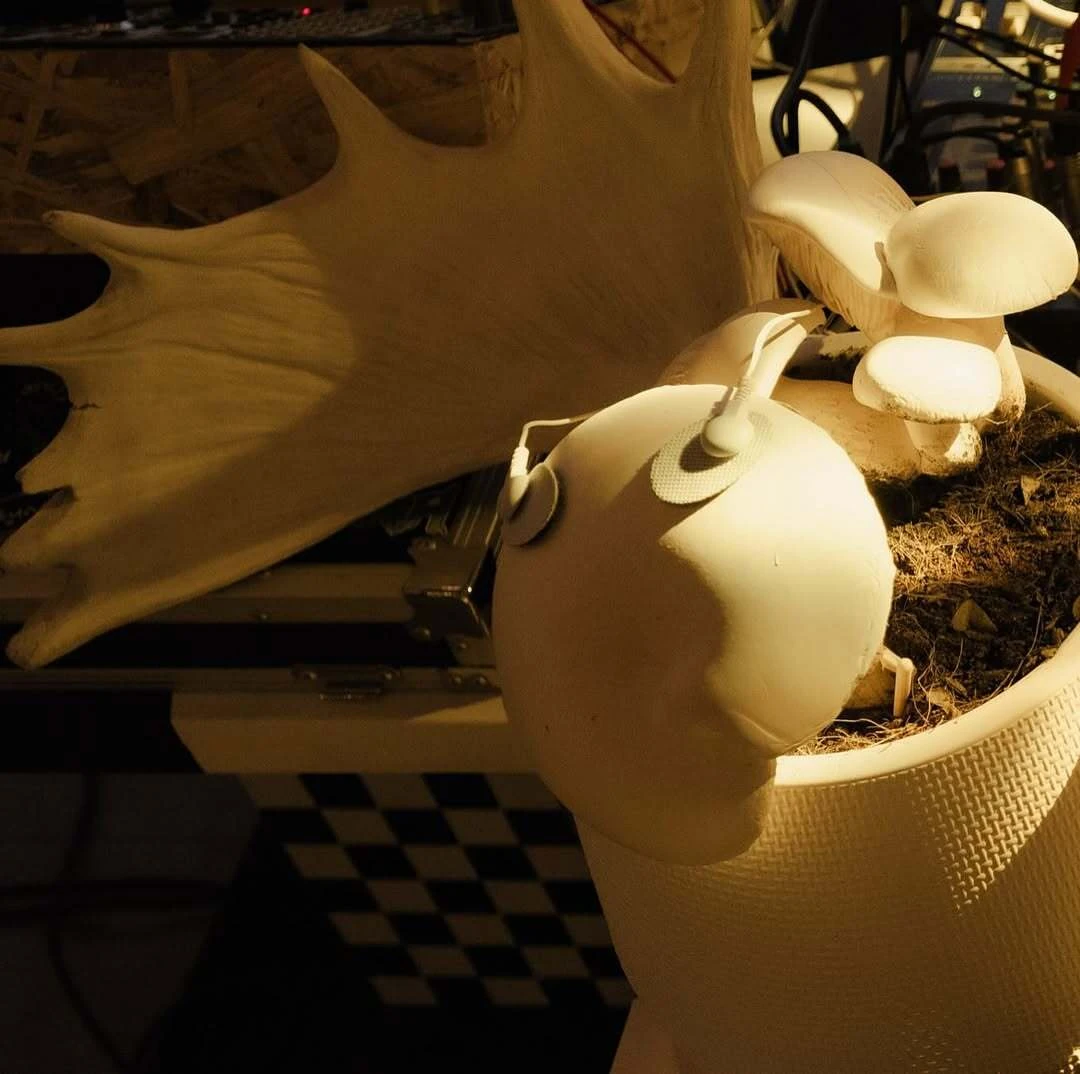
There are moments when the mushroom 'plays' solo. Signals redirecting the trajectory entirely. 'Yes,' he confirms. 'Sometimes it doesn't go according to plan at all.'
And yet those are often the most compelling passages.
'It reminded me that we need more direct contact with nature,' he says of the broader lesson. Not as metaphor, but as practice.
For artists curious about collaborating with living systems rather than simply sampling them, his advice is surprisingly relaxed. 'Sampling the sound is good too. It's just a different way of working.'

Frequencies and what remains
As Bangkok prepares to say goodbye to Studio Lam this February, I ask how he's holding that ending.
'Everything has its time,' he says. 'Many good memories were created here. I think that's enough.'
Is Melt and Reform, in some way, a reforming of roots rather than a farewell?
'Not really. It developed from its own path.' There's no grand narrative of rebirth. Only parallel timelines.

Looking ahead, he mentions a new project in April titled City Frequencies with street artist NEV3R. The concept translates the physical act of drawing into sound. As NEV3R marks the canvas, lines become signals. The image transforms into rhythm and melody.
'Bangkok has its own frequency,' Ben says. 'Not just sonically, but in energy, rhythm and movement.'

Traffic, construction, engines, human breath. Layered, shifting, somehow structured. Extracted and reshaped through modular synthesis.
When the last frequency fades at a Melt and Reform performance, what does he hope lingers?
“I don't really have expectations. But it would be nice if they felt something, and enjoyed it”
That answer stays with me longer than the technical diagrams.
Because perhaps that's the quiet radicalism of Melt and Reform. Not that mushrooms can 'play' music. Not that rice contains hidden symphonies. But that listening itself might be an act of reform.
At the whisky event where I first hear his work, the room eventually returns to chatter. Glasses clink. Ice melts. Yet for a few minutes, the space feels recalibrated. As if something small and alive has spoken, and we've chosen, however briefly, to hear it.