

[image]
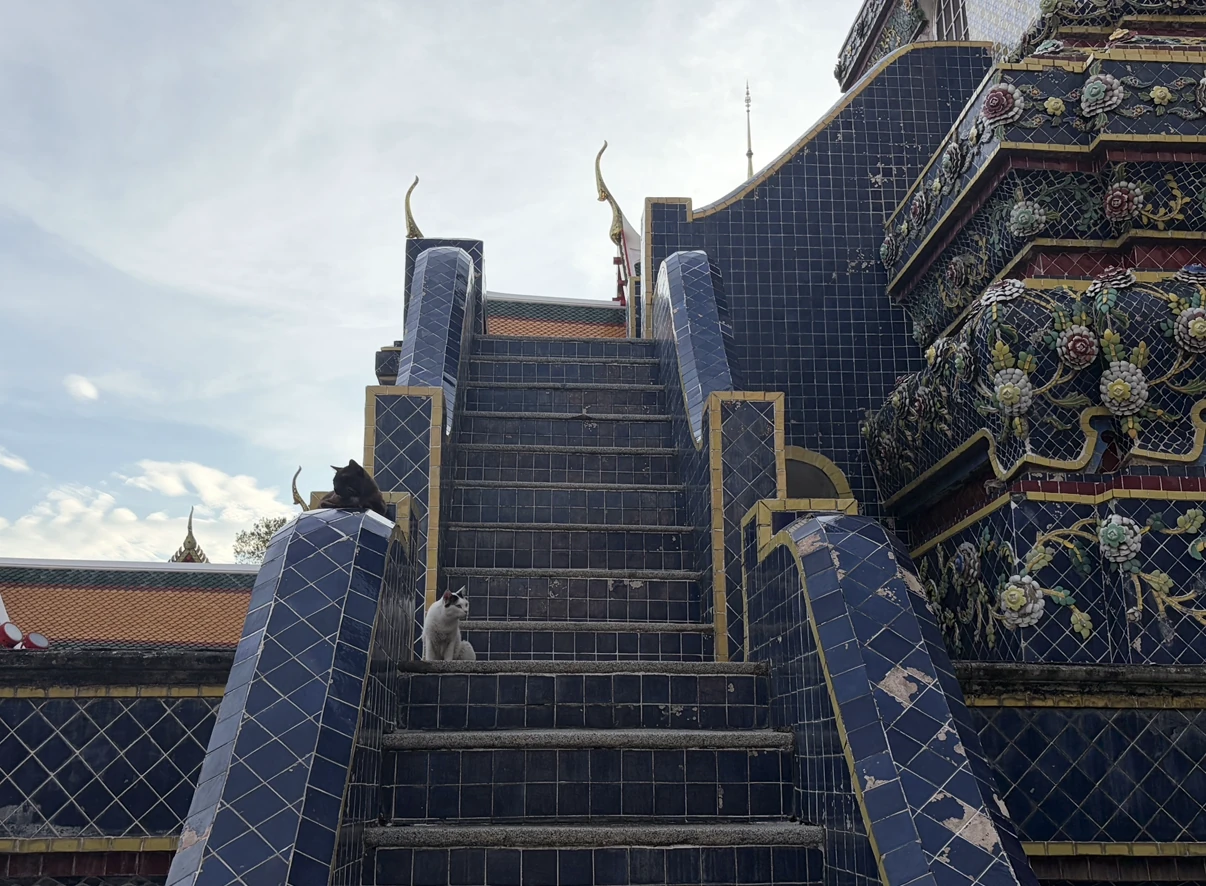
[title]Not everyone who visits Thailand wants to see another temple. But what if it had cats? So many cats that you forget all the statues and keep your eyes down for a game of feline ‘I spy’ as hundreds of furry faces run carefree among the colourful ceramic chedis.
At Wat Pho (or its official Thai name, Wat Phra Chetuphon Wimon Mangkhalaram Rajwaramahawihan), the temple is a safe haven for visitors looking for a little peace of mind, a place where monks share their teachings and, in this case, a home for some very cute little creatures, too. About 200, to be exact.
A tail of 200 temple cats
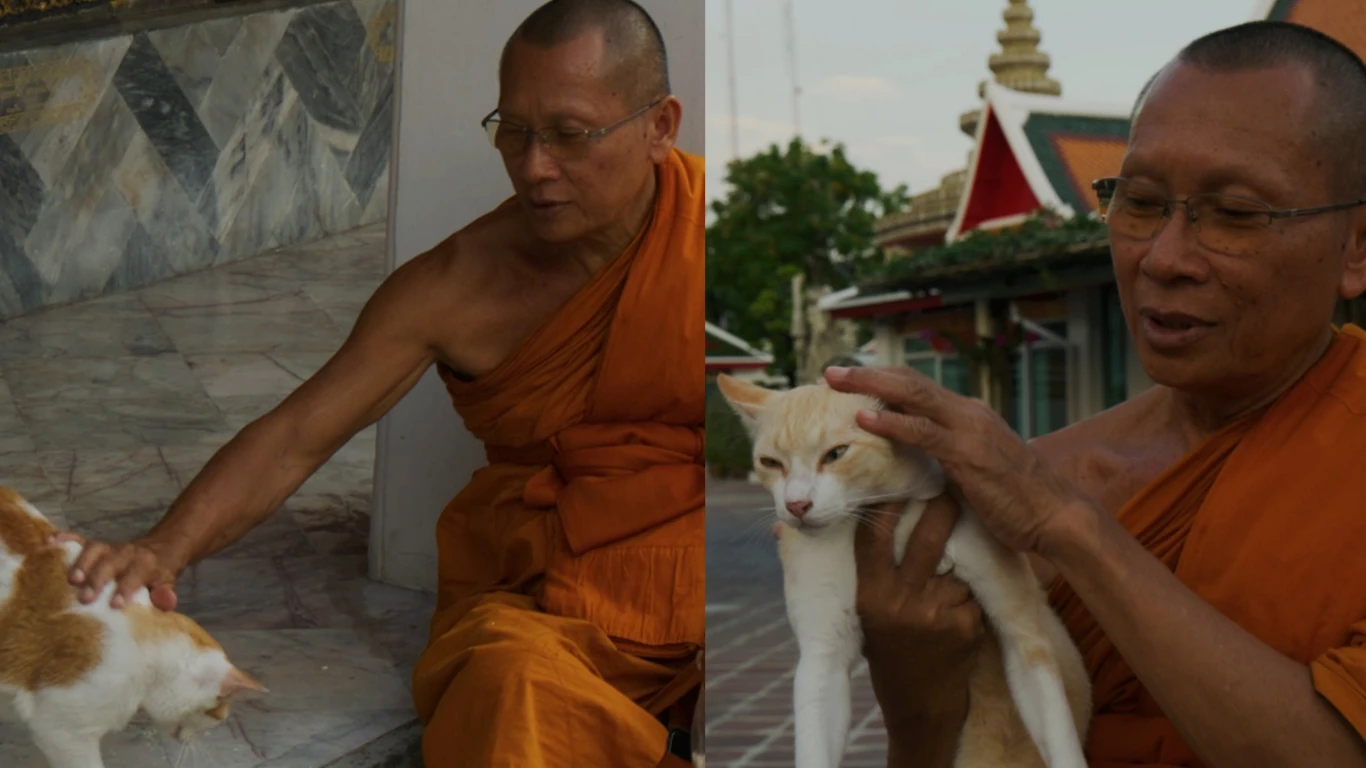
At first there were just 20 – some stray cats wandering around the neighbourhood, others abandoned at the temple. Venerable Monk Mahanalin was, at some point along his journey in the Sangha, tasked with looking after them, making sure the temple remained a clean and safe place for both people and cats. They were never meant to permanently stay. In fact, Ven. Mahanalin says he wasn’t even a cat person. And yet, here he is years later, introducing us to hundreds of cats he named himself, with a gang of them following him at all times.
‘This is Pizza; Mom Mam (the oldest of the bunch who’s been here for 10 years); nong Mali, the youngest and newest resident; and Botun, who has to take daily medication. Mafuang and Mafai are siblings, both born here. Green Beans is the shyest of them all, and Grass Jelly, he’s the leader of one of the many cat gangs roaming the temple.’
At this point, we were starting to get confused about who was who. One thing was clear, though: they were all loved, even a little chubby, which can only be a good sign.
Some of the cats even had collars, so naturally, we had to ask if he secretly had favourites. Was that why some had collars and others didn’t? He insisted he loves them all equally. The collar-less ones, he explained, simply wouldn’t let him put one on.
Caring for the cat’s purr-manent residents
Feeding time starts at 7pm and ends a little after 9pm. Like clockwork, as soon as the monk starts his walk, cats come prancing out from every corner – tucked into the steps of the stupa, lounging in shady corners and seemingly appearing from thin air.
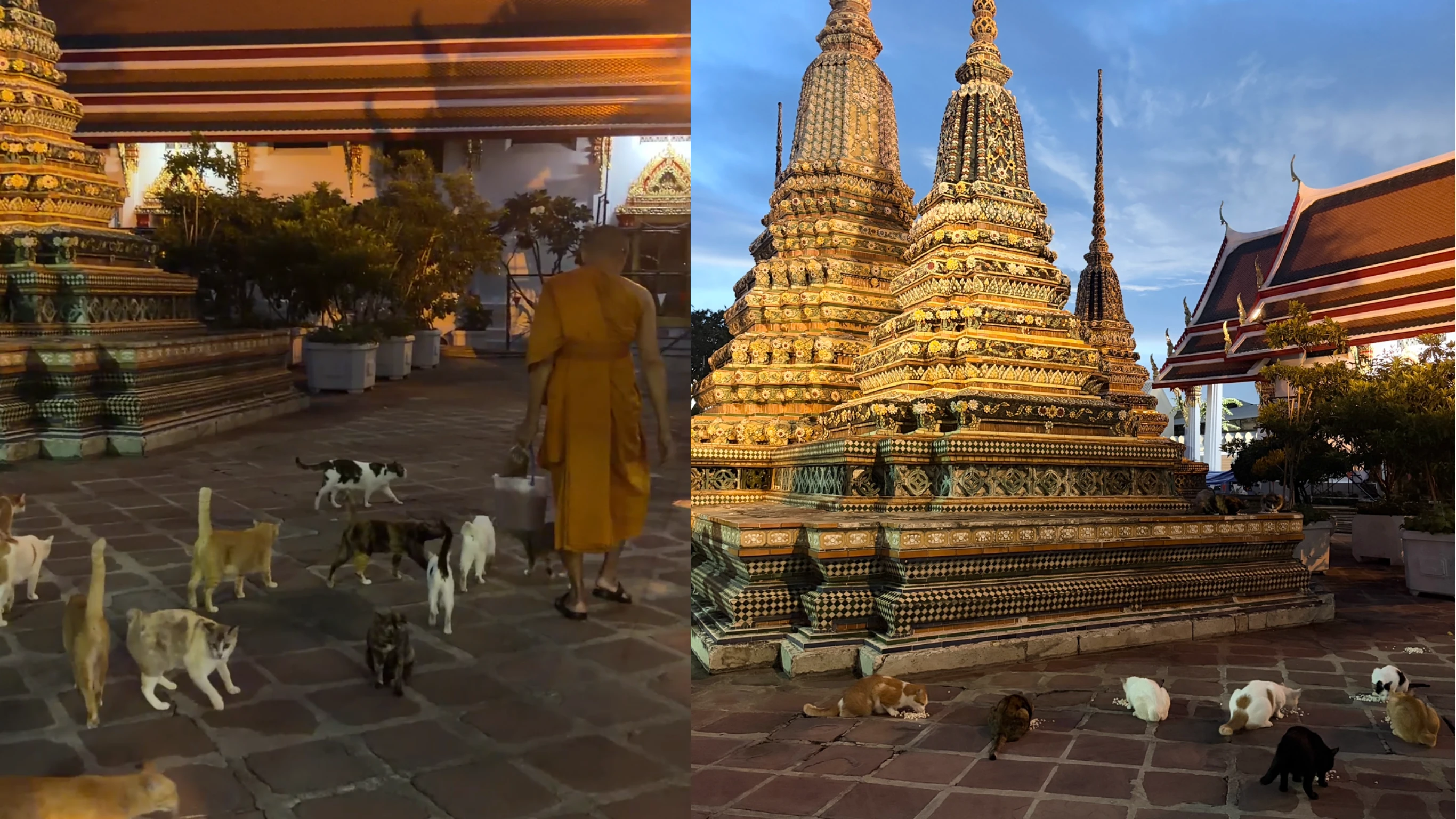
Like pigeons finding pizza in New York City, they all flock to him – except they’re fighting for his attention rather than the food. He makes his way around, greeting every single one and checking their coats and condition, making sure they’re free from cuts, ticks and haven’t used up any of their nine lives.
All of the cats have been sterilised and vaccinated, with support from The Voice Foundation, a Thai non-profit organisation that rescues and advocates for stray, injured and abused animals. The temple also has a team of volunteers who help clean and care for the cats.
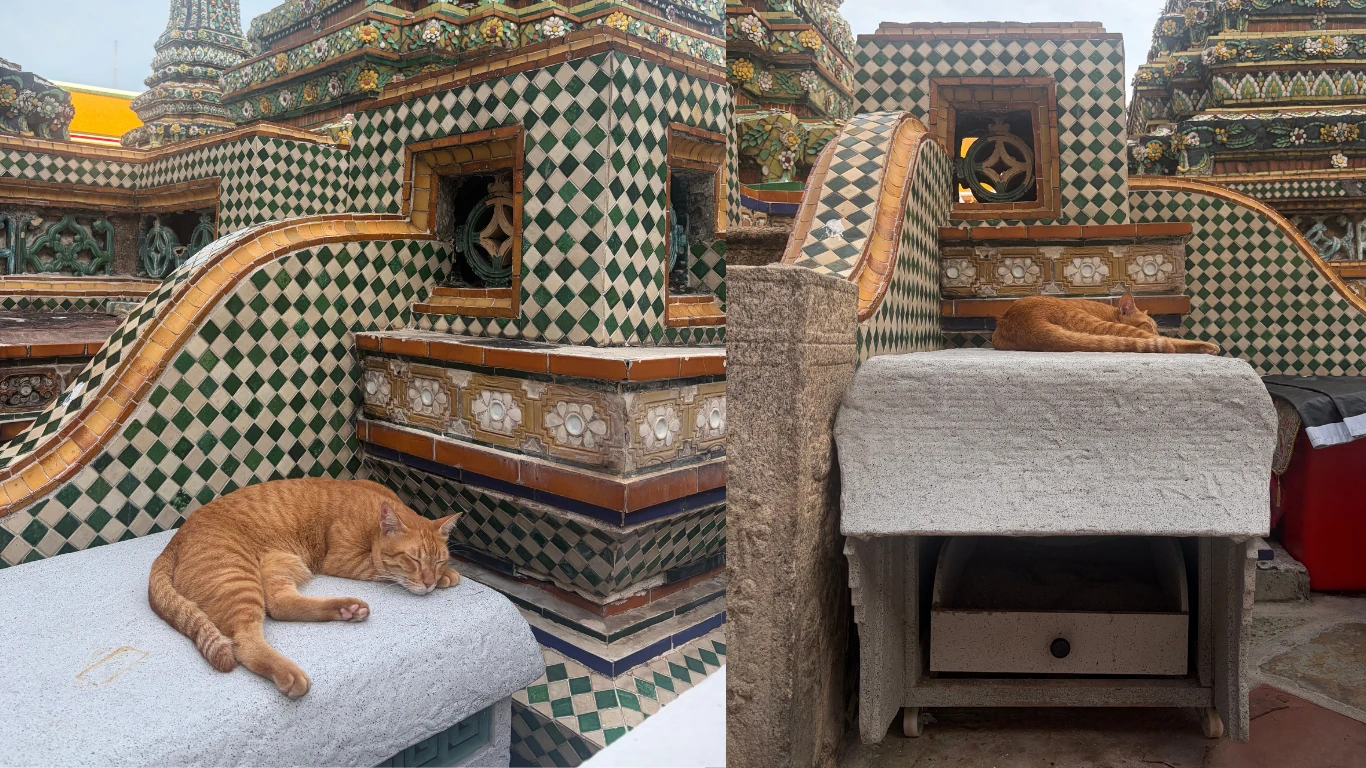
And with 200 cats comes a lot of responsibility. Scattered throughout the temple are more than 60 litter boxes that you’d never notice at a glance. Ven. Mahanalin proudly points one out and explains:
‘I had them specially designed with stone motifs to blend into the temple architecture. They pull out for easy cleaning and there’s no smell. That said, the cats seem to love them best for napping...’
There are no typical water bowls here, either. Instead, traditional brown Thai Ratchaburi bowls, hand-painted with dragons and floral patterns, double as drinking bowls for the feline residents.
With so many cats to care for, the temple goes through plenty of cat litter and food. Visitors can lend a paw by donating cat litter, as well as cat kibble and freeze-dried chicken for the older kitties who can’t quite chew as well as they used to.
Spotting the holy cats
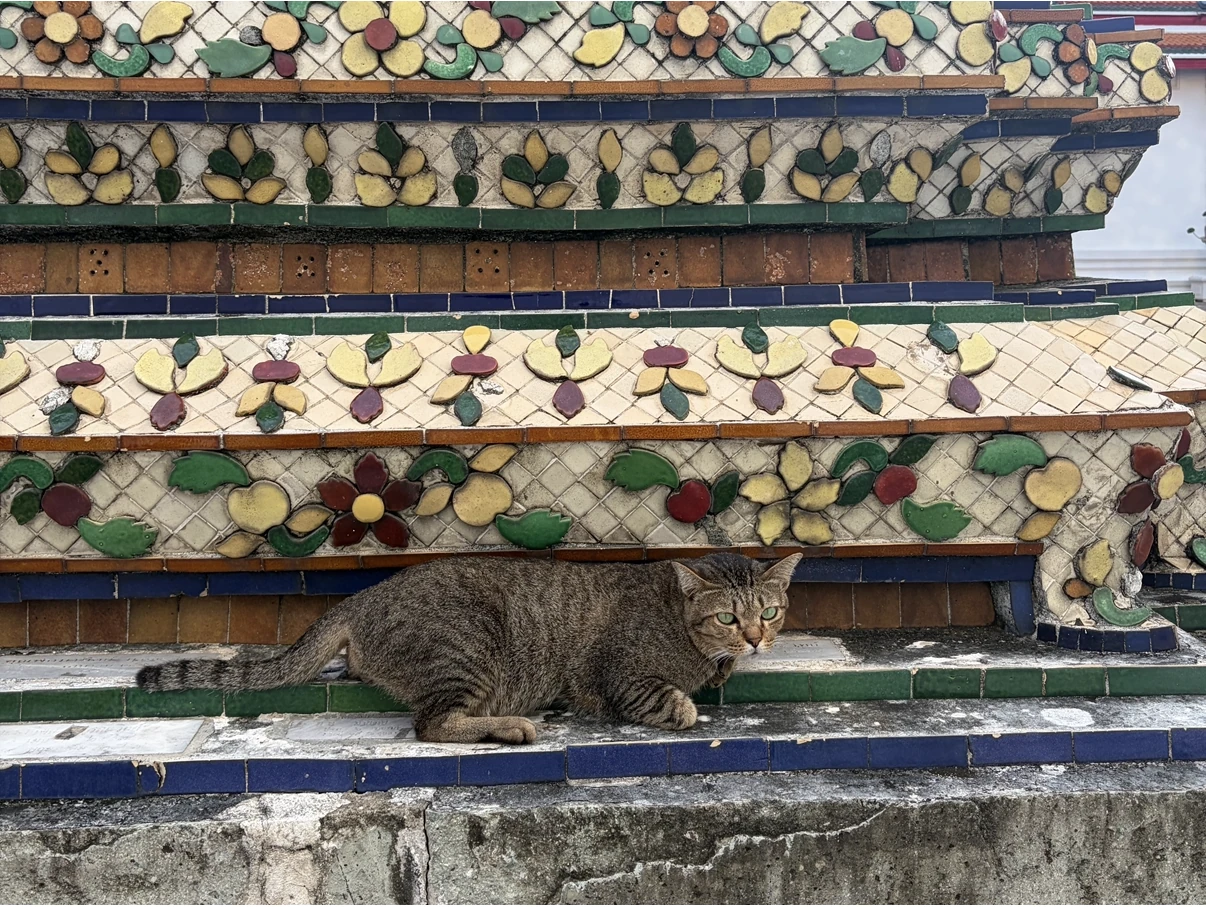
The best places to spot the cats are in the shade and tucked into little crevices around the temple. Come around 7pm, when feeding time begins, and you’ll see a furry army emerge from their hiding spots in full force.
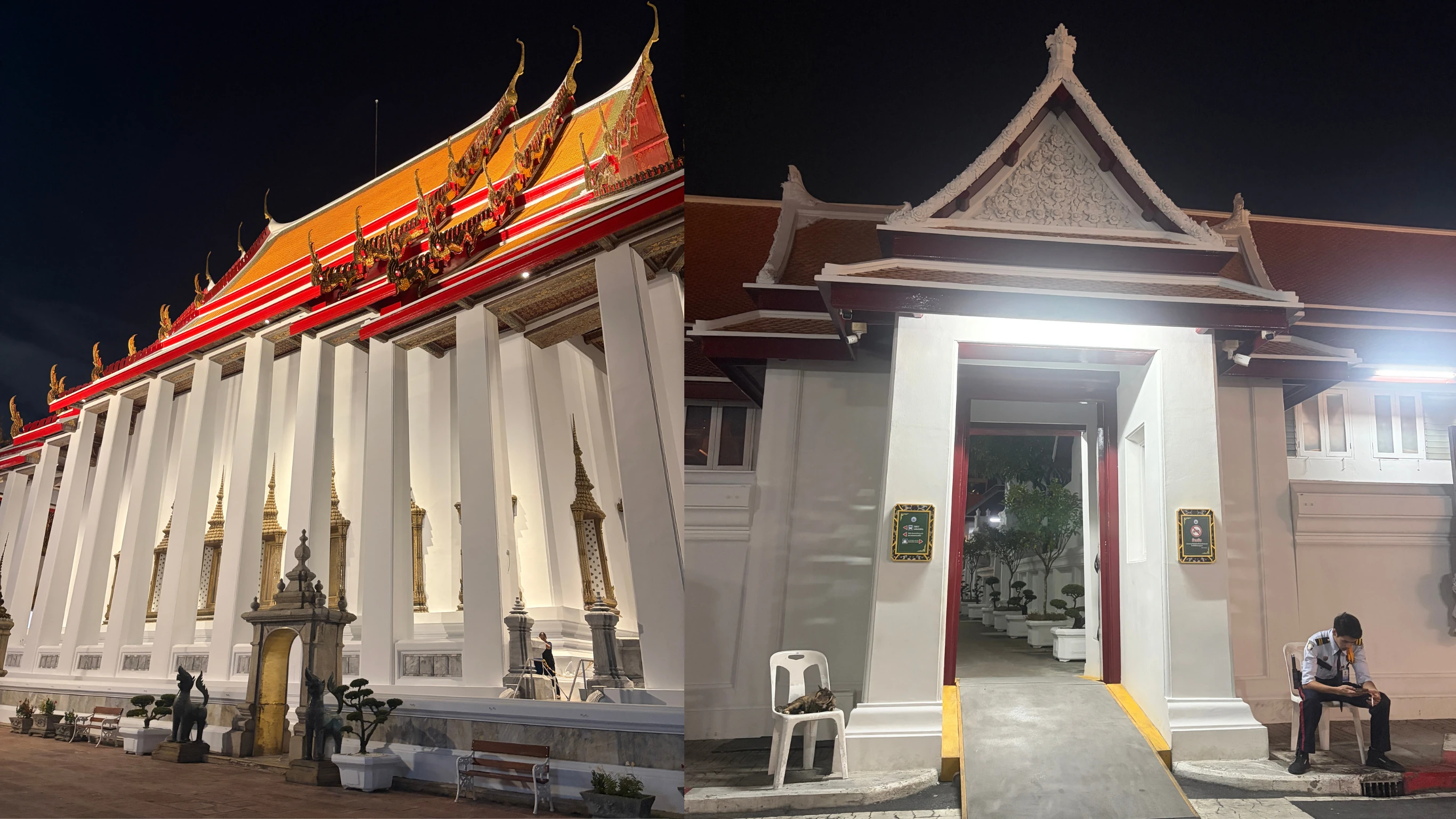
There’s never a guarantee where a cat will turn up, but the quieter side entrance at Ticket Counter 2 is a good place to start – it’s also where we spotted the most cats, thanks to a tip from the security guards. For those driving in, the closest parking is available on Chetuphon Road for B20 an hour, although spaces are extremely limited. If you really can’t spot one, find a group of tourists gathered around a chedi – chances are there is a cat modelling for them.
While it might be tempting to pet every cat you meet, the monks ask visitors to refrain, as many of the cats get easily frightened. And remember to dress respectfully and cover your shoulders and knees.
Paws and reflect at the temple
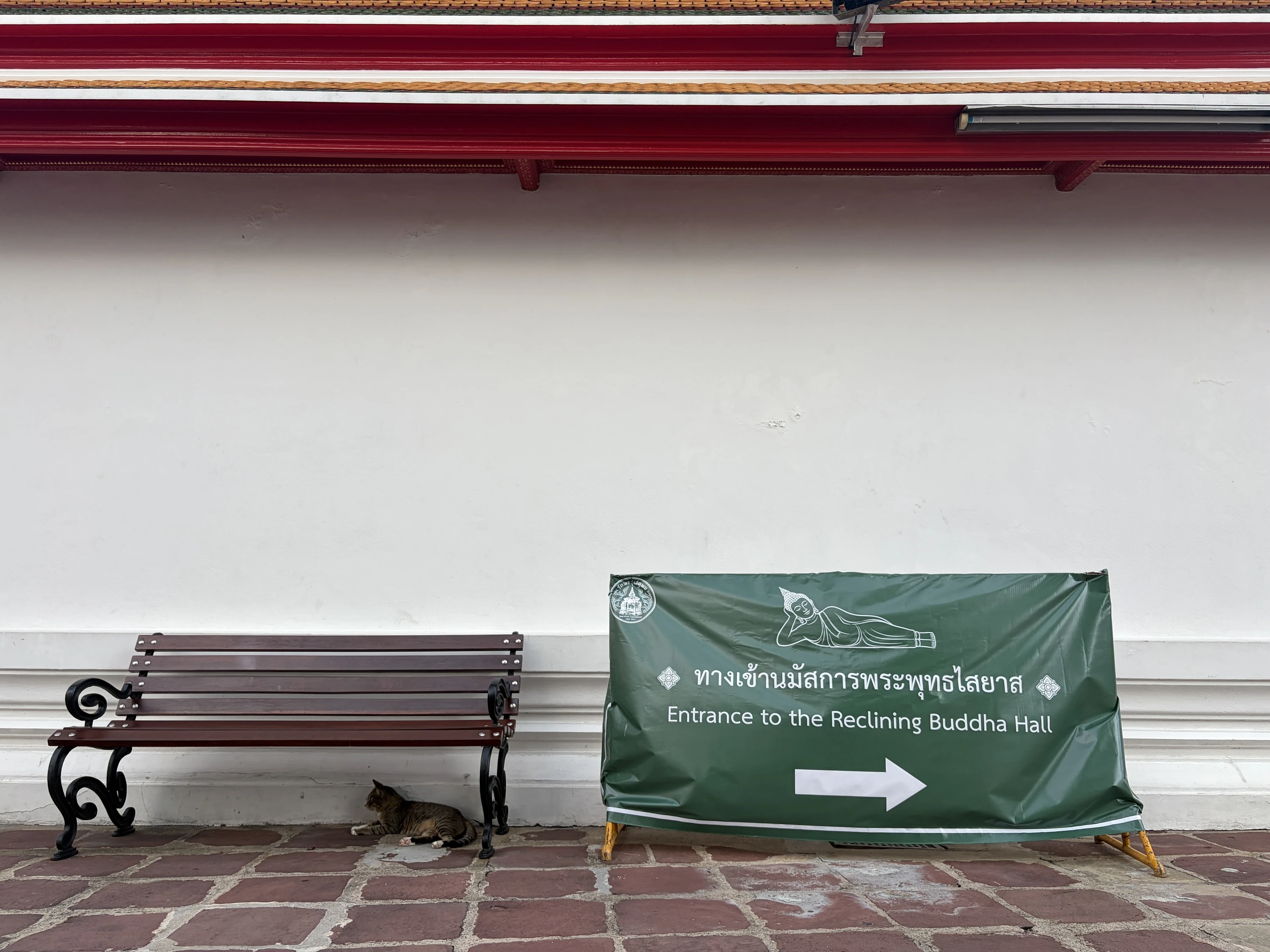
Of course, the cats aren’t the only reason to visit Wat Pho. The temple is home to one of Bangkok’s most famous sights: its enormous gold-plated reclining Buddha, stretching 46 metres long and 15 metres high. It’s also where Thai traditional massage has its roots, and the temple’s walls are packed with centuries-old illustrations and inscriptions that helped earn it recognition on UNESCO’s Memory of the World Programme.
We came specifically for the cats, but surprisingly, Wat Pho still managed to stun even those of us who grew up going there on school trips. At night, the pagodas glimmer and illuminated golden structures pop against the dark sky. We followed the monk carrying cat food from one corner of the temple to another, with a parade of cats serving as our unofficial tour guides.
The cats left behind here aren’t a nuisance; they’ve become part of the temple’s charm. In their own way, they embody something Thailand is known for: a sense of hospitality and warmth that makes room for everyone – no matter how many legs you have.
Who knew we’d end up leaving with more than just a few cat photos, but a little wisdom, too.
Wat Pho, 2 Sanam Chai Rd, Phra Borom Maha Ratchawang, Phra Nakhon. B300. Open daily 8am-7:30pm