
[image]
[title]If you needed proof that Thai drag has arrived on the world stage, Gawdland just handed it to you. The first Thai queen to win RuPaul's Drag Race: UK vs the World. Before her, Pangina Heals had already been laying the groundwork – hosting Drag Race Thailand Season 3, then stepping up to compete on UK vs the World herself. Every think piece, every ‘watch this space’ moment has been building to this. Gawdland feels like the exclamation mark at the end of a sentence years in the making.
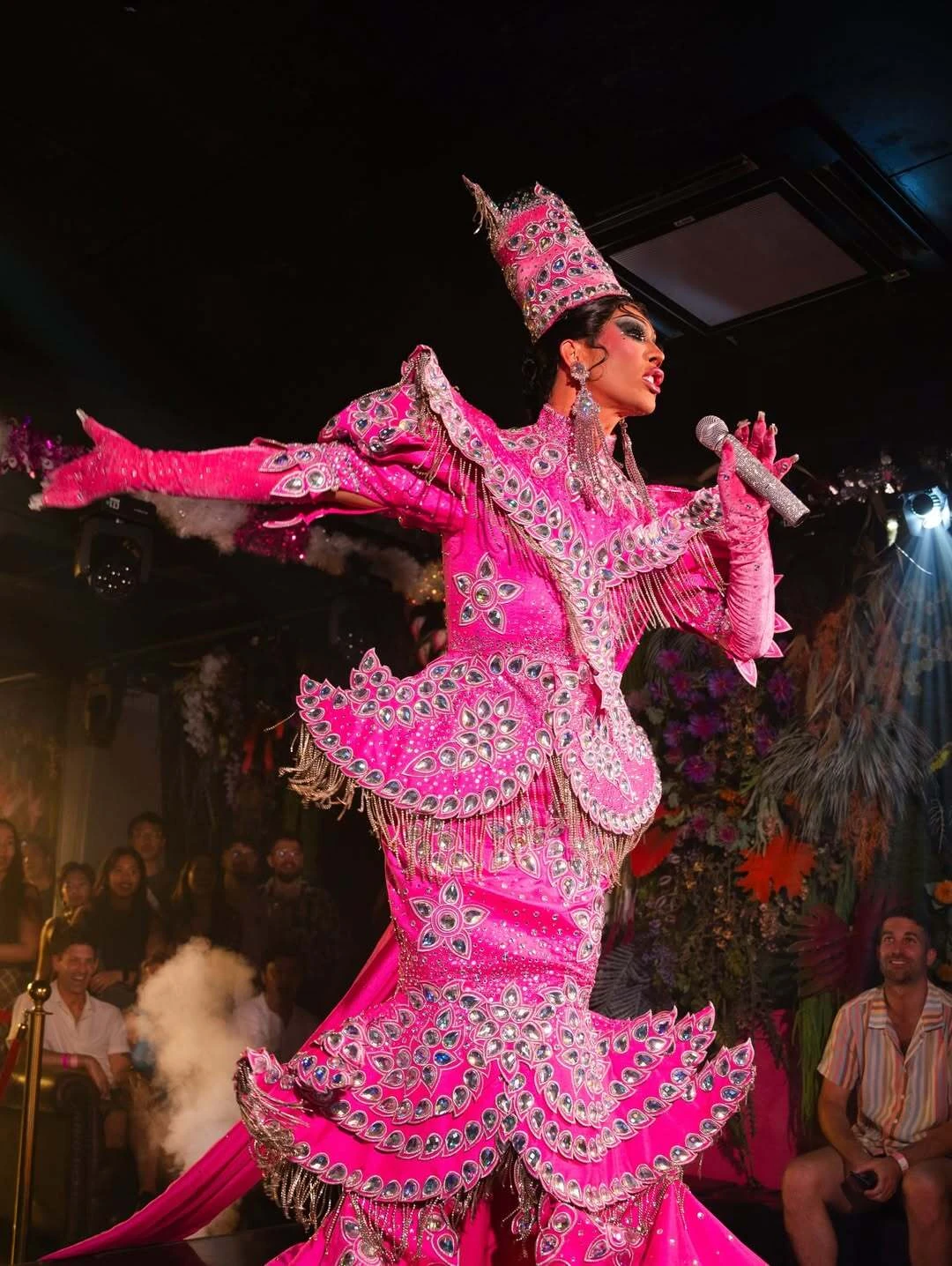
What makes these looks land isn’t just the concept. It's the craft hiding inside it: rhinestones sewn on one by one, fittings that happen six or seven times before a seam is signed off, and the instinct to get the brief before it even exists.
That person, for many of these looks, is Veed, the Thai designer behind some of the most striking pieces in Thai drag and performance fashion, built on obsessive craftsmanship, a theatrical eye and a clear refusal to play it safe. Alongside him is Fam, known as three_theofficial, the headpiece designer whose sculptural creations sit right at the top of a look. Veed builds the silhouette, Fam quite literally crowns it.
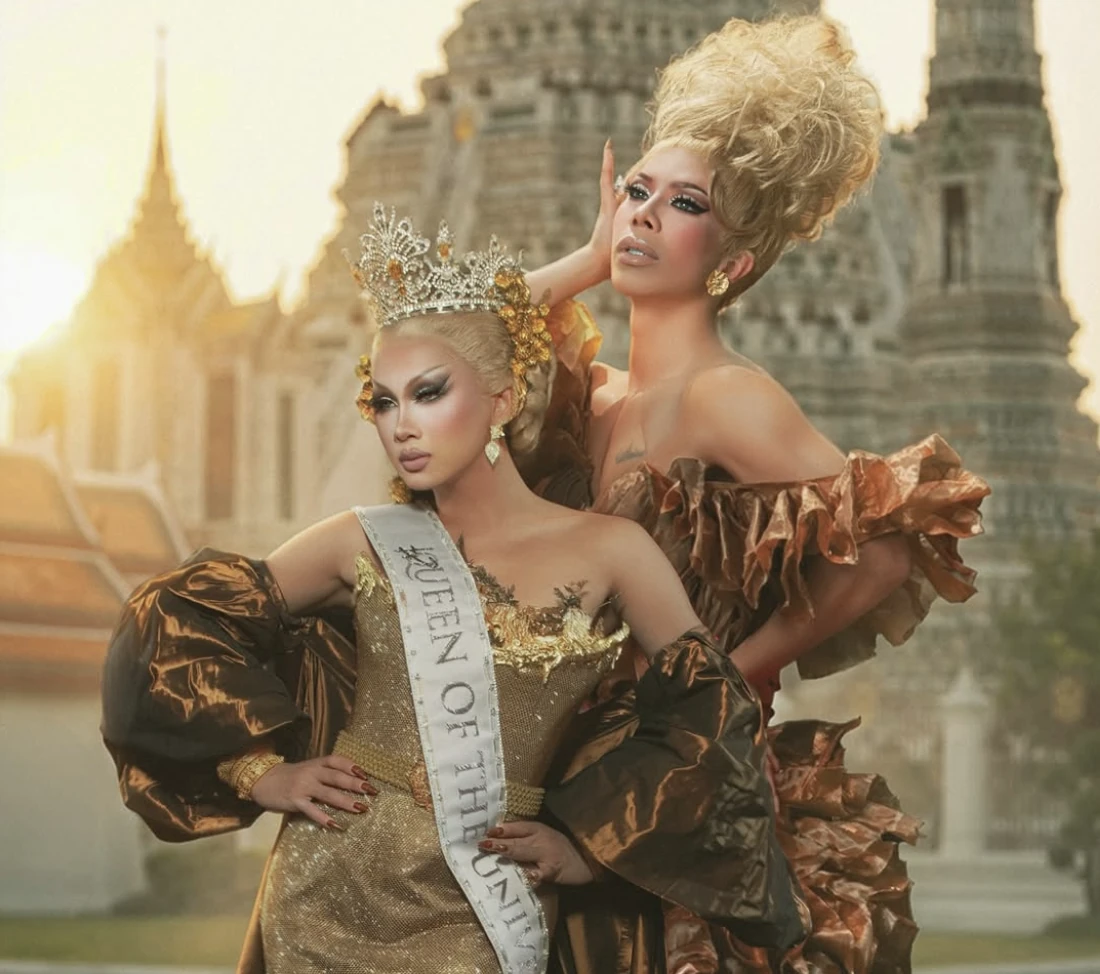
We had Gawdland drop by our office just months before she went on to make history. There was something sweet in the air that day, though no one knew yet she'd be carrying the Thai flag all the way to the top. Read more here.
Now, as the win settles in, we're turning the spotlight onto the creative force behind the looks. Many hands and minds shaped this journey – today, we're focusing on two of them. Short names, precise work: remember them, Veed and Fam.
Here's where it all began, how they think and why the most interesting looks are often the ones that spark debate. Spoiler: they’re into that.
Start at the beginning – how Veed and Fam found their craft
Where did it all begin?
Veed:
‘It started with art and a question: how do you take something you love and make it real?’
My aunt used to bring Issey Miyake bags into the house when I was small, and something about the way those objects existed lodged itself in my mind. That eventually led me to John Galliano's Dior haute couture show from 2003, and the whole world cracked open. That show – the collision of cultural references, theatrical excess and genuine beauty – completely reframed what fashion could be for me. It was never just clothing. It felt more like mythology with a zip.’
Fam: It started with making pieces for myself – for class assignments and faculty performances. Then people began noticing and reaching out, asking me to make things for them.
Trace the early work and how it evolved
Veed: Looking back, I was completely in the world of costume – everything built around specific characters and very particular fantasies. Japanese animation, high-drama aesthetics, a visual language that only really makes sense at full volume.
The shift came when I enrolled at a vocational development centre in Phatthalung, where I learned to sew properly. Not just the idea of it, but the physical reality: how fabric behaves, what a needle does, how a machine reads a seam. The more I understood the process, the more absorbing it became. The precision, the way cloth falls from different angles, the quiet drama of a well-constructed garment – it all started to feel like magic with a technical manual.
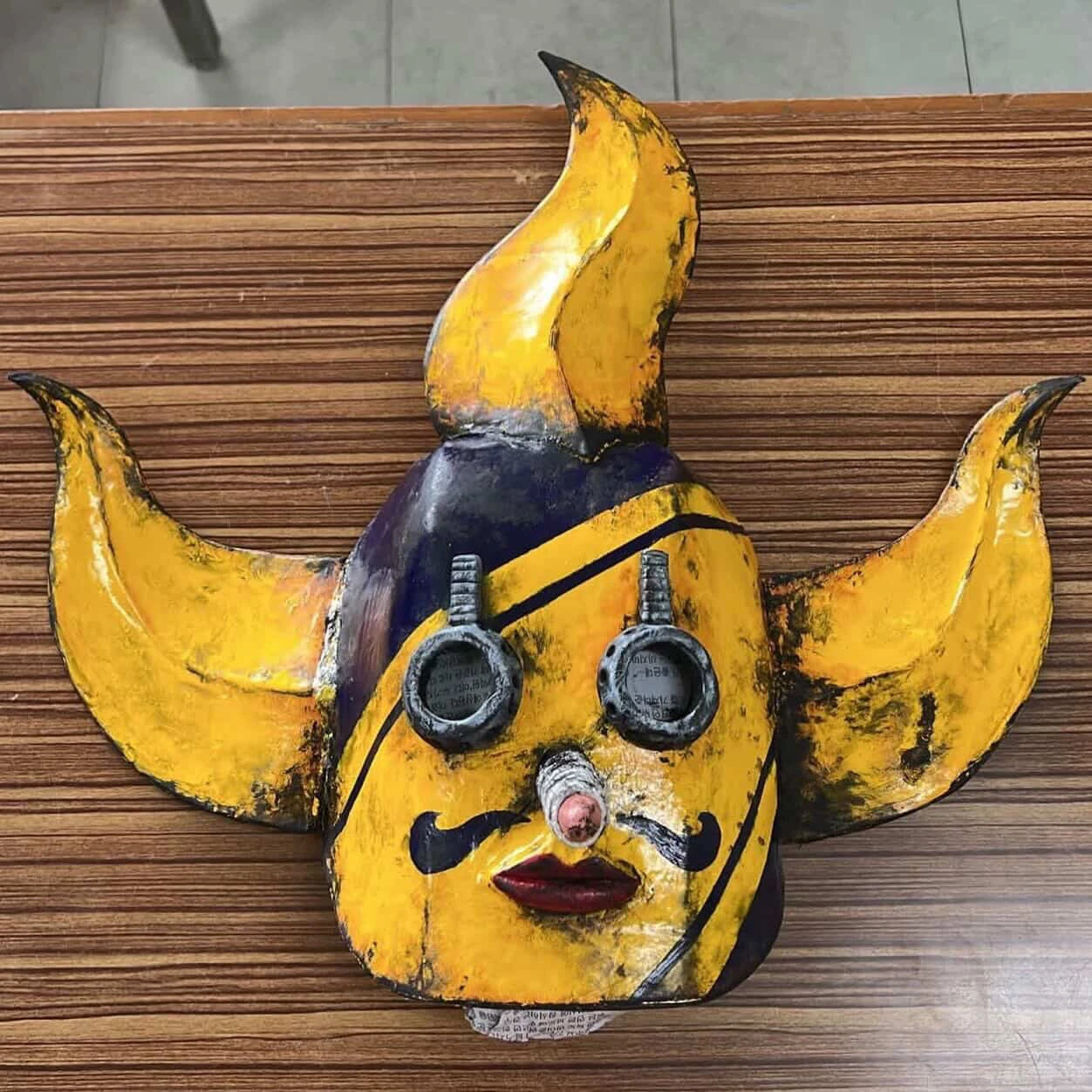
Fam: My early work leaned into cosplay-style – mostly pieces made for class assignments. The first thing I ever made was a Sogeking mask from One Piece, for a school project.
Build the look – what each piece brings
Veed: The body comes first. A look for a show isn't just about how it photographs or reads from across a room. It has to work with the person wearing it – how they move, how they perform, how their body speaks when the music starts. Some pieces go through six or seven fittings before they're right, with adjustments made not just for fit but for rhythm.
‘The outfit has to sync with the song. It has to breathe with the performer. Anything less is just a very expensive obstacle.’
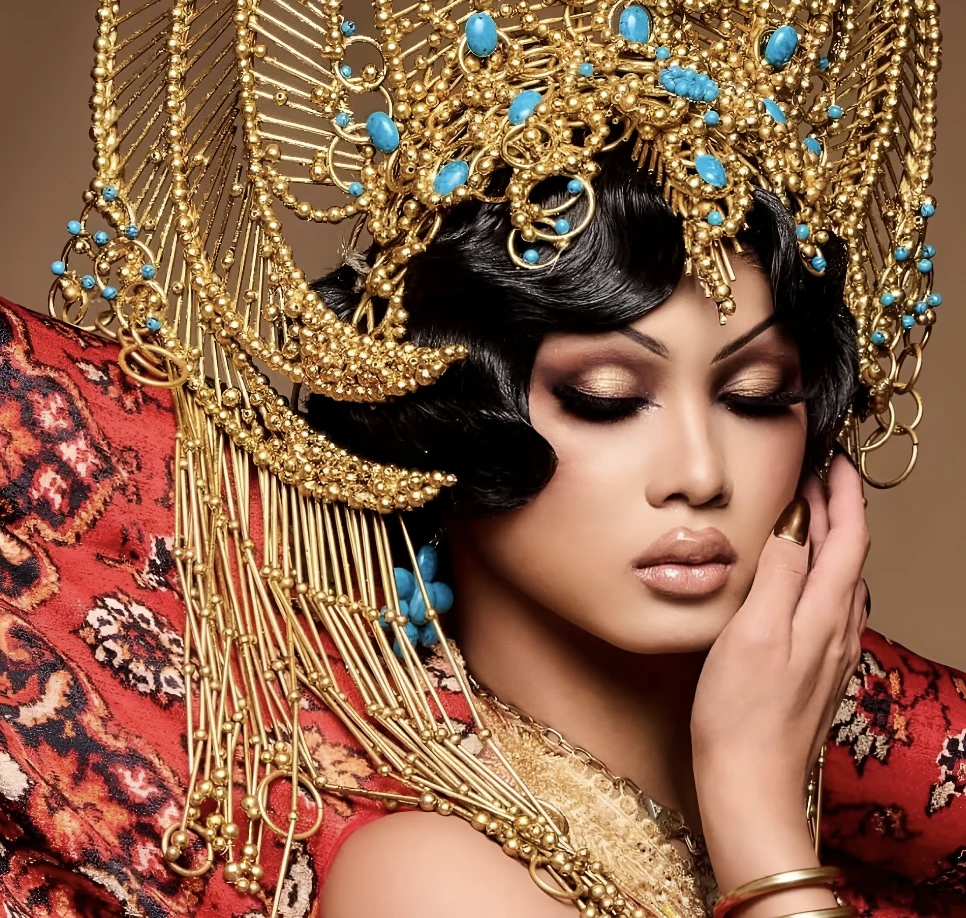
Fam: A headpiece is what makes a look complete. An outfit can be beautiful on its own but still feel like something’s missing – like the story hasn't quite been told.
‘The moment you bring a headpiece in, everything clicks. It fills the gap and the whole look becomes what it was always meant to be.’
Handle the unseen – the hardest parts of the work
What are the hardest parts of this work that most people never see?
Veed: Fashion – especially at the level of real tailoring and construction – demands patience and precision that can be brutal.
‘There are moments when you have a grand vision in your head and then you sit down to execute it and realise how much invisible work is hiding inside the dream.’
The gap between what you see and what it takes to get there can feel enormous. There were times when that voice crept in: is this right? Is this really where I'm supposed to be? But I stayed!
Fam: The biggest challenges are time and materials.
‘Finding new materials that can reduce the weight of the headpiece without compromising the look – that's a constant puzzle.’
It has to be comfortable enough to sit on someone's head, sometimes for hours. I'm always adjusting structure and weight so it doesn't become a burden for the person wearing it.
Read the performer – working with Gawdland
When you first started working with Gawdland, how did you approach understanding who she is?
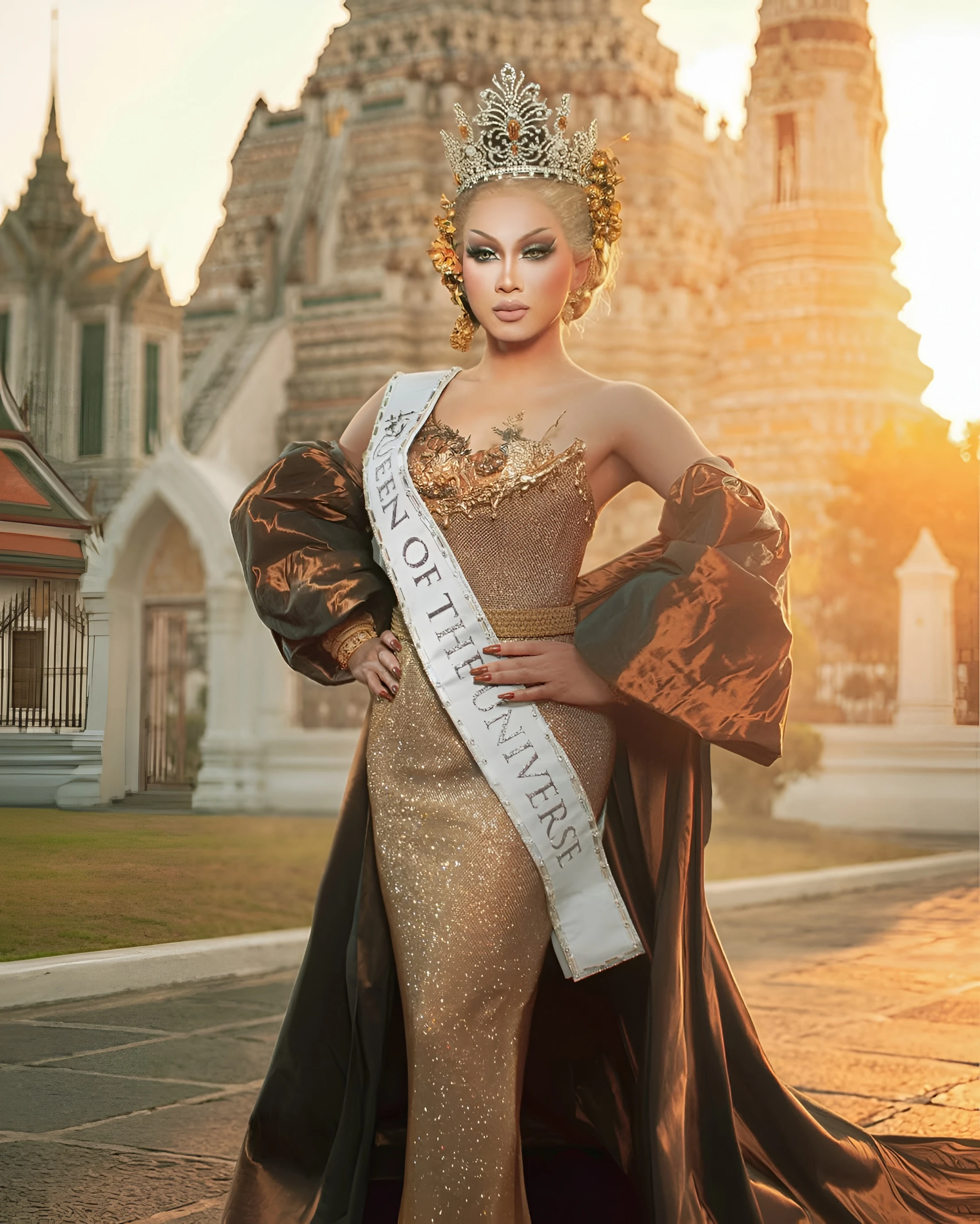
Veed: Gawdland is genuinely fun creative territory, and that's not a throwaway compliment. Her identity sits at an interesting intersection: modern and playful, with a pull between something conservative and something that twists it sideways. There's a generational energy to her that keeps the design process alive. If anything, it’s hard to stop.
Fam: Working with Gawdland is actually quite straightforward. The team usually comes with images or references already in hand, and I design within that to create something that fits the look they've envisioned.
Shape the idea – from concept to finished look
Walk us through the creative exchange – how does an idea become a finished piece?
Veed: It starts with understanding who someone actually is – not just what they like to wear, but their temperament, their way of thinking, the energy they carry without realising it. Some people appear still but are intricate. Some seem strong but hold something fragile inside.
All of that becomes material. It can be translated through silhouette, fabric, colour or the smallest detail. Clothes are a language. They tell a person's story without requiring them to say a word. The goal is never to reinvent someone – it's to make what's already there feel clearer and more like itself.
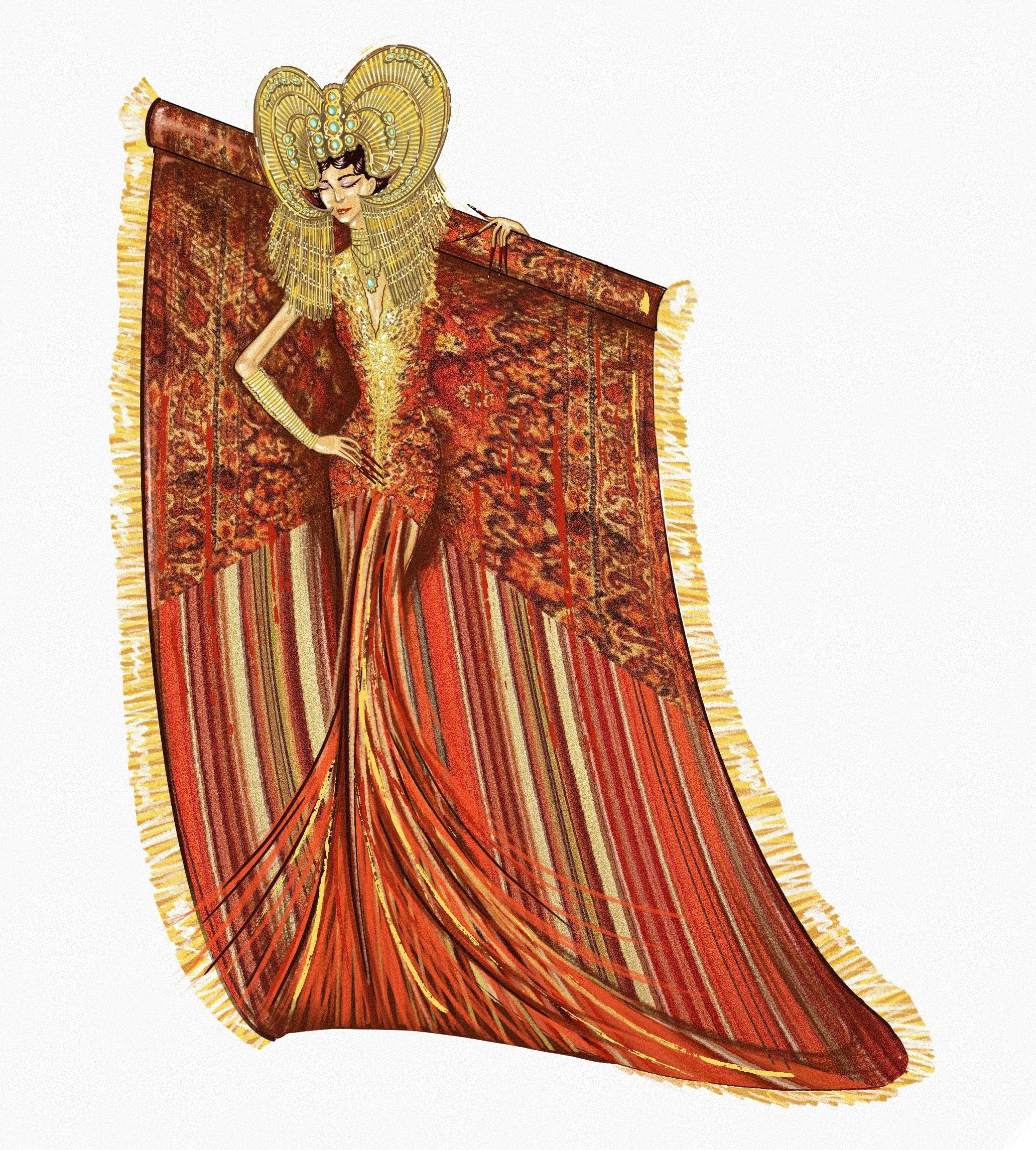
Fam: The team comes with rough references and gives me a scope to work within. From there, I take those references and bring my own ideas into the design. It's a collaboration – they set the direction, I build the detail.
Pinpoint the look – defining Gawdland
Is there a specific Gawdland look that captures her most completely?
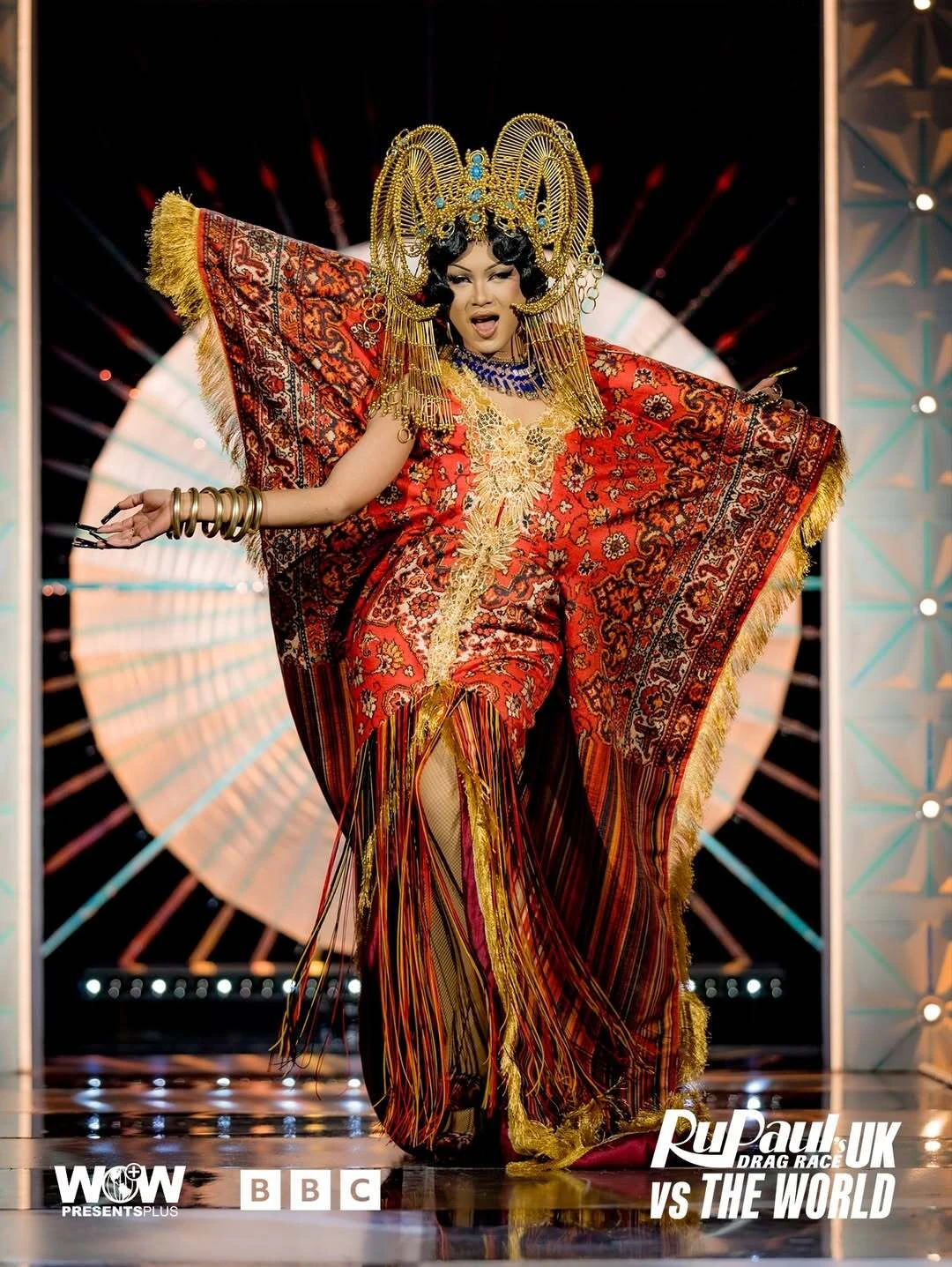
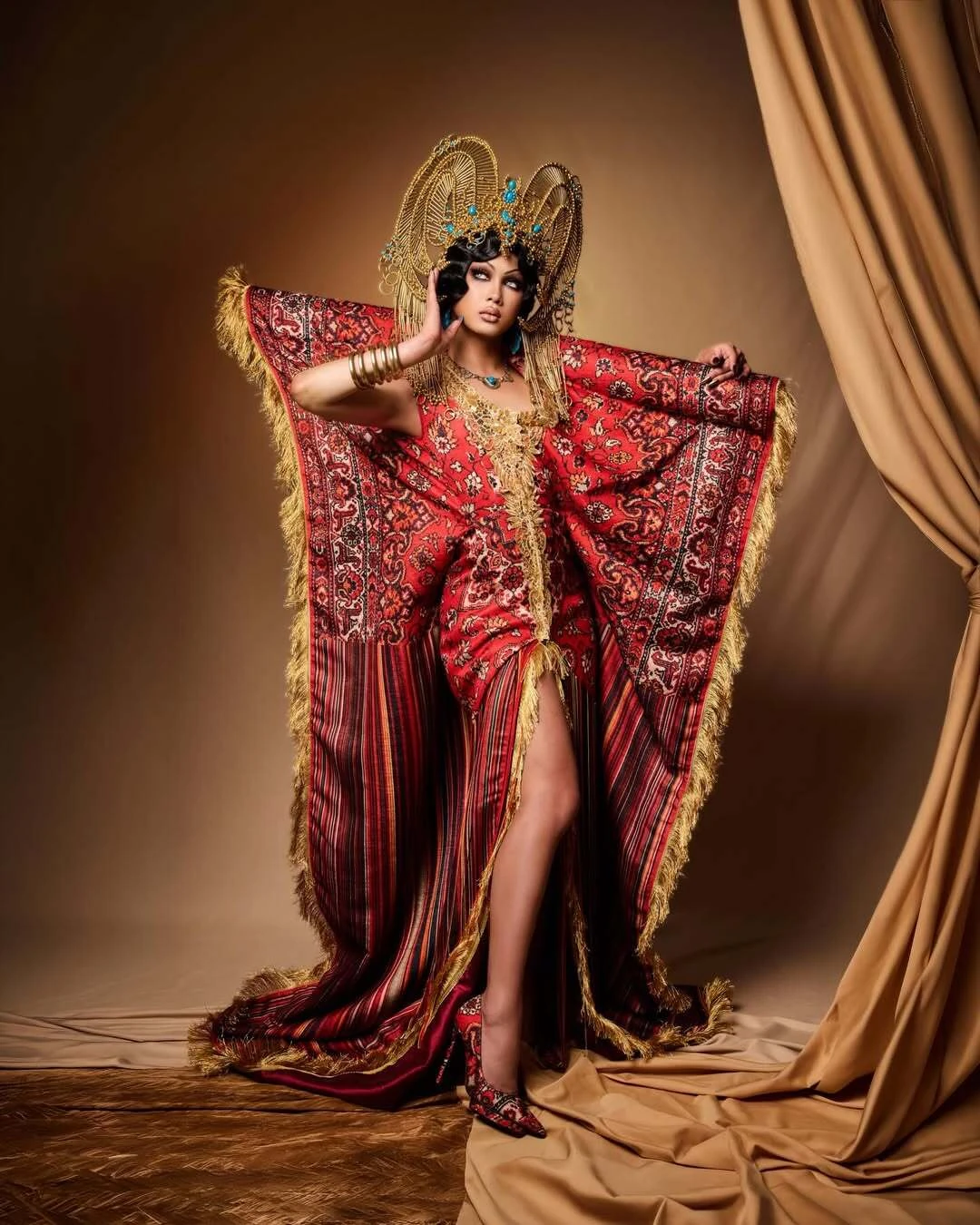
Veed: The carpet look. It brings together everything that makes Gawdland interesting: High Camp, a fashion sensibility that knows exactly when to twist convention, and a reading of conservative cultural aesthetics put through a very particular filter. The headpiece, the make-up, the construction – it all works together to say something specific. It doesn't just look good. It means something.
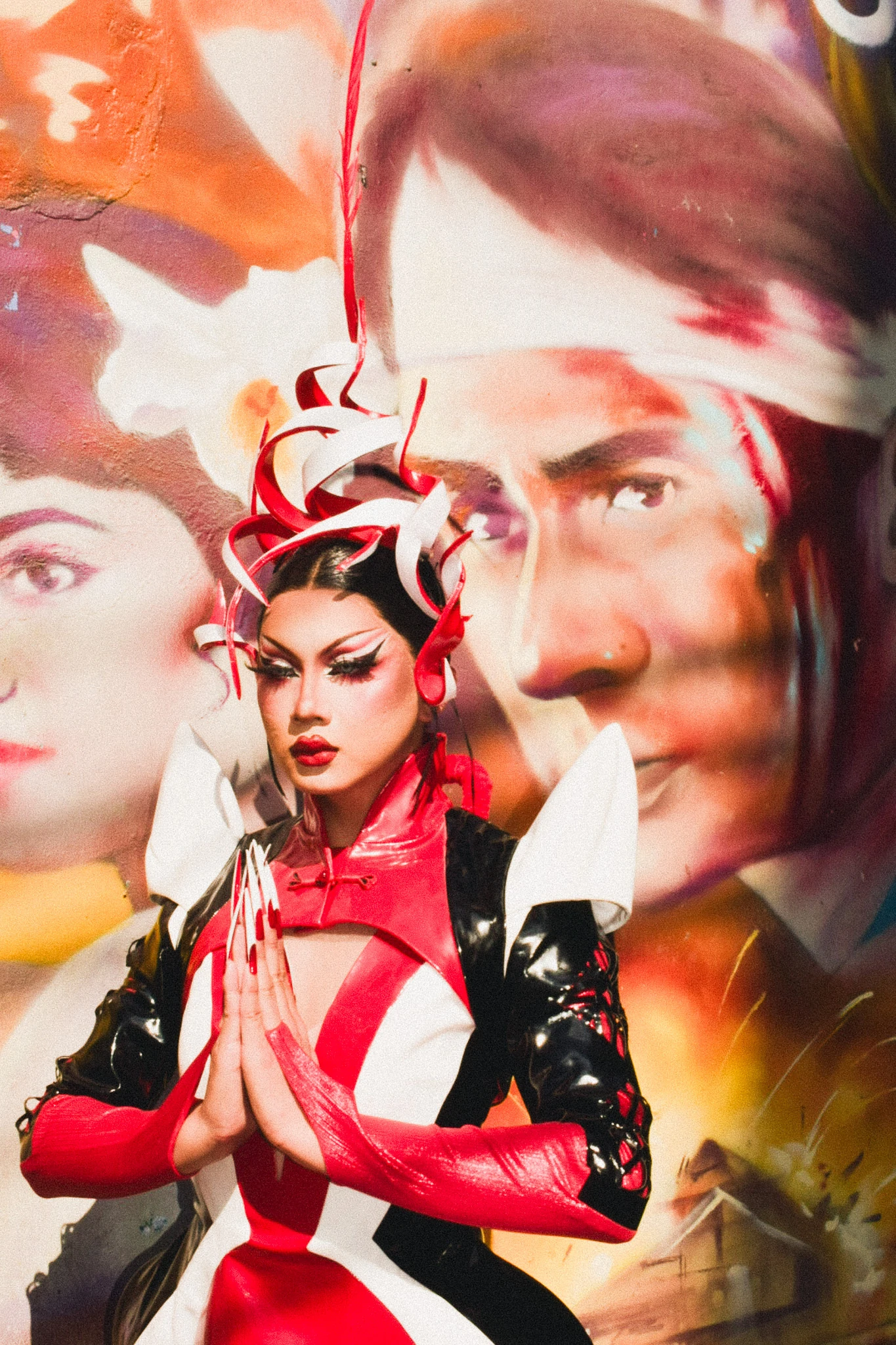
Fam: The piece Gawdland wore for the promotional shoot. For me it speaks to Thai identity reinterpreted in a more contemporary way. That tension between tradition and modernity is exactly the kind of problem I love to solve.
Hold the signature – the pieces that feel most personal
And which piece holds the most of you in it?
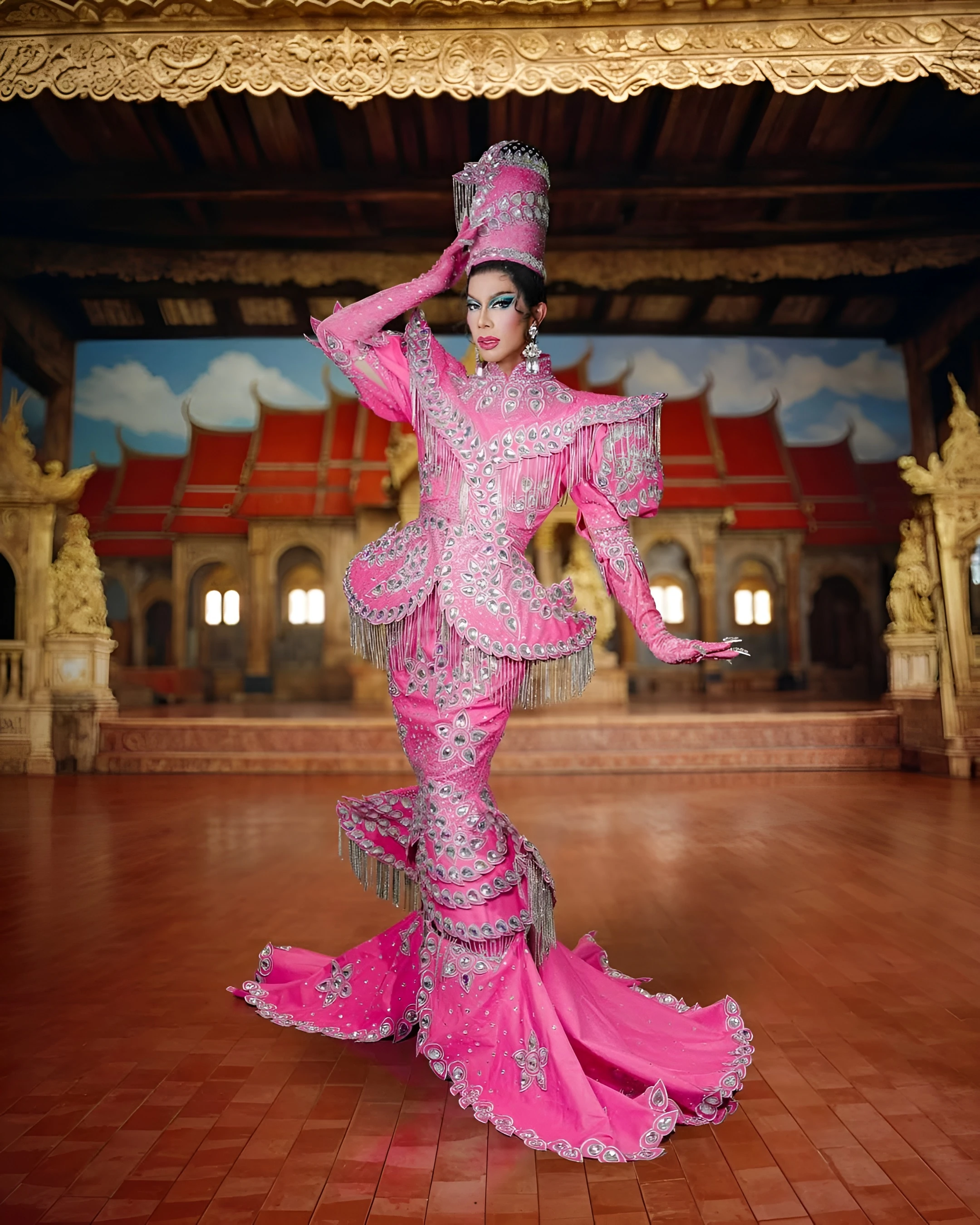
Veed: The Likay look I created for Pangina Heals, for the opening episode of Drag Race Thailand Season 3 when she came out as host. That one sits closest to me. It was a genuine merging of Camp and Thainess, with both holding their ground rather than one swallowing the other.
‘And the craft involved was not for the faint-hearted: rhinestones sewn on one by one, in exactly the way traditional Likay costume makers actually work.’
It's slow, it's painstaking, but entirely worth it. That level of attention doesn't disappear when the cameras roll.
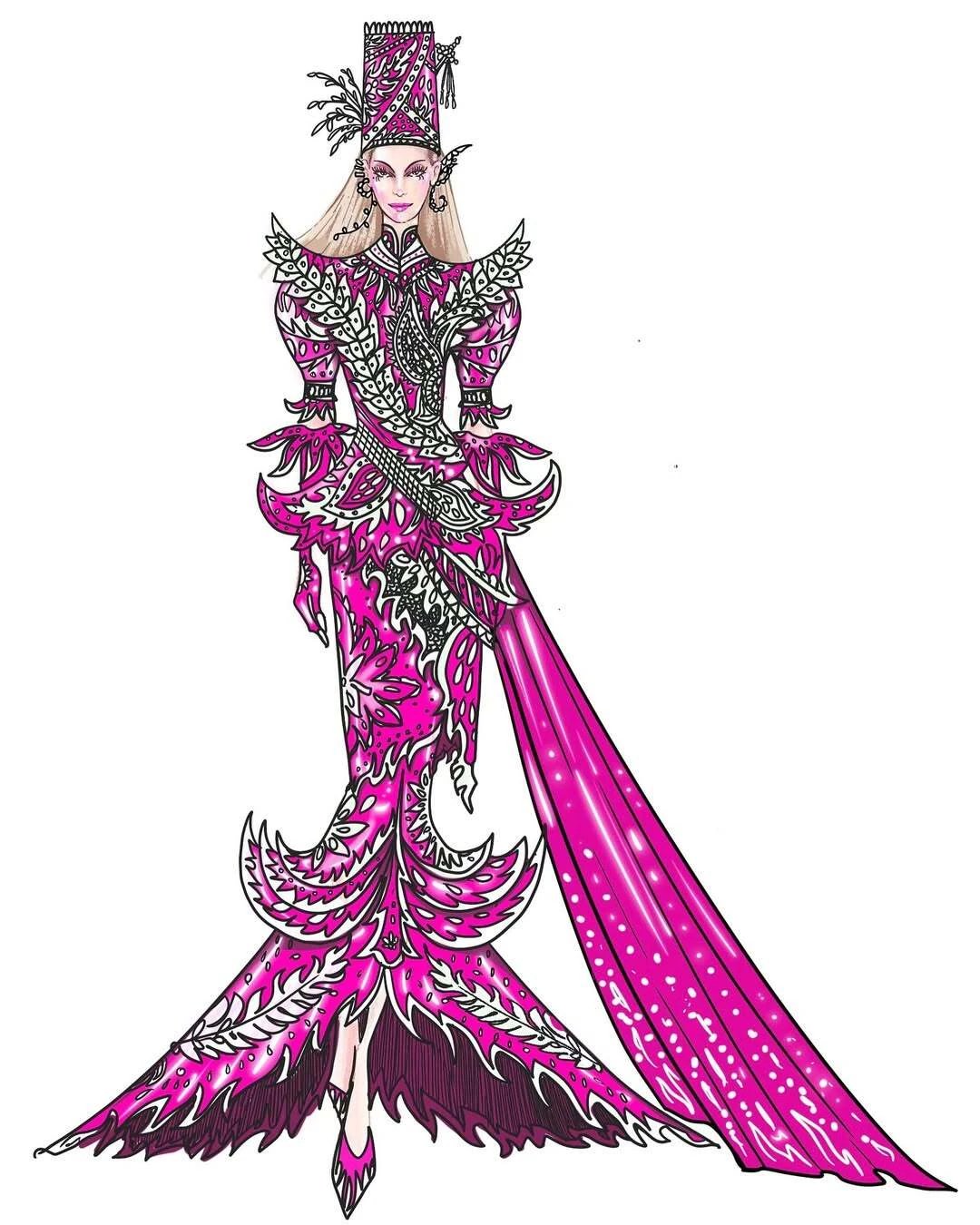
Fam: The promotional shoot piece, honestly. That's genuinely who I am – someone who takes traditional Thai headpieces and finds ways to make them feel modern. That piece didn't just look like me. It came from me.
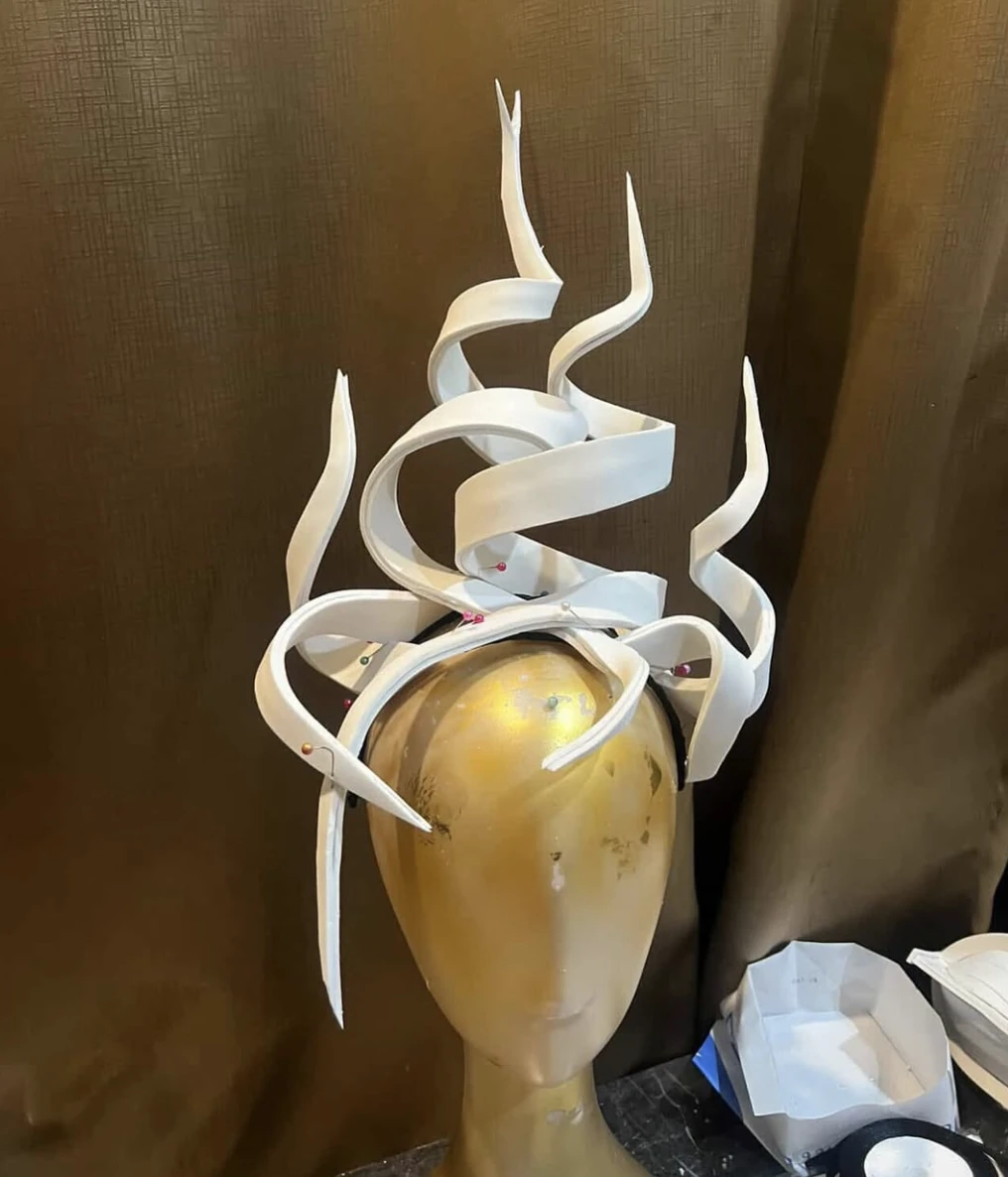
Step onto the stage – seeing the work go global
Seeing your work on a global stage – has it changed how you see what you do, and what brought you to this point?
Veed: The approach doesn't change, even when the platform does. When I worked with Nicky Doll for Drag Race France, it was the same method as always: start from who they are, read their energy and find the answer through your own perspective. The scale confirms the method – it doesn't replace it.
‘And I think what brought me here is consistency and the willingness to risk being wrong.’
If something looks beautiful in a familiar way, it becomes just another look – nothing people hold onto.
‘The things that stick are the ones that make people talk, that spark a little friction, that you can't immediately categorise.’
I don't like making things that have already been made. That instinct has, almost accidentally, become my most recognisable quality: when a client wants to stand out, they know where to find me.
Fam: I feel genuinely proud. That Gawdland and the designer trusted me and gave me the chance to be part of a global drag stage – that means everything.
‘Trust is really what got me here. People saw the work, believed in it and kept coming back.’
Push forward – what comes next
Where are you taking things from here?
Veed: I try to put craftsmanship into everything I make, because it's something you can't find on a shop floor or order online. It's what turns a piece of clothing into something people remember. That's where I'm heading – deeper into the work that takes time, demands skill and leaves a mark. Follow along at @wearingveed.
Fam: I want to keep pushing Thai headpieces into new spaces – finding ways to make something so rooted in tradition feel completely current. There's a lot more to explore there and I've barely started. So watch me as I go. Follow @three_theofficial.