
[image]
[title]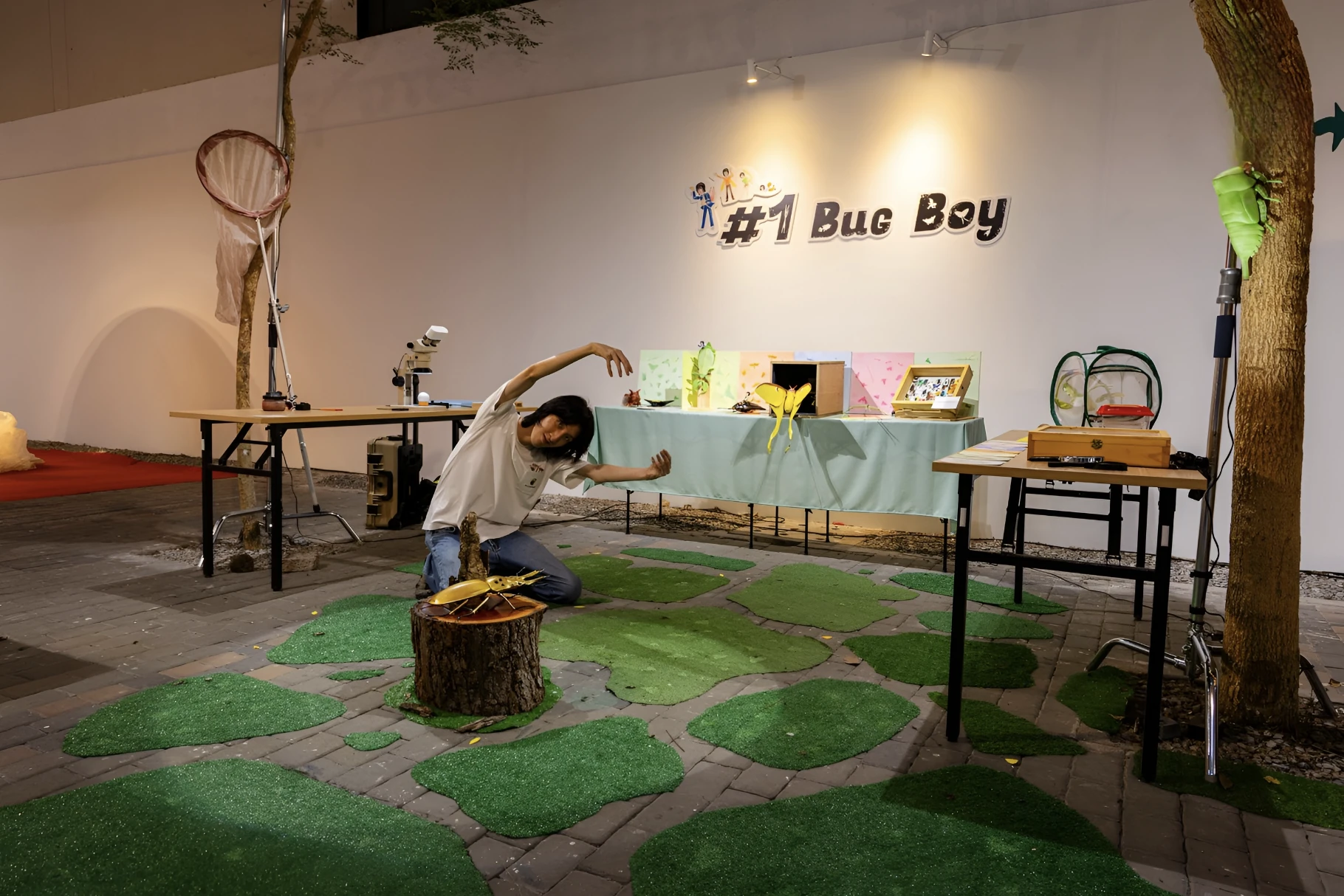
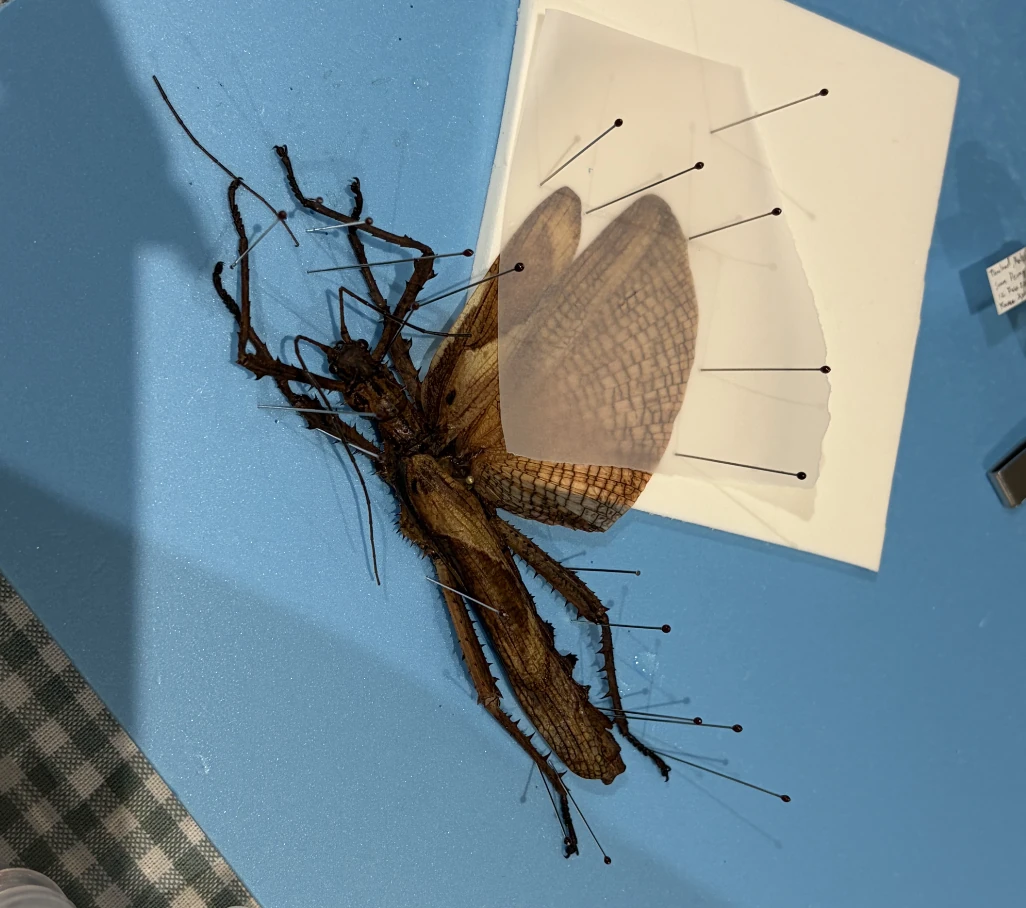
There is a stick insect on the table. It is dead, but it doesn’t look it. Long and twig-brown, legs angled outward like dropped from a branch, it has the quality of an animal simply resting. The hindwings are spread flat on washi paper, broader and more ornate than the forewings, faintly iridescent under the light. In life they stay folded out of sight. They only open to startle.
Kawin Sirichantakul twists an entomological pin carefully between his fingers, with the ease of someone who has done this a thousand times – because he has. He tilts his head, finds the spot just to the right of centre on the thorax and pushes down with confidence. The pin goes in cleanly. 'You never pin through the middle,' he says. 'That destroys both sides. You want to leave one side intact for study.'
This is Wanghin Lab, a home studio and learning space in a residential corner of Bangkok where insects are not pests, not curiosities and not decoration. They’re something altogether more serious: a window into a natural world that most city people might have stopped noticing. Led by two brothers, Kawin and Kavee Sirichantakul, the lab blends art, science and technology to create large-scale insect models, DIY exhibits and hands-on workshops grounded in real research and genuine curiosity.
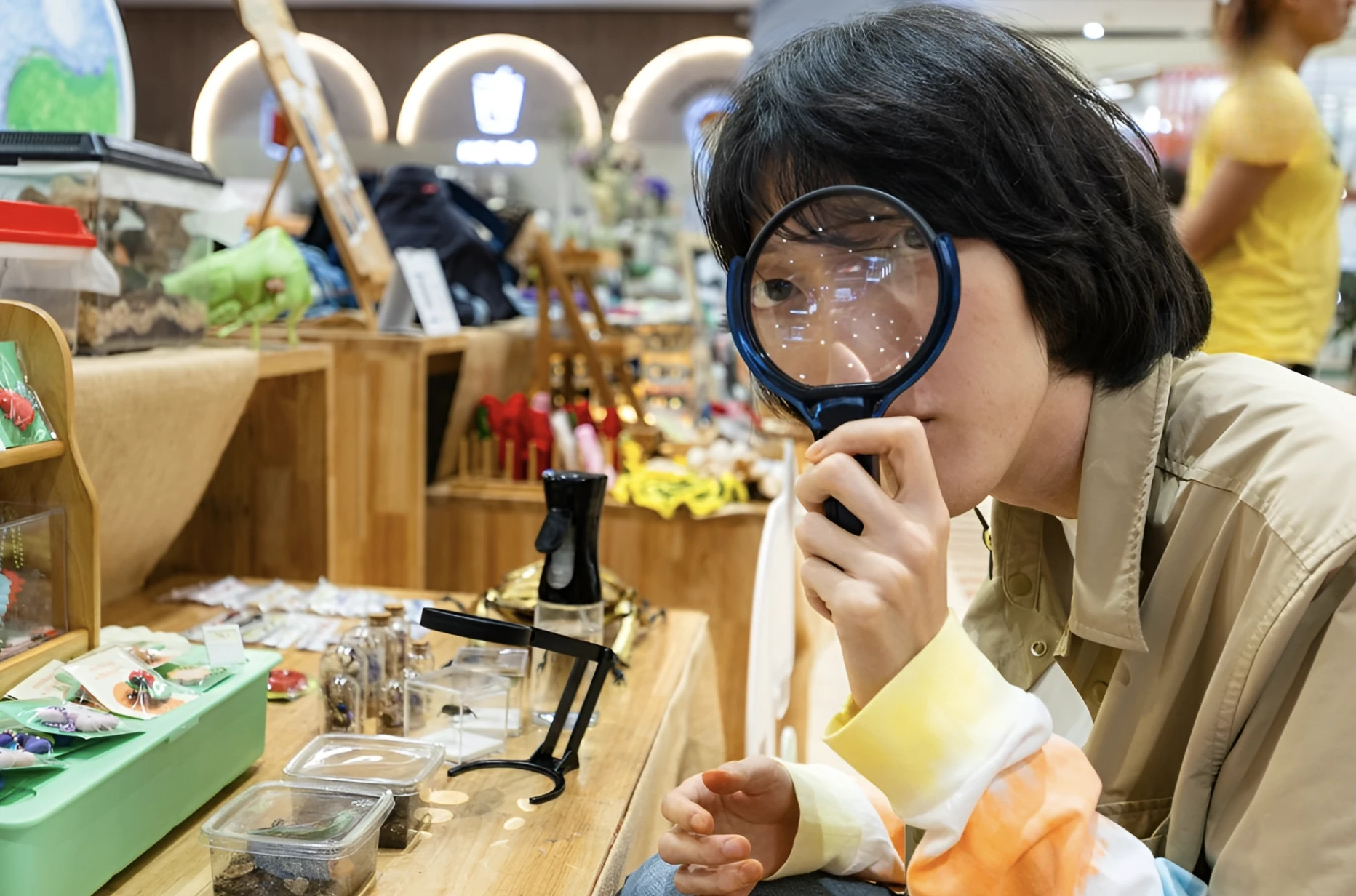
By any standard, it is an outlier. Strange in shape, rare in spirit. And depending on who you ask, maybe the only one moving like this in Bangkok right now. At Time Out, we would go further. We think Wanghin Lab feels necessary. Let us explain.
How it started
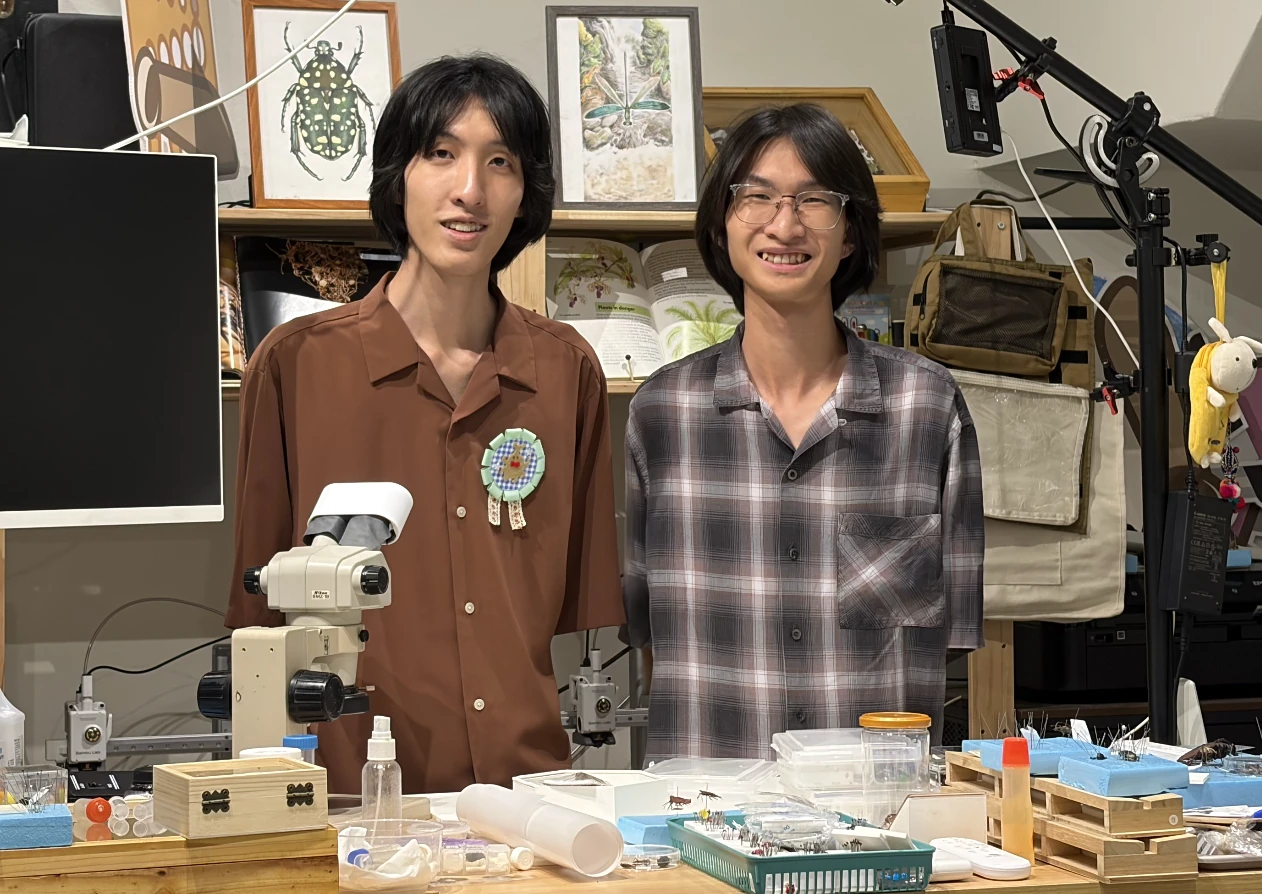
Kawin is the elder of the two. He has a deep love for nature photography, which has led him to create a handful of documentaries in the field. Kavee, the younger, works as a 3D modeller and is the one who first fell in love with insects.
‘Wanghin Lab did not begin as an entomology project. It began as a question,’
Kavee says.
'After I graduated, I had a gap,' Kavee says. 'I asked myself: what do I actually want to do? And then I talked to my brother about it. What if we tried something that felt like us? Something connected to nature?'
The family home had space. There was no grand plan for a museum, no business model mapped out in advance, though underneath it all sat something most creative people recognise: the desire to do work that is seen and valued beyond your own four walls.
Both brothers had grown up drawn to the outdoors. Photography pulled them in. Landscapes at first, then macro work – macro, in its very nature, changes what you see. Kawin liked animals and ecosystems broadly. Kavee liked insects specifically. 'Insects are tangible,' he says. 'You can hold them. That changes how you relate to them.'
Kavee taught himself to pin, largely through doing. A friend who worked as a field researcher let him tag along on collection trips. He watched, asked questions and practised. No formal training, no entomology degree. Just repetition and a willingness to be bad at something until he was good at it, which, as he is the first to admit, is very much still the ongoing reality.
The lab, the workshop, the world in a box
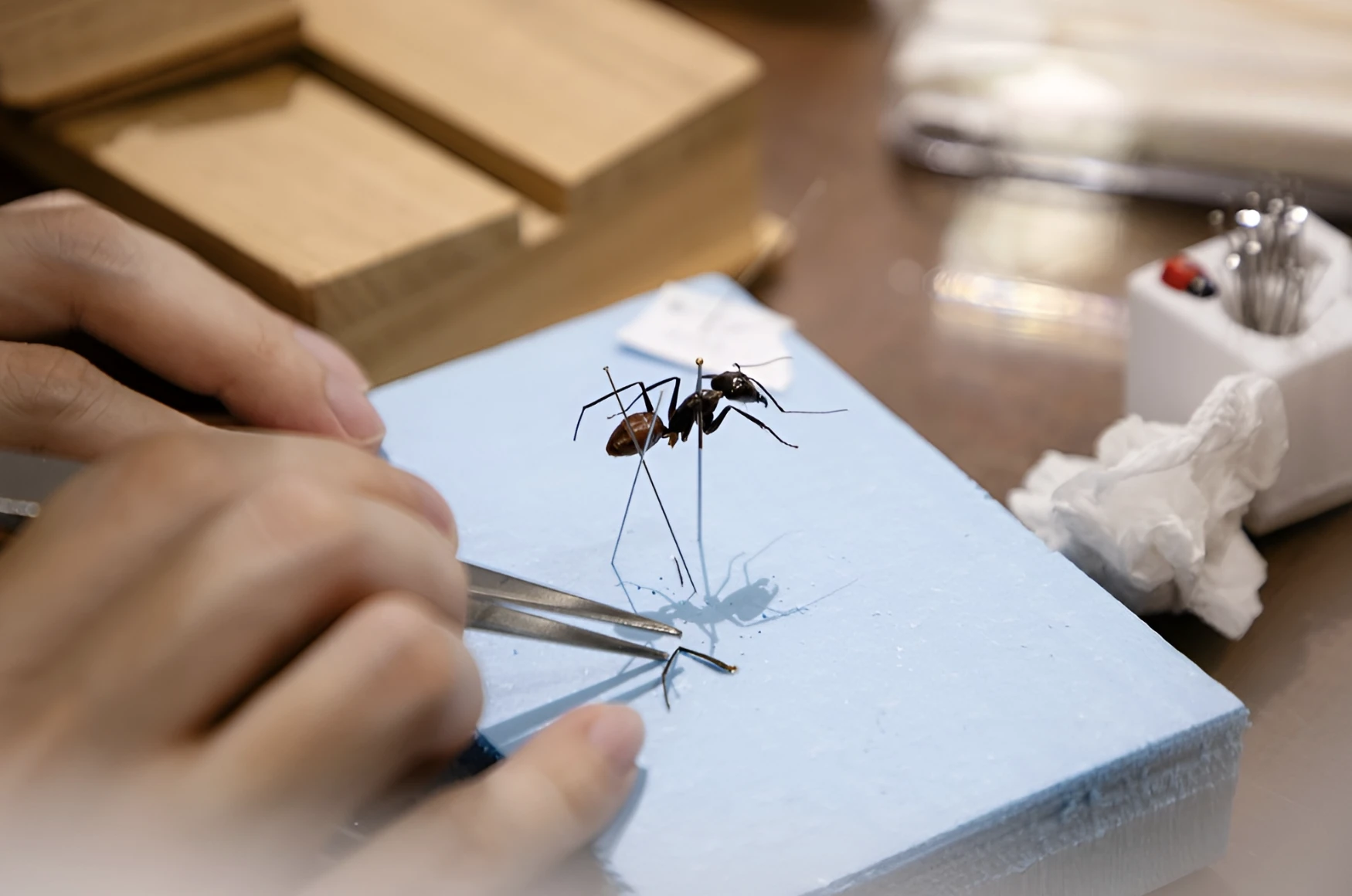
Wanghin Lab offers insect pinning workshops where participants learn the process step by step, guided by an expert and take home their own pinned specimen in a display frame along with a certificate of completion. Sessions are kept small, six participants at most, which gives the experience the feeling of a private class rather than a public event.
The workshops opened tentatively, with little fanfare. 'At first nobody came,' Kavee says, with the good-humoured candour of someone who has made peace with a difficult early period.
'We invited friends first, just to test it. Then after the new year they shared it and it started to grow.'
Within a few months the lab had run close to ten rounds, expanded its audience and begun collaborating with schools. Three institutions have brought students through so far, where the brothers introduced a biology class to the basics of specimen collection and pinning.
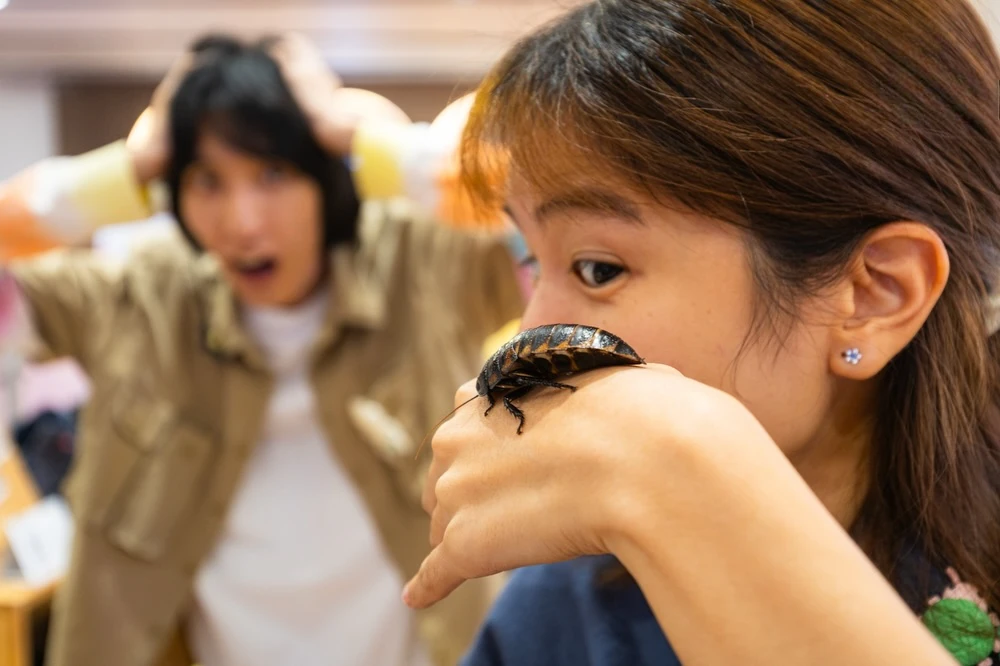
The target, if there is one, is anyone who loves nature deeply enough to get up close with a pin. In practice that means the audience skews wide. Parents bring their seven-year-olds. Forty-somethings come alone. What they share, the brothers say, is not expertise but openness.
What actually happens
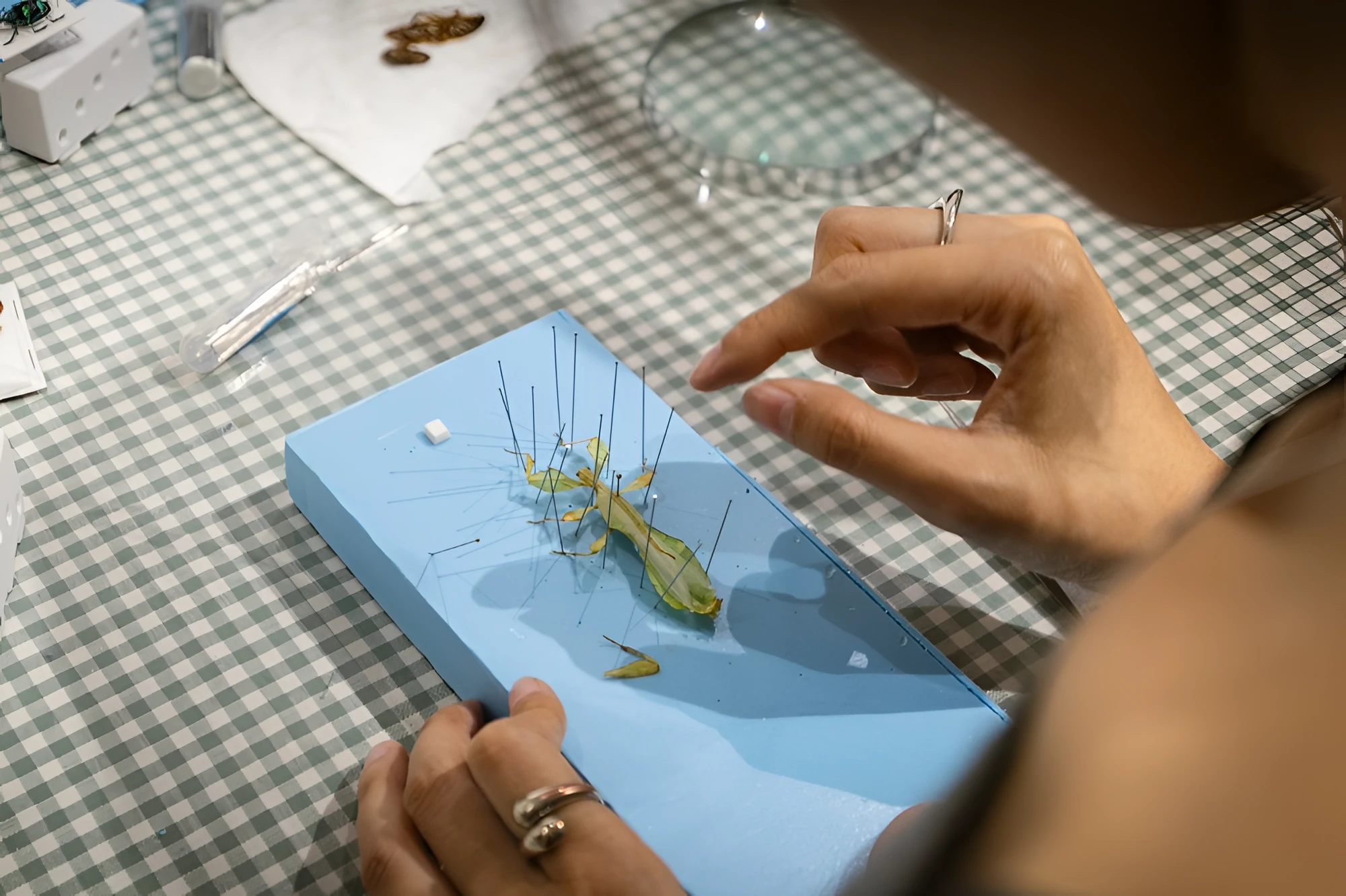
The workshop does not begin with a pin. It begins with a specimen. And before that, with understanding what a specimen is and why it matters.
Researchers in the field have been mounting insects for centuries. The practice serves taxonomy, ecology and long-term biodiversity monitoring. But in a research context, speed is the priority: a scientist collecting a hundred specimens in a day works fast and efficiently. Aesthetics are secondary. Wanghin Lab occupies a different space. Participants create pinned specimens that sit at the intersection of art and science, with legs posed, wings spread and bodies positioned with a care that museum collections rarely afford individual specimens.
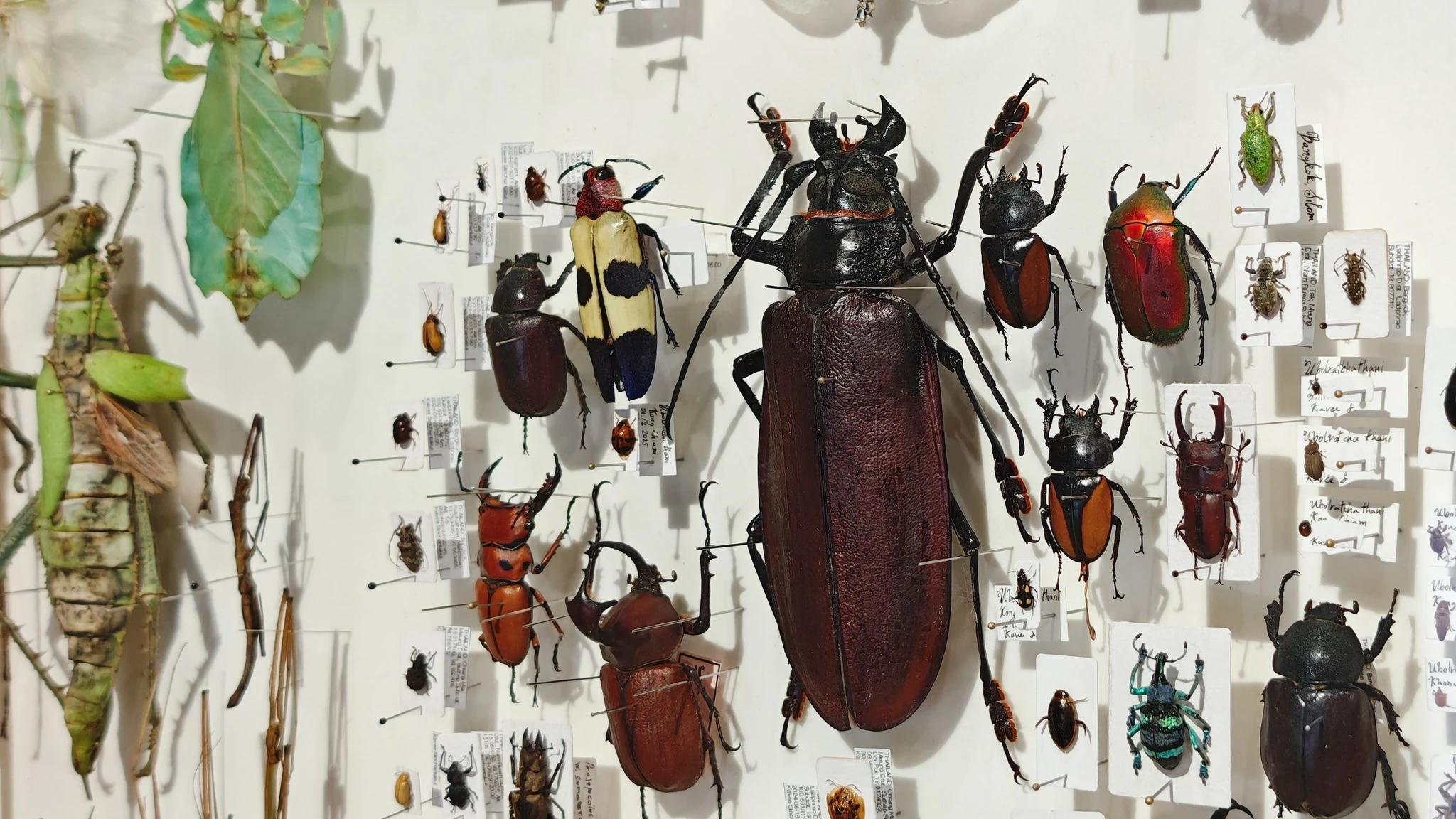
'In a museum collection, the insects aren't necessarily beautiful. The legs aren't set to show the shape. They're done quickly because you're processing dozens at a time. We have the luxury of slowing down,' Kavee explains.
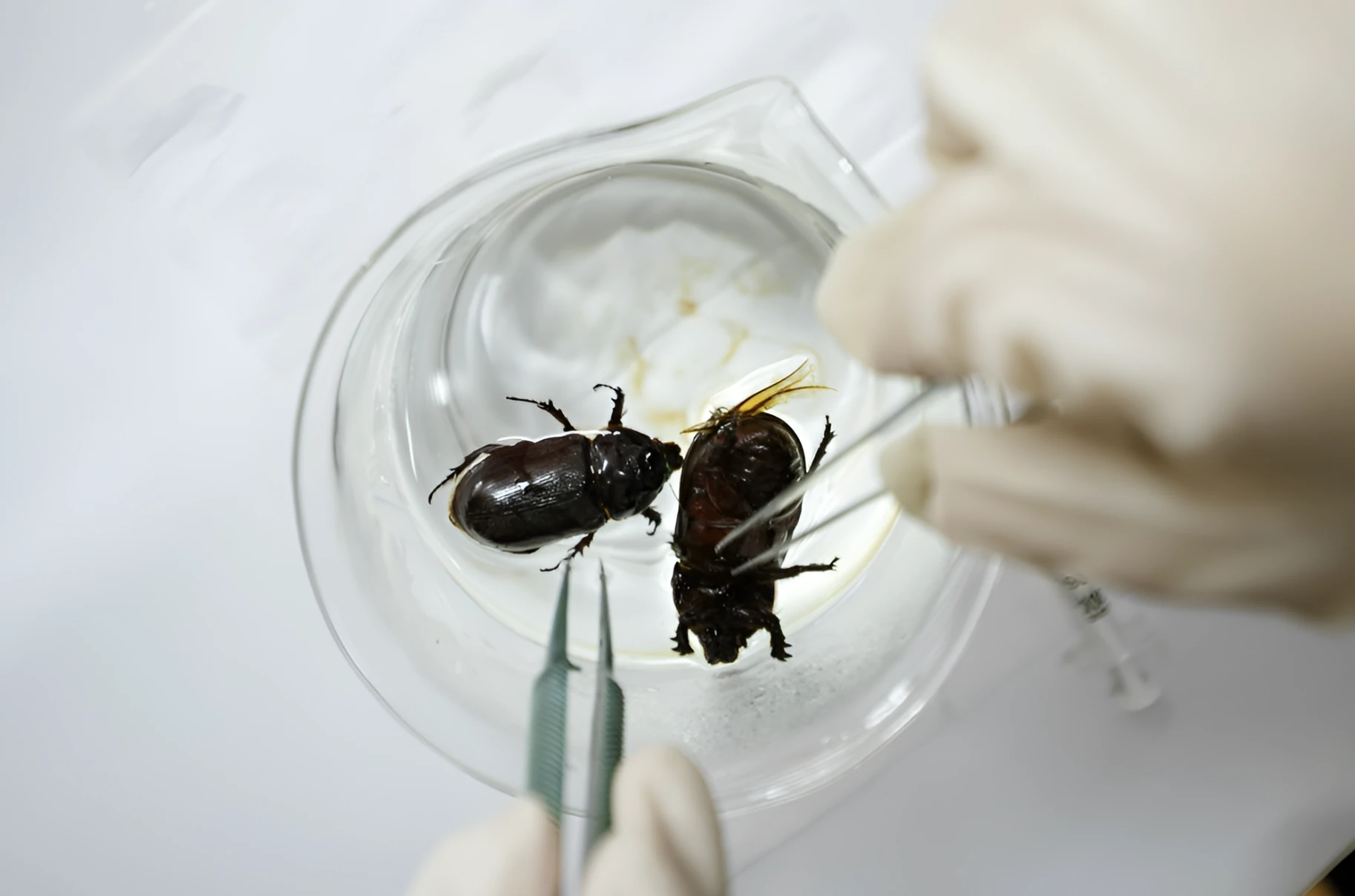
The process itself has several stages. Insects that have been stored dry need to be relaxed before they can be pinned. A rigid specimen cannot be posed without breaking. The humid jar method, a sealed container with a damp cloth, is slower. Hot water works faster but requires a careful hand. 'You have to keep the water away from the paper,' Kavee says, pulling the beetle from the tray and dabbing it carefully. 'If the paper swells, positioning becomes a nightmare.'
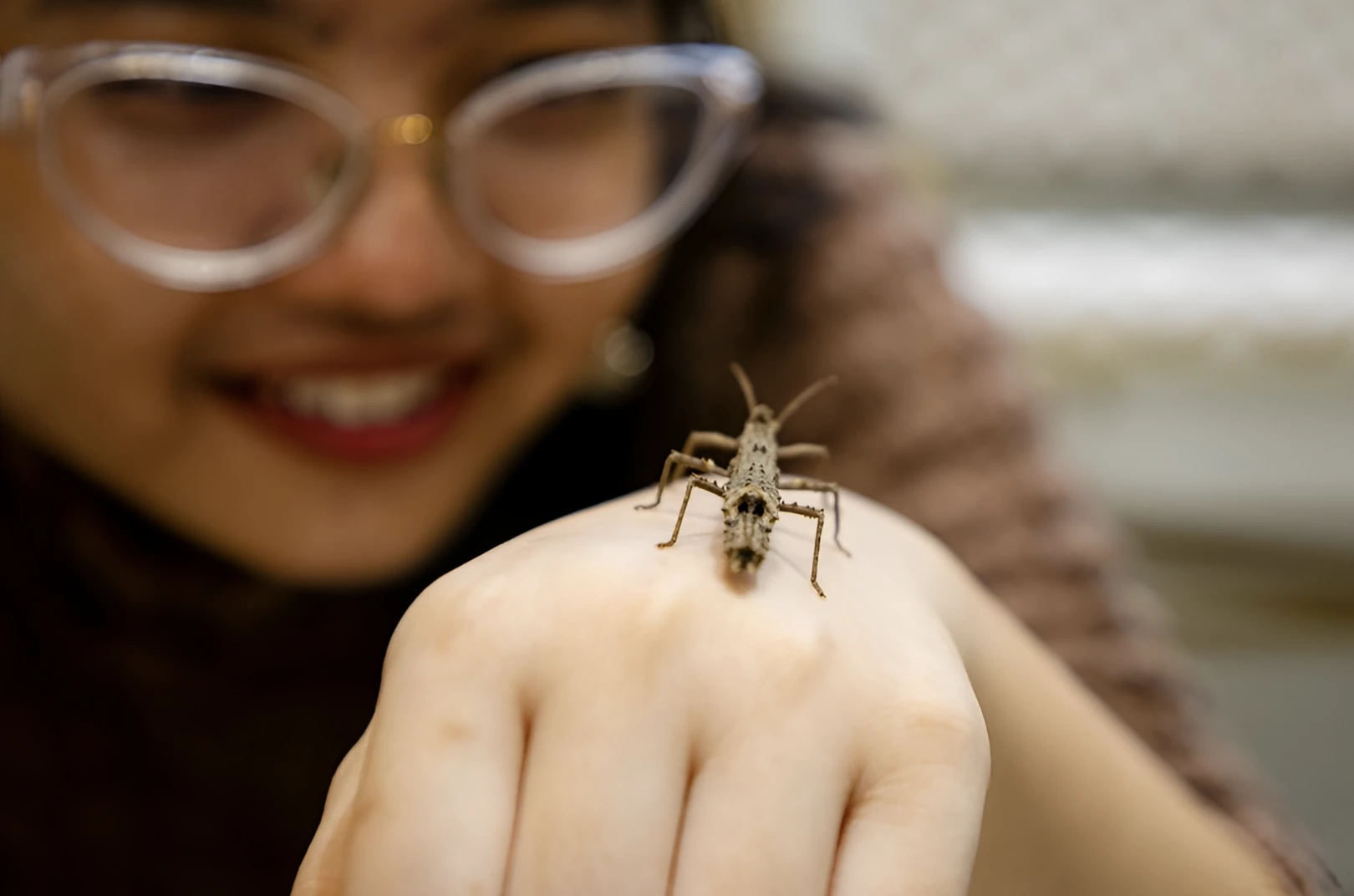
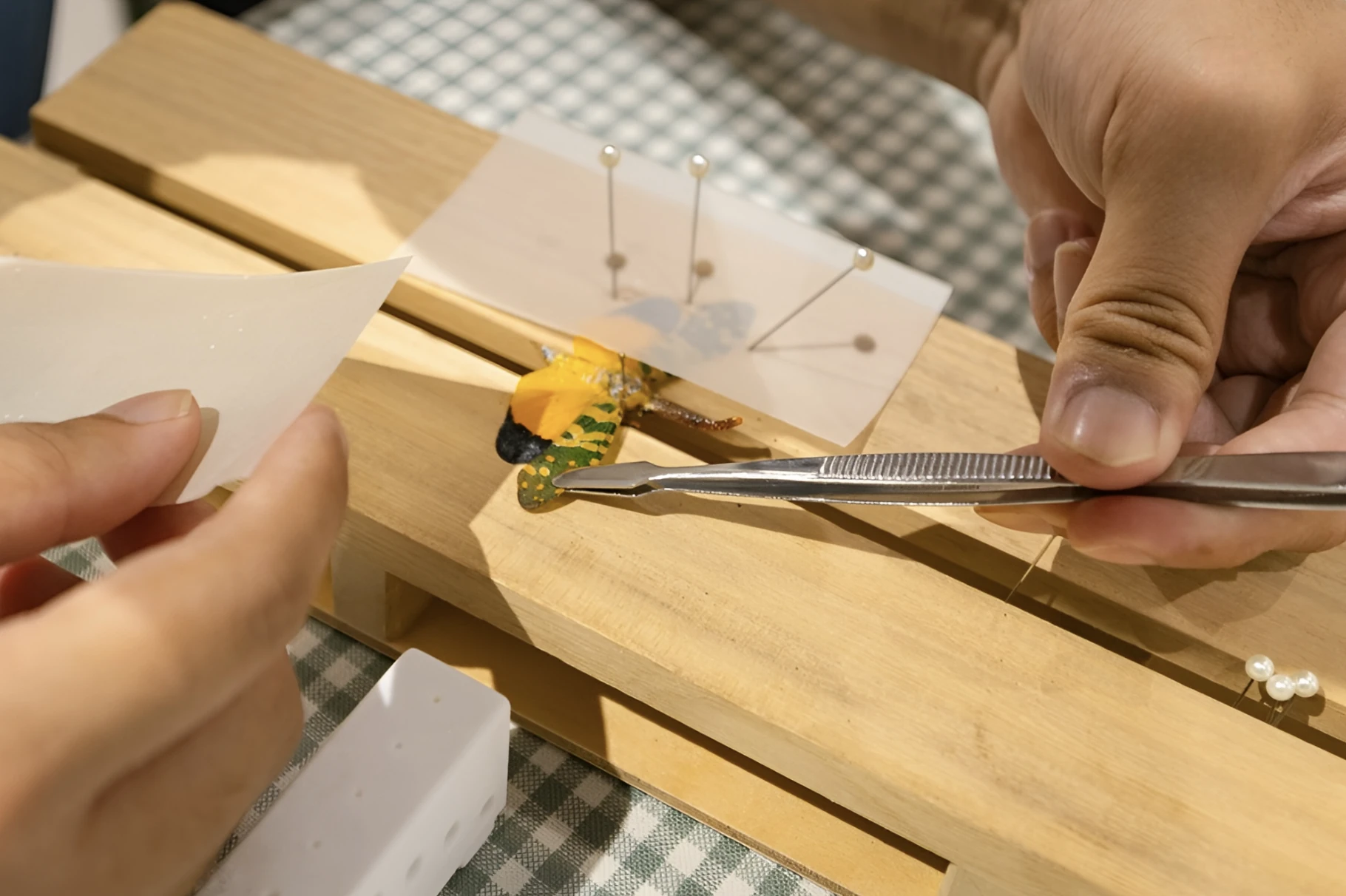
Once pliable, the insect is ready to be mounted. A single entomological pin, stainless steel and rust-free, goes through the thorax, slightly off-centre rather than dead through the middle, so that either side of the body remains intact and readable for study. 'One pin through the body, that's it,' Kavee says. 'The rest is just support. You're not skewering anything else. The moment you start putting pins through the insect itself, you're doing damage.'
Strips of washi paper keep the wings flat while everything dries. For a small insect, one to two hours suffices. A larger specimen takes longer, which is why workshops use insects appropriate to the session length. 'While it's drying, we don't just sit around,' Kavee says.
'We look at reference books. We go out back and look at the live ones. You learn more than just how to use a pin.'
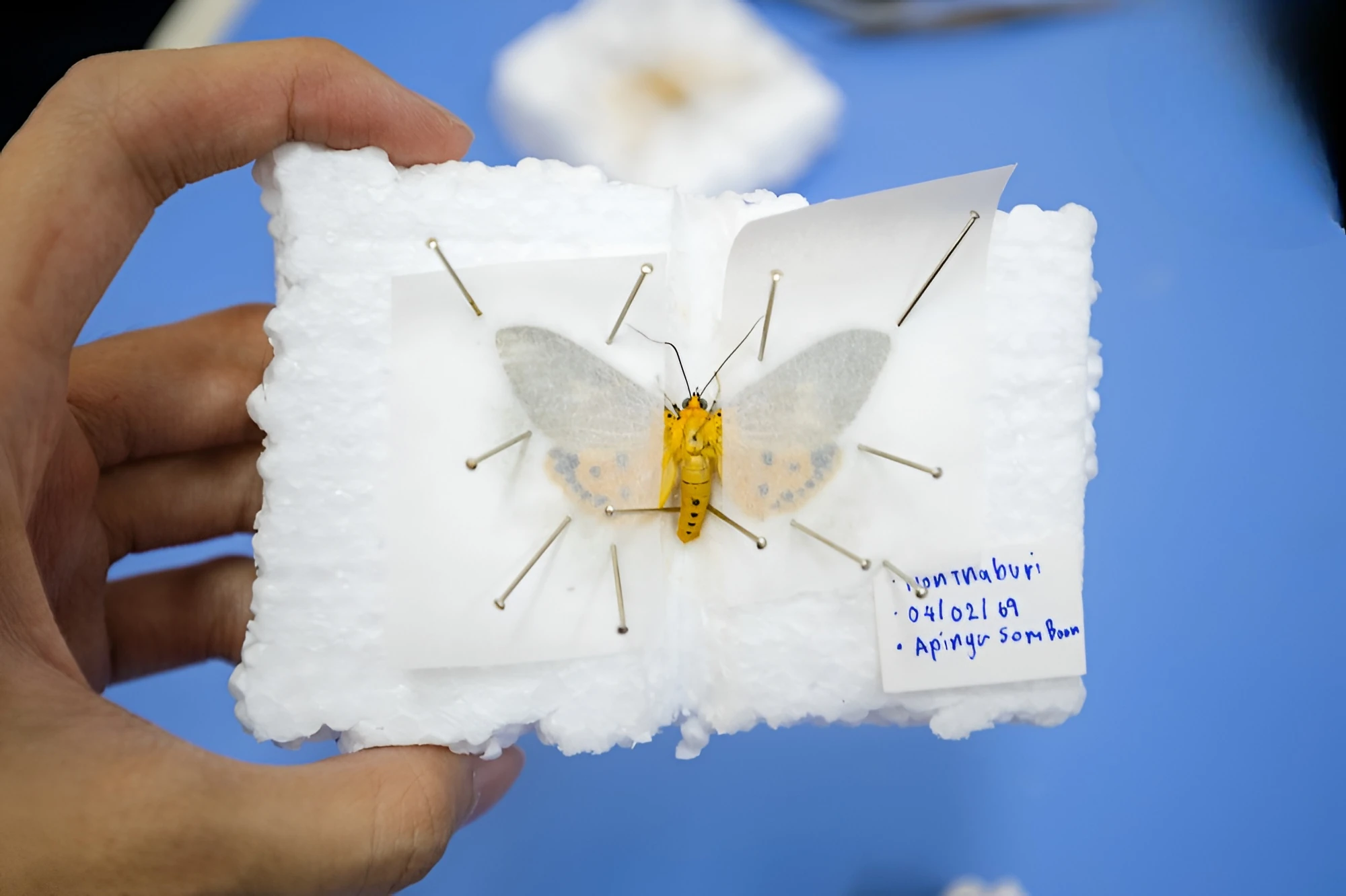
Done correctly, a pinned insect can last an extraordinary amount of time. 'If you keep it dry, if nothing gets in to eat it, it lasts indefinitely,' he says. The oldest specimens in the world are over three hundred years old. Some of them are at Cambridge. They're tiny little things. Still perfect.'
The real point
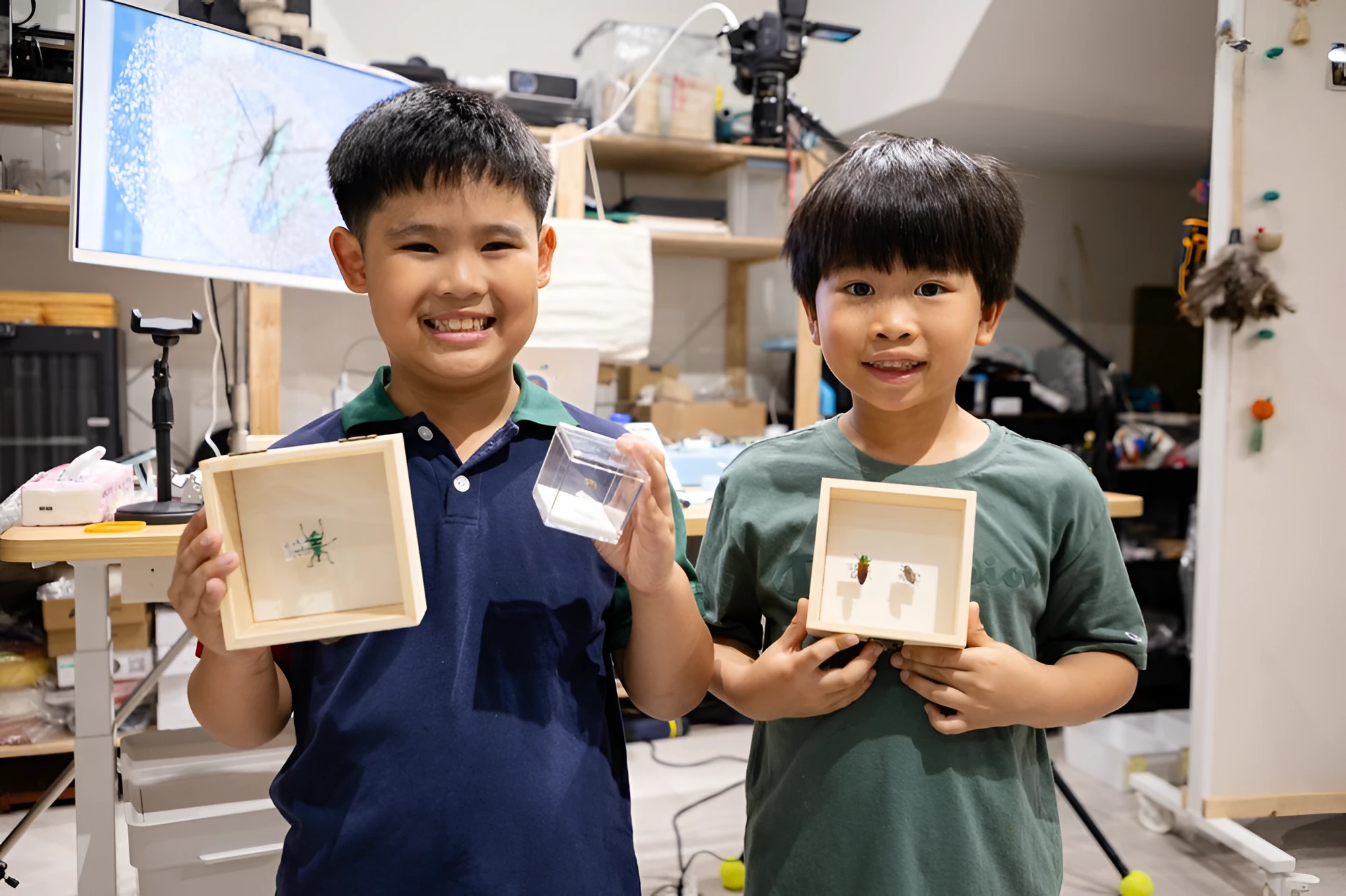
Wanghin Lab is, at its core, not a craft studio. The pinning is just a vehicle. The destination is something harder to package.
The brothers describe their mission as reconnecting urban residents with insects and the biodiversity that surrounds them, even in a city as dense and concrete-heavy as Bangkok. Kavee monitors the insects around the family home with something approaching the consistency of a field researcher. Which species appear in which season. What changes when a tree is cut down nearby. What turns up on a particular lamp post at night.
'Most insects are specialists. They don't eat everything, they eat one thing, one plant, one tree, sometimes one specific part of that tree. When that tree goes, they go with it. People worry about us collecting specimens, but honestly, insects reproduce in enormous numbers. Taking a few for science barely registers,' Kavee explains.
'What actually collapses the system is when the habitat disappears entirely. No green space means no insects and if you follow that thread far enough, it doesn't stop at insects. It unravels everything above them too, including us.'
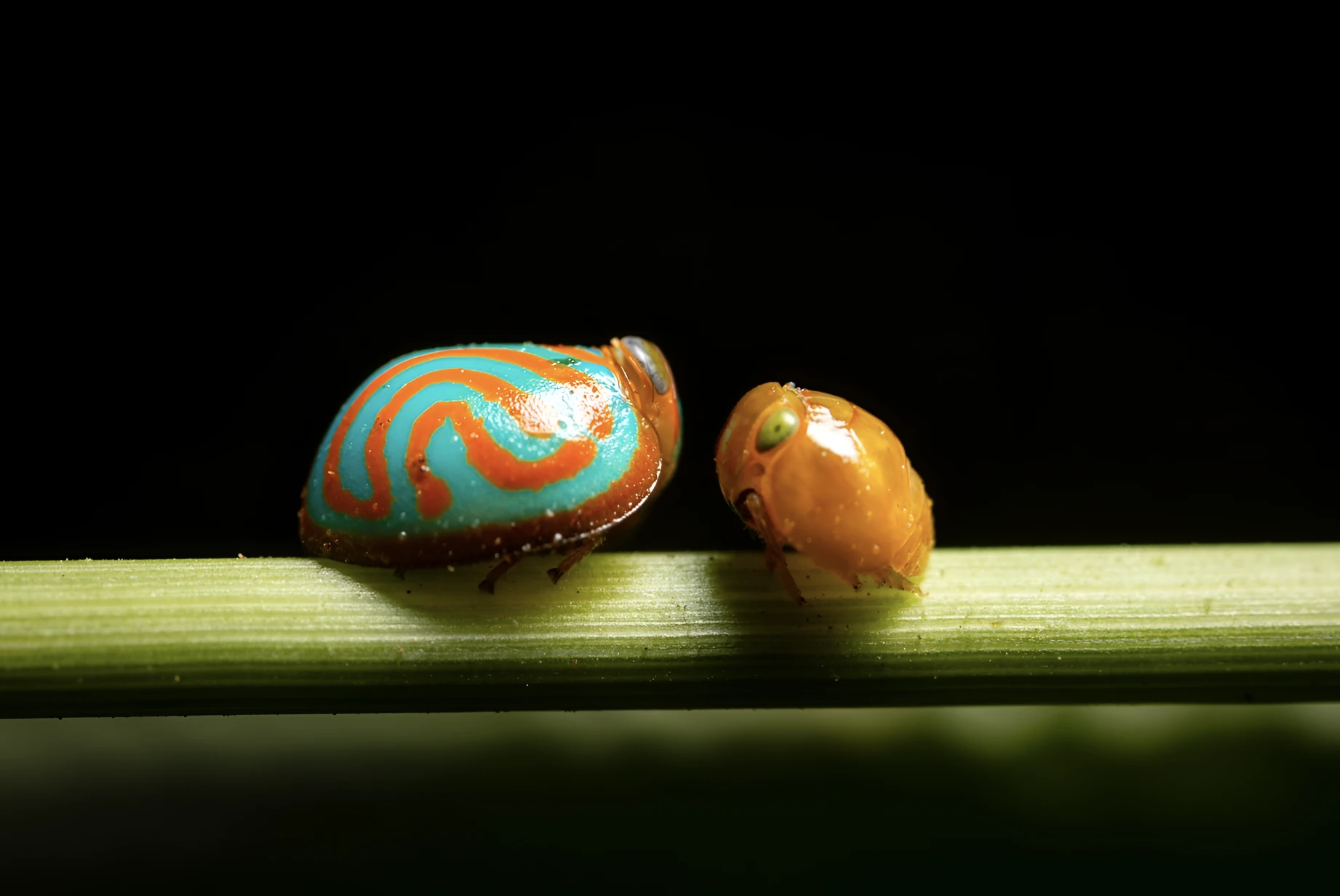
Thailand is one of the most insect-rich countries in the region. Researchers estimate it has upwards of three hundred stick insect species. Japan, by comparison, has around twelve. Part of what threatens that diversity is structural: land tax penalises owners for leaving plots undeveloped, so wetlands and scrubland get cleared not out of malice but economics. Exactly the kind of habitat insects need to survive.
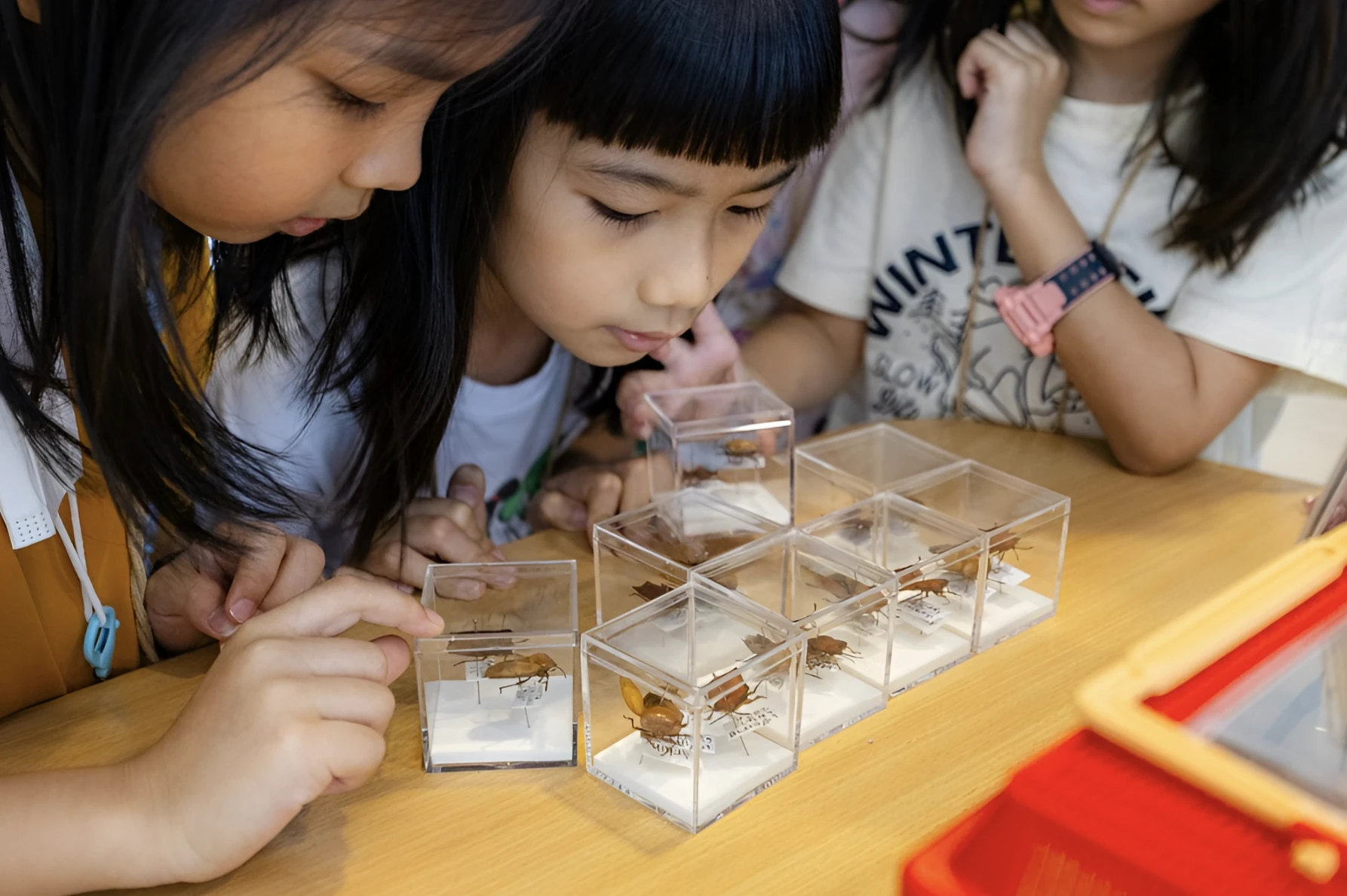
This is the undergrowth of the whole project: a city that has gradually lost the habitat its insects need and residents who have never been given a reason to care. Wanghin Lab is trying to give them one.
Kavee has a favourite example of why that matters. Out surveying near Asok one evening, he caught a stick insect, observed it and released it elsewhere. When he returned a short while later, the insect was back at the exact spot where he had first found it. He looked more closely. There was a nymph in the vegetation, nearly invisible, perfectly camouflaged. 'The adult had flown back because the nymph was calling it,' he says. 'Stick insects communicate through vibration. The nymph was on the branch, vibrating, saying: there's food here. Come back.' He pauses. 'Nobody hears that. You can't hear it. But it's happening everywhere, all the time.'
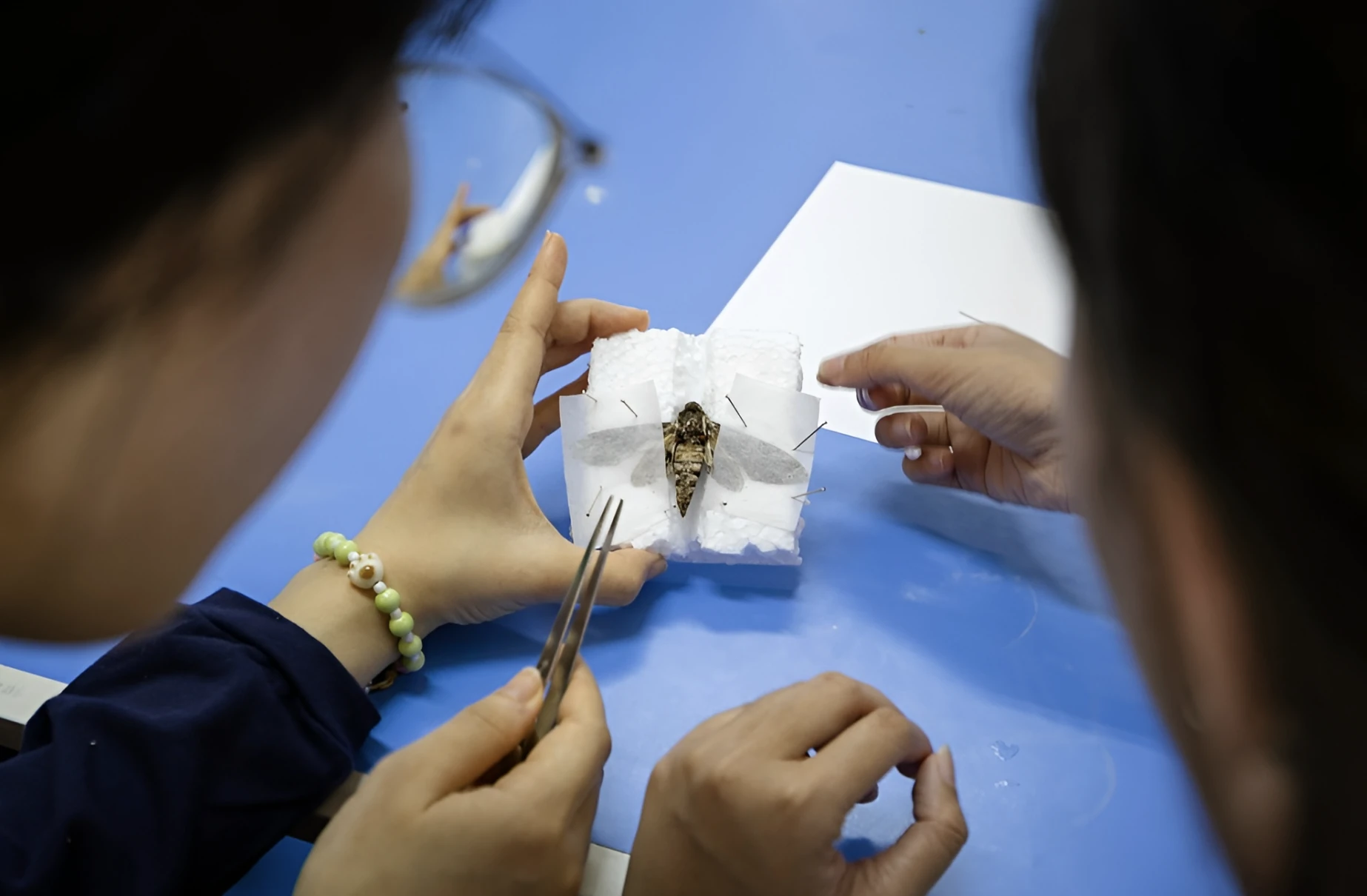
Insect communication, he could talk about for hours. Chemical signals released and received. Visual displays. The waggle dance of bees. Even the branch-vibration language of stink bugs – each species with its own frequency and rhythm, its own version of a sentence. 'It's complex,' he says. 'Just like us. Just much quieter.'
What comes next
The workshop programme continues to develop. Sessions open roughly a month in advance. Private bookings are available for those who want a more tailored experience or have already completed the introductory course. There are plans to take things outdoors, pairing specimen collection with pinning for groups who want the full arc of the practice.
The longer ambition, though, is a small museum. A permanent space where people can drop in without a booking, browse specimen collections, encounter the world of insects at their own pace.
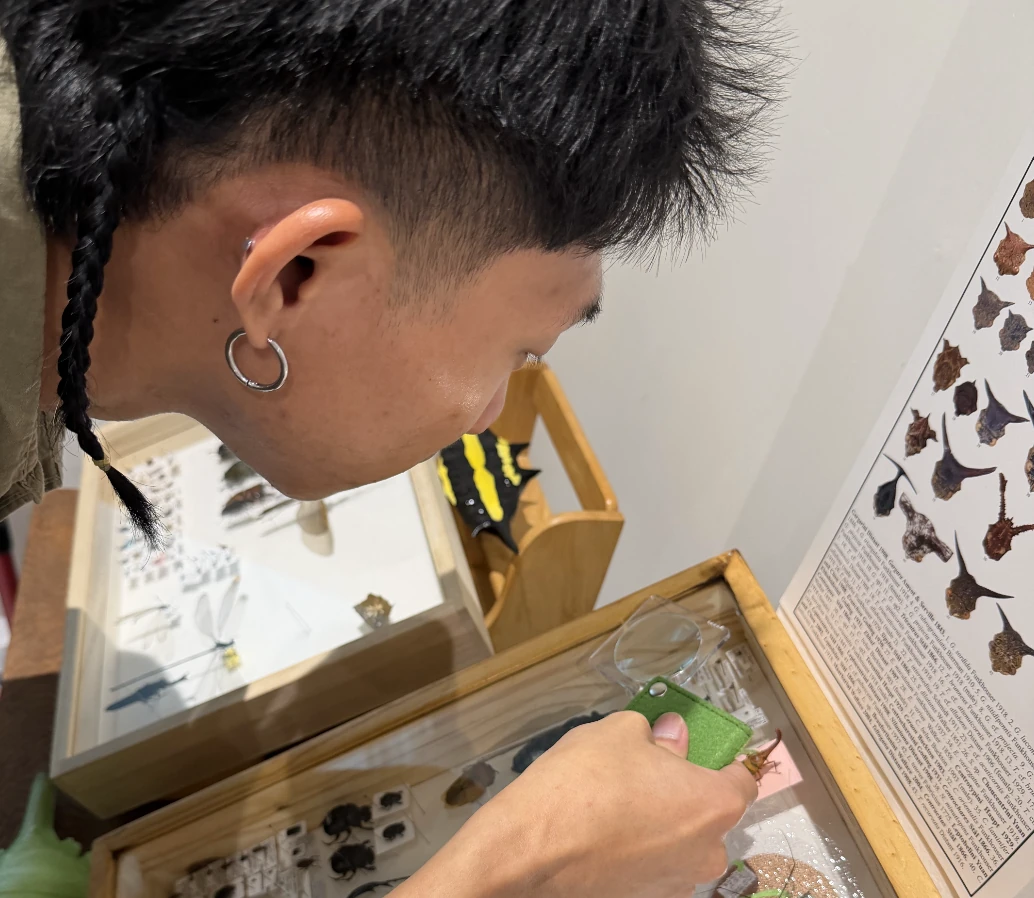
'We want it to be somewhere you can come any time,' Kawin says. 'Come and look, come and learn, come and just sit with it for a while.'
Kavee picks up the thread. 'And taking people into parks, into green spaces, showing them what's actually out there. You don't have to go far. It's already here.'
And maybe that is the simplest version of what Wanghin Lab is trying to do. Not to bring nature back, because it never really left. Just to remind people where to look and perhaps more importantly, to remember that the city has never belonged to us humans alone.
Wanghin Lab is based in Lat Phrao, Bangkok. Workshop schedules and booking information are available at wanghinlab.com, via direct message at @wanghin.lab or by phone on 086 565 5799.
Wanghin Lab, 19 Soi Muban Mahalap, Lat Phrao, Bangkok 10230.