[category]
[title]
Our guest writer shares his experiences entering Womb – an exhibition by Gerda Liebmann.

In a dead-end alley, a few minutes' walk from MRT Sam Yan Station, I was welcomed inside by one of BATURU Incubator Space's founders. Walking into the gallery, I was struck by the contrast between the spacious room, its two expansive white walls, and the 24 small portraits of women arranged across them. Next to each portrait was a caption. A few acrylic paintings occupied a smaller section of wall, apart from the portraits. On the floor, slightly off-centre, lay a large pink cocoon-like cushion sculpture.
I started down the line of portraits, looking at the women and reading the captions beside them. Then it dawned on me. What I had expected, without being fully aware of it, was an exhibition about the womb itself. But the notes told me a different story. Each of the women approached the subject differently. Where I had assumed I would find a shared relationship with the womb, I found 24 deeply individual ones.
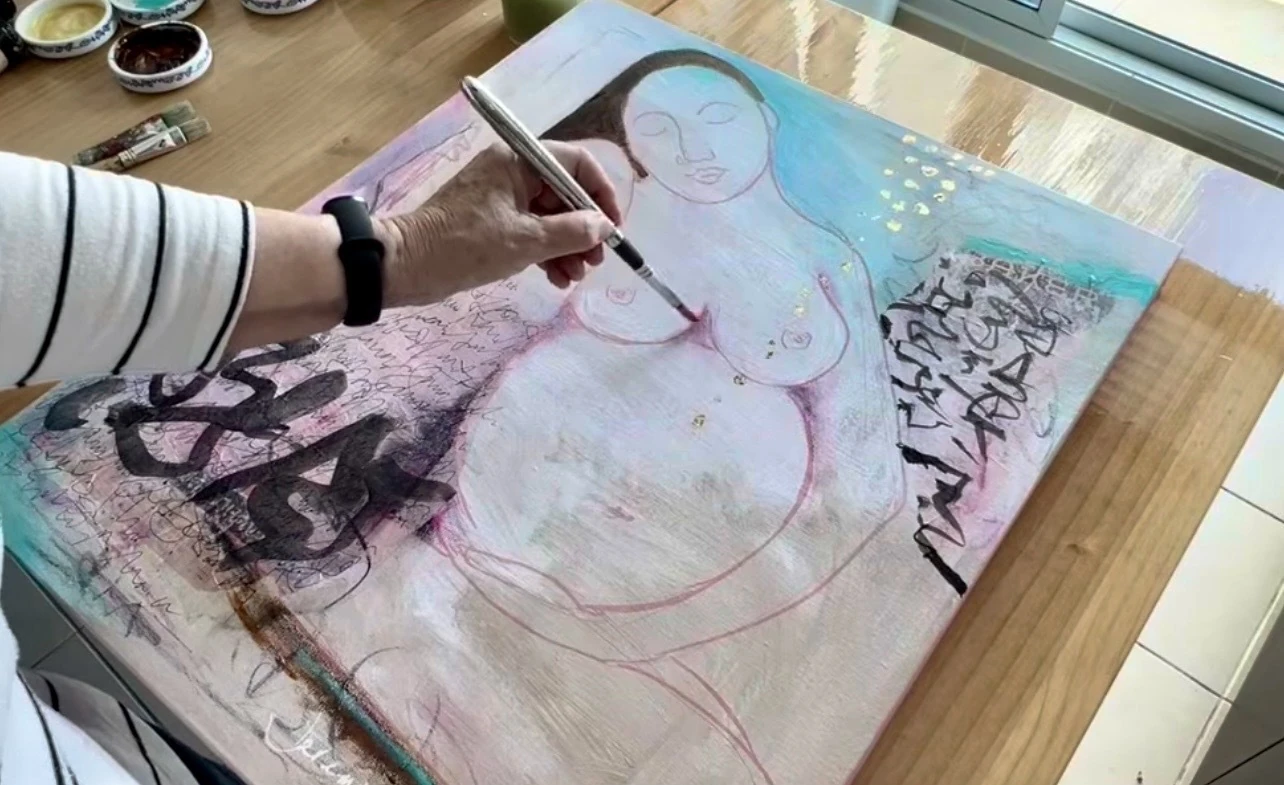
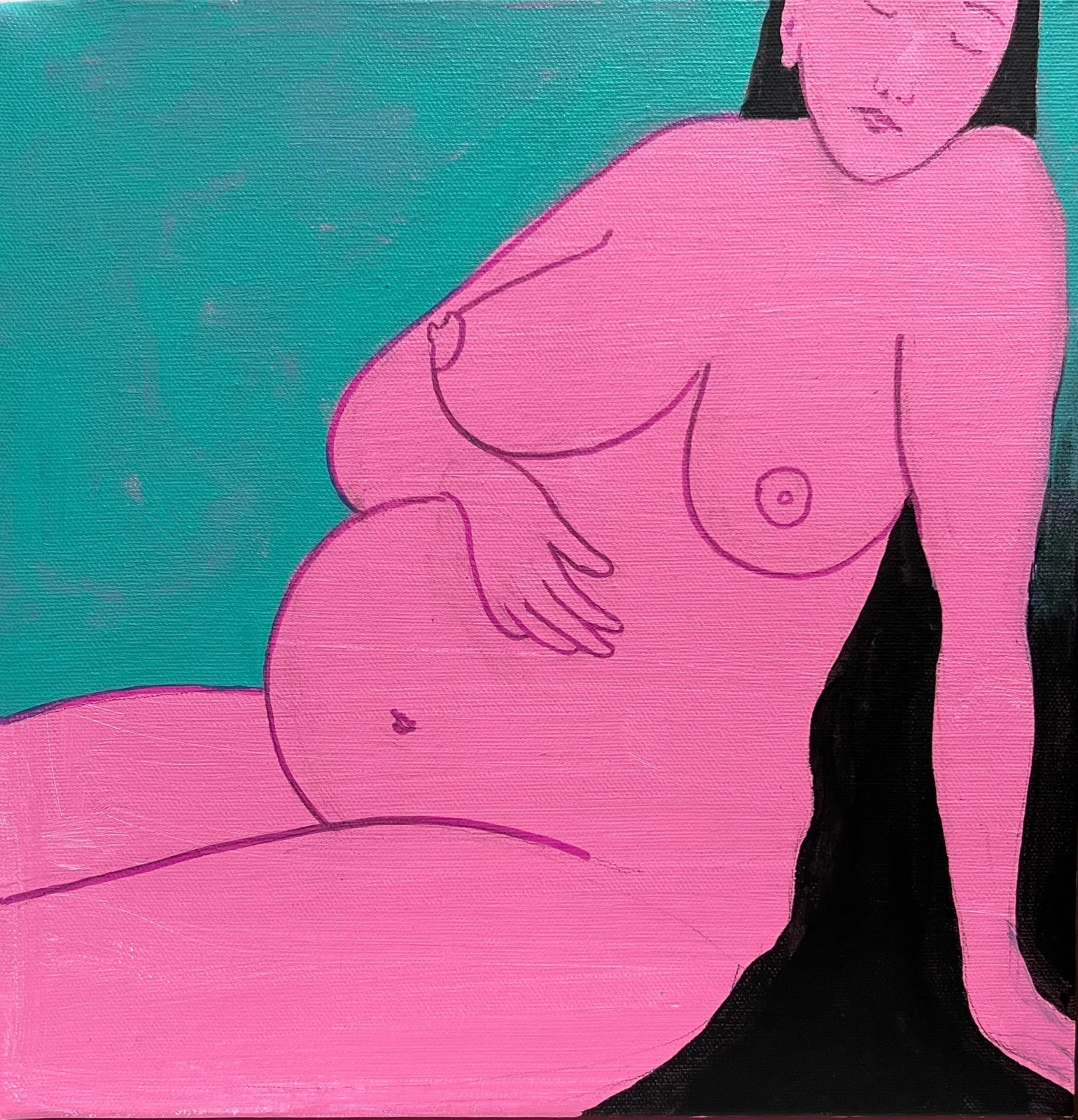
Gerda Liebmann drew her inspiration from an unexpected life event. When her adult son died, she experienced grief physically – in her womb. She later described it as feeling desolated, barren and torn apart. Her own acrylic paintings in the exhibition explore that territory of creation and loss.
Until then she had not given her womb much thought, outside of her pregnancies. It made her wonder whether other women have similar experiences and how women in general relate to their wombs.
This curiosity made her invite women to work with her. 24 women eventually took part, each photographed making the symbolic hand gesture for ‘womb’ and writing her thoughts on the subject. Their words appear alongside their portraits in both English and Thai. Their responses differ, sometimes widely. An American woman tells how God gave women the ability to create life and change the world. One person sees nurturing new life as the primary function of the womb. Others implicitly distance themselves from the idea that value or fulfilment must come from having children, suggesting that choosing independence, travel, or personal growth can be just as powerful and self-defining. Occasionally some mention discomfort and pain.
From the first response to the last, Gerda's curiosity seems well rewarded. Women do, at least that is what it looks like, relate to their wombs in highly individual ways. No generalisation seems ready to be made. Age might play a role, as Gerda told me that some younger women felt the subject was so intensely personal that they declined to be photographed or discuss it publicly. Whether a woman has had children, has chosen not to, or has remained childless despite wanting them may influence her relationship to her womb. Gerda also felt that cultural, religious and socio-economic backgrounds influence how women relate to it. However, none of these factors produces a predictable relationship. Gerda may have found some answers. Yet new questions arise.
It took some time to digest what the exhibition was actually showing me. At first glance, Womb seems to be an exhibition about something all women have in common. It gradually reveals itself as an exhibition about how differently women relate to that same hidden part of themselves. Finally, it leaves you questioning how often we mistake what we share for an experience we share.
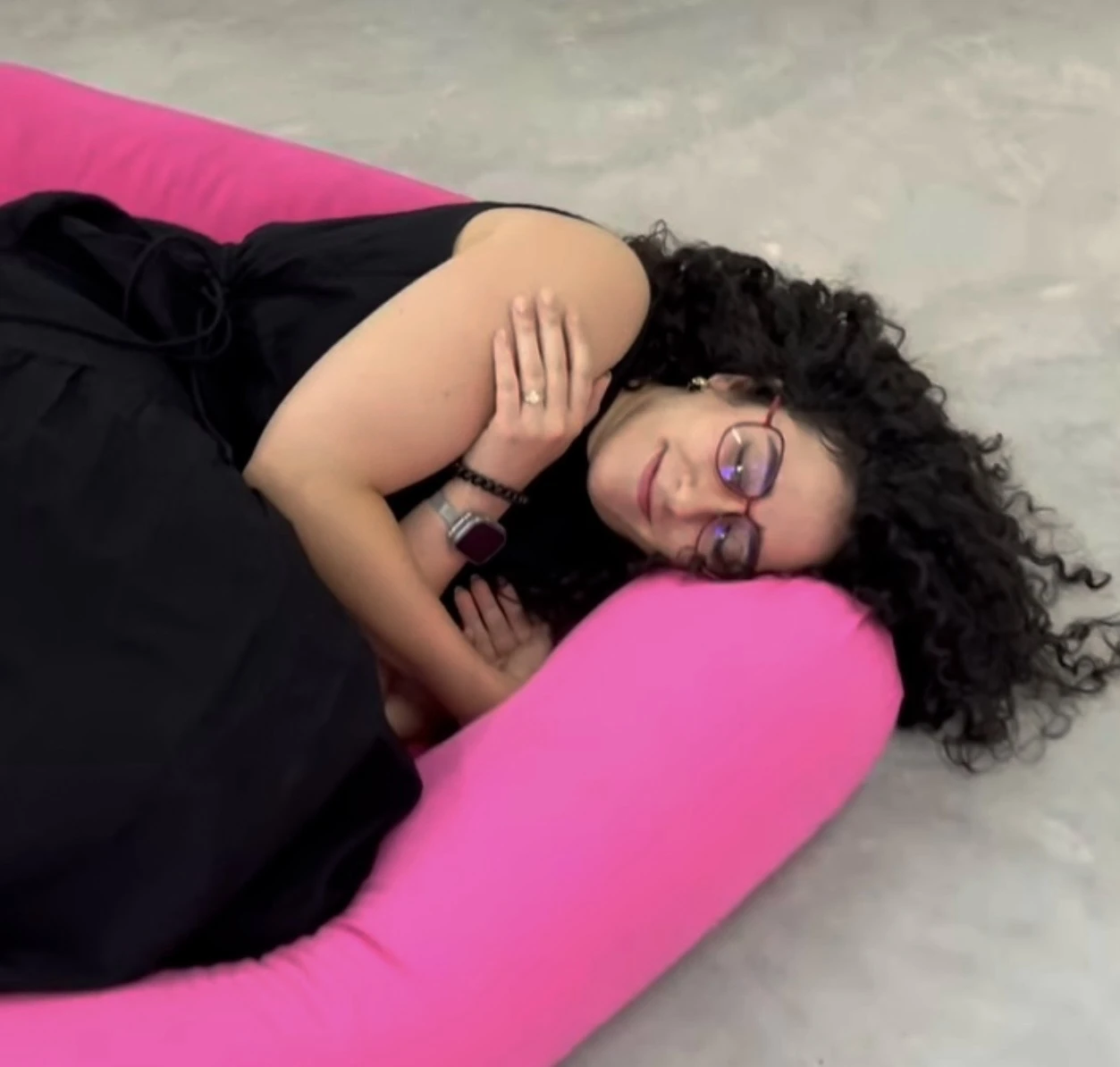
Just before leaving, I looked around the room. A woman lay inside the large pink womb, curled into a foetal position. She remained there for quite some time. I could only wonder why.
Womb – an exhibition by Gerda Liebmann. July 18-August 14. BATURU Incubator Space (150m from Exit 2 of MRT Sam Yan Station)
Discover Time Out original video