
[category]
[title]
Your guide to Bangkok’s Jay Vegetarian Festival, from meat-free street food to Chinese temple rituals and opera, with Yaowarat festivities running October 9-18


Follow the yellow flags and bring an appetite. Bangkok’s Jay Vegetarian Festival 2026 brings plant-based street food to Yaowarat and Talat Noi while Chinese temples offer a glimpse of the festival’s religious side.
What is it?
The Jay Festival (เทศกาลกินเจ) is a Thai-Chinese tradition rooted in Buddhist and Taoist beliefs. Devotees follow a strict plant-based diet as part of a religious observance intended to purify the body and mind.
Its food rules go beyond a typical vegan diet. Meat, poultry, seafood, eggs and dairy are off the menu, along with pungent vegetables such as garlic, onions, Chinese chives, scallions and leeks. These are traditionally believed to disturb the body’s balance and spiritual calm, although the precise restrictions vary between traditions. Animal-based seasonings, including fish sauce, oyster sauce and shrimp paste, are excluded too.
But don't expect a festival of sad salads and steamed vegetables. Sizzling stir-fried noodles, crispy spring rolls, rich curries and peanut desserts give you plenty to work through. Beyond the food, it is a time for self-discipline, spiritual reflection and making merit.
When is it?
The festival falls during the ninth lunar month of the Chinese calendar, usually in September or October. In 2026, the nine-day observance runs October 10-18, with some devotees starting a preparatory day on October 9. Yaowarat’s festival runs October 9-18, while Chow Sue Kong Shrine in Talat Noi celebrates October 9-19. Individual temple ceremonies follow their own schedules.
Where is it held?
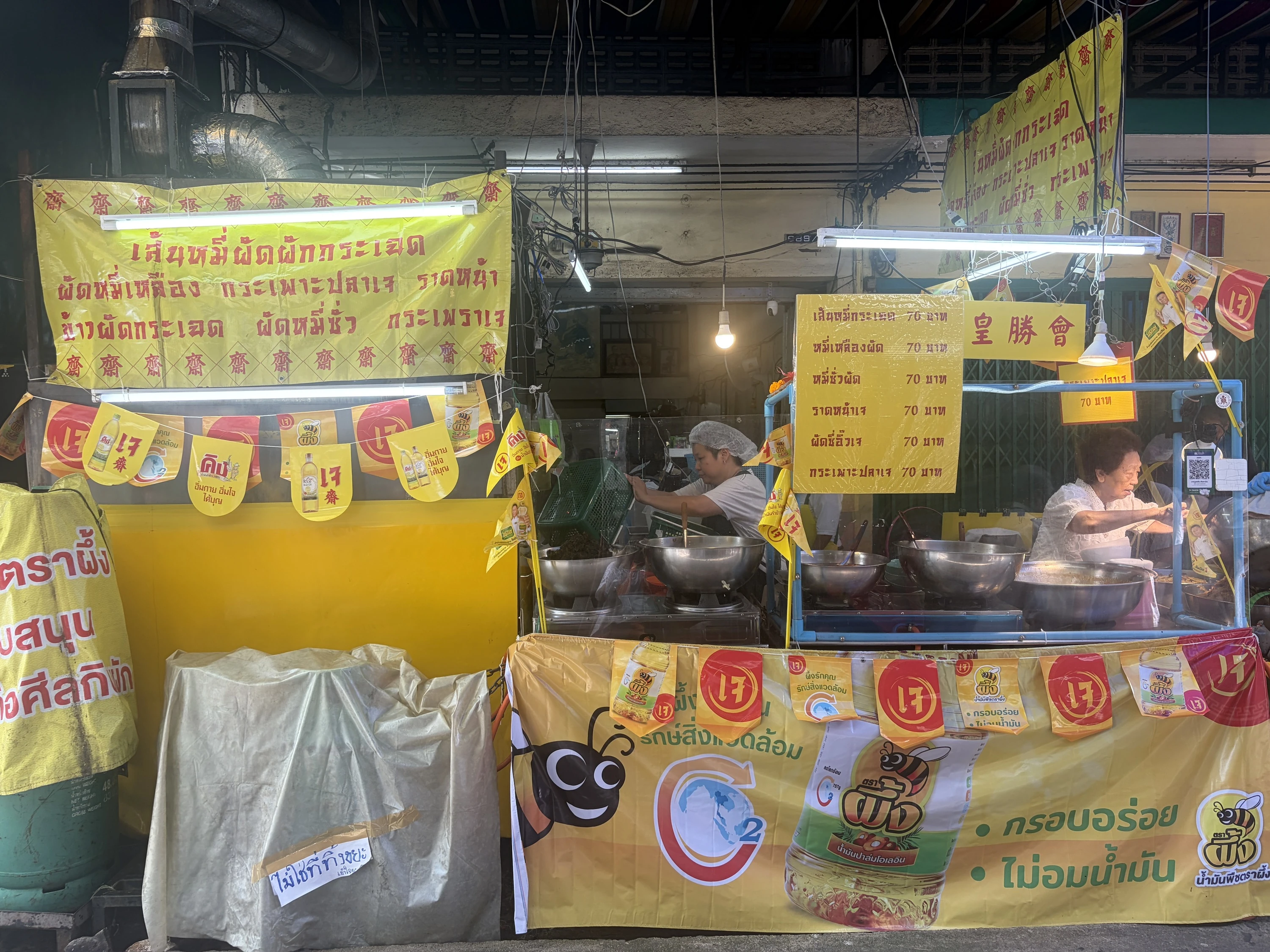
Across Bangkok, really. Even 7-Eleven stocks Jay-labelled products, but Yaowarat and Talat Noi are among the best places to explore the festival on foot. Familiar street-food stalls get a Jay makeover, serving everything from meat-free noodles to deep-fried snacks. Look for เจ on yellow flags and shopfronts – it’s the Thai lettering for Jay, indicating food preparation according to the dietary rules and your sign for anyone curious about going vegetarian.
For the festival’s spiritual side, visit Chinese temples such as Wat Mangkon Kamalawat on Charoen Krung Road, or Chow Sue Kong Shrine in Talat Noi. You don’t need to share the faith to visit respectfully. White clothing is customary among devotees and may be required for particular ceremonies, so dress modestly and check with staff before joining a ritual. Some temples and vegetarian halls also serve free Jay meals, with donations helping to support the kitchens.
What is it like?
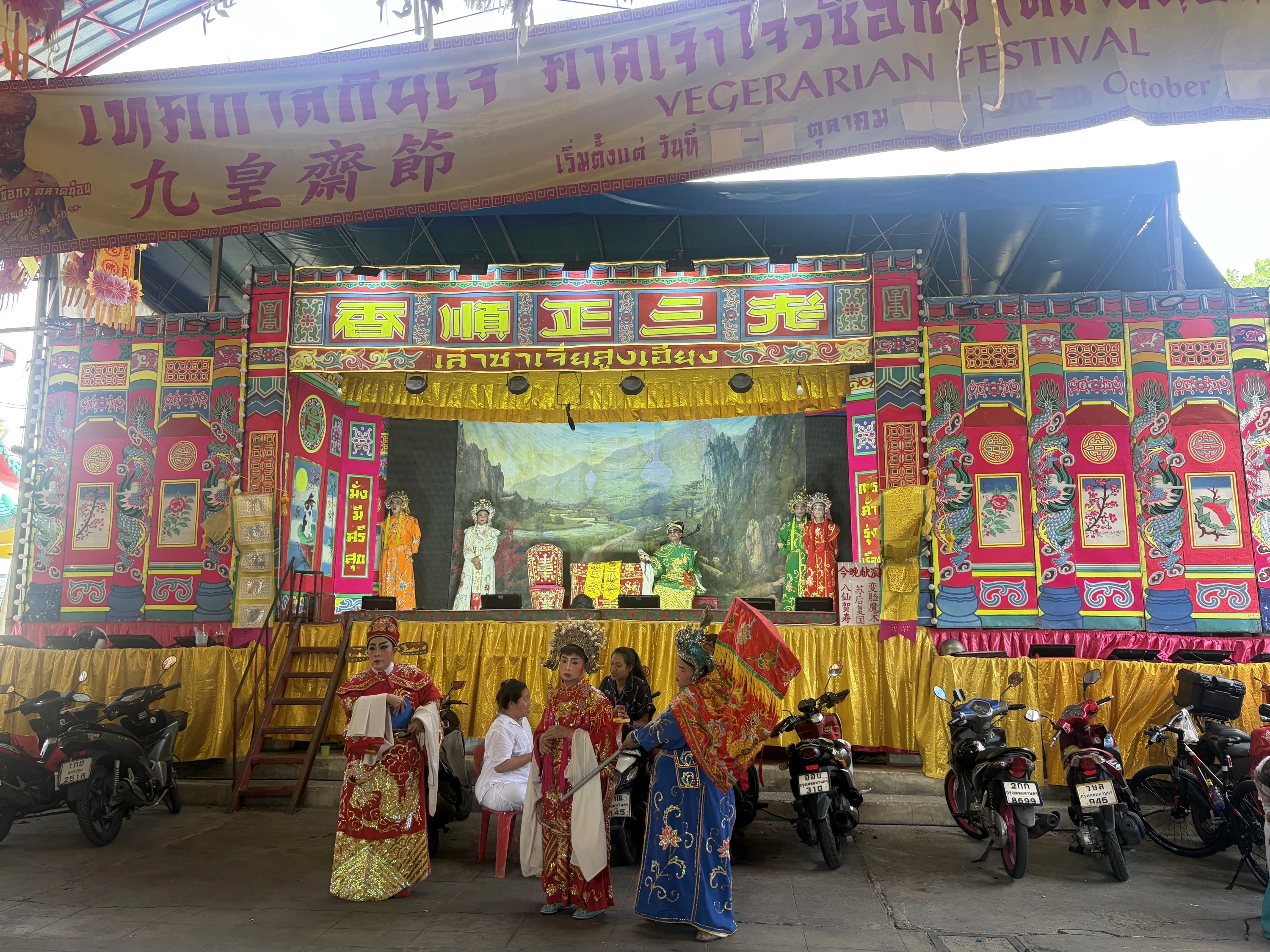
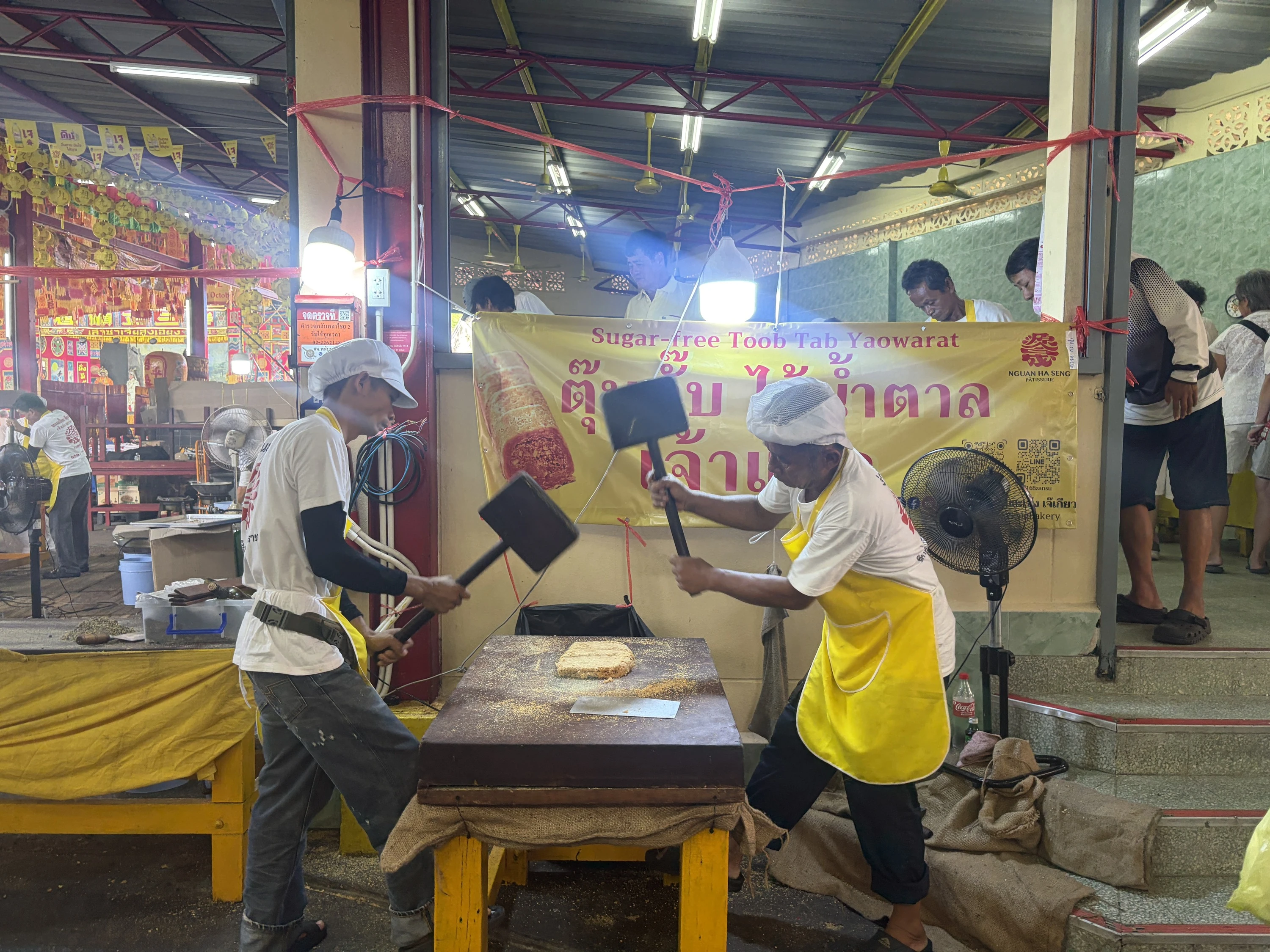
The atmosphere was lively, with vendors pounding away at tup tap (ตุ๊บตั๊บ), a traditional Chinese peanut brittle, using Thor-sized hammers to crush and shape it into crunchy pieces. Nearby stalls were piled high with pastries, fried Chinese doughnuts and soy milk, while other vendors sold sauces and Jay-friendly ingredients. Chinese opera played in the background, a longstanding feature of temple celebrations performed to honour deities and bring the community together. Beside the stage, worshippers made wishes with candles as tall as they were, symbols of light and devotion. There was a little bit of everything, everywhere, all at once – and that’s part of the charm.
Last but not least, the verdict on the food
Forget the pretty food pictures for a moment. We’re using the aftermath as evidence: empty bowls and not a grain of rice in sight. We visited the Chow Sue Kong Shrine which served free Jay meals, Chinese doughnuts, soy milk and traditional corn-and-coconut desserts, with yellow donation boxes for anyone wanting to contribute.
After a comforting cabbage stew, flavour-packed kaeng som (sour curry) and freshly fried doughnuts, leaving something in the donation box felt like the least we could do. The home-cooked spread was every bit as satisfying as a meat-based meal. There wasn’t a lineup of every imaginable variation of meat that isn’t actually meat, instead, the vegetarian spread here focused on well-seasoned vegetables and punchy curries, with that unmistakable Thai spicy kick that made even the plainest vegetables as satisfying as meat.
For anyone visiting Bangkok during the festival who wants to give it a try, you don't have to observe the tradition to join in. Just follow the yellow flags and discover how creative Thai plant-based cooking can be.
Discover Time Out original video