[category]
[title]
A 27-tonne sauropod discovered in Chaiyaphum province has officially become Southeast Asia’s largest known dinosaur, with fossils, a new research centre and a life-sized reconstruction drawing attention to Thailand’s surprisingly rich dinosaur history


It started, as these things often do, with somebody spotting something odd by the water. In 2016, a local resident in Chaiyaphum province noticed several strange-looking rocks near a pond in northeastern Thailand. They weren't rocks – they were fossilised bones – and nearly a decade later, scientists have confirmed they belong to an entirely new dinosaur species: the largest ever identified in Southeast Asia.
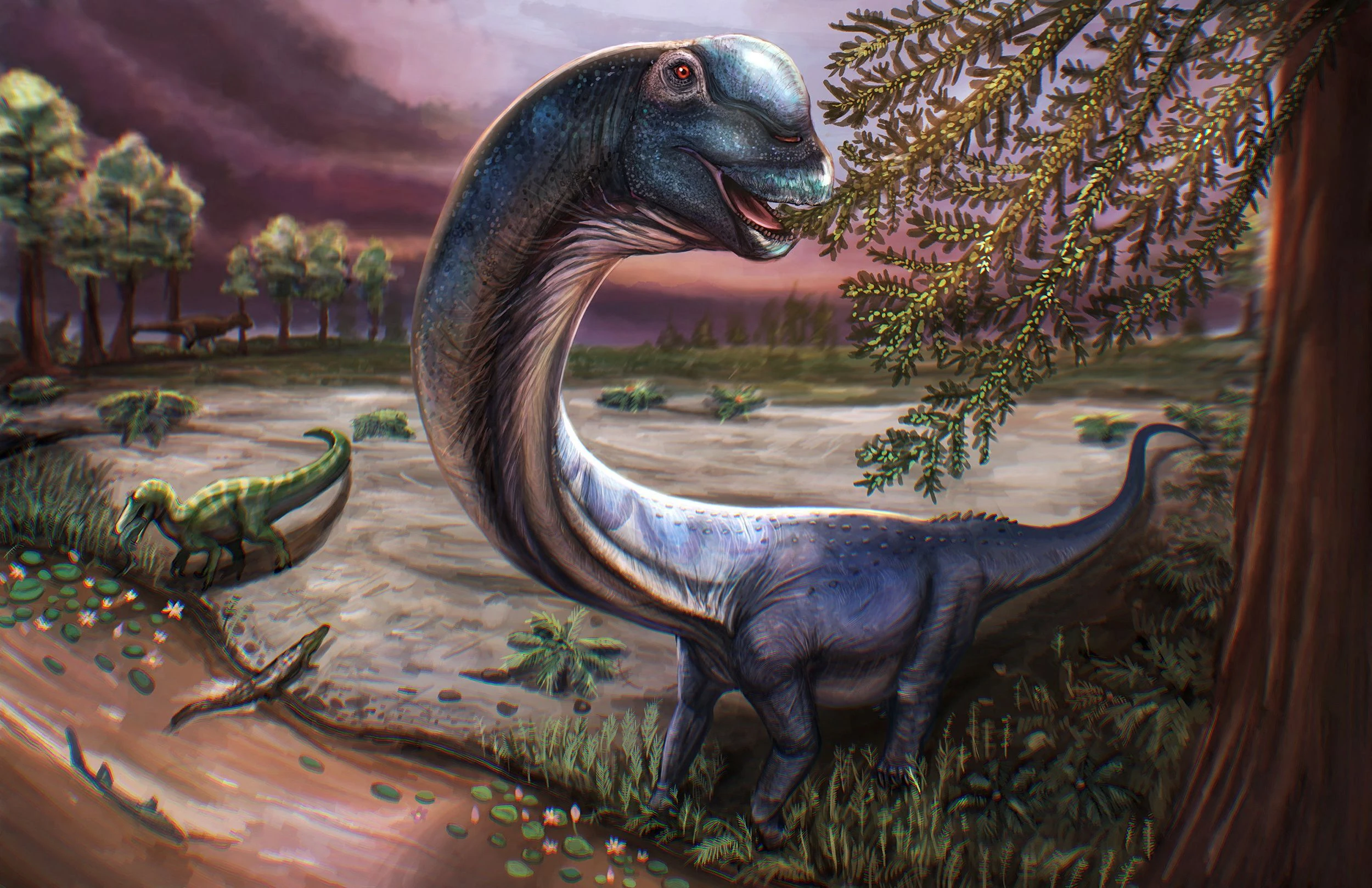
Meet Nagatitan chaiyaphumensis: a colossal long-necked sauropod that roamed what is now Thailand more than 100 million years ago during the Early Cretaceous period. Researchers estimate it weighed 27 tonnes and stretched nearly 27 metres from nose to tail – longer than a basketball court and more than three times the weight of a T.rex. One front leg bone alone measured 1.78 metres.
The findings, published in Scientific Reports on May 15, came after researchers studied vertebrae, ribs, pelvis fragments and leg bones excavated between 2016 and 2019. Funding delays stalled the project for several years before a National Geographic Society grant in 2023 allowed the team to resume the study.
The names lean heavily into mythology, which feels deserved for something this size. 'Naga' references the serpent-like beings woven throughout Southeast Asian folklore, while 'Titan' nods to the giants of Greek mythology. 'Chaiyaphumensis' honours the province where the fossils were found.
Lead author Thitiwoot Sethapanichsakul, a Thai PhD student at University College London, recalled the shock of seeing the fossils for the first time. When I first laid eyes on the humerus, it was taller than me,' he said. ‘That was quite surprising.'
Scientists believe northeastern Thailand at the time would have been dry to semi-dry terrain, conditions that sauropods appear to have preferred. Nagatitan likely shared its environment with smaller plant-eating dinosaurs and early relatives of Triceratops.
There’s another reason researchers are calling it ‘the last titan’. The rock formation where Nagatitan was uncovered is the youngest dinosaur-bearing formation found in Thailand. Younger geological layers in the region point to a shallow sea environment, meaning giant land dinosaurs probably disappeared from the landscape after this period. In other words, this may genuinely be the last giant Thailand ever gets.
Thailand only entered the palaeontology world relatively recently, with its first dinosaur discoveries officially recorded in 1986. Nagatitan chaiyaphumensis now becomes the 14th dinosaur species formally named in the country.
The discovery site has since developed into a research centre, while a life-sized reconstruction of Nagatitan chaiyaphumensis is now on display at Thainosaur Museum in Bangkok – where most people will properly grasp just how absurdly large this thing actually was.
Discover Time Out original video