[category]
[title]
By reimagining messy noodle stalls as sleek Japanese prints and freezing tropical 7-Elevens in eternal winter, one local digital artist is leading a quiet rebellion against the Bangkok grind


If you live in Bangkok, you know the sensation well. It is the specific, heavy exhaustion that hits you at 6pm on a Friday. You are stuck in the back seat of a Grab on Sukhumvit, the sky is a bruised purple, the neon signs are flickering on, and the humidity is fogging up the windows. You are tired. You are dreaming of being anywhere else.
It is in this precise moment – between the office and the home, between the reality and the dream – that Pacific Salaryman exists.
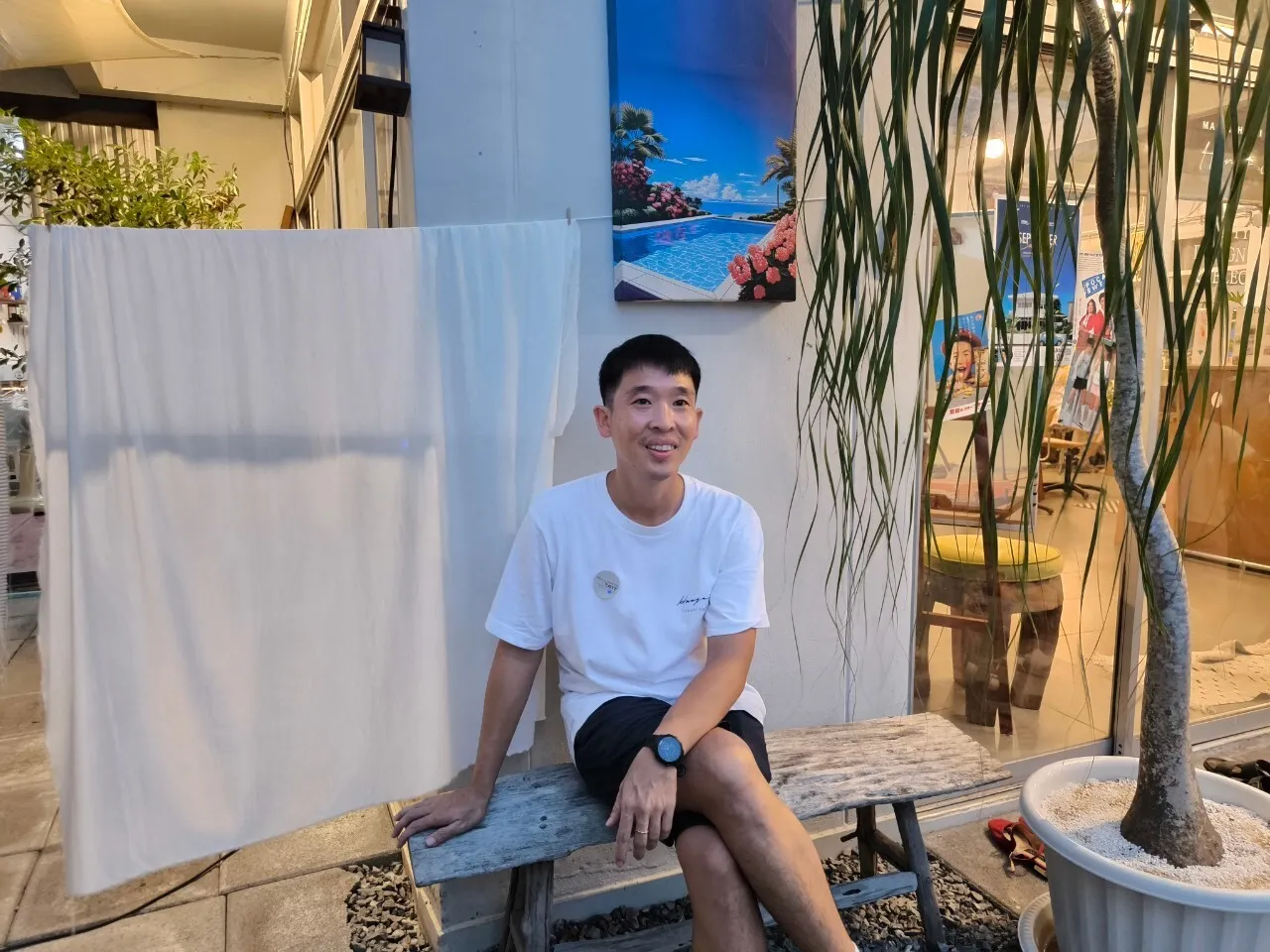
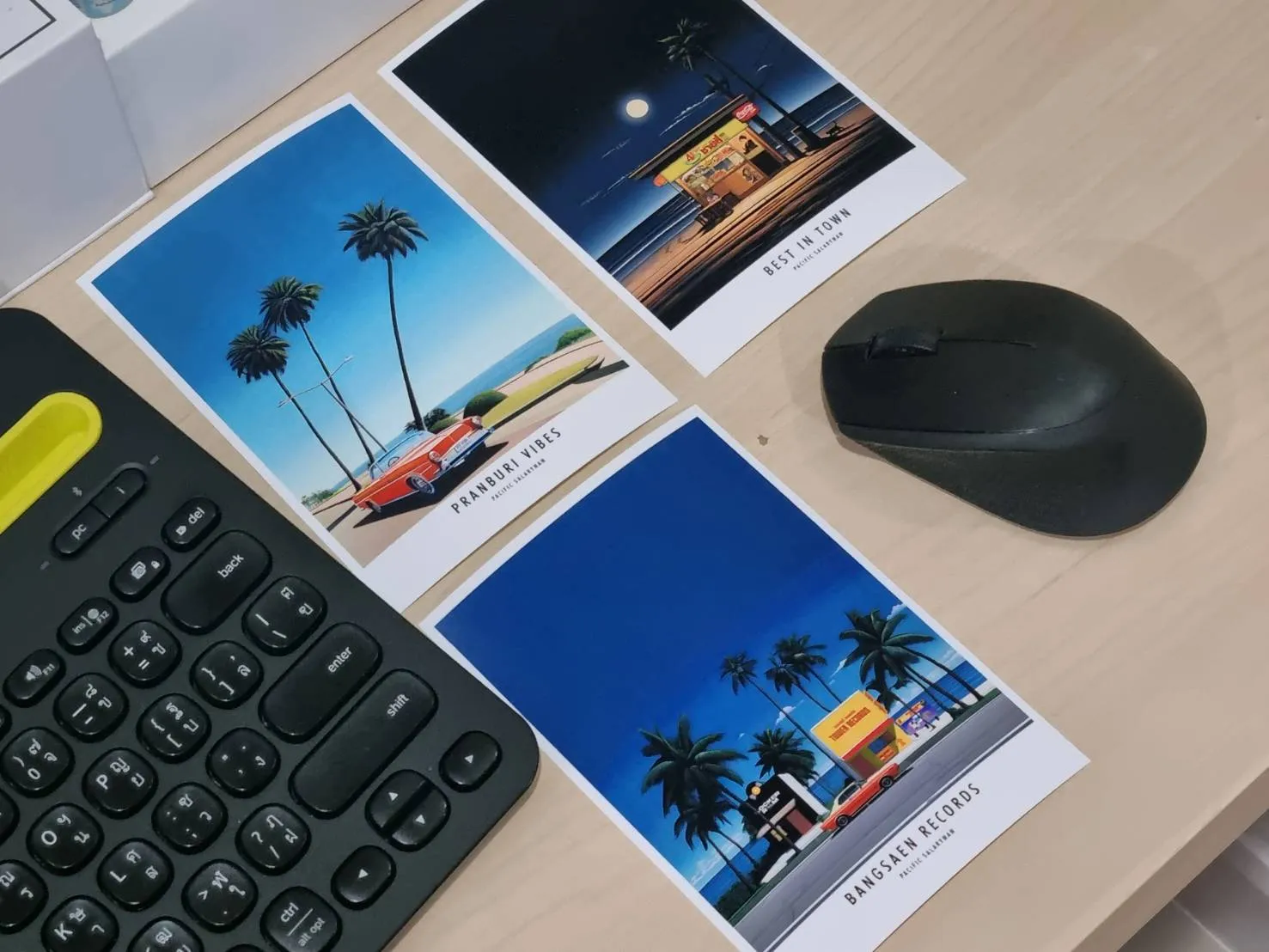
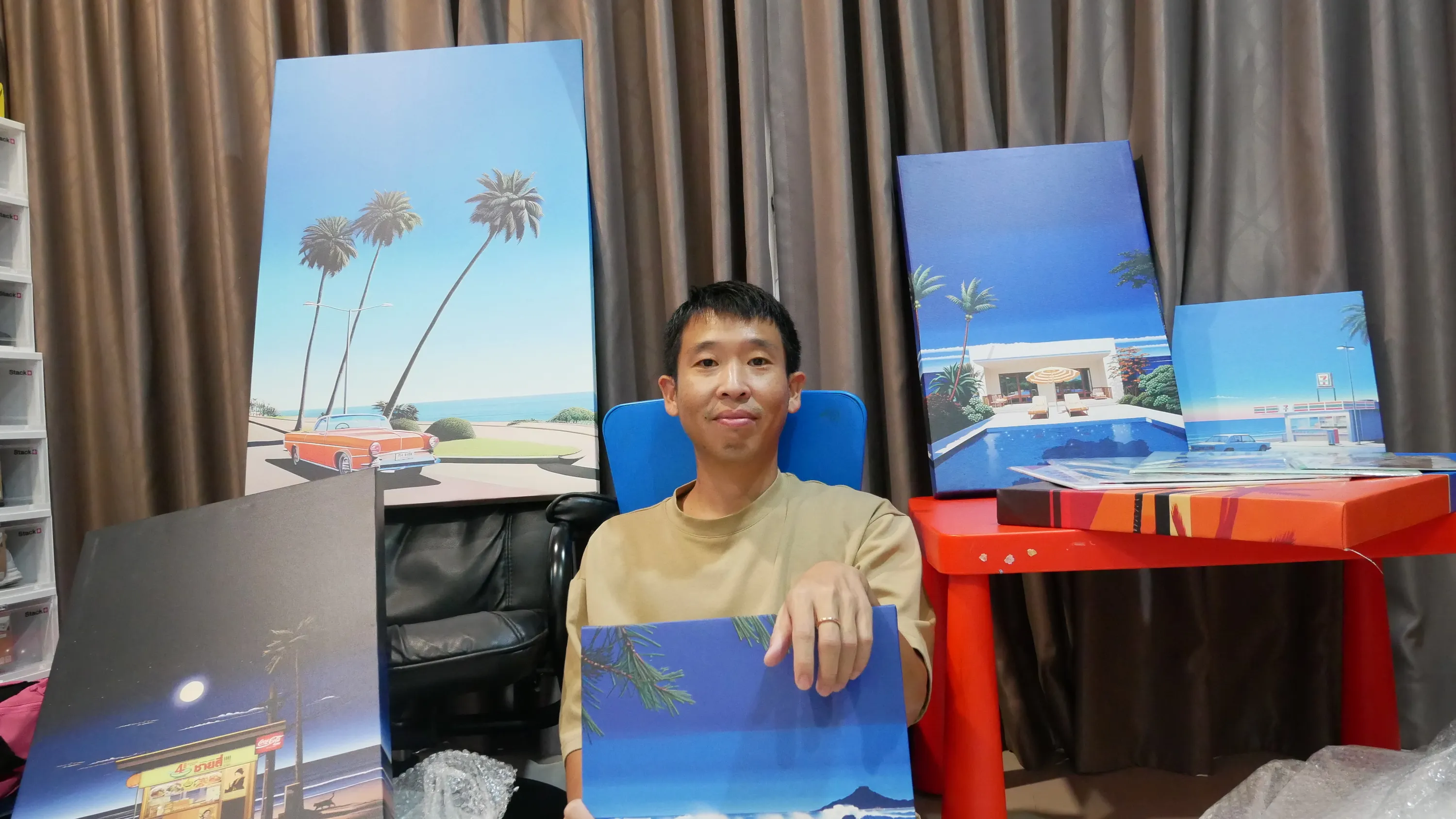
Over the past year, the digital artist (real name Teerapatra Rundhasevi) has become a viral sensation in the Thai creative scene. His art hits a nerve because it does something impossible: it makes the chaotic, sweaty, tangled mess of Bangkok look slick. He takes our everyday eyesores – the tangled overhead wires, the rusty corrugated iron of a street food stall, the blinding fluorescent glare of a convenience store – and filters them through the nostalgic, pastel lens of 1980s Japanese city pop.
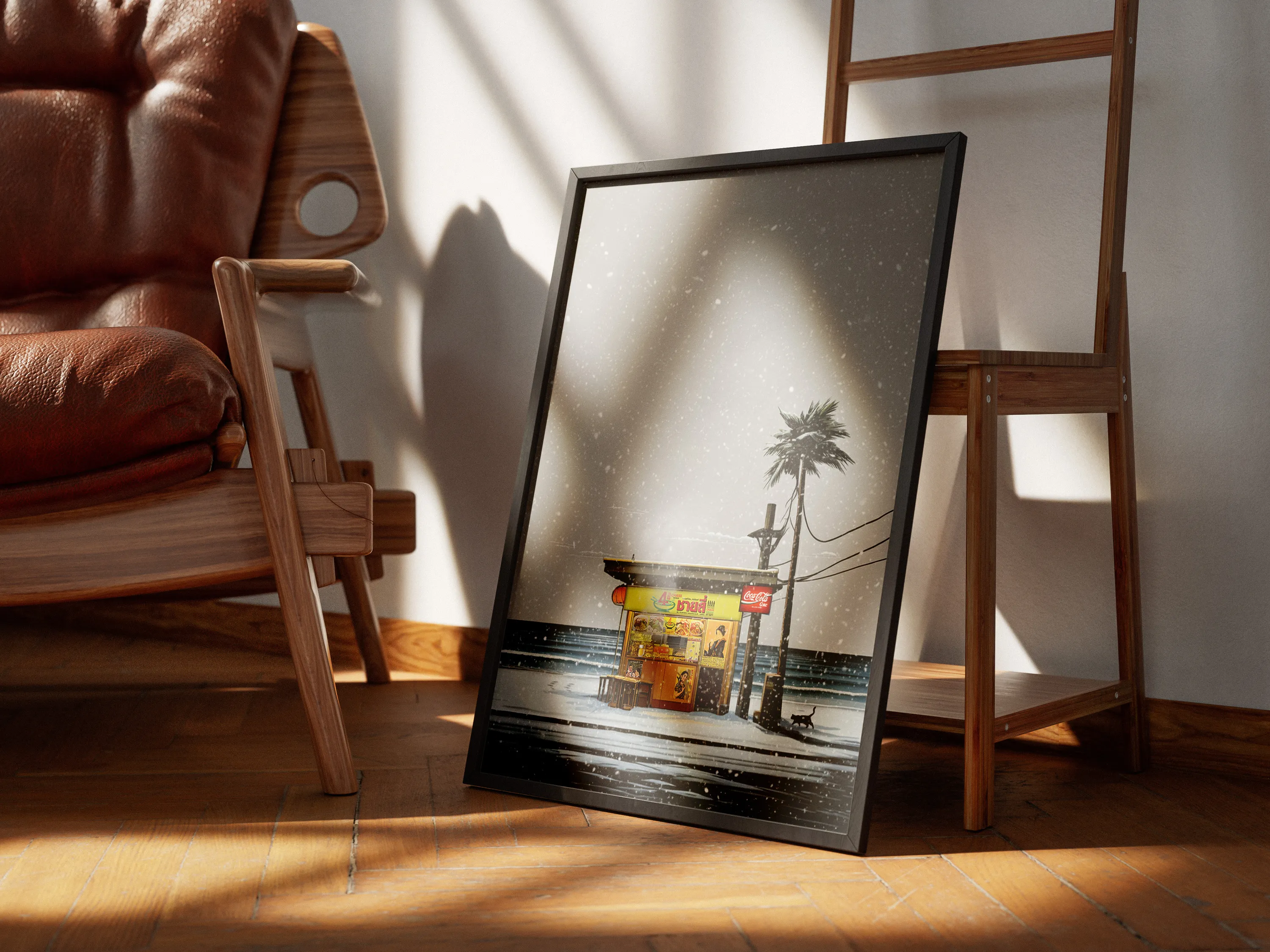
In the winter world of Pacific Salaryman, snow falls gently on the grilled pork (moo ping) carts. Icicles hang from the awnings of Cafe Amazon. It is a visual shock that offers an ‘emotional cooling down’ for a city that is perpetually overheated.
We caught up with the man behind the monitor to discuss the art of escapism, why the ‘Bangkok Salaryman’ is a different breed from the Japanese original, and where to find his hidden work in the wood-carving district of Bang Pho.
The name itself sounds like the title of a lost vinyl record found in a crate in Shibuya – mysterious, breezy, and contradictory. For Teerapatra, the persona is a carefully constructed intersection between his two lives.
‘The name actually started with my obsession for the word “Pacific”,’ he tells Time Out. ‘It’s not just a direction on a map to me – it’s the name of an ocean with this magnetic, endless charm. I’ve lived my life on the Pacific side, and every time I look out toward that horizon, it feels like the ocean is quietly recharging me.’
But then comes the second half of the name: the anchor.
‘“Salaryman”, on the other hand, is me embracing the reality of modern life,’ he says. ‘The deadlines, the grind, the routine – but without letting go of the artistic heart that grew up on late-’80s city pop aesthetics. Neon lights, warm synth pads, quiet car rides home, that feeling of being tired but still dreaming… that’s the world I come from.’
His Instagram contains a poignant manifesto: ‘A salaryman is tired from the real world.’ It’s a phrase that resonates deeply with those who clock in and clock out every day. But Teerapatra insists his art isn’t a violent protest against capitalism; it’s a survival mechanism.
‘A lot of it is a reaction – not in a dramatic, smash-the-desk kind of way, but more like a quiet rebellion that only people who’ve lived the 9-to-5 grind really understand,’ he explains. ‘Instead of fighting the punch-clock loudly, I slip out the side door and build a world where I can breathe. It’s rebellion, but in a soft, very Japanese way – more “I’ll escape into my own neon-drenched universe” than “burn the office down”.’
The term ‘Salaryman’ is, of course, a Japanese export. But Teerapatra believes the Bangkok version of the corporate warrior is a unique species. While the Japanese salaryman culture is built on rigid hierarchy and ritualistic devotion, the Bangkok experience is defined by its beautiful madness.
‘Bangkok intensity is chaotic,’ he says. ‘It’s heat, traffic, deadlines, LINE group chats that never sleep, and a city that moves faster than you can mentally process. You can go from a boardroom to a street market to a sky bar in the same hour.’
This environment creates a different kind of worker. ‘A “Bangkok Salaryman” survives in a different rhythm – less about hierarchy, more about hustle; less about formality, more about adaptability. Where the Japanese salaryman fades into the crowd, the Bangkok salaryman is constantly shape-shifting.’
It is this chaos – the ‘messy, loud, energizing’ nature of the capital – that provides the raw material for his art.
Perhaps the most striking series in the Pacific Salaryman portfolio is his collection of winter scenes. Seeing a classic Thai 7-Eleven storefront buried in snow, or a Chai See Bamee Kiew noodle cart battling a blizzard, triggers a double-take. It’s surreal, funny, and oddly comforting.
‘I think “coldness” hits Thai people on two levels,’ Teerapatra muses. ‘On the surface, yeah – it’s the heat. We live in a place where stepping outside sometimes feels like opening an oven door, so seeing Bangkok wrapped in snow instantly feels refreshing.’
But the psychological impact is stronger. ‘Deeper than that, cold imagery gives us a sense of stillness that’s hard to find in this city. Snow, even in imagination, slows everything down. It softens edges, quiets noise, and makes familiar places feel gentle again. Snow over a street cart isn’t just funny – it’s a kind of emotional reset.’
If he could choose one Bangkok landmark to give the winter treatment to next? ‘I think Hua Lamphong Railway Station would be the most fun to transform into a winter scene. Its classic architecture, wide arches, and nostalgic atmosphere would look incredible under a blanket of snow.’
The aesthetic glue holding these images together is ‘city pop’ – the 1980s Japanese genre of music and art associated with economic boom times, coastal drives and urban melancholy. Why does a style from 40-year-old Tokyo resonate with modern Bangkokians?
‘I think the 80s Japanese aesthetic resonates with modern Bangkok because both worlds share this mix of optimism and exhaustion,’ says Teerapatra. ‘People here are hustling harder than ever, juggling ambition and burnout… The city pop look captures that vibe perfectly: warm tones, soft lights, urban loneliness and a bittersweet kind of hope.’
Teerapatra’s genius lies in applying this high-gloss, curated aesthetic to ‘lo-fi’ Thai subjects. He cites legendary Japanese artists like Hiroshi Nagai as influences, masters who stripped scenes down to their quietest elements.
‘When I look at a messy noodle stall or a pole tangled with wires, I’m not seeing the clutter – I’m searching for that same sense of space,’ he says.
His favourite creation? The larb shop signs.
‘They have this unexpected Western vibe in their typography and layout, yet the word “ลาบ” (Larb) is so deeply tied to Thai identity. That contrast hits perfectly. It’s iconic, humorous and oddly beautiful.’
While his art features dreamscapes, Teerapatra’s life is grounded in the real city. We asked him to break down his personal favourites for a ‘Pacific Salaryman’ approved day off.
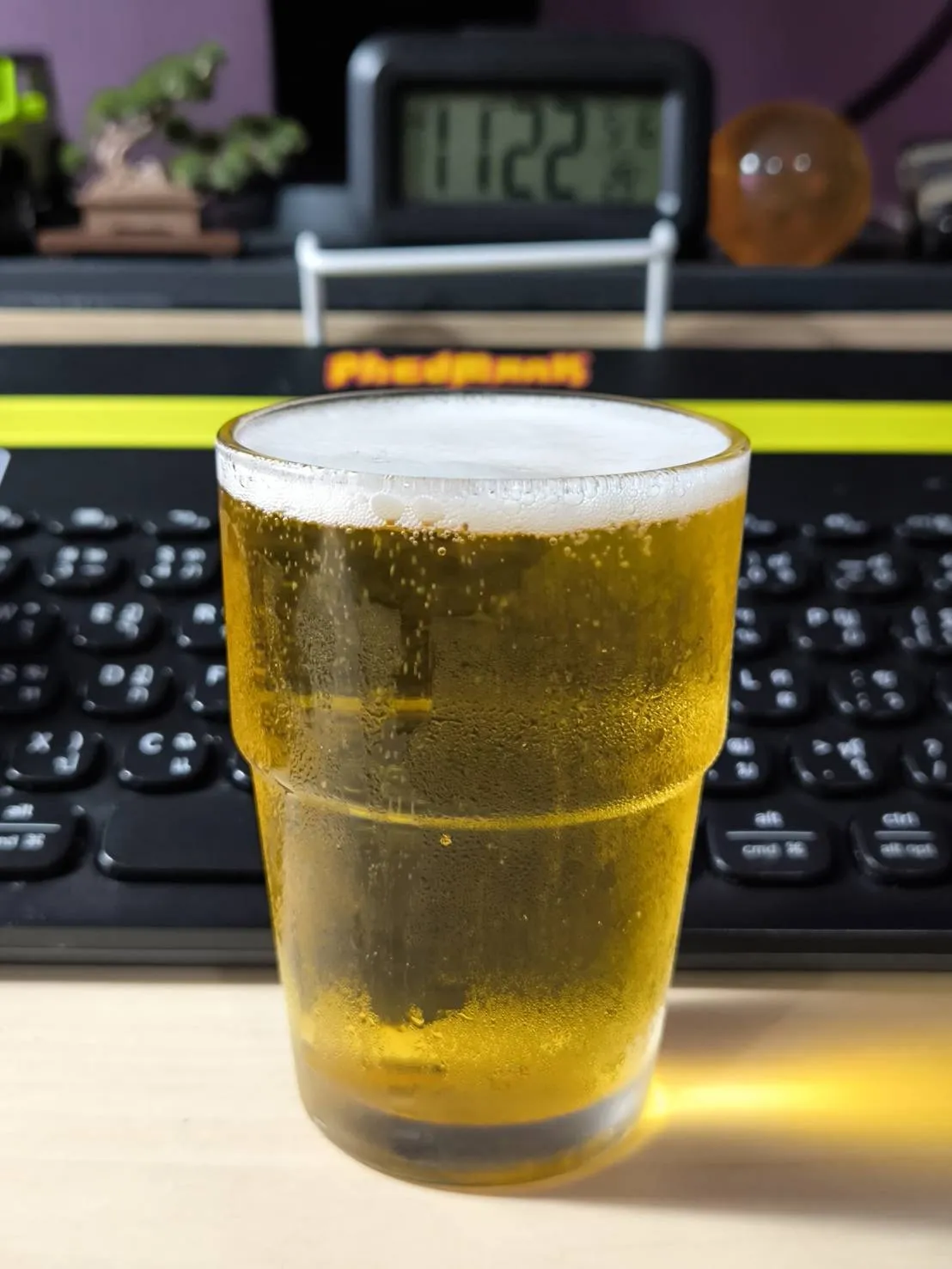
The drink: Forget craft cocktails or natural wine. The signature drink of the Pacific Salaryman is ‘an ice-cold Japanese lager. Clean, crisp, no nonsense’.
‘Beer is honest,’ he says. ‘It’s the universal language of tired office workers everywhere. There’s something poetic about that first sip – the way it cuts through the noise… It’s not fancy. It’s not curated. It’s just real.’
The sunset spot: His art is famous for ‘golden hour’ lighting, and in real life, he chases that same glow by the water.
‘Golden hour in Bangkok hits different when you’re by the river. My favourite spot is probably Asiatique, or honestly any of the tall buildings lining the Chao Phraya,’ he recommends. ‘But if you want something a little more grounded, walking around Pak Khlong Talat or Song Wat during sunset is just as magical. The mix of old shophouses, warm street lights and fading sunlight creates a mood you can’t fake.’
The playlist: You can’t create city pop art without the soundtrack. Teerapatra lists three essential tracks for the vibe:
While Pacific Salaryman lives online, his physical presence is hidden away in one of Bangkok’s most interesting old-school neighbourhoods: Bang Pho.
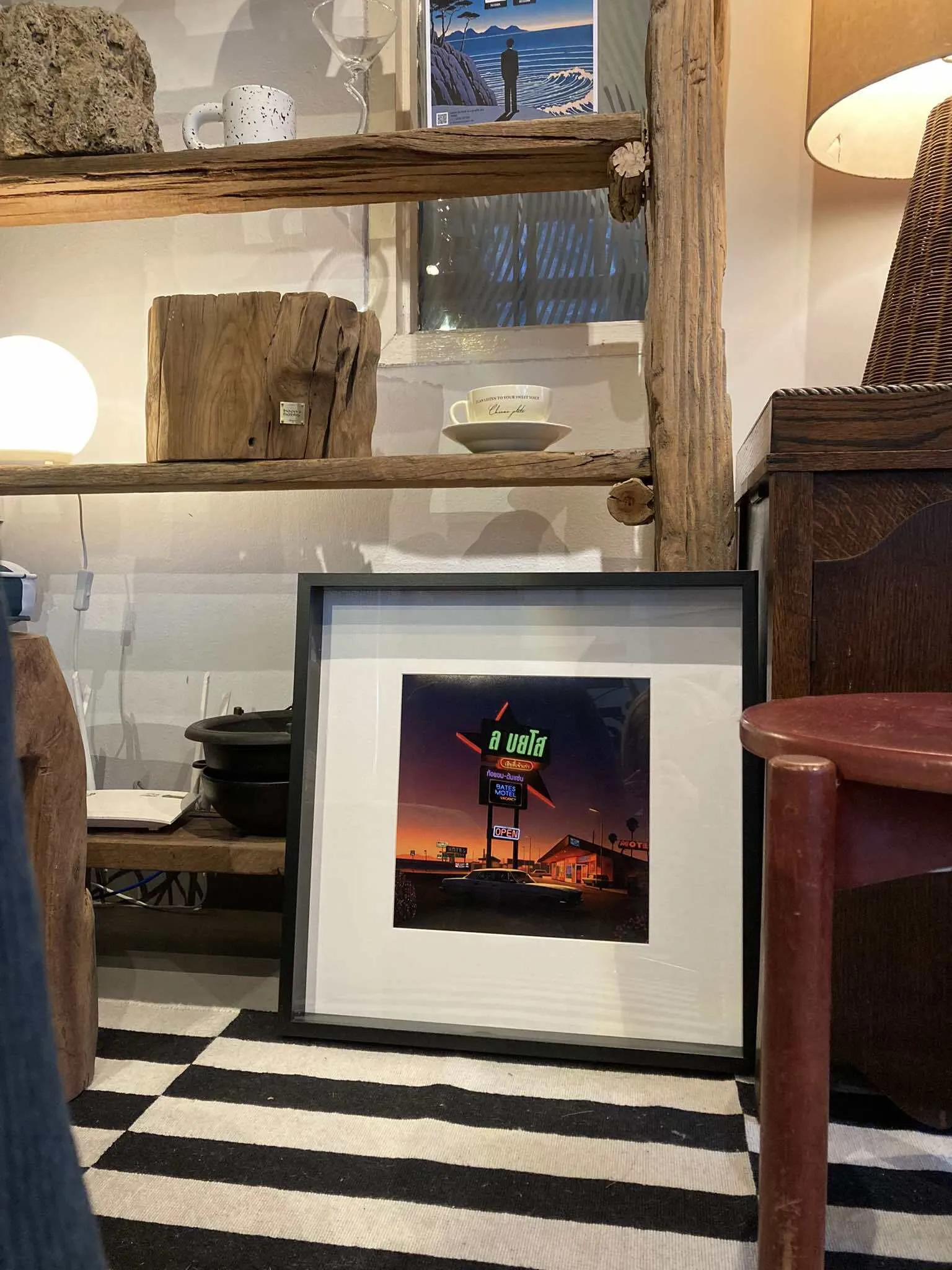
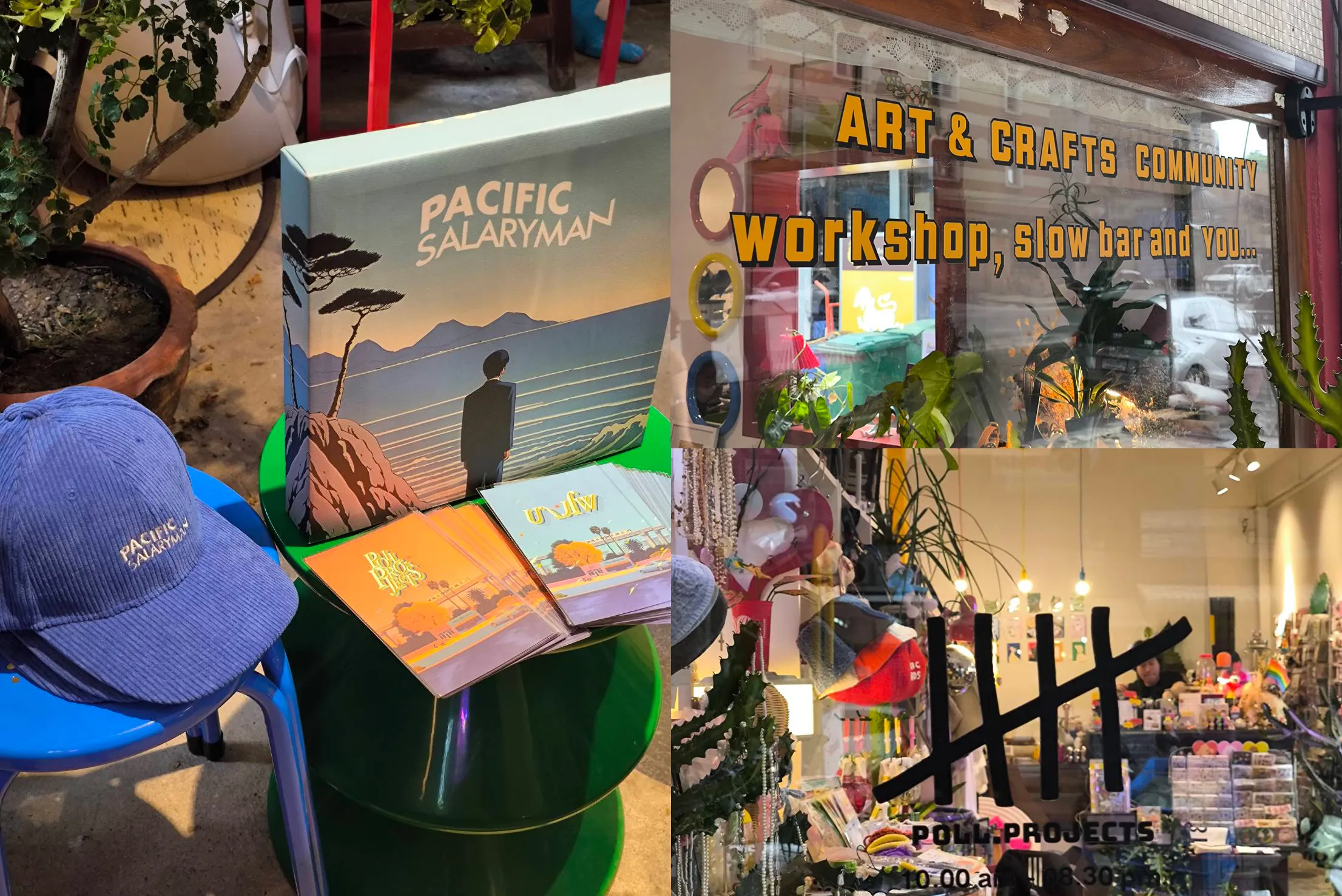
Known historically as the ‘street of wood’ for its timber yards and furniture craftsmen, Bang Pho has recently seen a surge of creative energy. Central to this is POLL.Projects, a community space and shop where Teerapatra sells his prints and merchandise.
‘I connected with POLL.Projects through a really good relationship we built last year,’ he says. ‘It’s one of those spots where you walk in for a look and walk out feeling inspired.’
For Time Out readers looking for an off-beat weekend excursion, he highly recommends the trip. ‘POLL.Projects brings together three things that rarely coexist so naturally: art, good tea, and genuinely kind people. It feels more like a creative hangout than a formal gallery.’
What to buy: If you make the pilgrimage to Bang Pho, look for the Pacific Salaryman Cap (‘a clean and simple design… that quiet, understated vibe’) and the just-released 2026 Calendar, which weaves the city pop atmosphere into every month of the upcoming year.
Teerapatra also notes a hidden perk of visiting the shop: ‘The real surprise is the sunset by the Chao Phraya River right beside their shop. You wouldn’t believe how stunning it is… golden light spilling over the water, calm air, and this peaceful moment you don’t normally expect in Bangkok.’
In an era where every creative is trying to build an empire, launch an NFT, or pivot to video, Teerapatra’s ambitions remain refreshingly humble. He doesn’t want to quit his day job. He doesn’t want to be a celebrity.
‘My ultimate dream is actually much simpler than people expect. I’m just a salaryman who happens to create illustrations – not an artist chasing a big gallery show,’ he admits. ‘I don’t really dream of having my own exhibition or some grand artistic milestone. What I want is the small, human happiness of finishing a long day of work, cracking open a beer, and drawing something that feels good to make.’
For the Pacific Salaryman, the art isn’t a ladder to climb. It’s a window to open.
‘I don’t need to retire to the sea or reinvent my life. I just want to keep creating in my own rhythm… If that brings someone else joy too, then that’s basically the dream fulfilled.’
Where to find him:
Discover Time Out original video