[category]
[title]
The stubborn persistence of a small Chinese-Thai hotel that somehow endured seven decades of city upheaval

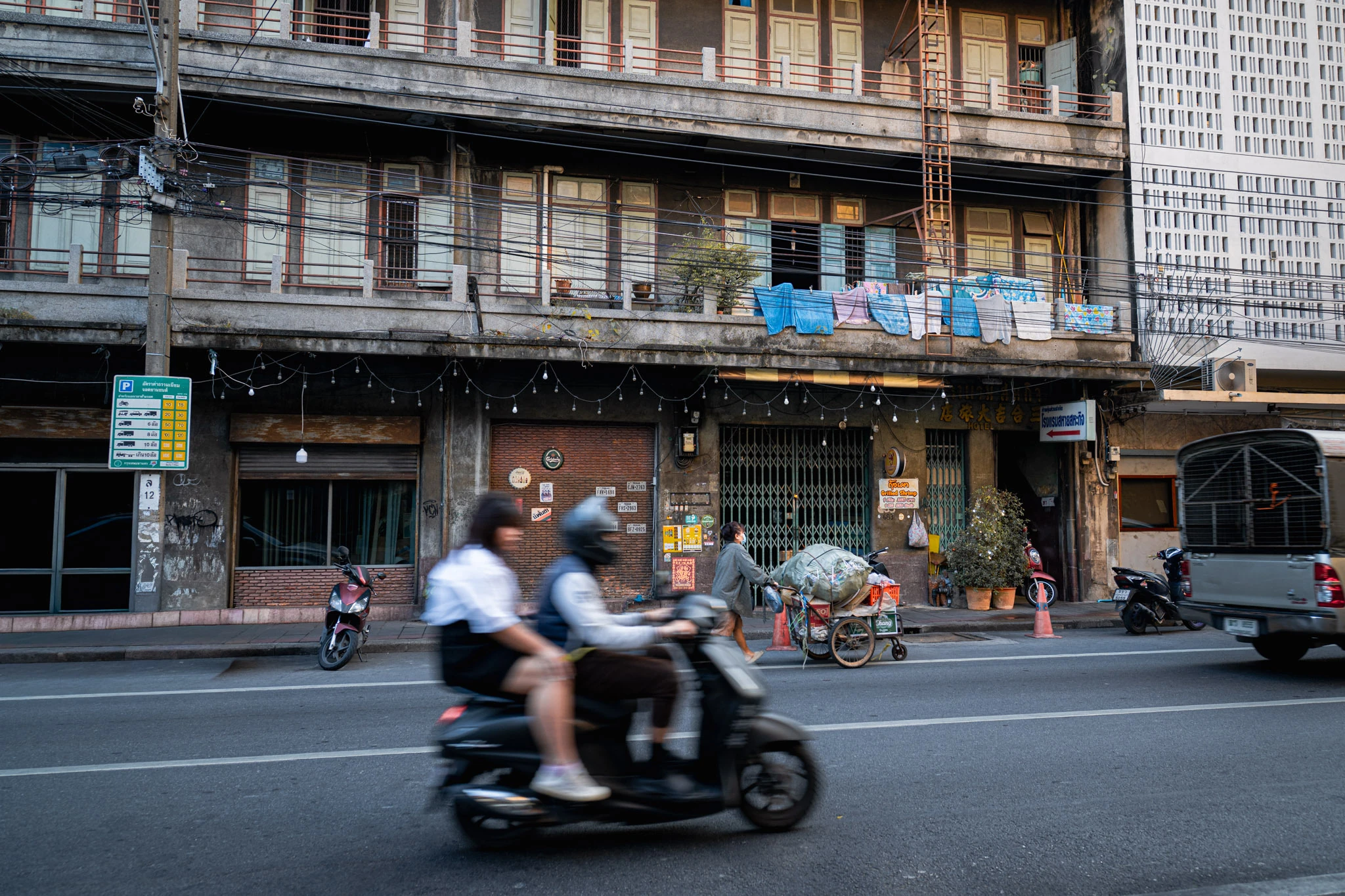
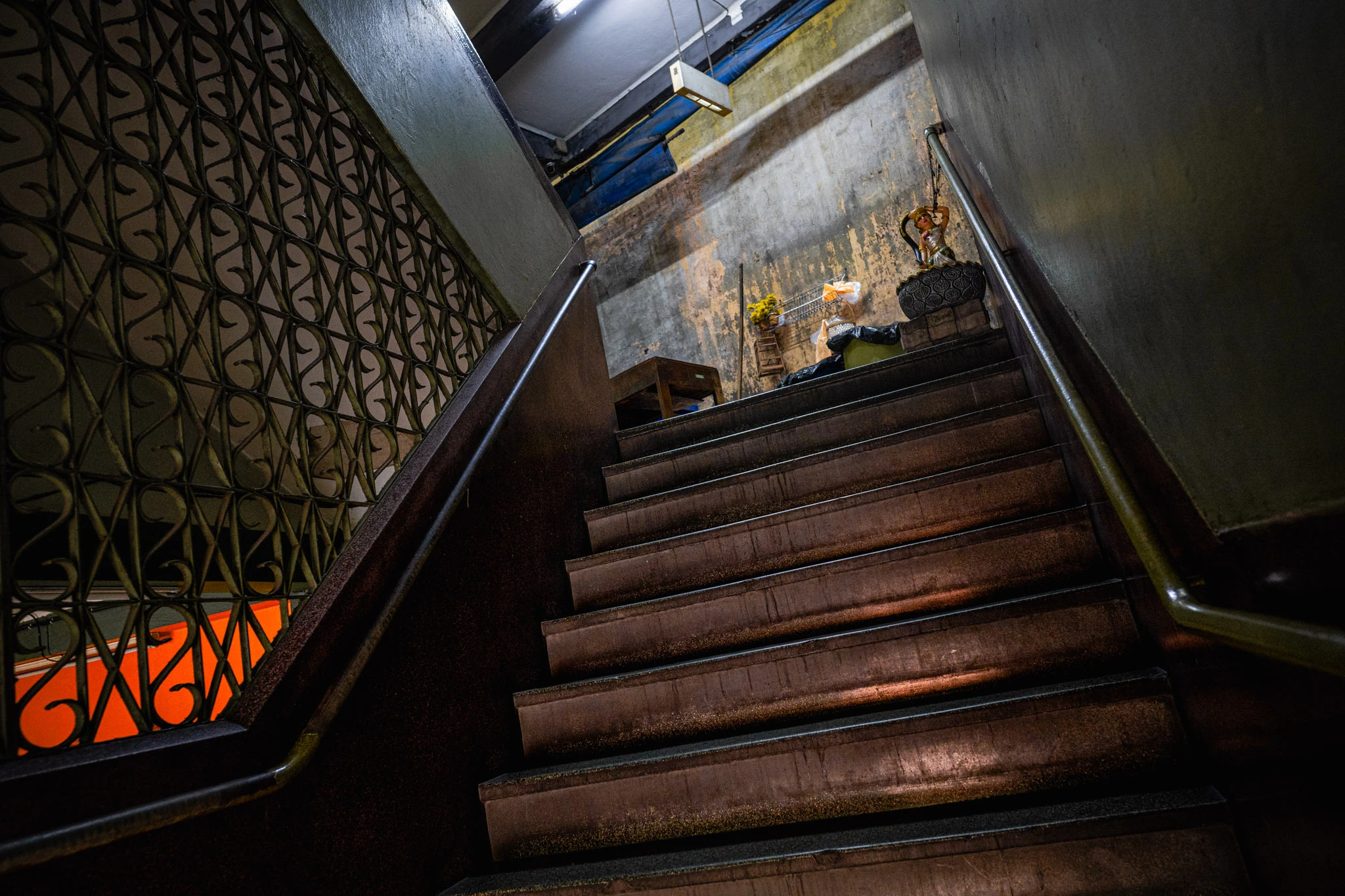
The old wooden staircase on Maitrichit Road creaks underfoot, like a soundtrack from a 1950s film noir. Outside, motorcycle couriers zip past old, rusting shutters. Noodle carts hiss steam by the curb and the low rumble of trains drifts in from the Hualamphong rail corridor. Then you reach the second floor – step into the lobby of the 74-year-old Sahai Sahakit Hotel, and at that moment, the city seems to shed several decades.
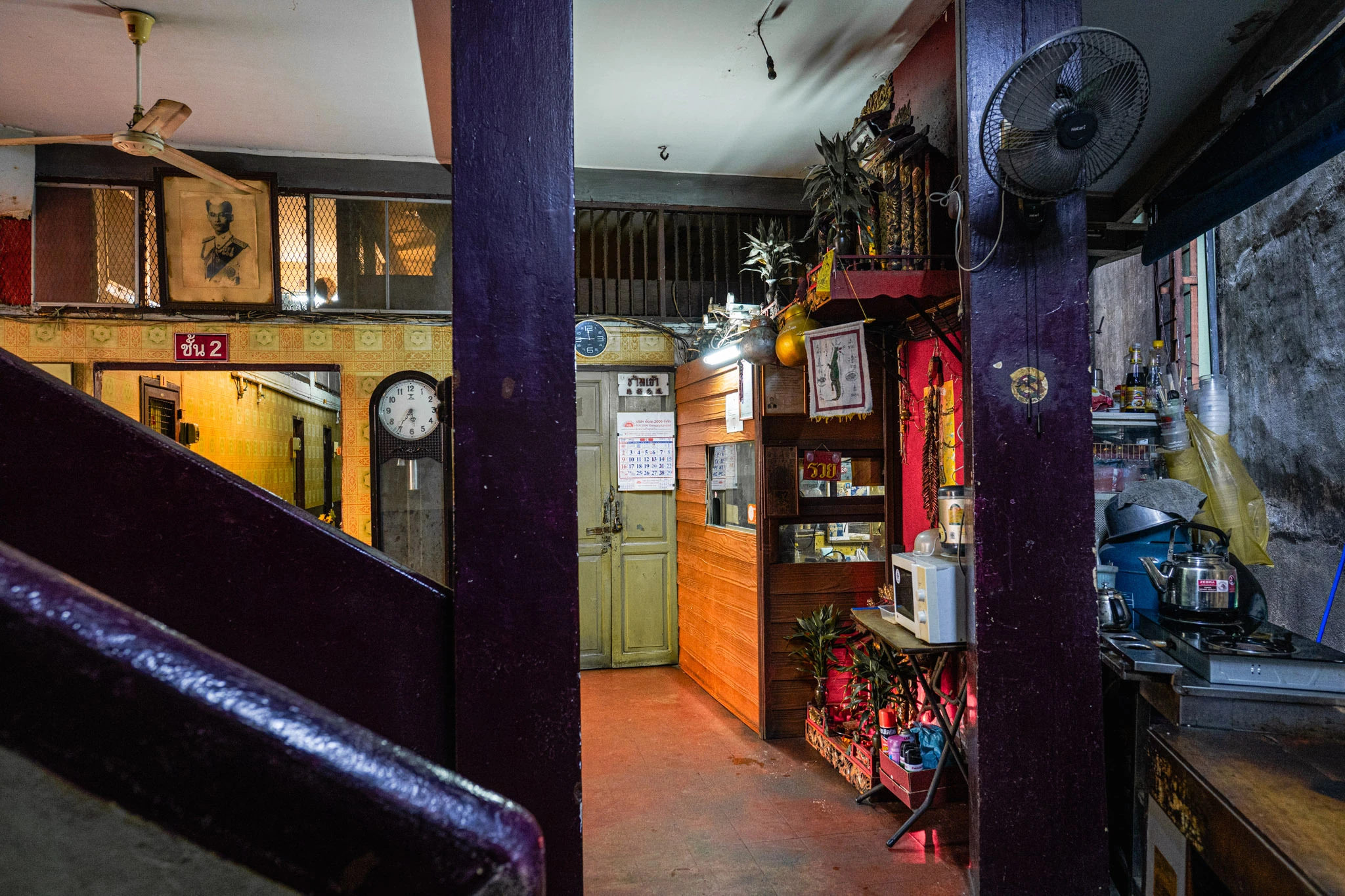
A large portrait of Mao Zedong watches over the lobby. The standing clock near the reception desk, hands frozen in place, looks like it hasn’t been touched since the 1960s. Fading walls glow amber beneath fluorescent tubes. Old wooden doors to guest rooms line the corridor behind the front desk. Somewhere deeper in the building, a television murmurs in Thai, while an electric fan slowly pushes the hot air around.
Bangkok still holds onto a few places like this, but they grow fewer with each passing year.
Known in Chinese as the Three Harmony Lucky Grand Inn (三合吉大旅店), the Sahai Sahakit Hotel – as it’s better known – represents a disappearing part of urban Bangkok: the modest Chinese Thai commercial hotels that once thrived near the city’s main train station, its wholesale markets and the busy dockside trading districts.
Unlike the grand colonial-era hotels like the Mandarin Oriental along the river, or the backpacker guesthouses that later sprang up around Sathorn and Banglamphu, places like Sahai Sahakit operated quietly, serving traveling salesmen, merchants from the provinces, railway passengers and new migrants. Most left little trace in guidebooks or official archives. That very obscurity is what makes the hotel so intriguing today.
Founded in 1952, Sahai Sahakit opened its doors during a very particular time. Bangkok was rebuilding after World War II, and nearby Hua Lamphong railway station had become a major transportation hub for the kingdom.
Chinese family businesses, having survived wartime disruptions and anti-Chinese restrictions of the Phibun era, were reopening or reorganising. Small hotels appeared along Thailand’s rail routes to accommodate traders and migrants moving between Bangkok and the provinces.
The hotel’s name hints at that world. ‘Sahai’ means companion or comrade; ‘Sahakit’ suggests cooperative enterprise or joint business activity. Together, the name sounds less like a tourist hotel and more like a mid-century Sino-Thai commercial venture. The prominently displayed Mao portrait in the lobby only deepens the intrigue, hinting at ideological leanings from an era when overseas Chinese communities across Southeast Asia closely followed the political upheavals transforming China after the war.
The owner’s parents migrated from Chaozhou in southern China, part of the Teochew diaspora that profoundly shaped Bangkok’s commerce. Today, the owner himself, who prefers not to be named, is 96 years old, and his hotel survives almost unchanged.
Across Bangkok’s Chinatown and Pom Prap districts, entire layers of architecture and social history have vanished under the relentless march of redevelopment. Most other railway-centric hotels disappeared. Chinese opera associations and their assorted performance venues closed. Long-running shophouse pharmacies became cafes, clubs or condominiums. Yet Sahai Sahakit somehow endures.
The building’s trilingual signage remains unchanged, with raised Thai, Chinese and English lettering typical of Bangkok commercial typography from the ’40s through ’60s. In areas like Yaowarat and Hua Lamphong, businesses often needed to communicate with Thai customers, Teochew- and Cantonese-speaking Chinese communities and foreign traders or sailors moving between rail and port connections.
The signage alone feels like an artefact from a different commercial universe.
Inside, manager Pradit quietly oversees the operation. He has worked there for 30 years, starting as a bellboy before eventually taking over management duties. These days, he sleeps in a small room right beside the reception desk.
‘There used to be many hotels like this,’ he says. ‘Now almost all are gone.’
In its prime, Sahai Sahakit was considered a first-class hotel. Rooms once cost only twenty baht a night. Today, prices remain remarkably low by Bangkok standards: B300 for smaller rooms, B400 for larger ones. The furnishings are sparse. Its appeal lies in atmosphere rather than comfort.
And atmosphere, increasingly, becomes a valuable commodity.
Over the past decade, Bangkok’s Chinatown has undergone dramatic transformation. What many younger Thais once viewed as congested and old-fashioned suddenly became fashionable again. Artists move into Talat Noi warehouses. Cocktail bars appear behind shophouse facades. Boutique hotels open inside restored Chinese commercial buildings. Photographers and filmmakers discovered that the district’s fading textures hold a cinematic power difficult to replicate on a studio set.
Sahai Sahakit became part of that rediscovery. Today, fashion photographers, television crews, magazine stylists and film producers regularly rent the property. Thai university students arrive carrying cameras and lighting equipment. A Korean crew recently occupied the hotel for nine days while filming a television series. Japanese and Indian productions also shoot there.
The corridors, lobby, staircases, and aging guest rooms possess precisely the kind of visual authenticity directors crave but developers eventually erase. Few productions, however, have immortalised the hotel more memorably than Nicolas Winding Refn’s 2013 film, ‘Only God Forgives’.
The divisive neo-noir thriller, starring Ryan Gosling and Kristin Scott Thomas, competed for the Palme d’Or at the 2013 Cannes Film Festival and sharply split critics and audiences between passionate admirers and baffled detractors. Director Nicolas Winding Refn reportedly spent six months living in Bangkok while preparing and scouting locations for the film.
‘I’ve spent three years making this film and I don’t really know what it’s about,’ Refn famously remarked when it was finished.
Bangkok itself becomes one of the movie’s central characters: humid, violent, neon-lit, and dreamlike.
One of the film’s most disturbing early sequences unfolds nearby and then inside Sahai Sahakit. Tom Burke’s character, Billy Thompson, first appears prowling the former Cleopatra Turkish bath massage parlor – today reborn as hip boutique hotel The Mustang Blu – just 50 meters south of the Sahai Sahakit.
After going on a rampage when management refuses to supply an underage girl, Billy leaves and walks down the street towards Sahai Sahakit. He climbs the hotel staircase.
Soon afterward, the film’s avenging plainclothes police officer, Chang, enters through the same doorway. In the lobby, viewers briefly glimpse the standing clock still visible today, though the Mao portrait remains outside the camera frame. Deeper inside the second-floor corridor, in a large room at the hall’s end, Billy commits the murder that launches the film’s brutal chain of vengeance.
Watching the movie now, anyone familiar with Bangkok’s Chinatown experiences an uncanny recognition. Refn did not build elaborate sets. He found places already vibrating with mystery and decay.
That same strange magnetism continues attracting younger creative communities today. On some afternoons, Sahai Sahakit feels less like a functioning hotel than an accidental museum of old Bangkok urbanism. Stylists carry garment racks up the staircase. Models pose beside weathered windows. Videographers linger in hallways, trying to catch the right shaft of light.
Yet despite its cinematic afterlife, the hotel doesn’t feel self-consciously curated. Nobody here speaks the language of heritage conservation or adaptive reuse. Sahai Sahakit simply continues operating as it always has.
Beneath the hotel, meanwhile, another small reinvention is taking place. The manager’s son and daughter-in-law run a casual, open-fronted restaurant on the ground floor of the building. Plastic camp tables spill onto the sidewalk and street edge each evening beneath Chinatown’s tangled electrical wires. Smokers drink beer beside trays of seafood while traffic inches past.
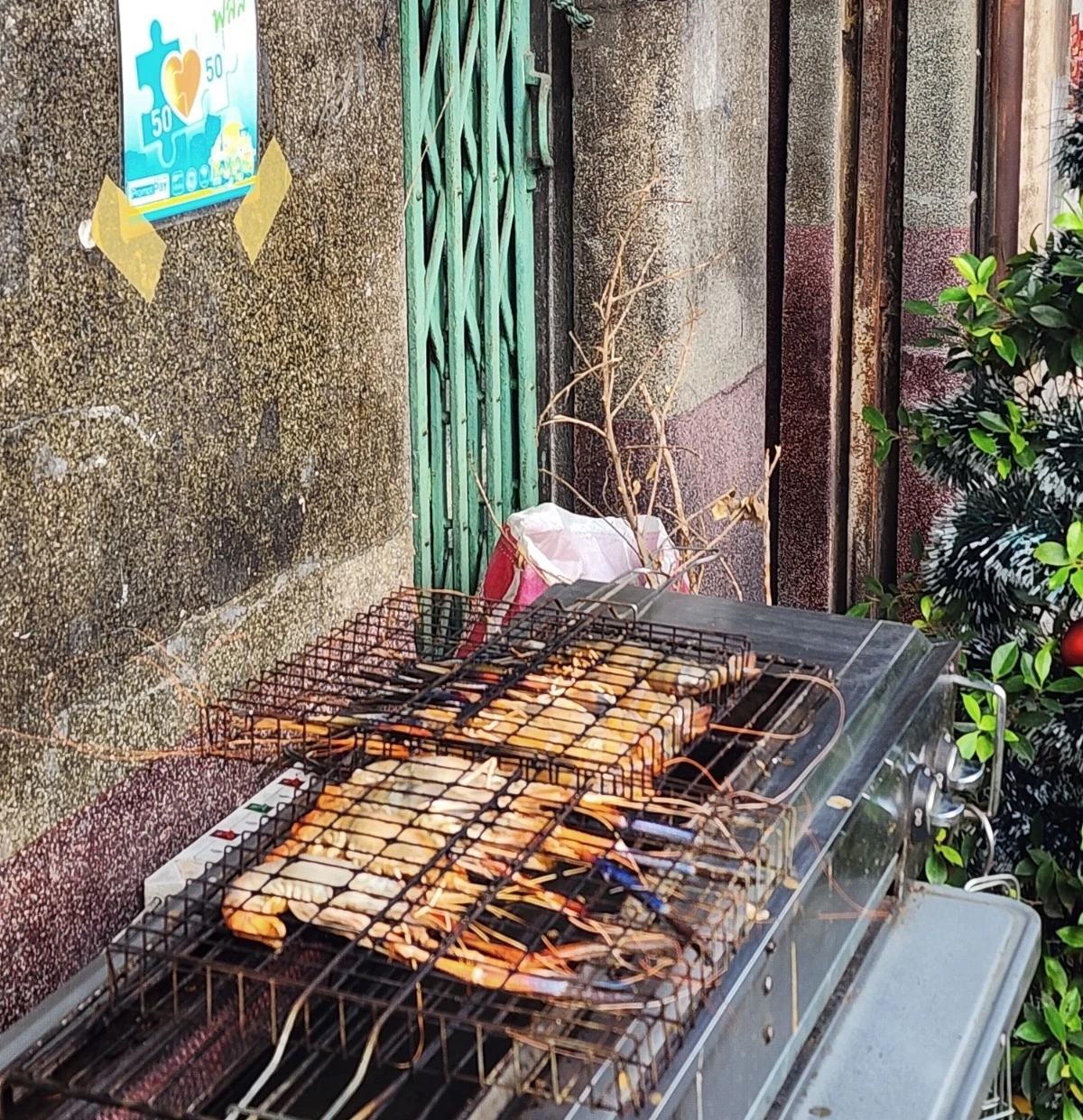
Called Kung Phao Lao Teng, the specialty here is grilled river prawns sold by the kilo. At B450 – enough for two diners – they remain among the best bargains in central Bangkok, especially at a time when many riverside seafood restaurants charge double that amount or more.
The prawns arrive charred and smoky, their fat heads rich with orange tomalley.
A handful of supporting dishes round out the menu. Fried shrimp cakes emerge crisp and surprisingly delicate. A tom yum Mama noodle dish topped with a raw egg riffs knowingly on the famous late-night version served at Jeh O Chula, where diners sometimes queue an hour for a table.
Nothing about the restaurant feels curated for tourists either. That, increasingly, is its appeal.
A decade ago, according to locals familiar with the neighbourhood, Sahai Sahakit functioned largely as an hourly hotel catering to sex workers and their customers. But Chinatown’s transformation alters the economics of survival. Today, photography rentals often generate more revenue than overnight guests.
Bangkok constantly reinvents itself, often brutally. Entire neighboruhoods disappear beneath condominiums and infrastructure projects. Yet now and then, a place survives long enough to outlive its original purpose and acquire an entirely different meaning.
That may be the true significance of Sahai Sahakit Hotel.
Not luxury. Not nostalgia. Not even cinematic fame.
Rather, its value lies in continuity – in the stubborn persistence of a small Chinese-Thai commercial hotel that somehow endured seven decades of political upheaval, urban redevelopment, changing vice economies, mass tourism and gentrification without fully surrendering its identity.
You climb the staircase. The wood groans softly beneath your feet. Mao still watches from the lobby wall. Outside, Bangkok hurtles towards the future. Inside Sahai Sahakit, another Bangkok refuses to disappear.
Discover Time Out original video