

[image]
[title]There is no sign outside Dots Coffee explaining what it is. No mission statement on the wall, no framed certificates, no small-print acknowledgement that something here is different from the coffee shop two floors down. You order, you wait, you collect your drink. The beans come from Chiang Rai, medium-roasted and they taste good.
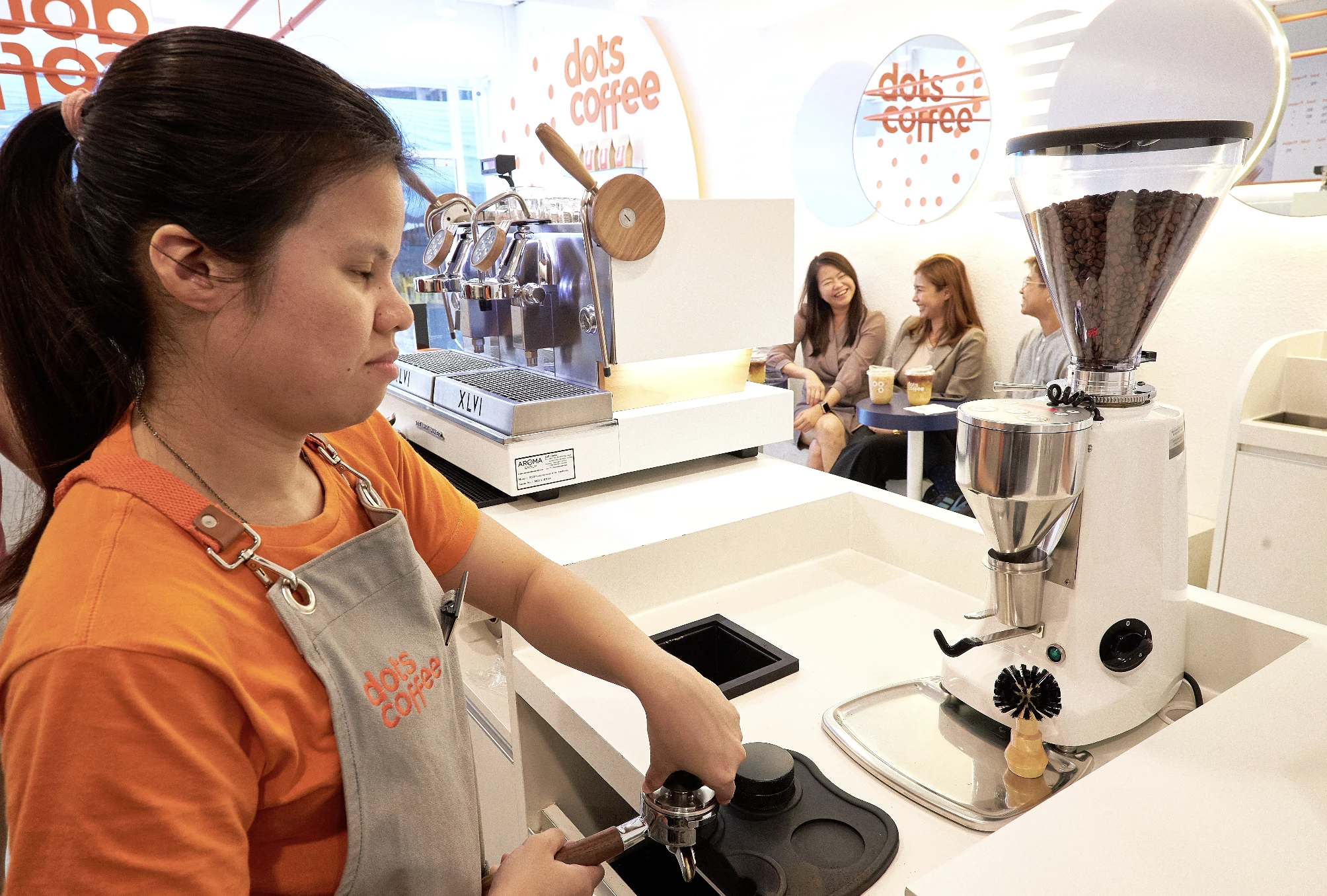
The barista behind the counter moves with efficiency, adjusting the portafilter, calling out an order, doing what baristas do. What you may or may not notice, depending on how closely you are paying attention, is that every person behind the counter is visually impaired.
That absence of signage is not an oversight. In fact, sight was never part of the concept. The whole philosophy is physical – a place built around giving agency to those who can’t see.
Where it all started
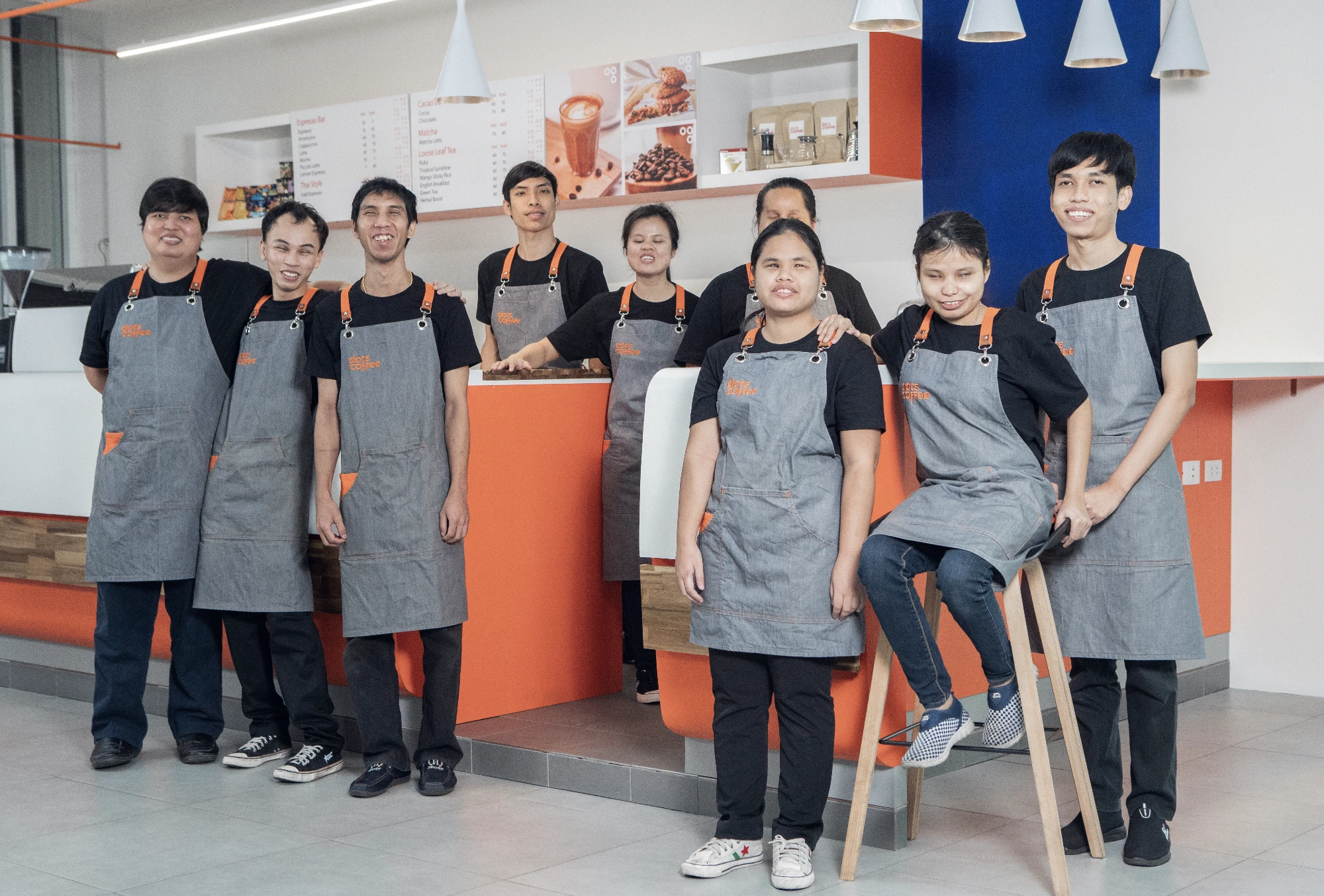
Dots Coffee is the world's first retail business operated entirely by visually impaired staff and its founders built it with a single ambition in mind – not to ask for your sympathy or your admiration, but to run a sustainable, profitable, well-made coffee business in which visually impaired people are not a feature of the story but take a central role in the whole operation.
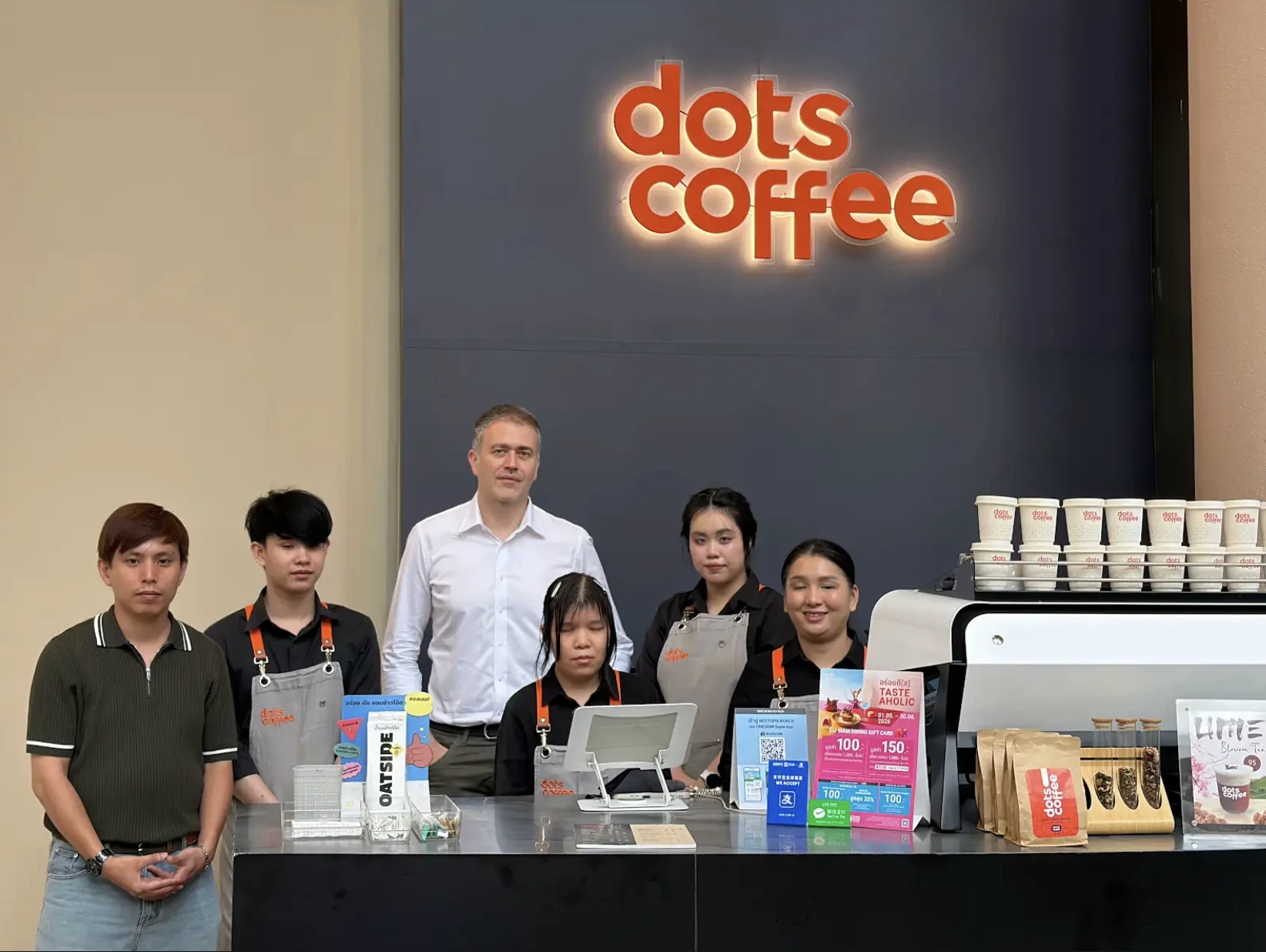
The social impact, as co-founders Julien Wallet-Houget and Gavin Kuangparichat see it, is not something that happens alongside the business. It is the business. And the business has to be good enough to stand entirely on its own.
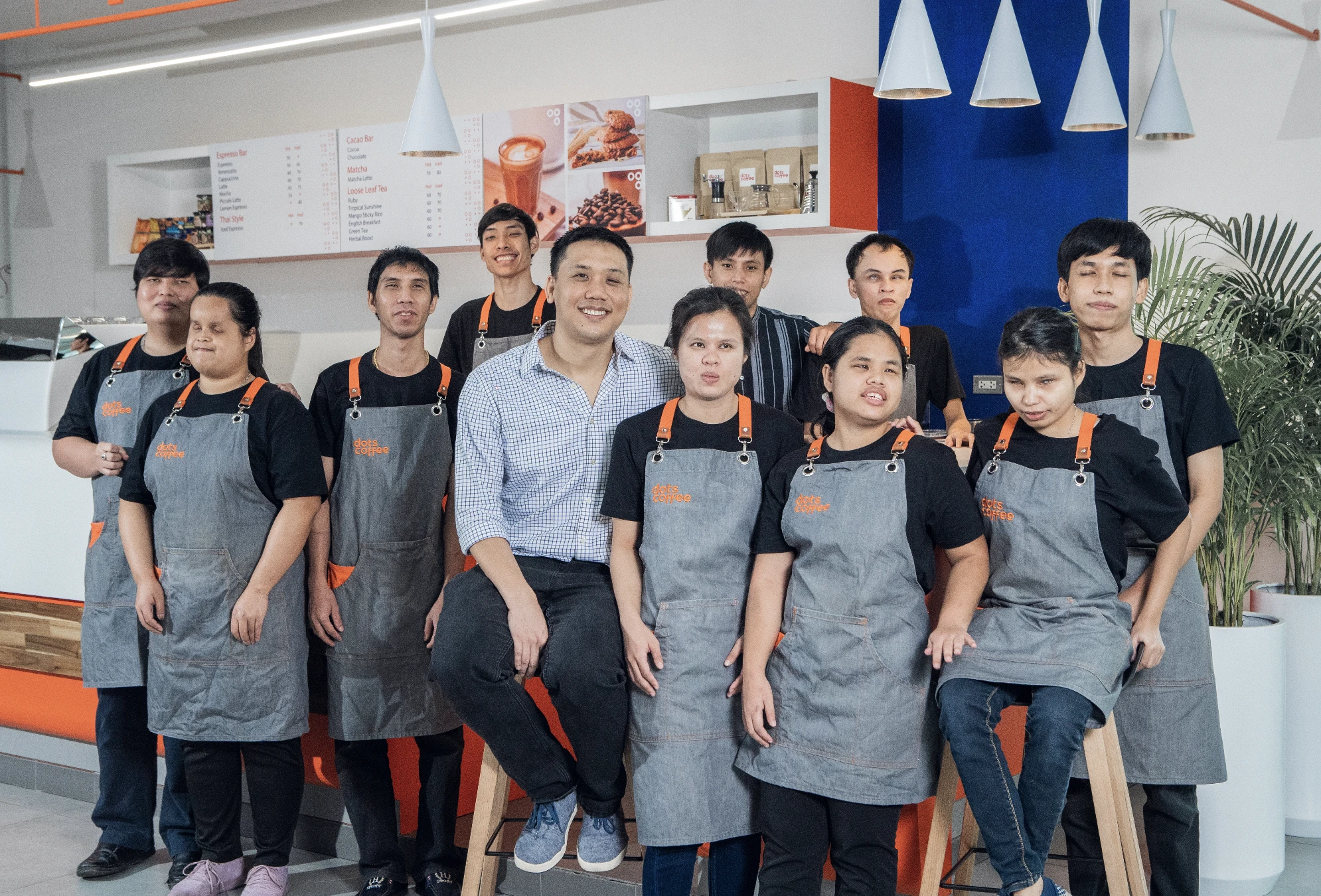
Julien and Gavin met in Bangkok in 2009 at the Population and Community Development Association (PDA), an organisation run by Mechai Viravaidya, the public health pioneer better known in Thailand as the ‘Condom King’ for his decades of work on HIV prevention and population control.
By the time the two men arrived, PDA had shifted its focus towards income generation, microfinance and poverty alleviation. It was good work, seriously done. But Julien had something else brewing on the side.
Before he was a social entrepreneur, Julien had been organising events in Bangkok – most notably Lush, a music festival that grew to 5,000 people across sixteen editions, raising money for social and environmental causes. But the question that had been forming in the background was getting louder: instead of outsourcing social impact through fundraising, what if it could be built directly into a permanent business from the start?
The answer came one morning in 2011, with a clarity he still describes as almost physical.
'I woke up and I knew very distinctly that a restaurant in the dark would be the solution. It combined all these elements and it would be a permanent location where the social impact was integrated within the business.'
A pitch-black dining experience run entirely by visually impaired staff, front of house and all. But this was not for novelty. This was to prove that workspaces can – and should – be blind-friendly.
Into the dark
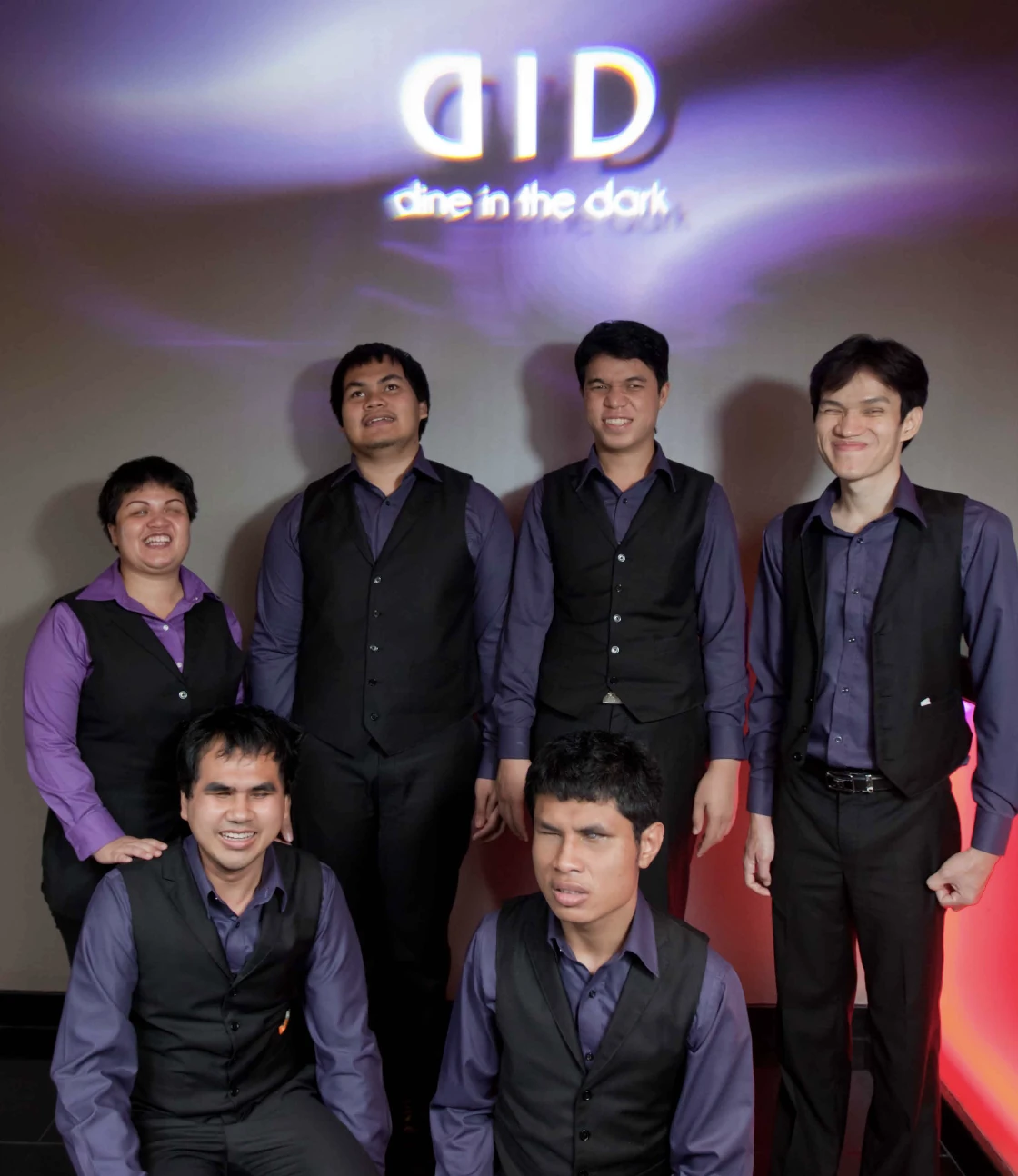
DID – Dine in the Dark was the next venture, a brand that became famous across Asia during the early 2010s. If you don’t know it, it works like this: the dining room is pitch black. Not dim, not atmospheric. Completely dark in a way that makes ordinary darkness feel almost bright. Guests are led to their seats by visually impaired staff, served food and drink by them and guided through an evening in which they have no idea what they are eating until after the meal.
'You start getting more aware of what people say,' Julien explains. 'You don't look around thinking, oh, that person has a blue shirt. You're just very focused on what's around you. It's a role reversal, where the visually impaired person leads you.'
Gavin, a Thai-American with a B.S. in Materials Science and Engineering from Columbia University and an MBA from the University of Michigan, was one of Dine in the Dark's first customers before later joining the team. He subsequently became co-founder and managing director of Dots Coffee. The restaurant still runs at the Sheraton Grande Sukhumvit, with plans to open in the Philippines later this year. But both men are candid about the format's limitations. By placing visually impaired staff in an entirely special environment, the concept had inadvertently reinforced the idea that they needed special conditions to thrive. Exclusive by nature, expensive by necessity, its reach would always be contained.
'And then comes Dots Coffee,' Julien says, 'which solves this problem amazingly well.'
And then comes Dots Coffee
The logic behind coffee is more layered than it first appears. Gavin sets it out methodically, like someone who has worked through the argument enough times to have sanded it down to its essentials.
'We wanted something scalable. Not just a few shops, but something that could take over Bangkok, Thailand, eventually the world.'
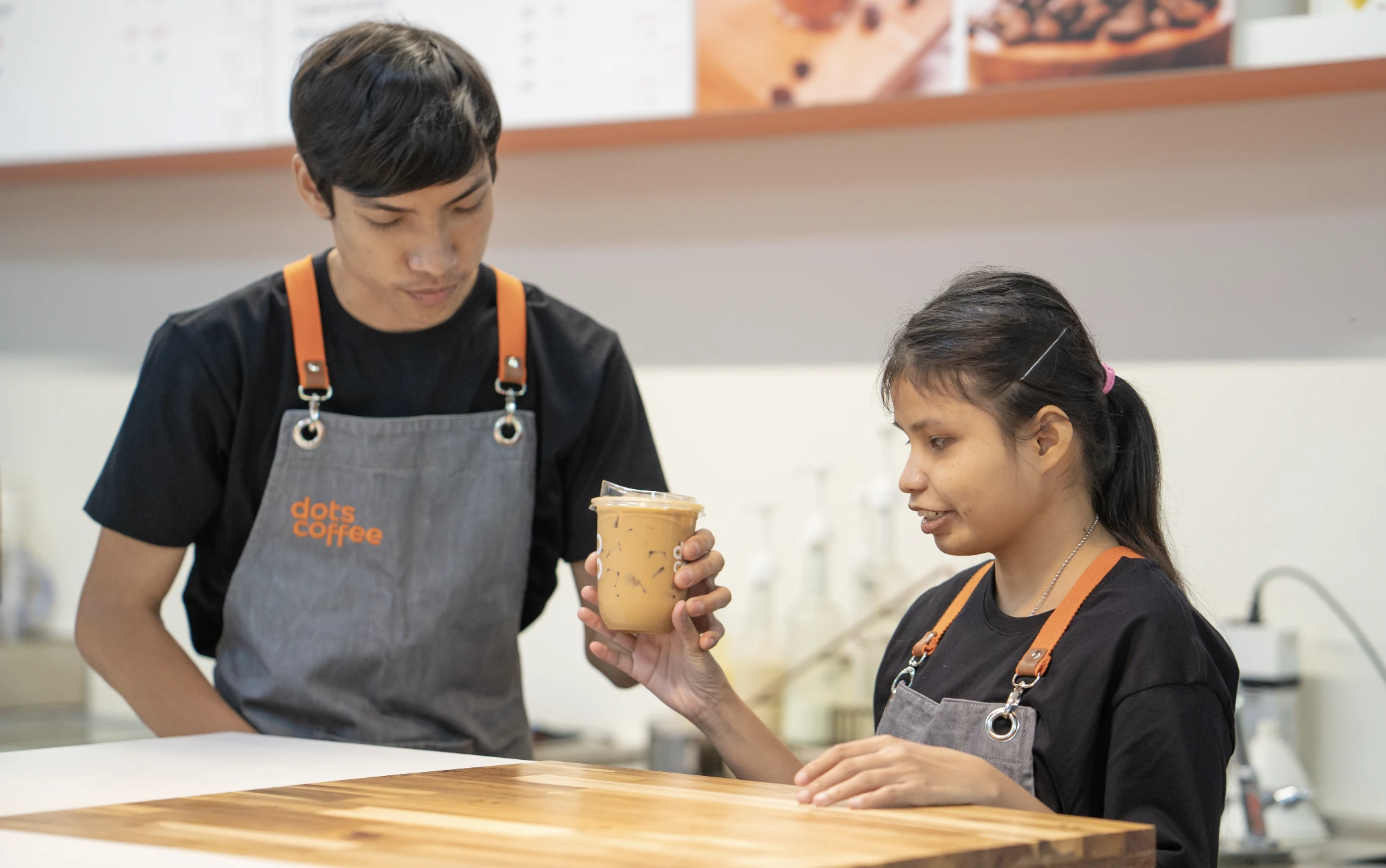
An everyday product at a democratic price point, something people could choose to buy daily rather than experience once a year. The more shops, the more visible the model. The more visible the model, the more normalised the sight of visually impaired people in front-of-house, customer-facing, commercially driven roles.
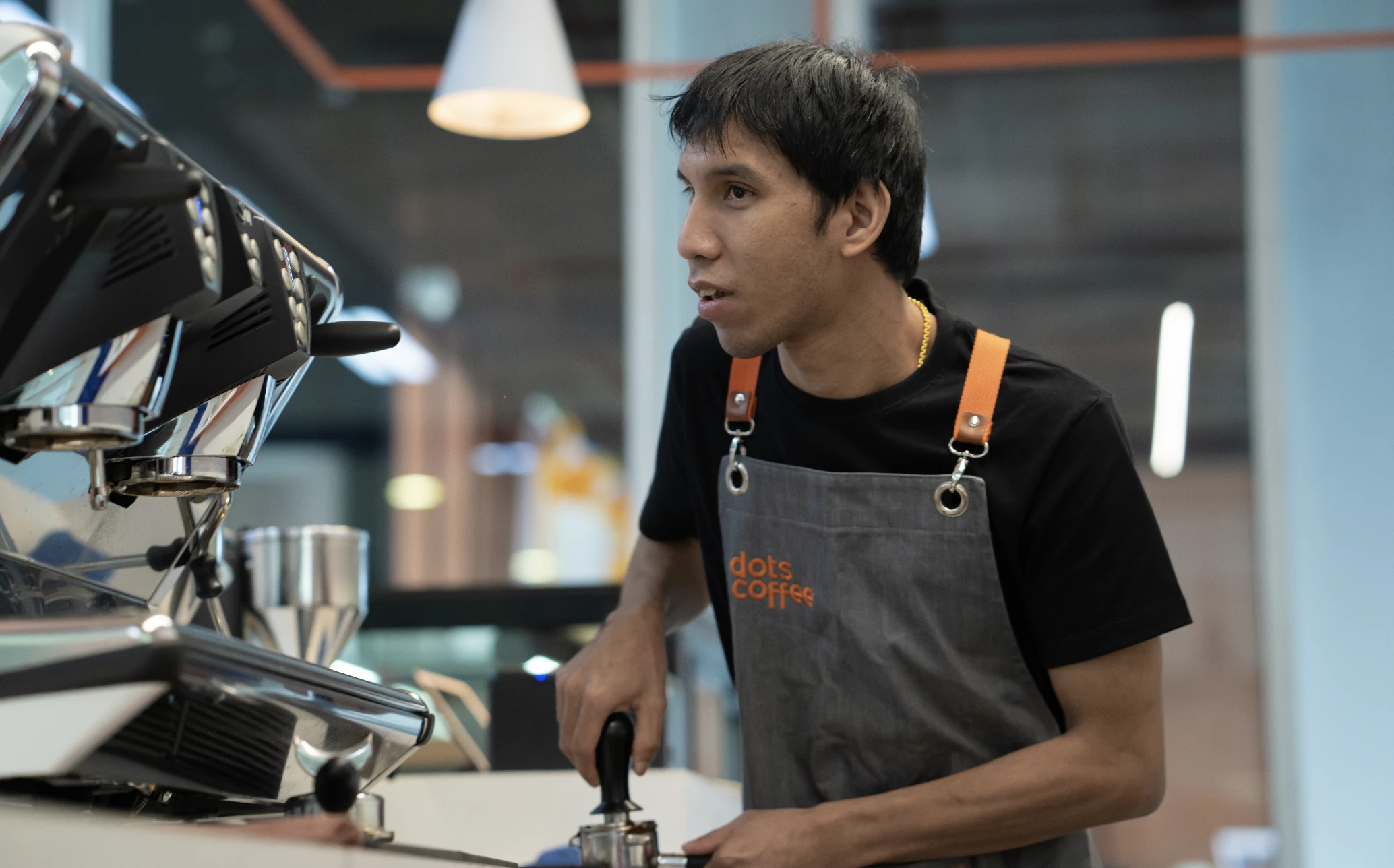
'People are coming because of the product.'
'People are coming because of the product,' Gavin says. 'And that proves the point we're trying to make. Our baristas are playing a key role in driving the customer experience, driving revenue, ultimately the bottom line. They don't have to be sequestered into welfare-driven approaches or an NGO model.'
On purpose, Dots Coffee positions itself just below the technical threshold for specialty coffee. That grade requires a cupping score of 80 or above, a standard that tends to push prices upward in ways that contradict the whole ethos.
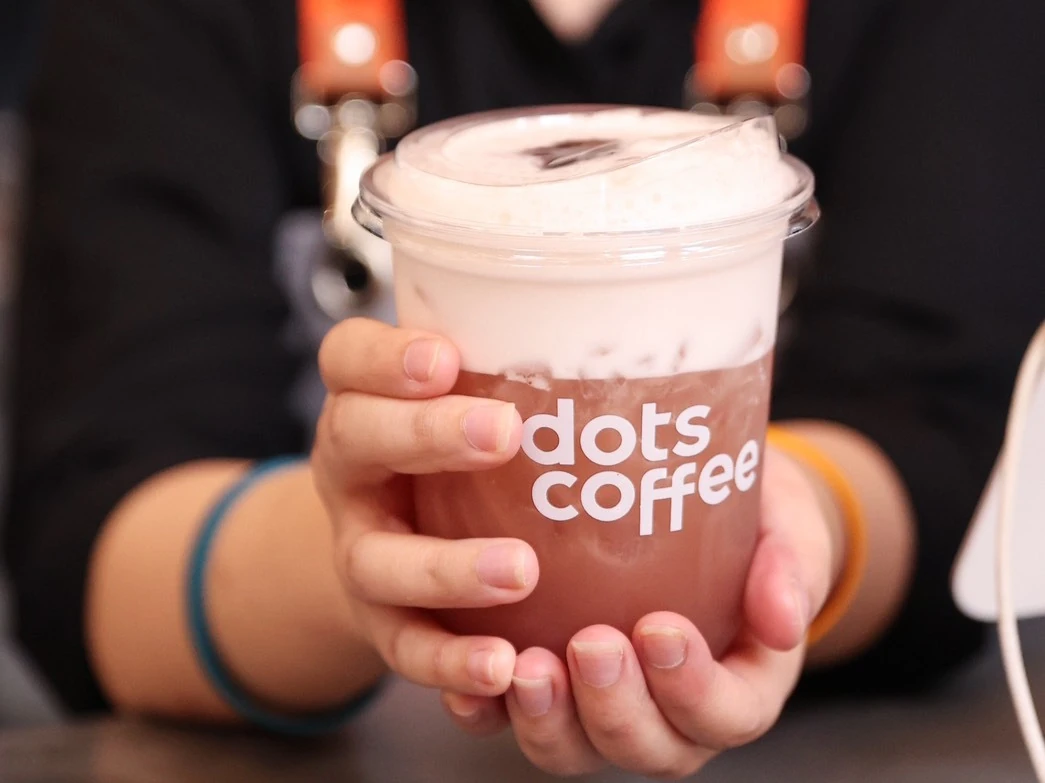
Dots Coffee sources its beans from a female farm owner in Chiang Rai who owns her own farm, runs her own roasting facility and holds a Q grader certification, meaning she oversees the entire process from growing to roasting and can guarantee the quality across every bag. The coffee is excellent. It is simply priced so that someone who wants to come every day can actually afford to.
'The word exclusive has limits, and excluding people is not really what we want to do.’Julien, Dots Coffee co-founder
The dots in the logo

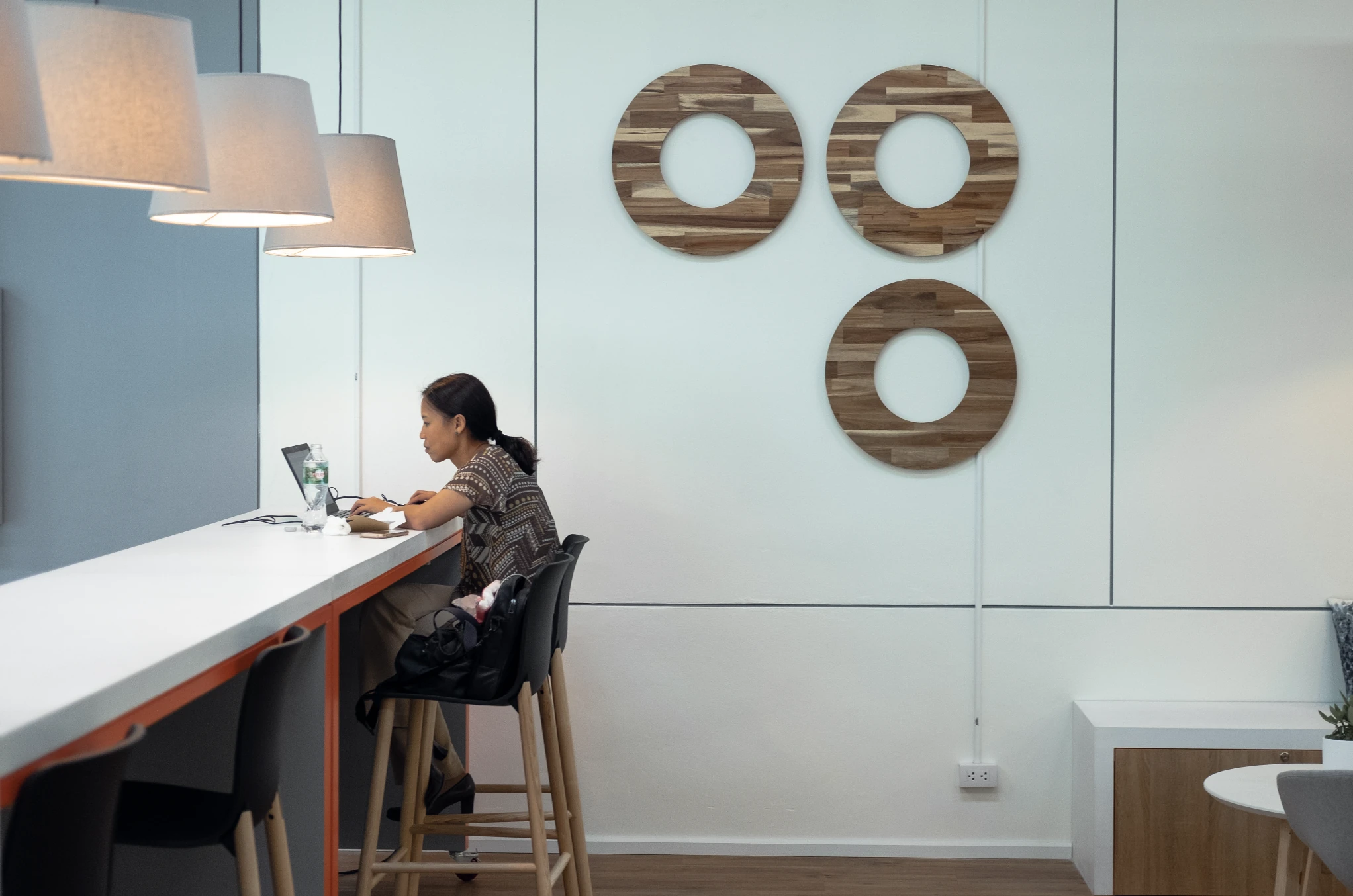
The name arrived through a design process with a detail elegant enough to feel inevitable in retrospect. Hidden in the negative space of the logo is a stylized Braille 'd', which together with the surrounding design spells out D-O-T-S. The loyalty card, where staff punch a hole for each drink purchased, is stamped in Braille, so that the moment a customer notices the holes and wonders why they are arranged that way, the penny drops.
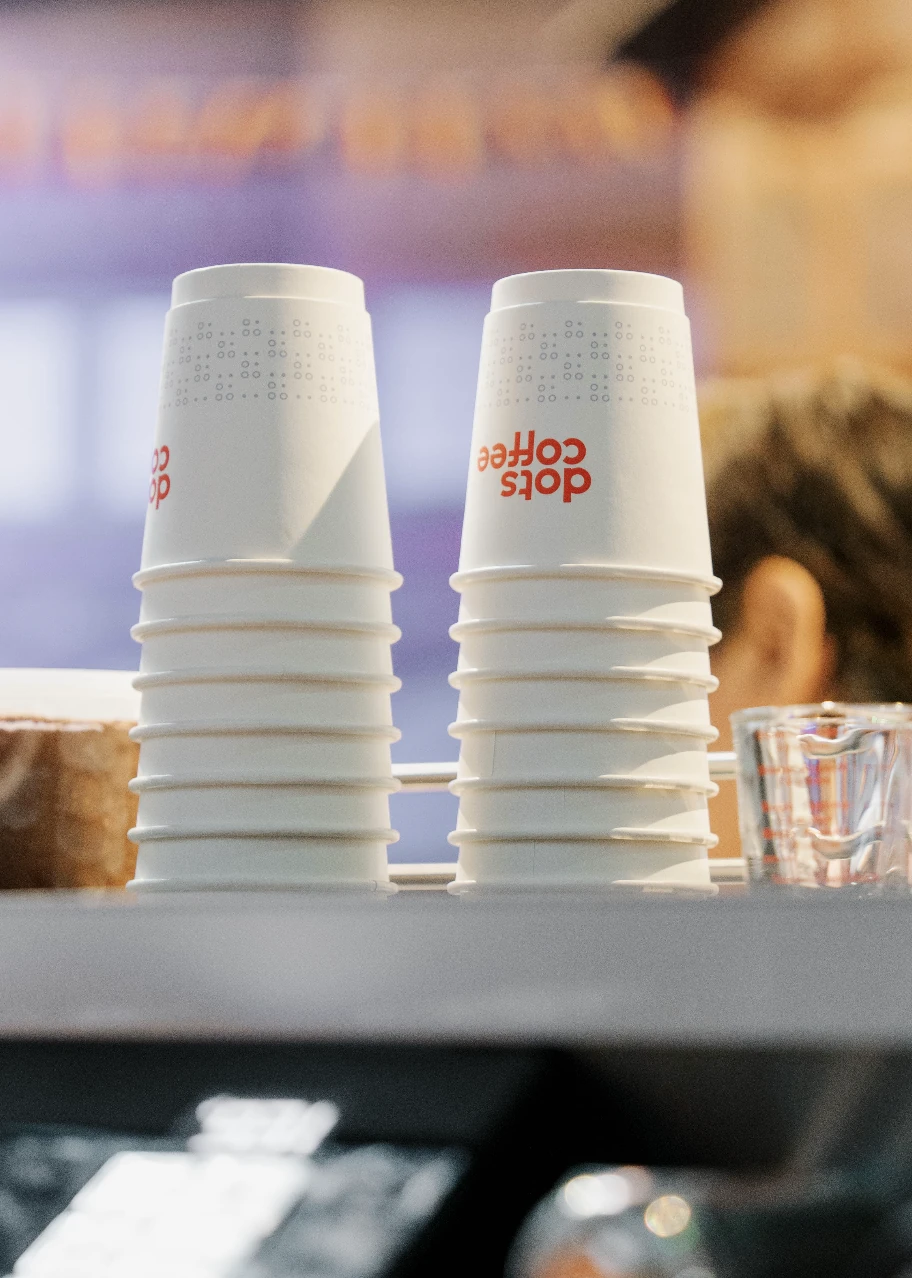
'If you know, you connect it,' Julien says. 'If you don't, you may not immediately understand. And that's completely fine.' A subtle inclusion rather than an announcement. The shop exterior carries no reference to visual impairment at all.
Learning together
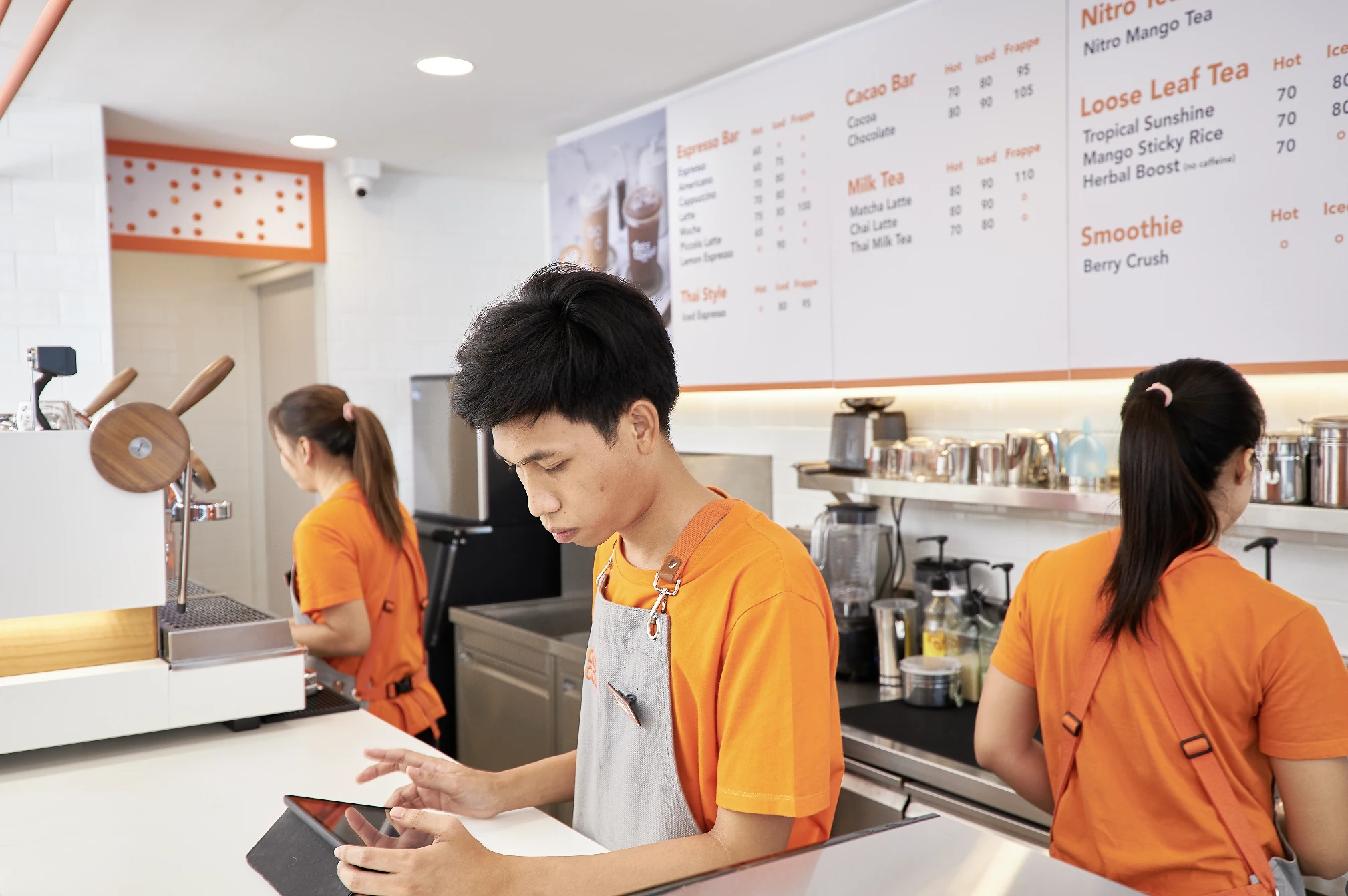
But for something so radical, where visually impaired people are just workers, not a feature, the Dots Coffee training programme had to be built. Drawing on the expertise of Piyatuch Benz Tangchusub, Head of Operations – a coffee industry trainer who had previously taught people how to open their own shops – the programme was shaped around both the outcomes and the steps needed to achieve them. The adaptation, working out how to teach those steps spatially and tactilely for someone navigating without sight, was an ongoing feedback loop between Piyatuch Benz Tangchusub and the baristas themselves.
'Before they enter the counter, we set up the equipment, switch everything off so they're not afraid of burning themselves, and let them orientate,' Gavin explains.
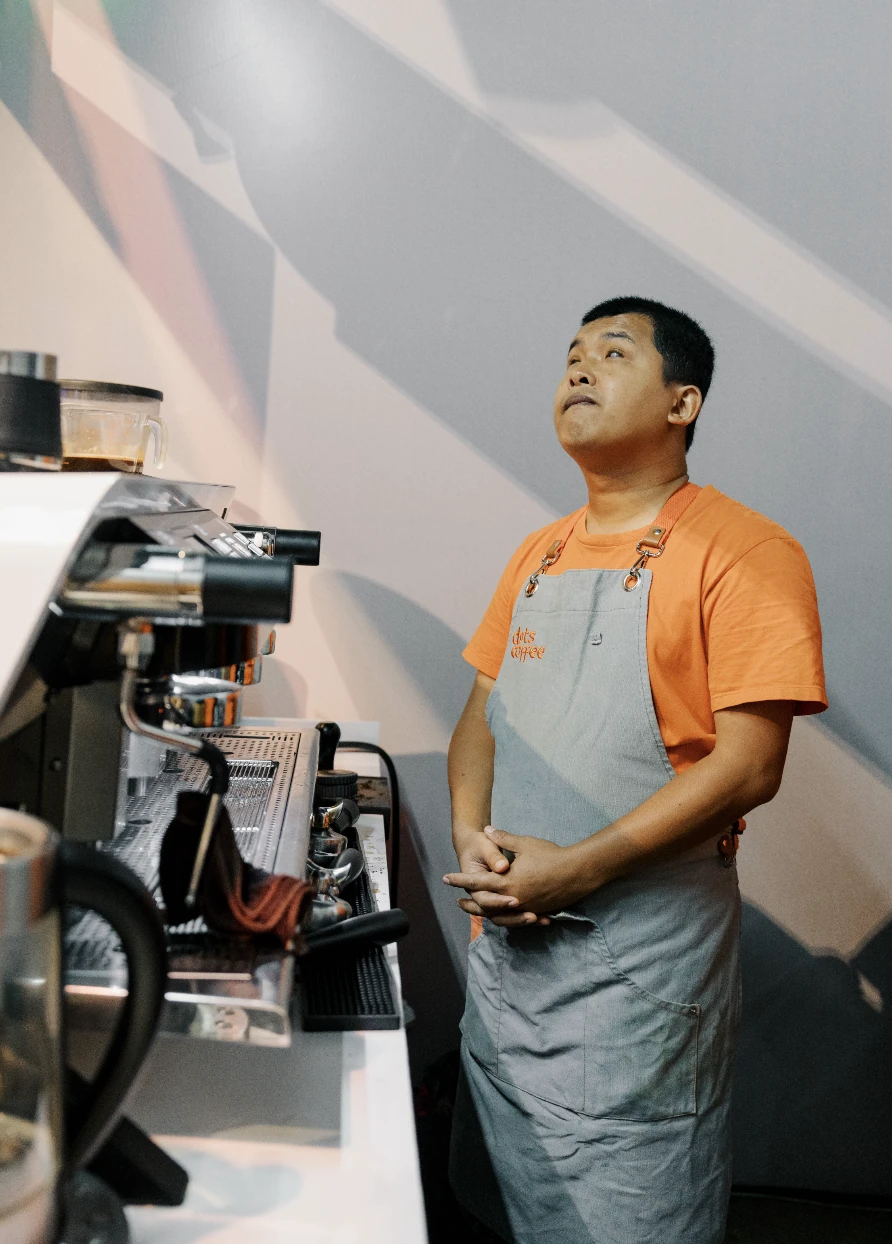
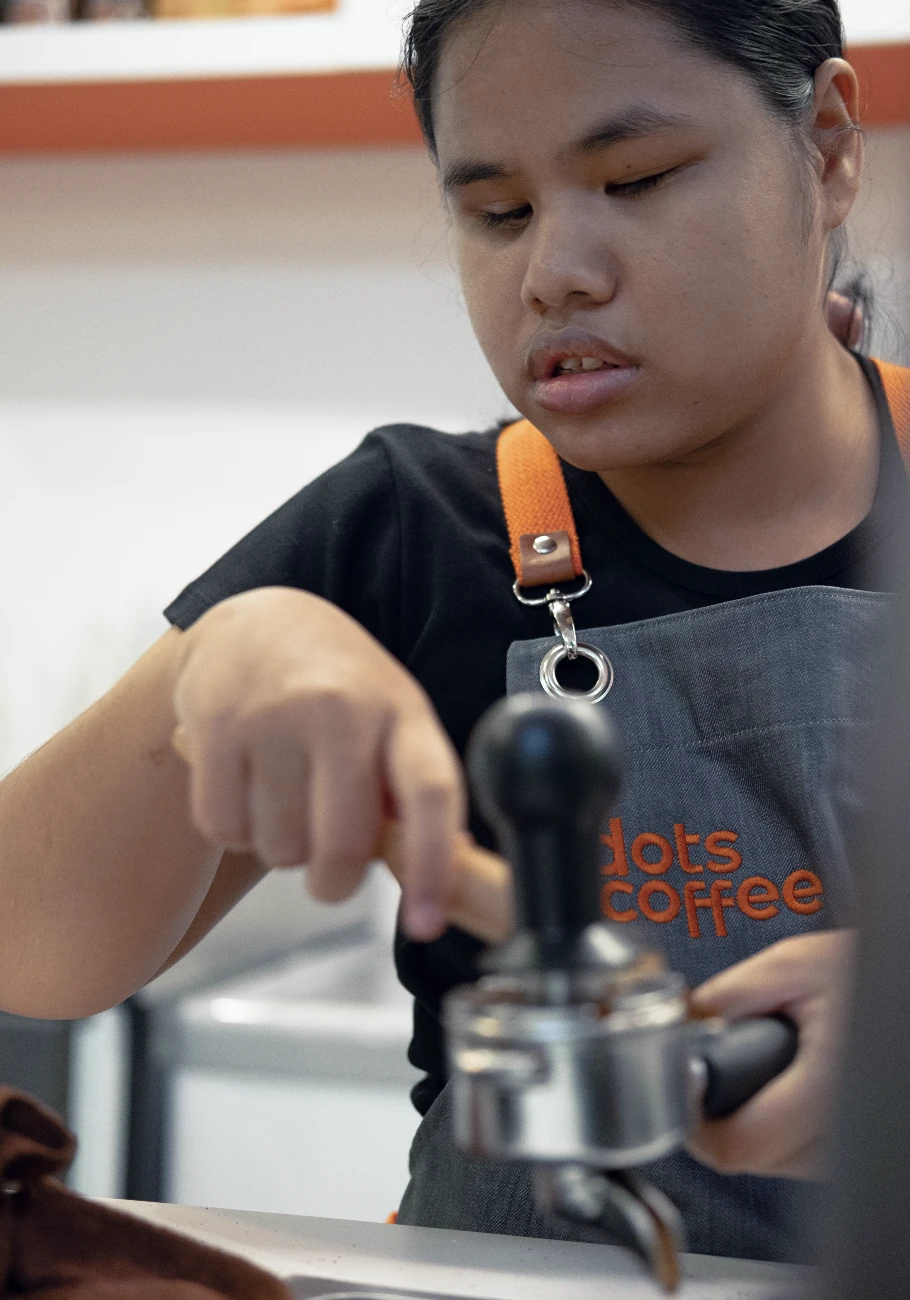
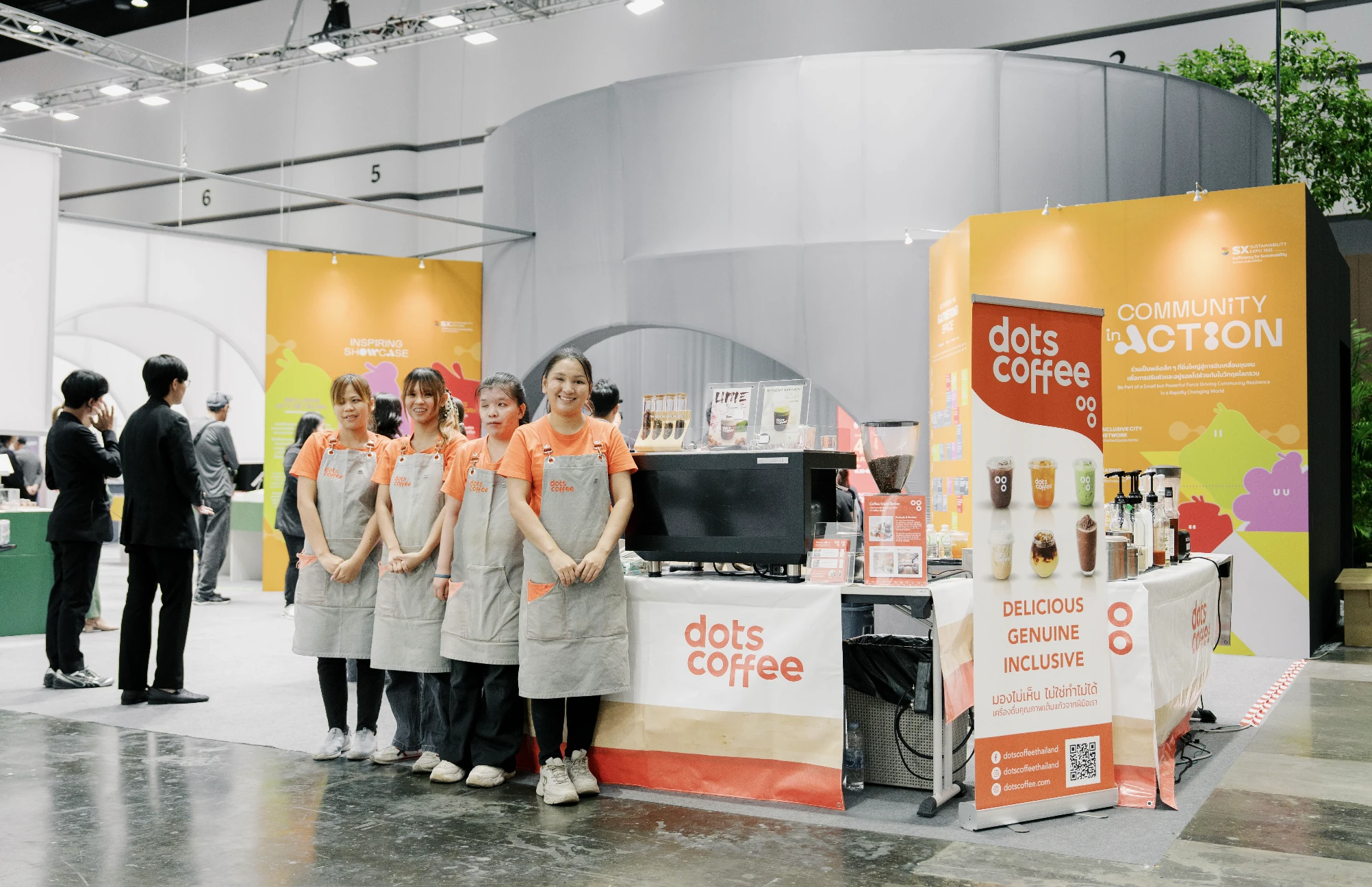
'They feel around, learn what everything does and where it sits. Then a lot of practice, putting the portafilter in, building muscle memory.' After one to two weeks, new baristas move to Dots Coffee's Knowledge Exchange Center (KX) location, a mid-volume shop designed specifically as a training ground. Real customers, real orders, but at a volume that does not overwhelm. From there, they progress to the booths and pop-up setups, which change layout with each new venue and teach them to adapt when the environment shifts. Then the full commercial locations.
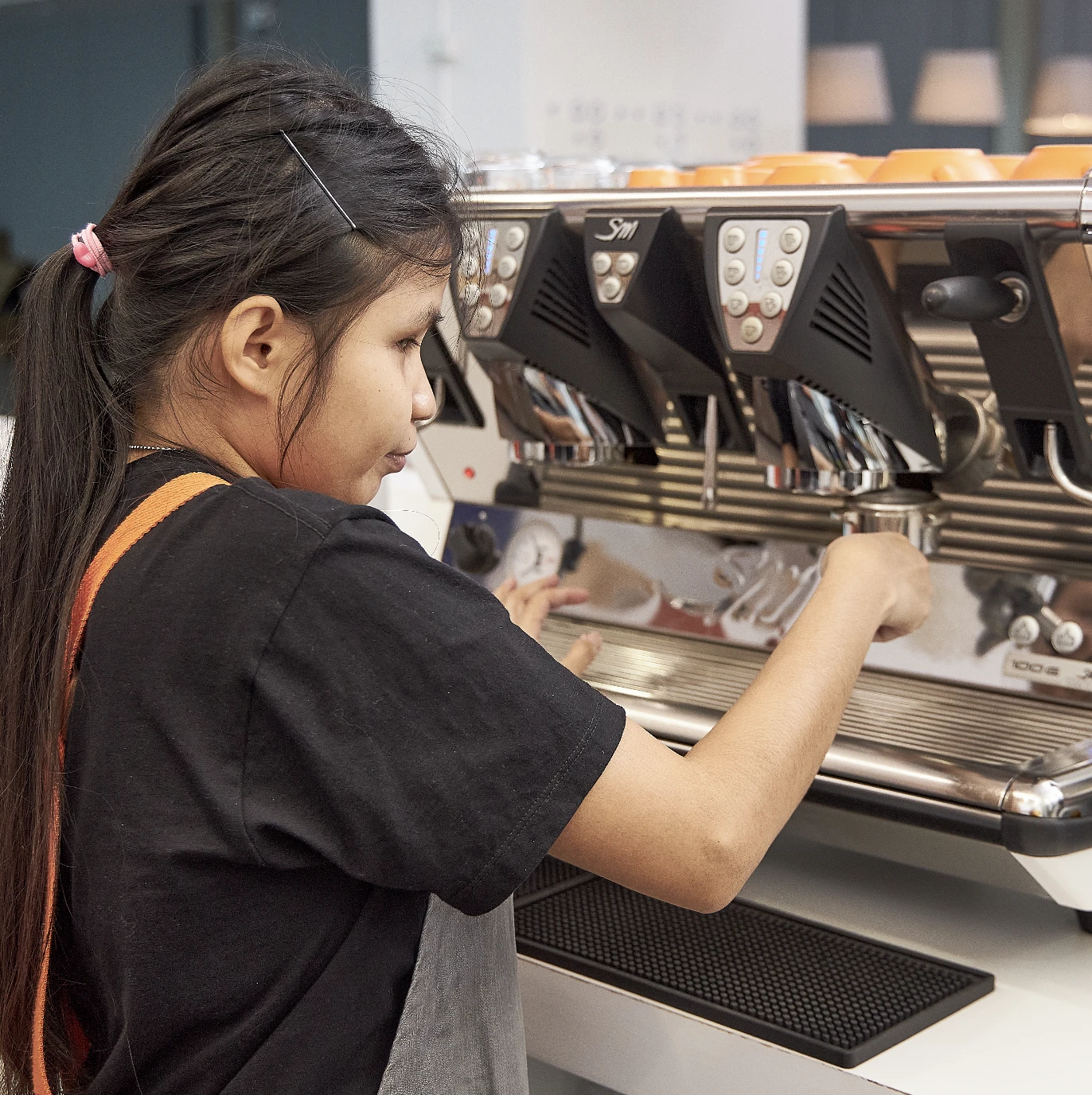
‘The essential part is that it will not work if you try to think for them. The moment you think you know better than them is when the process goes wrong. You have to set the goals, explain the context, and create a mutual understanding so that you can work with them on how to get there. The moment you start making assumptions about them, it is bound to fail’
Julien, Dots Coffee co-founder
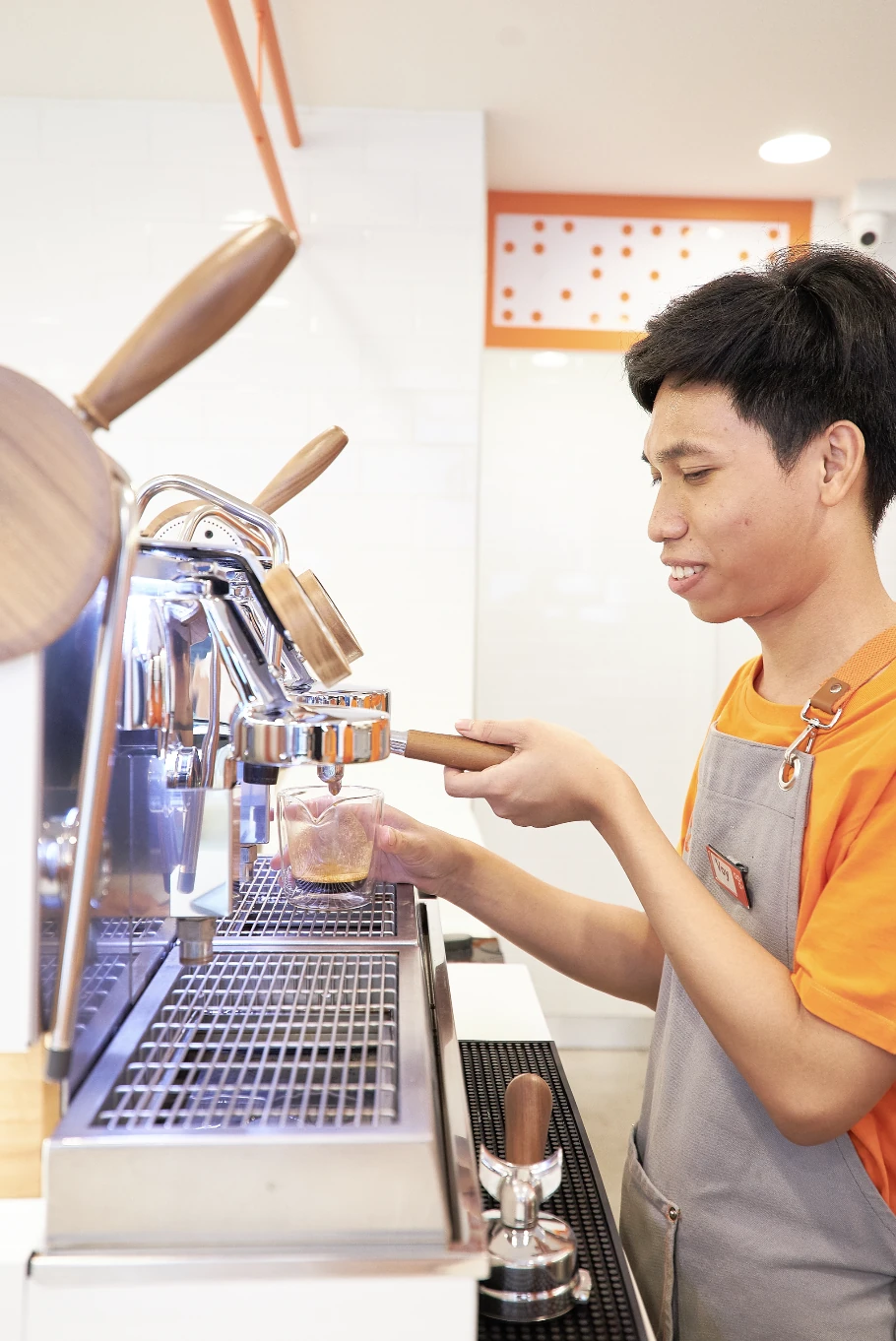
What makes this harder than it sounds, Gavin says, is that Dots Coffee is working with a group of people who have rarely been asked what they think. 'They're not used to giving feedback, assessing things, offering their own thoughts. So building that trust and that willingness to speak up, that's its own process. That's the part people don't always see from the outside.'
What the baristas say
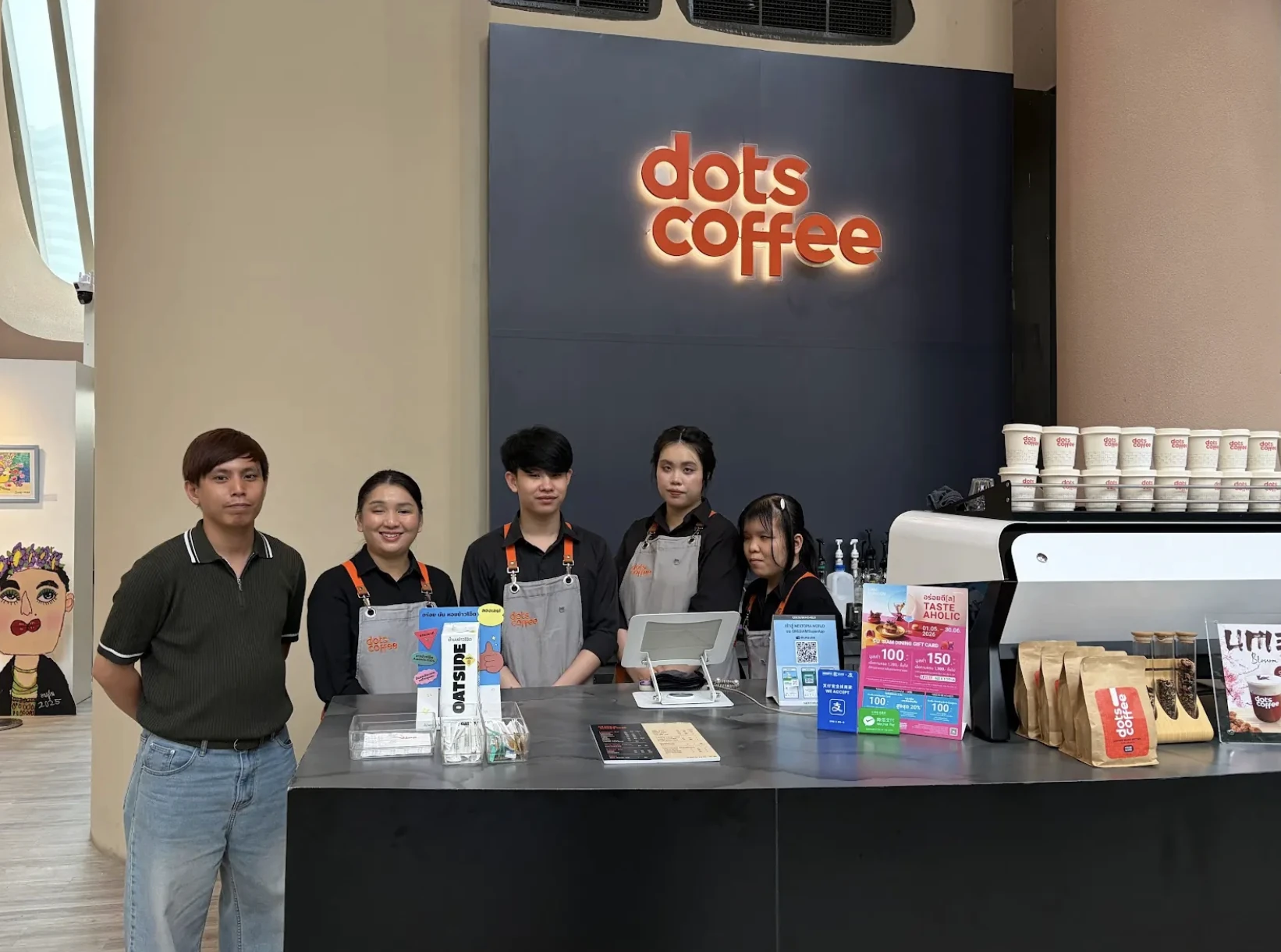
Pinn, one of the baristas at Dots Coffee, heard about the company through a friend who passed on word that they were hiring. She had been living within Bangkok's visually impaired community for some time, but had no background in coffee whatsoever. 'No knowledge at all,' she says. 'I started from zero. The training was naturally challenging for someone with no prior experience in a coffee shop environment.’ She knew what an Americano and a latte were by name. She had no idea how they were made. But she stayed. She found her footing and she is clear about what the cafe represents to her.
'I feel good that a place like this exists. It's another career path that's actually open to us.'
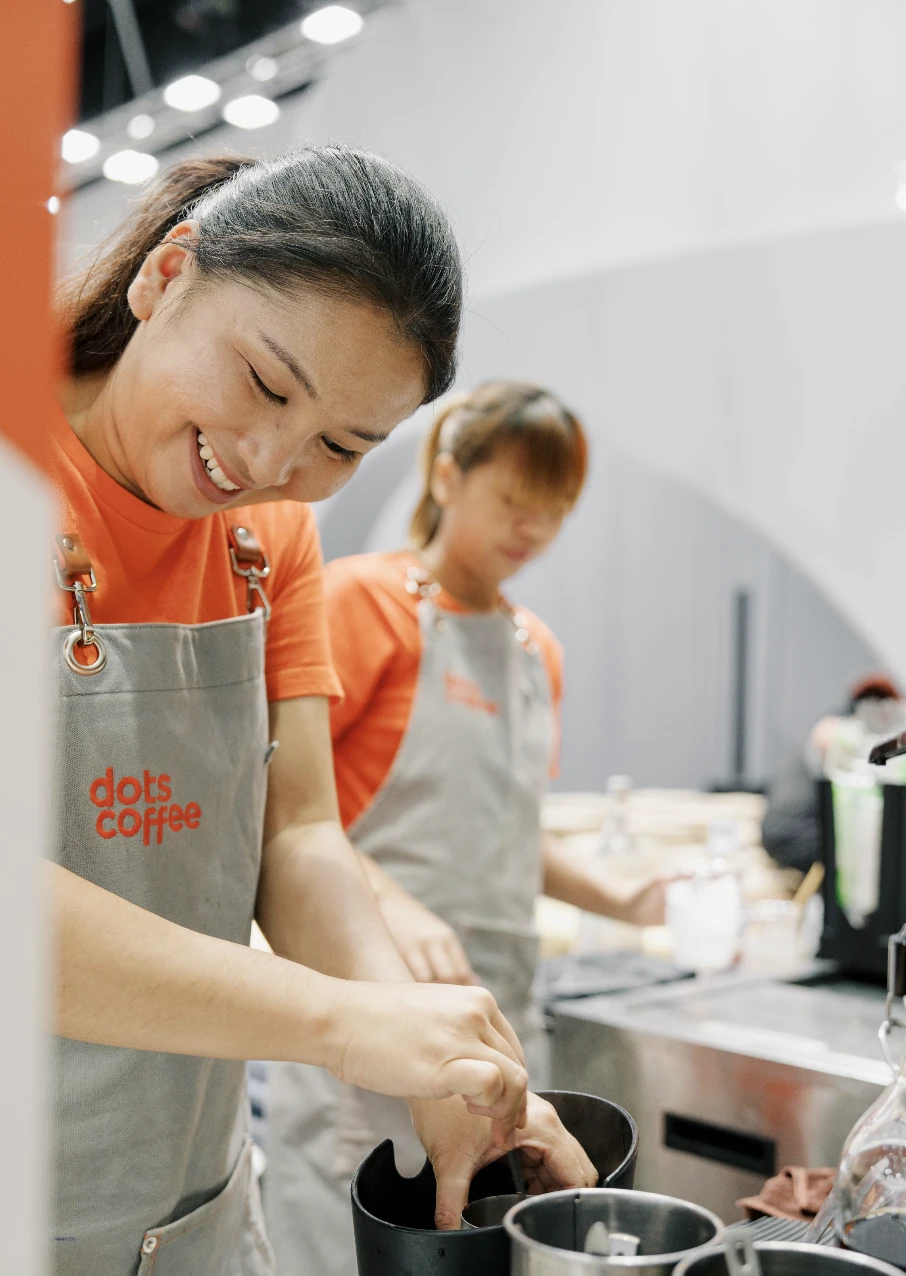
Pa's story carries a different kind of weight. She grew up in the provinces, outside the networks and specialist schools that typically connect visually impaired young people in Thailand to any kind of professional opportunity.
For a long time, her ambitions were deliberately small. 'My dream was just to have a stable income,' she says.
'Because at the end of the day, disabled or not, you have to look after yourself.'
Coming to Bangkok, finding a community of people who shared her experience, changed the shape of what she thought was possible. 'I realised I wasn't alone. That I didn't have to think of myself as someone who could only get by on their own with whatever came along.'
She talks about what Dots Coffee represents not just as a workplace but as a kind of proof.
'We're in an open space where anyone can come in. We want regular customers like any other coffee shop. We want to be a small place that shows society, shows organisations, that the opportunities for us can grow.'
Coming to Dots Coffee, she says, showed her how much more was possible than she had let herself imagine.
The spectacle problem
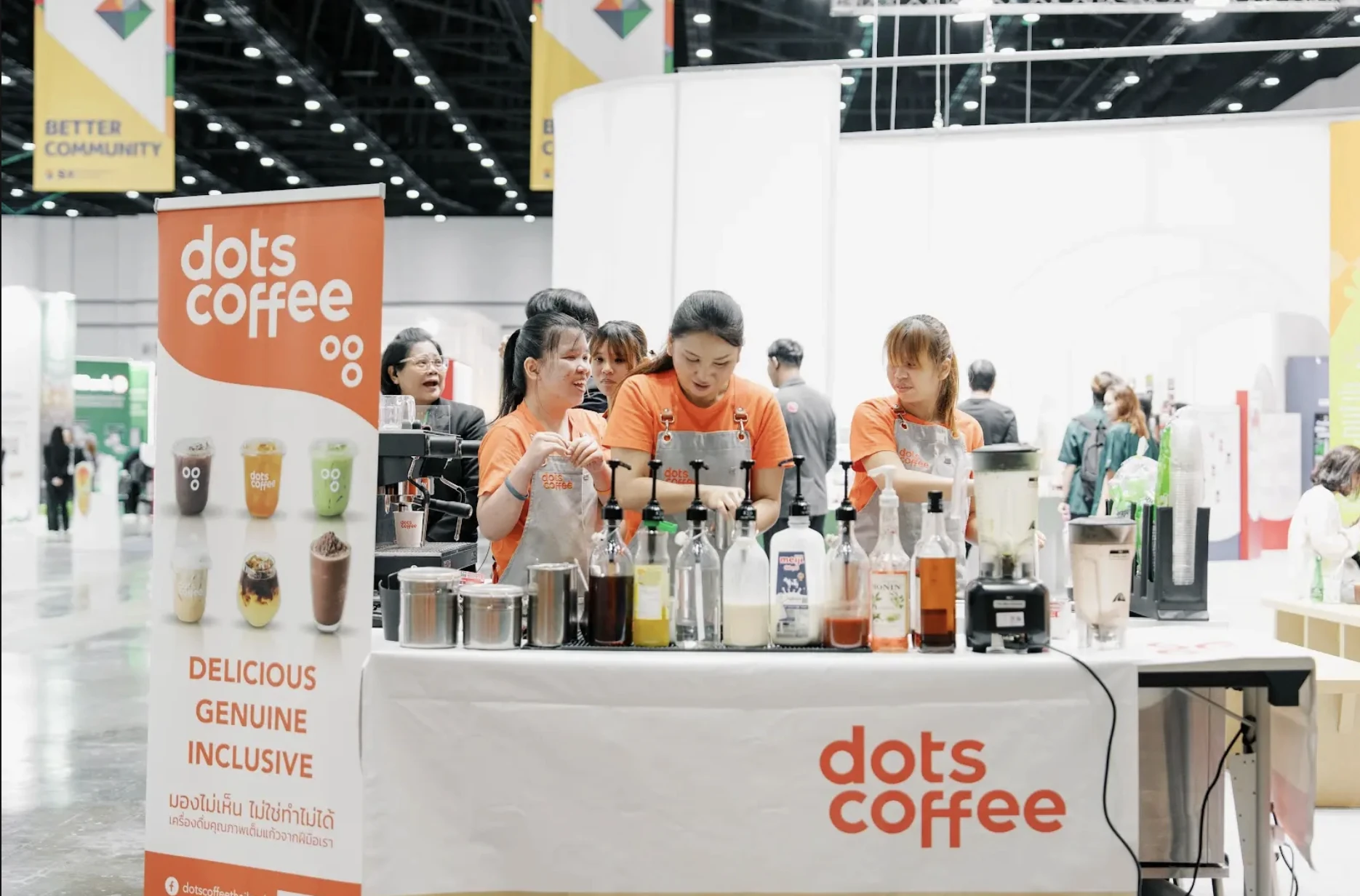
Ask Gavin and Julien about the line between creating empathy and creating spectacle and something in both of them sharpens. 'We don't get asked that enough,' Gavin says. 'And that's the concerning part. A lot of people don't see the problem with the spectacle.'
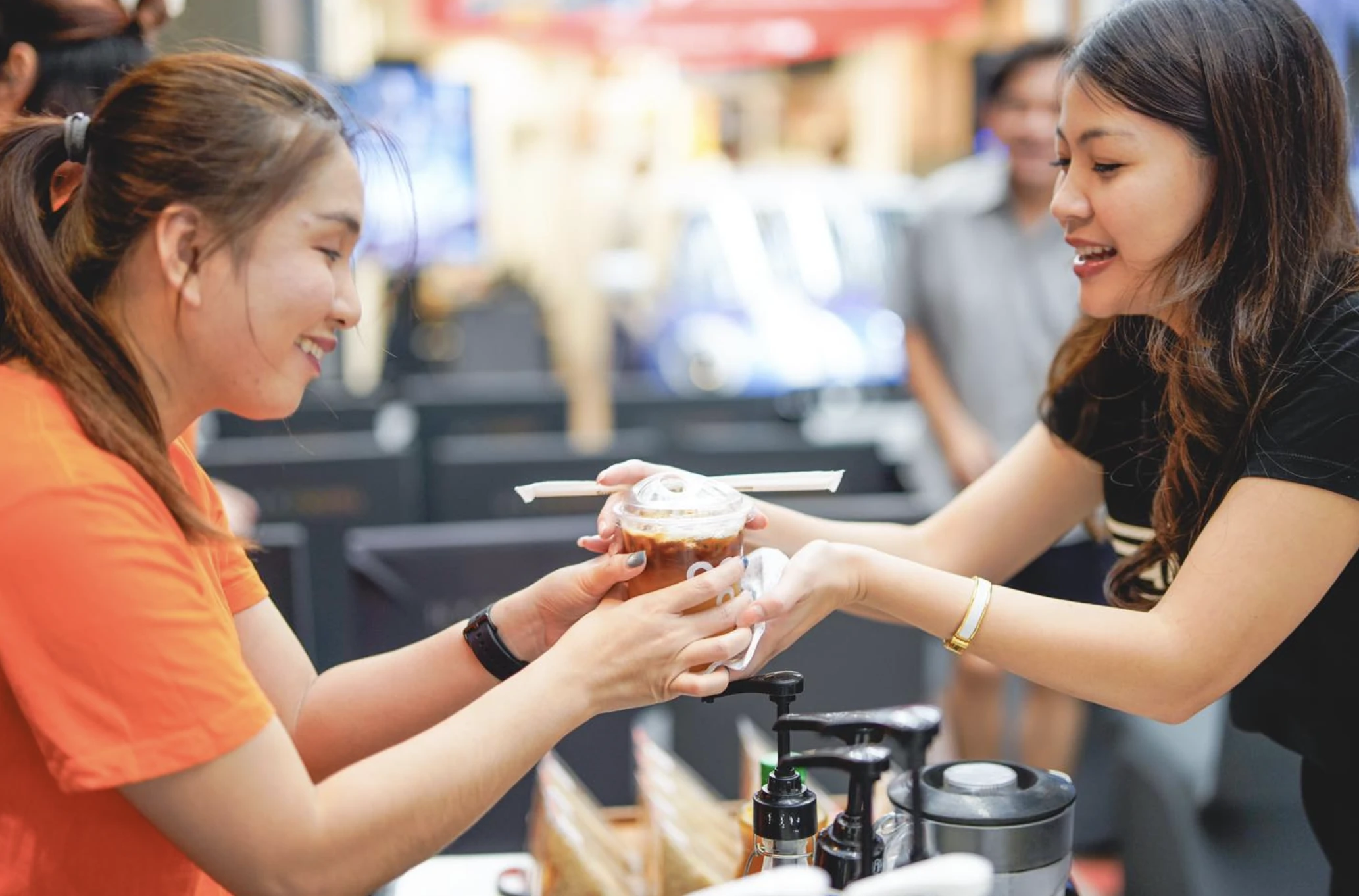
Some customers arrive having heard about Dots Coffee and find themselves disappointed that nothing feels like a performance. The baristas are just working. There is no theatrical element to witness. And occasionally, well-meaning advisers have suggested adding one. The most memorable proposal was recalled with a kind of exhausted disbelief: the suggestion that baristas might serve coffee balanced on their heads.
The approach at Dots Coffee is the near-inverse of spectacle. Some customers buy their coffee for weeks without realising who is making it. 'In a way,' Julien says, 'that's a success.’
We've achieved what we wanted. On the other hand, we also want to say something. The tension between wanting to communicate the values and not wanting to lead with disability is one the brand navigates constantly, through small, intelligent cues rather than declarations.
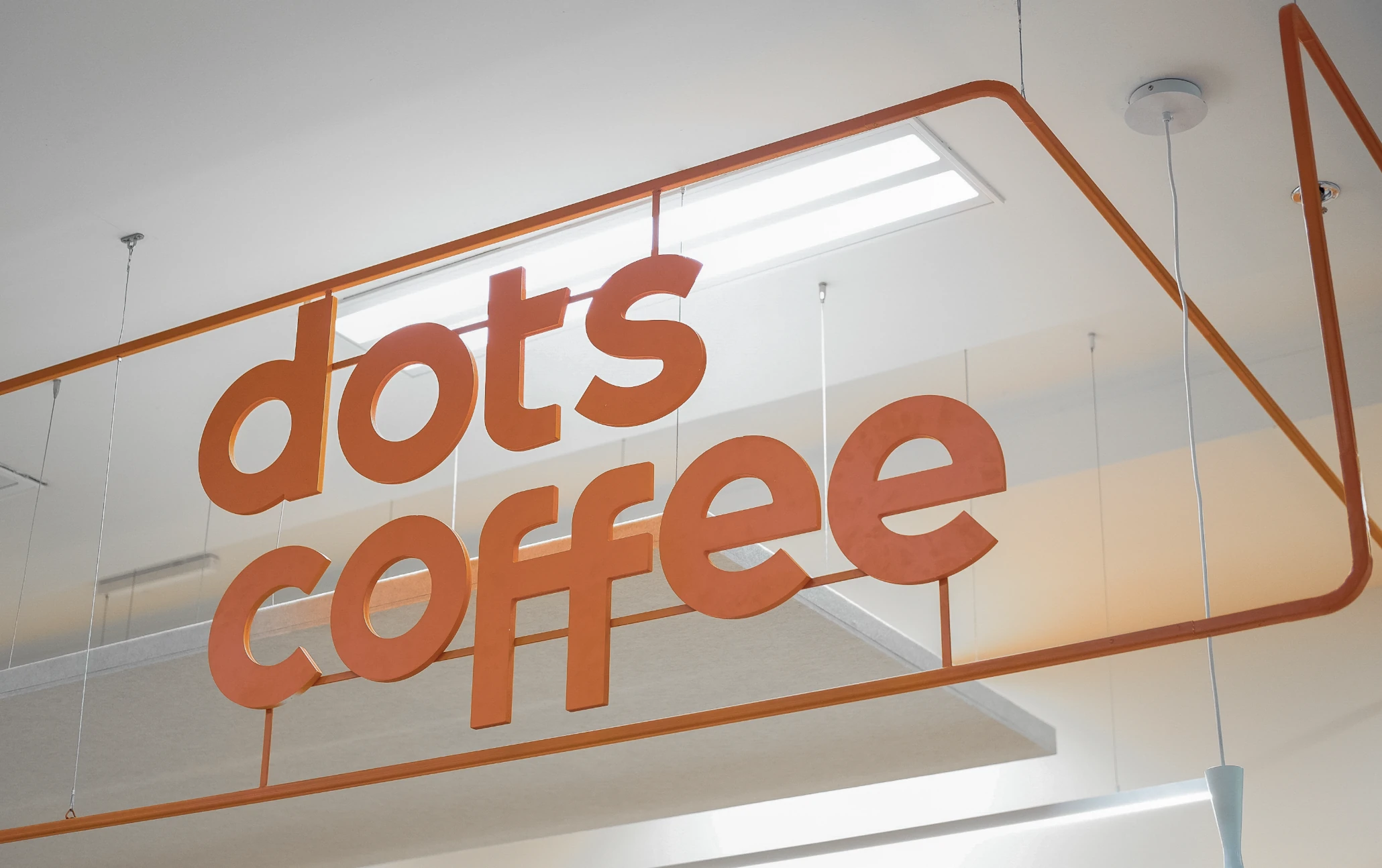
The Braille stamp on the loyalty card. The negative space in the logo. The absence of a sign out front.
'We're doing this because discrimination is harmful and most of it isn't even done consciously. We are fighting those sub-conscious assumptions.'
The employment ecosystem
Thailand's Article 35 allows companies to fulfil their disability employment obligation by funding roles at partner organisations – paying the salary of a person with a disability who works elsewhere. Dots Coffee uses this model to build three-way partnerships. Corporate partners contribute to the baristas' wages through Article 35, while Dots Coffee provides additional compensation to ensure pay is commensurate with the work being done and can grow with performance, experience and promotion opportunities. The company becomes a real employer rather than a legal technicality. The barista earns above the minimum. Dots Coffee brings its staffing costs down. 'Win, win, win,' Gavin says.
Hiring now runs primarily through word of mouth within the visually impaired community, which is tightly connected through its own online networks and social media groups. The community, both men note, moves quickly once it trusts something. Dots Coffee currently employs 24 visually impaired baristas across three locations and runs a robust multi-round interview process. As the company grows, many team members have expanded beyond operational responsibilities, taking on new roles that support both their personal development and the business's evolving needs.
'There is a real difference between employment and inclusion.'
'A lot of companies employ a person with a disability and then celebrate the fact that they've spent fifteen years in the same entry-level position. People applaud. But that is terrible,’ Julien says carefully. ‘That person should have the same aspirations as anyone else. The same chances to grow. Employment is just the beginning. Inclusion is everything that comes after.'
What’s next?
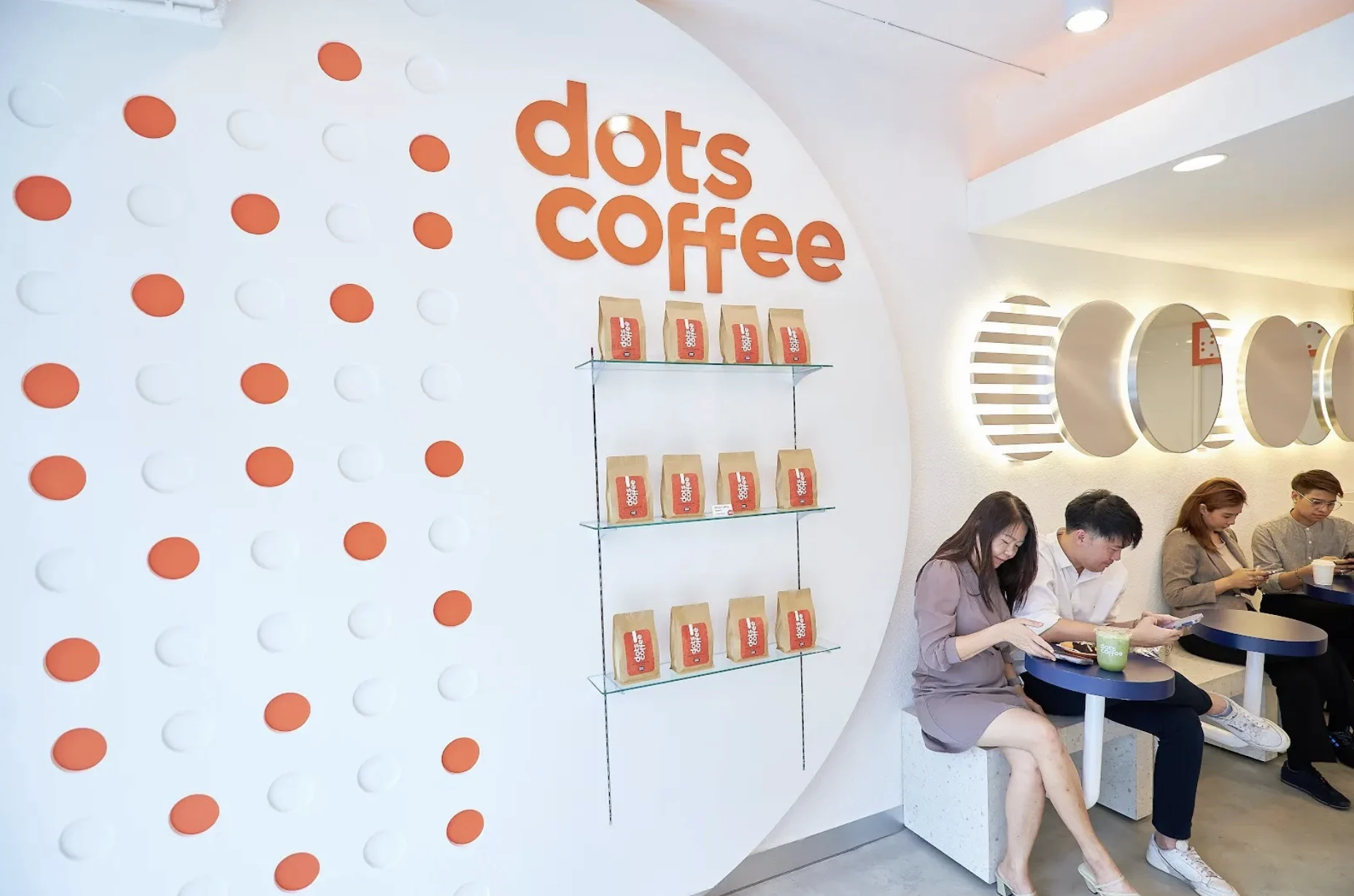
The near-term roadmap for Dots Coffee involves a roasting facility, which would allow the company to source, roast and sell its Chiang Rai beans directly, supplying hotels, corporate offices and online customers with whole beans, drip sachets and coffee capsules. It would also bring visually impaired staff into the roasting process itself, extending the proof of concept into a part of the coffee supply chain that few would have imagined accessible. A training curriculum developed in partnership with Save the Children Thailand is also in progress, designed to bridge the gap between education and employment for young visually impaired people through a structured set of soft skills and workplace readiness tools.
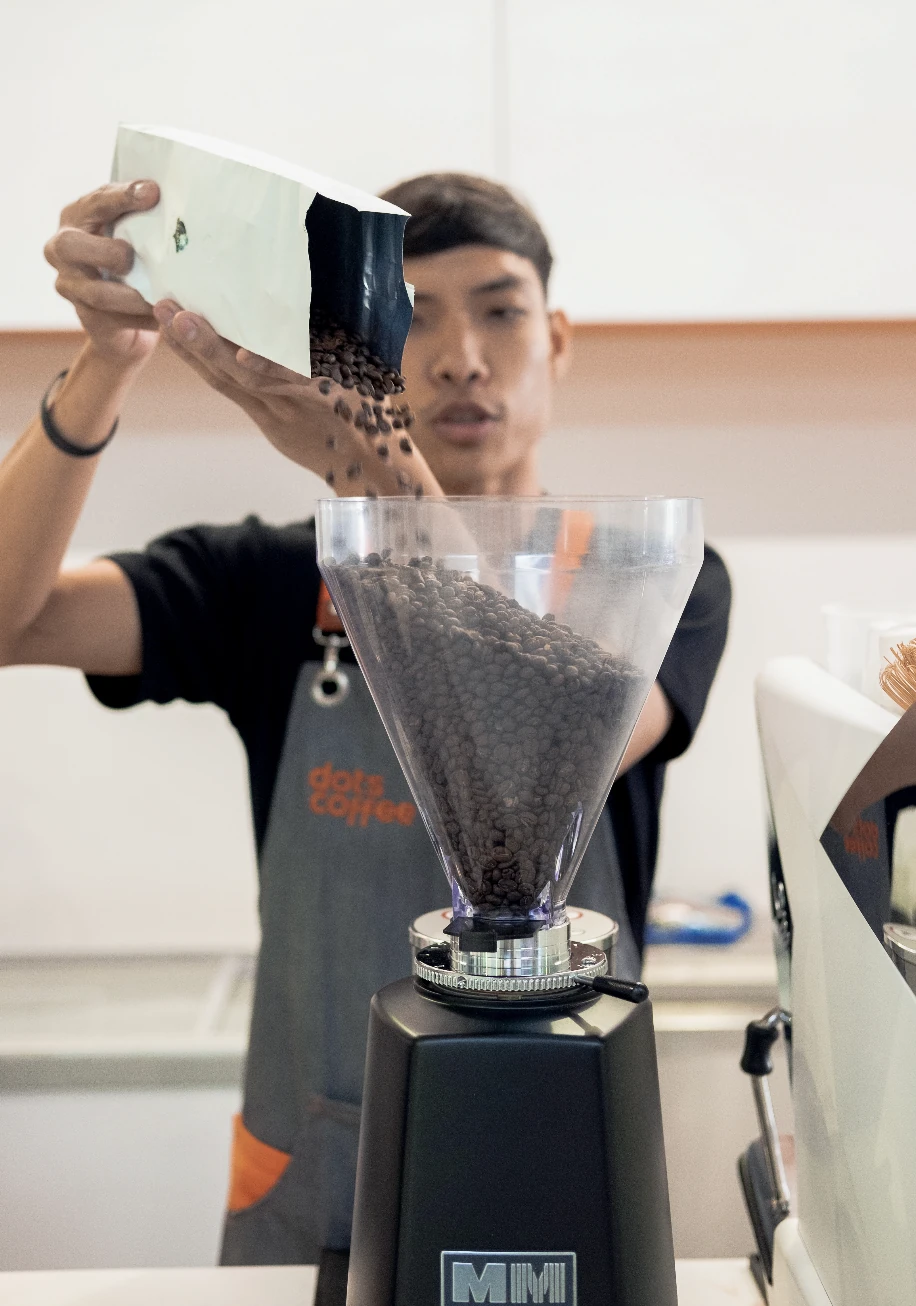
The aspiration, further out, is a franchise model that would allow visually impaired individuals to own and operate their own Dots Coffee locations with full operational and brand support behind them.
'If it works in a coffee shop, it probably works more easily in a lot of other places. Any retailer. Any service operation. The endgame is showing that this is replicable beyond us, not just a single model that exists in one context.'
Julien and Gavin, Dots Coffee co-founders.
Bangkok has been, by their account, a surprisingly receptive testing ground. Not because the city leads the world on disability inclusion, but because of something in how Thai culture processes new information. 'The moment you show something exists here, it gets accepted,' Julien says. 'There's no fuss. It's just, oh, okay, it's there, it's normal.'
Whether that acceptance translates into systemic change, whether other employers hire not because of a legal obligation but because they have genuinely understood something new, remains the open question.
Julien is patient about the timeline. 'We've spent five or six years demonstrating that this works,' he says. 'Now we're at the point where we want people to look at what we've built and think, if they can do it in a coffee shop, we can probably do it too.' He considers this for a moment. 'I think we just want to become unremarkable. That's really all we're asking for.'
Dots Coffee has locations at Knowledge Exchange Center (KX), Wireless Road and Siam Paragon (Nextopia), while Dine in the Dark operates at the Sheraton Grande Sukhumvit.