

[image]
[title]Saw that piece Tyla had on? It traces back to a Thai coastline and a sleeping toddler – and to a designer building something global without losing the thread.
There’s a small coastal town in Thailand where a woman sews clothes that now turn up on festival grounds in California, on major music figures and in wardrobes across more countries than she's probably counted.
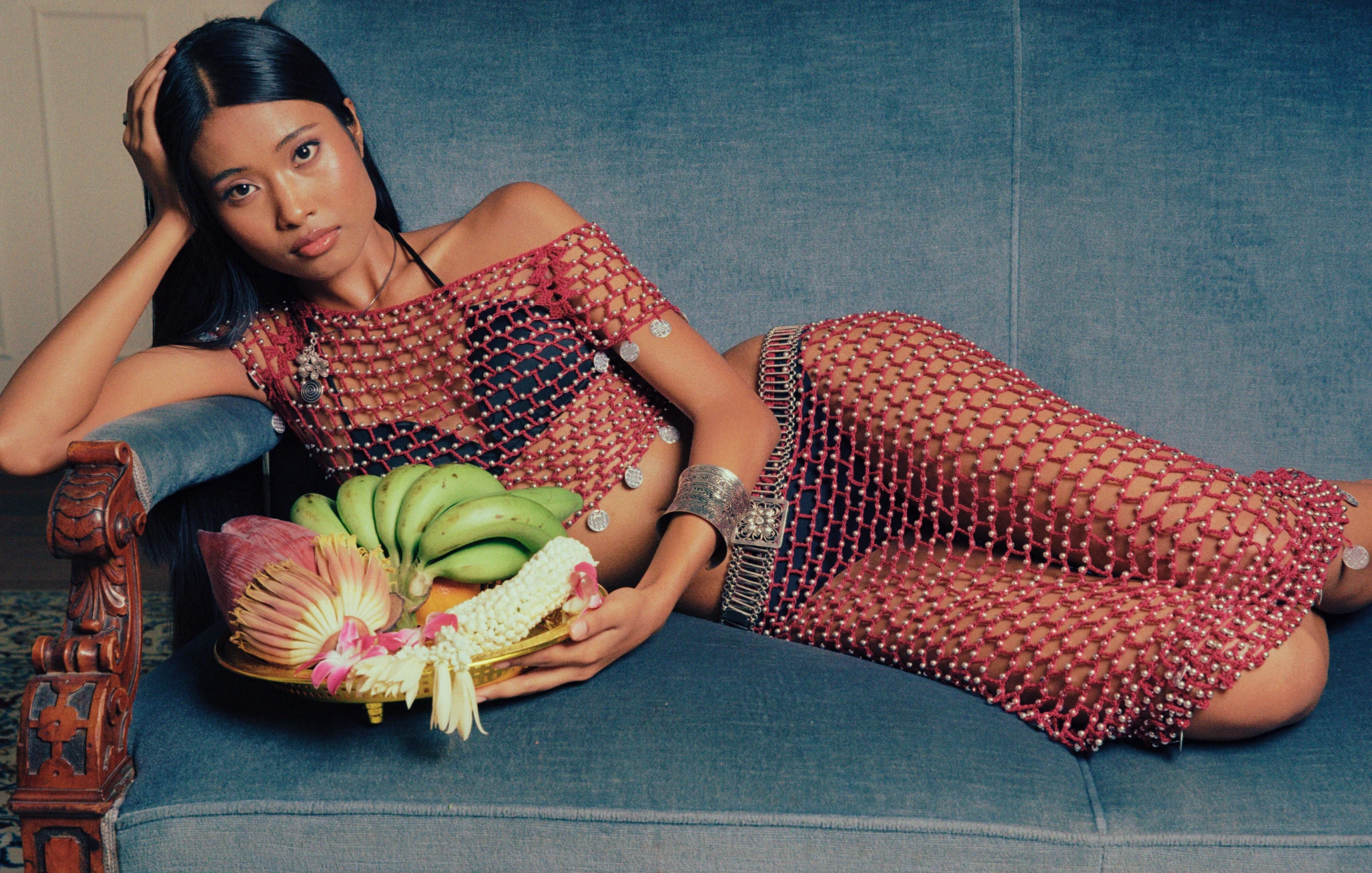
Chaninporn ‘Cha’ Hess didn’t set out to build a label. She set out to do something with her hands while her son slept. That instinct – simple, practical, personal – grew into Chalay, a globally shipping brand with two artisan production teams, a sell-out track record and a story that still feels grounded. It starts with a self-timer and a handmade crop top, and somehow scales without losing its centre.
Leaving Thonglor behind
Before Chalay, life sat firmly in Thonglor. Cha was an accountant by day, orbiting bar culture by night, married to a professional DJ and constantly making things on the side. It worked – creative, social, a little chaotic.
Then her son arrived, and the whole setup shifted.
Bangkok gave way to the coast. Full-time motherhood replaced the old rhythm, and the pace slowed to something salt-lined and open. It didn’t read as a big pivot at the time. In hindsight, it was the reset that made everything possible.
A crop top, a wall and a nap window
The first Chalay image wasn’t a campaign. It wasn't even planned. It was Cha, wearing a crop top she'd sewn herself, standing against the outside wall of her house while her son slept inside.
‘I started to design some clothes as a hobby,’ she says – a line that sounds casual but carries the entire origin story.
The name followed the same logic: Cha from Chaninporn, Lay from ‘talay,’ the Thai word for sea. It’s geography and identity stitched together – where she is now and who she is.
When Coachella found it
At first, things moved the way most real brands do – slowly, through word of mouth. Customers found Chalay locally, drawn to pieces that felt handmade and specific rather than mass-produced.
Then the festival crowd clocked it.
Coachella has always been a hunting ground for pieces that photograph well and don’t exist anywhere else – vintage-adjacent, globally sourced, genuinely one-off. Chalay slipped neatly into that space. When it hit, it moved fast.
‘It suddenly changed the situation when it went viral,’
Cha says, without overstating it – more observation than hype..
Built across two craft worlds
What makes Chalay more than just another aesthetic success is how it’s built.
Production runs through two teams at opposite ends of Thailand, each rooted in a different tradition.
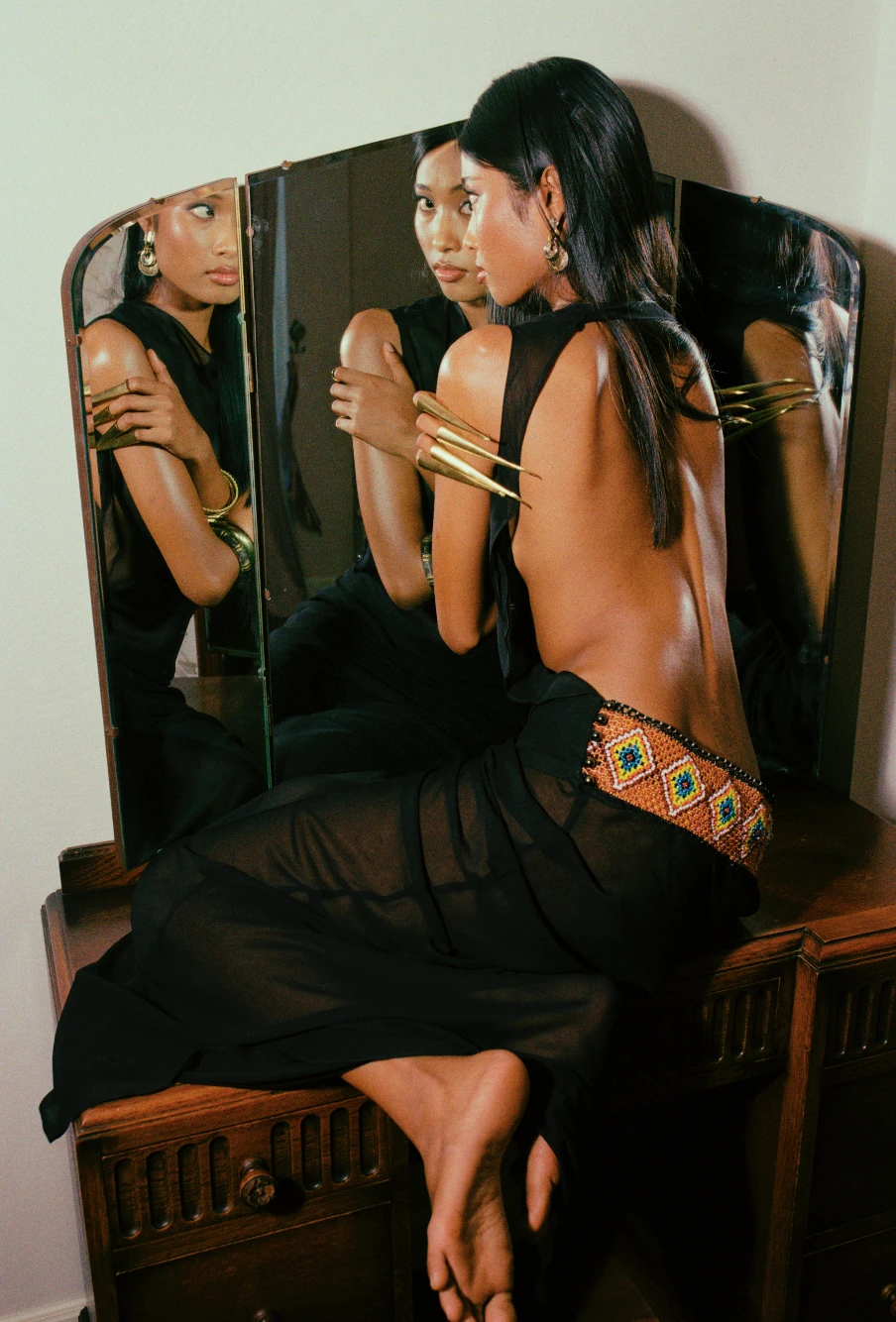
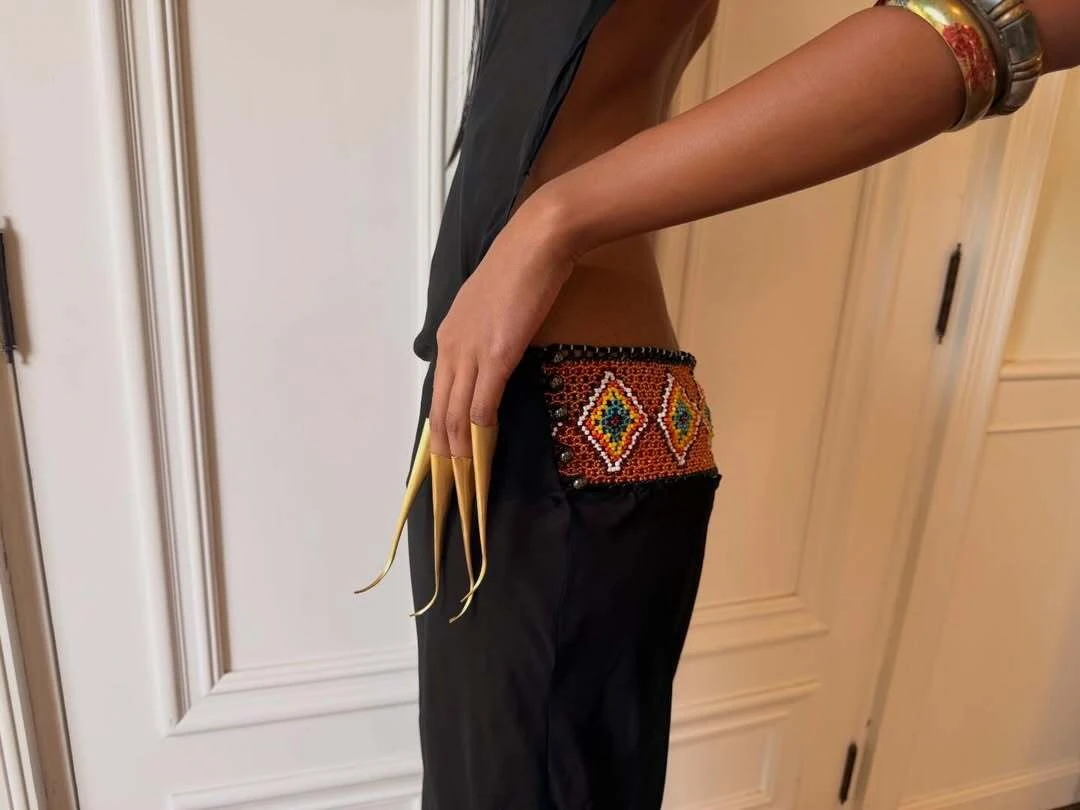
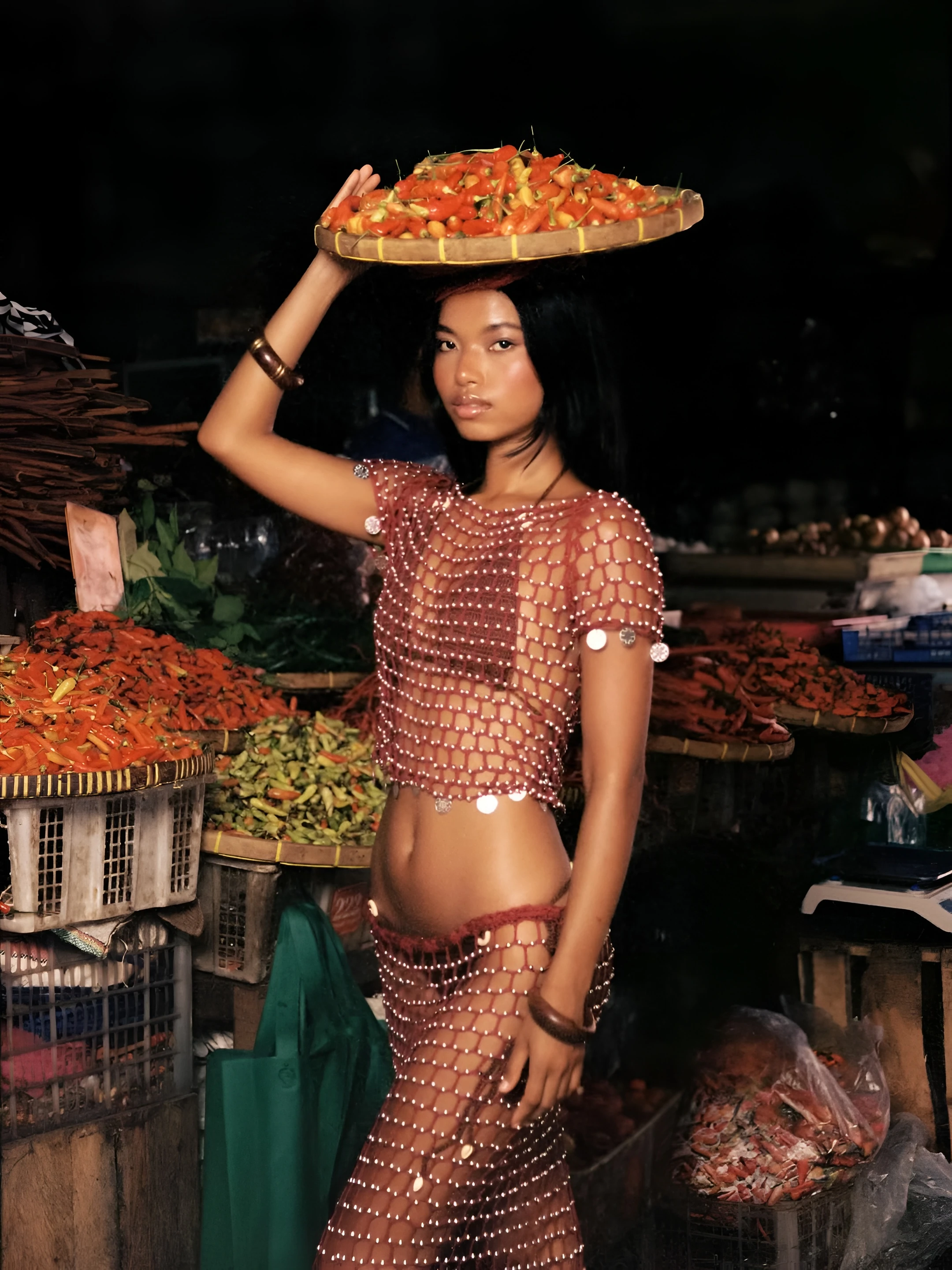
Up north, Cha works with a Hmong community known for intricate handmade textiles and patterning. They've been part of the brand from the start. ‘I am proud that Chalay can be able to give them a better life and income for their families,’ she says – not as a tagline, but as a responsibility that sits behind the work.
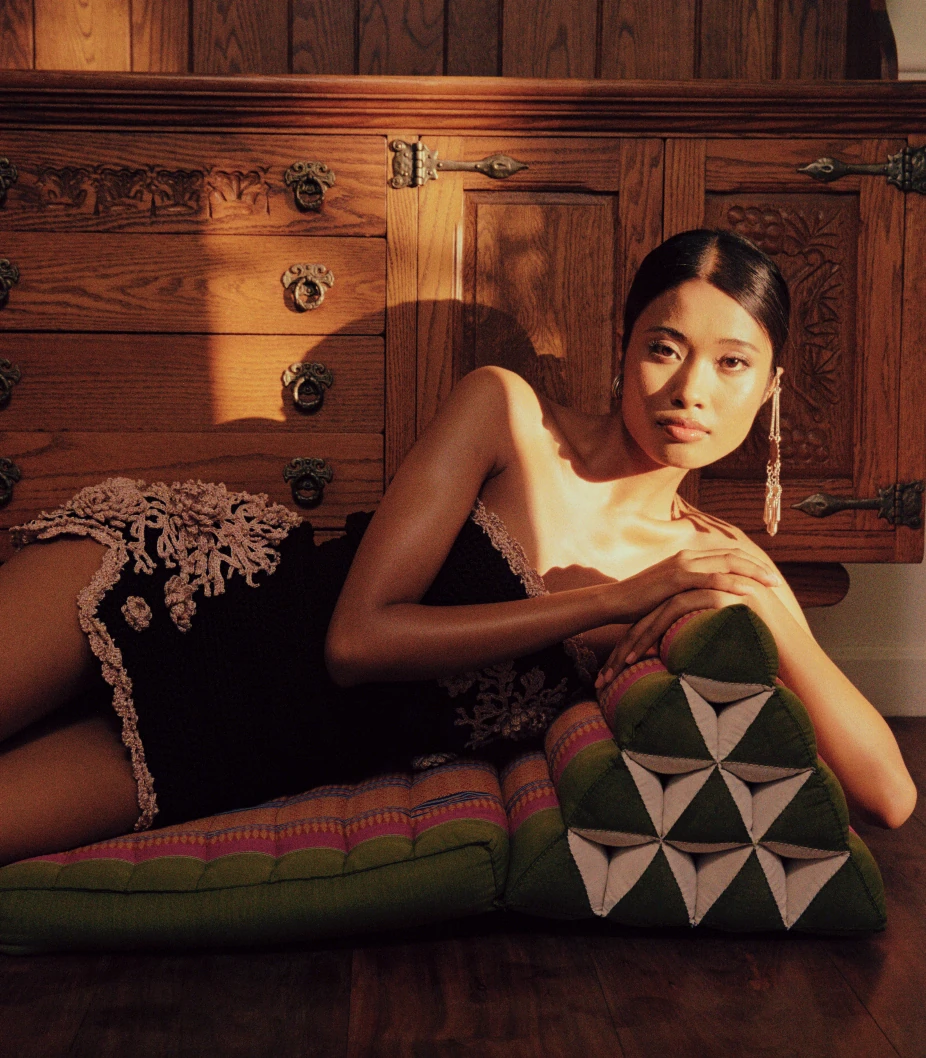
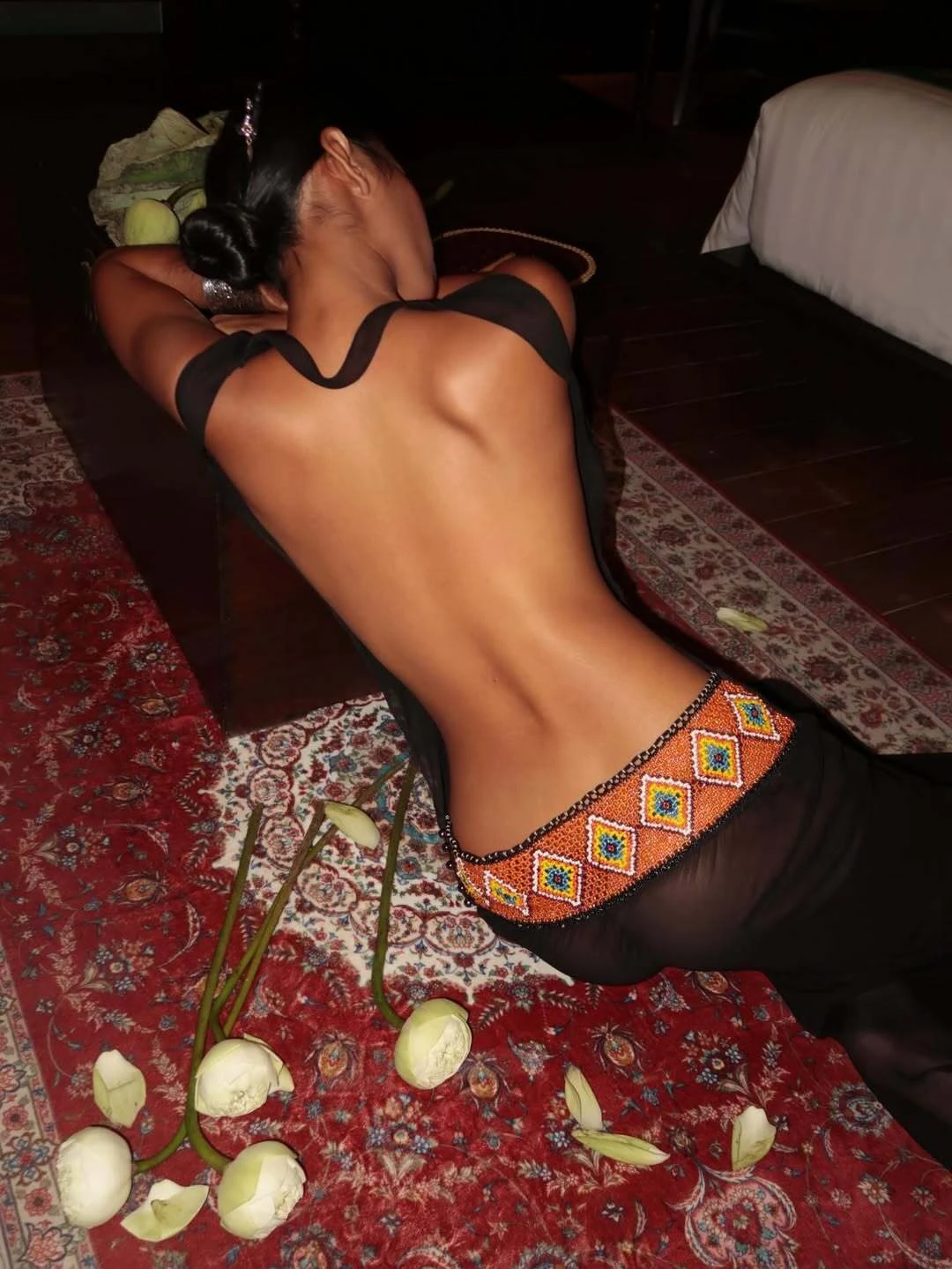
In the south, a second team draws from the world of Manora (or Nora), one of Thailand's oldest dance-drama traditions, where costume-making is detailed enough to feel like its own discipline. Pieces like the Nora dress and the Rayya top come out of this collaboration.
Two regions, two distinct lineages, one shared idea: clothing that carries culture forward rather than flattening it. As Cha puts it, it’s about ‘sharing the traditional, cultural and storytelling in every stitch’.
Pha thung, reworked
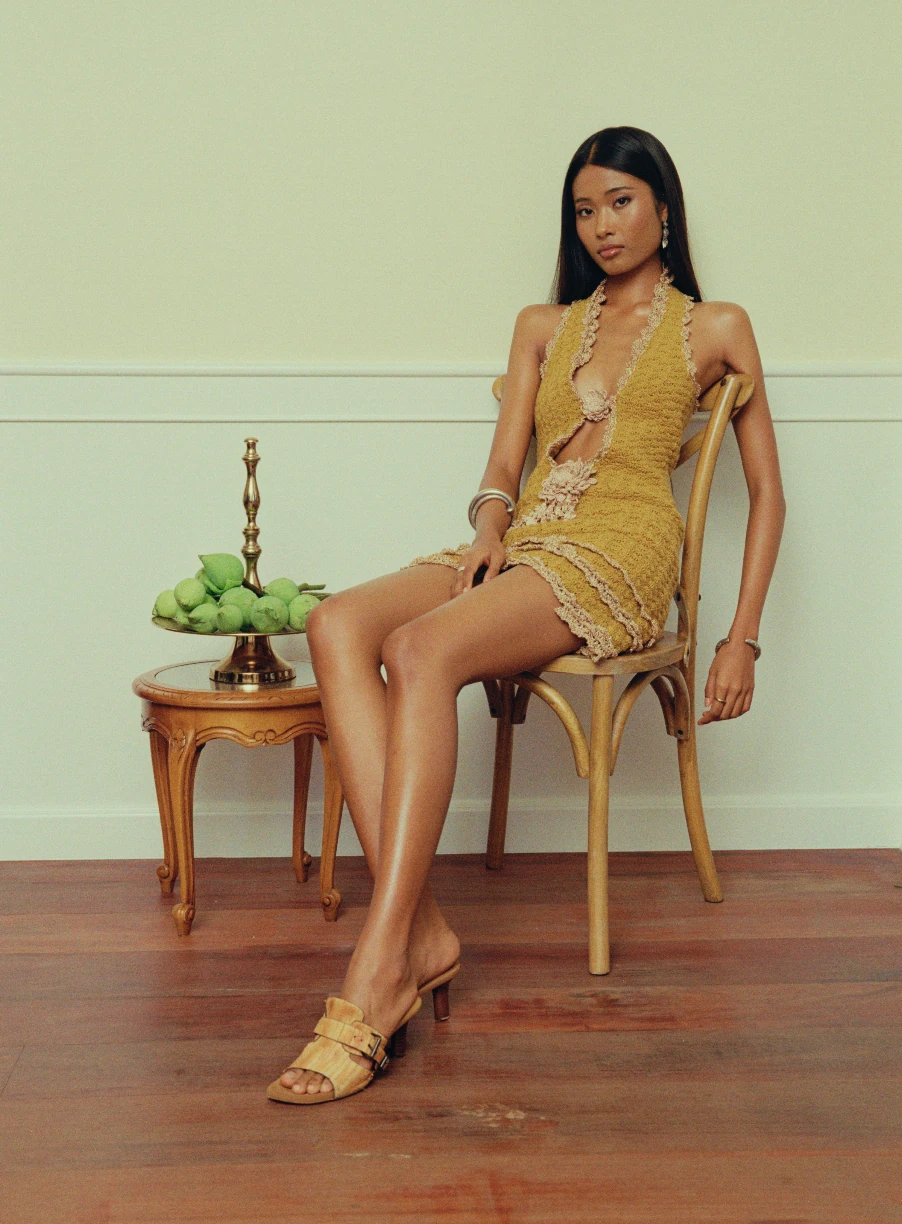
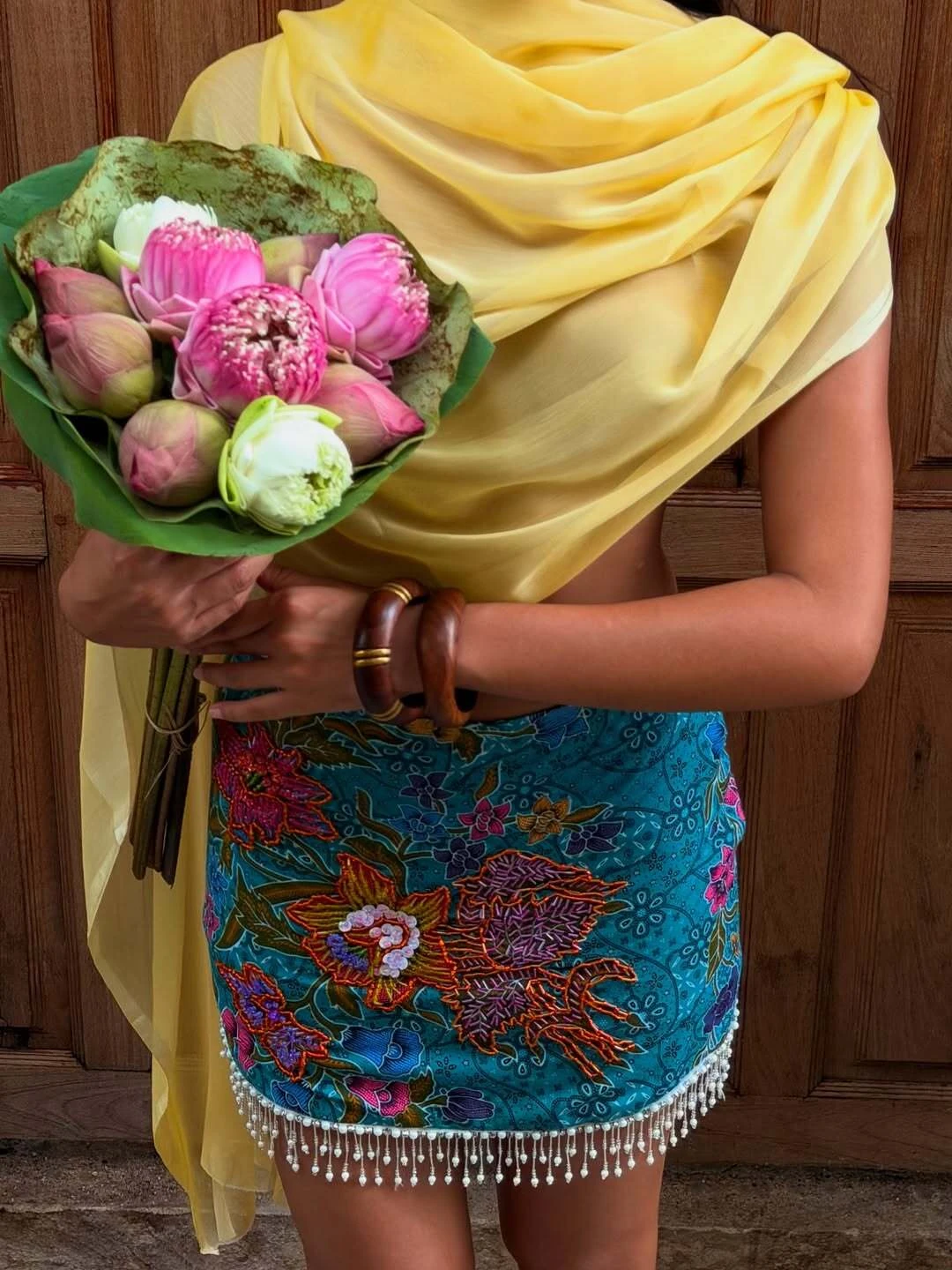
Growing up inside Thai visual culture leaves a mark. For Cha, it starts with the pha thung – the wrapped skirt worn across generations, modest, practical, beautiful. It becomes the blueprint for one of Chalay's most recognisable pieces.
The Sinh Siam skirt lifts that same grammar – the proportions, the ease, the everyday familiarity of local mothers' clothing – and shifts it forward without sanding it down.
What’s key is how Cha handles reference. It’s not mood-board styling or surface-level borrowing. The cultural cues sit inside the structure – in silhouette, in pattern logic, in how the garment moves – rather than being applied as decoration.
‘I would like to express Thainess and local culture which I'm really proud of,’ she says. The emphasis lands on pride. Not nostalgia, not heritage-as-aesthetic, but something lived and continous.
When Tyla wore it
Then there’s the Tyla moment – the kind that tips a niche label into wider view.
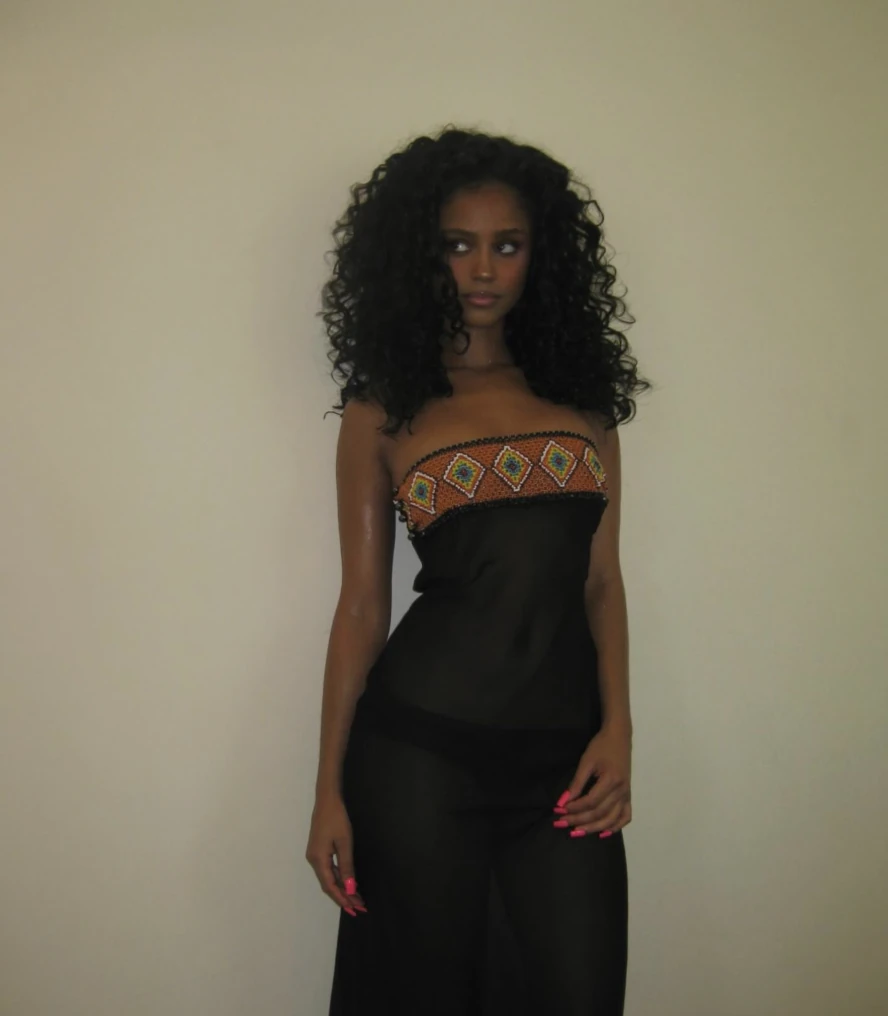
When the South African singer, riding the wave from ‘Water’ into global pop visitility, appeared in a Chalay piece, the reaction wasn’t calculated. The team screamed.
The piece itself matters. It comes out of the southern collaboration: a contemporary silhouette carrying hand-stitched Nora patterning. Traditional craft, but worn in a way that doesn’t feel museum-bound.
The collection sells out. That’s the headline. But Cha’s takeaway sits elsewhere.
‘I was so proud to bring something of Thai culture to the world,’ Cha says.
That's the point. Not the co-sign, not the sell-out – the fact that the craft travelled intact.
Not playing the expected role
Global visibility comes with its own set of expectations, especially for designers working outside Western fashion centres. There’s a pressure to become legible on someone else’s terms – to be ‘exotic’, ‘traditional’, easily categorised.
Cha’s response is disarmingly simple: she mostly opts out.
‘Nothing can please everyone so I don't have any pressure from expectation at all,’ she says. ‘I just do things at my very best and I am happy with that.’
It sounds straightforward, but holding that line – making work without shaping it for an imagined audience – is harder than it reads. It’s also what lets Chalay stay specific.
Start first, refine later
For younger designers figuring things out, Cha's advice cuts through the usual overthinking.
‘Just start doing it and don't worry too much!’
It’s blunt, but it tracks. The brand itself begins that way – one piece, one image, no grand plan.
On preserving traditional craft, she shifts the focus again, this time to perception.
‘It started with you seeing the value in any small thing,’ she says. The pha thung your grandmother wore, embroidery on a temple wall, festival costumes repeated so often their origins blur.
‘They might look old or not casual, but it’s about thinking how to elevate them into something else.’
That reframing – not discarding, not preserving unchanged, but reworking – sits at the core of what Chalay does.
Still by the sea
Thonglor is another life now. The accountant years sit even further back.
What remains is the through-line: a move to the coast, a handmade piece during a nap window, a name pulled from the self and sea – and a brand that now travels well beyond it.
Every piece gets the same attention. No favourites, because that would mean stepping outside the work and ranking it after the fact.
Somewhere in the north, a Hmong artisan threads a needle. In the south, hands trained in Nora costume-making do the same. And Cha stays by the water, holding the structure together as the rest moves outward.
The visibility, the sell-outs, the celebrity moments – they come and go. The work holds.