

[image]
[title]Stepping off the ferry onto the firm ground of Koh Phangan, I couldn’t help but notice the change. Last time I was there, I was just 18 – sunburnt, eager and chasing the island’s infamous Full Moon Parties with a kind of reckless enthusiasm only young backpackers possess. Back then, the island felt untamed. Dusty roads. Cheap buckets. Half-broken beach bars stitched together from driftwood and optimism. Around me, travellers and foreigners who had made the island home, all with the same wide-eyed stories to tell – all convinced they’d somehow discovered the island in its ‘better days’.
Seventeen years later, the island feels a lot different. Wellness cafés sit where old traveller joints once stood. Boutique resorts climb steep hillsides once hidden behind jungle. The parties remain, but they no longer feel like the whole story.
And that’s why I came back.
With just a few weeks to go before Julian Marley & The Uprising lands on the island’s sandy shores, I arrived, knee deep in water, flip flops in hand, to meet those who are bringing him here: a tight-knit mix of reggae scene veterans with decades of experience in the UK’s reggae events and festival scene, working alongside a family of Thai rastas who have called Koh Phangan home for more than 20 years.
This is the story behind the show Reggae Rumble, a massive, reggae event held across Koh Phangan, Phuket and Bangkok. Headlining is Julian Marley, the son of late, great Bob Marley, playing alongside local legends Job 2 Do, Malaiman Downtown, Jimmy Tae and INJA.
And while any reggae fan (myself included) is stoked to see a Marley come to Thailand for the first time, this event goes deeper than just the music. It’s backed by stories of life, trauma and revival, carried by those dedicated to preserving something real through the spirit of reggae itself.
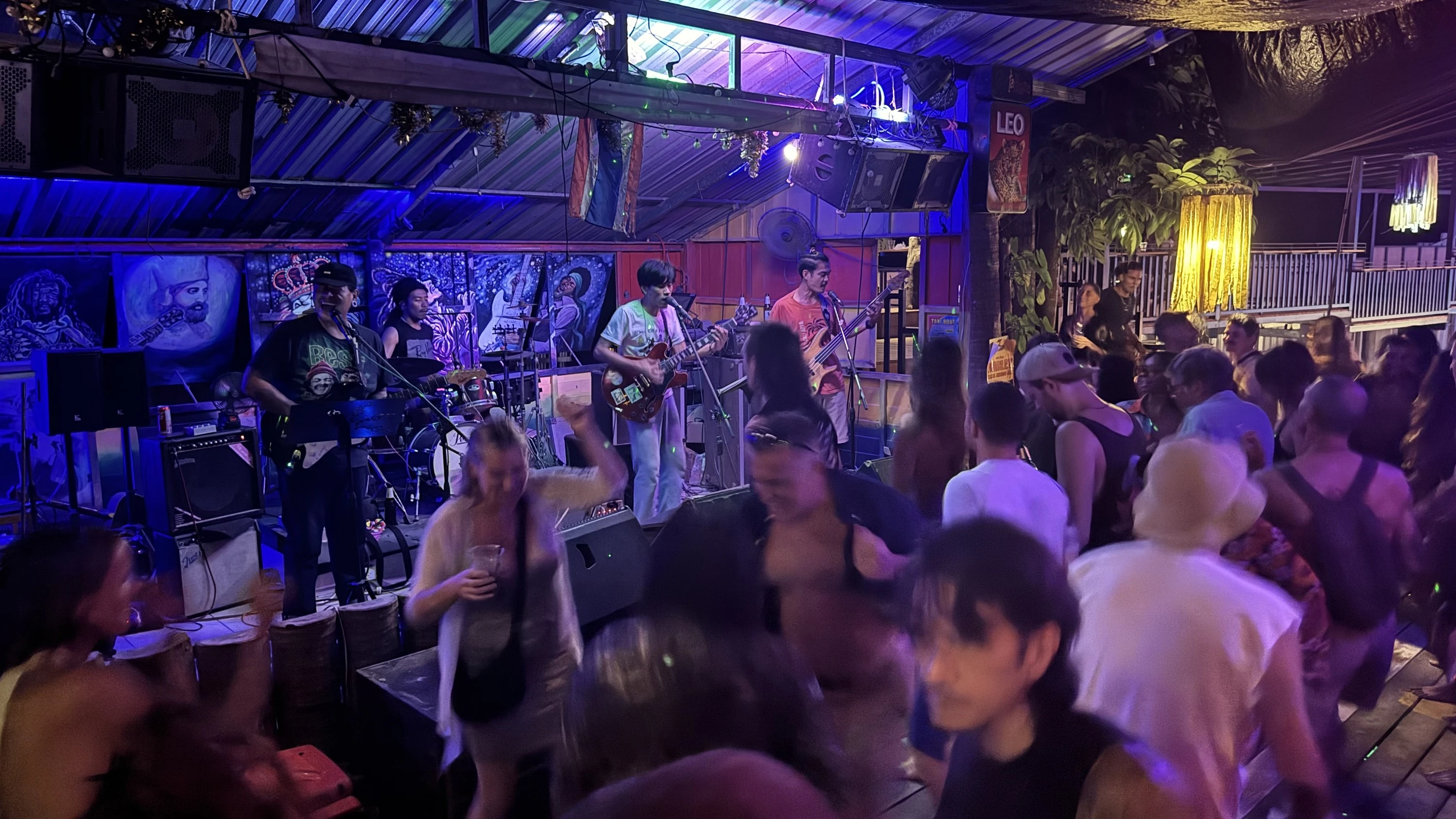
Koh Phangan’s Rasta Home, the perfect venue
Rasta Home doesn’t immediately announce itself with grandeur. There are no velvet ropes or VIP sections. No imported western aesthetics. Instead, you’ll find a hut that’s evolved into a bar, into a venue – built by the hands of those who live there using reclaimed wood and a lot of trial and error.
Walk in and sisters, aunties and mothers grill meats, serve homemade cakes and welcome you with energy. Inside, Kiew, Nai and Ae take the helm – original Thai rastas, exactly as you’d expect, serving drinks, smoking joints and forever smiling from ear to ear.
Alongside them, Mark Worrall and and Brian Cleary, both UK festival legend, with decades of experience working in event production and planning, including Reggae Land and Boomtown, featuring some of reggae’s greatest – Mad Professor, Eek-a-mouse, General Levy, Rodigan, Barrington Levy, the list goes on.
Together, along with a crack-team of producers and sound engineers, they are hosting Julian Marley & The Uprising live at Rasta House on May 15, before touring him across Phuket and Bangkok on May 21 and 22 respectively.
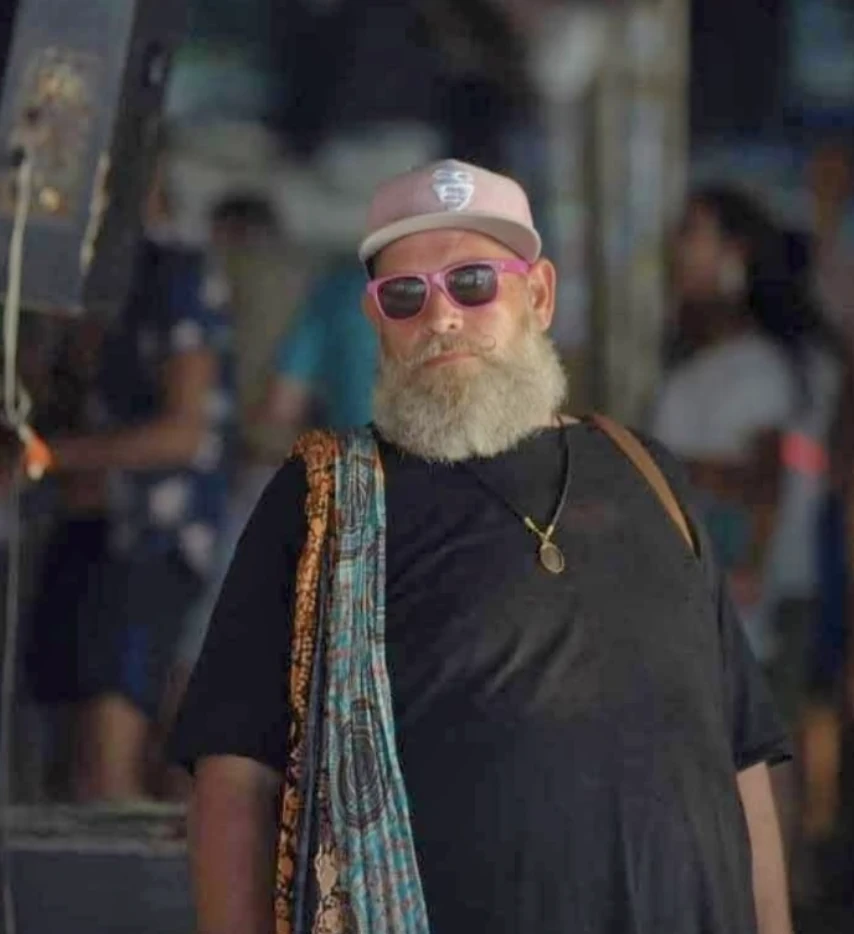
The rumble of reggae in Thailand is bassy
‘The world can feel like it’s falling apart,’ Mark says as we catch up overlooking the open seas from a hillside balcony. ‘It's scary for our kids and our future, and we need to bring people back together. That’s why we're doing this.’
Mark’s journey to this moment feels almost inseparable from the music itself – deeply rooted in the scene, he knows reggae inside and out. But his personal experiences, full of loss, chance encounters and unexpected redemption, is what has driven his passion to bring the biggest reggae names to Thailand.
In April 2024, his close friend Big John – one of the UK’s old-school, rave-scene personalities and a longtime fixture of Koh Phangan’s underground scene – died suddenly in his arms upstairs at his home after an evening together at the bar they’d frequented for decades.
‘He died in a place he loved, surrounded by people who loved him,’ Mark says quietly, clearly still raw from the experience.
What followed didn’t help. Police and ambulances turned to ceremonies and cremations. Crushing fragments of bone by hand so they could be transported back to the UK according to his mother’s wishes. People fighting over Big John’s assets.
‘What the hell is my life?’ Mark quipped, a question he asked himself during those dark times. Festivals and parties suddenly feel hollow, the UK scene passed him like a blur. Nothing had any lasting meaning.
Then something shifted.
Almost exactly a year after Big John’s death, following a beach memorial ceremony filled with candles and old friends, news broke that Manu Chao – the globally revered Franco-Spanish musician known for blending reggae, punk and Latin sounds with fiercely political lyrics – would play at Rasta Home.
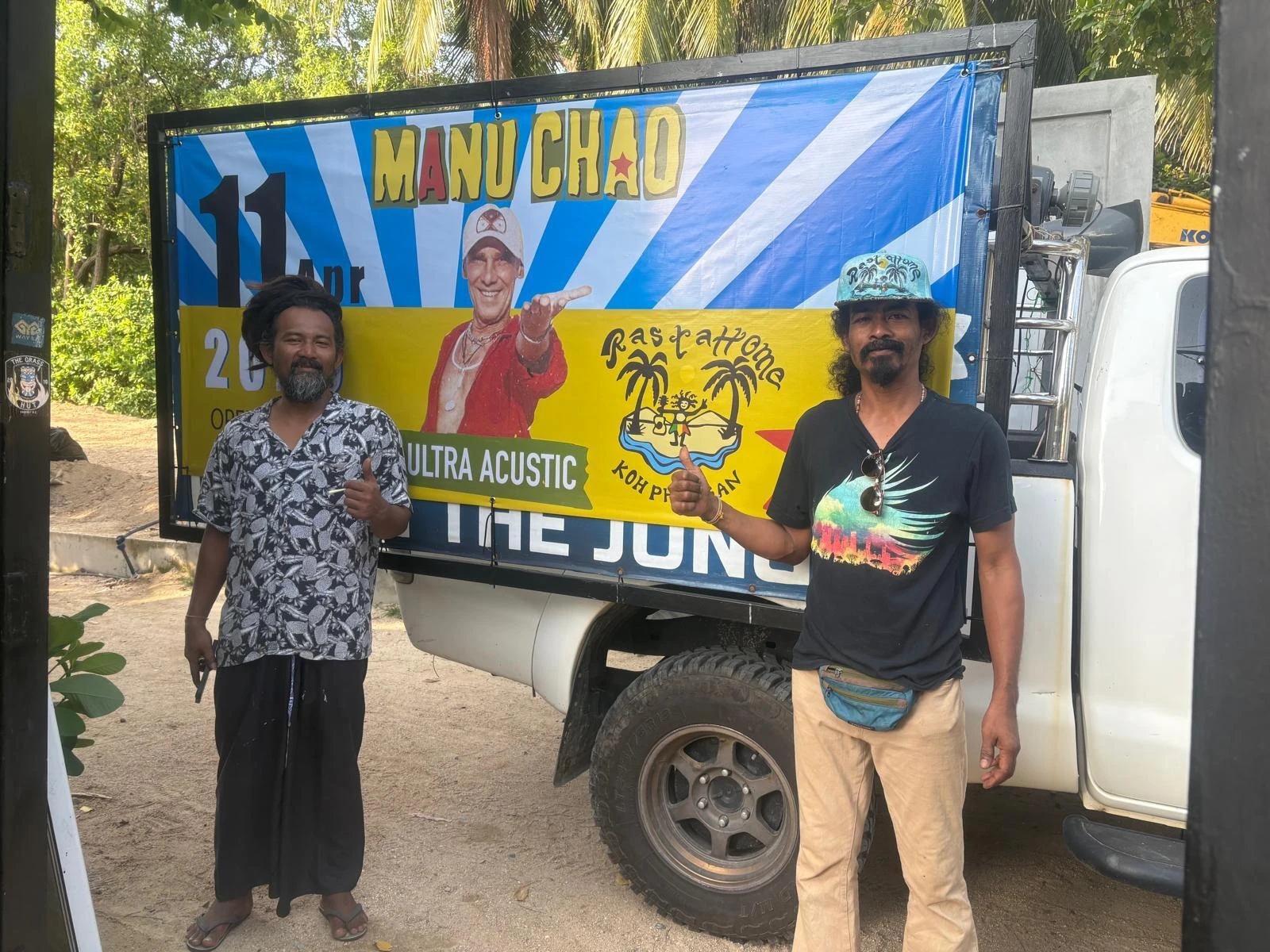
‘A friend of Rasta Home knew the band and invited them to come play,’ Mark explained. ‘The whole thing was very last minute, flying them over following a show in Singapore; we had to prepare the bar, the marketing and sell tickets in just five days.’
Nobody really expected it to work. But it did.
‘The whole place was flooded with people,’ recalls Kiew, one of Rasta Home’s founders, grinning like he still can’t quite believe it happened. ‘I felt like a teenager again.’
By all accounts, the night became legendary. Manu Chao delivered a euphoric set, but what everyone remembers most was his warmth off-stage – sitting with locals, talking to staff, embracing the ethos of the place rather than treating it like another stop on tour.
‘He was an absolute diamond of a person,’ added Mark as he smiled eagerly in recollection. ‘Everything you’d want Manu Chao to be. Left wing, socialist, for the people, approachable. His girlfriend was beautiful and lovely, their manager was amazing.’
It was at this moment, the rumble of reggae relit a spark in Mark. For a brief moment, the darkness lifted and an idea came to him. ‘If Manu Chao can play Rasta Home, who else can we bring to the island?’
Within six months, the son of reggae’s most iconic figures was signed to play Rasta Home, Lotus Arena (Phuket) and UOB (Bangkok).
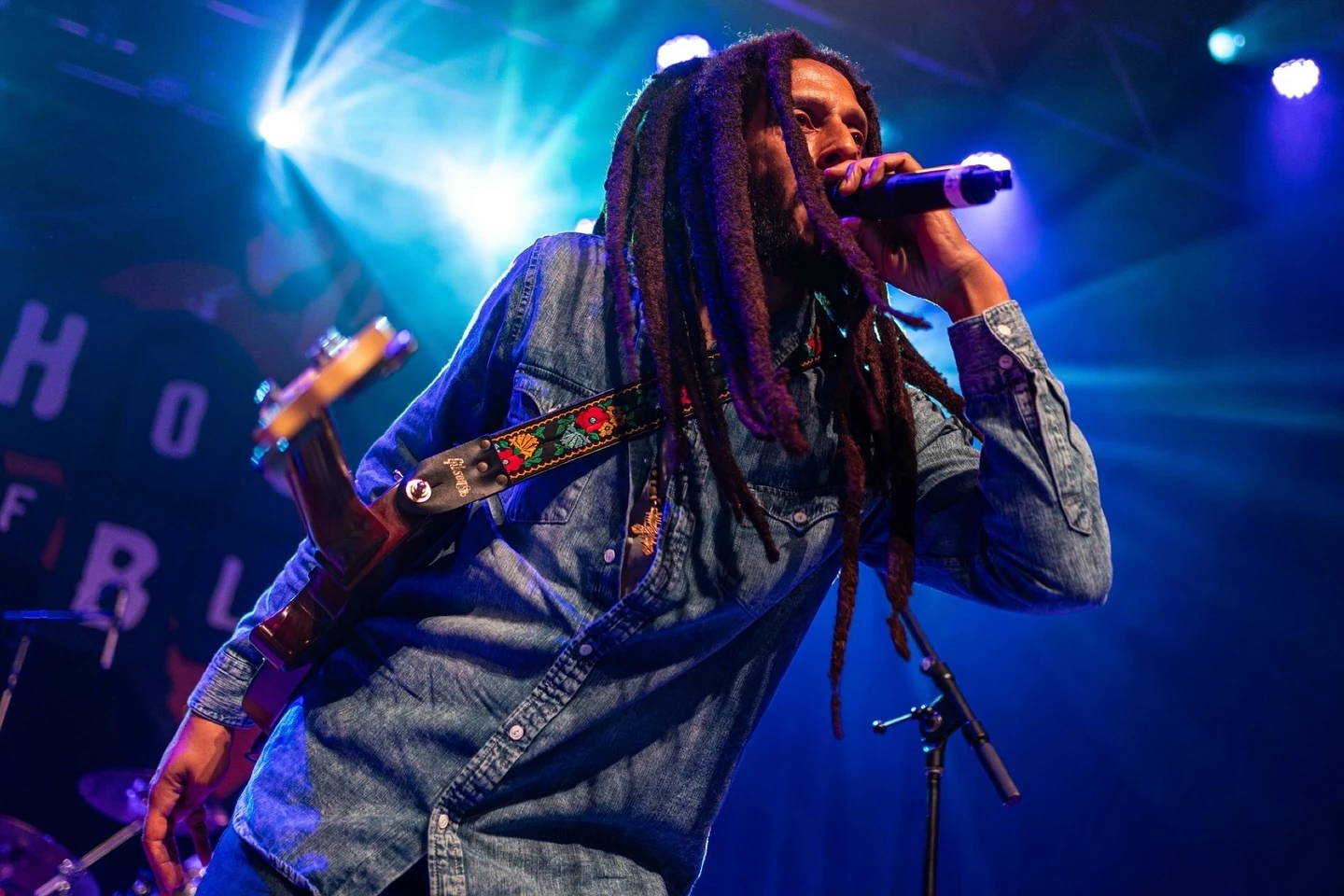
The first Marley to ever play in Thailand
‘He may have passed,’ Kiew says, rolling up his sleeve, a tattoo proudly exposed on his shoulder, ‘but Bob’s spirit is always here with us.’
‘We’re just a small bar really, and Bob Marley’s son is coming here,’ added Nai. ‘I still can’t really comprehend it.’
For reggae fans, the arrival of Julian Marley in Thailand feels significant far beyond the novelty of seeing a famous surname on a festival poster.
Julian has spent decades loudly carving out his own place within reggae culture – less commercially polished than some of his siblings, but deeply respected among roots reggae purists for staying close to the spiritual and conscious side of the genre.
Raised between Jamaica and the UK, his music leans heavily into themes of unity, Rastafari, resistance and social awareness, carried by a warm groove that feels right at home on Koh Phangan. In 2024, he won a Grammy Award for Colors of Royal, cementing his reputation as one of contemporary roots reggae’s most authentic voices.
And fittingly for his tour, he won’t be arriving alone. The lineup surrounding him feels deliberately rooted in Thailand’s own long-standing reggae scene, led by legendary southern Thai reggae pioneers Job 2 Do – the band behind the iconic anthem ‘Doo Ter Tham’ that helped bring reggae into the Thai mainstream during the ’90s.
Joining them are Chiang Mai favourites Malaiman Downtown (Phuket and Bangkok), known for blending reggae rhythms with Northern Thai energy and street-culture spirit, as well as island legend Jimmy Tae and the Rasta Home band (Koh Phangan), a longtime figure within Thailand’s soundsystem and reggae community. Gluing the whole show together – turning it from a concert into a full-blown show – is UK drum ‘n’ bass legend INJA (aka Importance Never Justifies Anything), a long time friend of Mark who’ll kick-off the event, see through changeovers and ends it with a bang with the late-night slot.
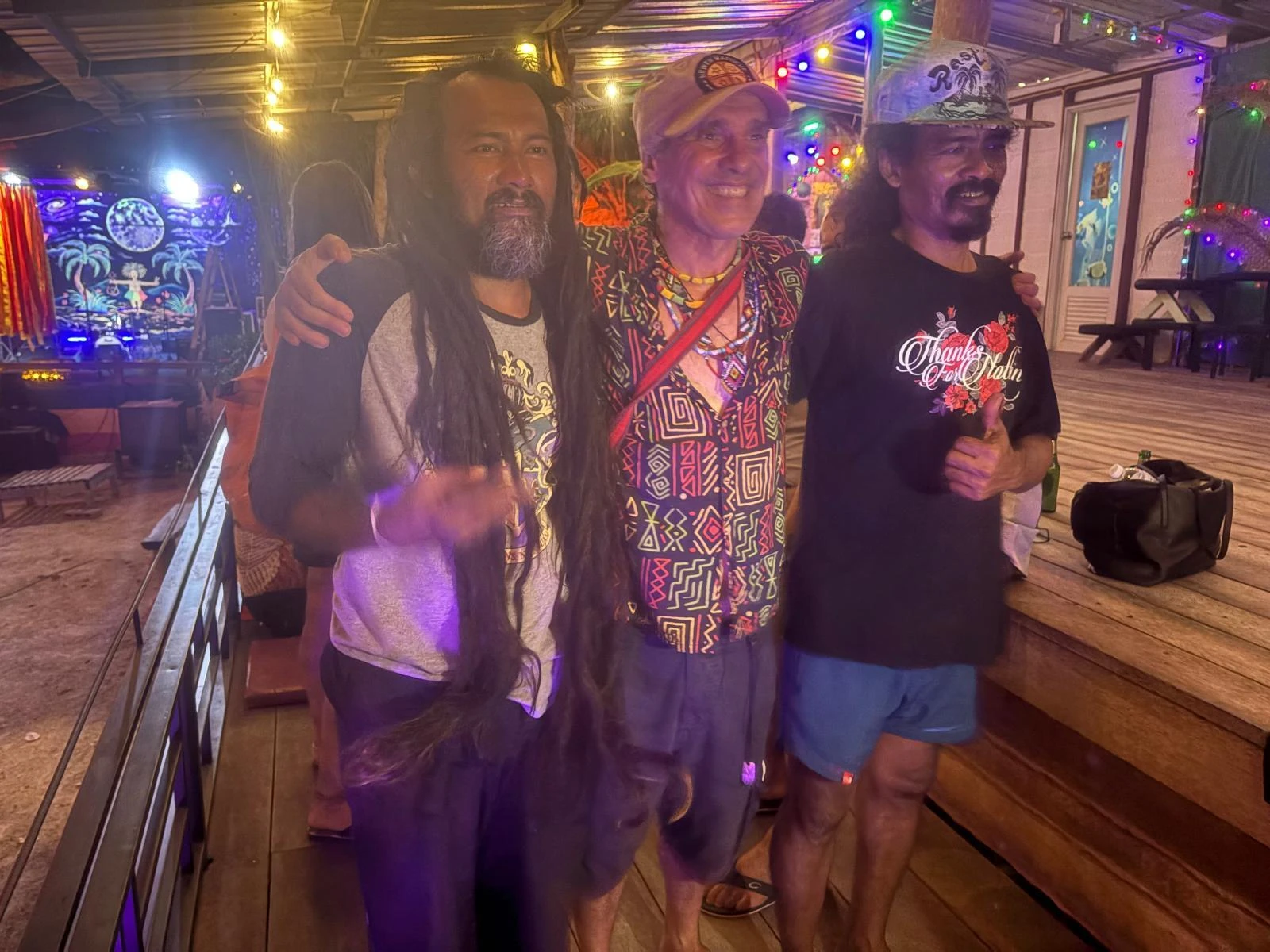
Rather than feeling like an imported international concert dropped onto an island, the event instead feels woven into the fabric of Thailand’s own reggae history – old friends, local legends and global icons sharing the same stage.
That spirit sits at the heart of reggae culture here. It’s not performative. It’s not exclusive. It’s about connection, spirit and the soul of the rhythm.
Even the event pricing reflects that philosophy. Despite the enormous financial risk involved in bringing Julian Marley to Thailand, the organisers fought hard to keep ticketing equal for everyone rather than creating expensive VIP zones.
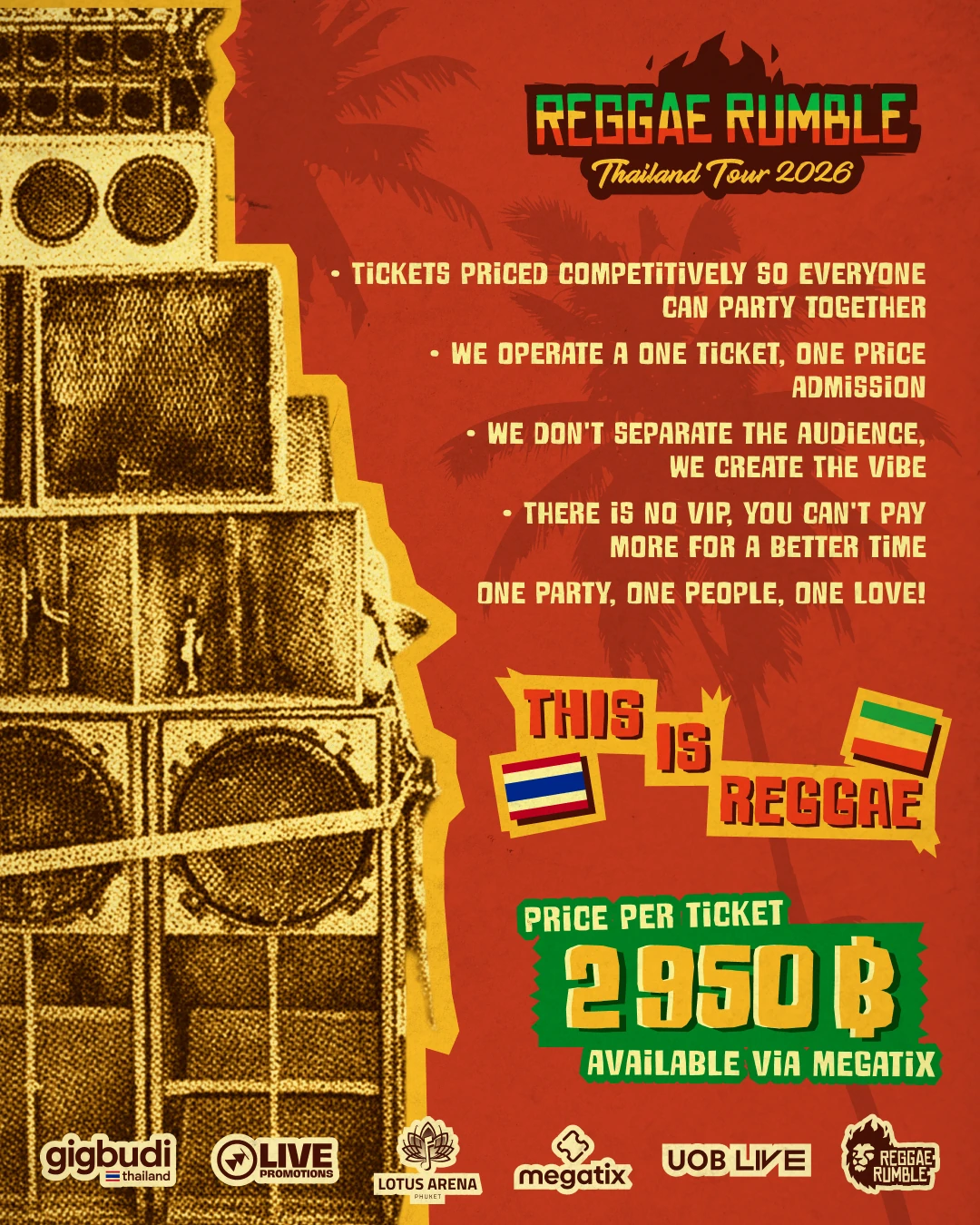
‘Why should richer people get a better view?’ Mark asks. ‘That’s not what reggae is about. For reggae, everyone must be equal. If you separate people by who’s richer when it comes to reggae, you’ve already failed.’
And maybe that’s what struck me most during my time there.
In a world increasingly divided by algorithms, politics, money and identity, there was something deeply moving about finding a small jungle bar on a rapidly changing Thai island still stubbornly insisting on togetherness.
Not in some naive, postcard peace-and-love caricature of reggae culture – but in a genuinely human way. People eating together. Smoking together. Building together. Dancing together.
Sat at Rasta Home, as the bass rolled through the trees late into the night, I realised I hadn’t really come back to Koh Phangan searching for nostalgia after all. I came searching for proof that some parts of it still remain. Reggae is clearly that conduit.
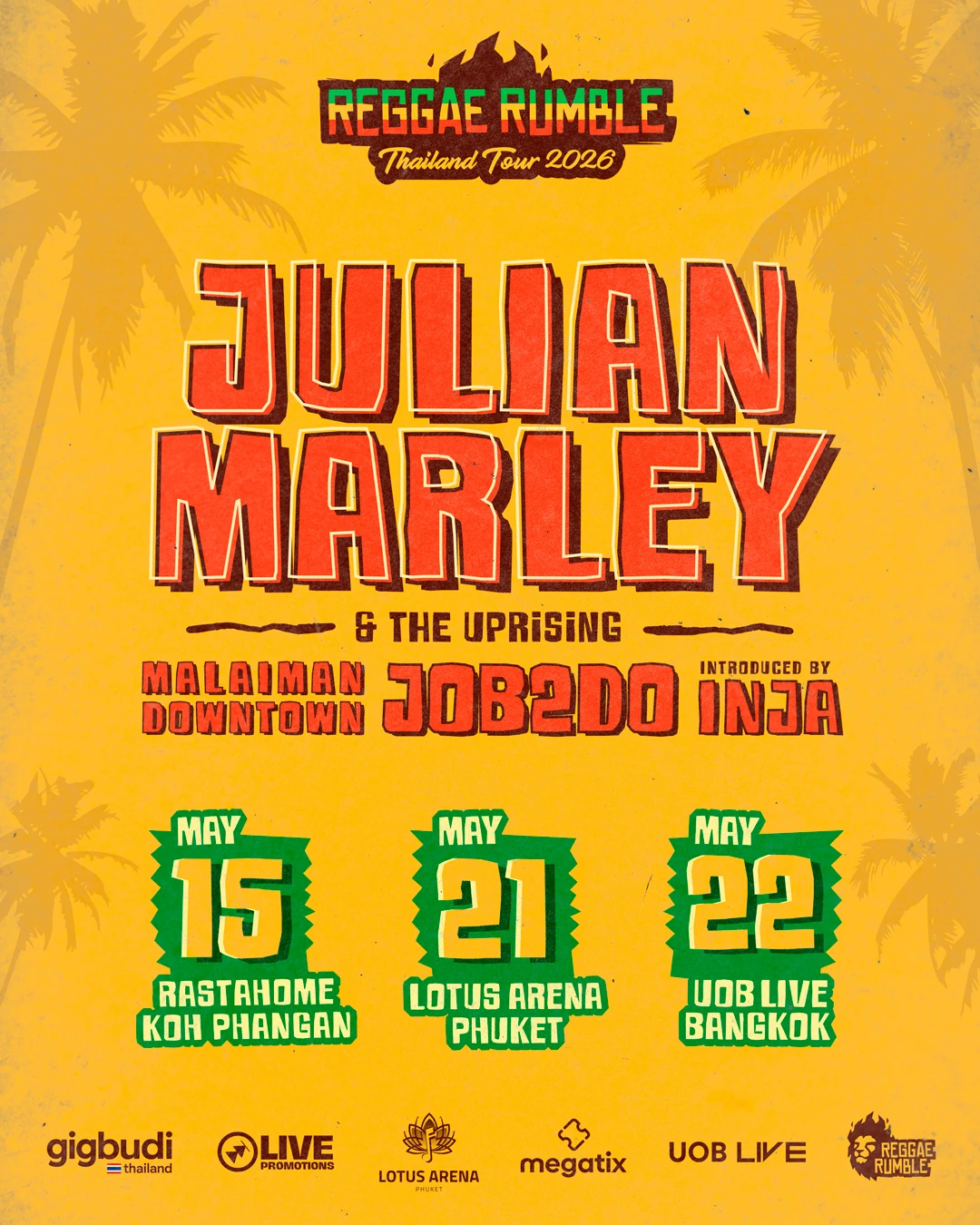
Where to see Julian Marley live in Thailand
Julian Marley, the son of legendary Bob Marley, will be playing live at three venues in Thailand throughout May.
Rasta Home on Koh Phangan kicks off the Reggae Rumble tour, with a more intimate, legitimate performance that will set the scene for what's to come.
But fear not, if you’re a reggae fan but can’t make it to the island, he’ll be performing again in Phuket at the amazing Lotus Arena on May 21 followed by the mighty UOB Live in Bangkok on May 22.
Tickets can be found on Megatix, with no segregation between zones, you can get up-close and personal with the legend himself; the first ever Marley to grace our Thai shores. This is one not to miss.
Julian Marley tickets for UOB Live, Bangkok (May 22)