
[image]
[title]Surely it’s not possible to see all of Thailand’s famous sights in a single day? After all, the country covers over half a million square kilometers. Yet if you’re savvy, you can remain in Bangkok and find out all you need to know in a single afternoon with a simple visit to Muang Boran, where the country (and the heavens) are presented in a gilded golden outdoor museum.
What is the Ancient City?
The 320-hectare park, which claims to be the biggest private museum in the world, was the brainchild of Khun Lek Viriyaphan, an eccentric businessman who also created the nearby Erewan Museum and the Sanctuary of Truth in Pattaya. From the sky, the park is shaped roughly like Thailand itself and includes around 120 exhibits of Thailand’s most famous buildings divided into three categories – those relocated from their original site, replicas of existing structures (some on a reduced scale) and some rather whimsical creative designs by Khun Lek himself.
How to get to and around the Ancient City?
Take the BTS Skytrain green line to Kheha, then it’s just a short taxi ride to Muang Boran. It is also conveniently near Suvarnabhumi Airport if you simply can’t wait to get exploring as soon as you land.
Given its size, walking is discouraged, but you can rent a bicycle (B150), e-bike (from B250) or golf cart (from B350) and the journey becomes a breeze. You can even obtain a car permit (B200) or join occasional tram rides (free) that cover the site in an hour and a half with just half a dozen stops.
How to best explore the Ancient City?
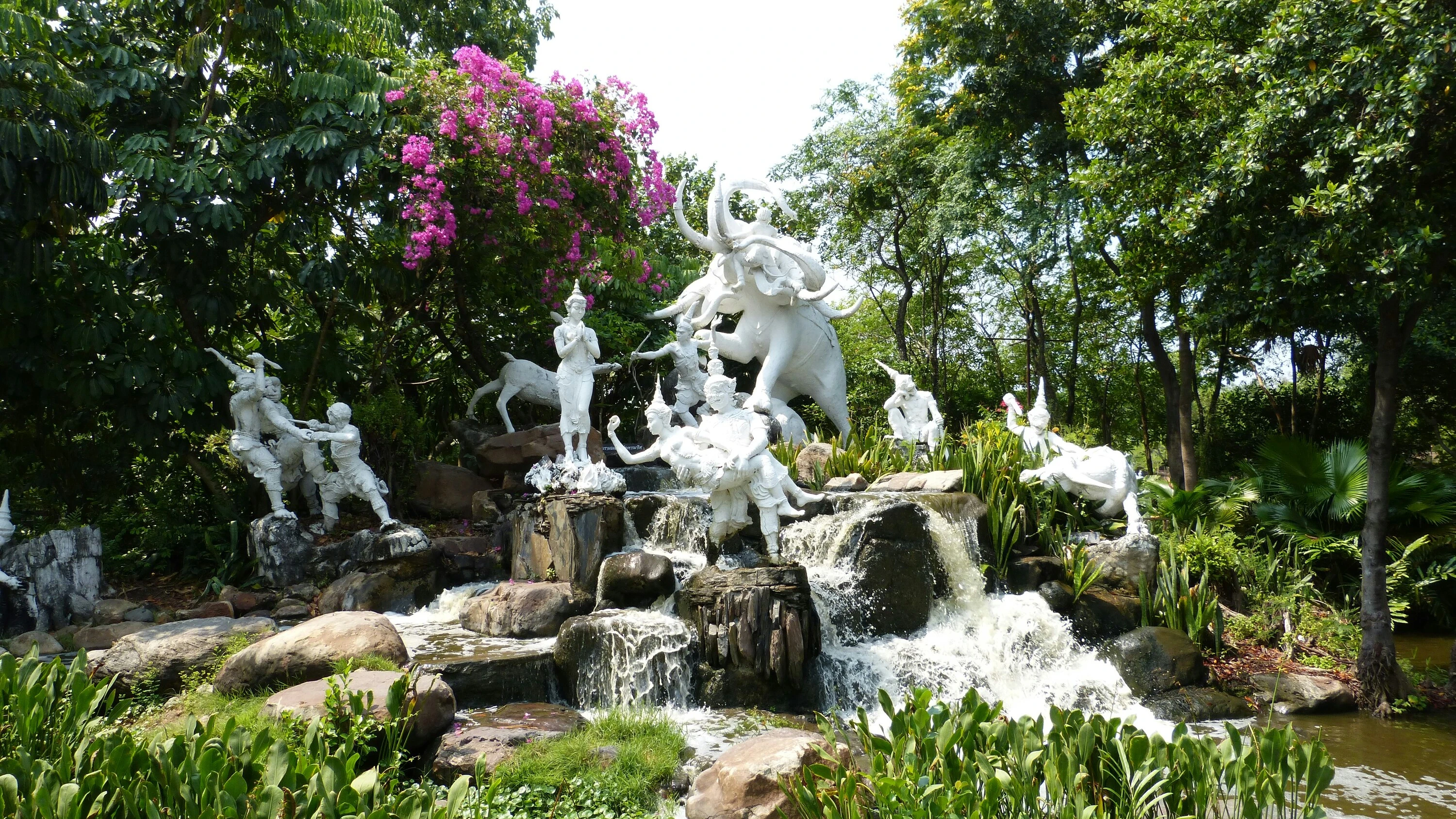
The site is divided into five regions – southern, central, northern, northeastern and Suvarnabhumi – the last being a flight of fancy of a vanished ‘golden land’ that reflects the heavens. After buying a ticket and choosing a form of transport at the entrance, study the map and note the places that appeal most. Photogenic spots are conveniently tagged on the map and audio guides are also available. If you’re feeling playful, rent a period costume and dress up for a few selfies in front of the park’s magnificent palaces and temples. Available from I-Nao Studio just inside the entrance (from B600).
What can I see in the Ancient City?
While you can roam as you please, it’s best to follow a clockwise route through the park. Starting in the southern region, the most popular site is the stupa of Wat Mahathat in Nakhon Si Thammarat, due its recent designation as a UNESCO World Heritage Site. Though smaller than the original, the attention to detail gives a strong sense of the monument’s sacred nature.
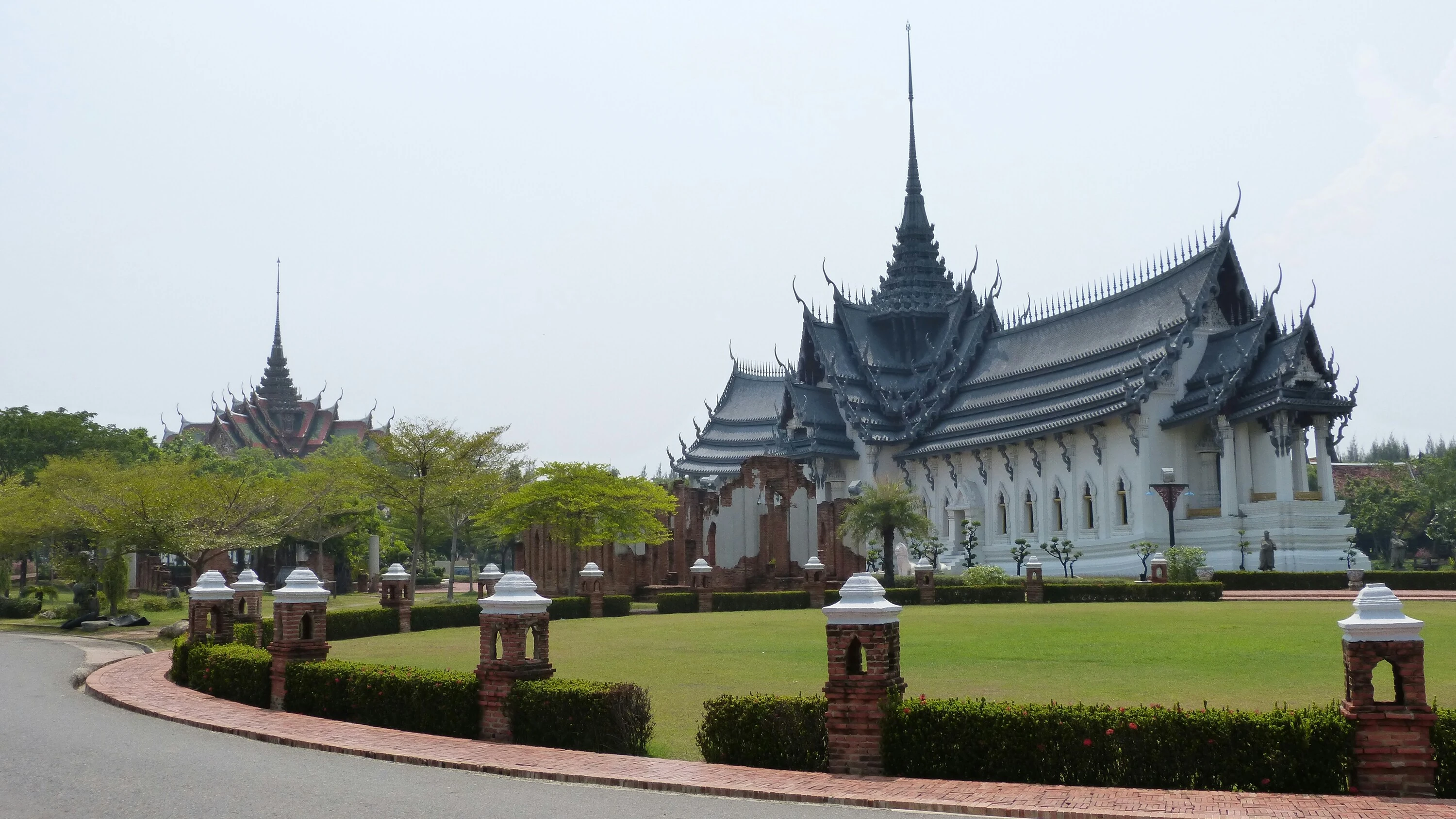
The central region is packed with famous sites, including the Dusit Maha Prasat (in the grounds of the Grand Palace, Bangkok), Phra Sam Yot in Lopburi and the Sanphet Prasat Palace in Ayutthaya. This last is perhaps the most beautiful building in the entire park, though the original no longer exists as invading Burmese destroyed it in 1767. The reconstruction is based on detailed archaeological and historical evidence, and the result is a wonder to behold.
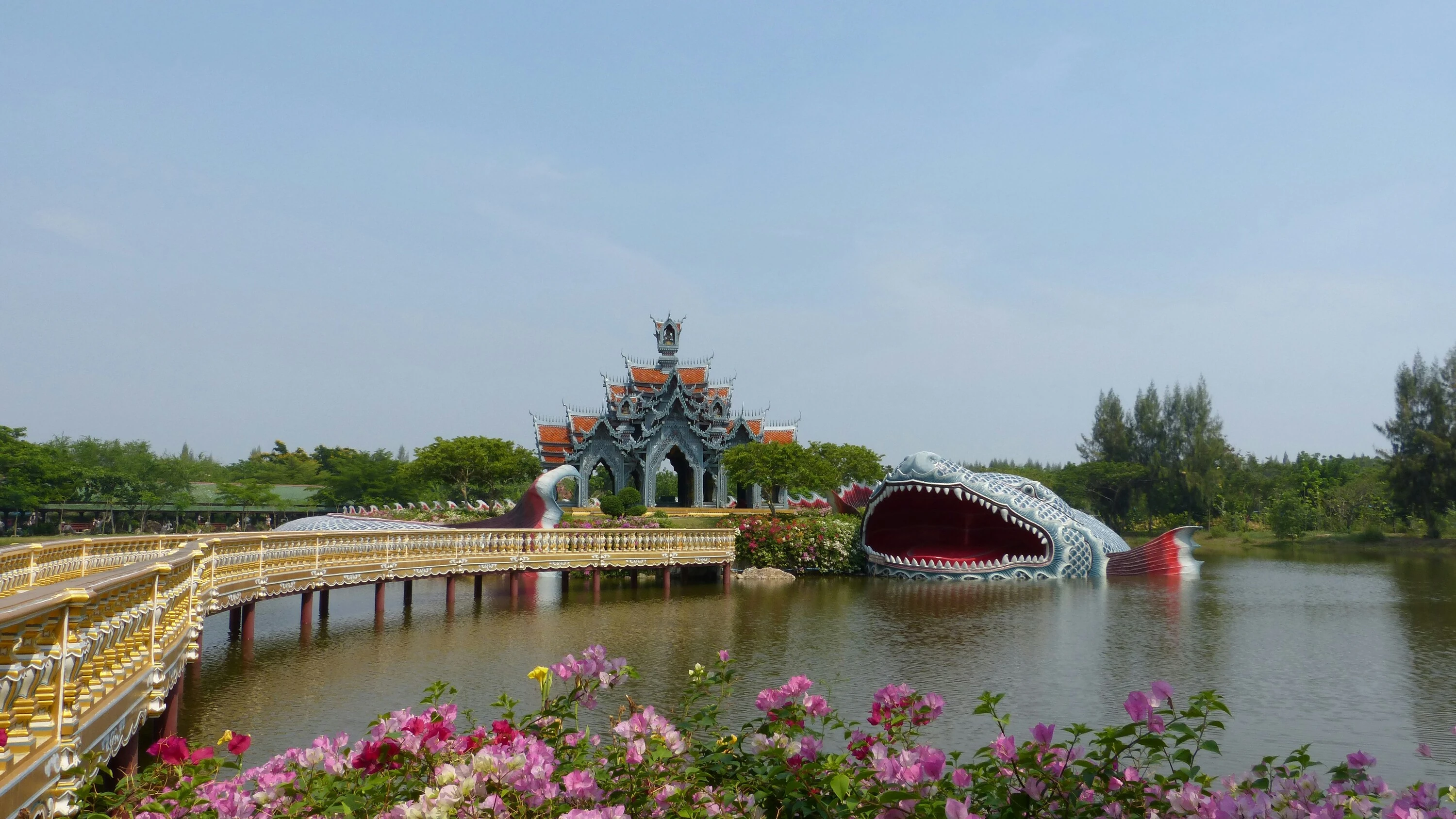
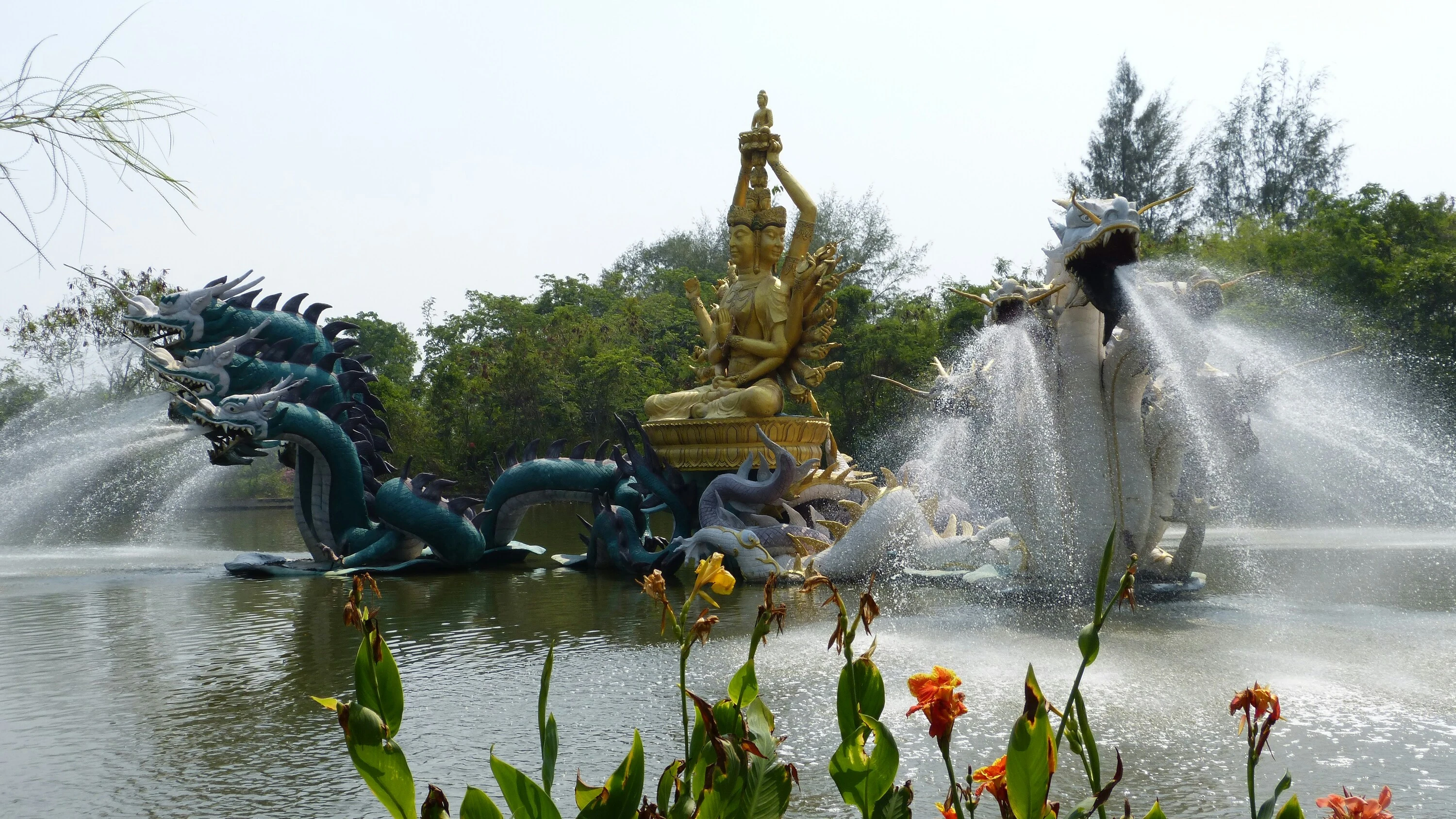
The sprawling Suvarnabhumi section features some eye-popping structures, such as the Pavilion of the Enlightened, Sumeru Mountain in the clutch of a giant fish, and the Botanical Garden from Thai Literature, nestled into the extreme northwest corner of the park.
After pausing for refreshment at the Floating Market, head to the northern region for a glimpse of the main stupa at Wat Mahathat in Sukhothai Historical Park. Although its actual size was reduced by three quarters, the sitting Buddha image framed by laterite pillars is instantly recognizable as one of the country’s best-known sights.
Lanna houses usually have crossed beams called kalae above the gable, and examples are on display in the Northern Thai Village, while a reconstruction of Wat Phumin in Nan shows its unique cruciform shape and engaging murals on the interior walls. The teakwood building of Wat Chong Kham was painstakingly dismantled at its original location in Ngao, Lampang Province, and reconstructed here without the use of nails. It is a delightful combination of sturdy pillars, split-level roofs and intricate carvings.
Finally, in the northeastern region, reproductions of Prasat Hin Phimai and the Phanom Rung Sanctuary, the latter set on an artificial hill, reveal the ingenuity of Khmer carvers who built the world’s largest religious structure at Angkor Wat in Cambodia.
If you follow this route and snap a few selfies along the way, you’ll be able to kid your friends that you actually did get to see Thailand’s most important monuments, and you can do it all in one day.
What else can I see around the Ancient City?
If you are impressed by the park, check out the nearby Erewan Museum, with its collection of ancient religious objects, another of Khun Lek’s creations.
Muang Boran (also known as Ancient City and Ancient Siam costs B800 for foreign adults (B400 for Thais and foreigners with work permits) and B400 for children. Here’s a tip; book on trip.com and get deals that are half the price. Open daily, 9am-7pm